
This article will cover the Best Bond Trading Platforms & Brokers to Use such as Charles Schwab, Fidelity Investments, TD Ameritrade, Vanguard, TradeStation, Saxo Bank, Degiro, BondEvalue, UBS Bond Desk, and J.P. Morgan Self‑Directed Investing.
These trading platforms have different bonds, low-cost trading, and advanced trading tools to help investors determine the best fixed-income investment options.
Key Point & Best Bond Trading Platforms & Brokers to Use
| Platform / Broker | Key Features |
|---|---|
| Charles Schwab | Wide range of bonds, low fees, user-friendly platform, research tools, strong customer support. |
| Fidelity Investments | Extensive bond selection, advanced research tools, retirement-focused strategies, high liquidity, reliable execution. |
| TD Ameritrade (Schwab) | Robust trading tools, bond laddering options, educational resources, mobile-friendly, integrated with Schwab network. |
| Vanguard Brokerage | Low-cost bond funds, strong retirement focus, intuitive platform, solid research, long-term investment planning. |
| TradeStation | Advanced trading platform, professional-grade analytics, customizable dashboards, diverse fixed-income products, active trader tools. |
| Saxo Bank | Global market access, competitive spreads, multi-currency bonds, professional trading interface, strong research and reporting. |
| Degiro | Low-cost trading, European market access, easy-to-use platform, no minimums, basic research tools. |
| BondEvalue | Focused on bond investing, real-time bond pricing, portfolio tracking, institutional-grade analytics, global bonds access. |
| UBS Bond Desk | Premium fixed-income services, personalized advice, large bond inventory, institutional-grade execution, wealth management integration. |
| J.P. Morgan Self‑Directed Investing | Access to corporate and government bonds, research-driven recommendations, integration with JP Morgan banking, secure platform, global offerings. |
1. Charles Schwab
Charles Schwab has the best bond trading sites and brokers because of their fixed-income services and adaptable pricing. The transparent pricing along with no account minimums on multiple items, means customers can buy thousands of U.S.
Treasury, corporate, municipal, and international bonds. The company’s research, outstanding platform, and educational services, allows anyone to trade to access to fixed-income investments. Schwab also has great customer service. Overall, Schwab has deep inventory, great tools, and adaptable pricing, making it the best choice for bond investors.
Charles Schwab Features, Pros & Cons
Features
- Comprehensive fixed-income inventory (corporate, munis, & Treasuries)
- No minimums on several bonds
- Advanced research and screener tools
- Mobile and web platform integration
- Extensive education and support offerings
Pros
- Inclusive bond selection
- Competitive pricing
- Customer support is top tier
- Portfolio building tools are excellent
- Mobile trading is a breeze
Cons
- Some tools may overwhelm beginners
- In some categories, bond fees may are higher than lower cost brokers
- Limited selection for bonds outside the US
- Platform can be complex
- Limited access to global markets outside of the US
2. Fidelity Investments
Fidelity Investments is also one of the best sites and services to trade bonds, because they operate the largest number of fixed-income products. Fidelity has U.S. Treasuries, agency securities, municipal bonds, investment-grade and high-yield corporate bonds, and global fixed-income products on their bond marketplace. Investors also get access to research, with the analytics, along with pricing in real-time, making trading very easy.
The educational services, along with customer service, are great. With no minimum for multiple bonds, Fidelity has great pricing and analytics, attracting retirees, and self directed investors.
Fidelity Investments Features, Pros & Cons
Features
- Comprehensive global bonds
- Comprehensive robust research & analytics
- Laddering tools
- Pricing and alerts in real
- Integrated retirement tools
Pros
- Extensive bonds inventory
- Quality research
- Treasuries yields are competitive
- Customer support is top tier
- No hidden fees
Cons
- For new traders, platforms can be complex
- Bonds pricing differs for each bond type
- Less liquidity on bonds outside the US
- An alysis tools have a learning curve
- Some advanced features require experience
3. TD Ameritrade (Schwab)
Due to TD Ameritrade’s powerful trading platform and Charles Schwab’s robust fixed income resources, TD Ameritrade (Schwab) is ranked at the top in bond trading platforms and brokers. Its bond offering includes competitive pricing on Treasuries, municipals and corporates, and CDs, as well as offering advanced search options.
Custom bond ladders can be created by investors and risk metrics can be analyzed by investors through advanced screening tools. Even though it is designed for intermediate and advanced investors, TD Ameritrade’s educational resources and trading tools make it simple to fixed income trading for beginners. Schwab integration gives TD Ameritrade additional and better liquidity and research, making it an overall great bond trading platform.
TD Ameritrade (Schwab) Features, Pros & Cons
Features
- thinkorswim platform
- Ladder builder is easy
- Live support and education
- Integrated with Schwab
Pros
- Great platform for active traders and casual ones
- thinkorswim is very advanced and provides great analytics
- Education is strong
- Liquidity is strong
- New offerings with Schwab integration
Cons
- The platform may be too sophisticated for some
- Bond trading will incur some fees
- The tools may be too complicated
- Access to international markets will be limited
- Pricing may be complicated in some situations
4. Vanguard Brokerage
Vanguard Brokerage is best suitable for bond trading for long term investors. Vanguard is well-known for its low-expense offerings and long-term value. Vanguard provides a wide range of options for individual bonds as well as numerous bond funds and bond ETFs, all at low prices. Vanguard focuses on long-term value, which protects and grows wealth and aligns well with the fixed income investments that are aimed to provide income and mitigate risks.
Vanguard’s trading tools are simpler than its competitors, offering a higher level of simplicity and lower operational costs. This increases overall value by smoothing out complex processes. This is a great choice for investors that want bond investment with a simple approach and low costs.
Vanguard Brokerage Features, Pros & Cons
Features
- Low-cost ETFs & bond funds
- Available individual bonds
- Prepared for retirement
- A clean and clear interface
- Research and planning tools
Pros
- The bond funds have very low fees
- A long-term strategy can be set up easily
- The platform has excellent educational resources
- The platform has a good reputation for reliability
- The brand is strong
Cons
- Individual bonds have low selection
- Their tools are basic compared to other platforms
- The platform is less likely to be used by active traders
- The access to international fixed-income securities is limited
- The basic research is less than other platforms
5. TradeStation
Recognized as one of the best platforms for bond trading, TradeStation offers advanced analytics for active traders and bond trading professionals. TradeStation facilitates the trading of various fixed income products, such as corporate bonds, municipals, and treasuries, combined with high-performance trading tools.
TradeStation also has a customizable platform, fast execution, and detailed charts; offering advanced research. While TradeStation’s fee structure may seem unattractive to casual investors, the order management and technologies entice advanced bond traders. TradeStation offers automation, data-driven resources, extensive education, and tools for traders looking to have a hands-on approach to managing the execution of bonds in their portfolios.
TradeStation Features, Pros & Cons
Features
- Bonds
- Treasuries
- Corporates
- Advanced charting
- Fast execution
- Customizable dashboards
- Professional-grade analytics
Pros
- TradeStation is excellent for active traders
- The execution is high performance
- There are powerful automation tools
- The data feeds are deep with a flexible interface
- The platform is popular for its automation tools
Cons
- The cost structure is higher than average
- The platform is complex for beginners
- There is limited educational resources
- The global bond offerings are limited by TradeStation
- The platform has less mainstream appeal
6. Saxo Bank
Saxo Bank is one of the best bond trading platforms and brokers for professional-grade services with global access to fixed income. Access to over 60,000 global securities is offered through Saxo’s platform, with both government and corporate bonds, and in various currencies. Real-time pricing, customizable dashboards, and deep analytics are offered through powerful web and desktop platforms, which makes them ideal for sophisticated global investors.
Saxo has a competitive pricing structure with tiered accounts based on trading experience. While primarily focused on advanced investors, those seeking extensive exposure to bonds outside the United States will benefit from Saxo’s research, global accessibility, and integration across multiple asset classes.
. Saxo Bank Features, Pros & Cons
Features
- The ability to trade over 60,000 global bonds
- Multi-currency trading is available
- There are professional analytic tools available
- The accounts are organized into tiers
- There is institutional-grade reporting available
Pros
- Big bond global exposure
- There is good research and execution
- There is access to multiple markets
- There are good professional portfolios
- There is detailed analytic tools available
Cons
- If you are a casual investor, then expect higher fees
- There is a platform learning curve
- Inactivity fees may apply.
- Some features require larger balances.
7. Degiro
Degiro has become one of the most promising trading platforms and brokers in Europe for bond trading because of their low-cost and easy to use system. Accessible to European and selected international fixed-income markets, Degiro has the lowest fees and no inactivity fees. The platform is simple and easy to use, which is the ideal trading experience for cost-sensitive investors looking for bare bone functionality.

Additionally, while research tools on the platform may be lacking compared to competitors, the attractively low commissions and the open-door policy to European and international markets makes the platform ideal for investors looking to make cheap bond transactions. Cost-sensitive investors looking to invest in fixed-income are most likely to buy and hold with the Degiro platform.
Degiro Features, Pros & Cons
Features
- Low-cost trading
- Access to European bonds
- Easy to use
- No inactivity fees
- Limited research tools
Pros
- Extremely low trading fees
- Effortless navigation
- Easy
- Low-cost European market access
- No minimum balance
Cons
- Limited access to US bonds
- Limited research
- Limited analytics
- Advanced traders will find it lacking
- No mobile app
- No educational resources
8. BondEvalue
For determined fixed-income investors looking for real-time pricing and high-quality analytics, BondEvalue is great as it is one of the leading platforms and brokers in bond trading. BondEvalue is not like any other average brokerage as it provides specialized services on bonds and also offers access to privately held, public and municipal bonds with clear pricing and market.
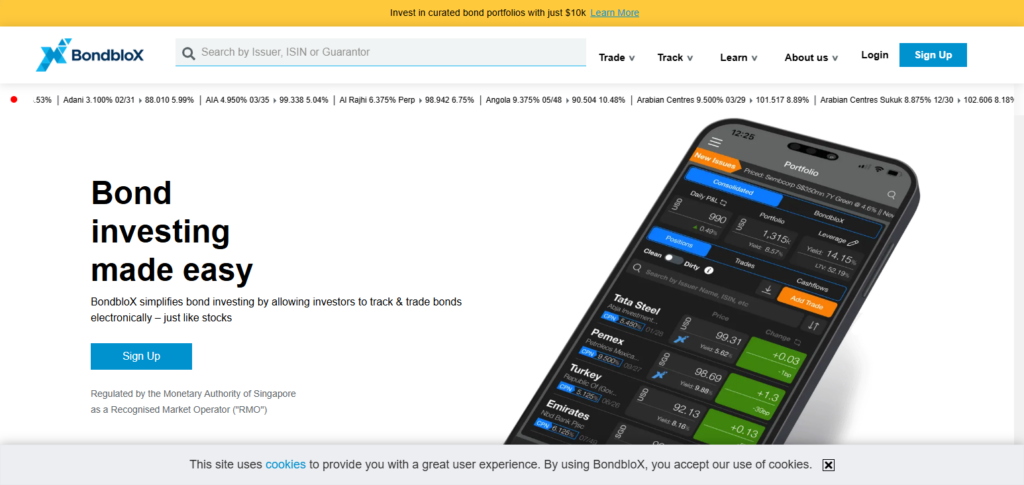
The platform offers services such as yield calculators, risk assessments and portfolio analytics in order to help the client make a choice based on facts and real-time data. BondEvalue is for investors who want more fixed-income as stock trading is not as prominent of a choice. The platforms bond market inventory and tech-focussed approach makes them a great choice for all.
BondEvalue Features, Pros & Cons
Features
- Marketplace for bonds
- Live price updates
- Global access to fixed income
- Analytics on portfolios
- Calculators for yields
Pros
- Strong analytics
- Strong data transparency.
- Focused on fixed income
- Global access
- Strong analytics
Cons
- Not a full broker
- Complex for beginner
- Education is lacking
- Retail is too simple
- Institutional is too complex
9. UBS Bond Desk
The UBS Bond Desk is one of the top bond trading desks and brokers for ultra-high-net-worth and institutional clients who need personalized fixed-income solutions. The Bond Desk provides UBS’s wealth management clients personalized service and access to actionable liquidity and bond opportunities in the municipal, treasury, and structured product markets. The service also includes relationship management and research.
While UBS has higher account minimums, the customized services and execution are designed for more sophisticated investors who need strategic income and risk management. Bond investors looking for a customized approach with a global reach and active management will value UBS’s professional services.
UBS Bond Desk Features, Pros & Cons
Features
- Advisory services are personalized
- Access to large pools of liquidity.
- Fixed income opportunities
- Wealth management combined
- Execution is premium
Pros
- Support & research is dedicated
- Strategies are tailored
- Execution is institutional
- Access to bonds globally
- Global
Cons
- Account minimums are high
- Fees are high
- Casual trading is not good
- Limited tools for DIY investors
- Best for experienced investors
10. J.P. Morgan Self‑Directed Investing
For investors seeking quality research and linkage with a top-tier financial institution, J.P. Morgan Self-Directed Investing is one of the best bond trading desks and brokers. J.P. Morgan’s market expertise and fixed income research back this service for U.S. Treasuries, corporate and municipal bonds, and some overseas securities.
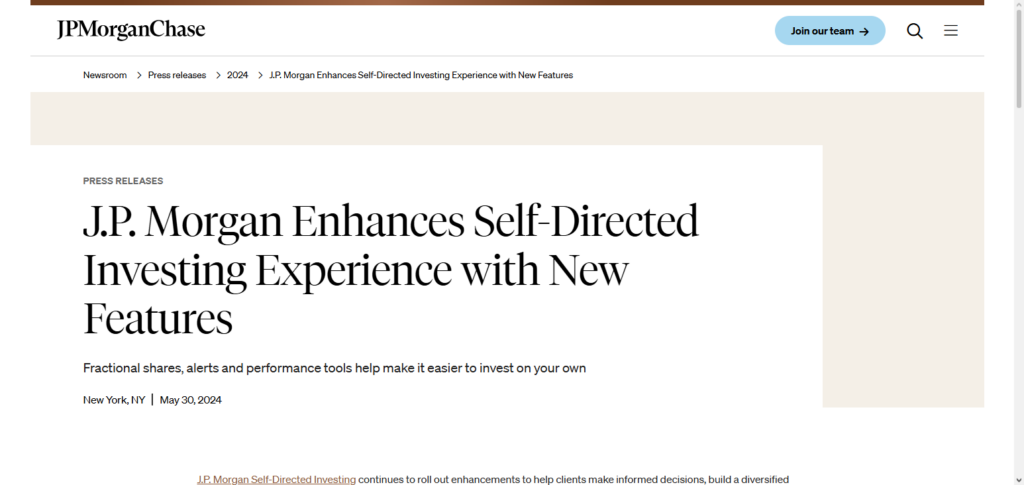
The service is a part of J.P. Morgan’s Self-Directed Investing, which links to other banking and managed wealth services, providing a comprehensive financial overview. Users will find effective pricing, and the web and mobile interfaces are well-designed for tactical and casual bond investors. J.P. Morgan has the market standing and resources to make this service worthwhile for bond investors looking for dependable execution and research on a par with market makers.
J.P. Morgan Self-Directed Investing Features, Pros & Cons
Features
- Market for fixed income
- Access to research that is institutional grade
- Corporate, municipal, government bonds
- Integrated financial view
- Competitive pricing
Pros
- Strong research backing
- Secure, widely trusted platform
- Good mix of bonds
- Seamless banking integration
- Easy self‑directed access
Cons
- Learning curve for tools
- International markets limited
- Fees vary by product
- Not as advanced analytics as specialists
- Best for existing J.P. Morgan clients
Conclusion
To achieve your short-term and long-term investment objectives, it is important to determine which bond trading platform and broker is appropriate for your investment strategy. Solid research tools, extensive bond inventories, and excellent customer service make Charles Schwab, Fidelity Investments, and TD Ameritrade (Schwab) suitable for U.S.-based investors. Vanguard Brokerage is a good option for retirees and investors on a budget, as they offer a long-term investment option with low costs.
TradeStation and Saxo Bank offer active traders better analytics and worldwide trading opportunities. Institutional real-time pricing and analytics are provided by BondEvalue, UBS Bond Desk, and J.P. Morgan Self-Directed Investing. Depending on investment style and market access, all the mentioned platforms are professional, efficient, and trustworthy for managing fixed-income portfolios.
FAQ
What are the best bond trading platforms and brokers?
The best platforms include Charles Schwab, Fidelity Investments, TD Ameritrade (Schwab), Vanguard Brokerage, TradeStation, Saxo Bank, Degiro, BondEvalue, UBS Bond Desk, and J.P. Morgan Self‑Directed Investing. They are chosen for their wide bond selection, competitive pricing, research tools, and reliable execution.
Which platform is best for beginners?
For beginners, Charles Schwab, Fidelity, Vanguard, and TD Ameritrade (Schwab) are ideal due to their easy-to-use interfaces, educational resources, and customer support. They provide guidance on building bond portfolios and understanding yields and risks.
Which platforms offer the lowest fees?
Vanguard Brokerage, Degiro, and Charles Schwab are known for low-cost bond trading. Vanguard is particularly cost-efficient for long-term investors, while Degiro provides low fees for European markets.
. Which brokers provide global bond access?
Saxo Bank, BondEvalue, and UBS Bond Desk offer access to international bonds across multiple currencies. These platforms are best suited for investors seeking portfolio diversification beyond domestic markets.