This article will explore the Best Games Powered by AI Technology is changing the way gamers interact with virtual worlds in today’s gaming industry.
AI brings depth, difficulty, and immersion like none before, from intelligent adversaries that adjust to your strategies to dynamic, living cities that react to every action.
This article examines the top AI-powered games, emphasizing how innovative AI algorithms provide gameplay that is captivating, surprising, and infinitely replayable.
| Game | Key Point (AI Technology) |
|---|---|
| The Last of Us Part II | Advanced AI controls enemy and companion behavior for realistic combat and stealth encounters. |
| Cyberpunk 2077 | AI governs city simulation, traffic, NPC routines, and dynamic events for an immersive open world. |
| F.E.A.R. | Tactical enemy AI uses squad strategies, flanking, and cover for challenging combat. |
| Left 4 Dead 2 | AI Director adjusts enemy spawns, pacing, and events based on player performance. |
| Alien: Isolation | Adaptive AI learns player patterns and hunts intelligently, enhancing horror experience. |
| No Man’s Sky | Procedural generation AI creates infinite planets, ecosystems, and alien species. |
| Middle-earth: Shadow of Mordor | Nemesis System AI tracks player interactions and creates dynamic enemy hierarchies. |
| Watch Dogs: Legion | AI manages NPC behaviors, enabling procedural missions and dynamic world interactions. |
| Minecraft (with AI mods) | AI mods enhance procedural generation, NPC intelligence, and interactive gameplay mechanics. |
| Grand Theft Auto V | AI controls pedestrian behavior, traffic, and emergent events for a realistic city simulation. |
1. The Last of Us Part II
The Last of Us Part II uses the most advanced game AI technology to enhance the storytelling and gameplay of the game. The game uses AI technology to create advanced NPC enemies and companion characters to provide a more immersive experience.

The challenges presented by the enemies to the player’s control of the game are deliberately dynamic and create a believable game environment.
AI partners provide believable and active support that makes combat encounters and exploration challenging and rewarding. The Last of Us Part II may provide the highest quality storytelling through action and combat gameplay with a seamless blending of AI.
The Last of Us Part Main Features:
- Flanking and player action response AI behavior.
- Support combat partner AI.
- AI detection and dynamic stealth encounters.
- Ally and enemy environmental awareness AI.
- Enhanced NPC story immersion.
Pros:
- Realism and immersion in storytelling and gaming.
- Increase of challenge and strategy from enemy AI.
- Tactical decisions from Companion AI support.
- AI real storytelling.
Cons:
- Predictability of some AI behavior.
- AI behavior technologically high cost.
- Stealth mechanic high learning curve.
2. Cyberpunk 2077
In Cyberpunk 2077, the city of Night City is immersive and gaming AI makes the city feel alive. The AI controls the NPCs, city traffic, and the pedestrians providing the city with some level of realism.

In addition, the AI helps determine the gameplay by making controls enemies, or changing the outcome of an event. Cyberpunk 2077 is also recognized as one of the best games powered by AI technology because of its use of AI and how people play the game
The game will be different for each player and will result in different interactions and actions from people in the game. The use of complex AI in the traffic system and the use of NPCs will set the precedence in AI in the gaming industry.
Cyberpunk 2077
Main Features:
- AI behavior in NPC and city interactions.
- AI dynamic pedestrian and traffic.
- AI dynamic procedural events.
- AI behavior in combat and mission enemies.
- Emergent open world AI interactions.
Pros:
- Immersive and realistic city AI environment.
- Unique playthrough for each player.
- Player choice reactive AI world.
- AI events storytelling improvement.
Cons:
- Bugs in the AI result in unusual NPC behavior
- Performance in lower-end computers is poor
- Some missions can be repetitve regardless of the AI
3. F.E.A.R.
F.E.A.R. set the benchmark for AI in shooter games back in 2005. In F.E.A.R., the player is forced to use thoughtful combat and use tactics to win as the enemy AI uses advanced tactics like, for example, the player sniper will use ultimate cover, move around, and flank the enemies and the enemies will use cover to force the player to be tactically sound.

The enemies in F.E.A.R. will use strategies and attack in coordination with other enemies and the player will be forced to have a different strategy each time because of the adaptive AI. That strategy is very necessary in the gameplay of first shooter games.
F.E.A.R. is one of the best games powered by AI technology because of the advanced AI that focuses on enemy strategy for the overall gameplay of the game. The AI from F.E.A.R. is still used in design and tactics of especially modern combat games.
F.E.A.R. Key Features:
- Tactical squad-based AI for enemies
- Effective use of cover and flanking in AI
- Adaptive AI that responds to player strategy
- Improvisation of AI creates unpredictable combat scenarios
- Increased game challenge due to coordination of enemies
Pros:
- Highly challenging combat
- Replayabilty is increased due to AI
- Immersive experience of first person shooter
- Realistically and intelligently designed enemy tactics
Cons:
- Casual players may find the AI too punishing
- Graphics are outdated
- Repetitive AI across levels
4. Left 4 Dead 2
The AI Director system in Left 4 Dead 2 analyzes player activities and modifies the rhythm of the game in real time. It tracks player performance and dynamically spawns zombies, activates special zombies, and creates and removes environmental effects, etc., to adjust the tension of the game and maintain balance with the performance of the players.

By dynamically altering the game, the AI removes the monotonous grind of co-op campaigns and creates endless replayability as the horror experience is tailored to the player’s skill.
The AI Director has become the model for countless other co-op and survival horror games with its effective use of AI to steer narrative direction and maintain game tension.—
Left 4 Dead 2 Key Features:
- Dynamically changing pacing due to AI Director
- Intelligent enemy spawning
- Environmental AI for managing tension
- Difficulty adapts to player performance
- Enhancement of AI in cooperative gameplay experience
Pros:
- Unique experience in every gameplay
- AI sustains gameplay tension
- Encourages cooperation and strategy
- High replayability due to dynamic AI
Cons:
- Unfair difficulty spikes due to AI Director
- Limited enemy AI types
- AI changes may be abrupt and inconsistent
5. Alien: Isolation
In the realm of horror gaming, Alien: Isolation showcases one of the most advanced AI systems. The Xenomorph uses adaptive AI, enabling it to track player behavior, learn patterns, and change how it hunts.

Due to the Xenomorph’s AI, it can take any route it wants, leaving the player to experience the unknown. This encourages players to change their strategies as the Xenomorph’s AI adds real life horror to the game.
The intelligent alien helps create a game full of horror and fear that will most likely be replayed because of the alien’s adaption to the player’s decisions. AI technology adds realism and immersion to the game.
Alien: Isolation Key Features:
- Xenomorph AI adapts and learns how the player plays
- The AI is reactive and unpredictable
- The enemy patrols and hiding spots are intelligent
- The NPCs react differently based on player actions
- AI increases terror immersion and suspense
Pros:
- The gameplay is terrifying
- The AI ensures no encounter is predictable
- Plenty of replayability due to adaptive AI
- The immersion and terror is strong
Cons:
- The Xenomorph AI may seem too difficult
- Some pathfinding issues for the AI
- The enemy variety is limited (only Xenomorphs)
6. No Man’s Sky
A strong dependence on AI for procedural generation is seen in No Man’s Sky, allowing the creation of infinite variations for planets, ecosystems, flora, fauna, and alien species. This means players will see unique worlds.
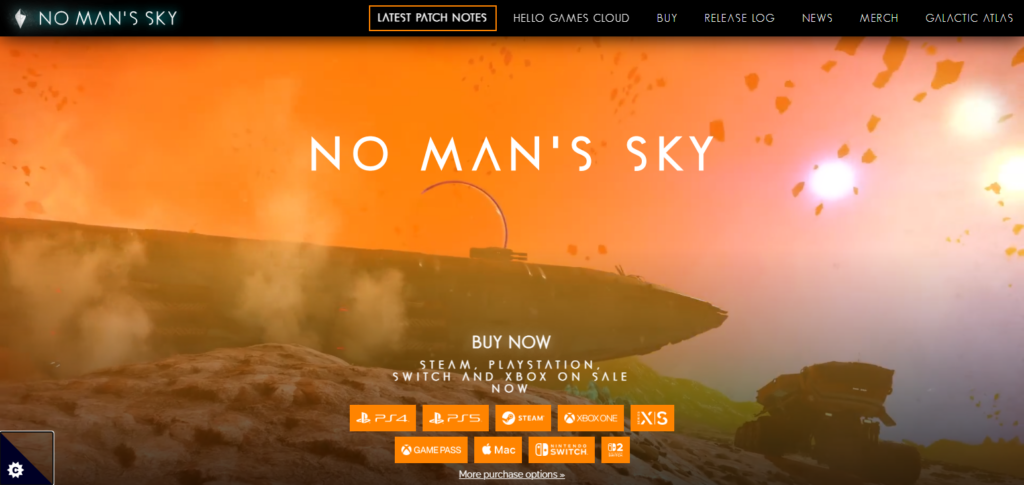
AI is also utilized for behavioral and environmental interactions, and as such, players have emergent gameplay opportunities. AI-driven gameplay revolves around exploration, trade, and survival in a universe that will react to player’s actions.
No Man’s Sky may be one of the best games powered by AI technology, but it also shows the advancements AI technology has in creating an open-world environment that seamlessly integrates exploration, interactivity, and the infinite complexities of a universe.
No Man’s Sky Key Features:
- Planets and ecosystems generated procedural and AI
- Alien species behaviors controlled by AI
- Interactions with the environment are dynamic and AI based
- Resources and events generated procedurally
- The AI adapts to the player explorer to the AI generated world
Pros:
- There are infinite possibilities for exploration
- Emergent gameplay provides each session with variety
- The ecosystems are AI driven and feel alive
- Creativity and the will to explore are encouraged
Cons:
- The procedural worlds may feel visually repetive
- Interactions with the AI can become predictable
- The multiplayer AI integration is limited
7. Middle-earth: Shadow of Mordor
In Shadow of Mordor, the Nemesis System is an AI powered system that allows for the customization of a player’s experience. Each player encounters different enemy characters who will “remember” previous encounters and develop rivalries and hierarchies.
Each enemy character AI will change their personality and strategies based on their individual player encounters which also provides for a high level of narrative world building.

Each character’s role in the storyline will also evolve, thus ensuring a high level of challenge and providing an experience unlike any other for each individual player with a different unique rival system.
Shadow of Mordor is one of the best games powered by AI technology because of the high level of narrative world building.
Middle-Earth: Shadow of Mordor Key Features:
- The Nemesis System is a record of player and enemy interactions
- The AI evolves and remembers past encounters
- The enemy hierarchy is dynamic and generated by the AI
- The AI system alters the story and missions5. Emerging gameplay from procedural enemy behavior
Pros:
- Keeps player engagement by customizing enemy encounters
- Replay value with Nemesis System
- Combat is deeper with smarter enemies
- AI suggest driven narratives with rivalries
Cons:
- Repetitive player Nemesis AI becomes predictable
- AI behavior appears unrealistic at times
- Repetitive combat systems
8. Watch Dogs: Legion
Watch Dogs: Legion creates a city where every citizen is an NPC with their own routines and interactions. Each NPC also has a unique set of skills. Because of this, the city provides the player with a large amount of emergent gameplay.
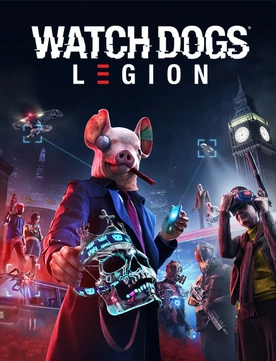
Players can recruit NPCs to fight in their resistance, and the player can also complete missions and participate in events that interact with the city and the NPCs to create an ecosystem that feels alive.
This game is one of the best examples of large scale AI use in gaming. Each NPC is placed and interacts with other NPCs in an emergent way which creates a unique experience for each player, and responds to the player’s actions.
Watch Dogs: Legion Key Points:
- City wide AI controls NPC behavior
- Routines and traits differ among NPCs
- Procedurally created missions by AI
- Player actions are countered by City AI
- Recruitment system created emergent gameplay
Pros:
- Open world and dynamic gameplay
- AI NPCs provide unqiue player experiences
- Greater player agency and control
- Replay value with procedural missions
Cons:
- AI behavior appears unrealistic at times
- City wide AI can be overwhelming
- Recruitment system has a learning curve
9. Minecraft (with AI mods)
Minecraft’s AI mods provide a different gameplay experience in addition to the base game’s minimal procedural generation. AI-controlled NPCs, mobs, and even structures provide more complex and interactive worlds.

Players can experience a sandbox world where they can use their creativity to the fullest in order to overcome the challenges that the AI may provide.
Minecraft with AI mods is one of the best games powered by AI technologies within its genre. Due to the modular nature of the world paired with the use of AI, players are provided an endless experience within the world of Minecraft.
Minecraft (with AI mods) Key Points:
- Mob and NPC behavior are enhanced with AI mods
- AI creates interactive and dynamic worlds
- Procedural AI adapts to player actions
- AI enables complex automated systems
- AI improves gameplay for survival, creativity, and strategy
Pros:* Customizable gameplay using AI mods
- Replayability is boosted by emergent gameplay
- Adventure and survival challenges are enhanced
- AI provides sandbox worlds more realism and complexity
Cons:
- Without mods, base game AI is pretty basic
- Some AI mods are buggy and unstable
- There is a learning curve with advanced AI systems
10. Grand Theft Auto V
In Grand Theft Auto V, artificial intelligence creates a workable, living city. Traffic control, citizen movement, random encounters, and police behavior are all controlled via AI.
Because non-playable characters (NPCs) can interact with the player and each other, there are emergent gameplay phenomena. AI immersion systems create a one-of-a-kind experience as players traverse all of Los Santos.

GTA V is one of the most recognized games for the use of AI technology because of the use of artificial intelligence to create complex social systems for open-world gameplay.
AI not only controls narrative events and gameplay but social systems as well in an ever-changing environment.
Grand Theft Auto V Key Features:
- Movement and behavior of pedestrians by AI
- AI controls traffic and events play
- Counter actions of player NPCs react
- AI controls police and emergency response
- Emergent gameplay by AI in a dynamic city
Pros:
- Simulations city immersive
- Realistic and dynamic NPCs and interactions
- Replayability by AI events
- Alive and Felling world open
Cons:
- AI NPCs and traffic
- Emergent behaviors unrealistic
- AI performance System requirements high
Importance of AI in enhancing gameplay, immersion, and player experience
Smart NPCs
With AI, non-playable characters can react to players in a real-world scenario. Be it in combat, speech, or exploration, player immersion and experience become far more real.
Adapting Difficulty
AI can improve player interaction, and, for example, if a player is losing, the game may become less difficult. This leads to tension and a flow-based satisfaction.
Created Gameplay
AI can help design events, enemy movements, and physical components of the environment to achieve unpredictable outcomes. This provides the user with opportunities for distinctive tactics in each game.
Engaging Storytelling
AI can help track user actions and make specific adjustments to the fictional role of objects in order to create a more interactive and personalized story to the player.
Realistic Open Worlds
With AI, massively multiplayer online games can have non-playable characters that possess real-world driving, living, and interactive behaviors, and players can explore to their hearts’ content in a more realistic way.
How does AI improve gameplay?
AI greatly enhances the gameplay experience making it more engaging and interesting due to its ability to create more dynamic and immersive gaming environments. Here’s how it accomplishes this.
Adaptive Challenges: AI identifies the skill level of the player and alters challenges in order to be more engaging to the player. AI identifies players movements and actions in order to create balanced and engaging challenges. For example, AI can identify when to flank, fall back, or change strategies and adapt to the player in order to create the next most exciting encounter.
Intelligent NPC Behavior: AI can be used to create more realistic and intelligent computer players or NPCs. NPC allies can be instructed to take particular actions at particular times in order to be more successful. Similarly, NPC enemies can be programmed to respond to the player’s actions in the game and NPC civilians can be instructed to follow their own routines making the game world feel more alive.
Emergent Gameplay: AI can be used to create unforeseen gameplay scenarios. Each playthrough can be unique due to AI generated challenges and in order to create opportunities for exploration. Games such as Left 4 Dead 2 and No Man’s Sky utilize AI to create emergent gameplay environments.
Immersive Storytelling: AI can be used to analyze player choices and actions and based on this, the game can change the story, the interactions and the characters. This level of adaptive storytelling creates a greater emotional investment from players.
Enhanced World Realism: AI can be used to more realistically replicate world ecosystems, manmade and environmental systems. In open world games this creates a more interactive world that in turn creates a more engaging experience overall.
Conclusion
Artificial intelligence has emerged as a key component of contemporary gaming, revolutionizing the way users interact with virtual environments. Intelligent NPC behavior, variable difficulty, and dynamic world simulation greatly boost player engagement and replayability, according to data from these top ten AI-powered games.
While games like Cyberpunk 2077 and Watch Dogs: Legion highlight AI’s capacity to create responsive, living worlds, games like The Last of Us Part II and Alien: Isolation show how adaptive AI can enhance the immersion of horror and conflict.
AI-driven systems are crucial to modern game design because they improve player happiness, gameplay depth, and narrative quality overall.
FAQ
What is AI in gaming?
AI in gaming refers to computer-controlled systems that simulate intelligent behavior, such as enemy tactics, NPC routines, dynamic events, and procedural world generation, enhancing gameplay realism and immersion.
How does AI improve gameplay?
AI adapts to player actions, making combat, exploration, and strategy unpredictable. It controls NPC behavior, generates emergent events, and creates dynamic challenges, increasing engagement and replayability.
Which games are best known for AI-driven experiences?
Top examples include The Last of Us Part II, Cyberpunk 2077, Alien: Isolation, Middle-earth: Shadow of Mordor, and Watch Dogs: Legion, each using AI for combat, world simulation, or narrative adaptation.
Can AI make games more immersive?
Yes. AI enables realistic NPC reactions, adaptive difficulty, dynamic world events, and procedural storytelling, allowing players to feel like their actions meaningfully impact the game world.
Does AI affect replayability?
Absolutely. Games with adaptive AI, like Left 4 Dead 2’s AI Director or No Man’s Sky’s procedural generation, ensure that each playthrough is unique, keeping players engaged longer.