
In the following article, I will highlight the Best Crypto Blockchain Compliance Oracles, which integrate off-chain regulatory information with on-chain smart contracts.
These oracle networks are essential for transparency, accuracy, and regulatory compliance in the DeFi, tokenized assets, and institutional blockchain solutions in regulated markets.
Why Use Crypto Blockchain Compliance Oracles
Automated Compliance – Smart contracts can automatically adhere to compliance rules, limiting the burden of regulatory checks on staff.
Reliable Data Integration – On-chain solutions can access verified off-chain data like prices, risk factors, and other variables that pertain to compliance.

Greater Data Integrity – Data that is auditable and traceable can support regulatory inquiries and foster trust from the private sector.
Decentralized Data Sourcing – Assists in the prevention of manipulated markets, fraudulent activities, and corrupted data, using dispersed data collection.
Market Entrant Facilitation – Assists in the transition of financial institutions, investment managers, and corporations into the blockchain ecosystem.
Multi-chain Compliance – Compliance criteria can be enforced uniformly across different blockchain systems.
Smart Contract Protection – Automatically stops the execution of a transaction that is invalid or out of compliance.
Benefits Of Crypto Blockchain Compliance Oracles
Automated Regulatory Enforcement – No hands-on participation is needed for smart contracts to implement regulatory guidelines.
Greater Integrity of Data – Data manipulation and single source reliance is prevented by decentralized oracle networks.
Trust from Institutions – Enterprise clients and regulators can trust the transparency and reliability of the data.
Compliance Monitoring – Market and risk data streams allow for real-time, ongoing compliance monitoring.
Operational Cost Savings – Manual compliance, auditing, and reconciliation costs are lessened.
Cross-Chain Compliance – Logic surrounding compliance is uniformly applied across diverse blockchain networks.
Improved Security – Non-compliant transactions and faulty data inputs are kept out by the protocols.
Top 10 Blockchain Compliance Oracles (2026) Points
| Oracle Project | Key Point (Compliance & Utility) |
|---|---|
| Chainlink | Industry leader; Proof-of-Reserve, AML/KYC-ready APIs, institutional adoption |
| Pyth Network | High-frequency financial market data; trusted by regulated DeFi & TradFi |
| RedStone | Modular, lightweight feeds; transparent audit trails for compliance automation |
| API3 | First-party data providers; decentralized KYC/AML APIs directly from regulated sources |
| Band Protocol | Cross-chain compliance feeds; strong governance and multi-chain support |
| Tellor | Community-driven oracle; transparent compliance reporting with decentralized governance |
| DIA | Institutional-grade compliance datasets; audit-ready transparency for regulators |
| Umbrella Network | Layer-2 scaling oracle; cost-efficient compliance data aggregation |
| Switchboard | Solana-native oracle; customizable compliance feeds for high-speed ecosystems |
| Supra Oracles | High-performance cross-chain oracle; focus on regulatory-grade speed and reliability |
1. Chainlink
Chainlink is the most integrated decentralized oracle network. It connects smart contracts with various off-chain data, such as compliance records, price feeds, and identity signals. With thousands of dApps and hundreds of blockchains, Chainlink has dApps in all blockchain ecosystems.
Its ecosystem has automated compliance, proof of reserve, price feeds, and verifiable random function (VRF) technologies. It is best for secured decentralized finance (DeFi), regulatory-aware real world assets (RWAs), and corporate blockchain ecosystems that need reliable data in real-time.
It provides proof for the ecosystem which includes Solana, Ethereum as well as countless other leading networks through bridges, and provides 90+ assets with confidence intervals for precise pricing.
For instant premium market pricing, Pyth is most suitable for protocols such as decentralized exchanges, perpetual markets, and real-time risk scoring that require instant, premium market data.
Chainlink Features, Pros & Cons
Key Features
- Standard for decentralized oracle networks
- Price feeds and Proof of Reserve
- Automation and verifiable random function (VRF) services
- Cross-chain communication (CCIP)
- Enterprise-grade compliance tools
Pros
- Most trusted oracle in crypto
- Massive ecosystem collaboration
- High security and reliability
- Strong institutional trust
- Comprehensive documentation
Cons
- High expenses for premium price feeds
- Complicated for novices
- Central node concentration issues
- Sluggish innovation cycles
- Heavy reliance on LINK token value
2. Pyth Network
Pyth Network has almost exclusive access to ultra-fast, real-time prices from the institutional market, making it well suited to the Defi/high-frequency trading use-case. Pyth’s feeds are are optimized for sub-second syncs across multiple ecosystems, allowing for almost instantaneous price update integrations.
It’s core ecosystems include Solana, Ethereum, and several other top chains via bridges and it prices over 90 assets with accompanying confidence intervals. Pyth provides instantaneous market data for decentralized exchanges, perpetuals, and real-time risk scoring.
Pyth Network Features, Pros & Cons
Key Features
- Institutional price feeds in real-time
- High cadence of data point updates and price feed updates
- Confidence interval pricing
- Significant backing of Solana ecosystem
- Data-first publishing model
Pros
- Data is ultra-low latency
- Strong market price
- Partnership with many exchanges
- Fitting for Derivatives and peri
- Price methodology is fully transparent
Cons
- Data with no price is often lacking
- Compliance-related enforcers are lacking
- There is a reliance on publishers
- Smaller EVM presence comparably to Chainlink
- Governance is still being constructed
3. RedStone
RedStone, a multi-chain oracle network, provides modular and scalable data feeds to smart contracts. Its ecosystem enables multi-chain integration across both base and EVM networks, with more than 1200 feeds, including prices, on-chain metrics, and custom data.
RedStone is adaptable, enabling developers to configure data combinations and update intervals to address specific project requirements, which is ideal for the financing of DeFi, tokenized assets, and indexes.
Low-latency feeds and variable options for feeds, primarily for complex pricing data, are the hallmarks of RedStone, particularly in multi-chain DeFi and tokenized real-world asset platforms.
RedStone Features, Pros & Cons
Key Features
- Modular architecture for oracles
- Cross-chain support
- Coverage for a wide range of assets
- Integration that is lightweight
- On-Demand Access to Data
Pros
- Flexibility
- Paying for Data in a Cost-Effective Way
- Easy to Use
- Fast to Release
- Perfect for tailored feeds
Cons
- Smaller network of validators
- Less adoption by institutions
- Less tools for compliance
- Low name recognition
- Newer ecosystem
4. API3
API3 focuses on a first-party model where providers of the data deploy their own Airnode oracle because there are no middlemen which increases transparency.
Its ecosystem offers support to EVM-compatible networks and a decentralized governance through its DAO where stakeholders exercise their votes for governance and the proposals.API3 enables smart contracts to connect to on-chain dAPIs (decentralized APIs) that furnish reliable data.
This makes it easier to reduce trust assumptions. API3 is best for data-sensitive projects where data provenance is transparent and audit-able. API3 is best suited for projects that need direct and reliable partnerships with established off-chain APIs for on- financial data, weather, and compliance data.
API3 Features, Pros & Cons
Key Features
- First-party oracle structure
- Airnode architecture
- Integration of Direct APIs
- DAO governance
- Provenance of transparent data
Pros
- Less assumptions on trust
- Less ambiguous sources of data
- Less risk of middlemen
- Compliance-friendly architecture
- Vision of great decentralization
Cons
- A limited ecosystem of data providers
- Extended ecosystem still to grow
- Feeds take longer to expand
- Less plug-and-play integration
- Reliance on API collaboration
5. Band Protocol
Band Protocol is a decentralized oracle that contains a large selection of real world data and uses a delegated proof of stake to distribute it over multiple blockchains. Its ecosystem adds support to Cosmos-based infrastructures and IBC, giving interoperability to both EVM and non EVM chains.
Band Protocol creates flexible oracle scripts that allow developers to solicit for a specific data set that suits their use on FX rates or custom indices.
This makes Band Protocol best suited for multi-chain DeFi protocol and cross-chain applications that require reliable, aggregated data off-chain. Band Protocol offers data for compliance when there are additional external compliance or risk indicators that need to be harmonized cross-chain.
Band Protocol Features, Pros & Cons
Key Features
- Oracles scripts across chains
- Based on Cosmos SDK
- IBC integrated
- Data sources aggregation
- DP Delegated Proof of Stake
Pros
- High-degree of interoperability
- Custom data calls
- Reasonable pricing
- Designed for multi-chain applications
- Distributed validators
Cons
- Less adoption in the DeFi space
- Less pricing in real-time
- Smaller ecosystem
- Less focus on compliance
- Visibility less than top oracles
6. Tellor
Tellor is a decentralized oracle ecosystem where individual reporters are rewarded for competing to supply data, and reporters are predicated on a staking and reward system.
Tellor has developed a fully permissionless ecosystem that highlights the main features of the Tellor protocol. Users can contribute economically to the Tellor ecosystem if they choose to do so. Tellor mainly works with EVM-compatible networks with price feed capabilities and custom off-chaining.
Tellor prices custom off-chain data, making it adaptable to different data needs for a contract. Tellor’s model enhances the decentralization and robustness of the ecosystem to meet the needs of compliance-focused protocols that require a transparent and auditable data source. Tellor excels in projects that require a high level of customization and a fully decentralized data model.
Tellor Features, Pros & Cons
Key Features
- Reporting data without permissions
- Security through staking
- Custom data feeds
- Dispute resolution
- EVM targeting
Pros
- Open participation
- Transparent governance
- Flexible data types
- Strong censorship resistance
Cons
- Slower data updates
- Limited scalability
- Requires dispute monitoring
- Smaller adoption
- Less enterprise use
7. DIA
DIA (Decentralized Information Asset) is a trustless data aggregator that gives users and clients customizable data feeds from a network of data suppliers that are validated on the blockchain. DIA’s ecosystem offers more than 50 blockchains, as well as price feeds, on-chain verifiable randomness, and fully cross-chain data.
For validated data, DIA offers traceability on data, which is particularly important in regulated ecosystems for compliance and auditability. DIA is widely used in the DeFi market for pricing, lending, and tokenized assets for the trustless data offering. For the use of regulated finance and compliance APIs with a high level of transparency, DIA is ideal for developers who need cross-chain, verifiable, and trustless data.
DIA (Decentralized Information Asset) Features, Pros & Cons
Key Features
- Open-source data sourcing
- Fully transparent methodologies
- Multi-chain support
- Community governance
- Custom oracle feeds
Pros
- High transparency
- Verifiable data origins
- Strong auditability
- Good compliance alignment
- Broad blockchain support
Cons
- Lower data frequency
- Smaller validator base
- Less DeFi dominance
- Limited automation tools
- Brand awareness gap
8. Umbrella Network
Umbrella Network is a decentralized oracle service that provides scalable and affordable data through a Layer-2 architecture.
As of now, Umbrella’s ecosystem offers integration with Ethereum, BNB Chain, Polygon, Avalanche, Base, Linea, and Solana and offers customized and high- frequency data streams. With low latency and high security, Umbrella’s decentralized validator network is ideal to serve feeds for DeFi, NFTs, and gaming data.
Adjustable features enable custom compliance projects to restrict feeds on parameters such as market conditions, stability, and external compliance triggers. Umbrella is most effective for developers and dApps requiring scalable, economical, and flexible oracle solutions.
Umbrella Network Features, Pros & Cons
Key Features
- Layer-2 oracle architecture
- High scalability
- Low-cost data feeds
- Custom data delivery
- Multi-chain support
Pros
- Cost-efficient
- High throughput
- Flexible feed design
- Growing ecosystem
- Suitable for compliance triggers
Cons
- Smaller decentralization level
- Early-stage adoption
- Limited institutional usage
- Less documentation
- Fewer data partners
9. Switchboard
With Switchboard, anyone can become a data publisher and verifier for a decentralized oracle network. They also provide modular data streams, which can be used to access data on a variety of use cases, whether it be pricing, results of a sporting event, and/or data for other events.

To increase security and decrease the likelihood of manipulation, Switchboard employs decentralized consensus with their producers.
This creates a flexible and resilient ecosystem. From a compliance standpoint, the transparency of data linage, verification, and auditability is beneficial. Projects with an increasing need for participation, various types of data, and configurable oracle streams will benefit the most from Switchboard.
Switchboard Features, Pros & Cons
Key Features
- Permissionless oracle network
- Custom feed creation
- Decentralized publishers
- Flexible data sources
- Multi-chain deployment
Pros
- Open participation.
- High customization.
- Developer control.
- Transparent feed logic.
- Good for niche data.
Cons
- Smaller security budget.
- Limited enterprise trust.
- Manual configuration complexity.
- Less standardized feeds.
- Early ecosystem growth.
10. Supra Oracles
Supra Oracles offers a unique blend of decentralized oracle solutions with cross-chain data capabilities and quick data refresh rates, all built within a singular ecosystem that also houses a Layer 1 Supra ecosystem.
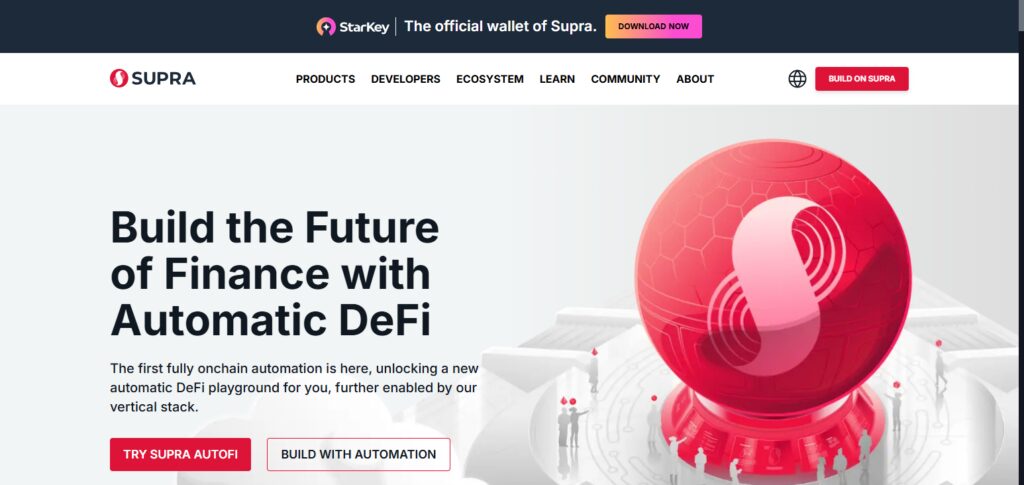
With integrated fallback safety and decentralized data sourcing, Supra’s Oracle Stack provides near-instant data across multiple chains. Its ecosystem consists of native cross-chain messaging, VRF, and automation, which is tailored for DeFi, gaming, and real-world asset use cases.
Designed for high performance, Supra is best for use cases in compliant DeFi markets and next-gen dApps that need real-time data and fast off-chain updates. For optimal multi-chain oracle delivery, Supra is the best choice for scalable performance.
Supra Oracles Features, Pros & Cons
Key Features
- High speed data delivery.
- Native cross-chain design.
- Integrated VRF & automation.
- Oracle + L1 ecosystem.
- Near instant finality.
Pros
- Extremely fast updates.
- All in one oracle stack.
- Cross-chain ready.
- Strong performance focus.
- Future proof architecture.
Cons
- Less widespread usage.
- Smaller validator base.
- Limited historical data.
- New governance model.
- Lower brand maturity.
Conclusion
With increasing blockchain adoption in regulated finance, real-world assets and institutional DeFi, the need for oracle networks as infrastructure for increased adoption is apparent.
Chainlink, Pyth Network, RedStone, API3, Band Protocol, Tellor, DIA, Umbrella Network, Switchboard, and Supra Oracles offer the best reputation in the field for crypto blockchain compliance oracle services, and provide secure and verifiable bridging of off-chain regulatory insights with on-chain logic.
These oracles enable smart contracts to automate and govern compliance on pricing accuracy, risk, and audit-ability and execute regulatory policies.
Attributes such as ecosystem, data trustworthiness, and decentralization alongside adaptability to regulatory changes influence the choice of oracle in these networks. These oracles are the primary choice for regulated and blockchain systems that require increased trust.
FAQ
What are crypto blockchain compliance oracles?
Crypto blockchain compliance oracles are decentralized oracle networks that deliver verified off-chain data—such as pricing, risk indicators, regulatory parameters, and audit signals—into smart contracts, enabling compliance-aware on-chain execution.
Why are compliance oracles important in blockchain?
They allow smart contracts to enforce regulatory rules automatically, reduce fraud, improve transparency, and support institutional adoption in areas like DeFi, tokenized assets, and cross-border finance.
Which is the most widely used compliance-friendly oracle?
Chainlink is the most widely adopted oracle, offering secure data feeds, proof-of-reserve, automation, and compliance-oriented tooling for regulated blockchain applications.
Are compliance oracles used only in DeFi?
No. They are also used in real-world asset tokenization, institutional trading, insurance, gaming, supply chain tracking, and governance frameworks.
Do compliance oracles provide KYC or AML directly?
Most oracles do not perform KYC/AML themselves but deliver verified data and signals from trusted off-chain providers that smart contracts can use to enforce compliance rules.