
Here, I overview the Best AI Platforms to Validate Financial Data Accuracy that you may use for accurate financial info within a business.
Advanced applications deployed in several of these enterprises are utilizing machine learning and automation to identify discrepancies, mitigate risks and enhance the accuracy of reporting.
As organizations strive to maintain financial integrity, knowing their features and advantages can support the selection of suitable solutions.
Key Points & 10 Best AI Platforms for Financial Data Accuracy Validation
| Platform | 15-word Explanation |
|---|---|
| DataSnipper | Automates data extraction, reconciliation, and validation in Excel, ensuring traceability, accuracy, and audit compliance workflows. |
| MindBridge.ai | Uses AI to analyze entire datasets, detect anomalies, score risks, ensuring accurate and reliable financial validation. |
| Workiva | Connects financial data across reports, maintains audit trails, ensuring consistency, compliance, and validated reporting accuracy processes. |
| Trullion | Automates accounting workflows, extracts and validates financial data with high accuracy, ensuring compliance and reporting reliability. |
| Stampli | Enhances invoice processing using AI workflows, validating financial data through approvals, controls, and anomaly detection systems. |
| Vena Insights | Integrates AI with financial planning, consolidating data, validating forecasts, and ensuring budgeting and reporting accuracy consistency. |
| HighRadius | Uses AI for receivables, cash flow, and risk analysis, ensuring validated, accurate financial operations and data insights. |
| Nanonets Flow | Extracts and validates document data using AI, improving accuracy through continuous learning and automated workflows. |
| Booke.ai | Automates bookkeeping, reconciliation, and categorization, ensuring consistent, validated financial records with minimal manual intervention required. |
| Hebbia | Uses AI search and reasoning to analyze financial data, validate insights, and improve decision-making accuracy. |
10 Best AI Platforms for Financial Data Accuracy Validation
1. DataSnipper
DataSnipper is an Excel-native intelligent automation platform that provides high accuracy data validation of financials and is one of the most widely used tools in audit and finance workflows.

It allows users to pull, reference and validate information directly from the source documents themselves with a full provenance of every data point.
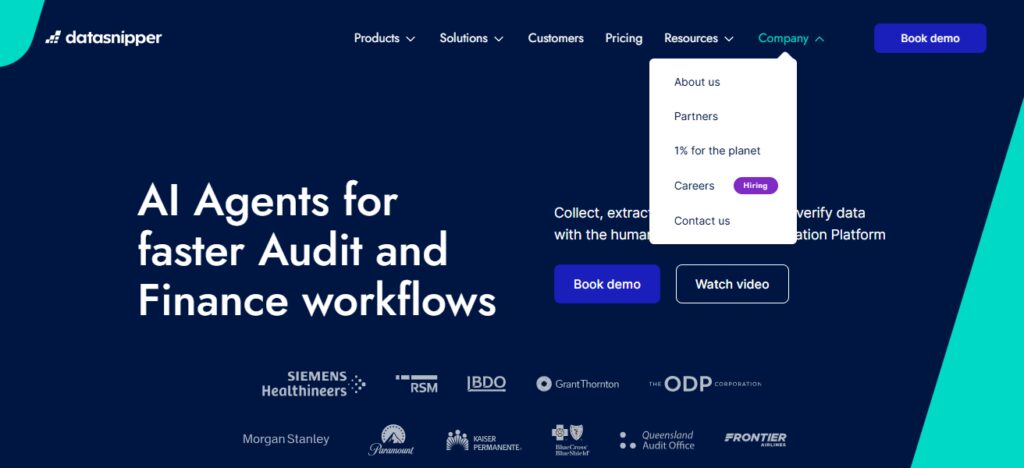
Its AI agents automatically conduct reconciliation, document matching, and anomaly detection that minimize manual errors by a significant percentage and improves overall audit quality.
Used by 600,000+ users around the world, DataSnipper makes your audit process faster while staying compliant and secure so that you are assured of accurate financial data and transparency through complex audits.
DataSnipper Features
- Extracts data directly in Excel while applying links to the source documents for accurate validation and audit traceability.
- Banshee Cross–Referencing & Reconciliation helps in enhancing data cross-referencing and reconciliation across books which minimizes human effort significantly and reduces errors a lot.
- Makes sure every financial figure comes with receipts, it offers intelligent document matching and verification
Pros & Cons DataSnipper
Pros
- Speeds up audit workflows by automating repetitive data extraction tasks.
- Integrates seamlessly with Excel for accountants.
- Reduces human error in financial document handling.
- Saves significant time in audit preparation.
Cons
- Can slow down Excel performance during heavy use.
- Limited functionality outside accounting workflows.
- Occasional inaccuracies in data recognition.
- Requires training for optimal efficiency.
2. MindBridge.ai
MindBridge. ai is the leading AI-based financial risk and anomalies detection platform that analyzes entire homegrown datasets, not just limited samples.
It also uses machine learning and statistical models to detect unusual transactions, assess fraud risk and identify discrepancies in accounting data. It enables risk scoring, as well as explainable
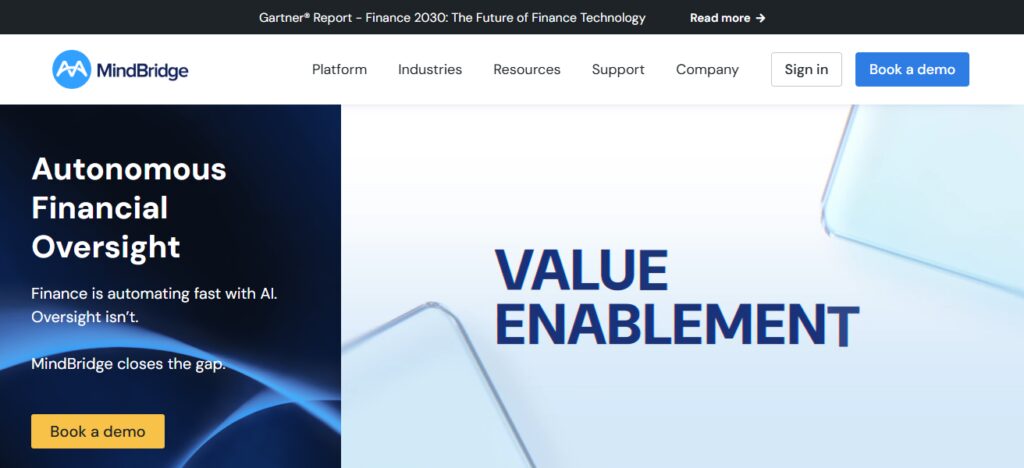
AI insights that enable auditors to validate financial data with more confidence and transparency.
The ability of AI to process large volumes of structured financial data means continuous monitoring can lead to greater accuracy in auditing
while minimizing the risk of oversight leading to organizations remaining compliant with evolving financial regulations and standards.
MindBridge.ai Features
- Applies AI to vast financial datasets, detecting anything amiss or risky that conventional sampling techniques might miss.
- Offers risk scoring with explainability, allowing auditors to confirm financial accuracy through understandable insight.
- Utilizes ML and advanced statistical models to identify fraud patterns and out of cycle transactions.
- Enables continuous monitoring on the financial data to achieve compliance and lower audit risks successfully.
Pros & Cons MindBridge.ai
Pros
- Detects fraud and anomalies across 100% of transactions.
- Enhances audit quality with AI-driven insights.
- Provides scalable risk assessment analytics.
- Improves efficiency in CPA firms and audit teams.
Cons
- Best suited for audit departments, limited broader use.
- Learning curve for non-technical users.
- Requires strong data integration setup.
- Pricing may be high for small firms.
3. Workiva
Workiva is a cloud-based platform for financial reporting and governance, which gathers data from various sources and lends integrity and consistency between reports.
And it offers connected reporting, audit trails and real-time collaboration that allow organizations to validate financial data quickly.
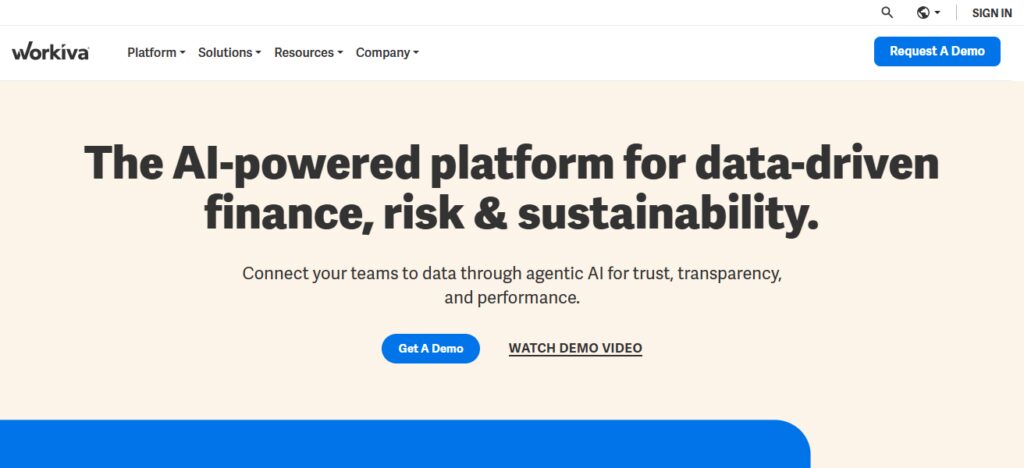
Workiva’s AI-driven capabilities improve data cross-referencing, decrease manual reconciliation errors and highlights compliance with regulations such as SEC and ESG agreements.
As a complete GRC platform, it can facilitate end-to-end audit lifecycle management processes for finance teams to ensure transparency, data integrity and accurate reporting between complex business interdependencies.
Workiva Features
- Links financial data between systems, providing consistent and accurate reporting and regulatory filings.
- Keeps comprehensive logs for auditing purposes which provides tracking and validation of each financial data item.
- Facilitates real-time collaboration, increasing workflow efficiency and decreasing reporting gaps among teams.
- Enable compliance to frameworks like SEC and ESG through automated validation and governance tools.
Pros & Cons Workiva
Pros
- Cloud-based collaboration with real-time updates.
- Strong compliance and audit trail features.
- Secure with enterprise-grade encryption.
- Streamlines financial reporting and SOX compliance.
Cons
- Interface takes time to master.
- Subscription pricing can be expensive.
- Limited offline functionality.
- Complex setup for small teams.
4. Trullion
Trullion is an AI-powered accountancy software provider that specializes in automating financial workflows, used for tasks such as lease accounting, revenue recognition, and audit.
It generates compliance-ready, structured data from contracts and financial documents according to IFRS, GAAP나 standards.
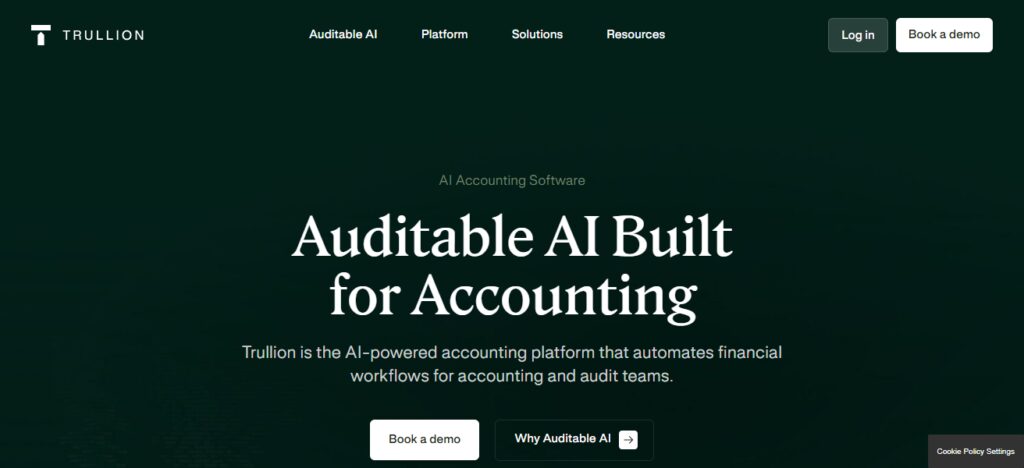
Trullion automates data validation and reconciliation, streamlining the flow of information to reduce manual work and improve reporting accuracy.
Its AI models also learn constantly from financial documents which is enabling it to extract and validate the data accurately.
We help businesses ensure financial statements are accurate, compliant, and ready for audits consistently, minimizing risks in complex accounting processes and human errors.
Trullion Features
- Uses AI to extract structured data from contracts, streamlining financial data validation and reports.
- Learns in a loop from the financial files which help for better extraction and validation.
- Minimizes manual accounting processes that are inaccurate and leads to better readiness for audit in various organizations.
Pros & Cons Trullion
Pros
- Automates lease accounting under ASC 842 and IFRS 16.
- AI-powered revenue recognition compliance.
- Easy-to-use interface for accountants.
- Strong customer support and integrations.
Cons
- Focused mainly on lease and revenue accounting.
- May not suit smaller businesses.
- Requires accurate document uploads for best results.
- Limited customization options
5. Stampli
Stampli — A platform for accounts payable automation powered by AI, helping with validating financial data via intelligent invoice processing.
Its AI assistant reviews invoice data, flags anomalies and confirms correct codes and approvals before payments are made.
Stampli consolidates communication, workflows and documentation to give finance teams the ability to confirm the accuracy of financial data in real time.
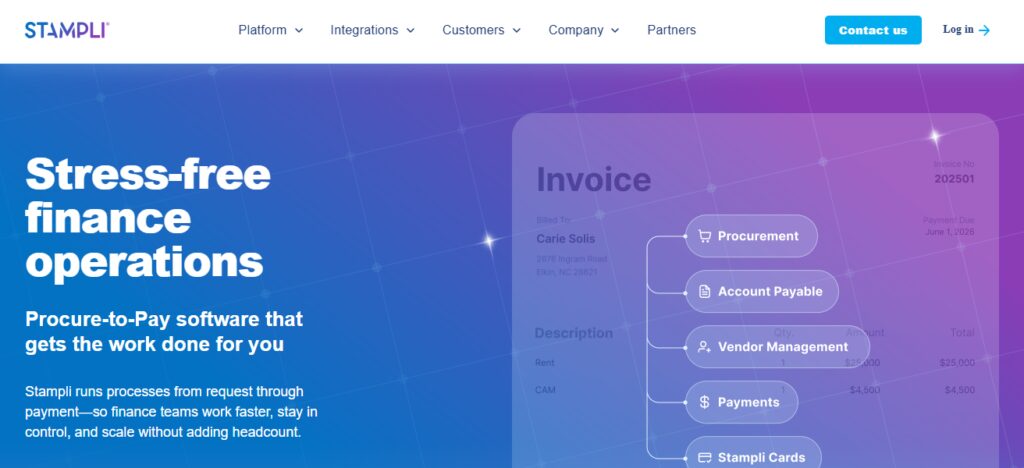
Minimizing errors, preventing fraud, and improving financial transparency by automating repetitive tasks and enforcing approval controls.
It further reinforces validation and maintains wide-ranging management of financial data across organizations with its integration with ERP systems.
Stampli Features
- Eliminates errors in invoice processing processes with artificial intelligence, validating money-related data before sending them throughout the approval and payment execution stages.
- Identifies discrepancies and mistakes in invoices, minimizing potential frauds and enhancing the trustworthiness of financial data.
- It streamlines communications and workflows, guaranteeing transparency and correct validation of financial transactions.
- Seamlessly integrates with ERP systems, ensuring integrity and consistency in financial operations and reporting processes.
Pros & Cons Stampli Features
Pros
- Simplifies invoice approvals with intuitive interface.
- Enhances team communication during AP workflows.
- Automates coding for faster invoice processing.
- AI assistant “Billy” improves efficiency.
Cons
- Limited GL account restrictions.
- May require manual oversight for complex invoices.
- Integration challenges with some ERP systems.
- Pricing may scale with usage.
6. Vena Insights
Vena Insights marries AI with financial planning and analysis (FP&A) to help all reporting processes — budgeting, forecasting, reporting — leverage more precise data.
It is a centralized database built on Excel that integrates financial data from various systems and validates it using AI-powered analytics.
Vena provides consistency by allowing you to maintain a single source of truth, avoiding discrepancies in financial documents.
And its predictive insights are driving anomaly detection and improved forecasting accuracy for finance teams.
This improves decision-making while helping to keep financial data secure, verified and in line with organizational objectives and performance indicators.
Vena Insights Features
- Integration of AI in Excel-based financial planning, maintains all budgeting, forecasting and reporting processes accurate.
- Combines information from numerous platforms, ensuring a single source of truth to validate.
- Offers predictive analysis for anomaly detection and significant improvements in the accuracy of financial forecasting.
- Improves collaboration and data governance, providing standardized and verified financial reporting throughout your organization.
Pros & Cons Vena Insights
Pros
- Excel-native interface for easy adoption.
- Strong financial planning and forecasting tools.
- Transparent data consolidation and reporting.
- User-friendly design for finance teams.
Cons
- Steep learning curve for advanced features.
- Limited mobile support.
- Can be resource-intensive for large datasets.
- Pricing may be high for startups.
7. HighRadius
HighRadius is an AI-powered finance automation platform specializing in accounts receivable, cash flow forecasting and risk management.
It employs machine learning algorithms to verify financial transactions, identify anomalies and improve cash application processes.
Automating reconciliation and enabling consistency across financial operations enhances data accuracy using the platform.
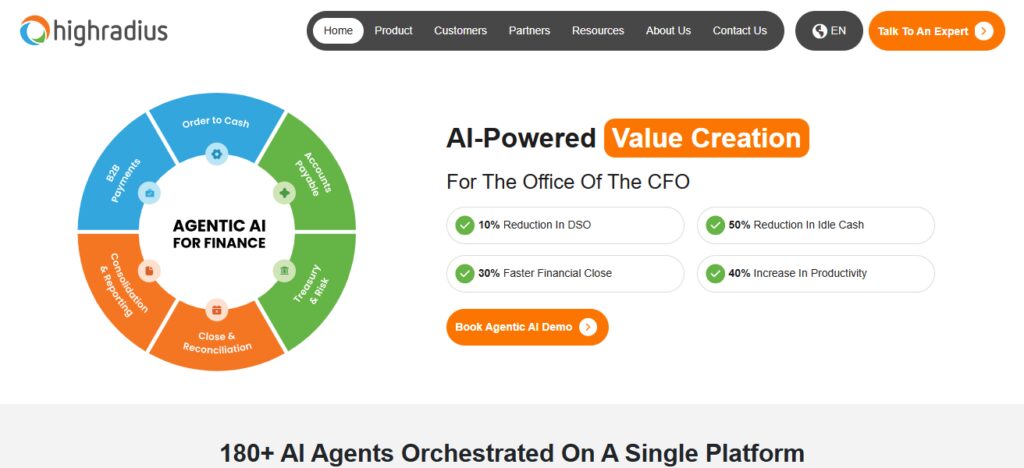
HighRadius also offers predictive analytics that improve visibility into finances and minimize errors by predicting cash flow.
By handling massive amounts of transactional information, it enables businesses to keep their financial records precise, reduce risks while enhancing the overall integrity of financial data.
HighRadius Features
- Automate account receivables and cash application | True validation of transactions and reconciliation process
- Employs AI to forecast cash flow, enhancing financial planning and mitigating data inconsistencies.
- Discover abnormalities and threats in financial transactions, improving data accuracy and compliance adherence.
- Large Transactional Dataset: Handles large transactional datasets effectively keeps financial records without any discrepancies improves decision-making insight
Pros & Cons HighRadius
Pros
- Automates accounts receivable processes.
- Improves reconciliation and payment management.
- Enhances efficiency across finance teams.
- Strong customer support reputation.
Cons
- Implementation can be complex.
- May require customization for specific industries.
- Pricing not transparent for smaller firms.
- Occasional integration challenges.
8. Nanonets Flow
The Nanonets Flow, An AI-based document processing and workflow automation platform specialized in extracting and validating financial data from the unstructured documents.
It extracts information from invoices, receipts and statements with high accuracy using OCR and machine learning to convert data into a structured format.
It learns based on user feedback, providing increased validation accuracy. It automates approvals, reconciliations, and data input processes which minimizes human errors.
With the ability to standardize data extraction, validation and flow into an accounting system, Nanonets Flow improves accuracy of financial data making it a perfect fit for large scale finance operations.
Nanonets Flow Features
- Utilizes OCR technology to extract data from invoices and documents, providing accurate and structured financial information.
- Automates the validation of financial information, minimizing human error and increasing process efficiency.
- Continuously learns from user input, generating greater accuracy and verification capabilities over time.
- Automates workflows like approvals and reconciliation to standardize financial data processing.
Pros & Cons Nanonets Flow
Pros
- Automates document-heavy workflows with AI.
- Low-code/no-code platform for easy setup.
- Boosts accuracy in finance and logistics.
- Saves time by reducing manual errors.
Cons
- Expensive at higher tiers.
- Limited support options (no live chat).
- Few plan tiers available.
- Best suited for document-centric industries.
9. Booke.ai
Booke. ai — An AI-powered bookkeeping automation platform that allows for automated categorization, reconciliation and debugging to ensure accurate financial data It connects to accounting software such as QuickBooks and Xero, examining transactions in real time for anomalies.
The platform leverages AI to validate entries, recommend corrections and automate routine bookkeeping activities.
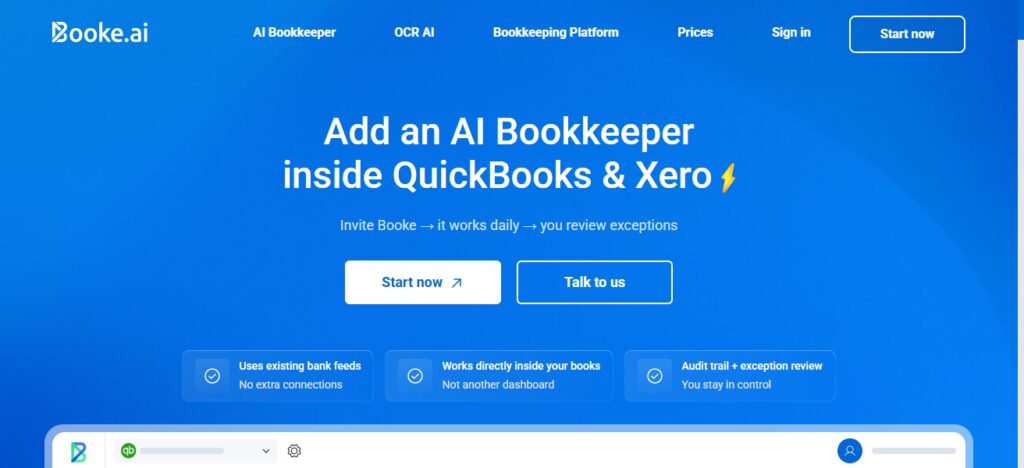
By reducing manual intervention, Booke. ai reduces human error and guarantees consistent financial records.
Its smart automation allows accountants to keep the books accurate, boost efficiency and provide trusted financial insights for informed decision making.
Booke.ai Features
- Automate the process of bookkeeping such as categorization and reconciliation, which are central to financial record keeping.
- Includes integration with accounting systems such as QuickBooks and Xero to verify data flow easily.
- Leverages AI to identify errors and recommend corrections for enhanced financial data precision and consistency.
- Minimize human intervention allowing the bookkeeping professionals to devote their time on analysis and management decisions
Pros & Cons Booke.ai Features
Pros
- AI-driven bookkeeping automation.
- Integrates with QuickBooks and Xero.
- Strong error detection and categorization.
- Improves accuracy in financial records.
Cons
- Customer support often criticized.
- Auto-categorization feature sometimes fails.
- Refund support lacking.
- Limited free trial availability.
10. Hebbia
Technically advanced, Hebbia leverages large language models and deep data analysis to extract and validate financial insights out of complex databases.
It allows users to search, analyze and cross-reference financial information across extensive documents and databases in record time.
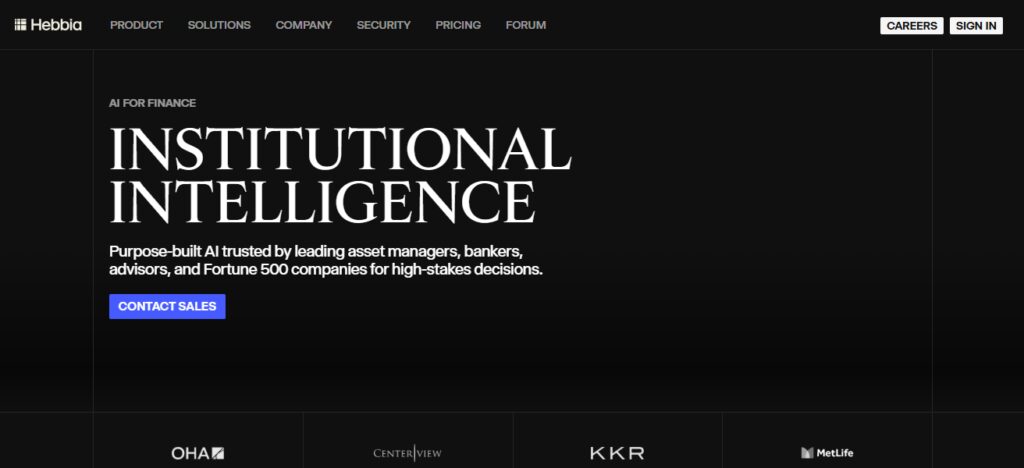
Hebbia’s AI has the ability to process unstructured data, identify inconsistencies and provide accurate insights in financial decision-making. Explainability and reasoning provide transparency for validation.
This is what makes Hebbia so valuable when it comes to investment analysis, due diligence and any financial research that requires high accuracy in data.
Hebbia Features
- Uses AI-enabled search to scan significant financial data sets and highlight accurate insights quickly.
- Cross-references structured and unstructured information sources to validate financial data.
- Ensures explainability, improving transparency in the processes of financial validation and decision making.
- Provides deep data analysis with very high accuracy outputs to support investment research and diligence
Pros & Cons Hebbia
Pros
- Powerful AI-driven search and analysis.
- Efficient document management for research-heavy tasks.
- User-friendly interface for data workflows.
- Strong matrix feature for extracting insights.
Cons
- Best suited for enterprise-scale data analysis.
- May overwhelm small teams with complexity.
- Pricing unclear compared to competitors.
- Requires structured data for optimal performance.
Conclsuion
Last but not least, Best AI Platforms for Financial Data Accuracy Validation ensure accuracy, mitigate errors and help in compliance.
These tools leverage automation, machine learning and real-time insights to improve financial transparency and decision-making.
The best platform for you will always derive from the context where businesses need to ensure that these processes are reliable and utilize efficient solutions, which still facilitate audit when required.
FAQ
Which AI platform is best for auditing purposes?
DataSnipper and MindBridge.ai are widely used for auditing, offering automation, anomaly detection, and validation features.
Can AI validate 100% of financial data?
Yes, platforms like MindBridge.ai analyze entire datasets, improving accuracy beyond traditional sampling methods.
Are these AI tools suitable for small businesses?
Yes, tools like Booke.ai and Nanonets Flow are ideal for small and mid-sized businesses.
Do these platforms integrate with accounting software?
Most platforms integrate with tools like QuickBooks, Xero, and ERP systems for seamless data validation.