

The critical banking, transaction, and client information stored in financial databases means that ransomware attacks will most likely be aimed at financial databases. Cyber threats are constantly evolving. Detection, prevention, and isolation are essential; however, organizations will need security solutions that integrate recovery.
The Best Ransomware Protection and Isolation Tools for Financial Databases are vital for protecting critical systems, helping to keep operations running even during an attack, and supporting the safeguarding of financial integrity and protecting customers’ trust while helping ensure that the latest legal requirements for financial databases are met.
Key Point for Financial Databases
| Ransomware Protection & Isolation Tool | Key Point for Financial Databases |
|---|---|
| CrowdStrike Falcon | Uses AI-driven endpoint detection and response (EDR) to identify and stop ransomware before database encryption occurs. |
| Palo Alto Networks Cortex XDR | Correlates network, endpoint, and cloud telemetry to detect ransomware attacks targeting financial data systems. |
| Microsoft Defender for Endpoint | Provides ransomware behavior monitoring, automated investigation, and recovery capabilities for database servers. |
| SentinelOne Singularity | Offers autonomous ransomware prevention, rollback functionality, and real-time threat remediation. |
| Trend Micro Vision One | Combines extended detection and response (XDR) with ransomware-specific protection for critical financial assets. |
| Zscaler Zero Trust Exchange | Isolates users and applications through a zero-trust architecture, reducing ransomware lateral movement risks. |
| Illumio Core | Uses micro-segmentation to isolate financial databases and prevent ransomware from spreading across networks. |
| Akamai Guardicore Segmentation | Provides workload-level segmentation and breach containment for sensitive banking and financial databases. |
| Rubrik Security Cloud | Delivers immutable backups, ransomware detection, and rapid recovery for mission-critical financial databases. |
| Veeam Data Platform | Ensures secure backup, clean recovery points, and ransomware resilience for enterprise financial environments. |
1. CrowdStrike Falcon
CrowdStrike Falcon offers a comprehensive cloud-native cybersecurity service targeting protection against persistent threats in financial services. Using artificial intelligence alongside behavioral analytics and real-time threat intelligence, CrowdStrike Falcon can recognize abnormal activity before adversaries are able to compromise important financial data.
CrowdStrike Falcon provides endpoint detection and response (EDR) services, in addition to threat hunting and automated threat mitigation, enabling financial services to sustain protection.

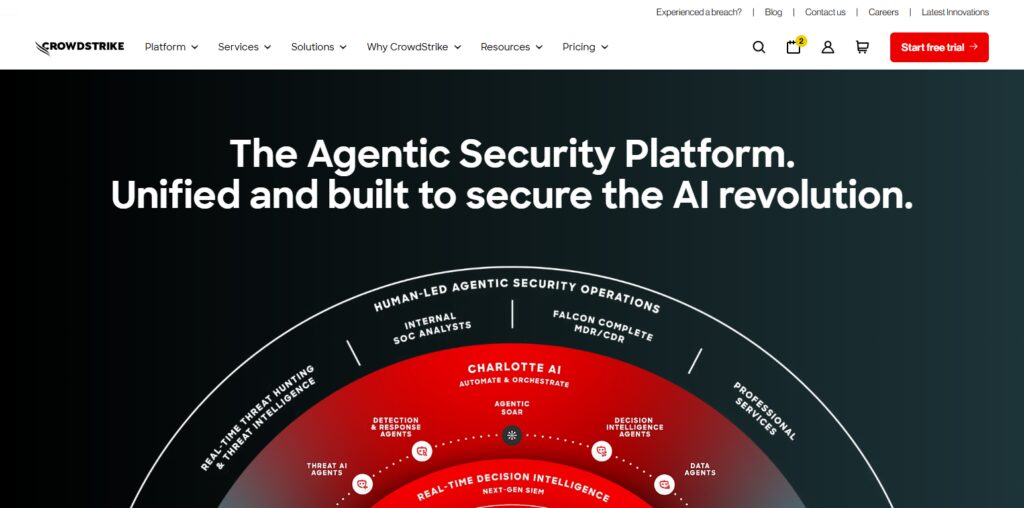
Inclusion among the Best Ransomware Protection and Isolation Tools for Financial Databases is well-deserved. CrowdStrike Falcon is adept at recognizing behaviors exhibited during a ransomware attack, including the encryption of files as well as the escalation of privileges and lateral movement.
Furthermore, its management console is invaluable, enabling security personnel to analyze incidents and respond to threats in a timely manner. It also plays nicely with SIEM and SOAR products, optimizing security operations and enabling firms to satisfy the rigorous requirements for financial compliance.
Best For
- Large financial enterprises
- Banking institutions
- Hybrid IT environments
- Real-time threat detection
- Advanced ransomware defense
Key Security Features
- AI-powered threat detection
- Endpoint Detection and Response (EDR)
- Managed threat hunting
- Automated incident remediation
Pros
- Excellent ransomware detection rates
- Lightweight cloud-native architecture
- Strong threat intelligence integration
- Centralized security management
Cons
- Premium pricing
- Complex initial configuration
- Advanced features require expertise
2. Palo Alto Networks Cortex XDR
Cortex XDR from Palo Alto Networks is an extended detection and response (XDR) platform that integrates the security of endpoints, networks, clouds, and identities. It utilizes the security data of many different systems to continuously monitor for the detection of ransomware attacks on financial databases. Cortex XDR’s ability to correlate data beyond the traditional security systems empowers security teams to remediate threats that might otherwise go undetected.
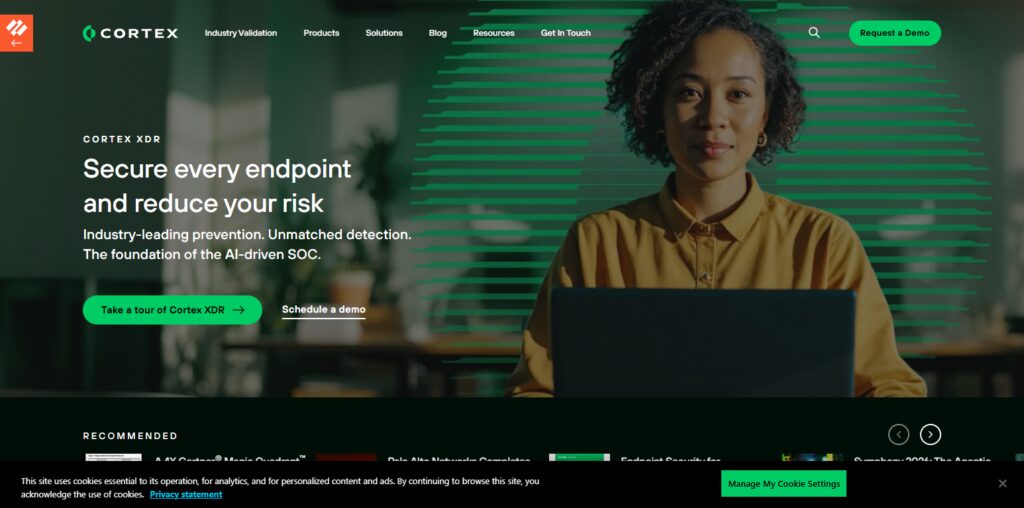
Cortex XDR is one of the Best Ransomware Protection and Isolation Tools for Financial Databases. This tool includes advanced threat detection, investigation automation, and rapid incident response. Stopping the spreading of ransomware campaigns across the many critical systems within a financial organization is one of the many benefits of Cortex XDR.
Thanks to the advanced analytics, Cortex XDR significantly decreases the number of alerts and assists with regulatory compliance by offering forensic insight into security incidents, especially those involving threats to the database.
Best For
- Large financial organizations
- Security operation centers
- Multi-cloud environments
- Threat correlation
- Enterprise-scale deployments
Key Security Features
- Cross-domain threat analytics
- Behavioral threat detection
- Automated investigation
- Unified XDR platform
Pros
- Excellent visibility across environments
- Reduces alert fatigue
- Strong analytics engine
- Effective ransomware prevention
Cons
- Higher implementation cost
- Steep learning curve
- Best value within Palo Alto ecosystem
3. Microsoft Defender
Microsoft Defender for Endpoint is another one of the Best Ransomware Protection and Isolation Tools for Financial Databases. This solution provides automated disruption of attacks, end point security and response, and protection against ransomware.
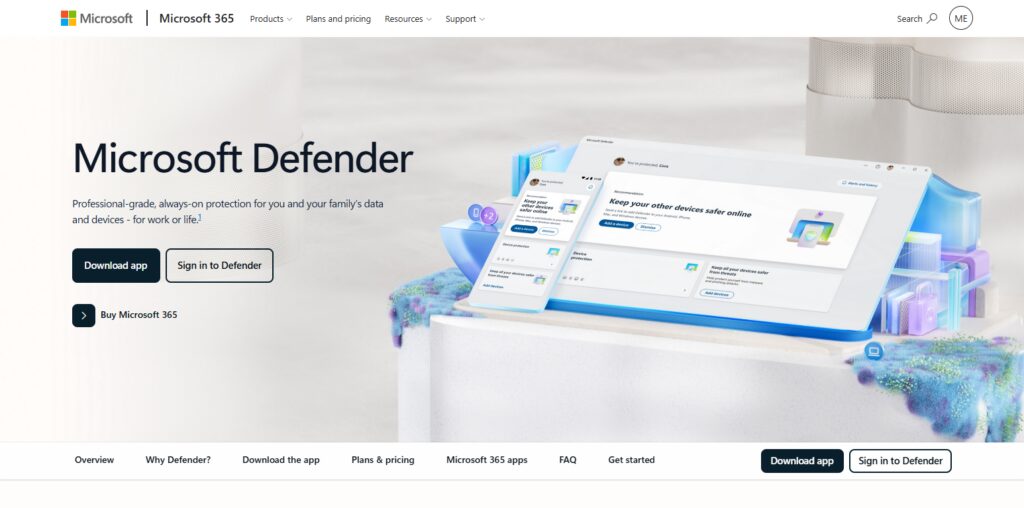
The security teams of financial organizations are able to rapidly isolate, investigate and restore endpoints. Integrating Microsoft Defender for Endpoint with other security tools results in a fortified protective posture for the financial organization’s database, while also maintaining operational resilience.
Best For
- Microsoft-centric organizations
- Mid-sized financial firms
- Hybrid work environments
- Endpoint protection
- Compliance-focused businesses
Key Security Features
- Attack surface reduction
- Endpoint detection and response
- Automated threat investigation
- Threat intelligence integration
Pros
- Strong Microsoft integration
- Competitive pricing
- Easy deployment
- Comprehensive security coverage
Cons
- Advanced features require Microsoft ecosystem
- Complex policy management
- Some features need additional licenses
4. SentinelOne Singularity
SentinelOne Singularity is a self-operating platform of autonomous cybersecurity that includes AI-driven ransomware protection for endpoints, servers, and the cloud. It evaluates and investigates system behavior and responds to threats independently. Financial organizations using SentinelOne have the advantage of stopping attacks at the earliest stages of the ransomware execution.
SentinelOne Singularity also ranks among the Best Ransomware Protection and Isolation Tools for Financial Databases for its advanced rollback features, which allow the restoration of encrypted files post-attack attempt.
All-in-one endpoint protection, threat hunting, and automated remediation are available in a single console. Rapid response further reduces downtime, protects financial records, and enables a business to continue operating with less effect to productivity from cyberattacks.
Best For
- Financial services and insurance
- Risk management and compliance
- Automated security operations
- Cloud-native environments
- Endpoint protection
Key Security Features
- Behavioral analytics
- Ransomware recovery
- Integrated risk management
- Endpoint protection
Pros
- Advanced analytics
- Integrated risk management
- Strong protection capabilities
- Automated remediation
Cons
- Costly solution
- Complexity of tailoring to specific needs
- May require significant admin time
5. Trend Micro Vision One
Trend Micro Vision One is an extended detection and response solution providing extensive visibility for endpoints, email, network, cloud workloads, and servers. This platform aids the financial sector in detecting attacks from a ransomware threat prior to reaching a database of sensitive information. By integrating multiple security layers, finer granularity of the attacker and attack path is available.
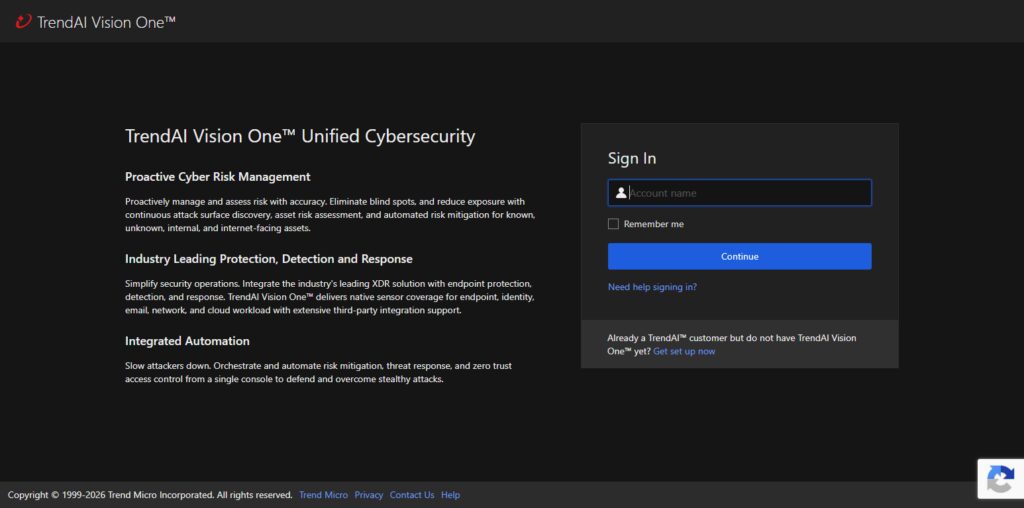
Trend Micro Vision One ranks among the Best Ransomware Protection and Isolation Tools for Financial Databases for its advanced threat intelligence and analytics, which expedite detection and response. This solution allows financial organizations to focus on high-impact threats and fully automate security missions and investigations, ultimately decreasing the time to respond to threats.
Ransomware attacks are thwarted and protection is provided for customers and their data, as well as the main operating databases and infrastructure of financial organizations.
Best For
- Financial enterprise networks
- Threat detection teams
- Hybrid cloud security
- Compliance focused security
- Multi-layered security operations
Key Security Features
- Extended detection and response (XDR)
- Risk-based alerts
- Layered threat visibility
- Threat intelligence
Pros
- Excellent coverage
- Great threat detection and analysis
- Smooth and easy incident management
- Excellent protection for cloud workloads
Cons
- Operational complexity
- High costs
- Increased burden on internal resources for training
6. Zscaler Zero Trust Exchange
Zscaler Zero Trust Exchange is a cloud-based security solution that uses a zero-trust approach to ensure both users and applications are given the access that they need and no more. Unlike others that connect users directly to internal networks, Zscaler securely brokers those connections, thus shrinking the attack surface that a potential ransomware operator has, especially those that target financial databases.
Of those on the Best Ransomware Protection and Isolation Tools for Financial Databases list, Zscaler Zero Trust Exchange is the best in preventing lateral movement within enterprise spaces. Zscaler’s user verification, application isolation and user segmentation help contain threats that attempt to access and breach financial systems.
Ransomware attacks that try to spread through the internal enterprise space and targeted phishing attacks on enterprise credentials are more effective when networks are more complex. Zscaler helps financial institutions by preventing the attacks in the first place.
Best For
- Security based on the Zero Trust model
- Financial services
- Securing a distributed workforce
- Cloud-first companies
- Secure access to enterprise applications
Key Security Features
- Zero Trust Network Access (ZTNA)
- Secure web gateway
- Application isolation
- Continuous user verification
Pros
- Scalable, distributed, secure by design
- Limits the possible attack routes
- Eliminates lateral movement
- Secures remote access
Cons
- Only works with an internet connection
- Can be difficult to configure policies
- Higher enterprise costs
7. Illumio Core
Illumio Core is a micro-segmentation solution that helps prevent the lateral spread of ransomware by establishing secure borders between application and workload spaces. This solution enables financial institutions to segment their critical databases in order to help minimize their exposure to attack by visualizing communication and network traffic in real-time.
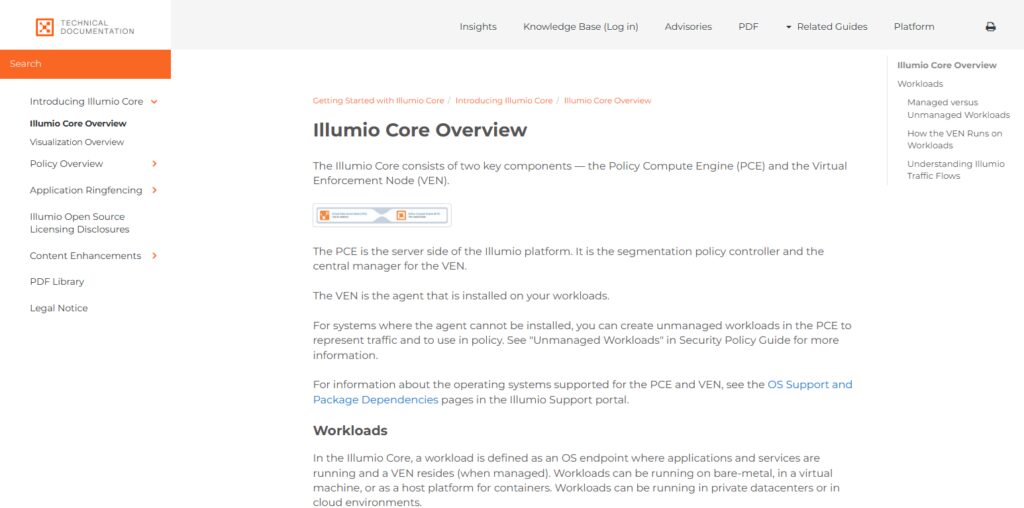
On the Best Ransomware Protection and Isolation Tools for Financial Databases list, Illumio Core is a breach containment solution. In the event that ransomware does breach the network, Illumio’s segmentation policies prevent lateral movement to financial databases that are deemed sensitive.
This solution enables organizations to adopt a more robust zero-trust posture, while protecting sensitive financial data from more stealthy and sophisticated ransomware attacks.
Best For:
- Database segmentation
- Protection of financial data
- Hybrid infrastructures
- Zero Trust deployments
- Breach containment
Key Security Features
- Micro-segmentation
- Application dependency mapping
- Traffic visibility (Real-time)
- Workload Isolation (Policy-based)
Pros
- Great Ransomware Containment
- Excellent Visibility Across Networks
- Reduces Lateral Movement
- Compliance Support
Cons
- More Planning/Preparation is Required for Implementation
- Initial Policy Creation is Complex
- Greater Overall Enterprise Costs
8. Akamai Guardicore Segmentation
Akamai Guardicore Segmentation adds an extra layer of protection against advanced cyber threats such as ransomware in financial databases using micro-segmentation based on workloads.
The software maps out the dependencies of applications along with the communications made over the network. This allows the security team to build security policies to the level of detail required to determine the interactions between systems.
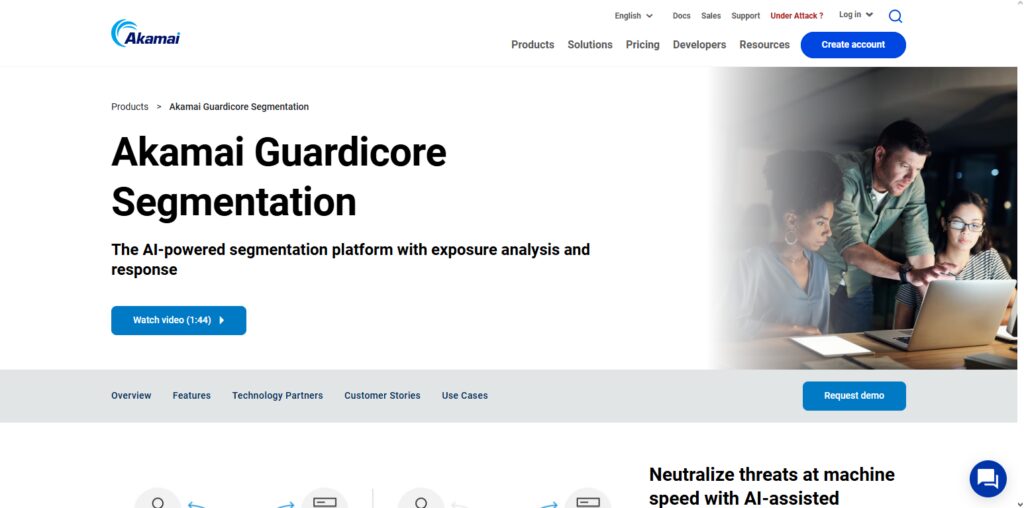
Akamai Guardicore Segmentation is part of the Best Ransomware Protection and Isolation Tools for Financial Databases. Its toolset enables companies to contain data breaches and isolate important resources in a shorter amount of time.
Because it focuses on detecting and preventing the spread of ransomware, there is improved security for network systems along with reduced risk of exposure. Financial databases that contain sensitive information about customers and transactions are better protected.
Best For
- Financial Databases
- Data Center Security
- East-West Traffic Containment/Tacking
- Breach Containment
- Hybrid Cloud Security
Key Security Features
- Micro-segmentation (Granular)
- Network Flow Visualization
- Workload Protection
- Threat Containment Policies
Pros
- Great Segmentation
- Excellent Visibility of the Network
- Flexible Policy Creation
- Great Isolation of Ransomware
Cons
- Complex to Deploy
- Requires an Understanding to Operate
- High Cost of Licensing
9. Rubrik Security Cloud
Rubrik Security Cloud focuses on cyber resilience that integrates the security of backups, the detection of ransomware, and the ability to recover in a short time. It actively protects recovery backups from modification by ransomware and actively scans the backup environment for suspicious activities. This helps financial institutions maintain the integrity of recovery backups and protect financial records.
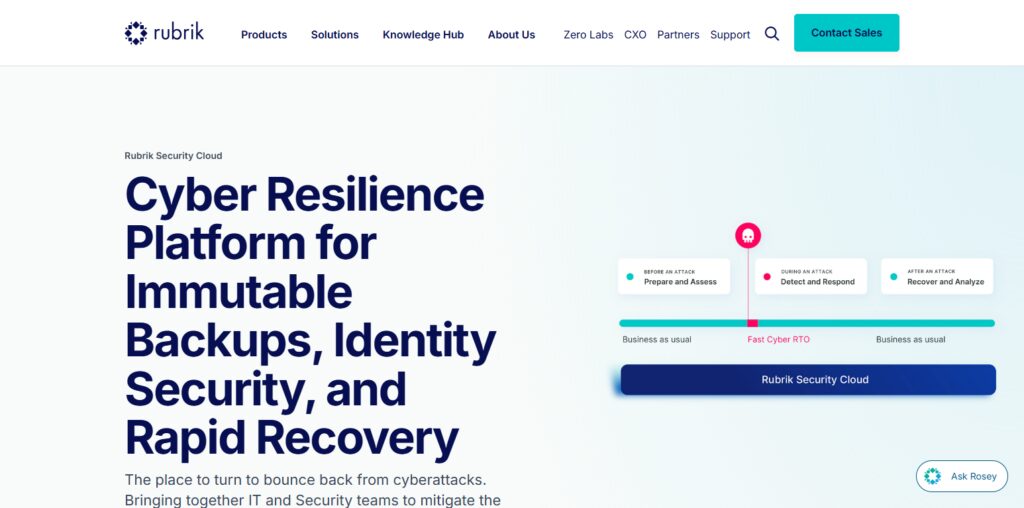
Among the Best Ransomware Protection and Isolation Tools for Financial Databases, Rubrik Security Cloud offers the best recovery from ransomware. It allows companies to restore operations with near zero downtime, using safe versions of databases. Its other integrated features further promote resilience for financial institutions by reducing the negative effects of ransomware on finances and operations with automated recovery.
Best For
- Ransomware Recovery
- Financial Database Recovery
- Cyber Resilience Focused Programs
- Hybrid Cloud Security
- Disaster Recovery Planning
Key Security Features
- Recoverable Backup (Immutable)
- Ransomware Threat Protection
- Recovery is Automated/Improved Performance
- Protection of Sensitive Data
Pros
- Easy Recovery
- Backup Recovery Strong
- Cyber Resilience (Advanced Focus)
- Easy to Manage
Cons
- Required Higher Pricing
- Protection Focus is Limited When Compared to EDRs
- Configuration of Advanced Features May be Required
10. Veeam Data Platform
Veeam Data Platform offers backup, recovery, and cyber resilience tools for financial databases and enterprise workloads. Veeam creates safe backups, with 24/7 monitoring, and recovery orchestration to defend organizations from ransomware. Veeam Data Platform protects complex, financial infrastructures by utilizing on-prem, cloud, and hybrid support.
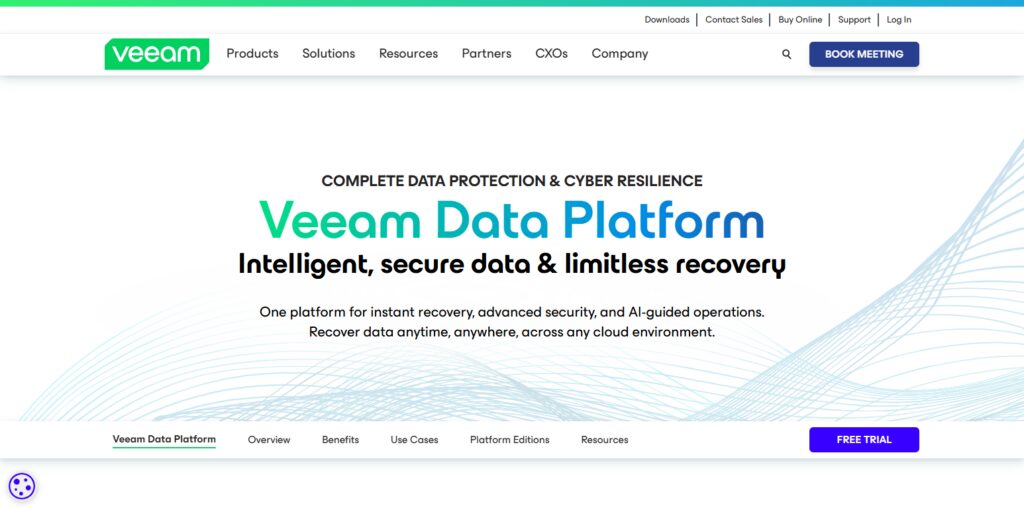
Veeam Data Platform Ranked one of the Best Ransomware Protection and Isolation Tools for Financial Databases, provides financial institutions with the option to restore infected databases, and limit the service outage. Veeam Data Platform forces data availability, with Disaster Recovery, to support financial institutions with operational and regulatory compliance.
Best For
- Protection of financial data
- Backup and Recovery
- Continuity of business operations
- Hybrid cloud architectures
- Disaster recovery procedures
Key Security Features
- Unchangeable backup storage
- Malware identification
- Recovery Environment Security
- Backup Analysis and Monitoring
Pros
- Consistent backup execution
- Backup flexibilities
- Enhanced Recovery
- Wide support for multiple platforms
Cons
- Backup-centric approach with limited prevention of threats
- Higher tier licenses provide access to advanced features
- Backup Recovery plans need to be set up correctly
Why Financial Databases Need Ransomware Protection
Ransomware Targets High-Stakes Data Financial databases have important data, such as details of an individual’s accounts, credit data, and transaction histories. Since they can bring financially lucrative gains, they are sought after by ransomware attackers.
Systematic Collapse Risk Ransomware can lock up vital database systems to halt banking, freeze payment, and even immobilize customer service, causing unmanageable disruptions to a business.
Legal Consequences Financial services face stringent regulations and specific requirements (e.g., PCI DSS, GDPR, SOX). A compromise or loss of data may result in significant fines.
Highly Evolved Ransomware Some modern ransomware have artificial intelligence, implement double extortion, and use stealth techniques to breach financial systems and overcome security measures employed.
Evasive Data Protection Ransomware actors leak data, often before they are encrypted, and can compromise customer privacy and business reputation, even when there are data backups.
Operational Availability Financial services have a minimal tolerance for disruptions. Ransomware protection can rapidly restore data to maintain services.
Customer Confidence A ransomware attack can quickly erode customer confidence, undermine reputation in the market, and adversely affect a firm’s growth in the financial services sector.
Benefits of Using These Tools in Financial Systems
More Secure Protection of Financial Data These tools provide protection to the critical financial databases by detecting and locking ransomware before they go on to encrypt or exfiltrate financial data. It secures customer information, transactions, and account data.
Minimized Exposure to System Downtime Advanced features of isolation along with endpoint protection ensure that ransomware attacks are contained to isolation, thereby ensuring the systems are available and financially operational.
Greater Regulatory Assurance These tools alleviate the financial organizations of the burden to meet strict compliance mandates. Tools like PCI DSS, GDPR, SOX, and ISO 27001 are implemented with data security and automated control frameworks.
Enhanced Speed of Threat Detection and Response Rapid detection of unusual behavior is made possible through the combination of real time analytics and AI, which provide the opportunity for the security personnel to respond prior to the delivery of a major blow.
Better Containment and Isolation of Ransomware Design characteristics like Micro segmentation and Zero Trust architecture are especially effective in preventing the lateral progression of ransomware, and minimizing its effect to a single endpoint.
Backup and Recovery from Attacks with Minimal Operational Impact Innovative tools provide immutable backups of financial databases and automated recovery post attack.
A More Stable Financial Organization with Assured Ransomware Protection Protection of financial databases and customer data against ransomware instills confidence of the customers and stakeholders on operational financial stability while assuring the protection of the brand’s reputation.
Future Trends in Ransomware Protection
AI-Driven Autonomous Threat Detection Expect Ransomware protection to proactively stop threats using a combination of AI and machine learning to analyze patterns and behaviors in systems in real-time.
Wider Adoption of Zero Trust Architecture Widespread implementation of Zero Trust Architecture will create a significant barrier against the spreading of Ransomware and access to financial data.
Immutable and Air-Gapped Backups Ransomware will be unable to affect backup data if it attempts to alter or delete backups. Immutable and air-gapped backups will ensure restoration after an attack.
Micro-Segmentation Financial systems will be able to remove cross-segment Ransomware by introducing micro-segmentation to limit the movement of Ransomware to various databases.
Shift in Analytics Security tools will be able to analyze behaviors and data patterns rather than relying on descriptive analytics techniques to identify Ransomware before it begins the process of data encryption.
Cloud-Based Ransomware Protection Protection tools are expected to be fully cloud-based with multi-cloud and hybrid cloud environments to manage Ransomware Protection.
Autonomous Incident Response and Recovery Solutions Systems of the future will be able to automatically contain non-infected areas, restore systems, and roll back to previous states in the least amount of time.
Conclusion
Security tools that protect from Ransomware and provide isolation have become critical for securing databases containing sensitive financial data. This is due to the increasing, evolving threats and the growing financial impacts of cyberattacks.
A modern defense architecture to secure sensitive financial data against encryption and theft contains Endpoint Detection, a Zero Trust Model, Micro-Segmentation, and Immutable Backups.
Solutions such as CrowdStrike’s Falcon, and Microsoft’s Defender for Endpoint, as well as isolation-centric solutions such as Illumio Core and Zscaler’s Zero Trust Exchange provide complementary defense Posture tools. In addition, recovery-focused solutions, such as Rubrik Security Cloud and Veeam Data Platform, allow rapid recovery and restore business operations after an attack.
Employing a combination of isolation and recovery tools is the minimum requirement to defend institutional resiliency. Advanced cyber defenses reduce obsolete operations and improve regulatory compliance, protecting client relationships and driving profit in a rapidly evolving cyberattack environment.
FAQ
What are ransomware protection tools for financial databases?
Ransomware protection tools are cybersecurity solutions designed to detect, prevent, isolate, and recover financial databases from ransomware attacks that can encrypt or steal sensitive financial data.
Why are financial databases highly targeted by ransomware attackers?
Financial databases store valuable information such as banking records, transaction data, and customer details, making them highly profitable targets for cybercriminals seeking financial gain or data extortion.
Which are the best ransomware protection and isolation tools for financial systems?
Some of the leading tools include CrowdStrike Falcon, Palo Alto Networks Cortex XDR, Microsoft Defender for Endpoint, SentinelOne Singularity, Trend Micro Vision One, Zscaler Zero Trust Exchange, Illumio Core, Akamai Guardicore Segmentation, Rubrik Security Cloud, and Veeam Data Platform.
How do isolation tools help prevent ransomware attacks?
Isolation tools like micro-segmentation and Zero Trust architecture prevent ransomware from spreading laterally across networks, limiting the impact to a single system or workload.
What role do backup solutions play in ransomware protection?
Backup solutions such as Rubrik Security Cloud and Veeam Data Platform provide immutable and secure copies of financial data, enabling quick recovery after a ransomware attack.
Can ransomware protection tools guarantee 100% security?
No tool can guarantee complete protection, but advanced ransomware solutions significantly reduce risk by combining detection, prevention, isolation, and recovery strategies.