Modern finance requires treasury management software which can allow businesses to deal with international obstacles, compliance challenges, and liquidity risks in 2026 and beyond. I’d like to explain how some market-leading treasury management software, such as Kyriba, HighRadius and SAP Treasury, enables CFOs and finance leaders to have real-time cash visibility, automate payments, and enhance risk management.
Together with their AI-centric analytics solutions, these platforms, when integrated with ERP tools, easily digitize and automate corporate treasury operations. I will explain their individual offerings, core products, and how they help corporations deal with uncertainty in volatile international markets.
What Is Treasury Management Software?
Treasury Management Software (TMS) helps companies manage cash, payments, liquidity, and risk through automation and analytics. TMS works seamlessly with ERP systems, payment systems, and banks for the optimal cash position and visibility of financial workflows. It also offers cash and liquidity forecasting, report automation, fraud prevention, and risk management.
By automating time-consuming functions, TMS provides corporate finance managers with tools to lower financial risk and ensure audit compliance with less working capital. TMS is the best business solution for enterprise agencies that need to control and automate complex, cross border, financial operations.

Why Treasury Management Software Matters in 2026
- Cash Visibility: With real time indications on cash position globally, CFOs can make informed decisions to optimize cash liquidity and financial position across numerous entities.
- Liquidity Planning: Systems with advanced forecasting can help companies address funding gaps and gaps in working capital while placing the company in the best financial position to withstand volatile market conditions.
- Risk Management: Systems with automated risk controls can help shield a company from unpredictable financial shocks caused by exposure to FX, interest rates, or credit.
- Compliance Assurance: The systems allow reporting that is auditable and files that can be used to address regulations. This helps fulfill regulatory requirements and avoids penalties and enhances the overall corporate governance for the company.
- Payment Automation: With systems that can automate payment flows, risk of fraud is significantly decreased as are the number of days suppliers wait to be paid and trust between parties is increased.
- ERP Integration: to allow financial data to be one and provide unified treasury oversight, systems should integrate seamlessly with other corporate financial and banking systems.
- AI Analytics: These systems help with decision making by automating tasks such as forecasting and detecting abnormalities in data.
- Global Scalability: With cloud technology, treasury teams are able to efficiently manage multiple currencies and varying financial and regulatory environments.
Key Points in Treasury Management Software
| Software | Best For | Key Features | Overall Score |
|---|---|---|---|
| Kyriba | Enterprise treasury teams | Cash visibility, liquidity planning, risk & compliance workflows | 9.3/10 |
| HighRadius | Mid-to-large teams | Forecast vs actual variance reporting, strong reconciliation | 9.2/10 |
| Finastra Treasury & Capital Markets | Mid-size treasury teams | Cash & capital market workflows, payment connectivity | 9.0/10 |
| Oracle Treasury Management | Structured workflows | Cash forecasting, banking integrations, risk controls | 8.6/10 |
| Serrala | Global enterprises | Payment flows, risk inputs, audit-ready reporting | 8.5/10 |
| Taulia | Supplier payments | Workflow orchestration, working-capital reporting | 8.4/10 |
| GTreasury | Multi-entity treasury | Scenario planning, variance analytics, audit-grade reporting | 8.3/10 |
| HazelTree | Finance teams | Cash visibility, reconciliation reporting | 8.2/10 |
| Kantata Treasury | Mid-size teams | Disciplined cash forecasting, approval workflows | 8.1/10 |
| SAP Treasury & Risk Management | Large corporations | Integrated ERP treasury, risk & compliance | 8.0/10 |
1. Kyriba
Kyriba is the clear market leader for cloud-enabled solutions across cash visibility, liquidity management, and risk governance. Kyriba’s solutions are easily integrated with ERPs, banks, and network payment systems, thus providing access to real time financial system data.
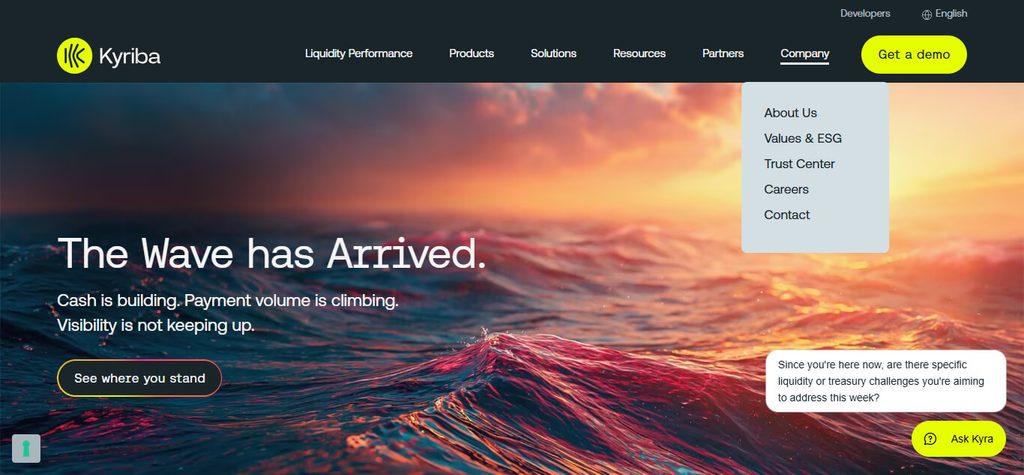
Kyriba’s solutions are designed for multinational corporations and focus on cash forecasting, fraud mitigation, and compliance. Systems built by Kyriba provide real time insights to CFOs and treasurers on the optimization of working capital and management of FX and debt related risks.
Kyriba’s strong API connectors and enhanced AI provide businesses the ability to make better decisions, minimize financial risk exposure, and enhance their global operations through improved liquidity.
Pros
- Sophisticated cash visibility and liquidity planning
- AI-based risk and fraud prevention
- API and ERP integration
- Automated global compliance and reporting
Cons
- High implementation cost
- Protracted onboarding for smaller teams
- Strong IT support required
- More expensive than similar tools in the market
Best For
- Multinational corporations
- CFOs with a need for global liquidity control
- Complex FX exposure corporations
- Corporations prioritizing compliance automation
2. HighRadius
HighRadius specializes in automating cash management with its scalable AI solutions for cash forecasting, reconciliation and variance reporting. HighRadius also specializes in automating Accounts Receivable and Payable processes.
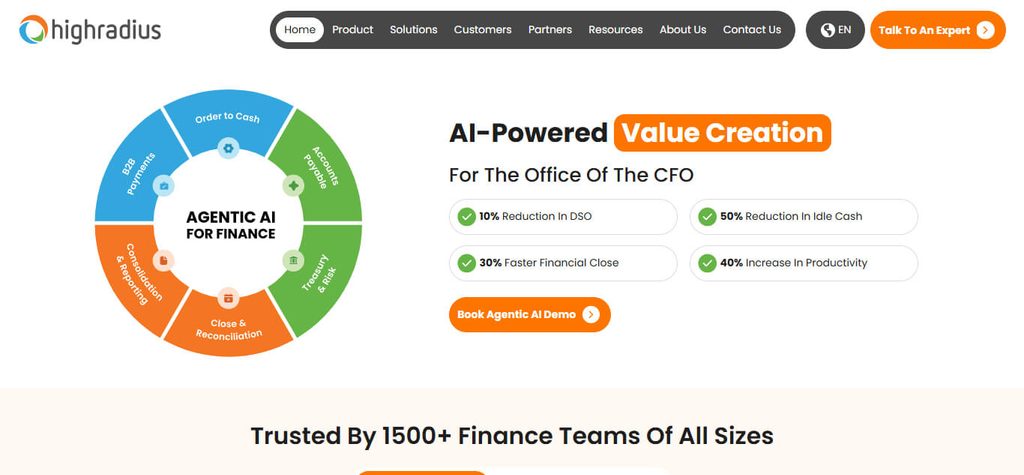
Its advanced forecast models allow treasury teams to track and analyze actuals and projected cash flows to identify and address forecasting variances. Its machine learning technology minimizes forecast variances and helps treasury teams perform better.
HighRadius gives businesses real time dashboards with financial data. It provides quick and efficient reconciliations and improves working capital in combination with its first rate SaaS treasury workflow technology.
Pros
- AI-based cash forecasting
- Automated reconciliation workflows
- Robust AR/AP tools
- Real-time dashboards for cash management
Cons
- Limited flexibility for non-standard industries
- Needs data maturity
- Premium modules are costly
- Steep learning curve for smaller teams
Best For
- Mid-large enterprises
- Industries with frequent audits
- Needs predictive analytics
- Corporations focused on AP/AR optimization
3. Finastra Treasury & Capital Markets
Finastra Treasury and Capital Markets connect cash and payments management, and risk workflows. Its services cater to large and medium-sized enterprises with structured treasury systems as well as the planning of corporate liquidity and transactions in the capital markets.
Finastra’s solution interfaces with international banks for payment processing and foreign exchange risk management. There are a variety of add on features offered in derivatives, debt, and other investment related modules that are applicable to more complex financing structures.
The solution also supports compliance, acuity, and reporting efforts focused on treasury management systems. Finastra helps customers achieve process improvement and financial efficiency with the added benefit of built-in analytics and workflow automation.
Pros
- Excellent integration for capital markets
- Robust FX and derivatives management
- Seamless connectivity to global banks
- State-of the-art compliance and regulatory reporting
Cons
- Complex implementation for mid-size firms
- Increased licensing costs
- Complexity for SME treasury teams
- Lack of flexibility for smaller firms
Best For
- Corporations with an exposure to capital markets
- CFOs managing derivatives portfolios
- Corporations needing seamless integration with global banks
- Firms requiring robust compliance workflows
4. Oracle Treasury Management
Oracle Treasury Management is part of Oracle’s ERP suite and is a solution for medium to large enterprises with the need for structured workflows and deep financial integration. Oracle’s cash forecasting and liquidity planning tools are complemented with automated banking connections.
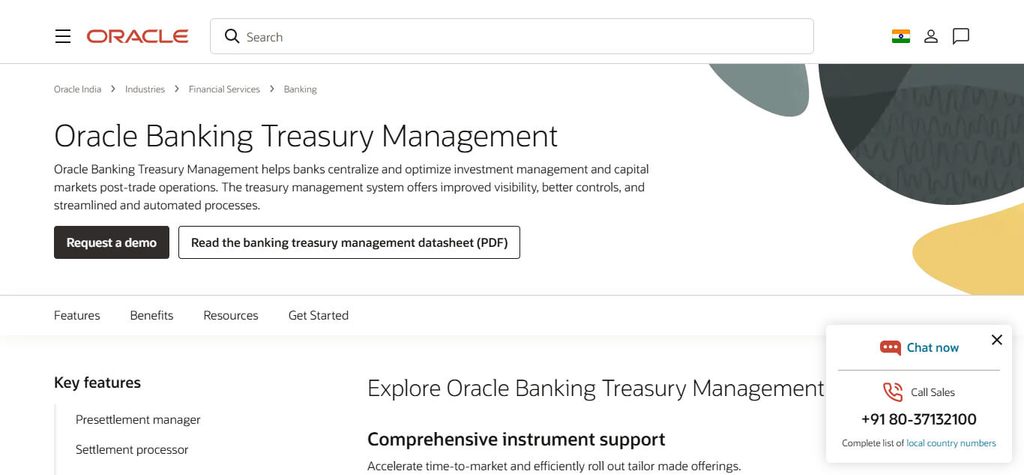
Oracle’s suite also focuses on risk management, compliance, and treasury accounting. They ensure that the records are audit ready. Oracle’s advanced analytics tool offers real-time reporting on treasury cash and debt positions as well as investment portfolios.
Oracle’s solutions are built for the needs of multi-national enterprises to integrate treasury systems into their ERP systems. There is a noticeable improvement in process seamless collaboration and reduction in risk among finance, accounting, and treasury functions.
Pros
- Deep integration of Oracle’s ERP products
- Strong cash forecasting and liquidity planning
- Streamlined banking connectivity
- Advanced analytics and reporting
Cons
- Limited connection with third-party product ecosystems
- High cost for implementation
- Steep learning curve and relatively complex
- Lack of price competitiveness versus similar products
Best For
- Large enterprises with complex cash management problems
- Multi Layering of exposures (e.g., FX risk, interest rates, credit, commodity, etc)
- Compliance burden and automated solutions for compliance
- Lengthy time to implement
5. Serrala
Serrala’s end-to-end treasury solutions handle payment flows, risk and audit interactions. Their solutions cater to more advanced enterprise level client needs. Serrala covers payment processing, risk management, cash visibility and fraud management, all ensuring contract compliance while the solution maintains a secure treasury environment.
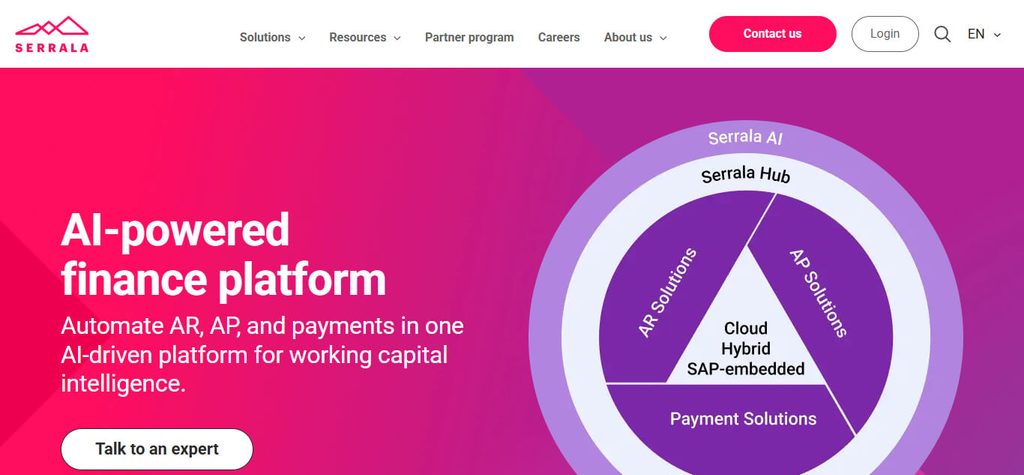
It offers integrations with ERP systems and banking networks, providing users with timely data on liquidity and working capital. Serrala specializes in risk management, compliance, and treasury automation enabling CFOs to automate their financial strategies.
Using their solutions brings process simplification through reduced back office intervention, increased transparency and strong reporting in end-to-end control. Serrala’s solutions help treasurers maintain confidence in their financial operations.
Pros
- End-to-end payment automation
- Fraud prevention
- Real-time liquidity visibility
- Audit-ready compliance reporting
Cons
- Limited scalability for SMEs
- Advanced modules bring hefty price tags
- Requires ERP integration for value
- Complex workflows for smaller teams
Best For
- Global enterprises
- CFOs needing payment security
- Businesses needing fraud prevention
- Firms requiring audit-ready treasury
6. Taulia
Taulia works in supplier payments and optimized working capital alongside the orchestration of working capital and cash flow. In terms of treasury management systems, Taulia focuses on helping customers manage their treasury through dynamic discounting, supply chain finance and automation of payments.

Their solutions integrate seamlessly with an enterprise resource planning (ERP) system, providing real-time data on payables and receivables. Taulia’s solutions help customers experience cash flow flexibility while maintaining healthy and stronger relationships with suppliers.
Their solutions provide increased automation, reporting, and cash flow forecasting. Taulia’s advanced analytics provide actionable insights, financial savings and resilience in treasury operations.
Pros
- Strong supplier financing solutions
- Dynamic discounting
- Seamless ERP integration
- Real-time payables visibility
Cons
- Focused on supplier payment solutions
- Limited capital markets
- Requires strong supplier engagement
- Best for bigger ecosystems
Best For
- Firms with large supplier ecosystems
- CFOs on working capital optimization
- Businesses needing supply chain financing
- Prioritized liquidity flexibility
7. GTreasury
GTreasury serves multi-subsidiary groups who require sophisticated modeling and analytics for variance. GTreasury performs cash, liquidity, and risk management. GTreasury’s offerings assist treasury in audit and compliance with real time visibility of the financial state and audit trail.

GTreasury’s automated integration to banks and ERP systems gives Treasury the visibility and control of Information to perform its Cash Management role.
GTreasury excels at modeling Market behavior to position balance Sheets and optimize balance Sheet strategies. GTreasury’s systems enhance Corporate Control of balance Sheet liquidity and financial risk.
Pros
- Scenario modeling
- Audit grade compliance reporting
- Multi-entity Treasury visibility
- Seamless ERP and bank integration
Cons
- Complex for smaller teams
- Robust and advanced modules mean a hefty price tag
- Requires expertise in treasury
- Limited adaptability to non-standard processes
Best For
- Multi-entity entities
- CFOs needing models for diverse scenarios
- Complex multi-facet liquidity businesses
- Firms needing audit grade compliance
8. HazelTree
Finance teams looking for cash visibility and accuracy in reconciliation will appreciate HazelTree’s offerings. Its customizable solutions provide modeling and analytics for treasury management and automated cash positioning.
HazelTree’s automated solutions allow treasury to manage cash, provide audit and compliance reporting, and also integrate directly with all banking and ERP systems.
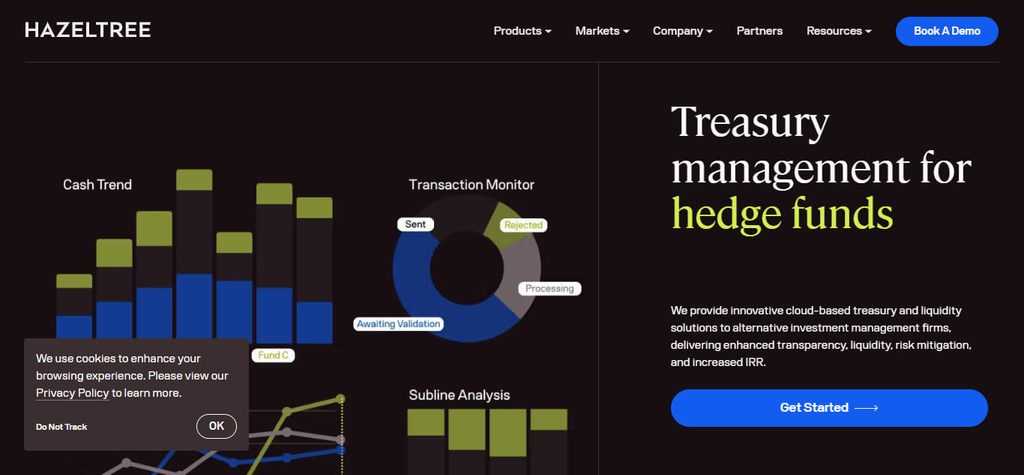
HazelTree’s solutions aid midsize companies by simplifying their treasury process, all the while providing automated solutions that reduce lagging reconciliation and improve forecasting.
HazelTree’s reporting solutions improve transparency in information delivery and accessibility of cash control, while its systems provide management of cash in a reliable manner without the complexity of larger enterprise solutions.
Pros
- Agile and configurable framework
- Full integration with multiple systems
- Diverse document and reporting functionalities
- User friendly interface
Cons
- Set up fees can be burdense
- Lengthier implementations
- Not robust enough for multi-currency environments
- More geared towards investment management
Best For
- Investment managers
- Primarily valued for record-keeping
- Reporting and document management
- Easy to understand cash visibility tools
9. Kantata Treasury
Kantata Treasury focuses on Approvals and Cash Forecasting for Mid-Market Treasury teams. They address structured liquidity planning and compliance assurance with automation of workflows. Kantata integrates banking networks and ERP’s, enabling seamless data flow.
Kantata provides treasury teams with tools for cash forecasting, status hierarchies and reporting for audits. There is an increase in cash visibility within a business, reduction in operational risks and an improvement in the efficiency of treasury functions.
Kantata offers tools to automate functions and to simplify the duties of the CFO with analytics. Kantata is an excellent choice for organizations that want to put in place Treasury functions that are compliant, user-friendly and functional.
Pros
- Predictable cash forecasting workflows
- Built in treasury team approval hierarchy
- ERP integration
- Reporting for compliance
Cons
- Limited global scalability
- Few advanced risk modules
- Best suited for medium sized businesses
- Requires ERP implementation for full functionality
Best For
- Medium sized businesses
- CFOs seeking workflow structure
- Companies requiring approval functionality
- Firms prioritizing compliance
10. SAP Treasury & Risk Management
SAP Treasury & Risk Management addresses the Treasury needs of large, global corporations that have complex financial operations. It incorporates SAP’s ERP product and delivers advanced liquidity planning, cash forecasting, and risk management.
SAP offers a comprehensive solution that strengthens a company’s compliance with regulatory frameworks and prevents fraud.
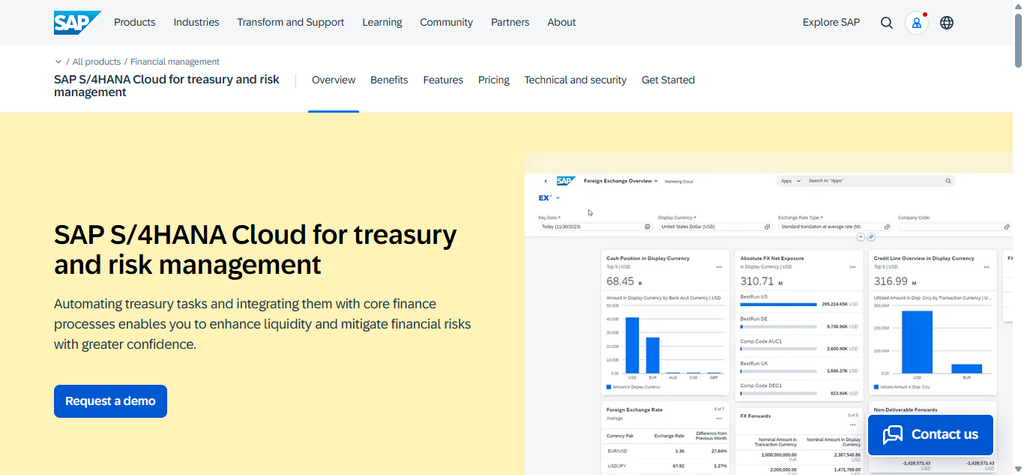
The SAP product offers treasury departments visibility to a corporation’s cash and investment positions, as well as the debt obligations, within an SAP ERP environment.
Finance departments of corporations benefit from SAP’s enterprise solution because of the automation of workflows and reporting for audits.
Pros
- Built in SAP ecosystem for deep ERP integration
- Advanced cash forecasting and liquidity planning
- Mature risk and compliance modules
- Real time treasury visibility
Cons
- Lengthy implementation periods
- High total cost of ownership
- Requires SAP ERP implementation
- Options for large corporations
Best For
- Large corporations
- CFOs needing ERP and treasury integration
- Complex risk exposure companies
- Firms requiring global compliance
Conclusion
Global financial systems in 2026 require advanced Treasury Management Systems (TMS) to connect the dots of financial data. Key players in the changing framework of TMS include Kyriba, HighRadius, and SAP Treasury, as well as Taulia and GTreasury who have pioneered supplier financing and cash flow modeling services.
These systems provide liquidity and risk management, integrate with existing systems, and automate accounting and banking processes. Based on advanced analytics, businesses now have the ability to understand their capital requirements and prioritize working capital to reduce the market exposure of their business.
With advanced tools, CFOs, and finance leaders can manage their organizations’ resources, eliminate financial risks, and optimize working capital to increase flexibility within their operations.
FAQ
What is Treasury Management Software?
Treasury Management Software (TMS) is a financial platform that centralizes cash, liquidity, payments, and risk management, helping businesses optimize working capital and ensure compliance across global operations.
Why does Treasury Management Software matter in 2026?
It matters because businesses face increasing financial complexity, global compliance requirements, and market volatility. TMS provides real-time visibility, automation, and AI-driven insights to strengthen resilience and decision-making.
Which companies benefit most from TMS?
Large enterprises, multinational corporations, and mid-sized firms with complex liquidity, FX exposure, or supplier networks benefit most, though scalable solutions also support smaller finance teams.
What are the core functions of TMS?
Key functions include cash forecasting, liquidity planning, payment automation, compliance reporting, fraud prevention, and risk management, all integrated with ERP and banking systems.