


Best Puffer Finance Rivals for Ethereum LRTs liquid restaking opportunity. While Puffer will likely continue to dominate the EigenLayer ecosystem, rival protocols are providing other attractive opportunities.
These opportunities vary and include more staking options, better DeFi integration, and overall better financial terms. As part of this series, we will introduce the best Puffer Finance rivals and describe what makes each of them unique. In addition, we will describe the ideal users for each of these protocols. The goal of this series is to help users of the ETH LRT stake market identify the best opportunities.
What Makes a Good Puffer Finance Rival?
Strong Liquid Restaking Token (LRT): Competitors should provide a widely used LRT having sufficient liquidity and enabling price stabilization. Further, it should facilitate interoperability of the Ethereum DeFi ecosystem.
High Return Potential: The protocol should help users realize returns through staking, restaking, and/or ecosystem staking.

Extended DeFi Interconnectivity: Increased interconnectivity of the LRT to other DeFi applications, like lending and trading, should enhance the utility of the LRT.
Extended User Base: This should be evidenced by a high TVL, large user base, and/or value staked.
Reduced Risks: This should be achieved by using risk mitigation strategies, such as slashing insurance, validator delegation to several validators, and utilizing secured smart contracts.\
Improved User Experience: The protocol should have the infrastructure to facilitate restaking of rewards without undue delays and/or imposing penalties on withdrawals.
Flexibility and Adaptability: The protocol should have the infrastructure to facilitate the restaking of rewards to satisfy market demands, and adapt to evolving EigenLayer products and other changes in the DeFi space.
Distinguishable Products: Incorporating novel products and services, multichain deployments, and strategic partnerships should be the foundation of new and differentiated products to compete in the Ethereum LRT space.
Which Puffer Rival Fits Different Users?
EtherFi: EtherFi is a staking solution for large ETH holders and institutions. EtherFi provides a liquid staking solution with DeFi integrations and liquid rewards staking.
Renzo: Renzo’s clientele mainly consists of users looking to gain staking rewards by taking advantage of ecosystem incentives offered by EigenLayer and other staking platforms.
Kelp DAO: Kelp DAO provides users the opportunity to gain staking rewards while gaining exposure to multiple liquid staking assets.
Swell: Users looking to gain staking rewards in an ETH 2.0 staking pool while it is still in its development phase can gain rewards by using Swell.
Eigenpie: Eigenpie provides users the opportunity to gain staking rewards with a greater control over asset isolation and more defined protocol risk.
Lido stETH: Lido is the leading liquid staking solution for ETH. Lido stETH provides users a simple liquid staking solution for ETH.
Pendle: Users looking to gain staking rewards while using advanced DeFi strategies to trade and gain staking rewards should use Pendle.
Morpho: Morpho’s main clientele consists of users looking to gain staking rewards and use the staked ETH as collateral to borrow and/or trade.
Key Points
| Protocol | Key Point |
|---|---|
| EtherFi | Largest LRT by TVL, dual-token model (eETH/weETH), strong liquidity and institutional adoption. |
| Renzo | Highest APY (~4.1%), multichain reach, strong DeFi integrations, point rewards. |
| Kelp DAO | Multi-asset restaking (accepts stETH, rETH, wbETH), geographic operator diversity, socialized risk reserve. |
| Swell | Integrated LRT + L2 ecosystem (rswETH + Swellchain), highest APY (~4.3%), growth potential. |
| Eigenpie | Focused on isolated single-asset LRTs, specialized risk management. |
| Lido Staked ETH | Largest liquid staking provider, now extending into restaking via EigenLayer. |
| Stader | Aggregates multiple LSTs into restaking pools, strong DeFi partnerships. |
| Pendle | Yield tokenization platform integrating LRTs, enabling advanced yield strategies. |
| EigenLayer | Core restaking infrastructure, directly competing by offering native restaking without intermediaries. |
| Morpho | Lending protocol integrating LRTs as collateral, expanding utility across DeFi. |
1. EtherFi
EtherFi is a major liquid staking protocol for ETH that has eETH and weETH tokens. Users can stake their ETH and maintain liquidity. EtherFi’s product has been very successful and is widely used by institutions. EtherFi uses a dual token model and because of this, large investors can restake their liquid staked tokens.

Users of EtherFi are restaking their ETH via EigenLayer. EtherFi has the largest TVL out of all the restaking protocols. To add, EtherFi has very good yield generating opportunities and provides liquidity for its users. To withdraw your ETH from EtherFi, you must go through the ETH validator exit process. However, EtherFi has some liquidity pools where you can get your ETH immediately.
Risks
- Smart contract audits do not guarantee security.
- Losing a large portion of TVL due to concentration risk.
- Slashing by EigenLayer operators.
- Inadequate liquidity on Curve/Balancer.
- Regulatory environment is uncertain.
Best-fit Users
- Large financial institutions.
- Professional traders.
- Users pursuing dual token yield farming strategies.
- Users desiring flexible staking of ETH.
2. Renzo
Like EtherFi, Renzo gives users the opportunity to liquid restake their ETH using EigenLayer. Renzo focuses more on the retail user by using gamification to reward its users and giving users points for staking. Because of this focus, its APY is lower, around 4.1%.

Similar to EtherFi, Renzo uses pooled restaking to distribute rewards among operators. Because of this, its TVL is smaller than EtherFi. To add, it has opportunities for liquidity and farming, as well as staking, and gives users a good yield. There are also risks of the liquidity pools where users can withdraw ETH becoming un pegged.
Risks
- History of ezETH depeg.
- Smaller validator sets increases slashing.
- Rapid growth increases smart contract risk.
- Liquidity is fragmented.
- Depends on EigenLayer for incentives.
Best-fit Users
- Users interested in yield farming on multiple chains.
- Users interested in Pendle yield farming.
- Retail stakers.
- Users comfortable with moderate risk/reward.
3. Kelp DAO
rsETH is a token created by Kelp DAO that is a restaked token of other liquid staking tokens of ETH, like rETH and wbETH. Kelp DAO focuses more on the geographic diversity of its node operators. Kelp DAO also created a risk reserve to protect users from losing staked ETH due to slashing.

Less dependency on ETH is achieved through the use of various LSTs as underlying assets. Ether and LSTs are staked on EigenLayer, with risk shared amongst the pooled stake. TVL is attracted to the project by integrations with other DeFi projects.
Staking rewards and EigenLayer points combine to create passive income opportunities. Temporary removal of Locked Staked Tokens is permitted, and upon withdrawal, ETH is provided via Liquidity Pools in an indirect manner.
Risks
- Slashing risk is increased by using multiple operators.
- Smart contract risk is increased by asset aggregation.
- Liquidity is less than EtherFi.
- Governance is controlled by a few.
Best-fit Users
- HODLers of ETH.
- Stakers seeking diversification.
- Users interested in rsETH.
- Long term investors.
4. Swell
An extension of the project is Swell, which is an L2 solution focused on developing decentralized finance applications and providing infrastructure. It issues rswETH and integrates LRTs to staking contracts. A complimentary project, it provides further opportunity for passive income through staking contracts and other DeFi applications.

Swell’s underlying assets are ETH and LSTs. Pooled staking is implemented for risk sharing through EigenLayer. Fast growing TVL attracts the community. Yield is attained through staking rewards, Swell rewards and EigenLayer rewards. Refined liquidity is provided through Curve. For further liquidity, users can employ validator exits to withdraw ETH.
Risks
- Dependence on L2 Adoption.
- L2/LRT integration increases smart contract risk.
- EigenLayer slashing.
- Concentrated liquidity on Curve/Pendle.
- Legal/Regulatory environment is uncertain.
Best-fit Users
- Users interested in first generation Layer 2 solutions.
- Users interested in ~4.3% yield.
- Two main categories of users.
- L2 users. Those who are well versed in the DeFi space looking for other layer 2 solutions.
- Users looking for high yield strategies for their ETH.
5. Eigenpie
Eigenpie focuses on creating LSTs for individual assets and provides a range of restaking options. Users can restake ETH and receive pieETH.

The TVL is less than EtherFi and Renzo, but greater than Eigenpie. Similarly to EtherFi and Renzo, Eigenpie uses EigenLayer for pooled staking and offers users.
The opportunity to stake ETH and earn rewards on EigenLayer. Eigenpie offers liquidity for Curve as well as other DeFi platforms. Users can withdraw ETH via the validator exit process.
Risks:
- Smaller market scope.
- Low liquidity.
- Slashing risk.
- Smart contract risks.
- Reduced product and protocol use.
Best Fit Users
- Stakers concerned about risk.
- Holders of ETH.
- Users of DeFi interested in pools with less liquidity.
- Users of DeFi interested in risk segmentation.
6. Lido’s stETH
Lido is the largest staking service provider and issues staking tokens in the form of stETH. Recently Lido launched Eigenlayer which allows users to restake their stETH.

Lido’s stETH gives the user an equivalent stake to ETH, which is pooled and staked across thousands of ETH validators. Users can also restake their stETH through Eigenlayer which integrates with Lido. Lido has the largest TVL at ~$30B.
stETH is widely used in DeFi, and users can exchange stETH for ETH instantly via liquidity pools. Lido also has strong partnerships and offers good APY.
Risks:
- Concentration of ETH Validators increases centralization.
- Risks posed by smart contracts.
- Slashing risk.
- Reliance on stETH for liquidity.
- Size of the operation.
Best Fit Users
- Traders of large amounts ETH for other assets.
- Users of DeFi for stETH.
- Users of DeFi for other asset restrictions.
- Users of DeFi for other asset restrictions and liquidity.
7. Stader’s ETHx
Stader also has a liquid staking service where users can stake ETH and receive ETHx in return. Like Lido, Stader also integrates EigenLayer and restakes LSTs.

Stader’s LSTs are pooled to stake ETH and distribution of rewards is done amongst Stader’s validator operators. Stader also offers its users other DeFi yield farm opportunities. Users can also find liquidity for ETHx on various AMMs. Stader also integrates with validator Exit’s to process user withdrawals.
Risks:
- Less liquidity than Lido/EtherFi.
- Pooled operators may be slashed.
- Smart contract risks.
- Less vaults than competitors.
- Centralized control of governance.
Best-fit Users
- Wants ETH but with some exposure to other assets.
- Stakers looking to be hedged against market risk.
- Wants to utilize ETH to staking and DeFi.
- Looking to be somewhat hedged against risk.
8. Pendle
Pendle is a yield farm and tokenization service which also integrates several other LRTs, to provide users the principal and yield of the token separately. Pendle mainly focuses on Lido stETH.

Pendle integrates several Raffle, EVM, and Cross-Chain networks to provide users the maximum yield. Pendle also has a strong liquidity pool for LRPs. Users can also withdraw principle via the LRPs.
Risks
- Complexity of the process of yield tokenization.
- Risk of smart contracts when splitting yields.
- Liquidity pools leading to liquidity fragmentation.
- Reliance on underlying LRT protocols.
- Inadequate regulations for yield derivative products.
Ideal Users
- Experienced users of DeFi for yield optimisation.
- ETH stakers for principal/yield separation.
- Risk oriented users.
- EigenLayer
9. EigenLayer
EigenLayer provides the core infrastructure for restaking ETH and LSTs. Lido and Stader are EigenLayer’s main clients. Users can also stake ETH directly on EigenLayer and get LP tokens.

The assets are ETH and LST. The staking is the protocol’s own. Multiple services are secured by multiple operators. The TVL is large.
It provides staking and ETH yield farming. Actively Validated Services (AVS) are lending services. Liquidity is provided by the LRT protocols. Withdrawals are processed by Ethereum’s validator exit process.
Risks
- Operator Slashing.
- Smart contract risks.
- Complex native restaking.
- Liquidity via LRTs.
- Governance.
Best Uesr
- Current Ethereum stakers for remove staking.
- Institutions for bank like services.
- DeFi developers for AVS integration.
- Long term ETH stakers.
10. Morpho
Morpho is a lending protocol where users can deposit LRTs as collateral and offer ETH and other restaked assets as loans. As such, it enhances interoperability of the DeFi ecosystem.
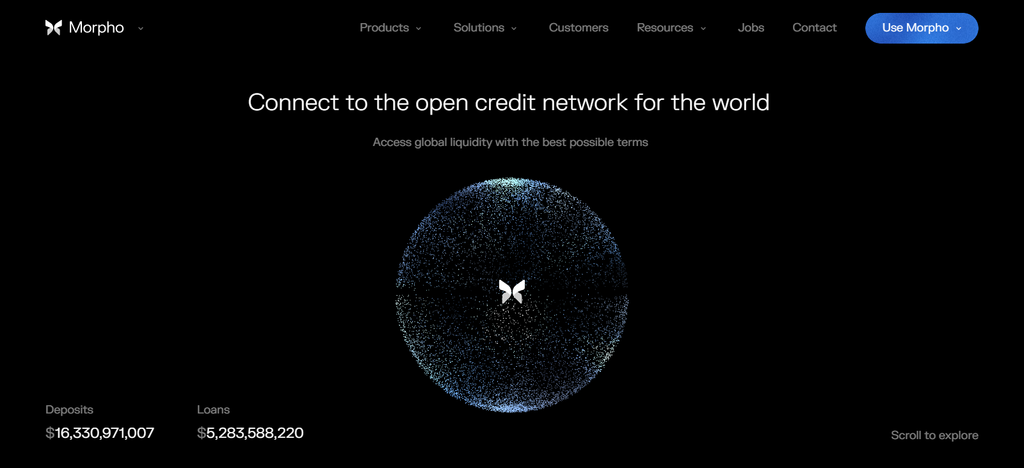
Lending demands determine TVL. The project also offers staking, yield farming and lending activities. The yield is also derived from EigenLayer and other lending services.
Liquidity is also high because of the broad collateral lending services. Depending on the lending service, users can withdraw their funds according to the terms of the service.
Risks
- Lending smart contract risks
- Liquidation and depeg risk of LRTs
- Liquidity fragmentation and impermanent loss
- Risks from optimistic assumption of LRTs
- Regulatory risk of lending
Best-fit Users
- Users of lending and borrowing DeFi services
- Users wanting ETH collateral
- Farmers wanting leverage
- Users of lending services
Quick Comparison of Puffer Finance Rivals
| Protocol | LRT Token | Main Strength | Yield Potential | Liquidity | Best For |
|---|---|---|---|---|---|
| EtherFi | eETH, weETH | Largest LRT ecosystem and TVL | High | Excellent | Institutions and large ETH holders |
| Renzo | ezETH | High rewards and multichain reach | Very High | Strong | Yield-focused users |
| Kelp DAO | rsETH | Multi-LST diversification | High | Good | Diversification seekers |
| Swell | rswETH | LRT + Layer-2 ecosystem | Very High | Good | Growth-oriented investors |
| Eigenpie | pieETH | Isolated restaking model | Medium-High | Moderate | Risk-conscious stakers |
| Lido | stETH | Market-leading liquid staking | Medium-High | Excellent | Conservative ETH holders |
| Stader | ETHx | Diversified validator network | Medium | Good | Balanced-risk investors |
| Pendle | Supports multiple LRTs | Yield trading and optimization | Very High | Strong | Advanced DeFi users |
| EigenLayer | Native Restaking | Core restaking infrastructure | High | Indirect | Direct restakers and builders |
| Morpho | Supports multiple LRTs | Lending and collateral utility | Variable | Strong | Borrowers and leveraged users |
Conclusion
Puffer Finance competes with a growing number of Ethereum liquid restaking protocols. The best option for an investor is dependent on their goals. For example, the largest and most liquid protocol is EtherFi. Renzo is also worth considering for investors looking for a high-yielding protocol.
For investors looking for a protocol with risk mitigation, Eigenpie is the best option. Also, Swell Finance is the only protocol that offers restaking and liquidity in the Layer 2 space. Puffer and Lido are the most established protocols.
Pendle and Panger are also good options for advanced yield farming. EigenLayer provides the underlying architecture for restaking, and Morpho provides lending services for LRT. Ultimately, each investor must consider their risk tolerance as well as their DeFi investment strategy and priorities.
FAQ
Which is the largest rival to Puffer Finance?
EtherFi is widely considered the largest Puffer Finance rival due to its substantial TVL, deep liquidity, broad DeFi integrations, and strong adoption among both retail and institutional Ethereum stakers.
Which Puffer Finance competitor offers the highest yield potential?
Renzo, Swell, and Pendle are often favored by yield-focused users because they combine staking rewards, restaking incentives, ecosystem rewards, and advanced yield-generation opportunities.
Which protocol is best for diversifying restaking exposure?
Kelp DAO stands out for diversification because it supports multiple liquid staking assets, including stETH, rETH, and other LSTs, through a single restaked token.
How does EtherFi differ from Puffer Finance?
EtherFi focuses on scale, institutional adoption, and deep liquidity, while Puffer Finance emphasizes validator decentralization, anti-slashing innovations, and Ethereum-native restaking participation.


