
XRP Ledger Proposes Quantum-Resistant Account Upgrade, Ripple Aims for 2028 Security Goal
The XRP Ledger is gearing up for a major security upgrade to shield crypto accounts from the dangers of future quantum computers. The idea behind the proposed quantum-resistant account system is that users could register new cryptographic keys and disable existing signing keys, without any change to how they store or access their digital possessions.
The upgrade will also seek to keep existing transaction fees in place despite the additional data quantum-resistant signatures would require. Ripple is aiming for more robust quantum security by 2028, with developers working on technical improvements, compatibility testing and independent security reviews before the proposed system moves toward implementation.
XRP Ledger Introduces Quantum-Resistant Security Features for Cryptocurrency Wallets
The XRP Ledger Foundation also suggested an account upgrade to enable users to substitute conventional cryptographic signatures with quantum-resistant ones. Account holders could register new security keys and disable their current signing methods, decreasing potential exposure to future quantum computing attacks.
Currently, XRP Ledger transactions can reveal public keys when users use their wallets to authorize payments. Current encryption is secure against conventional computers, but sufficiently powerful quantum computers could break it .

The upgrade is meant to reduce this long-term risk before quantum attacks become viable against blockchain networks. Most importantly, users would not have to change the way they hold or access their XRP and other supported assets.
The move follows other XRP Ledger security measures, such as proposed controls to prevent unauthorized stablecoin minting by approved issuers.
Quantum Resistant Signatures for Keeping XRP Transaction Costs at Present Levels
The developers have chosen ML-DSA-44, a post-quantum digital signature standard that was approved by the National Institute of Standards and Technology (NIST) in 2024.
This technology requires larger cryptographic signatures and public keys than the present system. Our implementation requires 3,732 bytes for public keys and signatures.
The proposed design would take up about 5,331 bytes of storage space for each protected payment, compared to 1,704 bytes for a standard payment. This means a significant increase in the amount of transaction data required.
The Foundation intends to keep the current base transaction fees on the XRP Ledger despite the increased cost of storage. It would make the security transition more accessible by not exposing users who adopt quantum-resistant protection to higher standard payment costs.
In the meantime, the XRP Ledger Batch amendment has brought another network improvement, which allows multiple transactions to be combined into one operation.
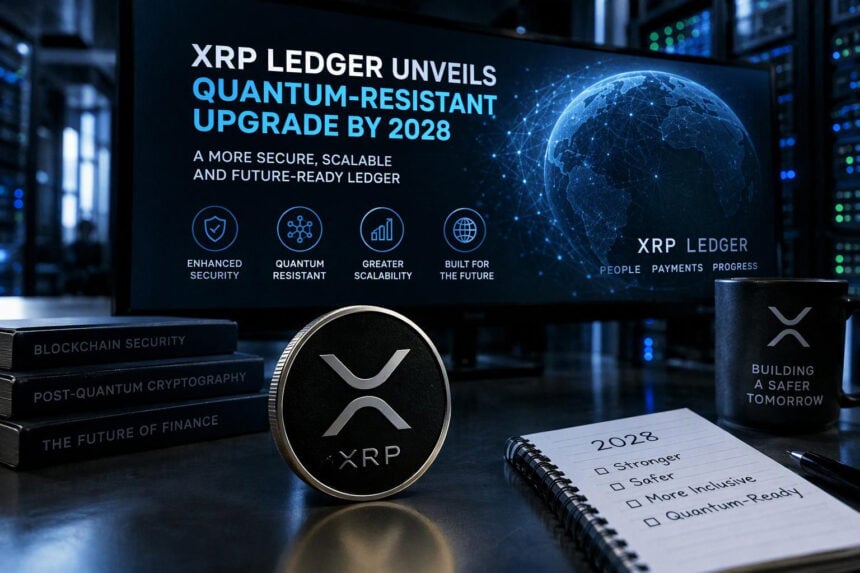
Ripple targets stronger quantum protection by 2028
In the first half of 2027, the XRP Ledger Foundation plans to conduct a quantum migration study and then continue with development and technical improvements.
Also developers are working on fixing inconsistencies in key generation between python, javascript and server implementation. It will be important to address these differences to ensure reliable security across the proposed system.
The development roadmap also includes an estimated budget of $215,000 to $255,000 and approximately 640 development hours for technical reviews and security audits.
Full validator performance testing of the proposed quantum resistant signatures has not yet been published. So further testing and independent security reviews will still be important before wider rollout.
To summarize, the proposed upgrade is a significant move to prepare the XRP Ledger for future crypto threats. Ripple’s 2028 security goal underscores the need for early preparation, but the success of the implementation will depend on the progress of development, testing and independent validation.