
This article will highlight the Best AI Tools to Manage Business Financial Data that assist companies in automating accounting processes, increasing accuracy, and obtaining insights in real-time.
By combining cutting edge analytics and machine learning, these tools help streamline financial processes and reduce manual mistakes. From identifying trends to better decision-making, AI-powered financial tools enhance efficiency, control, and business performance.
Key Point & Best AI Tools to Manage Business Financial Data
| Platform | Key Points |
|---|---|
| Oracle NetSuite AI | Real-time financial analytics • Automated forecasting • AI-driven anomaly detection • Unified ERP integration • Scalable for enterprises |
| IBM Planning Analytics (TM1 + Watson AI) | Advanced scenario modeling • AI forecasting with Watson • In-memory data processing • Strong budgeting tools • Enterprise-grade scalability |
| Workday Adaptive Planning AI | Continuous planning & forecasting • Workforce + finance integration • AI-based insights • Easy collaboration • Cloud-native flexibility |
| QuickBooks Advanced AI | Automated bookkeeping • Smart expense categorization • Cash flow predictions • SMB-friendly interface • Real-time reporting |
| Xero AI Insights | Predictive cash flow • Automated reconciliation • Smart financial suggestions • Cloud-based access • Ideal for small businesses |
| Zoho Books AI | AI assistant (Zia) • Invoice automation • Expense tracking • GST compliance (India-friendly) • Affordable pricing |
| Tableau + Einstein AI (Salesforce) | Advanced data visualization • AI-driven insights (Einstein) • Predictive analytics • Seamless Salesforce integration • Interactive dashboards |
| Alteryx AutoML Finance Suite | Automated machine learning • Predictive financial modeling • Data blending tools • No-code/low-code interface • Fast deployment |
| Anaplan AI for Finance | Connected planning ecosystem • Real-time scenario analysis • AI forecasting • Collaboration at scale • Enterprise agility |
| FIS Global AI Risk Suite | AI-based risk analytics • Fraud detection • Regulatory compliance • Real-time monitoring • Strong banking integration |
1. Oracle NetSuite AI
NetSuite AI provides standard business tools with automatic accounting and real-time reporting and forecasting. Businesses are able to incorporate AI for more effective transaction management and workflow improvement. NetSuite also allows businesses to optimize accounting and forecasting.
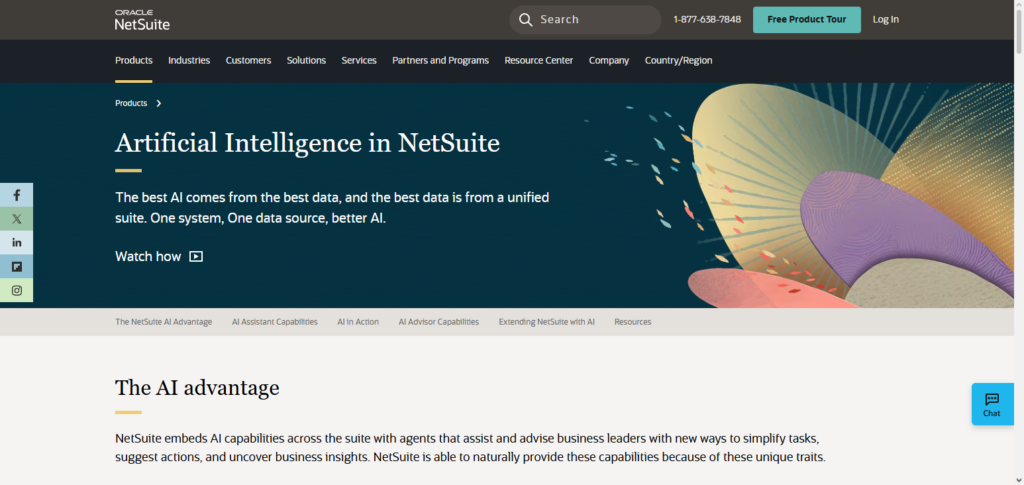
While participating in some of the Best AI Tools to Manage Business Financial Data, NetSuite has proven to be the best due to its constant ability to learn and deliver predictive reporting and other automated messages. NetSuite has proven to integrate with many departments in order to improve the real time allocation of an organizations funds.
Oracle NetSuite AI Features, Pros & Cons
Features
- AI-powered insights of reports
- Invoices and bills are captured and processed automatically
- Cash flow can be predicted
- Suggestions and recommendations
- Risk and anomaly detection (Oracle Documentation)
Pros
- ERP can be used
- Real-time visibility into financials
- Automation means less manual work
- Growing businesses are accommodated
- More information means better insights
Cons
- Implementation means costs
- Complicated
- Users need training
- Customization costs money
- Very small businesses are not accommodated
2. IBM Planning Analytics (TM1 + Watson AI)
IBM Planning Analytics is a best in class financial planning and analytics tool. It is able to simplify reporting, budgeting, forecasting, and planning in a realtime collaborative format. It is made for the best of the best.
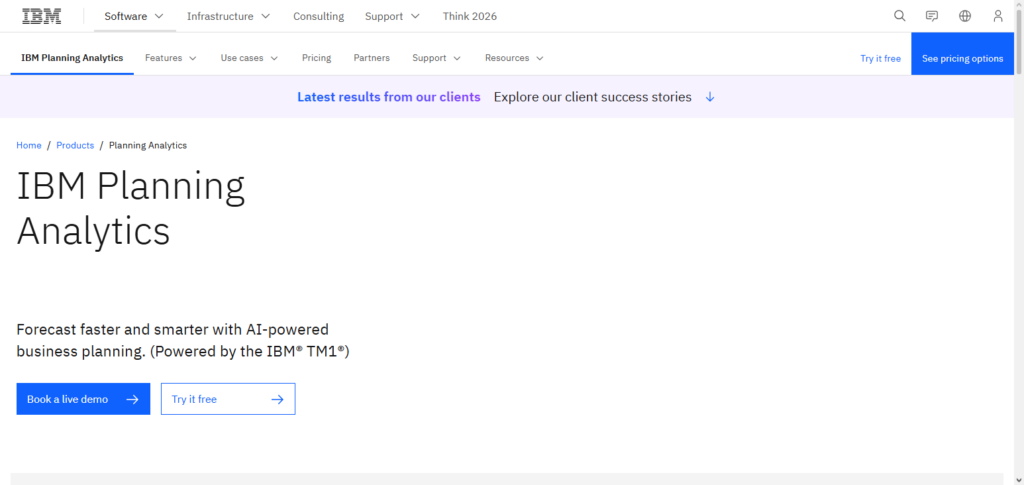
It allows multiple analyses to be conducted to determine the best option. While analyzing Best AI Tools to Manage Business Financial Data, IBM excels with the best analysis and forecasting and is able to provide your organization with the tools needed to successfully complete a flexible planning and implementing mission.
IBM Planning Analytics Features, Pros & Cons
Features
- Budgeting and forecasting using AI
- Planning and simulation of scenarios
- Processing of data, in-memory
- Integration of Watson AI
- Dashboards for finance in real-time
Pros
- Resiliency in enterprise analytics
- Accuracy in forecasting
- Processing and analysis of large data sets
- Multiple Means of deployment
- High level of analytics in planning
Cons
- Lack of understanding
- High costs for small and medium businesses
- High level of understanding needed
- Difficulty in using the system
- Difficulty in setting and maintaining the system
3. Workday Adaptive Planning AI
Workday Adaptive Planning AI combines modern financial technology, AI, and real-time data to offer insights for budgeting, forecasting, and workforce planning. The technology also automates predictive modeling of budgeting and workforce planning.

The new platform includes conversational AI so that users can access insights and recommendations on forecasting and budgeting planning.
When looking at Best AI Tools to Manage Business Financial Data, Workday is noted for its ability to integrate HR and financial data. Workday’s AI capabilities enhance forecasting, and its collaborative planning tools allow agile teams to make complex business decisions quickly.
Workday Adaptive Planning Features, Pros & Cons
Features
- Predictive forecasting of finance
- Planning based on scenarios and drivers
- Integration of real-time data
- Planning for workforce and finance
- Anomaly detection and AI (Scribd)
Pros
- Good interfaces
- Risk and anomaly detection and AI (Scribd)
- Timely
- Real-time planning updates
- Evolving cloud system
Cons
- High costs
- Fewer options to customize
- Workday system needs training
- Workday needs to be used as an ecosystem
4. QuickBooks Advanced AI
QuickBooks Advanced AI integrates automation and intelligent insights to make accounting and bookkeeping less burdensome for SMEs. QuickBooks makes bookkeeping easier with tools for automatic expense categorization, invoice tracking, and financial reporting. AI tools help to predict cash flow, highlight anomalies, and reduce financial risks.
When looking for Best AI Tools to Manage Business Financial Data, QuickBooks stands out for its simplicity and budget. Business owners can automate repetitive tasks and make decisions with AI without needing financial expertise or complex systems.
QuickBooks Advanced AI Features, Pros & Cons
Features
- Categorization for expenses is done by AI
- Cash flow prediction done by AI
- Smart invoicing
- Reporting on finances is done in real time
- Insights available for taxes
Pros
- Interface is great for beginners
- Competitive pricing
- Set up is easy
- Great automation for small to medium sized businesses
- Highly reliable
Cons
- Advanced analytics are very limited
- Large number of employees not catered to
- Reporting is basic
- Customization options are limited
- Less integration
5. Xero AI Insights
Xero AI Insights simplifies financial management using automation to streamline bank reconciliation, expense tracking, invoicing, and other processes. This cloud-based accounting software provides real-time analytics and recommendations on spending to help businesses increase profitability.
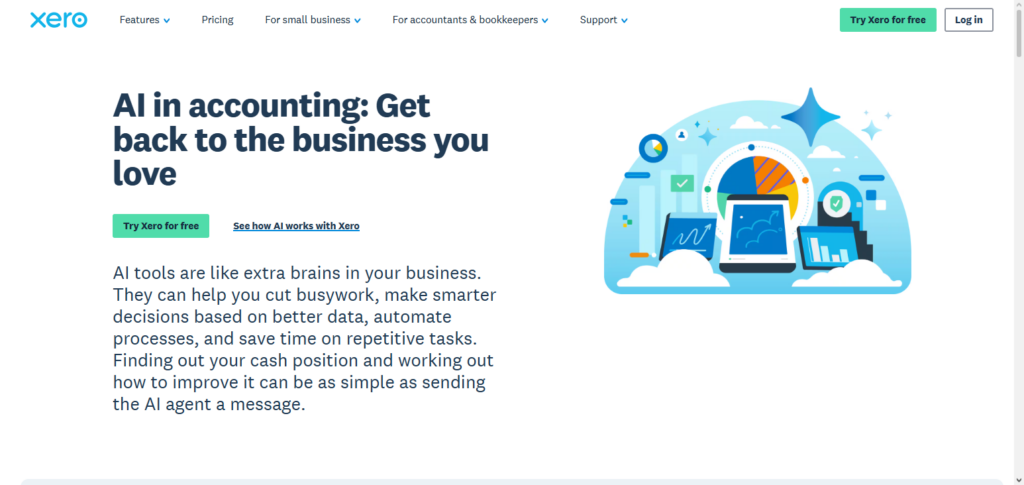
Xero identifies important trends and provides key recommendations to help businesses improve their cash flow. Xero has developed a reputation for having one of the Best AI Tools to Manage Business Financial Data.
This is due to their easy-to-navigate interface and strong integration ecosystem. This tool is especially popular for the predictive analytics tools, intelligent reporting, and streamlining of manual processes that allow small businesses and startup companies to easily keep accurate financial records.
Xero AI Insights Features, Pros & Cons
Features
- Reconciliation of banks is done by AI
- Cash flow is monitored in real time
- Insights are provided by AI
- Smart invoicing
- Predictive analytics
Pros
- User interface is clean
- Integrations are strong
- Great for start-up businesses
- Updates are in real time
- Collaboration is easy
Cons
- Advanced features are limited
- Necessary add-ons
- Price is incremental as usage does
- Not suited for big businesses
- Customization is mediocre
6. Zoho Books AI
Analytics and automation of the software Zia enables Zoho Books AI to effectively manage business finance. This tool simplifies invoicing, expense tracking, tax reporting, and financial reporting. Zoho Books AI’s financial operations management is enhanced with anomaly detection, cash flow prediction, and financial operations improvement recommendations.
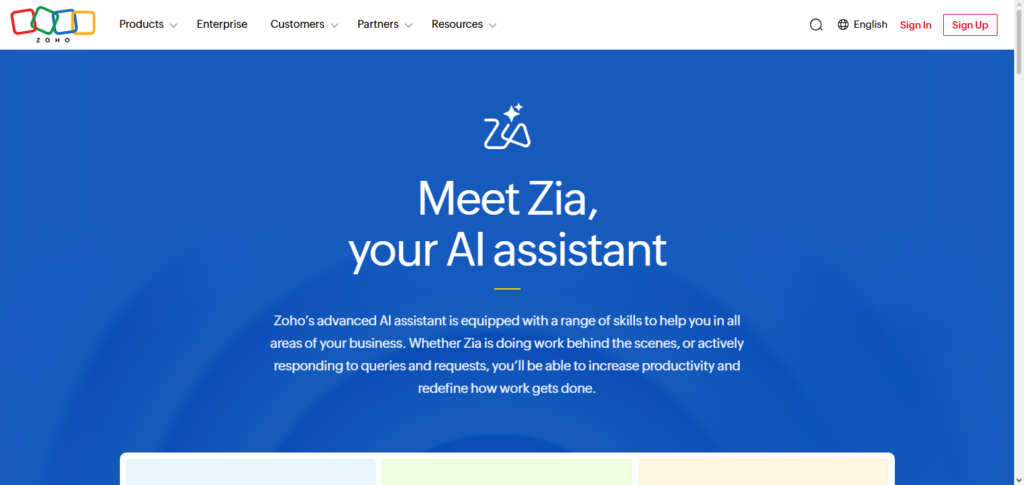
Of all the tools used to manage financial data through AI, Zoho’s Books is the most valuable because of the tool’s economical cost, along with its complaint features and flexibility for the Indian region. This tool simplifies accounting workflows, increases financial visibility and operational excellence by ensuring compliance.
Zoho Books AI Features, Pros & Cons
Features
- Insights from AI assistant (Zia)
- Automated billing and invoicing
- Expense tracking is automated
- ** Great Set of Compliance Features for India
- Financial reports can be customized
Pros
- Great automation
- Easy to use
- Budget-friendly
- Integration with Zoho ecosystem
Cons
- Limited analytics
- Limited external integrations
- Advanced UI design is lacking
- Limited customization
- Basic UI design
7. Tableau + Einstein AI (Salesforce)
Salesforce Einstein AI and Tableau offer great data prediction and visualization technology for financial management and analytics. it also helps to turn financial data into interactive dashboards to help improve speed and efficiency for management decision-making. Einstein AI helps by predicting and recommending actions from certain data.
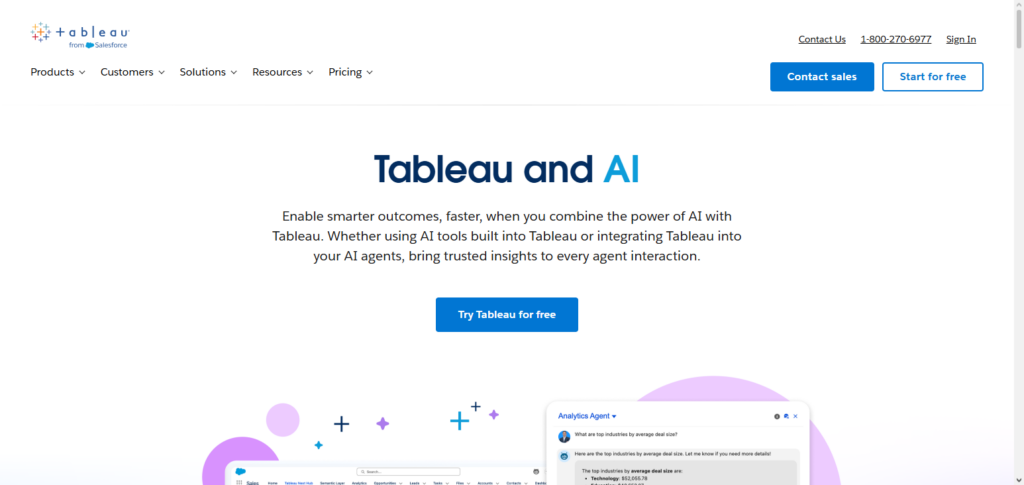
When analyzing the Best AI Tools to Manage Business Financial Data, this tool is exceptional in analytics and intelligence. Businesses gain insights into analyzing and predicting the future by pinpointing trends and pinpointing financial opportunities. An organization’s leadership is more data driven in their decision-making.
Tableau + Einstein AI Features, Pros & Cons
Features
- AI predictive analytics
- Advanced visualization on data
- Queries in natural language
- Integration with Salesforce
- Dashboards in real time
Pros
- Visualization is great
- Advanced AI analytics
- Fully customizable
- Ready for your company
- Strong analytical capabilities
Cons
- Costly license
- Data expertise required
- Data expertise required
- The setup is time-consuming
- Data quality dependence
8. Alteryx AutoML Finance Suite
Alteryx AutoML Finance Suite makes advanced analytics and machine learning easier for financial experts. Users can create models for prediction without requiring a programming background, so the tool is easy to use for all team members, such as those doing the data analytics and preparation.
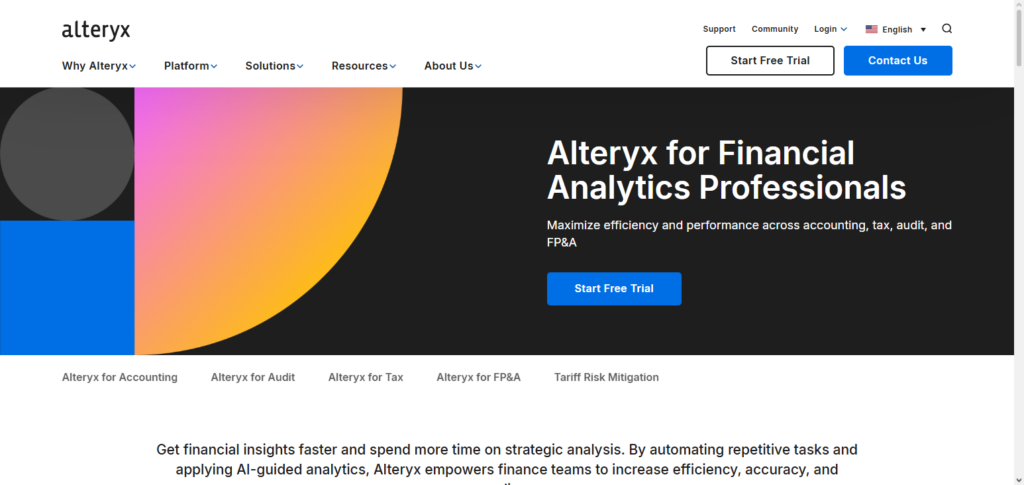
In the Best AI Tools to Manage Business Financial Data, Alteryx is noted for its ability to help users make decisions by providing user-comfortable automated insights. This tool is great for risk management, fraud detection, and predicting finances. It helps users in their optimum finance management by providing them the necessary insights to strategize effectively.
AutoML Alteryx Finance Suite Features, Pros & Cons
Features
- AutoML modeling without code
- Data preparation and blending
- Analytics on finances
- Automation of workflow
- Risk and modeling of fraud
Pros
- No coding
- Rapid deployment of modeling
- Powerful analytics
- Adaptive workflow
- Data-centric jobs
Cons
- Costly
- Data knowledge required
- Not beginner-friendly
- Visualization is limited
- Integration of BI needed
9. Anaplan AI for Finance
Anaplan AI for Finance is a unified planning system that connects financial, operational, and strategic data across an organization. It leverages AI to improve forecasting, modeling uncertainties, and overall decision-making. With this technology, users can collaborate and share data in real time, and eliminate departmental silos.
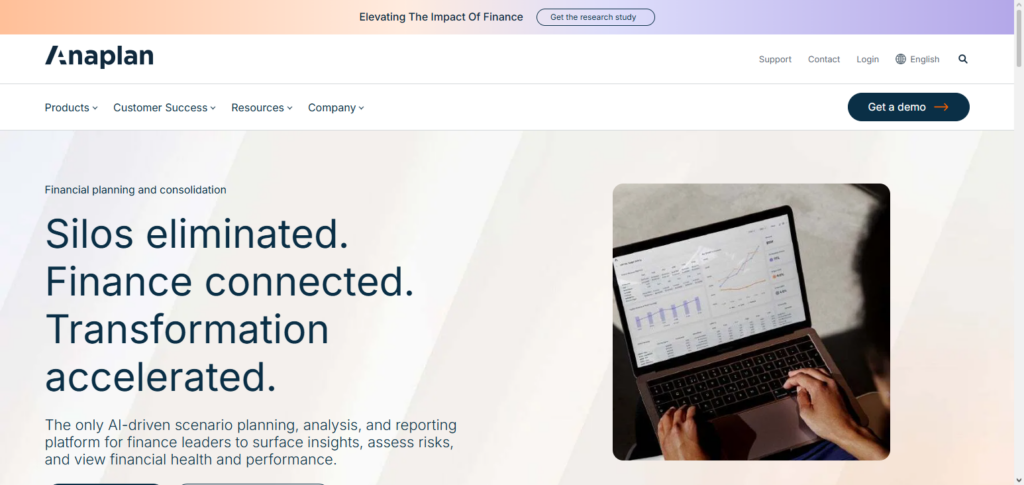
Anaplan is renowned for flexibility and scalability in the context of Best AI Tools to Manage Business Financial Data. With Anaplan, companies can model multiple scenarios, optimize the use of resources, and pivot in response to changing market conditions to achieve precise and responsive financial planning.
Anaplan AI Finance Features, Pros & Cons
Features
- Planning of connected enterprise
- Forecasting driven by AI
- Simulation of scenarios
- Collaboration in real time
- Financial modeling flexibility
Pros
- Extensive scalability
- Collaboration is adaptive
- Planning models
- Solutions of enterprise quality
Cons
- Costly implementation
- Complicated setup
- Time-consuming knowledge
- Skilled Employees required
- Businesses of small size are not suitable
10. FIS Global AI Risk Suite
FIS Global AI Risk Suite is a complete solution that focuses on risk management, fraud detection, and regulatory management within financial services. It incorporate sophisticated AI to perform real time monitoring of transactions and detect fraud.
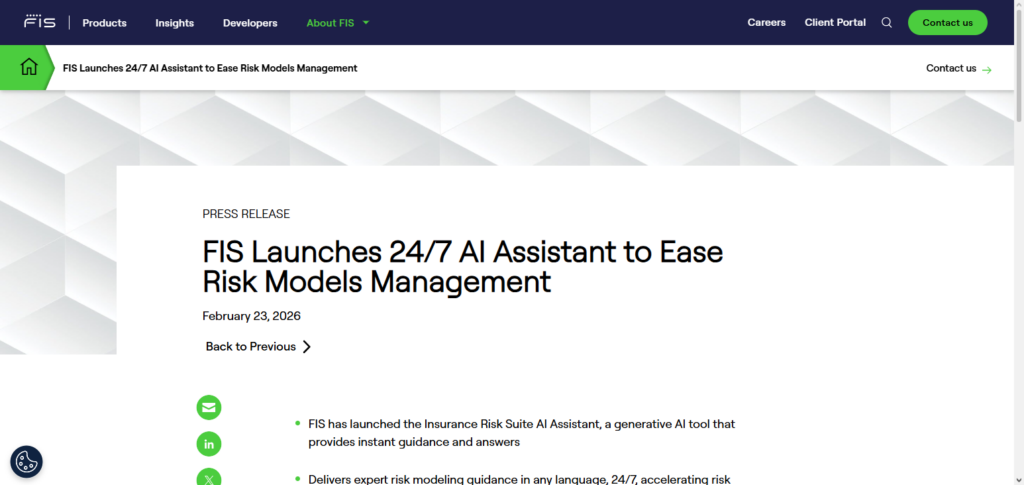
This system helps companies reduce financial risk and stay compliant to changing regulations. In the context of Best AI Tools to Manage Business Financial Data, FIS is praised for it’s attention to security and risk management. It equips users and financial institutions with the ability to understand and manage financial risk preemptively.
Suite AI Risk of FIS Global Features, Pros & Cons
Features
- Fraud detection powered by AI
- Monitoring risks in real time
- Tools for compliance with the law
- Surveillance of transactions
- Predictive analytics on risk
Pros
- High focus on security
- Monitoring in real time
- Financial Institutions
- Advanced risk analytics
- Extensive scalability
Cons
- Price is high
- Implementation is complicated
- Domain expertise is required
- Small-sized businesses are not suitable
- Accounting features are limited
Conclusion
To summarize, the Best AI Tools to Manage Business Financial Data are changing the way businesses conduct accounting, forecasting, and financial decision-making. Whether it’s enterprise options like Oracle NetSuite AI and IBM Planning Analytics, or more accessible tools like QuickBooks Advanced AI and Xero AI Insights, these tools bring automation, real time and predictive analytics.
They reduce manual work, increase accuracy, and keep businesses competitive. However, it’s important to find the right fit based on your business’ size, complexity, and goals. Nevertheless, it is clear adopting AI in finance is a strategic necessity.
FAQ
What are the best AI tools to manage business financial data?
The best AI tools to manage business financial data include platforms like Oracle NetSuite AI, IBM Planning Analytics, QuickBooks Advanced AI, and Xero AI Insights. These tools help automate accounting, forecasting, and reporting processes, making financial management more efficient and accurate.
How do AI tools improve financial data management?
AI tools improve financial data management by automating repetitive tasks such as data entry, reconciliation, and reporting. They also provide real-time insights, detect anomalies, and enhance forecasting accuracy. This leads to better decision-making and reduced human error.
Are AI financial tools suitable for small businesses?
Yes, many AI financial tools are designed specifically for small and medium businesses. Tools like QuickBooks Advanced AI and Xero AI Insights offer user-friendly interfaces, automation, and affordability, making them ideal for businesses without large finance teams.
Can AI tools help with financial forecasting?
Yes, AI tools use historical data and predictive analytics to generate accurate financial forecasts. Platforms like Workday Adaptive Planning and Anaplan AI for Finance allow businesses to run scenario analyses and plan future budgets effectively.
Do AI tools reduce financial errors?
AI significantly reduces financial errors by applying consistent rules, validating data in real time, and identifying anomalies. This minimizes issues like duplicate entries or incorrect calculations, improving overall financial accuracy.