
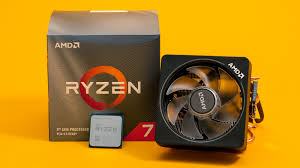
The Best CPUs For Mining Crypto will be covered in this post, with an emphasis on CPUs that provide RandomX and other CPU-friendly algorithms with great performance and efficiency.
We’ll examine hashrates, power consumption, and features to assist you in selecting the best CPU for dependable and successful cryptocurrency mining, from AMD’s potent Ryzen and Threadripper series to Intel’s premium Core and Xeon alternatives.
Key Point & Best CPUs For Mining Crypto
| CPU | Key Features / Notes |
|---|---|
| AMD Ryzen 9 7950X | Zen 4, PCIe 5.0, DDR5 support, high single & multi-core performance |
| AMD Ryzen 9 5900X | Zen 3, PCIe 4.0, DDR4, excellent multi-threading |
| AMD Ryzen 7 5800X3D | Zen 3, 3D V-Cache, gaming-optimized |
| AMD Ryzen 5 5600 | Zen 3, budget-friendly, DDR4 support |
| AMD Threadripper PRO 5975WX | Zen 3, workstation-grade, massive multi-threading, PCIe 4.0 |
| AMD Ryzen 9 7900X | Zen 4, high-performance desktop CPU, DDR5 & PCIe 5.0 |
| Intel Core i9‑13900K | Raptor Lake, hybrid architecture, DDR5 & PCIe 5.0, strong single-core |
| AMD Ryzen 7 7700X | Zen 4, gaming & productivity optimized |
| AMD Ryzen 5 7600X | Zen 4, entry-level high-performance, DDR5 |
| Intel Xeon W‑2295 | Workstation CPU, ECC memory support, strong multi-core performance |
1. AMD Ryzen 9 7950X
Based on AMD’s Zen 4 architecture, the AMD Ryzen 9 7950X is a premium desktop CPU with 16 cores and 32 threads, a TDP of about 170–200 W, and boost rates of up to 5.7 GHz. PCIe 5.0 for next-generation connectivity and DDR5 memory are supported.
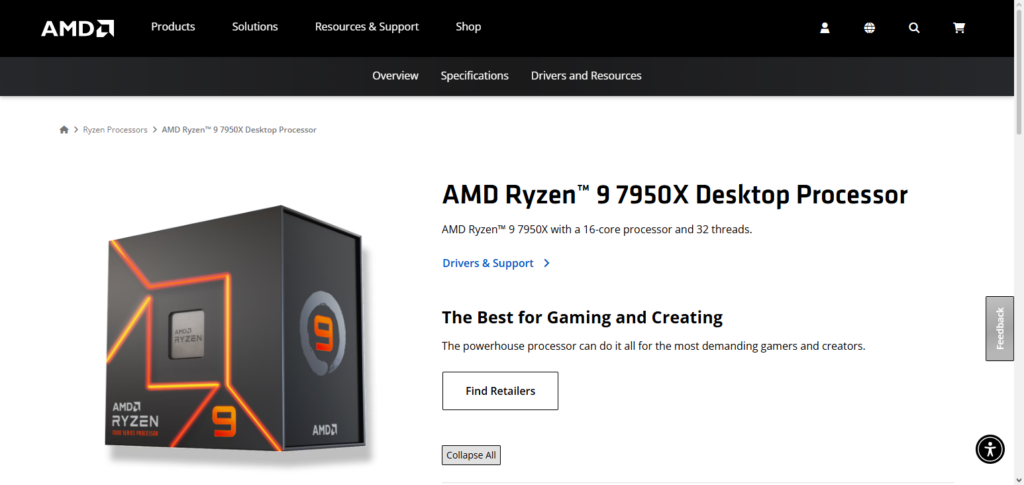
It is one of the best-performing consumer CPUs for cryptocurrency mining on the RandomX algorithm (used by coins like Monero), frequently reaching ~20 kH/s (≈21,500 H/s) in common setups, but some XMRig evaluations indicate even higher numbers near ~25 kH/s depending on memory and system tuning. The Ryzen 9 7950X’s high core/thread count and robust memory performance make it one of the finest CPUs for RandomX mining overall.
AMD Ryzen 9 7950X Features, Pros & Cons
Features
- 32 threads 16 cores (Zen 4)
- Boosts clock waves at 5.7 GHz
- PCIe 5.0 and DDR5
- L3 cache (improves data handling)
- Strong performance in gaming and multi-core tasks.
Pros
- Multi-threading (industry-leading)
- Excellent for mining (great RandomX hashrate)
- Future-proof
- Strong productivity performance
- Efficiency for the tier (low-an use)
Cons
- TDP requirements (170-200 W)
- Price expectations
- High DDR5 requirements
- Increased cooling requirements
- Basic tasks are overdone.
2. AMD Ryzen 9 5900X
With a base speed of roughly 3.7 GHz and a peak of up to 4.8 GHz, the AMD Ryzen 9 5900X is a 12-core, 24-thread Zen 3 CPU with a TDP of roughly 105 W. In the previous generation, it was a premier option for gaming and multitasking.
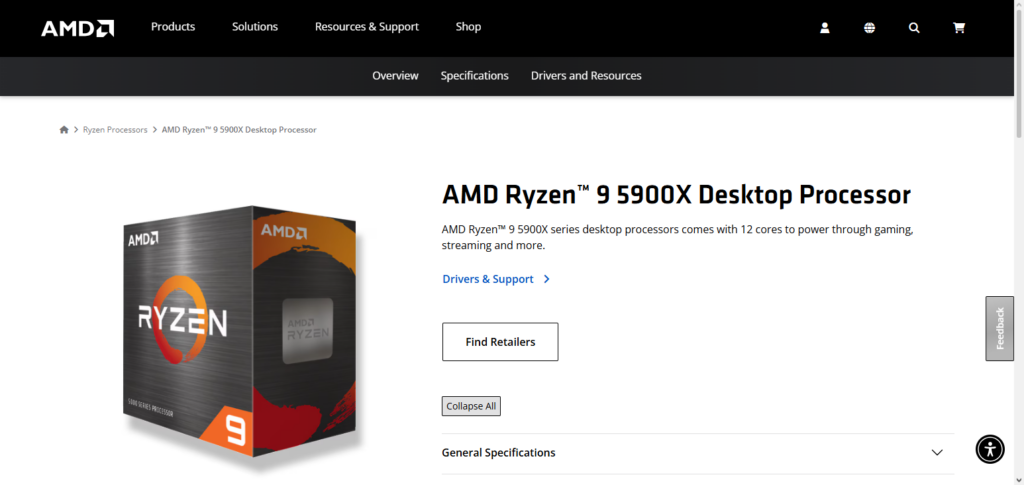
It has respectable hashrates (~16 kH/s reported) and good energy efficiency in relation to its power demand for RandomX crypto mining, making it competitive, if not superior, to more recent Zen 4 silicon. The Ryzen 9 5900X is still a good option for CPU mining Monero and other RandomX currencies at moderate hashrates in mining rigs where power efficiency is crucial.
AMD Ryzen 9 5900X Features, Pros & Cons
Features
- 24 threads 12 cores (Zen 3)
- Max boost at 4.8 GHz
- Support DDR4
- PCIe 4.0
- Efficient IPC performance
Pros
- Overall! Excellent CPU
- Good rating for crypto-mining (hashrate)
- Great performance in both single and multi-core tasks.
- Great performance in DDR4 systems (more affordable)
- High-end chips vs. lower power.
Cons
- Older than Zen 4 CPUs
- No DDR5 or PCIe 5.0 (lacks)
- 3D variants lower cache than.4. Very limited overclock potential
- Not the best for upgrades down the line
3. AMD Ryzen 7 5800X3D
The 8-core, 16-thread AMD Ryzen 7 5800X3D CPU uses AMD’s 3D V-Cache technology to enhance gaming performance. It can turbo up to about 4.5 GHz and has a TDP of about 105 W. The 5800X3D’s massive L3 cache makes it great for gaming, but it doesn’t always transfer into better RandomX mining performance.
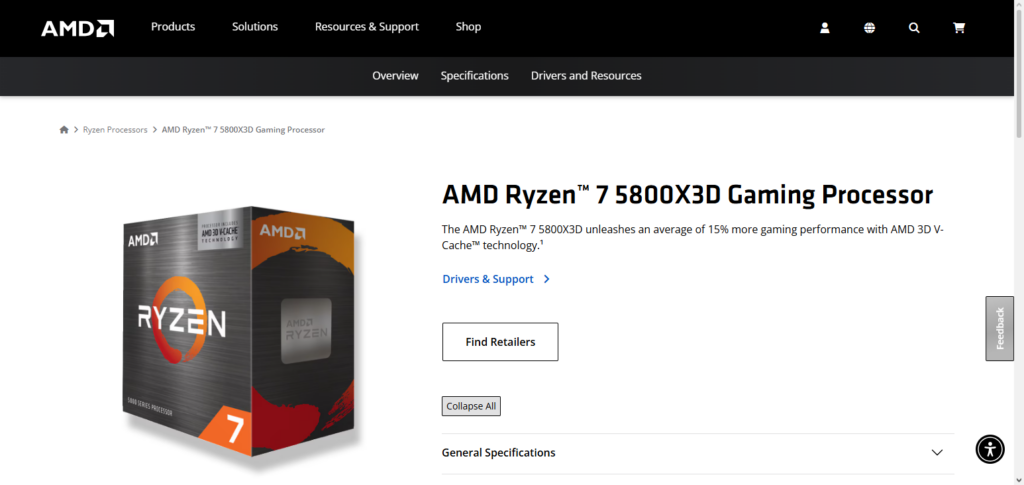
According to certain benchmarks, its hashrate is only about 9 kH/s, which is less than many other CPUs with comparable core counts. Nonetheless, it continues to mine RandomX consistently, and its robust cache is more beneficial than CPUs with conventional cache. It is still a strong CPU for mixed use, although it is not as good for pure mining as CPUs with more cores.
AMD Ryzen 7 5800X3D Features, Pros & Cons
Features
- 8 cores / 16 threads
- 3D V‑Cache
- Boost ~4.5 GHz
- DDR4
- Gaming focused
Pros
- Amazing gaming performance
- Lower heat output than many high-end CPUs
- 3D V‑Cache improves performance for cache-hungry tasks
- Good stability
- Very good single-core performance
Cons
- Hash rate for mining is relatively low for larger CPUs
- No support for DDR5
- Pricey for 8-core CPUs
- Not the best choice for content creation
- Future upgrade paths are limited
4. AMD Ryzen 5 5600
With a base speed of around 3.5 GHz and a peak of about 4.4 GHz, the AMD Ryzen 5 5600 is a 6-core, 12-thread Zen 3 CPU with a TDP of about 65 W. It is an affordable CPU that performs well in productivity, gaming, and daily duties. A 6-core CPU like the Ryzen 5 5600 generates modest hashrates proportionate to its core count in RandomX crypto mining, usually in the ~5–6 kH/s range as observed with similar 6-core CPUs.
This makes it an affordable mining option, but the returns are comparatively low when compared to higher-end chips. For novice miners seeking rudimentary CPU mining capabilities, it is still effective and reasonably priced.
AMD Ryzen 5 5600 Features, Pros & Cons
Features
- 6 cores / 12 threads
- Boost ~4.4 GHz
- DDR4
- Lower TDP (~65 W)
- PCIe 4.0
Pros
- Very good budget CPU
- Low power consumption
- Good price
- Capable of casual mining
- Good performance for mainstream gaming
Cons
- Mining RandomX yields lower hashrate
- Poor performance under high workloads
- No DDR5
- Limited cores for multi-threading
- Slower than most Ryzen 7000 CPUs
5. AMD Threadripper PRO 5975WX
Built on the Zen 3 architecture, the AMD Threadripper PRO 5975WX is a professional workstation CPU with 32 cores and 64 threads and a typical TDP of about 280 W. It is intended for enterprise workloads, content production, and intense multitasking.
Extremely high core counts in RandomX crypto mining translate into extremely high theoretical hashrates; under ideal circumstances, XMRig benchmarks on comparable Threadripper machines with 32 cores frequently exceed ~66–68 kH/s.
Although particular 5975WX data is less common, Threadripper PRO processors’ large core counts and copious cache provide exceptional mining performance; nonetheless, their high power draw and platform cost make them more appropriate for workstation use with mining as a secondary duty.
AMD Threadripper PRO 5975WX Features, Pros & Cons
Features
- 32 cores / 64 threads
- High multi-core boost
- Large L3 Cache
- PCIe 4.0 x128
- ECC Memory Support
Pros
- Workstation Powerhouse
- Extremely High Mining Hashrate
- Excellent For Professional Workloads
- Great Memory Bandwidth
- Ideal For Servers/Multi-Tasking
Cons
- Extremely Expensive
- Very High TDP (~280 W)
- Needs Workstation Motherboard
- Overkill For Gaming
- Higher Running Costs
6. AMD Ryzen 9 7900X
The AMD Ryzen 9 7900X is a 12-core, 24-thread Zen 4 CPU with a TDP of about 170 W and boost frequencies of up to ~5.6 GHz. For gaming and content production, it provides powerful single- and multi-threaded performance.
According to reports, this CPU’s hashrate for RandomX cryptocurrency mining is approximately 15–17.5 kH/s under common settings, making it a capable mining CPU that falls between mid-range and flagship performance. The Ryzen 9 7900X balances great energy consumption for its class with good performance in mining and computing, even though it lacks the raw power of the 7950X.
AMD Ryzen 9 7900X Features, Pros & Cons
Features
- 12 Cores / 24 Threads
- Boost ~5.6 GHz
- DDR5 & PCIe 5.0
- Zen 4 Architecture
- High IPC
Pros
- Strong Multi-Core Performance
- Good Mining Hashrate
- Solid Gaming Performance
- Future Platform Support
- Great Productivity Performance
Cons
- Higher Power Draw
- Needs Good Cooling
- Doesn’t Beat 7950X
- DDR5 Cost
- Not Ideal For Budget Builds
7. Intel Core i9‑13900K
With 8 performance cores and 16 efficiency cores (a total of 24) and 32 threads, the Intel Core i9-13900K is a high-end consumer processor with a hybrid design, boost frequencies up to ~5.8 GHz, and a TDP of about 125 W (base) and more under load.
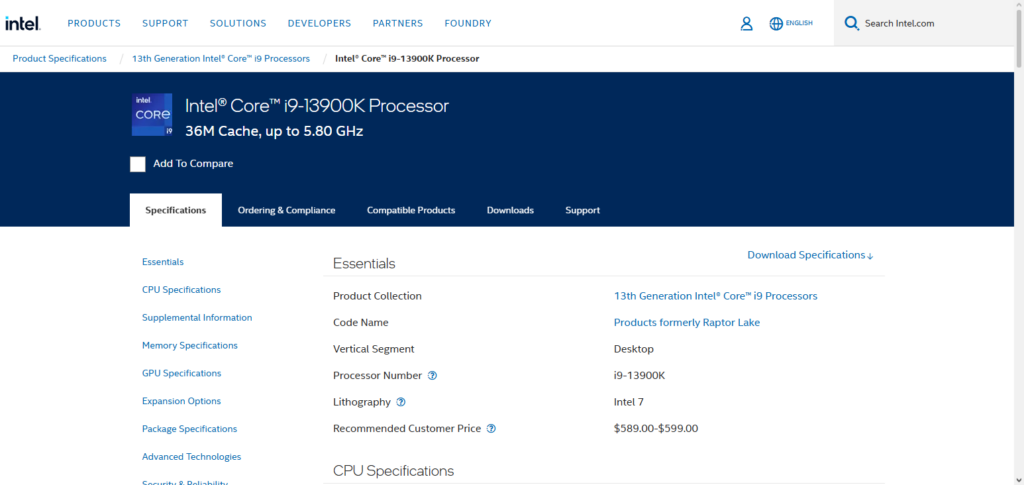
The i9-13900K has a hashrate of about ~13–14 kH/s in RandomX mining, which is competitive with other high-end CPUs but typically lags behind higher-core AMD parts because of lower cache per thread, according to slab tables. However, when compute performance and power consumption are balanced, the Core i9-13900K is good for mining and robust for mixed tasks.
Intel Core i9-13900K Features, Pros & Cons
Features
- 24 Cores (8 P + 16 E)
- Boost Up To ~5.8 GHz
- DDR5 & PCIe 5.0
- Hybrid Performance/Efficiency Design
- Excellent Single-Core Speed
Pros
- Top Single-Thread Performance
- Good General Use
- Decent Mining Hash
- Great Gaming CPU
- Strong Multi-Tasking
Cons
- Power Hungry Under Load
- Efficiency cores do not aid mining.
- Requires cooling.
- Cost of platform.
- Intel platform upgrades are convoluted.
8. AMD Ryzen 7 7700X
The AMD Ryzen 7 7700X is an 8-core, 16-thread Zen 4 CPU with a TDP of about 105 W and boost frequencies of up to ~5.4 GHz. It performs well in both productivity and games. Typical hashrates for RandomX cryptocurrency mining are around 13 kH/s, which is higher than previous 8-core CPUs and comparable to mid-to-upper tier mining performance for consumer chips.
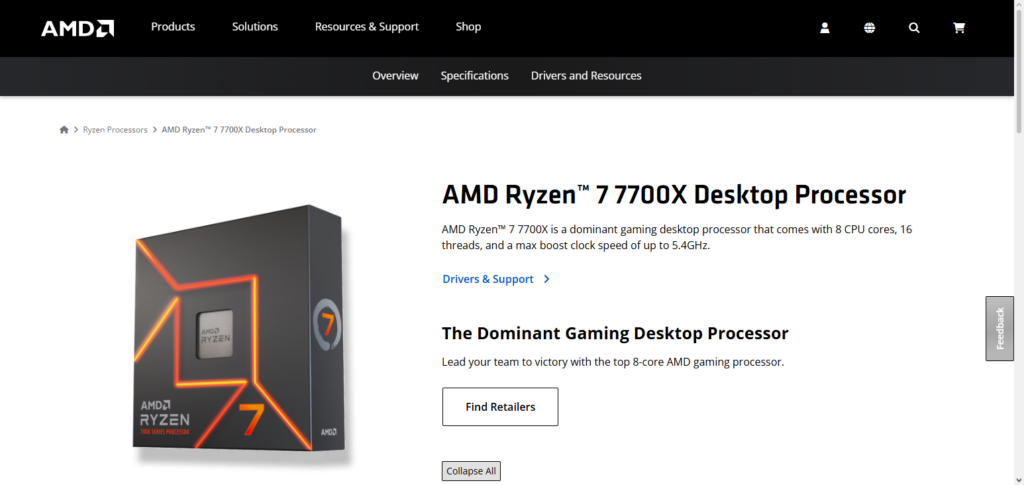
It is a good option for miners who desire respectable hash production without the high cost or power consumption of larger CPUs due to its contemporary architecture and higher power efficiency.
AMD Ryzen 7 7700X Features, Pros & Cons
Features
- 8 cores / 16 threads
- Boosts to ~5.4 GHz
- Supports DDR5 & PCIe 5.0
- Zen 4 has better IPC
- Improved cache
Pros
- Performance is great
- Excellent for gaming
- Given the number of cores, mining goes great with this cpu
- TDP is lower than the flagship
- Price to performance ratio is excellent
Cons
- Multi-core performance is lacking at the top end
- DDR5 platform has a high cost
- Workstation usage with heavy workloads is not recommended
- Mining profitability is average
- 12-core CPUs are definitely faster
9. AMD Ryzen 5 7600X
The AMD Ryzen 5 7600X is a 6-core, 12-thread Zen 4 CPU with a TDP of about 105 W and boost frequencies of up to ~5.3 GHz. Strong value and outstanding performance per core are its design goals.
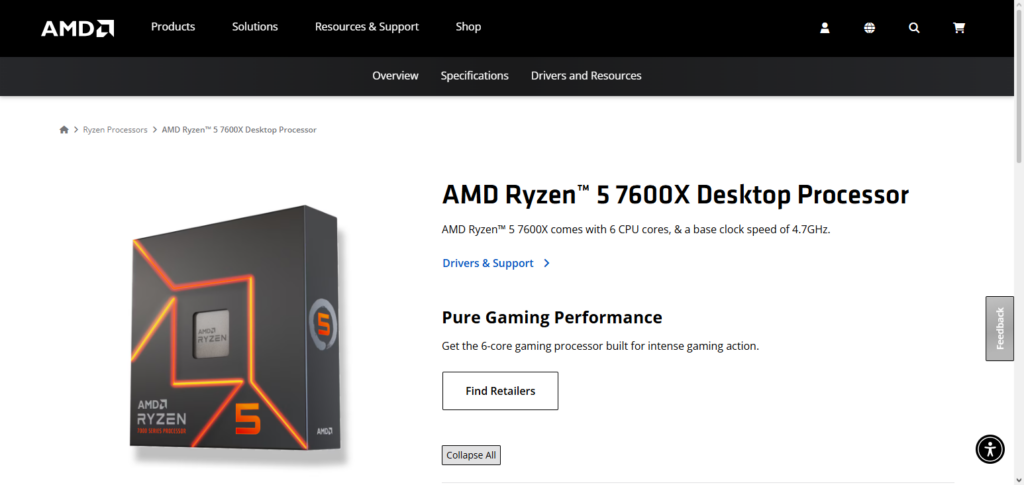
This CPU performs well among mid-range CPUs for RandomX crypto mining, with acceptable hashrates of about 8–10 kH/s. It is frequently cited as one of the better value mining CPUs in its class. It is adaptable for people who want CPU mining on the side because it provides effective mining capability while still excelling in gaming and general tasks.
AMD Ryzen 5 7600X Features, Pros & Cons
Features
- 6 cores / 12 threads
- Boosts to ~5.3 GHz
- Supports DDR5 & PCIe 5.0
- Zen 4 is more efficient
- Excellent clock speeds
Pros
- Value for Zen 4 is great
- Lower TDP compared to larger CPUs
- Adequate for general use
- Mining is fairly decent for the class
- Excellent for gaming
Cons
- Hashrate is the lowest on this list
- Difficult tasks are not recommended
- DDR5 is a requirement
- Multitasking is average
- Limited future headroom
10. Intel Xeon W‑2295
With 18 cores and 36 threads, a base frequency of roughly 3.0 GHz, and a TDP of about 165 W, the Intel Xeon W2295 is a workstation/server class processor.
Xeon CPUs emphasis stability and enterprise features (ECC memory, reliability) over sheer consumer performance. Benchmarks indicate that this Xeon model can generate approximately 8.5–9 kH/s for RandomX crypto mining.
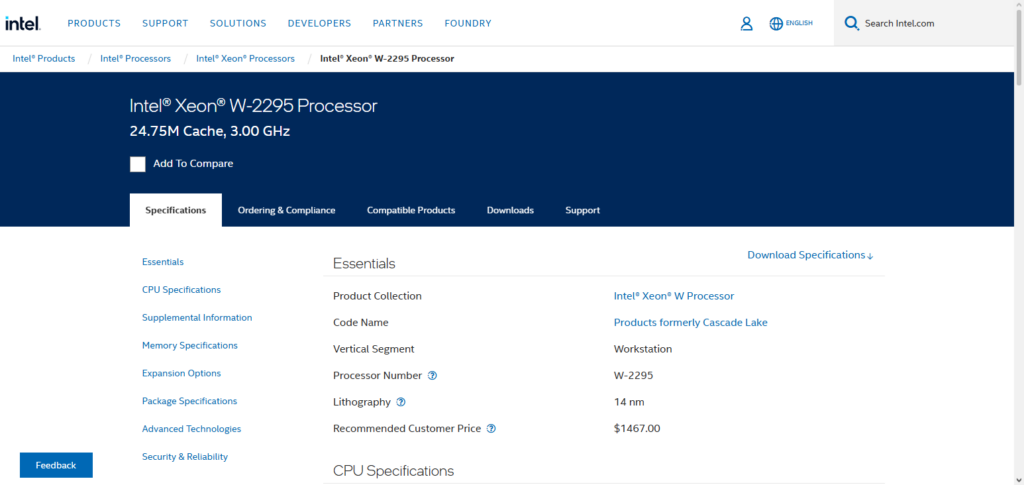
If converted from workstation hardware, it is still a useful mining processor even though it is not as powerful as many high-end Ryzen or Threadripper CPUs.
Although Xeon chips can be more affordable for mining, particularly when purchased used, their mining efficiency is typically lower than that of more recent consumer CPUs.
Intel Xeon W‑2295 Features, Pros & Cons
Features
- 36 Threads / 18 Cores
- Design oriented for Workstations
- Support for ECC memory
- Classical DDR4 for Servers
- Resilience for long-term periods and stability
Pros
- Reliability
- Performance at the Workstation level
- Multi-core mining at the level of the decent range
- Support for ECC
- Professional Workloads Support
Cons
- Architecture is dated
- Mining is worse than newer CPUs
- Single-core performance is lower
- Power consumption is higher
- Upgrades on the Legacy platform
Conclusion
CPUs with higher core counts, higher thread counts, higher caches, better memory bandwidth, and higher energy efficiency will perform better with the RandomX algorithm, which is used with cryptocurrencies like Monero.
The most handsomely rewarded CPUs for mining cryptocurrency are the most recent models of the Ryzen 9 7950X and Threadripper PRO 5975WX considering raw hashrate and core counts. The Ryzen 9 7900X and Ryzen 7 7700X are mid ranger mining options (balance of hashrate and efficiency) while budget options (level of energy consumption) are the Ryzen 5 5600 and 7600X.
The i9-13900k and Xeon W-2295 – while still strong – are less efficient per watt than AMD options. So if the goal is a highest hashrate and energy efficiency, or the best economic efficiency then that will help make a decision on the best CPU options available.
FAQ
Which CPU is the best for crypto mining?
For RandomX mining, AMD’s high-core CPUs lead the performance charts. The Ryzen 9 7950X and Threadripper PRO 5975WX offer the highest hashrates due to their massive cores, threads, and large cache sizes, making them the top choices for serious miners. Mid-range CPUs like the Ryzen 9 7900X or Ryzen 7 7700X are great for efficient performance at lower power costs.
Can Intel CPUs compete with AMD for mining?
Intel CPUs like the Core i9‑13900K or Xeon W‑2295 can mine effectively, but they generally have lower efficiency per watt on RandomX compared to AMD Ryzen CPUs. They are better suited for users needing a CPU that balances mining with high single-core workloads like gaming or workstations.
Does cache size matter for mining?
Yes, L3 cache significantly impacts RandomX mining performance. CPUs like the 5800X3D with 3D V-Cache can perform better than CPUs with similar cores but smaller caches. Higher cache reduces memory bottlenecks, boosting hashrate efficiency.
How important is TDP and power consumption?
TDP (Thermal Design Power) is crucial for mining profitability. High-core CPUs like Threadripper PRO deliver top hashrates but consume more power. Mid-range CPUs like Ryzen 7 7700X offer better energy efficiency for similar or slightly lower performance. Balancing hashrate per watt is key for profitable mining.