I’ll go over the top data privacy management software in this post, which aids businesses in safeguarding confidential information, maintaining legal compliance, and effectively managing privacy operations.
Selecting the best privacy management system is crucial for fostering trust, lowering compliance costs, and bolstering overall data governance initiatives in light of changing international data protection rules and growing data hazards.
What is Data Privacy Management Software?
Data privacy management software is a technological solution that assists businesses in identifying, managing, safeguarding, and regulating sensitive and personal data across systems in order to adhere to international standards and data protection laws like the CCPA and GDPR.
Data discovery, consent management, data subject access requests (DSARs), risk assessments, and compliance reporting are just a few of the privacy procedures that it allows companies to automate.
By centralizing privacy operations, this software lowers human labor, lowers compliance risks, improves transparency, and assists businesses in fostering consumer trust while upholding safe and responsible data handling procedures.
Why Use Data Privacy Management Software
Ensures Global Compliance: Assists organizations in navigating global data protection regulations including GDPR, CCPA/CPRA, LGPD, and HIPAA.
Streamlines Privacy Management: Activities such as DSARs, consent management, risk assessments, and reporting are streamlined so that more manual work can be avoided.
Data Insight Improvement: Locates and classifies the repositories of personal and sensitive data across systems, the cloud, and applications.
Risk and Penalty Mitigation: Data breaches, compliance gaps, and fines from regulations are able to be avoided.
Building Client Trust: Handles data responsibly and demonstrates transparency, building up the reputation of the company.
Unified Privacy Management: A single system that streamlines the management of policies, vendors, and privacy workflows.
Client Business Growth: Fulfills the demands of increasing data and changing regulatory requirements in business growth scenarios.
Key Point & Best Data Privacy Management Software List
| Tool | Key Point |
|---|---|
| OneTrust | Comprehensive privacy, risk, and compliance management platform widely used for GDPR/CCPA. |
| TrustArc | Strong focus on privacy compliance automation and consent management. |
| BigID | Advanced data discovery and classification using AI for sensitive and personal data. |
| Ketch | Developer-friendly consent and preference management with real-time enforcement. |
| Symantec Data Loss Prevention | Enterprise-grade data loss prevention across endpoints, network, and cloud. |
| Securiti.ai | Centralized data intelligence and privacy ops automation powered by AI. |
| DataGrail | Privacy management platform designed for fast DSAR and vendor risk workflows. |
| Osano | Easy-to-use consent and cookie management with strong regulatory coverage. |
| Informatica Data Privacy | Deep data governance and privacy capabilities integrated with data management tools. |
| AvePoint Compliance Guardian | Automated compliance and policy enforcement for Microsoft 365 and cloud data. |
1. OneTrust
Due to its risk management and compliance capabilities, OneTrust is one of the best data privacy management software for large enterprises.
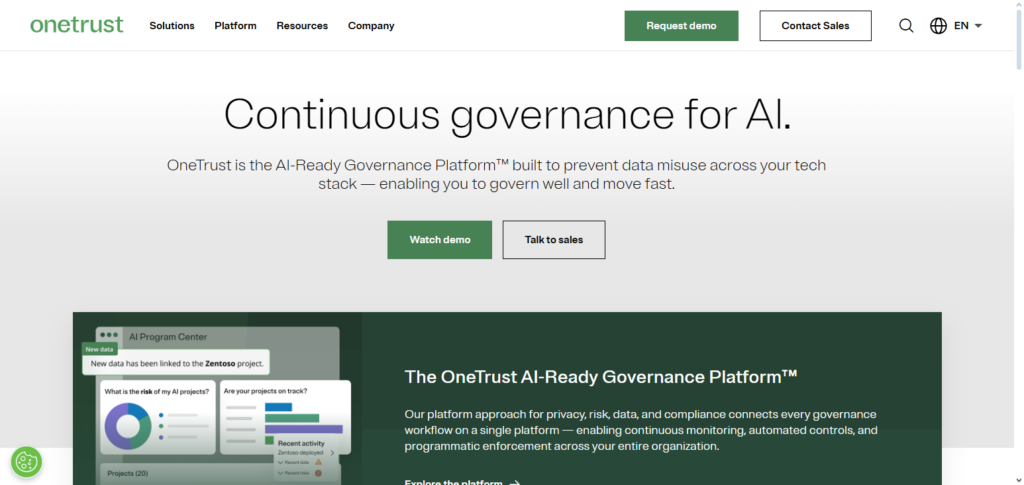
It works with the GDPR, CCPA/CPRA, and LGPD to orchestrate privacy operations with data mapping, assessments, and vendor risk, and management of data processing cycle. Reporting on data processing is also supported. Data Subject Access Requests (DSARs) and PIAs (privacy impact assessments) can be automated and privacy programs on the modular platform can be scaled.
Workflows for integration, compliance, and process automation optimize operational efficiency for the legal, IT, and security teams.
OneTrust Features, pros & Cons
Features
- Global privacy compliance framework
- Consent and preference management
- Data mapping and inventory
- DSAR (Data Subject Access Request) Automation
- Risk & Vendor management
Pros
- Comprehensive all-in-one privacy platform
- Scales well for large enterprises
- Strong regulatory coverage
- Excellent Reporting & Dashboards
- Large Integration Ecosystem
Cons
- Can be costly for small teams
- Steep learning curve
- Setup can be complex
- UI usability-issue
- Requires training for full use
2. TrustArc
TrustArc is also on the best data privacy management software list but has focused on compliance automation and eliminating privacy risk. Automated data inventories, impact assessments, and dashboards of privacy risk, and management of data processing cycle order, along with ECM (enterprise content management) assist organizations with compliance to global privacy policies.
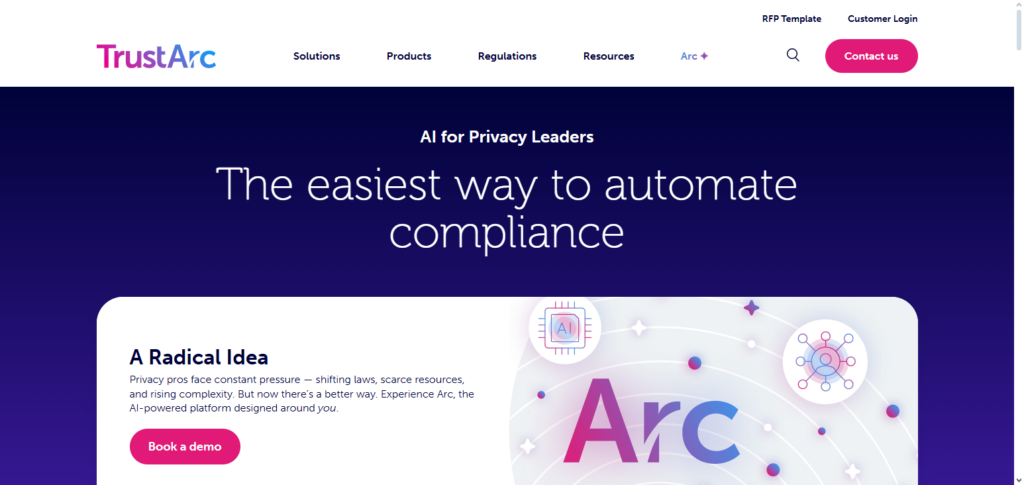
A characteristic that sets TrustArc apart is how easy it is to manage policies, assessments, and audit readiness. This makes it easy for businesses to provide legal oversight and compliance through an easy-to-use interface. It helps businesses scale and maintain consumer trust, even when faced with complicated regulations.
TrustArc Features, pros & Cons
Features
- Privacy Risk Assessments
- Data Inventory and mapping
- Consent Management
- Regulatory Reporting
- Vendor Risk Dashboard
Pros
- Easy compliance Automation
- Good legal-focused tools
- Supports multiple frameworks
- User friendly assessment Workflows
- Strong audit readiness
Cons.
- Less Advanced AI discovery
- Some Features Need Add-Ons
- Moderate Integration Support
- May Lag in Real-Time Automation
- Pricing Complexity
3. BigID
BigID is frequently recognized for being among the best privacy management software for its sophisticated data discovery and classification capabilities, especially its use of advanced AI and machine learning.
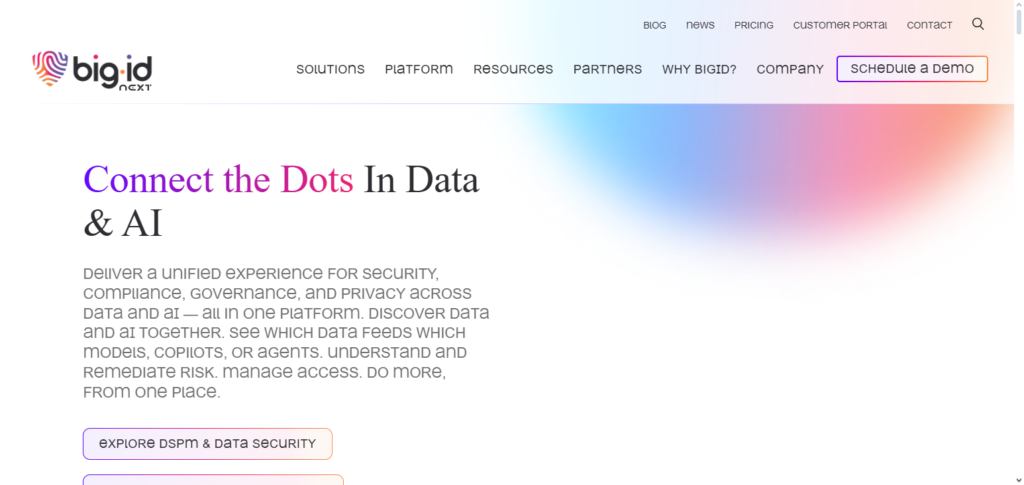
It specializes in the identification, classification, and mapping of sensitive and personally identifiable information (PII) across all layers of enterprise data (i.e. structured, unstructured, and cloud). As a result of BigID’s automated data intelligence, organizations are able to develop thorough data inventories, manage processing activities, and respond to requests and/or provide compliance reports to data subjects (DSARs).
It is particularly useful in large and complex data ecosystems with significant data volumes, providing in-depth risk scoring and remediation workflows that enhance and complement wider privacy and security initiatives.
BigID Features, pros & Cons
Features
- AI-Driven Data Discovery
- Sensitive Data Classification
- Inventory & Lineage
- Risk Scoring & Analytics
- DSAR (Data Subject Access Request) Support
Pros
- Deep discovery for complex data
- Scalable for big data estates.
- Good classification accuracy.
- Valuable risk insights.
- Good enterprise support.
Cons
- Can be pricey.
- Needs technical configurations.
- Overkill for smaller organizations.
- Scans can be slow at times.
- Training needed for advanced features.
4. Ketch
Ketch is favored as one of the best data privacy management software for the engineering teams that provide developer-centric, API-first privacy controls.
It focuses on “privacy-as-code,” allowing organizations to consolidate requests for consent, preferences, and rights programmatically across a given system. Ketch offers automated governance, strong identity resolution, and flexible workflow orchestration, which integrates easily into contemporary engineering stacks.
This makes Ketch optimal for organizations incorporating privacy in fundamental applications and APIs. Ketch effectively bridges the gap between the legal demand and the technical output by providing real-time fulfillment of data subject rights and cross-system enforcement.
Ketch Features, pros & Cons
Features
- Preference and consent orchestration.
- Automation via APIs
- Resolution of Identity
- workflows for requests of rights
- Enforcement of policies
Pros
- Friendly for developers
- Enforcement in real time.
- Good enforcement
- Strong integration of APIs.
- Good for modern stacks.
Cons
- Doesn’t offer a complete compliance suite.
- UI that lacks non-technical features.
- Smaller peer group.
- Regulatory reporting is not as good.
- Best with engineering resources.
5. Symantec Data Loss Prevention
Symantec Data Loss Prevention (DLP), which is currently a unit of Broadcom’s cybersecurity, is considered to be one of the *best data privacy management software* products that assists in the protection of sensitive information from unauthorized disclosure and abuse.
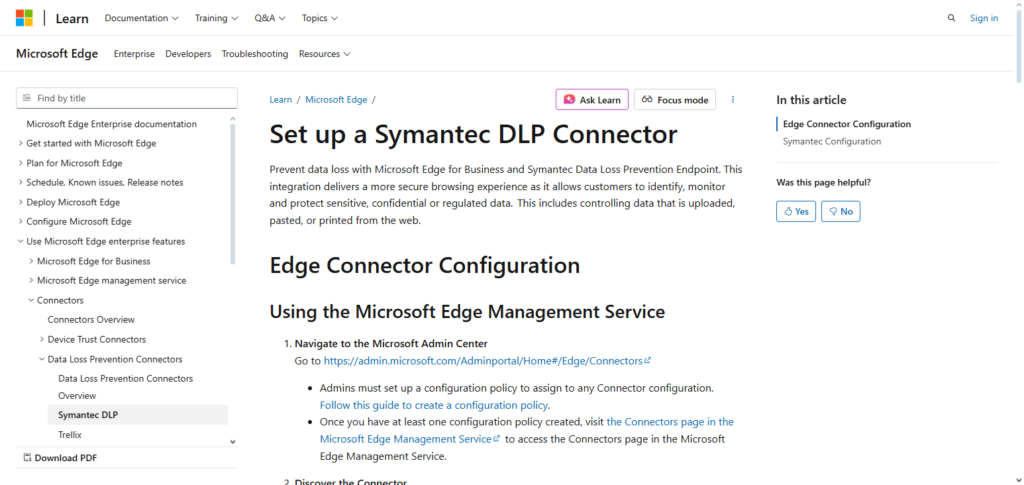
While Symantec DLP, like the other competitors, does not emphasize the legal privacy workflows, Symantec DLP does provide a solid enforcement security by discovering, monitoring, and protecting the data in endpoints, networks, storage, e-mail, and cloud services.
The rich content inspection that Symantec DLP offers and comprises of pattern matching, OCR, and exact data matching makes sensitive data detection outstanding. Enormous organizations that need to implement strict data loss prevention policies and have privacy compliance obligations would be best suited for Symantec DLP.
Symantec Data Loss Prevention (DLP) Features, pros & Cons
Features
- Monitoring of endpoints and networks.
- Content inspection & pattern matching.
- Cloud enforcement of DLP.
- Alerts and policies of risk.
- Discovery of data.
Pros
- Strong protection of data.
- Coverage across multiple channels.
- precise detection.
- Integration of enterprise security.
- Mature technologies
Cons
- No focus on privacy management.
- Policies tuning is complex.
- Costs are higher.
- Some features require high-level expertise.
- Heavy deployment can be done.
6. Securiti.ai
Securiti.ai is also among the *best data privacy management software* platforms for organizations that want to utilize AI to automate privacy, security, and governance.
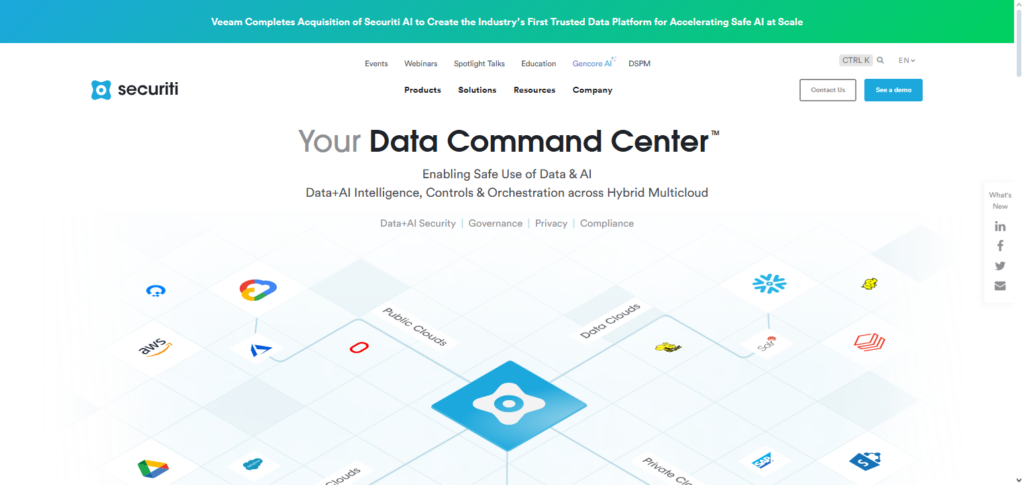
Using artificial intelligence, Securiti’s Data Command Center identifies sensitive information, classifies it, and creates cloud and hybrid environment data maps. It also automates the fulfillment of data subject access requests (DSARs) and consolidates consent management across various platforms.
Securiti’s automation decreases the amount of work required to enable privacy teams to stay compliant and to mitigate risks and identify anomalies. Securiti is integrated into multi-cloud environments and provides modern organizations with the automation and scalability required for data privacy operations.
Securiti.ai Features, pros & Cons
Features
- AI powered data discovery.
- Automated fulfillment of DSAR.
- Management of consent & preferences.
- Risk and compliance dashboards.
- Classification and data intelligence.
Pros:
- Level of automation is high.
- AI insights lessen manual tasks.
- Integration within cloud services is solid.
- Platform is vendor-locked.
- Scalable.
Cons:
- Onboarding is challenging.
- Costly.
- Some features require fine-tuning.
- Enterprise-leaning.
- Some features require training.
7. DataGrail
DataGrail is highly rated for automating the data subject access requests (DSARs) and operational compliance workflows. It integrates with countless SaaS applications and enterprise systems to centralize the management of consent, rights requests, data mapping, and vendor risk assessments.
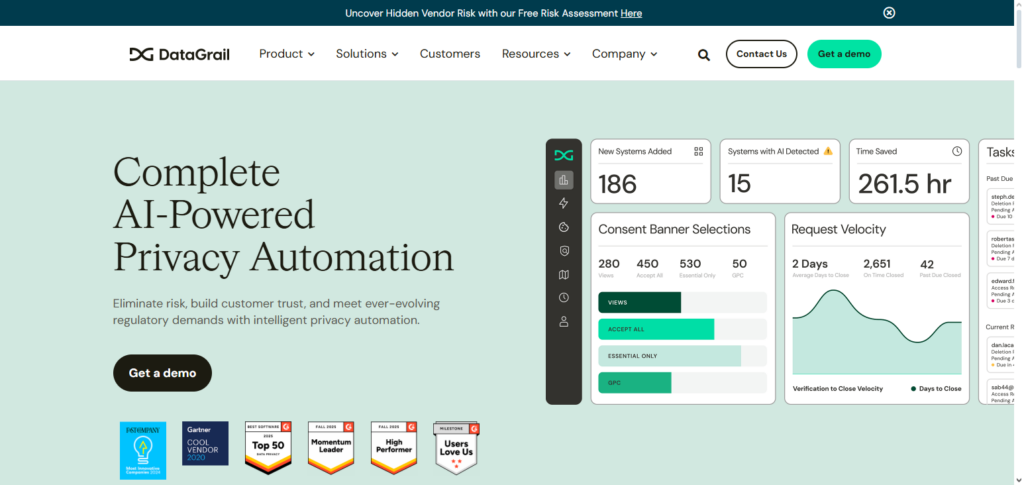
DataGrail provides privacy teams with the means to reduce manual work, as well as to speed up fulfillment, and to make more sophisticated accuracy handling requests for access, correction, and deletion across data sources.
Its automation makes it ideal for mid-sized companies and SaaS environments where the volume and complexity of DSARs can surpass what is manageable manually, due to its extensive connectors.
DataGrail Features, pros & Cons
Features
- Automation of DSAR
- Data Inventory Connectors
- Signals of Consent
- Profiles of Vendor Risk
- Reporting & Audit Trails
Pros
- Outstanding Workflows for DSAR
- Quick Integration with SaaS
- Rights Request Simplification
- Intuitive UI
- Good for Mid Sized Companies
Cons
- Limited Extensive Governance
- Does Not Pack As Much As Full Suites
- Lacking More Advanced Analytics
- Not Suitable for Old Systems
- A Few Features Must Be Paid For Separately
8. Osano
Osano is often recognized for providing small and mid-market companies with some of the most effective tools for compliance with data privacy regulations, particularly for straightforward automated DSARs and operational compliance workflows.
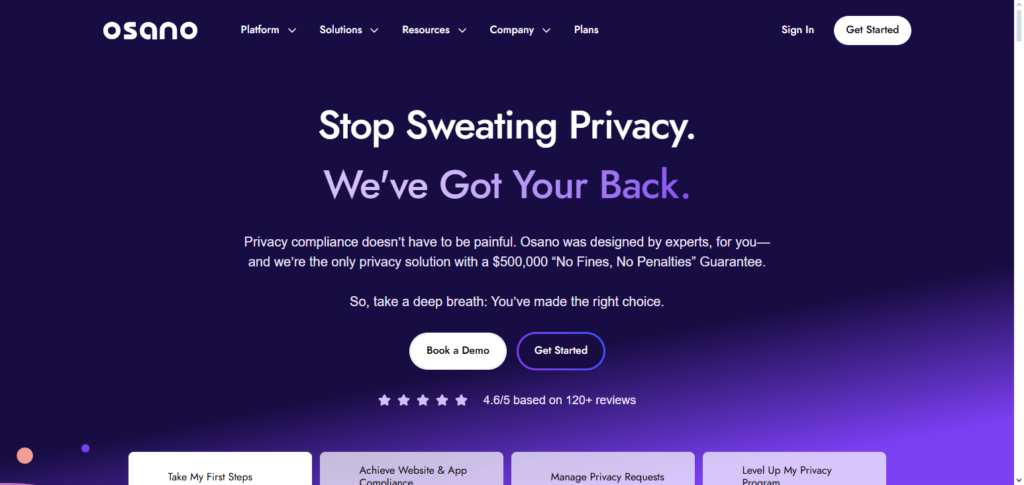
For example, Osano offers an easy-to-implement Consent Management Platform (CMP) for handling cookie banners, preference centers, and compliance notices across digital properties. This facilitates the user’s compliance with the GDPR, CCPA, and numerous other international privacy regulations.
Additionally, Osano offers vendor risk monitoring and streamlined DSAR processes, all wrapped in an intuitive dashboard. Due to the transparency of their pricing coupled with the ease of use, Osano is frequently chosen by customers who require quick implementation with minimal technical burdens.
Osano Features, pros & Cons
Features
- Consent Management Platform (CMP)
- Cookie Banner and Preference Center
- Compliance Notices
- Vendor Risk Monitoring
- DSAR Tools
Pros
- Simple to Implement
- Prices Friendly for SMB
- Compliance Support for Many Regions
- User Friendly
- Good Features for Consent
Cons
- Lacks Comprehensive Discovery
- Not For Enterprises
- Low Automation
- Limited Integrations
- Reporting is Basic
9. Informatica Data Privacy
Informatica Data Privacy Management is called one of the best data privacy management software vendors for companies needing strong privacy and enterprise data governance integration. It enables the discovering, classifying, analyzing, and protection of sensitive personal data, regardless of the environment (cloud, on-premises, big data).
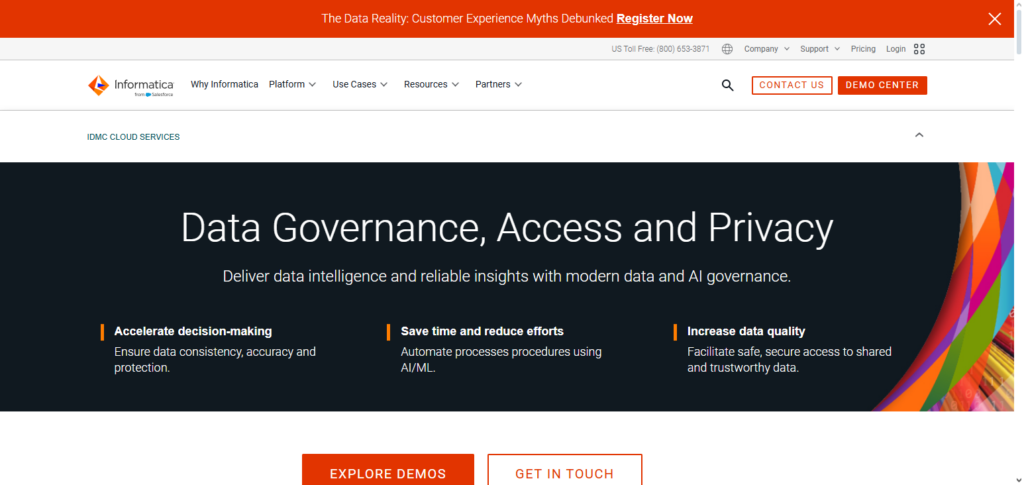
Leveraging AI-driven detection, behavioral analytics, and risk scoring, Informatica provides visibility and the ability to prioritize privacy risks, among other things.
It also offers automated protection and a host of other processes, such as remediation workflows, identity mapping, and support for rights requests to comply with GDPR, CCPA, and other regulations. This makes it a strong solution for data-centric enterprises with comprehensive governance and compliance needs.
Informatica Data Privacy Features, pros & Cons
Features
- Discovery and Classification of Data
- Risk scoring and management
- Risk management and automation
- Masking of sensitive information
- Support for rights requests
Pros
- Solid governance of data
- Extensive integration at a technical level.
- Robust data governance
- AI-driven data classification
- Well established and developed platform
Cons
- Complex implementation
- Lengthy setup.
- Specialist knowledge required
- Additional cost for some of the advanced features/modules
- High cost of an enterprise license
10. AvePoint Compliance Guardian
AvePoint Compliance Guardian is one of the best data privacy management software providers for organizations relying on Microsoft 365 and cloud productivity tools.
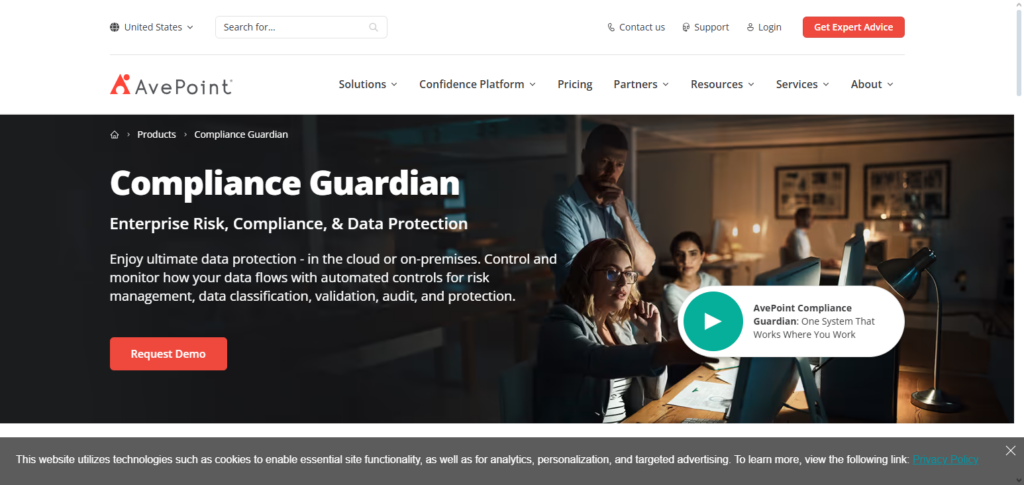
It merges automated data protection, validation, risk management, and data protection to analyze and assist firms in monitoring and managing the information flow. The platform streamlines the integration of privacy, compliance, and security and offers discovery of data assets, risk-based assessments, and automation of incident response workflows.
For firms in which collaborative work and cloud-centered repositories are critical to daily activities, AvePoint’s seamless integration with Microsoft 365 services helps in managing compliance and governance within a fast-evolving work environment.
AvePoint Compliance Guardian Features, pros & Cons
Features
- Compliance with Microsoft 365
- Automation of the scoring of business risks
- Risk assessment and management (automation, scoring, classification, and tagging)
- Implementation of policies
- Alerts and reporting
Pros
- Excellent integration and automation capabilities
- Great automation of policies
- Strong collaboration features
- Simplifies compliance with cloud technologies
- Adaptive automation policies
Cons
- Limited integration for software outside of Microsoft 365
- No full privacy suite
- Limitations of configuration and integration
- Some level of performance and monitoring management
- Requires some configuration and monitoring
Conclusion
An organization’s size, data complexity, regulatory exposure, and technological development all play a role in selecting the best data privacy management software. For businesses handling several international requirements, platforms like OneTrust and TrustArc are perfect because of their superior enterprise-wide compliance and governance capabilities.
BigID, Informatica, and Securiti.ai are notable for their deep integration with intricate data ecosystems, superior data discovery, and AI-driven automation. DataGrail and Ketch streamline DSAR and consent processes for operational efficiency, and Osano provides a practical, affordable option for smaller teams.
Data protection and enforcement are strengthened with Symantec DLP and AvePoint Compliance Guardian. When combined, these tools allow businesses to create data privacy strategies that are reliable, scalable, and compliant.
FAQ
What is data privacy management software?
Data privacy management software helps organizations discover, classify, protect, and govern personal and sensitive data. It automates compliance with data protection laws (like GDPR, CCPA/CPRA, and LGPD), manages data subject rights (e.g., access or deletion requests), tracks consent, and supports risk assessments. These tools centralize privacy workflows to reduce errors and operational costs.
Why do companies need data privacy management software?
Organizations must comply with evolving global privacy regulations and protect sensitive customer and employee data. Manual processes are inefficient and prone to error, especially when data is spread across multiple systems. Privacy software automates compliance tasks, reduces risk, accelerates audits, and improves trust.
Who benefits most from these tools?
Large enterprises, global organizations, and highly regulated industries (finance, healthcare, retail) gain major benefits, but many tools also support midsize businesses. Choosing depends on regulation scope, data volume, technical complexity, and budget.
Can these systems automate data subject rights requests (DSARs)?
Yes—leading platforms like OneTrust, BigID, DataGrail, and Securiti.ai provide DSAR automation, streamlining intake, verification, processing, and reporting for rights like access, deletion, and portability.