
As demand for better execution efficiency, access to deeper liquidity, and protection from slippage for large volume trades grows, firms are decentralizing their crypto trading infrastructures faster than ever. Traditional order books can’t withstand the volume demands of high-value swaps without causing a price impact.
This has resulted in the adoption of request-for-quote (RFQ) systems, intent-based protocols, and liquidity aggregators. The Best Decentralized OTC Desks for Slippage-Free Institutional Swaps are crucial to hedge funds, DAOs, and market makers for predictable execution in this developing industry.
What Are Decentralized OTC Desks?
Decentralized over-the-counter desks are blockchain trading platforms that allow direct, large volume cryptocurrency trades between buyers and sellers without the need for a centralized order book. These desks provide a better trading experience by reducing slippage and using RFQs, intent-based trading, and liquidity aggregation.
These desks also provide institutions, hedge funds, and DAOs the ability to trade digital assets in a private and efficient manner. Because decentralized, over-the-counter desks negotiate trades off-chain, but settle them on-chain, they provide a significantly better trading experience when dealing with high-value cryptocurrency trades.

10 Best Decentralized OTC Desks for Slippage-Free Institutional Swaps
| Platform | Key OTC / Slippage-Free Feature |
|---|---|
| AirSwap | Direct peer-to-peer RFQ trades with zero on-chain slippage |
| Paradigm | Off-chain RFQ matching with on-chain settlement |
| Hashflow | Guaranteed quoted pricing (no slippage) via professional market makers |
| CoW Protocol | Batch auctions eliminate MEV + reduce slippage |
| 0x Protocol | Smart order routing across liquidity sources |
| THORChain | Native asset swaps without wrapping + minimal slippage pools |
| UniswapX | Dutch auction-style fillers reduce slippage |
| ParaSwap | Splits orders across DEX liquidity for best price |
| LI.FI | Routes swaps across bridges + DEXs |
| OpenOcean | Searches best liquidity across CEX + DEX + bridges |
1. AirSwap
AirSwap is a decentralized OTC trading protocol created for slippage-free peer-to-peer institutional swaps. It employs an RFQ (Request-for-Quote) system, in which buyers and sellers set and agree on a fixed price, thus ensuring no price impact at the time of settlement. AirSwap conducts off-chain negotiations and on-chain settlements, combining the benefits of both systems to provide greater privacy and efficiency for larger trades.
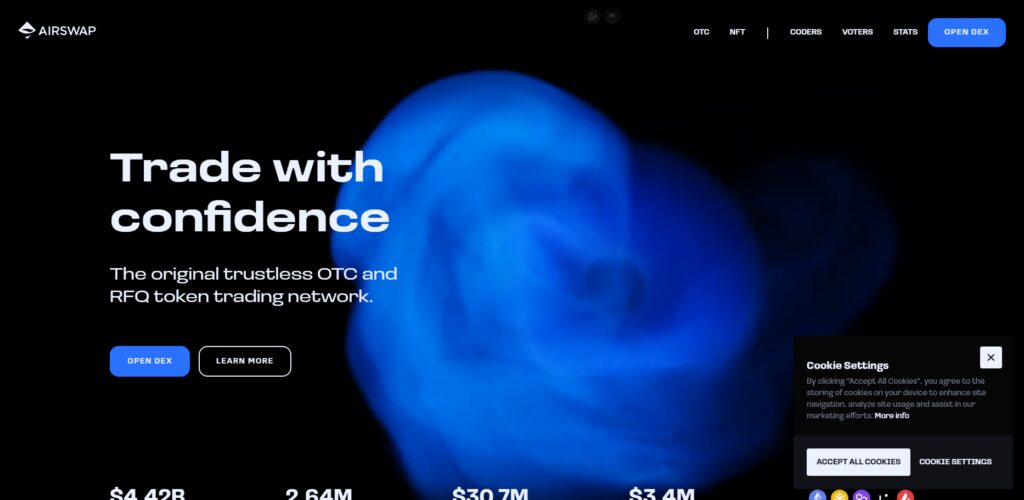
AirSwap is ideal for institutions that require private block trading of ERC-20 assets and want minimal market impact. Its main concern is secure OTC execution, and because it eliminates order book volatility, it is especially appealing to hedge funds and DAOs. AirSwap offers dealer discovery, instantaneous settlements, and a gas-efficient trade confirmation system.
AirSwap Key Features
- Peer-to-peer request-for-quote OTC model
- Off-chain pricing with on-chain execution
- Fixed price with zero slippage
- Gas-efficient ERC-20 swaps
- Private trades with no public order book
Best For
- Hedge funds making large block trades
- DAOs making treasury reallocations
- Institutional OTC crypto desks
- Large private ERC-20 swaps
Why Institutions Need Slippage-Free Swaps
- No price impact for large orders
- Execution cost is predictable
- Less exposure to volatile market
- Treasury reallocations are more efficient
2. Paradigm
Paradigm is an institutional-level liquidity network created for off-chain RFQ-based crypto derivatives and spot OTC trading. It and enables zero-slippage trades through price negotiations, which are then settled off-chain.
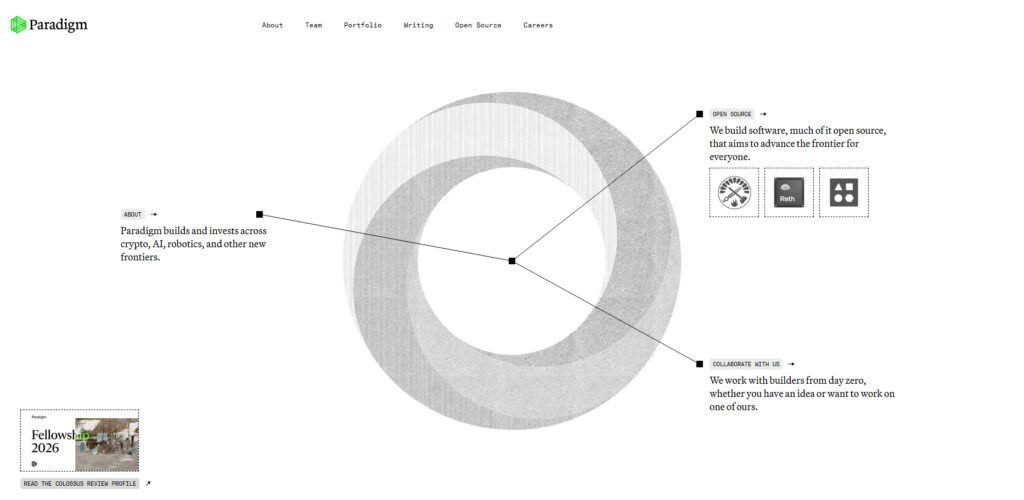
Paradigm is best for liquidity providers, high-frequency traders, and hedge funds who need deep OTC liquidity. Its main concern is optimization of RFQ negotiations for derivatives and capital. Paradigm offers an institutional-level liquidity supply network and advanced order routing, as well as flexible trade designs that cater to the execution of large amounts of crypto.
Key Features
- RFQ liquidity network for institutions
- Off-chain with market makers
- Deep liquidity for derivatives and spot
- Fast execution infrastructure
- Support for custom trade structures
Best For
- Hedge funds and quant trading
- Institutional derivatives traders
- Crypto market makers
- High-frequency OTC
Why Institutions Need Slippage-Free Swaps
- Large trades cannot have execution uncertainty
- Liquidity can be fragmented, but it won’t impact pricing
- Institutional pricing spreads can be maintained
- Derivatives trades cannot be slippage-free
3. Hashflow
Hashflow is an RFQ-based decentralized exchange that offers zero slippage and price guarantee for large, institutional-level swaps. Market makers provide off-chain signed quotes, and trades are executed on-chain at the quoted price, thereby eliminating price impact and MEV.
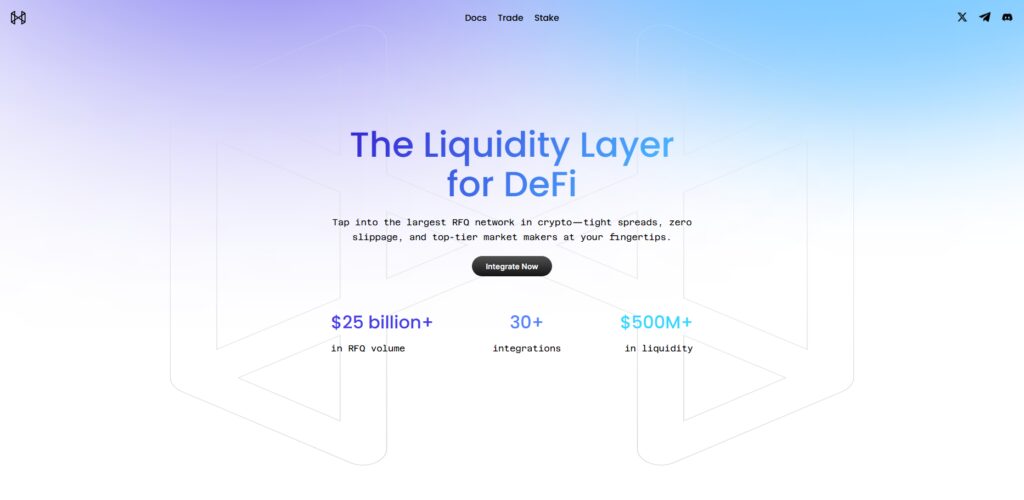
Hashflow best serves DeFi institutions and DAOs needing predictable execution pricing. Focusing on cross-chain access to liquidity and MEV protection, Hashflow offers RFQ trading, multi-chain swaps, and pricing guarantees, making it an excellent choice for large treasury reallocations and arbitrage.
Key Features
- RFQ with market makers for pricing
- No slippage with guaranteed traded price
- Cross-chain swaps
- Trade settlement is MEV resistant
- On-chain with off-chain execution
Best For
- Large swaps in DeFi
- DAO treasury managers
- Cross-chain liquidity traders
- Arbitrage trading firms
Why Institutions Need Slippage-Free Swaps
- Guarantees fixed prices for large trades
- Stops MEV and front-running
- Helps cross-chain execution
- Eases risks in volatile markets
4. CoW Protocol
In an intent-based design, users sign their trade intentions rather than execute orders. A competition of solvers batches and settles trades for optimal prices and offers MEV protection and less slippage for institutional OTC swaps.
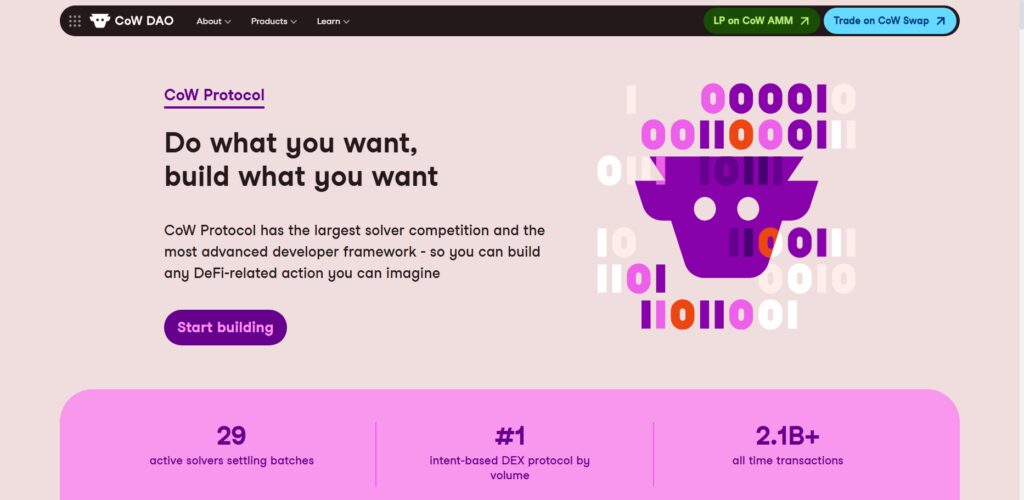
CoW Protocol best serves large DeFi traders and DAOs preferring optimal execution with no front-running. Batch auctions and solver competition are the primary focus. Additional offerings are gasless trading, aggregated liquidity execution, and price optimization. Overall, CoW Protocol is best for bulk crypto swaps.
Key Features
- Intent-based trading architecture
- Batch auction execution system
- Solver competition for best price execution
- MEV protection via trade batching
- Gasless trading for users
Best For
- DAO treasury exec strategies
- Institutional DeFi traders
- Large-volume swap execution
- MEV-sensitive trading operations
Why Institutions Need Slippage-Free Swaps
- Front-running risk is gone
- Price is improved because of solver competition
- Large orders have less market impact
- Predictable settlement is guaranteed
5. 0x Protocol
0x Protocol offers the base DeFi infrastructure for RFQ-based OTC trading and DEX liquidity aggregation. With 0x, institutions can use a single API to access multiple liquidity sources, while also benefitting from great prices and low slippage.
0x Protocol is best for developers and hedge funds and trading platforms who wish to build bespoke OTC systems. Liquidity aggregation and professional market-making are the primary focuses. 0x Protocol offers a plethora of services, including swap APIs, an RFQ framework, and smart order routing for decentralized market optimal trading.
Key Features
- RFQ + DEX aggregation infrastructure
- Smart order routing across liquidity sources
- API-based institutional trading integration
- Market maker network support
- High liquidity access across chains
Best For
- Fintech platforms with trading desks
- Institutional liquidity aggregators
- Hedge funds
- DeFi wallet integrations
Why Institutions Need Slippage-Free Swaps
- Execution is improved among fragmented liquidity
- Cost of large trades is less
- Price discovery is better
- Trading inefficiencies are reduced in volatile markets
6. THORChain
THORChain enables DeFi native asset swaps without the wrapping of tokens. WHORChain absorbs slippage while facilitating large trades in an OTC framework.
THORChain is best for institutions requiring cross-chain treasury movements (BTC, ETH, etc.). Notably, THORChain is focused on cross-chain decentralized liquidity routing. THORChain has native asset swaps, liquidity pool execution, and decentralized settlement. It is very strong for cross-chain OTC.
Key Features
- Cross-chain swaps for native assets
- Automated liquidity pool connections
- Smart routing technology
- Rapid bridge connections
- Continuous liquidity pools (CLP)
Best For
- DeFi liquidity providers
- Multi-chain portfolio managers
- Cross-chain institutional treasury swaps
- Bitcoin and Ethereum liquidity movement
Why Institutions Need Slippage-Free Swaps
- Avoids wrapped asset exposure
- Enhances cross-chain execution efficiency
- Direct asset settlement is possible
- Reduces bridging concerns
7. UniswapX
UniswapX has an intent-based swap system that auctions orders in Dutch style to get trades executed at the best price. UniswapX operates differently from most AMM systems, as in UniswapX, third-party fillers are the ones executing the orders.
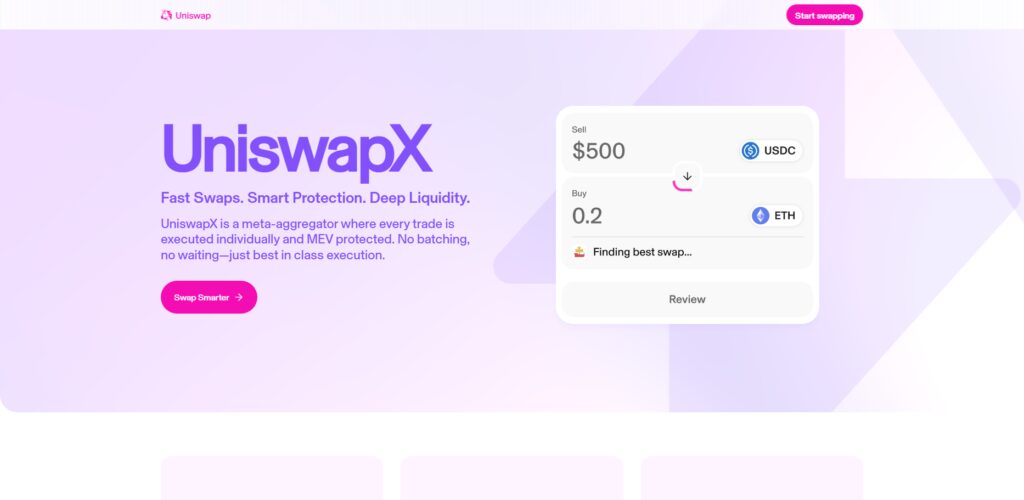
UniswapX is best for DeFi institutions executing large swaps with MEV protection. Its concentrated focuses are auction-based execution and aggregated liquidity. Its services of gasless swaps, cross-DEX routing, and optimal trade settlement make it useful for high-volume institutional DeFi activity.
Key Features
- Intent-based trade execution
- Price discovery through Dutch auctions
- Competition from third-party fillers
- MEV-resistant routing
- Gas abstraction
Best For
- Cross-DEX liquidity
- Large DeFi swaps
- DAOs
- MEV-sensitive organizations
Why Institutions Need Slippage-Free Swaps
- Eliminates MEV risk
- Improves efficiency of large orders
- Lowers gas costs
- Lowers routing costs
8. ParaSwap
ParaSwap is a DeFi aggregator that strives to obtain the best execution price with low slippage by routing trades through various DEXs. In order to accomplish this goal, it divides large trades into multiple smaller ones, each of which is placed in a liquidity pool.
ParaSwap is best for institutions optimizing execution cost across fragmented liquidity markets. ParaSwap is focused on different gas prices due to fragmented liquidity. Its service of multi-DEX aggregation is ideal for treasury managers and trading desks.
Key Features
- Aggregation of DEXs
- Smart order routing
- Gas-efficient exchanges
- API-driven trading
- Split-order execution
Best For
- Crypto funds
- Treasury managers
- Arbitrage desks
- DeFi wallets
Why Institutions Need Slippage-Free Swaps
- Reduces the effects of liquidity fragmentation
- Improves execution prices
- Gas and routing costs
- Trade scalability
9. LI.FI
LI.FI is a cross-chain liquidity aggregation protocol. It provides a single routing layer that connects DEXs, bridges, and swap providers. It offers institutions the ability to perform seamless OTC swaps across multiple blockchain ecosystems.
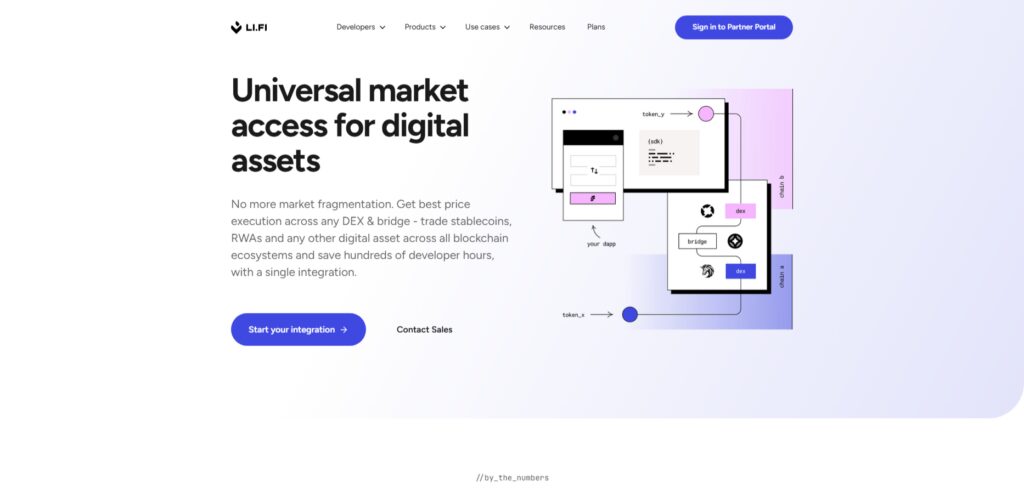
LI.FI is ideal for multi-chain funds and institutions managing diversified crypto portfolios. LI.FI operates within the ecosystem of cross-chain interoperability with a routing optimization focus. They provide bridge aggregation, swap routing APIs, and liquidity optimizations to reduce slippage throughout varying ecosystems.
Key Features
- Cross-chain bridge + DEX aggregation
- Multi-route swap optimization
- API-first infrastructure
- Modular liquidity routing system
- Supports multiple blockchain ecosystems
Best For
- Multi-chain institutional portfolios
- Cross-chain treasury management
- DeFi infrastructure builders
- Asset managers handling diversified chains
Why Institutions Need Slippage-Free Swaps
- Reduces cross-chain inefficiencies
- Ensures optimal routing paths
- Improves execution reliability
- Minimizes bridging-related slippage
10. OpenOcean
OpenOcean is a complete DeFi aggregator that gathers liquidity across DEXs, CEXs, and cross-chain bridges. OpenOcean ranks swap routes and exploits arb opportunities with the least slippage. It focuses mainly on hybrid liquidity.
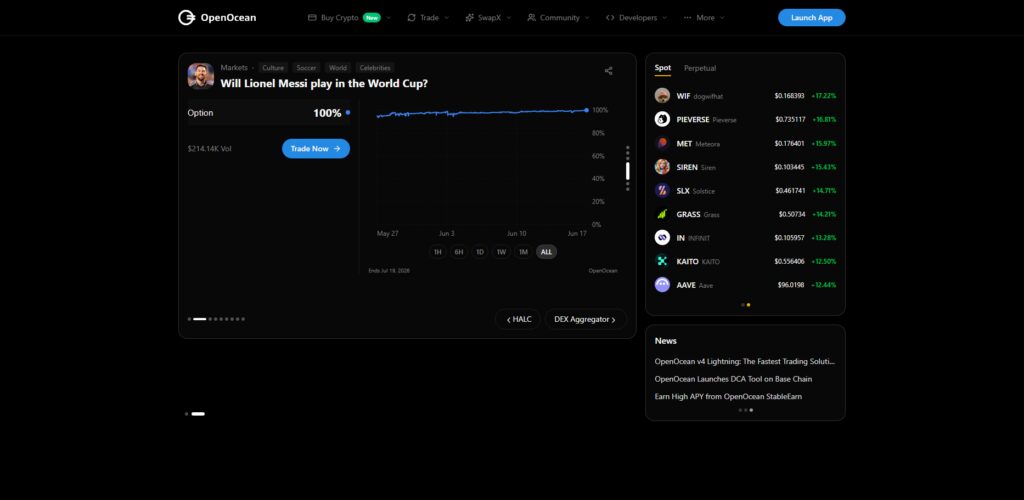
OpenOcean is best for multi-chain funds and institutions diversifying into various crypto strategies. OpenOcean provides route optimization, arb execution, and a multitude of liquidity options, allowing trades to be executed in varied environments quickly and effectively.
Key Features
- Aggregates DEX + CEX liquidity
- Intelligent routing optimization engine
- Cross-chain swap support
- Price comparison algorithm
- Arbitrage detection system
Best For
- Hybrid crypto trading firms
- Institutional arbitrage desks
- Multi-market liquidity seekers
- Cross-exchange execution systems
Why Institutions Need Slippage-Free Swaps
- Access to deepest liquidity pools
- Reduces execution price variance
- Improves arbitrage efficiency
- Enhances global liquidity access
Why Institutions Need Slippage-Free Swaps
Request for Quote (RFQ) Systems In an RFQ system, institutions ask professional market makers for a tradeable price. Since execution will not occur until both parties have agreed to the quote, this ensures price certainty with no, or very little, slippage. Since OTC trades tend to be large, the exposure of market-making systems can be very detrimental. Systems like RFQ networks help avoid the volatility of order books for large trades.
Intent-Based Trading Architecture Instead of a traditional order, users submit their intent to trade along with a signed contract. Solvers or fillers will then compete to trade against them. As a result of this model, institutions are able to receive improved pricing through MEV protection and execution optimization without order slippage or routing.
Liquidity Aggregation Engines In a single routing layer, these systems combine all DEXs, market makers, and liquidity pools. Aggregation engines are able to provide substantially large liquidity needed for large trades and reduce the price impact for institutional trades by appropriately distributing or routing orders.
Solver & Auction-Based Execution Models In auction based systems that use solvers, a contest among many participants executes a trade. This encourages minimized slippage and better pricing due to the selection of the most favorable execution path based on the state of liquidity.
MEV Protection Layers With the use of technologies that provide MEV protection, front-running, sandwich attacks, and the reordering of trades are prevented. By trade bundling or hiding, these technologies lower the hidden costs of trades while guaranteeing a fair execution price for large institutional orders
Cross-Chain Liquidity Routing Protocols Automating swaps over multiple blockchains, these protocols eliminate the need for bridging. By optimizing routes across chains, cross-chain slippage, delays, and liquidity mismatches can be effectively addressed, providing better execution consistency for global institutions.
Off-Chain Matching with On-Chain Settlement To avoid exposure to the market, off-chain trade matching is used by OTC systems. On-chain settlement is performed for safe and clear settlement. This hybrid model offers the advantages of blockchain-level trust and verification along with the benefits of fast execution, reduced gas costs, and minimal slippage.
Key Technologies Behind Slippage-Free OTC Trading
Request For Quote (RFQs) Selling counterparties post a sell RFQ for a given price for which buyers will be ready to trade. This results in trades taking place at a desired price, providing price certainty, with no slippage.
Intent-Based Trading Here, a user does not post a trade order to an order book, but rather posts a signed intent to trade which is solved by a solver. This method helps in furthest execution, with least MEV (Miner’s Extractable Value) risk.
Liquidity Aggregation Liquidity aggregation integrates all DEXs (decentralized exchanges) and CEXs (centralized exchanges), along with all liquidity pools, into a single routing layer. This leads to optimal liquidity for large institutional trades with least price effect.
Solver-Based Auctions Each solver executes trades for the auctions and competes on price. Hence, auctions assist large institutional trades in achieving optimal execution with least slippage.
MEV Protection MEV attacks, such as front-running, back-running, sandwiching and others, are prevented. As a result, RFQs and OTC (over-the-counter) trade contracts are provided with fair execution and price assurance.
Cross-Chain Routing Cross-chain routing helps in the swapping of digital assets through various blockchains without the need to rely on bridges, which leads to very high slippage and execution delays for cross-chain trades.
Off-Chain/On-Chain Hybrid Model With this method, trades are negotiated off-chain and settled on the mainchain, thus guaranteeing speedy execution with no significant market effect.
Conclusion
The combination of decentralized OTC desks and slippage-free swap technology is changing the landscape of institutional crypto trading. Price impact, one of the most detrimental inefficiencies of digital asset trading, is a direct result of large trades.
The industry is incorporating RFQ systems, intent-based architectures, and trading liquidity aggregators and is rapidly evolving toward execution confidence, liquidity accessibility, and MEV resistance.
Performing an in-depth inspection of AirSwap, Paradigm, HashFlow, CoW Protocol, ThorChain, 0x, UniswapX, ParaSwap, LI.FI, and OpenOcean demonstrates that the industry is moving in one direction; institutions prefer predictable execution over legacy order book systems.
These systems are highly desirable, especially to hedge funds, DAOs, and market makers, because they facilitate trade execution with minimal slippage and greater efficiency.
The industry is rapidly moving toward RFQ and intent-based OTC systems that will be the dominant infrastructure standards for institutional crypto execution. Trade execution within these systems contrasts legacy models in speed, fairness, and efficiency.
FAQ
What are decentralized OTC desks in crypto trading?
Decentralized OTC desks are blockchain-based trading systems that allow large crypto trades to be executed directly between parties or through liquidity networks without relying on traditional order books. They use RFQ, intent-based systems, and aggregators to provide better pricing and reduce slippage.
Why is slippage a major problem for institutional traders?
Slippage occurs when large trades move market prices due to insufficient liquidity. For institutions handling high-volume transactions, this leads to unpredictable costs, reduced profits, and inefficient portfolio execution, especially in volatile crypto markets.
How do slippage-free swaps work?
Slippage-free swaps use technologies like RFQ pricing, solver-based auctions, and liquidity aggregation. These systems lock or optimize trade prices before execution, ensuring institutions get near-fixed pricing without unexpected market impact.
Which technologies power decentralized OTC trading?
Key technologies include RFQ systems, intent-based trading architecture, MEV protection layers, cross-chain liquidity routing, solver-based auction mechanisms, and off-chain matching with on-chain settlement.
How do institutions benefit from OTC desks like AirSwap or Hashflow?
Platforms like AirSwap and Hashflow provide fixed-price execution, private trading, and MEV protection. This helps institutions execute large trades securely while avoiding slippage and market manipulation risks.
Are decentralized OTC desks better than traditional exchanges?
For large-volume trades, yes. Decentralized OTC desks offer better price stability, lower slippage, improved privacy, and reduced market impact compared to traditional order book-based exchanges.