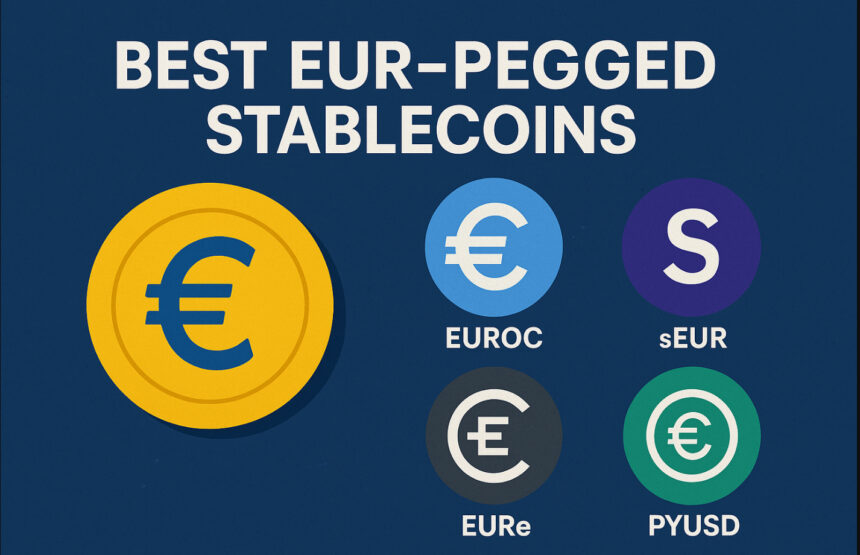
This article examines the optimal pegged stablecoins to the Euro. They all offer stability, transparency, and efficiency on the blockchain. As Europe’s crypto market expands, the demand for euro-backed digital assets for trading, DeFi, and cross-border payments increases.
Best EUR-Pegged Stablecoins and up because of the European regulators MiCA, and the stablecoin adoption by the institutions. Stablecoins offer users a fast, safe, and compliant way to transact fully on the blockchain.
What Is a EUR-Pegged Stablecoin?
Increased clarity for MiCA and growing institutional engagement means more consistent growth for the European EUR-pegged stablecoin market.
Although euro-backed stablecoins are further behind than USD stablecoins in the current global stablecoin market, the use of euro-backed stablecoins in DeFi, cross-border payments, and within tokenized assets ecosystems is growing.
In 2026, regulated issuers, transparent reserves, and multi-chain compatible euro stablecoins will be keys to market differentiation. Also, institutional-backed euro stablecoin projects are winning more trust, and decentralized projects are increasing their stabilityae peg mechanisms.
Beyond 2026, as compliance and liquidity continue to strengthen, EUR stablecoins are set to further integrate into Europe’s digital financial systems.
10 Best EUR‑Pegged Stablecoins (2026)
| Stablecoin | Key Feature |
|---|---|
| Euro Coin | High liquidity + broad support on major chains |
| STASIS EURO | Transparent reserves + EU legal framework |
| Anchored Coins Euro | Collateralized & MiCA‑aligned |
| Euro Tether | High liquidity; less regulatory clarity |
| Euro Stablecoin (EURCV) | Strong institutional backing |
| Eurite | Bank‑backed stablecoin in EU |
| StablR Euro | Fully euro‑backed; transparent on‑chain |
| EUROe | Regulated European issuer |
| EURD | Focus on programmable payments |
| EURA (Decentralised) | DeFi‑native with over‑collateralization |
1. Euro Coin (Ticker: EURC)
Euro Coin, now officially known and widely traded under the ticker EURC, is a leading euro‑pegged stablecoin issued by Circle, the same issuer as the euro‑pegged USDC stablecoin. EURC is a MiCA compliant, fully euro backed stablecoin maintaining a 1:1 euro peg with reserves held in euros in regulated European financial institutions.
EURC is available on most major blockchains, including Ethereum, Solana, Avalanche, Base, Polygon, and Stellar. With Euro Coin, users can perform DeFi transactions, lend, and borrow, and settle payments instantly via cross‑border transactions. Circle conducts monthly attestations of the reserves.
Euro Coin (EURC – Circle) Features:
- 1:1 with the Euro
- Circle is the issuer (the same firm behind USDC)
- Operates on Ethereum and other blockchains
- Reserves are transparent and audited
- Complies with MiCA regulations
Pros:
- Good reputation of the issuer
- Increased liquidity across the exchanges
- Integrates with DeFi users easily
- Reports on collateral are transparent
Cons:
- Control is centralized
- Dependent on regulations
- Adoption is less than USDC
- Transaction fees on Ethereum are possible
2. STASIS EURO (Ticker: EURS)
STASIS EURO (EURS) is one of the oldest euro‑pegged stablecoins, having launched in 2018 by STASIS, a fintech company based in Europe. To achieve stable value, EURS is backed 1:1 with euro assets held in liquid reserves, and uses daily and quarterly attestations, plus annual audits, to to keep users informed of any changes to the liquid reserves.
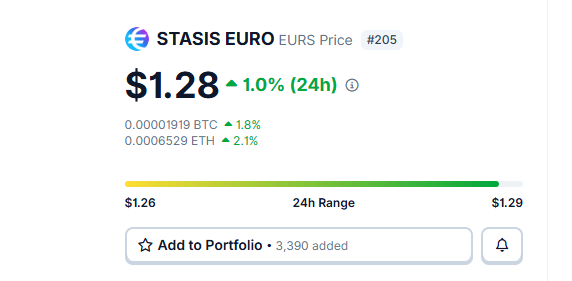
STASIS integrates payment, remittance, and DeFi solutions on Ethereum, Polygon, Algorand, XRPL, and more. They comply with regulations set for real-world asset-backed frameworks, focusing on both retail and institutional use cases.
STASIS EURO (EURS) Features:
- Euro-backed stablecoin since 2018
- 1:1 pegged to euro
- Issued by STASIS’, Maltese fintech
- Backed by liquidity providers and custodians
- Operates on Ethereum
Pros:
- Longevity in the market
- Good ecosystem support
- Model of issuance is transparent
- Links TradFi and Defi
Cons:
- Less adoption compared to Dollar stablecoins
- Unclear regulations in Malta
- Limited growth in multi-chain
3. Anchored Coins Euro (Ticker: AEUR) —
Euro-pegged stablecoins have launched in Switzerland. One of them is Anchored Coins Euro issued by Anchored Coins AG. They guarantee a 1:1 peg to the euro by holding balances equal to the issued tokens in euro fiat reserves in FINMA-licensed Swiss banks.
AEUR is a stablecoin that is backed by actual reserves and runs on Ethereum and the BNB Smart Chain. AEUR is easy to use for on-chain payments, cross-border payment transfers, and treasury management in conjunction with regular bank services.
AEUR is fully transparent and offers a predictable operating framework; therefore, it is ideal for businesses and developers who desire a euro stablecoin on-chain. AEUR offers a combination of regulatory compliance and the functionality of blockchain technology.
Anchored Coins Euro (AEUR)
Features:
- 1:1 pegged to Euro
- Issued by Swiss regulated Anchored Coins
- Backed by full cash reserves
- Follow Swiss AML guidelines
- Designed for quick and safe settlements
Pros:
- Strong AML compliance
- Guarantees secure redemption
- Offers more crypto options in euros
- Stable pegged euro cryptocurrency
Cons:
- Relatively new and less popular
- Reliant on AML compliance in Switzerland
- May have low liquidity
4. Euro Tether (Ticker: EURT)
Tether is the issuer of stablecoin USDT and has issued Euro Tether (EURT), a euro-pegged stablecoin. It is designed to ensure a stable 1:1 peg with the euro backed by euro reserves. It has a presence on various blockchains, including Euro Tether (EURT) and is designed for cross-border payment transfers with euro reserves.
Its high liquidity makes it suitable for trading, transfers, and participation in DeFi platforms. Though, EURET does not rank as high as some EU-regulated options for MiCA regulation compliance, which is a growing concern for the EU market. EURET’s increased integration across exchanges facilitates access to a wide range of markets.
Euro Tether (EURT) Features
- 1:1 pegged euro
- Issuer is Tether (like USDT)
- Backed by euros in reserves
- Available on most exchanges
- Can be used for trading and settlements
Pros:
- Established market via Tether
- High liquidity
- Integrates simply into systems
- Known by most traders
Cons:
- Reserve transparency
- Regulatory scrutiny
- Risks from centralized issuer
5. Euro Stablecoin (Ticker: EURCV)
EURCV (EuroCoinVertible) is a euro‑denominated stablecoin issued by Societe Generale’s digital assets arm SG‑FORGE and is among the first to fully comply with the EU’s MiCA regulation.
As a 1:1 euro-backed stablecoin, EURCV is intended for use in institutional finance and to be integrated into on-chain DeFi. It allows the euro to be tokenized for settlement, lending, borrowing, and trading on Ethereum-based platforms like Uniswap and Morpho.
Its authorisation under the EU regulatory framework fosters institutional confidence and paves the way for euro-backed stablecoins to bridge the divide between traditional finance and digital assets.
Euro Stablecoin (EURCV – CoinVertible by SG-FORGE)
Features:
- 1:1 euro peg
- Issuer is Société Générale’s SG-FORGE
- Stablecoin for institutions
- Fully MIICA compliant
- Collateral is reported daily
Pros:
- Backing of a solid banking institution
- High transparency
- Designed for corporate use cases
- Trust is guaranteed with Regulatory compliance
Cons:
- Limited adoption from retail users
- Focused on institutions, not individuals
- Potentially lower rate of innovation
6. Eurite (Ticker: EURI)
Eurite (EURI) is a euro‑pegged stablecoin issued by Banking Circle S.A., which is a regulated financial institution. EURI is fully redeemable and is backed 1:1 by euro cash in reserve. This enables institutional customers to mint tokens by making a euro deposit to Banking Circle’s bank account.
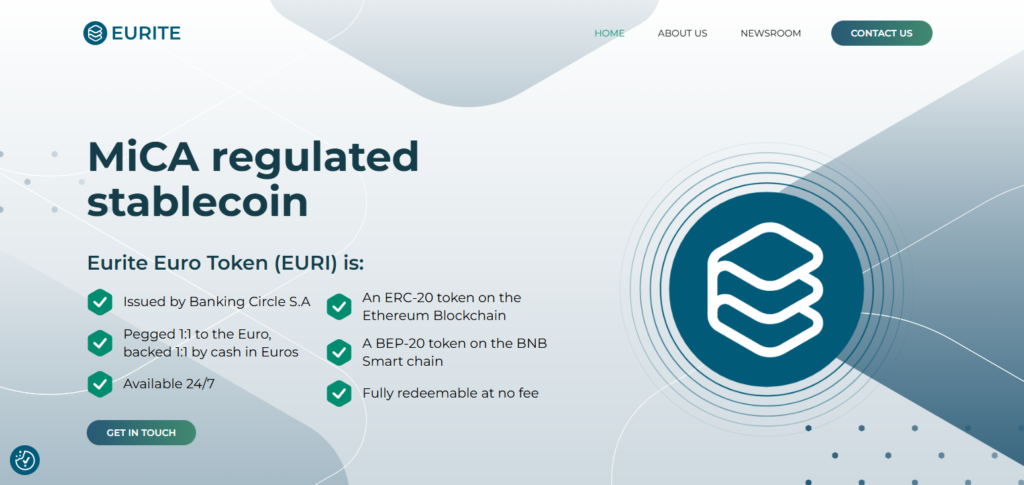
With settlement, transfer, and transaction transparency on the blockchain, and speed on Ethereum and BNB Smart Chain, cross-border transactions can be performed seamlessly.
With audited infrastructure, blockchain-based treasury management, smart contracts, and payment settlement solutions can be integrated across the digital finance ecosystem. Trust, legality, and compliance are bolstered by the MiCA regulation in the EEA as well.
Eurite (EURI) Features:
- 1:1 euro peg
- Compliant with Banking Circle SA reserves
- Multi-chain use (Ethereum, BNB)
- Compliant with MiCA
- Trust with security audits
Pros:
- Robust compliance
- Flexible multi-chain
- Reputable fiancní institution backing
- Cross-border payment use
Cons:
- Adoption still growing
- Liquidity is limited when compared to stablecoins pegged to USD
- Banking Circle reserves dependency
7. StablR Euro (Ticker: EURR)
StablR Euro (EURR) is a euro-pegged stablecoin issued by StablR Ltd., and aims to always be fully collateralised as well as maintains 1:1 parity to the euro, thus promises a stable value. Offering transaction costs that are virtually zero, and 24/7 access, blockchain technology is leveraged to ensure transparency and immutability.
EURR is supported on the Ethereum and Solana networks. Backed by collateralised assets, EURR users (institutions and individuals) are able to take advantage of less expensive cross-border transfers, and improved liquidity, as well as be compliant with the EU Framework for Regulated Digital Assets.
StablR Euro (EURR) features:
- 1:1 pegged to a euro
- Issued by StablR Ltd
- Runs on Ethereum, likely to Solana
- Fully compliant with MiCA
- Aims to fast and low-cost transactions
Pros:
- Good compliance with EU regulations
- Transactions on a blockchain at low cost
- Multi-chain compliance is good
- Good transparency and security
Cons:
- Less proven, newer project
- Smaller players have low liquidity
- Adoption is still developing
8. EUROe (Ticker: EUROe)
EUROe is a euro-pegged stablecoin issued by Membrane Finance. Being one of the first euro stablecoins to comply with MiCA in Europe, it operates on a no-fee, 1:1 basis for creation and redemption.
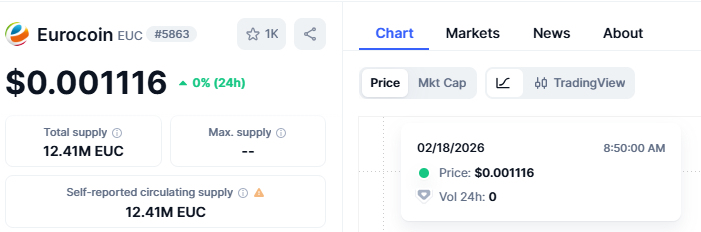
EUROe is also backed at all times by fully cash and capital buffer reserves held at European financial institutions. EUROe also offers cross-border payments, transfers, and on-chain settlements across Ethereum, Polygon, and Solana blockchains.
The goal is to provide the use of regulated euro digital currencies with privacy-protecting functions and a wide range of DeFi integration possibilities.
9. EURD (Ticker: EURD)
EURD is a euro-pegged digital currency issued by Quantoz Payments B.V. and regulated under the EU as an electronic money token (EMT). It remains equal to the euro. While it is not a stablecoin in the conventional sense, it does offer similar functionality by providing regulated euro digital payments and programmable money on the blockchain.
It operates on the Algorand network. Since it is issued by a licensed electronic money institution, there is also safety, transparency, and compliance with the EU’s MiCA regulations. It is therefore suited for enterprise finance and programmable digital euro use cases.
10. EURA (Ticker: EURA)
EURA is a decentralized euro-pegged stablecoin developed by Angle Protocol and implemented in 2021. In contrast to fiat-backed tokens, EURA is over-collateralized with a mix of crypto and other stable assets and uses a “zero-equity buffer” to protect users from de-pegging.

It is operational on several blockchains, among them Ethereum, Polygon, Arbitrum, BNB Smart Chain, Solana, and Base, and is extensively utilized in DeFi for trading, arbitrage, lending, and payments.
As a decentralized stablecoin, it offers the functionality of programmable money along with robust on-chain liquidity and auditable safety.
Key Criteria for Ranking the Best EUR Stablecoins
Regulatory compliance
The best EUR stablecoins have to follow the European regulations on stablecoins especially MiCA. Licensing and transparent governance frameworks boosts investors’ confidence.
Reserve transparency & audits
Stablecoins that provide regular audit reports are seen to have higher transparency and credibility and this also reduces anxieties over potential bankruptcy or mismanagement of reserves.
Stable liquidity & exchanges
Stablecoins that have been listed on the bigger crypto exchanges and have higher trading volume are more accessible and also provide safer trading environments and increased trading flexibility.
Blockchain flexibility
Stablecoins that have been built on several blockchains and multiple layers 2 solutions have more potential in deflationary integrations as well as faster and cheaper transactions.
Institutional adoption & collaborations
Stablecoins that have institutional support and collaboration with banks and incorporated fintech tools are also better European market stablecoins as they increase credibility and promote sustainability.
Future of EUR Stablecoins Beyond 2026
Full MiCA Implementation Impact
The full MiCA regulations will give compliant EUR stablecoins legitimacy, provide investor protections, define standard reserve regulations, and increase the number of European institutions in the compliant crypto space.
Integration with Digital Euro (CBDC)
The European Central Bank’s digital euro will either incorporate or coexist with future EUR stablecoins and allow the creation of hybrid financial systems that utilize public blockchains and central bank tokens.
Growth in Tokenized Real-World Assets
Tokenized bonds, real estate, and securities will strengthen cross border investments when coupled with EUR stablecoins. This will allow programmable euro financial instruments on both decentralized and institutional systems.
Expansion of Institutional DeFi
EUR stablecoins will facilitate regulated DeFi services like lending, liquidity provisioning, and on-chain settlements for traditional banks, fostering the creation of compliant decentralized finance ecosystems in Europe.
Cross-Border Payment Dominance
EUR stablecoins will offer Europe real-time payment systems with instant and low-cost cross border payment services while reducing reliance on traditional correspondent banking, and providing financial inclusion.
Conclusion
Increased clarity for MiCA and growing institutional engagement means more consistent growth for the European EUR-pegged stablecoin market. Although euro-backed stablecoins are further behind than USD stablecoins in the current global stablecoin market.
The use of euro-backed stablecoins in DeFi, cross-border payments, and within tokenized assets ecosystems is growing. In 2026, regulated issuers, transparent reserves, and multi-chain compatible euro stablecoins will be keys to market differentiation.
Also, institutional-backed euro stablecoin projects are winning more trust, and decentralized projects are increasing their stabilityae peg mechanisms. Beyond 2026, as compliance and liquidity continue to strengthen, EUR stablecoins are set to further integrate into Europe’s digital financial systems.
FAQ
What is the largest EUR-pegged stablecoin in 2026?
Market share varies by exchange liquidity and circulating supply. Historically, Euro Tether (EURT) and Euro Coin (EUROC) have ranked among the most liquid euro stablecoins, but MiCA-compliant projects are rapidly gaining institutional traction.
Are EUR stablecoins fully backed by euros?
Most regulated EUR stablecoins claim 1:1 backing with euro reserves held in financial institutions. Transparency depends on third-party audits, reserve attestations, and compliance reporting under EU regulatory frameworks.
How are EUR stablecoins different from USD stablecoins?
EUR stablecoins are pegged to the euro instead of the US dollar, reducing USD exposure for European users. However, USD stablecoins still dominate global liquidity and trading volume.
Are EUR stablecoins safe under MiCA regulation?
MiCA introduces strict reserve, governance, and disclosure requirements. Fully compliant issuers benefit from stronger investor protection standards, though users must still consider counterparty and operational risks.
Can EUR stablecoins be used in DeFi?
Yes. Many euro-backed stablecoins operate on Ethereum and Layer-2 networks, enabling lending, staking, liquidity pools, and cross-border payments within decentralized finance ecosystems.