
NFT royalties are important for creators to earn money when their digital possessions are resold on secondary markets. But without the right tools, keeping track of royalty payments, marketplace sales, and blockchain transactions can be a challenge.
In this article, I will discuss the Best NFT Royalty Tracking Software that helps creators analyze royalty activity, monitor collection performance, review transaction histories, and manage royalty information across supported blockchain networks and NFT marketplaces.
How to Choose the Best NFT Royalty Tracking Software
Blockchains Supported: Pick software that allows tracking of NFT royalty activity across different ecosystems, including major blockchain networks such as Ethereum, Solana, Polygon and Base.
Royalty Tracking Capabilities: Choose platforms that track creator royalties from secondary-market sales, and provide accurate data on royalty-related transactions and earnings.

Royalty Percentage Tracking: See if the software shows configured royalty percentages, recipient wallet addresses, and collection-level royalty details to improve earnings visibility.
Payment Tracking: Look for features that help in verifying royalty payments received, identifying payment discrepancies, and reviewing transaction records related to creator earnings.
Marketplace Coverage: Choose software that can pull NFT sales and royalty data from a range of marketplaces to better see secondary-market trading activity.
Transaction History: Seek out platforms that offer detailed transaction history, including wallet addresses, timestamps, NFT transfers, sales amounts, and other relevant blockchain activity.
Analytics and Reporting: Select software that offers customizable dashboards, historical royalty data, collection performance reports, and sales analytics so you can track how creator revenue trends are changing.
Pricing & Integrations: Look at subscription fees, API availability, integration capabilities, and scalability to ensure the software fits your technical needs and long-term NFT management goals.
Why do NFT Creators Need Royalty Tracking Software?
Creator Earnings Tracker: Helps NFT creators track royalty earnings from secondary market sales, offering insights into the revenue generated by their digital collections over time.
Monitor Secondary Sales: It provides creators a way to see NFT resales on marketplaces they support and to identify trading activity that could result in additional royalty income.
Validate royalty payments: Creators can verify that they have received the expected royalty payments correctly by examining blockchain transactions, recipient wallet addresses and payment histories.
Multiple Marketplaces in One: Provides you with better visibility into NFT trading activity across multiple marketplaces, so you don’t have to check each one.
Detect Payment Discrepancies: Enables creators to compare configured royalty percentages with recorded transactions, helping them spot missing, reduced, or inconsistent royalty payments.
Analyze Collection Performance: Provides historical sales information, royalty-related data, and collection analysis to help creators understand market demand and revenue performance.
Enhance Revenue Transparency: Makes it easier to review royalty-related transaction information, helping creators understand payment activity and maintain clearer financial records for their NFT collections.
Facilitate Better Decisions: Enables creators to leverage sales trends, transaction histories, and royalty reports to assess the performance of their collections and make informed decisions for future NFT projects.
Why Do NFT Creators Need Royalty Tracking Software?
| Software / Platform | Key Point |
|---|---|
| 1. Manifold | Supports creator-owned NFT contracts and royalty management infrastructure. |
| 2. Royalty Registry | Provides on-chain royalty information and recipient lookup through supported royalty standards. |
| 3. Dune | Enables custom SQL dashboards to analyze NFT sales, transfers, and royalty-related transactions. |
| 4. Reservoir | Provides NFT marketplace data, ownership information, sales activity, and trading APIs. |
| 5. OpenSea | Provides collection-level creator fee information and marketplace sales activity. |
| 6. Magic Eden | Displays creator royalty information and NFT marketplace transaction activity. |
| 7. Rarible | Supports creator royalty settings and NFT marketplace transaction tracking. |
| 8. NFTGo | Provides NFT collection analytics, historical activity, holder information, and trading insights. |
| 9. CryptoSlam | Tracks NFT sales, transactions, buyers, sellers, and cross-chain market activity. |
| 10. NFTScan | Provides NFT contract, wallet, transaction, and collection data for blockchain investigations. |
1. Variety
Manifold is a creator-first NFT infrastructure platform that empowers artists and brands to deploy collection contracts and manage creator settings. The royalty-related function is to establish creator earnings in supported contract standards, not to provide a plug-and-play dashboard that can verify every royalty payment across marketplaces.
Manifold’s tools are mainly built for the creation of Ethereum NFTs, though the exact networks available will depend on the product and the contract used. Through compatible marketplace records or blockchain analytics programs, creators can see sales and transfers. The price is dependent on the Manifold service and deployment requirements.
Key Features
- Deployment of creator-owned intelligent contracts.- Configuration of NFT royalties.
- Supports ERC-721 and ERC-1155 contracts.
- Tools for custom NFT minting.
- Creator owned NFT infrastructure.
Main Risks
- You need to know the technical part of deploying a smart contract.
- Not all marketplaces guaranty royalty payments.
- Blockchain gas fees can add to operating costs.
- Advanced customization might require developer help.
2. Royalty Register
Royalty Registry is an on-chain information layer that allows compatible NFT applications to discover royalty information associated with an NFT contract or token. This is not a full royalty accounting service in that it doesn’t independently collect every secondary-sale payment or offer universal marketplace payout monitoring.
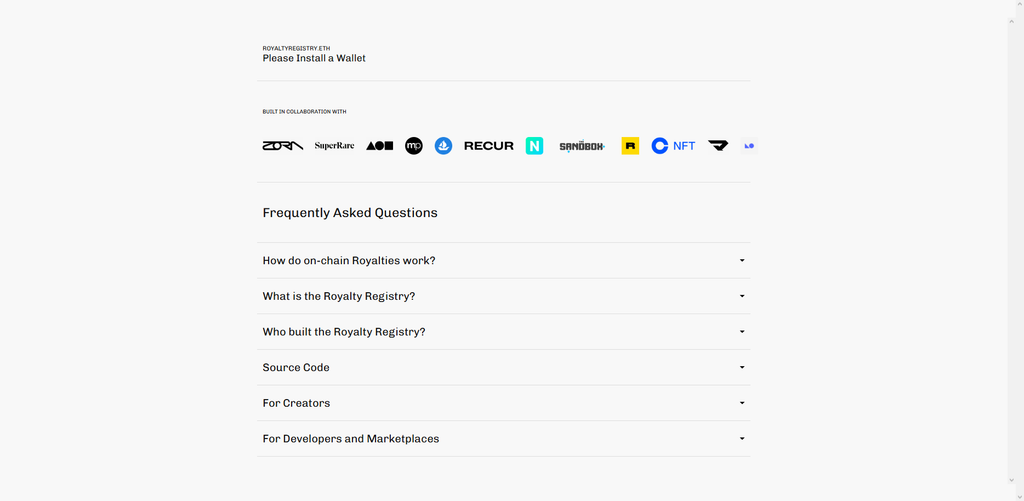
It is initially implemented on Ethereum and EVM based NFT infrastructure, compatibility depends on contract standard and integrating marketplace. The registry is used to help applications identify configured royalty recipients and rates where supported. Compatible NFT applications and marketplace systems can integrate its royalty information.
Key Features
- Royalty information on-chain.
- Identification of the beneficiary of creator royalties.
- Royalty percentage search.
- Compatible with smart contract royalties.
- Integration with NFT apps that are supported.
Important Risks
- No royalties guaranteed.
-Depends on the integration with the marketplace. - No direct payment monitoring.
- Contracts without support may contain incomplete information.
3. Dune
Dune is a blockchain analytics platform where users can query on-chain data and build dashboards for NFT activity. It helps royalty research by studying marketplace sales, transfer events, contract calls, recipient wallets, and payment amounts when relevant data is available.
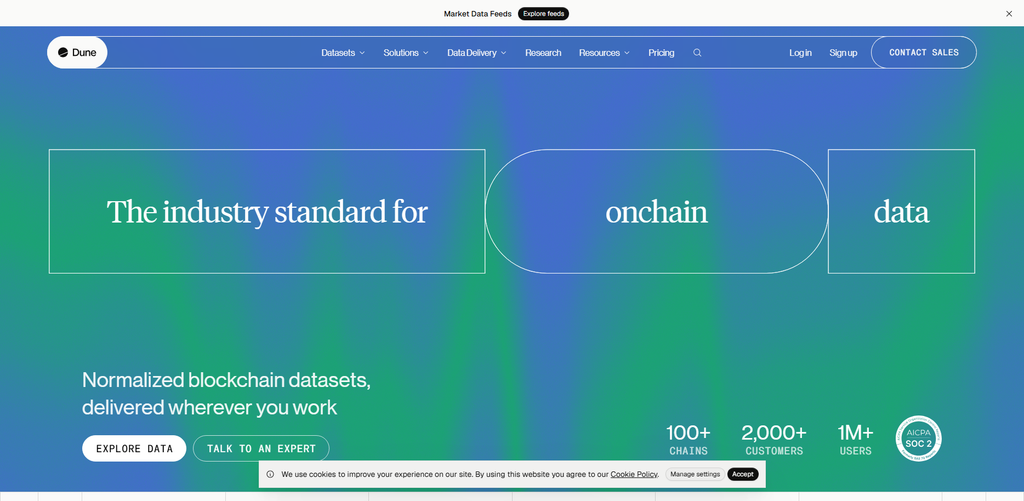
Dune supports 130+ blockchains, but the datasets and events available vary from chain to chain. It doesn’t automatically provide a full royalty ledger or account for each marketplace payment. Users can view public dashboards and create custom queries to analyze historical transactions. Paid plans may be necessary for advanced usage and API access.
Highlights
- Personalized NFT analytics dashboards.
- Monitoring blockchain transactions.
- Wallet analysis on royalties.
- Analysis of past NFT sales.
- Access to API and SQL queries.
Risks
- Requires SQL knowledge to conduct advanced analysis.
- Wrong queries can lead to misleading results.
- Blockchain datasets coverage is patchy.
- Subscription costs may be required for advanced usage.
4. Reservoir
Reservoir offers NFT Data and Trading APIs that aggregate data from supported marketplaces. Its data tools include collection and token details, sales activity, ownership information, and historical and real-time royalty data, making it especially relevant for royalty analysis.
Reservoir supports more than 30 EVM chains, coverage is dependent on its current supported-chain list. Developers are able to query sale records and royalty fee breakdowns, including whether full royalties were paid where reported, through its APIs and event subscriptions. Developer account available. Usage costs will vary based on API needs and volume.
Key Features
- APIs for NFT royalties.
- Data aggregation across multiple marketplaces.
- NFT sales information in real time.
- Supports multi-chain NFT data.
- Developer API and integration kit
Main Risks
- Requires technical integration with APIs.
- Royalty data should be taken with a pinch of salt
- Performance may be affected by API usage limits.
- Coverage of marketplace data varies.
5. OpenSea
OpenSea is an NFT marketplace that has creator-earnings settings, which allow eligible collection owners to set a royalty percentage and a payout address. Creator earnings on OpenSea can be optional or enforceable, depending on the collection’s contract setup. With optional you won’t be guarantyd to get paid when an NFT sells elsewhere.
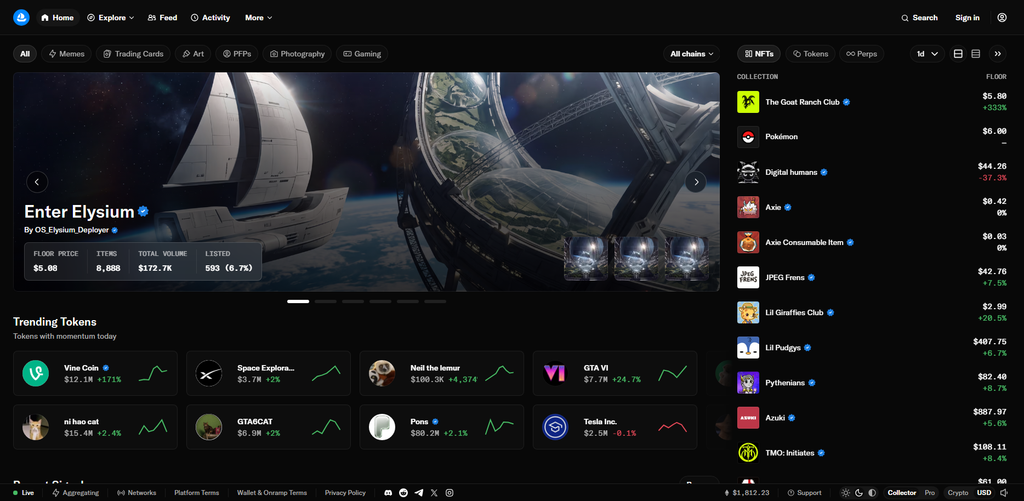
The platform supports NFTs on multiple blockchains but creator earnings behavior differs by chain and contract compatibility. You can see collection activity and sales on OpenSea, but for verifying on a transaction-by-transaction basis you might need to use a blockchain explorer. Browsing is free, but transaction and minting and network fees may apply
Key Features
- Earnings configuration for creators.
- royalty recipient address parameters
- Creator earnings on compatible contracts that can be enforced.
- Monitoring NFT collection sales.
- Creator revenue information.
Principal Risks
- Creator royalties remain optional.
- Enforcement is subject to contract compatibility.
External marketplaces may not pay any royalties. - Earnings for creators may differ across marketplaces.
6. Magic Eden
Magic Eden is a multi-chain NFT marketplace that shows creator royalty information on the NFT listings it supports and processes royalty payments according to the collection rules and marketplace settings. Some collections on its Solana marketplace allow for optional royalties, where buyers can choose what they want to pay.
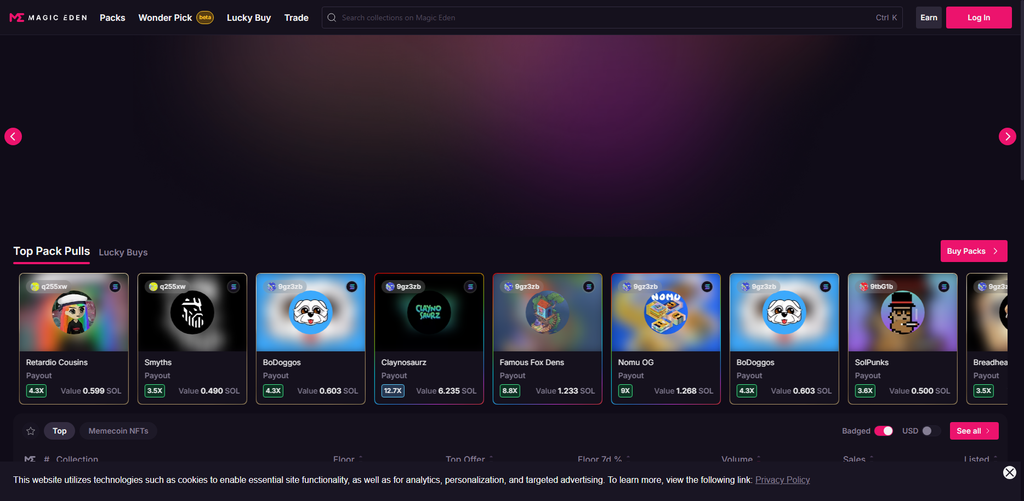
Required royalties for collections using supported enforcement standards. So the royalty % shown should not be taken as proof that all secondary sales paid the full royalty. Creators can check marketplace sales and item details, but independent verification may need on-chain records. Network and marketplace fees may apply
Key Features
- Details of the creator’s royalty.- Optional royalty payment options.
- Royalty required for compatible collections.
- tracing NFT marketplace transactions
- Support for paying creator royalties.
Principal Risks
- Optional royalties can hurt creator earnings.
- The standards of collection determine enforcement.
- Royalty functionality depends on the blockchain
- Transaction costs are affected by marketplace and network fees.
6. Rarible
Rarible is an NFT marketplace and creator platform that enables creators to define royalty percentages when minting or setting up supported collections. Then when a qualifying secondary sale takes place through a marketplace that honors those settings , the creator can get the configured share . Not all marketplaces will pay .
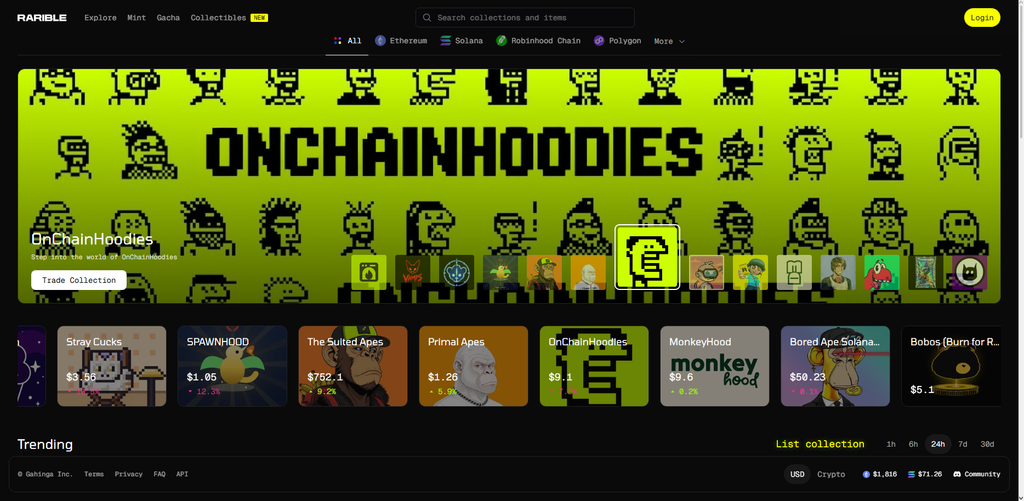
Rarible is available on several blockchain networks. The chains and fee schedules depend on the marketplace feature. Creators can see listings, sales & activity for a collection, and check payout details against their wallet & transaction history. Marketplace service fees and gas fees may apply.
Main Features
- Customizable creator royalty percentage.
- Multi-chain NFTs support
- Monitoring sales on NFT marketplaces.
- Support for creators’ revenue.
- Non-custodial wallet transactions;
Important Risks
- Each marketplace has a different enforcement of royalties.
- Marketplace fees impact transaction proceeds.
- Gas fees on the blockchain vary.
- Royalty reporting across chains can be tricky.
8. NFTGo
NFTGo is an NFT data analytics platform that focuses on NFT market research, NFT collection performance, wallet activity and NFT trading data. It allows users to study secondary market sales, collection volume, floor prices, holders and market trends, providing useful context for estimating royalty activity.
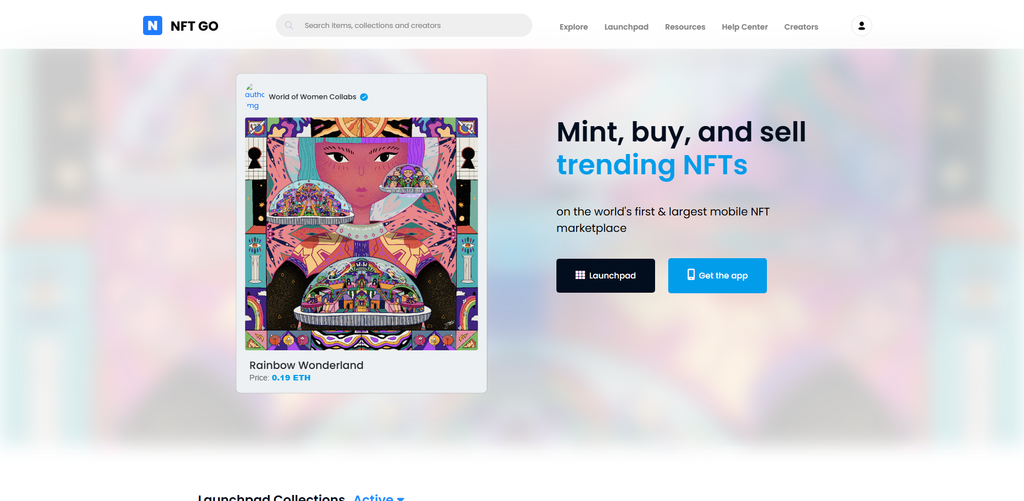
However, it should not be presented as a dedicated royalty payment processor, nor as proof that a creator has received a particular payment. Blockchain and marketplace coverage is a function of the datasets found in the product. Analytics are available to users through its web platform and developer services, with advanced features and API access potentially linked to the selected plan.
Main Features
- NFT market research
- Collection performance tracking.
- Monitor wallet activity
- Historical NFT trade data.
- APIs and SDKs for developers.
Key Risks
- No assurance that royalty will be directly paid or tracked.
- The Blockchain does not provide consistent data coverage.- Market stats do not confirm earnings of the creator.
- Advanced API access may incur additional costs.
9. Crypto Slam
CryptoSlam is an NFT data and analytics platform that tracks sales activity across several blockchain ecosystems. This is useful to review collection-level and marketplace-level trading volume, transaction counts, buyers, sellers, and historical sales trends to inform royalty research.
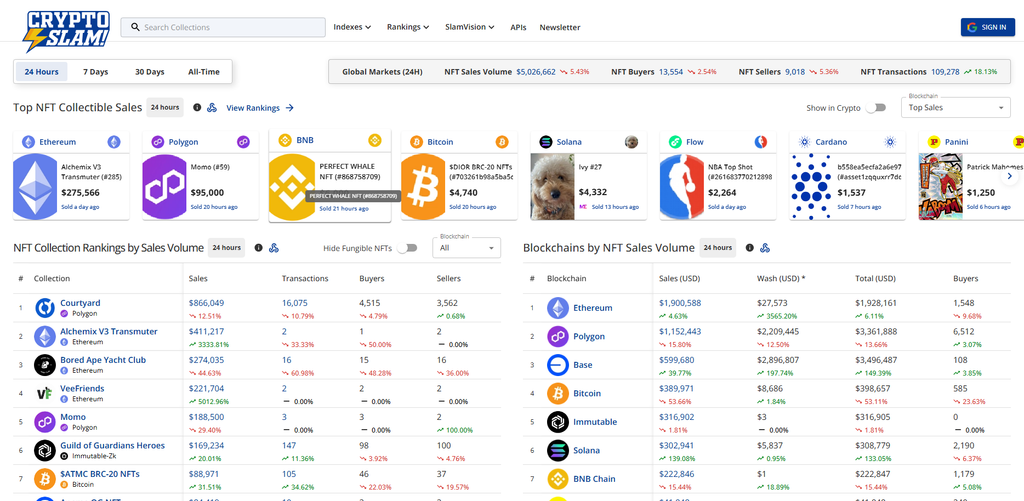
However, sales statistics do not verify the set royalty percentage for a collection or the amount paid to its creator. Contract level data and wallet transaction history might be needed to verify payments by users. CryptoSlam provides public market dashboards and data services. Advanced access and API terms are subject to current offering.
Feature Highlights
- Tracking cross-chain NFT sales.
- Performance analytics of NFT collections
- Monitoring seller and buyer activity.
- Historical market data for NFT.- Marketplace sales comparison.
Major Risks
- Is not directly addressing royalty payments.
- Coverage of marketplace data is not consistent.
- Royalty earnings are not equal to sales volume.
- Need more in-depth royalty accounting analysis.
10. NFTScan
NFTScan is a platform of NFT explorer and data infrastructure, providing NFT asset, collection, transfer and transaction information through explorer pages and APIs. It helps users find relevant NFT contracts, token activity, marketplace transactions and wallet movements on supported networks to assist with royalty investigations.
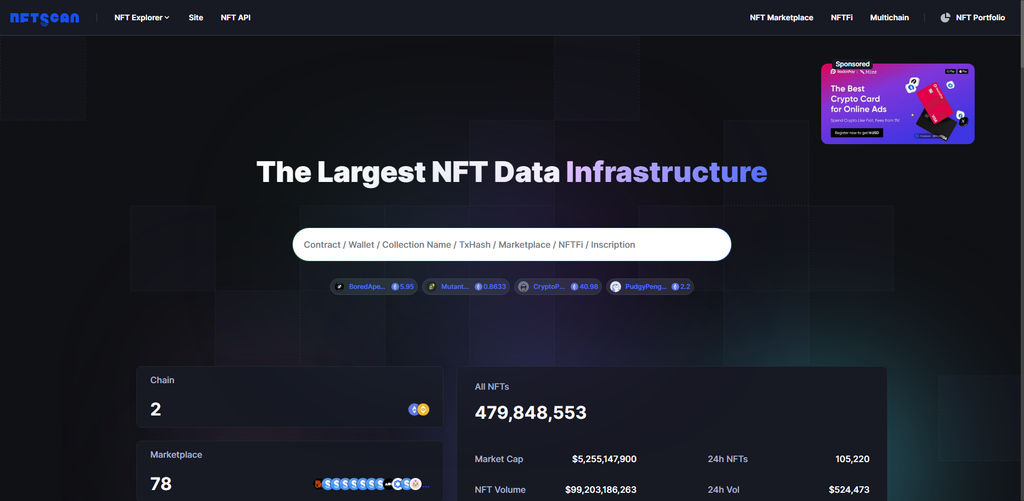
Its documentation lists EVM-chain data services for Ethereum and BNB Chain alongside more generic multi-chain API products; exact coverage depends on the API. NFTScan does not provide a universal royalty distribution service.
Users will need to analyze the transaction data to see if payments have been made. With developer access you get a free allowance of requests and further API terms depending on the plan you select.
Features
- Research NFT transactions.
- Access NFT data across chains.
- Collection and smart contract details.
- Wallet and token activity monitoring.
- APIs for NFT data for developers.
Material Risks
- No guaranty of royalty payment tracking.
- Blockchain coverage by service.
- Transactions must be interpreted with technical knowledge.
- Advanced API usage may incur additional charges.
Conclusion
NFT royalty tracking software enables creators to track secondary market sales, review royalty information, analyze blockchain transactions, and evaluate collection performance. Platforms like Manifold, Royalty Registry, Dune, Reservoir, OpenSea, Magic Eden, Rarible, NFTGo, CryptoSlam, and NFTScan provide various functionalities for royalty management and NFT analytics.
When choosing a platform, consider the supporting blockchains, marketplace coverage, payment monitoring, transaction history, reporting tools and pricing. Most importantly, remember that configured NFT royalties are not a guarantyd payment on each and every resale, as they rely on intelligent contracts and marketplace policies to enforce them.
FAQ
What Is NFT Royalty Tracking Software?
NFT royalty tracking software helps creators monitor secondary-market sales, review royalty information, analyze blockchain transactions, and track creator earnings across supported NFT marketplaces.
How Does NFT Royalty Tracking Software Work?
It collects NFT sales and blockchain transaction data, identifies royalty-related information, and helps creators review configured royalty percentages, recipient wallets, and payment records.
Which Is the Best NFT Royalty Tracking Software?
Manifold, Royalty Registry, Dune, Reservoir, OpenSea, Magic Eden, Rarible, NFTGo, CryptoSlam, and NFTScan offer different tools for NFT royalty configuration, data analysis, and transaction monitoring.
Can NFT Creators Track Royalties From Secondary Sales?
Yes. Creators can use blockchain explorers, marketplace reports, and analytics platforms to monitor secondary sales and investigate royalty payments when transaction data is available.
Which Blockchains Support NFT Royalty Tracking?
Ethereum, Solana, Polygon, Base, and other blockchain networks support NFT royalty-related data, depending on the software, smart contract standards, and marketplace integrations.