The ultimate goal of fractional ownership is to digitize and democratize real estate this has opened the door for many investors to take part in happy investing. Best Real Estate Investment Apps for Fractional Ownership offer a way for investors to purchase small amounts, spread funds on different properties, or receive passive income without managing them directly.
These types of platforms have merged the power of technology, data insights and professional management to demystify investing whilst making real estate markets more accessible to novice and seasoned investors alike, with lower risk exposure and greater opportunity for long-term wealth accumulation.
What is Fractional Real Estate Investment?
Fractional real estate investment is a contemporary form of property investment that allows multiple investors to share the cost of a property purchase rather than each individual buying one entirely on their own.
Investors own the fractional ownership stake and receive returns in the form of rentals as well as property appreciation. It really lowers the barrier to entry, enabling average people to invest even if they only have a little capital rather than waiting until they hold lots of funds.

This usually occurs via online platforms or apps that handle the property selection, legal structure and operations for you, allowing it to be seamless, passive and beginner-friendly.
Key Point
| App / Platform | Key Point |
|---|---|
| Fundrise | Offers diversified eREIT portfolios with low minimum investment and automated asset management, making it ideal for beginners seeking passive fractional real estate exposure. |
| Arrived Homes | Enables direct fractional ownership in rental homes with property-level selection, allowing investors to earn rental income while choosing specific assets. |
| RealtyMogul | Provides REIT-based fractional ownership with income-focused portfolios, suitable for investors prioritizing steady cash flow over liquidity. |
| Groundfloor | Focuses on real estate debt investments with low entry points, allowing fractional participation in short-term property loans and faster returns. |
| RealT | Uses blockchain tokenization to enable global investors to buy property shares and receive rental income through smart contracts. |
| Lofty AI | Offers low-cost tokenized real estate shares with daily rental payouts and governance rights for investors. |
| CrowdStreet | Specializes in commercial real estate fractional investments, providing access to institutional-grade deals for accredited investors. |
| RealtyShares | Allows pooled investments into real estate projects with digital ownership tracking and simplified portfolio management. |
| Zoniqx | Provides advanced tokenization infrastructure for fractional real estate, focusing on compliance, scalability, and global investor access. |
| SolidBlock / Harbor | Enables compliant real estate tokenization and fractional ownership with secure blockchain-based transactions and regulatory alignment. |
1. Fundrise
Fundrise is a top real estate investing platform that offers investors access to diversified portfolios through its proprietary eREIT and eFund models, being one of the earliest movers in online real estate investing.
Launched in 2010, the platform oversees billions worth of real estate assets across the U.S. and allows exposure to residential, commercial and private credit investments.
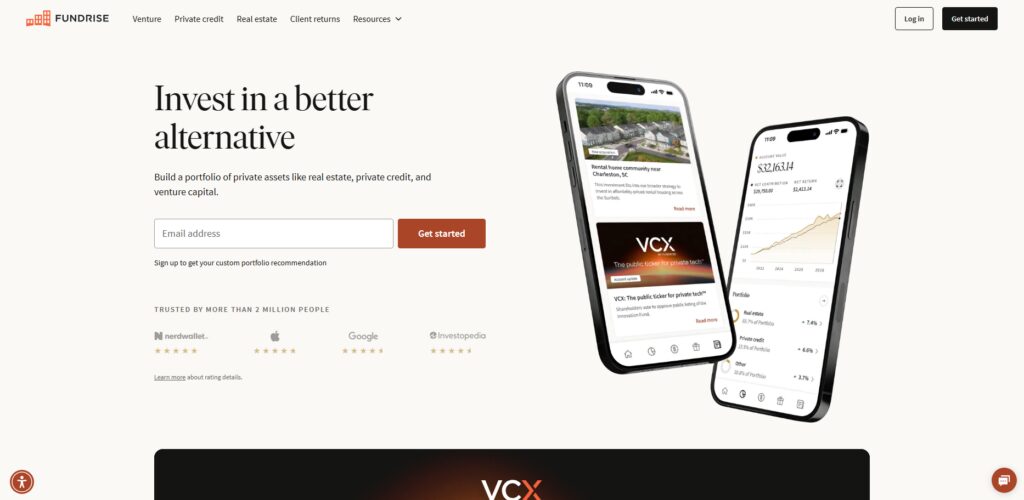
For example, in the mid-structure of its offering investors can get started with a very low $10 minimum investment, making it very beginner friendly & expects to returns is about 7%–12% yearly dependent on market conditions.
Fundrise does have a long-term strategy, so liquidity is restricted to quarterly redemption programs and investors must be comfortable with lower liquidity but comparatively stable risk relative to direct property ownership.
Fundrise Key Features
- New forms of eREITs and private real estate funds
- Minimum investment is very low, as low as $10
- Passive income via quarterly dividends
- Goal-based automated portfolio allocation
- Long-term wealth-building strategy (5+ years focus)
Pros
- Luftfartorm is a myth.
- Strong diversification reduces risk
- Steady long haul returns
- Fully passive investment experience
Cons
- Limited liquidity (restricted withdrawals)
- Not for short-term holdings
- Early retirement and penalties may be included
2. Arrived Homes
Arrived Homes specializes in single-family rental and short-term rental homes for fractional ownership, so that allows investors to purchase shares in specific properties instead of pooled funds.
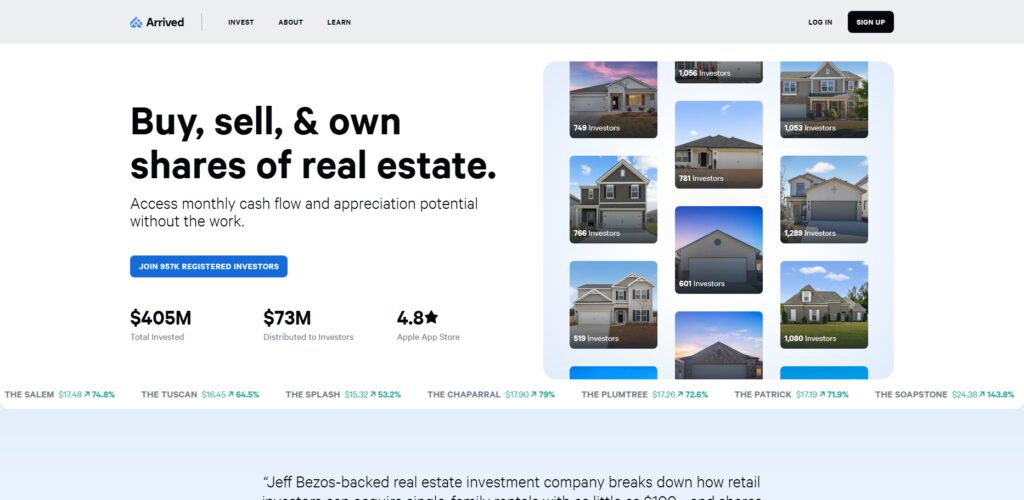
The platform prioritizes transparency by allowing users to select individual homes based on location and rental yield potential. For passive income seekers, the minimum investment is in the mid (around $100) and investors can receive quarterly rental income distributions.
Notably, returns depend on how well the property performs, with the platform focusing on stable rental markets, but limited liquidity since shares are usually held until the property is sold; as such it’s a moderate-risk income-generating investment option.
Arrived Homes Key Features
- Ownership of vacation and rental homes by the fraction
- Minimum investment starts around $100
- You earn rental income from individual properties
- Investors can choose specific homes
- Professionally managed properties
Pros
- Indirect exposure through Real (Estate) Funds
- Passive rental income generation
- Transparent investment selection
- Beginner-friendly platform
Cons
- Low liquidity (long holding period)
- Property-specific risk
- Limited geographic diversification
3. RealtyMogul
RealtyMogul provides you with a hybrid investment option through REITs and actual commercial real estate deals, thus providing investors with access to spend in institutional-grade assets like workplace buildings, retail facilities, and multifamily units.
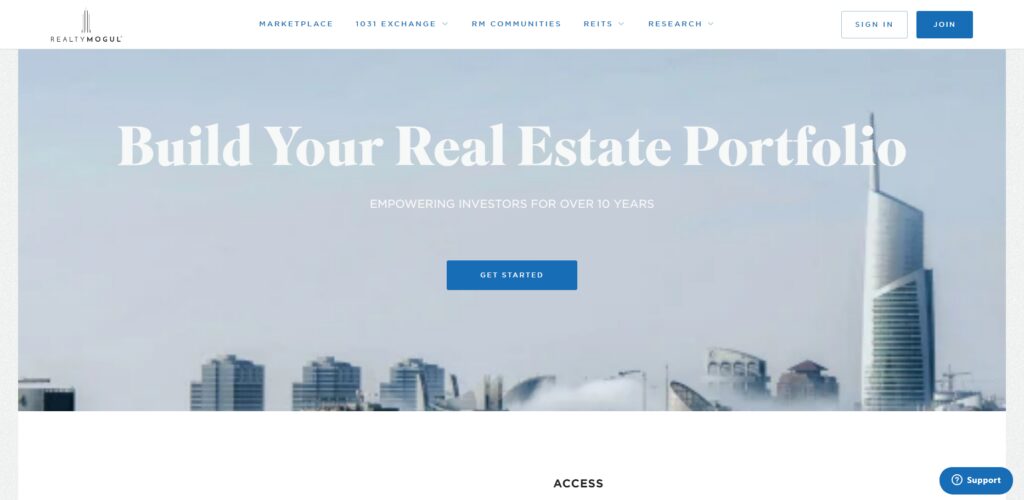
The platform is designed for both novices and seasoned investors, with *minimum investment ranging from $5,000 in REITs to $25,000+ in private placements. Performance-wise, RealtyMogul offers target returns of 4.5% to 18.7% depending on deal type and risk.
Investing into REITs diversifies and lowers risk compared to buying direct deals but does require accreditation with a higher overall risk/lower liquidity meaning this is better suited for: diversified growth-oriented investor
RealtyMogul Key Features
- Provides Reits and private real estate offerings
- A broader range of commercial real estate investments
- Investment opportunities for accredited and non-accredited investors
- Income-focused and growth-focused investment plans
- Professionally managed portfolios
Pros
- Diversified investment options
- Access to institutional-grade properties
- Potential for higher returns
- Strong platform credibility
Cons
- Some deals have a high minimum investment
- Limited liquidity
- Some investments require accreditation
4. Groundfloor
Groundfloor is unique in that they offer real estate debt investments rather than real estate ownership where individuals invest in short-term loans for house-flipping and other development projects.
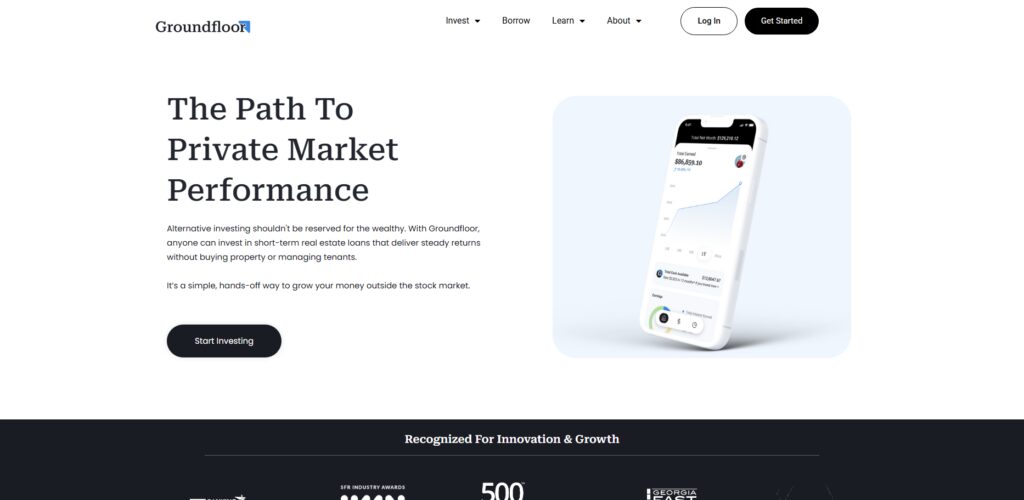
This unique model allows access to these high-yield opportunities, for relatively short durations. The minimum investment in the core structure is as low as $10 – it is one of the most accessible platforms out there (returns are usually higher than lending-based investments, note).
However, such loans have greater default risk and market sensitivity, particularly in economic downturns and can require maturity of loans to source liquidity thus leading Groundfloor into a higher-risk, short-term income-oriented platform.
Groundfloor Key Features
- Investing in real estate debt (short term loans)
- Minimum investment starts at $10
- Short-term investments (weeks-months)
- High-yield potential returns
- Investors choose individual loan projects
Pros
- Very low entry barrier
- Short-term investment opportunities
- Potential for high returns
- liquidity than long-term platforms
Cons
- Higher default risk
- No underlining physical ownership
- Performance based returns for the borrower
5. RealT
RealT is a blockchain-based platform that allows investors to buy tokenized fractional ownership of real estate properties, with an emphasis on U.S.-based real estate. The properties are fractionalized into digital tokens that permit international investors to earn rental income via a cryptocurrency transaction.
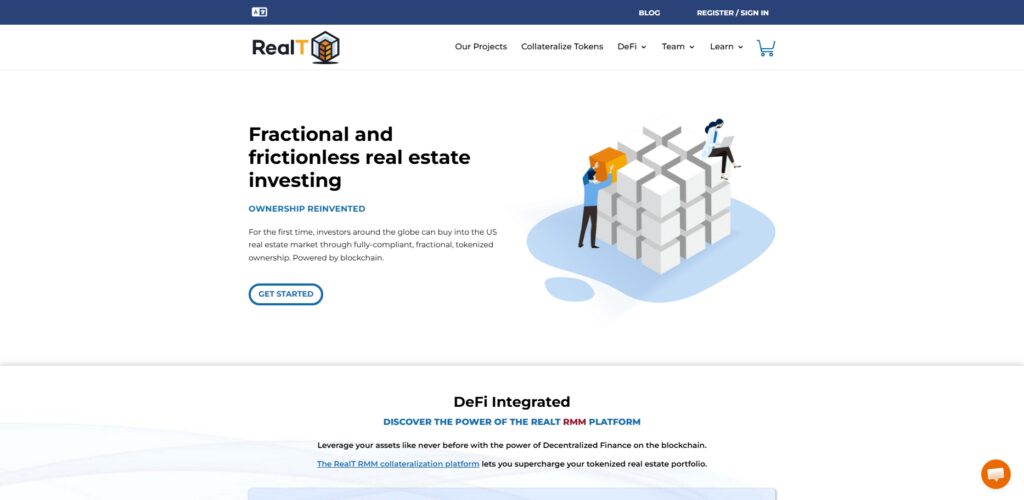
In mid-investment layer, entry barriers are wide (generally under $50–$100/token) and rental income is shared frequently in cryptographic wallets.
This innovation is meant to open doors through accessibility and transparency but brings with it crypto-related volatility, regulatory uncertainty and liquidity risk, making RealT a high-risk, tech-forward investment only appropriate for advanced investors interested in tokenization.
RealT Key Features
- Blockchain-based tokenized real estate ownership
- Fractional ownership via digital tokens
- Rental income paid in cryptocurrency
- Global investor accessibility
- Smart contract-based transactions
Pros
- Innovative blockchain technology
- Low entry investment
- Transparent ownership system
- Regular rental income payouts
Cons
- Crypto market volatility risk
- Regulatory uncertainty
- Limited mainstream adoption
6. Lofty AI
Real Estate Investing Meets Artificial Intelligence With Lofty AI, whose platform can show users where high-performing rental properties are by leveraging the power of predictive analytics and automated insights.

The platform enables fractional ownership in rental properties with decisions based on real-time data. Its main investment model allows entry with a minimum of $50 capital, while another unique feature is the ability to receive daily rental income payouts that increases cash flow transparency.
Also, Lofty has a secondary market place offering liquidity; however, volatile prices due to active traders across the platform can be detrimental making this a moderate-to-high risk platform with hefty upside.
Lofty AI Key Features
- AI-powered property selection and analysis
- Fractional ownership of rental properties
- Daily rental income payouts
- Secondary marketplace for trading shares
- Data-driven investment insights
Pros
- Advanced AI-driven decision making
- Frequent income payouts
- Improved liquidity via marketplace
- Transparent performance tracking
Cons
- Market price volatility
- Platform dependency
- New investors need to learn how to play
7. CrowdStreet
CrowdStreet targets direct investment into large-scale commercial real estate projects — office buildings, industrial assets, multifamily developments. Unlike beginner-friendly platforms, it’s mainly for accredited investors and articles have a high minimum investment of about $25,000.

The platform claims average returns up to 12% or more, depending on deal performance. Things are high-risk, high-return with regard to investment indeed, as investments generally are illiquid and locked for years, while project-specific risks can be dramatic (will the apartment get rented after all?) — therefore, CrowdStreet is a high-risk, high return platform with experienced investors only doing so.
CrowdStreet Key Features
- Investing directly in commercial real estate projects
- Focus on large-scale properties
- High minimum investment (~$25,000)
- Accredited investors only
- Long-term investment horizon
Pros
- High return potential
- Access to premium deals
- Strong sponsor network
- Institutional-level investments
Cons
- Only for accredited investors
- High capital requirement
- Illiquid long-term investments
8. RealtyShares
RealtyShares was one of the biggest names in real estate crowdfunding that had both equity and debt investment opportunities for residential and commercial properties. Investors were able to diversify their investments across a series of projects, with relatively flexible investment opportunities.
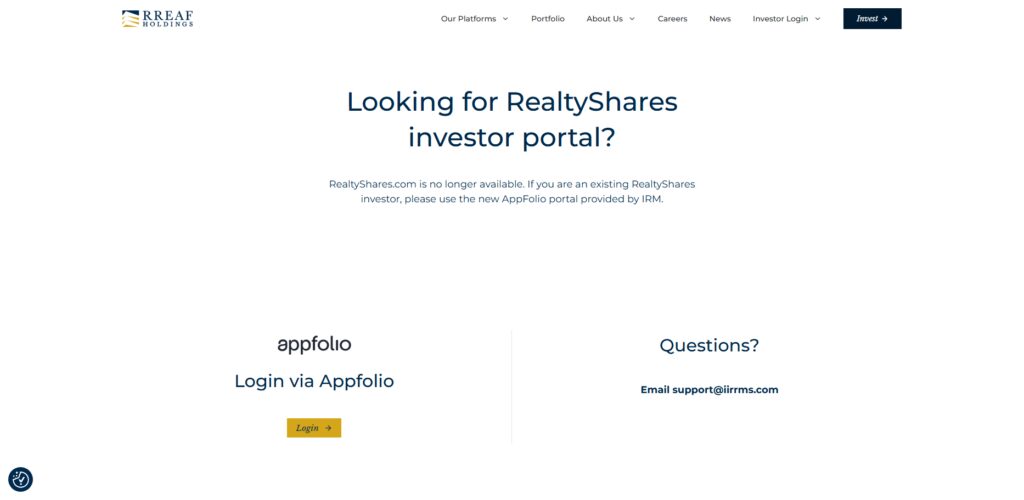
But midway through its operational run, RealtyShares encountered financial and operational issues and severely curtailed its services. Although past returns are competitive, current trading is low and liquidity fears are high making it a high-risk and less active market in comparison to newer entrants.
RealtyShares Key Features
- Once provided both equity and debt real estate investment
- Access to diversified property deals
- Emphasis on commercial and residential projects
- Online investment platform model
- Historical presence in crowdfunding market
Pros
- Strong past performance
- Variety of investment options
- Early innovator in crowdfunding
- Diversification opportunities
Cons
- Limited current operations
- Newer investors are facing a lot of uncertainty
- Liquidity concerns
9. Zoniqx
Tokenization infrastructure provider rather than investment platform, Zoniqx allows institutions to transform real world assets such as real estate into blockchain-based digital securities. Its ecosystem has an emphasis on compliance, smart contracts, and secure asset management.
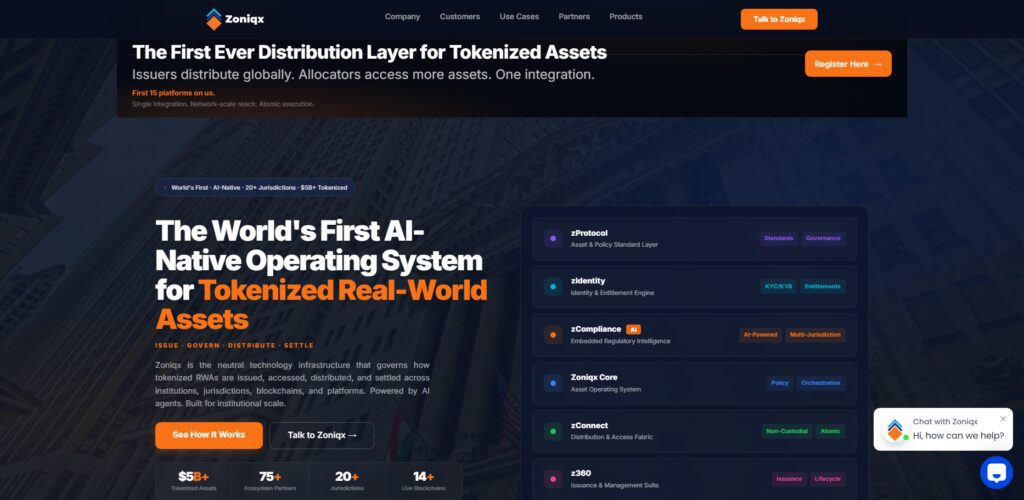
The mid-layer serves as an indirect benefit for investors on individual tokenized assets in collateralized structures, but access and entry requirements depend on partner platforms.
However, while the model is the future of real estate digitization, it comes with regulatory complexity, adoption risk and technological barriers — making it a high-potential but evolutionary investment ecosystem.
Zoniqx Key Features
- Tokenization infrastructure for real-world assets
- Blockchain-based asset digitization
- Focus on compliance and security
- Smart contract integration
- Institutional-grade platform solutions
Pros
- Future-focused technology
- High transparency
- Secure asset management
- Supports global investment ecosystem
Cons
- Not a direct investment platform
- Complex for beginners
- Regulatory and adoption risks
10. SolidBlock / Harbor
SolidBlock and Harbor: Leading platforms for real estate tokenization, digital securities, enabling tokenization of high-value global properties into fractions using blockchain Institutional investors typically use these platforms to tokenize large assets, such as hotels or commercial developments.

Entry points can vary across the investment spectrum, but overall a significant advantage is achieved in the form of increased liquidity by trading through digitization of assets.
But also consider regulatory risks, limited mainstream adoption and platform dependency, limiting these platforms to tech astute and institutional level investors seeking future spectrum real estate exposure.
SolidBlock / Harbor Key Features
- Real estate tokenization platforms
- Real Asset Backed Digital Securities
- Fractional ownership of high-value properties
- Blockchain-based transactions
- Focus on institutional investors
Pros
- Diversification into global real estate markets
- Increased liquidity via tokenization
- Transparent and secure transactions
- Future-ready investment model
Cons
- Regulatory challenges
- Limited adoption
- Requires technical understanding
Key Factors to Consider Before Choosing an App
Minimum Investment Requirement
As it determines the accessibility make sure to check the minimum amount which is required by the platform. Lower thresholds are suited for novices, and higher limits may appeal to seasoned or accredited investors.
Expected Returns and Performance
Review the platform’s past returns and future earning potential. Though the higher returns are enticing, they often come hand in hand with greater risk, so it’s important to find a balance between consistent performance and realistic expectations.
Risk Level and Investment Type
Know if the investment is into equity, debt, or tokenized assets; Each comes with its own risk — from market volatility, borrower defaults or regulatory uncertainty that affects overall portfolio stability.
Liquidity and Exit Options
Find how easily you can take your money out. Certain platforms maintain lock-in periods or limited redemption window, rendering them less desirable for investors who might require quick access to capital.
Fees and Hidden Charges
Scrutinize the total costs — management fees, transaction paywalls and hidden expenses. Since high fees can erode overall returns, selecting a transparent and low-cost platform is vital.
Platform Credibility and Track Record
Find out about the company’s history, its years in business and user reviews. The risk of fraud, mismanagement or operational failure is lower on a platform that has been around for some time and has successfully executed a number of well-considered projects.
Technology and User Experience
A good platform will have an easy-to-use interface, plain dashboards, and secure transactions. AI insights or blockchain integration can boost transparency and investment decision-making.
Benefits of Fractional Real Estate Investing
Low Investment Barrier
Norming Real Estate With Fractional Investing: Instead of large capital investments, fractional real estate investing allows people to invest in property with smaller amounts, enabling self-builders who do not have the means for full-scale ownership.
Passive Income Generation
This is a good option for those looking for steady and hands-off income streams, as investors receive rental income regularly without the hassle of overseeing tenants, upkeep or operation.
Portfolio Diversification
It allows investors to diversify their investments across different properties or geographies, mitigating risk associated with investing in a single property while enhancing the overall stability and performance of the portfolio.
Access to Premium Properties
High-value residential and commercial properties are now expensive enough to be out of reach for most investors, but fractional investing gives the small investor access to high-end real estate markets that used to be off-limits.
Professional Management
Most networks take care of choosing property, ensuring legal compliance and maintenance, allowing investors to enjoy the profits from expert management without having any knowledge in real estate or being actively involved in operations.
Potential for Capital Appreciation
In addition to rental income, property investors can also benefit from the asset value of property appreciating over time and contribute to long term wealth generation as real estate prices in strong or growing markets appreciate.
Easy and Digital Investment Process
The online platforms make the entire process, from selecting property to tracking the investment, much easier and real estate investing is more transparent, faster and convenient than buying physical property in traditional ways.
Future Trends in Fractional Real Estate
Growth of Blockchain and Tokenization
With the rise of tokenized assets, blockchain technology will further facilitate fractional ownership by providing secure and transparent transactions that are borderless in nature while increasing liquidity and allowing easy transfer of ownership across international real estate markets.
Rise of AI-Driven Investment Platforms
AI will become more widespread in property data analysis, return prediction and investment decision automation — making it possible for investors to make smarter, accelerated and more data-centric real estate decisions.
Increased Global Accessibility
To have an acess of international properties easily without having a physical entity or complex legal process, fractional platforms will break the geographical barriers and allow you to get investors in multiple countries.
Improved Liquidity Options
As secondary marketplaces and trading platforms develop, fractional investors will be able to more easily buy and sell their shares, decreasing lock-in periods and enabling a more flexible real-estate investment landscape.
Integration with Fintech Ecosystems
Users Make Use of Investing on a Real Estate App With New Cashless EconomyReal estate investing apps will integrate with digital wallets, banking services and financial tools that will create seamless investment experiences and allow users to manage portfolios within a single financial ecosystem.
Expansion of Retail Investor Participation
Lowering investment barriers and a user-friendly interface will bring in more retail participants into the market, leading to higher demand for fractional ownership, which will push innovation among product offerings and services.
Stronger Regulatory Frameworks
Governments and regulators will issue clearer regulations around fractional and tokenized real estate, enhancing investor protections, minimizing fraud risks while fostering trust in digital real estate investment platforms.
Conclusion
Fractional real estate investing has quickly matured into a data-driven, technology-enabled asset class; lowering barriers to entry and democratizing access to diverse property markets. You can invest as little as $10–$100 through now-available platforms, average annual returns between 6% and 12%, depending on the model, asset type + market conditions.
The data also shows a stark segmentation—REIT-based platforms provide relatively stable, lower-risk returns, rental income platforms offer steady cash flow generation, whilst tokenized or AI-driven platforms have greater growth potential at the expense of volatility and regulatory uncertainty.
Real estate has become more efficient, transparent and scalable for retail investors from a performance and usability perspective owing to the growth of digital platforms, automation and global accessibility. Liquidity restrictions, platform specialists, and price dynamics continue to be important factors.
In the broader picture, fractional real estate is an asset class solution that provides great long-term wealth generation potential when participatory investors branch out and diversify across several different platforms while matching these choices with their specific risk tolerance needs, investment horizons, and financial objectives.
FAQ
What is the minimum investment required in fractional real estate?
Most platforms allow investors to start with as little as $10 to $100, while some premium or commercial deals may require $5,000 to $25,000, depending on the investment model.
What returns can investors expect?
On average, fractional real estate investments generate 6% to 12% annual returns, combining rental income and property appreciation, although returns vary based on market conditions and platform type.
Is fractional real estate investment safe?
It is generally considered moderately safe, especially with diversified portfolios, but risks include market fluctuations, platform reliability, liquidity limitations, and property-specific performance issues.
Can I withdraw my money anytime?
No, most platforms have limited liquidity, with lock-in periods or quarterly redemption options, while some newer platforms offer secondary markets for partial liquidity.
Who should invest in fractional real estate?
It is ideal for beginners, passive income seekers, and long-term investors who want real estate exposure without managing properties or investing large capital upfront.