In this article, give you an overview of the Best Tools for Real-Time Payment Health Monitoring that enable businesses to monitor your payment performance, instantly detects a failure, and mitigate fraud risks.
With the rapid expansion of digital payments, real-time observations of transaction health will be critical for enhanced authorization rates, minimizing downtime and providing seamless customer checkout experiences across regional/ cross border payment systems.
What is Real-Time Payment Health Monitoring?
Real-Time Payment Health Monitoring is the monitoring of payment transaction activity, in real time as it flows across gateways, processors and payment networks. It delivers immediate insights into authorization rates, transaction failures, latency, fraud exposure, and overall system performance.
These monitoring tools enable businesses to identify any payment disruptions, technical errors or any suspicious activities instantly. By proactively finding problems in real time, businesses can speedily fix errors, enhance approval hit rates, diminish income loss as well as offering their clients fast-secure and reliable payment processing through digital and physical payment channels.
Key Point & Best Tools for Real-Time Payment Health Monitoring
| Tool | Key Point |
|---|---|
| Stripe Radar | Uses machine learning to detect fraud patterns in real time and automatically block risky transactions. |
| PayPal Fraud Protection | Provides automated fraud screening, seller protection tools, and live transaction risk analysis. |
| Adyen Risk Management | Combines behavioral analytics, device fingerprinting, and adaptive rules for real-time fraud prevention. |
| ACI Worldwide | Offers enterprise payment monitoring with fraud detection, anomaly alerts, and transaction intelligence. |
| FIS Payment Integrity | Monitors payment flows to detect suspicious activity and reduce fraud losses across channels. |
| Mastercard SafetyNet | Network-level fraud monitoring that identifies abnormal issuer or merchant fraud spikes globally. |
| Visa Advanced Authorization | Applies AI-based risk scoring to evaluate transactions instantly before authorization approval. |
| NICE Actimize | Provides real-time financial crime detection including fraud, AML monitoring, and behavioral analytics. |
| Kount | Uses identity trust scoring and AI decisioning to prevent payment and account takeover fraud. |
| Worldpay Risk Intelligence | Real-time payment visibility with performance tracking and risk alerts. |
1. Stripe Radar
Stripe Radar is an enhanced machine-learning fraud protection and payment-monitoring solution that’s integrated straight to the Stripe ecosystem. It analyzes millions of global transactions, in real time, to recognize suspicious behavior patterns, risky cards, abnormal purchasing activity and bot attacks.
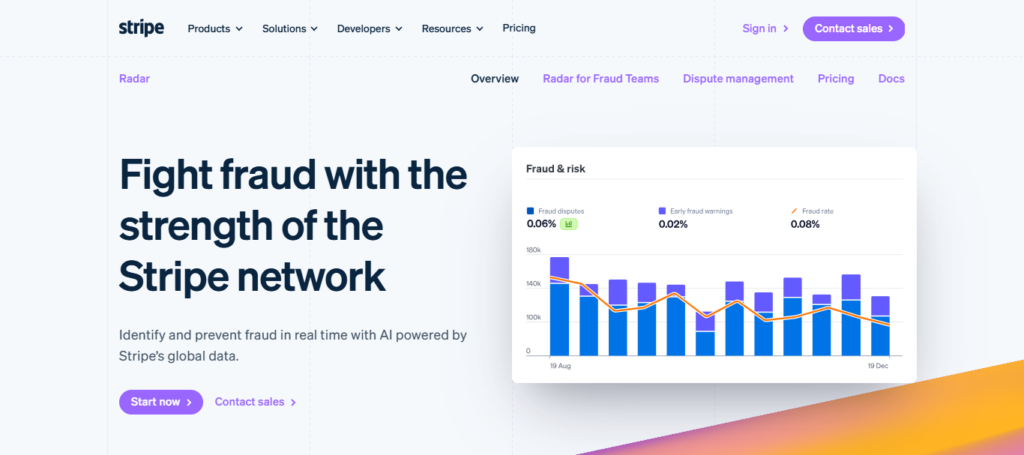
Merchants using it can configure system risk rules, automate transaction blocking and track authorization performance in live dashboards. Stripe Radar is also one of SmartTransaction’s Best Tools for Real-Time Payment Health Monitoring, enabling merchants to identify chargebacks and reduce them without any significant decline in their overall acceptance rates.
Its adaptive AI constantly learns from feeds of new fraud signals, enabling enterprises to keep payments flowing, enhance customer trust and safeguard revenue — without introducing manual review complexity.
| Feature | Description |
|---|---|
| Machine Learning Fraud Detection | Uses global transaction data to automatically identify fraudulent payment patterns. |
| Custom Risk Rules | Merchants can create manual rules to block or allow transactions based on risk signals. |
| Real-Time Monitoring | Provides live dashboards showing payment risks and fraud activity instantly. |
| Adaptive Risk Scoring | Continuously improves fraud detection accuracy using AI learning models. |
| Chargeback Management | Includes tools to monitor disputes and reduce chargeback losses. |
Stripe Radar – Pros & Cons
Pros
- Fraud detection using global Stripe data with the power of AI.
- Risk scoring and monitoring of transactions in real time
- Integrates seamlessly with the Stripe payments ecosystem.
- Custom rules of fraud and controls automation.
- Continuous machine learning improvements.
Cons
- Only built to be used inside of the Stripe environment.
- Limited flexibility for non-Stripe gateways.
- Advanced customization requires technical skills.
- This can prevent legitimate customers from being able to opt in, as false positives may be blocking them.
- Pricing scales with transaction volume.
2. PayPal Fraud Protection
The PayPal Fraud Protection integrates automated fraud detection specifically made to ensure online payments, subscriptions and digital transactions worldwide. Instantly assess risk at checkout using behavioral analytics, device fingerprinting and transaction history analysis.
Merchants benefit from actionable alerts, dispute management applications and risk filters for fraud exposure. One of The “Best Tools for Real-Time Payment Health Monitoring” Paypal Fraud Protection helps business detect suspicious payment trends without leading to false declines.
Its integrated ecosystem with buyers and sellers gives them the confidence that each transaction will be successful. Real-time monitoring helps detect fraud threats in advance, thereby mitigating operational risk and enhancing payment health as a whole.
| Feature | Description |
|---|---|
| Automated Fraud Screening | Reviews transactions automatically before payment completion. |
| Device Fingerprinting | Identifies users through device and browser behavior analysis. |
| Real-Time Alerts | Sends instant notifications for suspicious payment activities. |
| Custom Fraud Filters | Allows merchants to define risk tolerance and fraud thresholds. |
| Seller Protection Tools | Helps reduce financial loss through dispute and fraud coverage features. |
PayPal Fraud Protection 101 – Pros & Cons
Pros
- Built-in protection for PayPal transactions.
- Very good buyer and seller protection policies.
- Fraud filters and risk models that are completely automated.
- Easy activation with minimal setup.
- Global fraud intelligence network.
Cons
- Less control over fraud decision logic.
- High dispute and chargeback fees.
- Less effective outside PayPal ecosystem.
- Account freezes can affect merchants.
- Custom reporting options are limited.
3. Adyen Risk Management
Adyen Risk Management, integrated fraud prevention and a single payment performance monitoring across the commerce platform. The solution employs machine learning and shopper behavior analytics, geolocation verification and dynamic rule engines to identify threats in real-time.
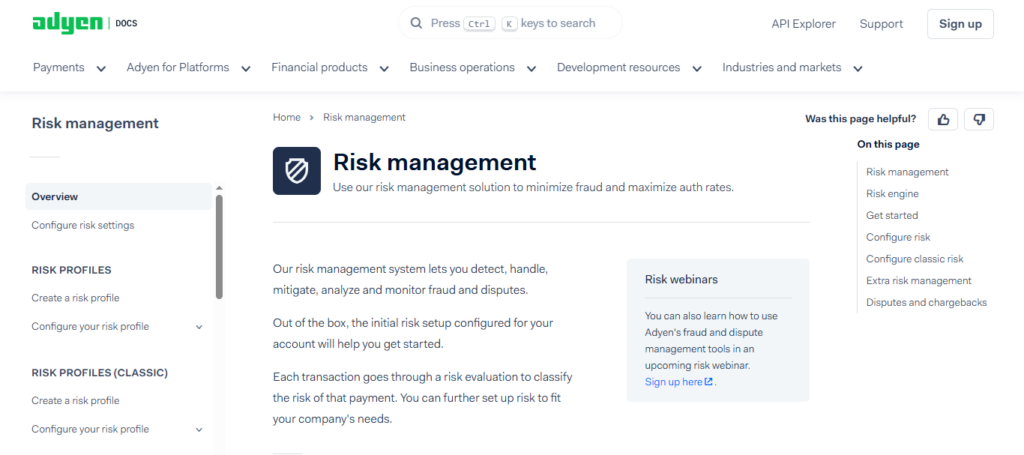
They allow merchants to fine-tune risk thresholds and monitor authorization results as well as assess fraud trends over multiple payment options. Adyen also balances fraud protection and conversion optimization, making it one of the Best Tools for Real-Time Payment Health Monitoring.
The automation of these processes with real-time insights enables companies to quickly notice declines in approve rates or out-of-the-ordinary payment activity. Its global data network boosts the accuracy of risk scoring while enabling seamless customer journeys across online, mobile and in-store payments.
| Feature | Description |
|---|---|
| Unified Fraud Platform | Manages fraud prevention across online, mobile, and POS payments. |
| Dynamic Risk Scoring | Calculates transaction risk using AI and behavioral data. |
| Shopper Behavior Analysis | Detects abnormal purchasing patterns and suspicious activity. |
| Rule-Based Automation | Enables automated approval or rejection workflows. |
| Central Monitoring Dashboard | Provides full visibility into payment health and fraud metrics. |
Adyen Risk Management – Pros & Cons
Pros
- Unified payments and fraud prevention platform.
- Real-time risk scoring and dynamic rules.
- Global payment data improves accuracy.
- Supports omnichannel fraud prevention.
- Advanced machine learning models.
Cons
- Complex setup for small businesses.
- Expensive versus basic tools
- Requires technical implementation support.
- Learning curve for dashboard usage.
- Best suited for mid-to-enterprise merchants
4. ACI Worldwide
ACI Worldwide provides enterprise-class payment monitoring and fraud detection that is utilized by banks, processors and merchants around the globe. The platform features real-time transaction monitoring with an anomaly and operational health tracking across payment infrastructures.
Advanced analytics detect anomalous spikes, system failures or fraud attempts long before they affect the revenue stream. ACI Worldwide has been recognized as Best Tools for Real-Time Payment Health Monitoring, allowing organizations to balance payment systems resilience with regulatory compliance needs.
Its real-time decisioning engine reviews large volumes of transactions, with low latency. Greater payment reliability, lowered risk of downtime and improved visibility into the end-to-end performance of the payment ecosystem are just some of these benefits that enable better business.
| Feature | Description |
|---|---|
| Real-Time Transaction Monitoring | Tracks payment flows continuously across systems. |
| Anomaly Detection | Identifies unusual payment patterns or system issues instantly. |
| Infrastructure Analytics | Monitors payment gateway performance and uptime. |
| Fraud Prevention Engine | Detects and blocks fraudulent payment attempts automatically. |
| Compliance Monitoring | Supports regulatory reporting and operational compliance. |
ACI Worldwide – Pros & Cons
Pros
- Enterprise-grade fraud and payment monitoring.
- Strong real-time transaction analytics.
- Supports banks, fintechs, and merchants.
- Highly customizable fraud strategies.
- Scalable global payment infrastructure.
Cons
- Implementation can be time-consuming.
- Expensive for small organizations.
- Requires trained fraud analysts.
- Complex system configuration.
- Longer onboarding timelines.
5. FIS Payment Integrity
With FIS Payment Integrity, companies can protect payment operations through ongoing transaction monitoring, fraud analytics and operational intelligence tools. It examines payment flows on different channels to identify unusual authorization patterns, authoritative user behaviour or settlement discrepancies.
It is used by financial institutions and corporations to verify the correctness of payments and reduce exposure to fraud. It comes as one of the Top Tools for Real-Time Payment Health Insights, FIS Payment Integrity enhances transaction transparency and boosts operational productivity.
Real-time alerts enable teams to immediately respond to payment disruptions or risks. The platform helps organizations maintain secure, reliable and optimized payment environments by integrating compliance monitoring with performance analytics.
| Feature | Description |
|---|---|
| Payment Flow Monitoring | Observes transactions across channels to ensure accuracy. |
| Operational Risk Analytics | Detects errors, fraud risks, and payment processing failures. |
| Real-Time Alerts | Notifies teams immediately about payment anomalies. |
| Reconciliation Tracking | Helps verify transaction settlements and financial accuracy. |
| Audit & Compliance Tools | Provides reporting features for compliance monitoring. |
FIS Payment Integrity – Pros And Cons
Pros
- Real-time monitoring across payment channels.
- Robust support from the banking and financial institutions.
- AI-driven anomaly detection.
- Regulatory compliance capabilities.
Cons
- Enterprise-focused pricing model.
- Requires technical integration resources.
- Which is quite terrible for startups or SMEs.
- Complex interface for new users.
- Customization may require vendor assistance.
6. Mastercard SafetyNet
Mastercard SafetyNet is a level network fraud monitoring system that protects issuers, acquirers and merchants from large-scale fraud events. It tracks global transaction data throughout the Mastercard network to find signs of unusual increases in fraudulent rates, compromised merchants or new modes of attack.

When risks are identified, institutions receive action-oriented alerts with advice on how to respond. Being one of the Best Tools for Real-time Payment Health Monitoring, SafetyNet enhances system-wide payment security instead of limiting to just individual merchants.
Its early-warning feature prevents transaction disruptions on a grand scale, while the financial service organizations can work quickly to contain their impact and maintain stable authorization performance at lower levels of fraud loss.
| Feature | Description |
|---|---|
| Network-Level Monitoring | Tracks fraud activity across the entire Mastercard ecosystem. |
| Fraud Spike Detection | Identifies abnormal increases in fraud rates quickly. |
| Global Transaction Intelligence | Uses worldwide payment data for risk analysis. |
| Early Warning Alerts | Sends proactive alerts to issuers and merchants. |
| Ecosystem Protection | Helps maintain stability across payment networks. |
Mastercard SafetyNet Pros & Cons
Pros
- Network-level fraud monitoring system.
- Detects large-scale fraud attacks quickly
- Issuers and banks receive real-time alerts.
- Protects entire payment ecosystem.
- Powered by Mastercard global network intelligence.
Cons
- Not for merchants, rather issuers centric
- Limited merchant-level customization.
- Requires Mastercard participation.
- Not a standalone fraud solution.
- Less control over decision rules.
7. Visa Advanced Authorization
Visa Advanced Authorization uses artificial intelligence and predictive risk scoring to assess transactions before the approval decision is made. The system processes global transaction data in billions of signals to identify your transaction behavior, your device IDs, your merchant history and your location patterns in real-time.
Issuers receive real-time risk recommendation that increases authorization accuracy while reducing fraud. A Best Tool for Real-Time Payment Health Monitoring Visa AdvancedAuthorizationProvides enhanced performance within the payment ecosystemby lowering false declines and earlier threat detection.
Its continuous learning models enhance approval rates, optimize customer checkout experiences, and enable financial institutions to gain deeper visibility into transaction health and authorization outcomes.
| Feature | Description |
|---|---|
| AI Risk Scoring | Evaluates transaction risk before authorization approval. |
| Authorization Decision Support | Assists issuers in approving or declining transactions. |
| Behavioral Analytics | Studies cardholder spending behavior patterns. |
| Fraud Prevention | Stops high-risk transactions in real time. |
| Approval Rate Optimization | Improves successful payment authorization performance. |
Visa Advance Authorization – Pros & Cons
Pros
- AI-driven authorization risk scoring.
- Uses Visa global transaction data.
- Enhances the approval ratios and fraud detection
- Real-time authorization decision support.
- Reduces false declines.
Cons
- This product is primarily available to Visa ecosystem users.
- Limited visibility into decision algorithms.
- Requires issuer participation.
- Not directly configurable by merchants.
- Most effective in conjunction with other tools.
8. NICE Actimize
NICE Actimize, which focuses on financial crime prevention and detection integrates fraud detections with anti-money laundering monitoring as well as behavioral analytics within a single intelligence platform. It constantly analyzes transactions, account activities, and customer interactions for abnormal behavior patterns.

Compliance teams can use real-time alerts and case management tools to efficiently investigate potential risks. Best Tools for Real-Time Payment Health Monitoring NICE Actimize is the industry leader in preventing fraudulent payments, offering a centralized monitoring approach that leverages modern technologies to help payment systems meet global regulatory standards.
Advanced analytics reduce workload on operations by automating the process of threat detection. It provides banks and payment service providers with better fraud prevention, improved operational oversight, and increased defense against complex financial crime .
| Feature | Description |
|---|---|
| Financial Crime Monitoring | Detects fraud, money laundering, and suspicious activity. |
| Behavioral Analytics Engine | Analyzes customer actions to identify risk signals. |
| Real-Time Case Management | Supports investigation workflows and alerts. |
| Compliance Automation | Helps meet global regulatory requirements. |
| Risk Intelligence Dashboards | Provides enterprise-level fraud visibility. |
NICE Actimize – Pros & Cons
Pros
- Industry-leading financial crime prevention platform.
- Advanced AML, Fraud Detection capabilities
- AI and behavioral analytics engine.
- Highly customizable risk workflows.
- Strong compliance and regulatory features.
Cons
- High implementation and licensing costs.
- Complex deployment process.
- Requires trained fraud teams.
- Long setup timelines.
- Overpowered for small businesses.
9. Kount
Kount provides AI-based fraud prevention via identity trust scoring and omnichannel transaction monitoring. It assesses real-time risk levels based on non-intrusive indicators such as transaction volume, fingerprints of devices used to make the transactions, customer ID signals and historical behavior.
Organizations may automate approval or denial decisions based on configurable rules. Recognized as one of our Best Tools for Real-Time Payment Health Monitoring, Kount supports organizations in sustaining payment dependability while minimizing manual fraud evaluations.
Its Identity Trust Global Network increases the accuracy of decisions by exchanging fraud intelligence across merchants around the world. Fewer chargebacks, better authorization performance and a balance between fraud protection and customer conversion mean companies win.
| Feature | Description |
|---|---|
| Identity Trust Scoring | Evaluates customer legitimacy using AI identity signals. |
| Device Fingerprinting | Tracks device behavior to prevent account fraud. |
| Automated Decision Engine | Approves or blocks transactions automatically. |
| Omnichannel Monitoring | Protects online, mobile, and in-store payments. |
| Chargeback Reduction | Helps merchants minimize fraud-related losses. |
Kount – Pros & Cons
Pros
- Identity-based fraud prevention approach.
- Real-time AI decision engine.
- Omnichannel fraud protection.
- Chargeback reduction tools.
- Easy integration with many platforms.
Cons
- High pricing for startups.
- Custom rule tuning required initially.
- Occasional false positives.
- Reporting dashboard can be complex.
- Best performance with historical data.
10. Worldpay Risk Intelligence
Worldpay Risk Intelligence is a powerful payment monitoring and fraud management solution that offers visibility into the performance of transactions and risk activity in real time. It analyzes payment data across different channels within the platform to quickly identify suspicious behavior, authorization issues, or potential fraud patterns.
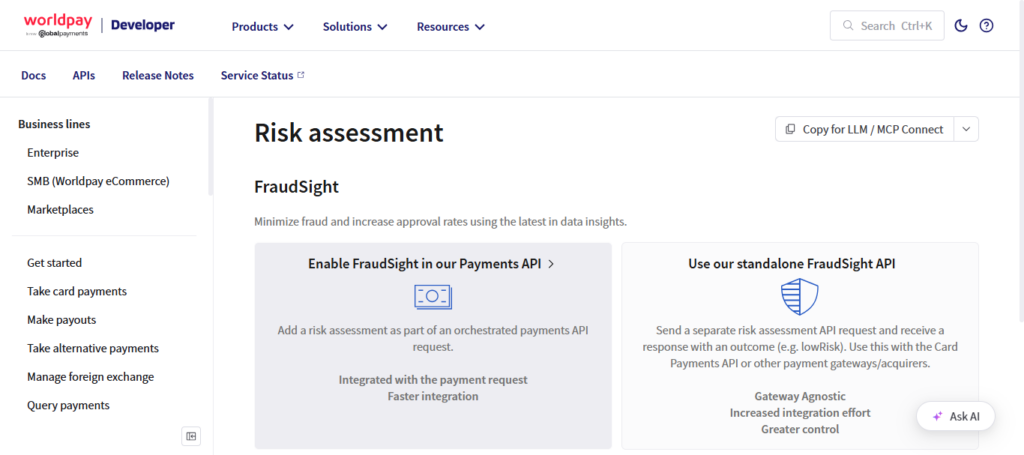
It aids with approving rates, limiting chargebacks and keeping payment systems stable for merchants. Predictive analytics, automated alerts and reporting dashboards allow businesses to be alert of any payment disruptions and security threats while optimizing payment health, operational efficiency, and customer experience for transactions.
| Feature | Description |
|---|---|
| Real-Time Transaction Monitoring | Continuously tracks payment activity across channels to detect suspicious behavior and performance issues instantly. |
| Advanced Fraud Detection | Uses machine learning and behavioral analytics to identify fraud patterns and reduce unauthorized transactions. |
| Risk Scoring Engine | Assigns dynamic risk scores to transactions, helping businesses make faster approval or rejection decisions. |
| Payment Performance Analytics | Provides insights into authorization rates, decline reasons, and payment processing efficiency. |
| Automated Alerts & Reporting | Generates real-time alerts and detailed dashboards enabling quick response to payment risks and operational disruptions. |
Fraud.net – Pros & Cons
Pros
- Offers smart, real-time visibility into payment traffic and risk activity.
- ML analytics fueled advanced fraud detection.
- Increases authorization rates by identifying decline patterns.
- Global payment processing at scale across channels
- Increased insights through comprehensive reporting dashboards drive better decisions on payment performance.
Cons
- Small businesses may find enterprise-focused solution expensive.
- Technical know-how is often required for implementation and onboarding.
- Custom configuration might also take time to optimize completely.
- Some advanced analytics functionality is not available without setup.
- Would perform best when existing in the Worldpay ecosystem.
Why Real-Time Payment Monitoring is Important ?
Prevents Payment Failures
Businesses can instantly identify transaction mistakes, gateway outages or processing delays with real-time payment monitoring. This can help in speeding up the troubleshooting, preventing failed payment transactions from happening, keeping revenue leakage as low as possible and ensuring uninterrupted checkout experience for customers.
Improves Authorization Rates
By tracking payment approvals and declines in real time, businesses can spot issuer problems, routing issues or risk triggers. Good optimization of these can lead to approved authorizations and consequently more customer transactions.
Detects Fraud Instantly
Real-time monitoring examines transaction behaviour in the act of paying, causing suspicious activities to be highlighted instantly. Merchant chargebacks, financial loss, account abuse and fraudulent usage are all prevented by early fraud detection.
Enhances Customer Experience
Real-time access to payment performance means customers enjoy faster, reliable checkouts without needless declines or delays. By ensuring stability on the payment front, you will establish trust within your customers which ultimately results in a better satisfaction ratio and higher repeat rate.
Enables Faster Operational Decisions
Leverage live payment analytics for actionable insights into transaction trends, system performance, and risk levels. Businesses can immediately adapt payment strategies, gateways, or security rules to keep their payments healthy and operating at peak efficiency.
How to Choose the Right Payment Health Monitoring Tool
Real-Time Monitoring Capability
Select a tool that enables real-time access to transaction, authorization, failure, refund, and latency data. Having real-time visibility of payment issues enables teams to identify any problems early, protecting both revenue and customer checkout experiences.
Comprehensive Payment Data Coverage
This provider should take care of monitoring all your gateways, processors, payment methods, regions and providers in one dashboard. Centralized monitoring means no blind spots and complete visibility of payment ecosystem performance.
Intelligent Alerting & Automation
Watch for customizable alerts triggered by spikes in decline, latency increase trends, fraud signals, or downtime events. Automated alerts enable operations teams to react quickly, without needing to monitor dashboards constantly.
Advanced Analytics & Reporting
A good monitoring tool will show all kinds of analytics like authorization rates over time, reasons for failures, provider performance and historical comparisons so that one can make data-driven optimizations and also smarter decisions on routing payments.
Integration & API Flexibility
Be aware of the importance of open architecture as part of the solution.
Benefits of Using Real-Time Payment Monitoring
Faster Issue Detection
Instant detection of payment failures, processing lags, or gateway outages with real-time monitoring. This enables businesses to address issues swiftly, allowing them to minimize downtime, avoid revenue loss, and ensure seamless payment processes for customers.
Higher Authorization Success Rates
Tracking these approvals and declines on an ongoing basis allows companies to understand how issuers behave as well as routing. This leads to higher authorization rates, fewer declined transactions and improved overall checkout conversion.
Immediate Fraud Prevention
Real-time transaction monitoring allows for immediate identification of potential payment fraud patterns. The sooner fraud is detected, the fewer chargebacks and financial losses or unauthorized transactions will occur to protect both merchants and their customers.
Improved Customer Experience
Strong payment performance enables seamless and speedy checkout experiences This builds trust, bolsters satisfaction and leads to repeat purchases and brand loyalty — while customers experience fewer declines, delays or errors.
Better Operational Efficiency
Automated alerts and real-time dashboards minimize manualThis means more time spent on strategic optimization for payment teams and less time spent troubleshooting, thus improving workflow efficiency and allowing faster decision-making across operations.
Reduced Revenue Loss
This is especially important during inflows of transactions where real-time insight enables business to catch hidden payment issues like processor downtimes or routing inefficiencies before they result in lost sales opportunities—ensuring maximum takeaway for minimization of missed transaction opportunity on peak e-commerce periods.
✅ 7. Data-Driven Decision Making
Real-time payment analytics yield actionable insights into performance streams and risk access levels. With real-time operational data they can trust, businesses can quickly adjust payment strategies, gateways or fraud rules.
Stronger Fraud & Risk Management
When payment performance metrics is combined with fraud monitoring, businesses are well positioned to strike the right balance between security and approval rates, minimizing false declines while also providing robust protection against evolving fraud threats.
Global Payment Visibility
Companies with global operations benefit from centralized coverage across multiple geographies, currencies and merchants in order to track performance consistently for payments and respond quickly, where neededto regional payment outages or network challenges.
Improved Compliance & Reporting
Automatic keeping of transaction logs and audit trails by real-time monitoring This functionality helps businesses in complex payment ecosystems facilitate compliance management, dispute investigations, as well as emblematic financial and regulatory requirements.
Conclusion
Payment health: Real-time payment health monitoring is a must-have for modern digital businesses that need fast, secure, and reliable transactions. These tools offer immediate insights into payment performance, authorization rates, and all fraud risks affecting revenue loss and seamless customer experience.
An effective monitoring tool allows you to make informed, proactive decisions that result in faster problem resolution and continuous payment optimization across channels and geographies.
With increasingly complex payment ecosystems, transforming real-time monitoring into a robust operational platform can deliver system stability, security at scale, compelling business growth through customer trust and improved overall payment success ratios.
FAQ
Why is real-time payment monitoring important for businesses?
It helps prevent payment downtime, reduces failed transactions, improves approval rates, detects fraud early, and ensures customers experience fast and successful checkout processes.
What metrics are monitored in payment health monitoring tools?
Common metrics include authorization rates, decline reasons, transaction latency, gateway uptime, fraud signals, payment success rates, error codes, and processor performance across different payment channels.
Who needs payment health monitoring tools?
Ecommerce businesses, fintech companies, subscription platforms, marketplaces, payment service providers, and enterprises handling high transaction volumes benefit most from real-time payment monitoring solutions.
How does real-time monitoring reduce payment failures?
It identifies issues like gateway outages, routing errors, or issuer declines instantly, allowing teams to fix problems quickly before they impact large numbers of customer transactions.
Are real-time payment monitoring tools suitable for small businesses?
Many tools offer scalable solutions suitable for startups and small businesses, although enterprise platforms may provide more advanced analytics and customization options.