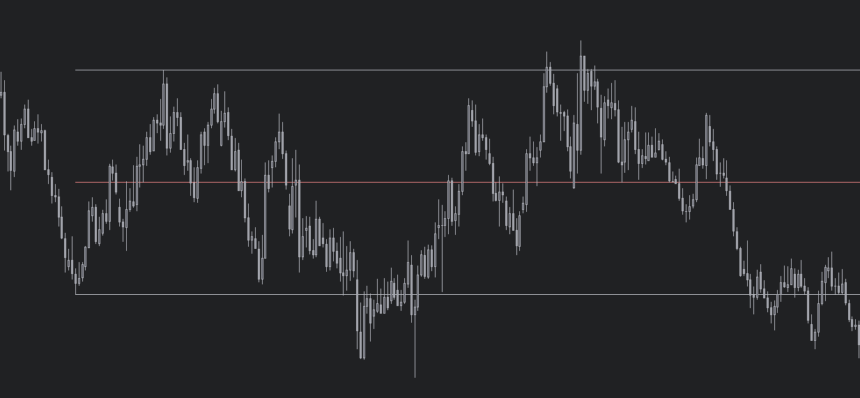
I will explain some of the most important concepts like chart types, candlestick patterns, trends, and indicators, so you are able to read the forex charts like a professional.
Understanding these will help you analyze the movement of the market, identify opportunities, and make the best possible trading decisions.
This tutorial is aimed at beginners and people that are trying to improve their skills. It will help you simplify the reading of forex charts.
What is Forex Charts?
Forex charts provide a visual representation of changes in price of two different currency pairs within a specific time period. Forex charts are tools for traders to analyze a currency pair’s market trend for successful trading decisions.
Currency pair examples include EUR/USD & USD/INR. Various types of Forex charts are available for usage including Line Charts, Bar Charts, & Candlestick Charts. However, Candlestick Charts are widely used by traders and provide a lot more information.

Opening price within the selected time period, closing price, and highest & lowest price are captured by the chart.
Forex traders utilize the charts to determine price movements, identify patterns, and determine support & resistance price levels in the currency pair market. Improving trading success by predicting future behavior of a market using Forex charts is a necessary skill in trading.
How to Read Forex Charts Like a Pro (Beginner Guide)
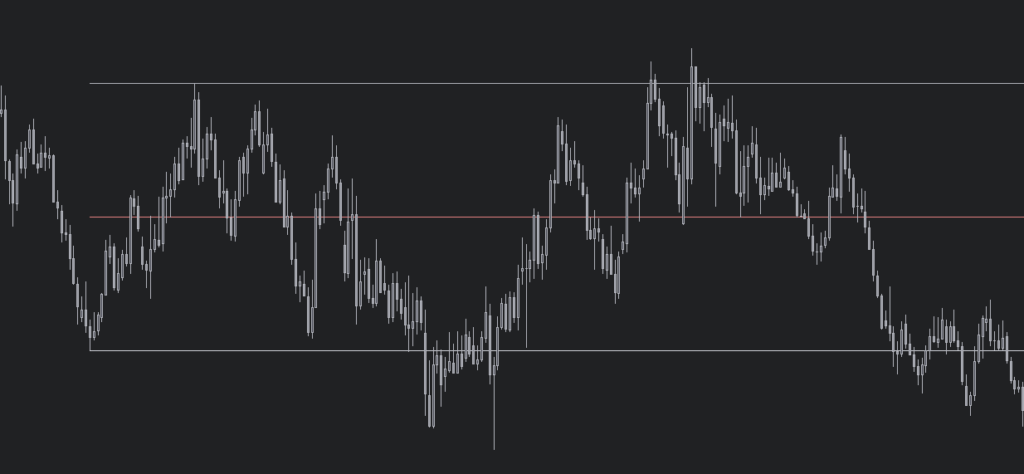
Step 1. Currency Pairs
Learn how to read all currency pairs (for example: EUR/USD, USD/INR).
In every currency pair, the first currency is referred to as the base currency, whereas the second currency acts as the quote currency.
In simple terms, the quote currency indicates how much is required to purchase one unit of the base currency.
Step 2. Chart Type
Among all chart types, We recommend you to select candlestick charts, as they give you the maximum amount of details.
- Choose a line chart if you want a simple view of the data.
- Choose a bar chart if you want more details.
- Choose a candlestick chart if you want the best of both worlds (recommended for both beginners and pros).
Step 3. Timeframe
Your trading style will determine what time frame you choose.
- For short term trading, select: 1 min, 5 min time frames.
- For medium term trading, select: 1 hour, 4 hour time frames.
- For long term trading, select: daily, weekly time frames.
Time frames with higher durations can give beginners more clarity.
Step 4. Candlestick Basics
Each candlestick on the chart will give you information about the:
- Opening price (of the day)
- Closing price (of the day)
- Highest and lowest price (of the day)
- Bullish (there is an upward movement of price) or bearish (there is a downward movement of price)
These attributes on a candlestick chart give the reader an idea of the prevailing market sentiment.
Step 5: Identify the Trend
Consider the general market movements:
- Uptrend → higher highs, higher lows
- Downtrend → lower highs, lower lows
- Sideways → no clear direction
“Trend is your friend” — always follow it.
Step 6: Mark Support and Resistance
- Support = price level where market stops falling
- Resistance = price level where market stops rising
These levels help you find entry and exit points.
Step 7: Use Basic Indicators
Add simple indicators to confirm signals:
- Moving Averages → show trend direction
- RSI → shows overbought/oversold
- MACD → momentum and trend strength
Avoid using too many indicators.
Step 8: Recognize Chart Patterns
Learn common patterns like:
- Double top & double bottom
- Head and shoulders
- Triangle patterns
These patterns help predict future price movements.
Step 9: Combine Signals for Confirmation
Don’t rely on one signal only.
Combine:
- Trend + support/resistance
- Indicator + candlestick pattern
This reduces risk and improves accuracy.
Step 10: Use Demo Accounts for Practice
Before you get involved with real money, you should:
- Open a demo account
- Practice all your money making strategies
- Evaluate your strategies and correct your error(s)
Practice makes perfect, and it will ultimately make you a professional.
Step 11: Protect your Capital
Always ensure you take measures to ensure you will still have your money:
- Use the stop-losses provided for you
- Do not trade too often
- Only lose a small amount of money compared to the entire capital you have
Step 12: Learning is a Consistent Effort
- You should study the charts regularly
- You should know the latest development in the market to assist you trade
- You should have a trading journal and regularly record your details of each trade
Key Forex Indicators
Moving Averages (MA)
- Displays average price of a currency pair over a given time frame.
- Comes in 2 varieties: Simple Moving Average (SMA) & the Exponential Moving Average (EMA)
- Assists in recognizing the overall trend direction
- Smoothens the price fluctuations across the given time frame
- Crossover signals (buy/sell) are done using Moving Averages
RSI (Relative Strength Index)
- Measures the momentum of a given market. (measured between 0 and 100)
- From 70 and above, Overbought (possible sell)
- From 30 and below, Oversold (possible buy)
- RSI can help in the identification of the reversal of a given trend.
- Entry points are confirmed using the RSI.
MACD (Moving Average Convergence Divergence)
- Illustrates the relationship of 2 moving average.
- Comprises MACD line, a signal line and a histogram
- Helps in recognizing the strength and direction of a trend
- Crossover(s) of the MACD signal line results in buying and selling signal(s)
- Great in identifying a shift in momentum
Bollinger Bands**
- Composed of a middle line (MA) with upper & lower bands.
- Measures the volatility of a market
- if the price is is close to the upper band, it is overbought
- if the price is close to the lower band, it is oversold
- Helps in finding reversal and breakout points.
Stochastic Oscillator
- Measures the range of a given price in order to see how the closing price compares to it.
- Has a range from 0 to 100
- From 80 and above, it is overbought.
- from 20 and below, it is oversold.
- Below 20 = oversold
- Good at finding turning points
Fibonacci Retracement
- Key Fibonacci levels (23.6%, 39.2%, 50%, 61.8%)
- Identify support and resistance levels
- Pullbacks in trends
- Often in trend continuation strategies
- Find entry points
Combining Analysis Techniques
Use Trend + Support/Resistance
- There is a larger trend, is it an uptrend or a downtrend?
- What are the larger support and resistance levels?
- Take a trade in the direction of the trend, near these levels.
- This should increase the probability of successful trades.
Combine Indicators and Price Action
- Indicators such as RSI or MACD should be used.
- Their signals should be confirmed by the presence of candlestick patterns.
- Example: RSI is in the oversold region, then a buy signal is confirmed by the presence of a bullish candlestick.
- Don’t rely on the indicator all by itself.
Use Multi-Time Frame Analysis
- Consider analyzing your charts, and candlestick patterns for various time frames.
- The overall trend of the security can be better understood when you analyze the larger time frames.
- Find better entry points when you analyze the smaller time frames.
- This should overall improve your timing and accuracy. This should improve your timing and accuracy.
Using Strategy of Indicator Confirmation
- A combination of only 2 to 3 indicators should not be too excessive.
- A better example of this can be stated as an example using indicators Moving Average, RSI, and MACD.
- This should improve your signals to be more in agreement with one another. The more the indicators agree with one another, the lesser will be the false signals.
Breakout + Volume Confirmation
- When you see a breakout from support or resistance lines, you should try to confirm the breakout with an increase in volume.
- When you see a strong increase in volume, this confirms the breakout is a real one.
- Every analyst must learn to recognize potential false breakouts before looking at patterns or making trades.
Combining Multiple Patterns and Indicators
- Combine patterns like double tops or triangles with indicators like RSI or MACD.
- Example: Head and Shoulders pattern + bearish RSI.
- This strategy assists in predicting potential strong reversals.
Practical Tips to Read Charts Like a Pro
Start With Higher Timeframes
- Start with charts that show a four hour or a day
- Start with these before lower timeframes as these show a clearer overall trend
- Avoid trader noise and additional confusion
Keep Charts Clean
- Too many indicators create clutter and unnecessary confusion
- Draw focus to price actions and price levels
- Your charts will argue with you less
Follow The Trend
- Trade in the direction that the market trend is headed
- Always market sentiment
- Avoid opposing strong trends
Mark Support And Resistance
- Mark and identify pertinent pricing levels
- Use these to determine entry and exit points
- Important to be able to set stops and targets
Use Basic Indicators
- Stick to a small number of indicators like RSI. MA or MACD
- Use these to confirm moves, do not rely on these to predict moves
- Complexity in your analysis will not be beneficial to you
Candlestick Patterns
- Patterns such as doji or hammer and engulf in order to signal a price increase or decrease
- Prices Sentiment and Reinforce the sentiment of price
- Useful to express reversals
Common Mistakes Beginners Make
Overloading Charts with Indicators
- Using more than 2-3 indicators
- Conflicting signals
- Confusing decisions
Ignoring the Trend
- Trading in the opposite direction of the market
- Leads to losses
- Losing trades means you aren’t following the overall market direction
Lack of Risk Management
- Not having a stop-loss
- Risking too much on a small trade
- Lose your entire trading account
Emotional Trading
- Making decisions are caused by fear or greed
- Trading too much after a loss or after a win
- Leads to poor decisions
Not Having a Trading Plan
- No clear strategy on entering the trade
- No clear entry or exit guidelines
- Inconsistent results
Chasing the Market
- Entering trades too late after the market moves
- Buying too high or selling too low
- Increases risk to lose
Ignoring Supports and Resistances
- Not knowing the key prices
- Missing key points to enter or exit
- Making your trades less accurate
Overtrading
- Trading too much in a very short period* Creates more risk and stress
- Customers and profits are less
No Practice Before Live Trading
- No practice trading and then going straight to real trading
- There is no strategy and so there is no confidence
- You will feel more comfortable if you practice on a demo
Conclusion
Professional forex analysts read the market’s price movements; this is a skill acquired through time, training, and patience. Beginners with the right foundation will need to grasp the fundamentals, this includes chart types and candlestick anatomy, alongside trend and support and resistance appreciation.
These basics can be improved through a combination of effective strategies, indicators, and price action. Being patient and avoiding common mistakes are also key to risk management. With time and experience, the market will reveal its movements and confident, shrewd decisions will come readily.
FAQ
What is the best forex chart for beginners?
The candlestick chart is the best for beginners because it shows detailed price information like open, close, high, and low, making it easier to understand market movements.
How long does it take to learn forex charts?
It depends on practice and consistency. Most beginners can understand the basics in a few weeks, but mastering chart reading may take several months.
Which timeframe is best for reading forex charts?
Higher timeframes like 4-hour and daily charts are best for beginners as they provide clearer trends and reduce market noise.
Do I need indicators to read forex charts?
Indicators are helpful but not necessary. Price action, trends, and support/resistance can be enough, but indicators can improve accuracy when used correctly.