
I’ll go over the main distinctions, advantages, and disadvantages of modular versus monolithic blockchain designs in this post.
While monolithic blockchains combine all operations into a single layer for simplicity and security, modular blockchains divide consensus, execution, and data availability into layers for scalability and flexibility. Developers, investors, and businesses must comprehend these models in order to select the best blockchain solution.
What is Modular?
The term “modular” describes a blockchain architecture in which various elements—such as execution, data availability, and consensus—are divided into distinct layers rather than being combined into one cohesive whole. This division enhances scalability, flexibility, and innovation by enabling each layer to concentrate on a particular task.
For instance, the execution layer handles smart contracts on its own, while the consensus layer makes sure that transactions are secure and ordered. Developers can create unique execution environments with modular blockchains, such as Celestia or Avail, without sacrificing the security of the underlying network. Modularity complicates layer coordination, though, and may call for sophisticated tooling to preserve compatibility and efficiency.
What is Monolithic?
A blockchain that is monolithic has all of its essential features—consensus, execution, and data availability—closely consolidated into a single layer. In this system, the network manages security, smart contract execution, and transaction validation all at once, offering simplicity and resilience.

Since all operations are controlled by a single system, monolithic blockchains, such as Ethereum 1.0 or Bitcoin, offer quicker development and established security.
Scalability limitations are brought about by this integration, though, because the network may become overloaded with additional users or sophisticated applications. Compared to modular alternatives, monolithic blockchains frequently suffer from high throughput, slower innovation, and less flexibility, despite being extremely secure and simple.
Project Overview
1. Celestia
Celestia is a modular blockchain solution that breaks apart consensus and data availability from execution. This allows developers to build their own execution environments or rollup frameworks without needing to be concerned about the security of the net’s modular framework.

With a modular framework, overall system throughput is enhanced as multiple execution layers can be run in parallel to one another, while utilizing the same modular consensus and data availability layer. Celestia’s focused approach on simplicity, modularity, and ease of use allows developers to create specialized frameworks and model new blockchains.
2. Avail
Avail is a modular rollup-centric blockchain that aims to provide scalable availability solutions. It provides a data availability layer to rollup and decentralized applications so that they can publish and verify their transaction data without needing a complete monolithic chain.

Avail is designed to optimize high throughput, low-latency data availability, verification so that rollups can efficiently use the available data layer. It also provides a modular architecture that many developers prefer, as it allows them to create environments that provide speed, security, and modularity when multiple execution environments are used.
3. Monad
Monad takes a monolithic or hybrid approach, consolidating consensus, execution, and data availability into a single system and modularizing some elements where most beneficial. Monad focuses on security, reliability, and simplicity and offers an integrated solution for smart contract execution and blockchain lifecycle management.
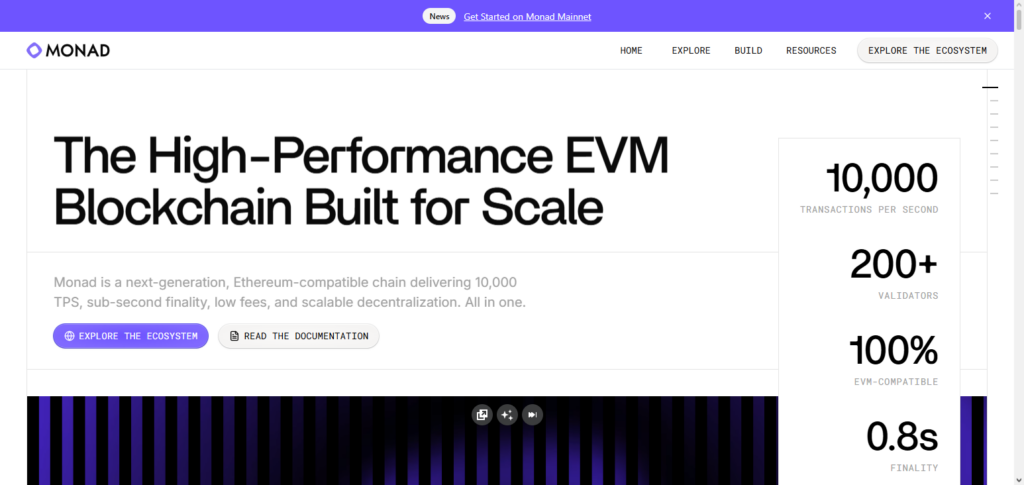
Monad is designed for use cases where stability and security are important. In continual data availability, there could be some loss on the scale of the system compared to other fully modular systems. Monad, by maintaining a monolithic core, is focused on the tradeoff of robustness over extreme flexibility for performance and security with respect to the use cases of core blockchains.
Key Differences Between Modular vs Monolithic
| Feature | Modular Blockchain | Monolithic Blockchain |
|---|---|---|
| Architecture | Separates consensus, execution, and data availability into layers | All core functions are integrated into a single layer |
| Scalability | High; multiple execution layers can run in parallel | Limited; single layer handles everything, may bottleneck |
| Flexibility | High; developers can customize execution without altering base layer | Low; changes affect entire network |
| Security | Relies on shared consensus; requires coordination | Simpler and robust due to integrated design |
| Complexity | Higher; layers need coordination and advanced tooling | Lower; easier to implement and maintain |
| Use Cases | High-throughput apps, rollups, experimental blockchain models | Mainstream apps needing stability and proven security |
| Examples | Celestia, Avail | Ethereum 1.0, Bitcoin, Monad (hybrid approach) |
Comparative Analysis
| Feature | Modular Blockchain | Monolithic Blockchain |
|---|---|---|
| Architecture | Separates consensus, execution, and data availability into layers | Integrates consensus, execution, and data availability into a single layer |
| Scalability | High; multiple execution layers can run in parallel | Limited; single layer handles all operations, can bottleneck |
| Flexibility & Customization | High; developers can create custom execution environments without affecting base layer | Low; changes affect entire network |
| Security | Depends on shared consensus; requires careful layer coordination | Robust and simpler due to integrated design |
| Complexity | Higher; coordination and advanced tooling required | Lower; easier to implement and maintain |
| Interoperability | High; easier cross-chain and multi-layer interactions | Limited; cross-chain integration is more complex |
| Use Cases | High-throughput DApps, rollups, experimental blockchain models | Stable, secure mainstream applications |
| Examples | Celestia, Avail | Ethereum 1.0, Bitcoin, Monad (hybrid approach) |
Why Choose Modular vs Monolithic
Why Choose Modular Blockchains
- High Scalability Demand: Suitable for low cost and highly frequent transactions, rollup-centric apps, or multiple rollups.
- Execution Context Customization: Developers maintain the ability to orchestrate customized execution environments for their specific needs.
- High Interoperability Requirements: Suitable for high demand cross-chain, inter-chain, or multi-layer operational projects.
- Flexible Innovation Potential: Good for variant DApps, DeFi protocols, and newly developing blockchain applications.
- Decoupled Layer Resource Savings: Construct layers to simplify the use of computation and storage.
- Decoupled Layer Resource Savings: Construct layers to simplify the use of computation and storage.
Why Choose Monolithic Blockchains
- Security Considerations: Monolithic blockchains work best when security is heavily prioritized.
- Simplicity & Monolithic Layer Demand: Applications requiring low demand complexity, as well as, maintenance, and oversight needs.
- Reliability & Stability Considerations: Best for the most reputable high traffic infrastructure needs.
- High Dependability of Throughput: Predictable, and steady uniform flows and functioning of the networks.
- Under Control Complexity: Without layers, advanced frameworks, or complicated rollouts.
- Reliability & Risk: Best for applications requiring long term reliability and low risk circumstances.
Benefits Of Modular vs Monolithic
Benefits of Modular Blockchains
- Great Scalability: More user applications can be processed simultaneously by multiple parallel execution layers.
- Flexibility and Customization: Developers are able to create their own execution environments tailored to their needs without having to make changes to the layer that sits below.
- Easier Integration: Modular blockchains have a much easier time interoperating with other blockchains and supporting applications that span multiple chains.
- Innovation Acceleration: Experimental applications, rollups, and specialized blockchains can be built on a modular layer, resulting in even further acceleration of innovation.
- Efficient Use of Resources: Individual execution layers can be used independently, and this modular setup helps maximize the efficiency of computing power and the usage of storage.
- Growing Ecosystems: Modular blockchains allow a multitude of other blockchains to be built without the base layer becoming overwhelmed.
Benefits of Monolithic Blockchains
- Security: The integrated design of monolithic blockchains offers greater security across the entire network.
- Ease of Use: Having everything in a single layer makes maintenance and monitoring of the system easier.
- Reliability: Monolithic blockchains are proven and trusted for applications that are common in the mainstream world of blockchain, like payments and NFTs.
- Consistency and Finality: Single layer processing helps avoid the coordination and error problems that come with multiple layers.
- Performance Predictability: The system’s architecture and design help make performance and throughput even more predictable.
- Less Coordination Overhead: The system requires less management, tooling, and coordination than multiple layers.
Challenges and Trade-offs
Modular Blockchains
Challenges:
- Layer Coordination: The more layers added the more complex synchronization becomes.
- Added Complexity: Developers need to utilize advanced tools to handle different layers.
- Possible Latency: Layer communication could delay the finality of a transaction.
- Cross-Layer Security Risks: Each layer has security issues. Misconfigurations can create risks.
Trade-offs:
- High Scalability vs Complexity: The overall system complexity might increase.
- Flexibility vs Coordination Overhead: Developers can customize more, but the complexity of layers increases.
Monolithic Blockchains
Challenges:
- Limited Scalability: High transactional throughput can result in bottlenecks in a single layer.
- Innovation is Slowed: Whole networks can be disrupted.
- Resource Use is High: More network resources are needed.
Trade-offs:
- Simplicity vs Scalability: Less effort is needed to increase security and maintenance, but the scalability is far more limited.
- Robust Security vs Flexibility: Security is top-tier, but adaptable use cases and security are limited.
Pros & Cons
Modular Blockchains Pros & Cons
Pros
- Scalability: More execution layers means simultaneous transaction processing.
- Customization: Developers can modify layers and create new execution environments.
- Cross Chain Integration: More efficient communication between chains.
- Experimental Models: New blockchain applications and models encouraged.
Cons
- Layer Coordination: More management and tooling needed.
- Layer Communication: Communication between layers may delay transaction.
- Security Coordination: Each layer needs to manage and maintain security.
Monolithic Blockchains Pros & Cons
Pros
- Simplicity: Less complex to maintain, implement, and monitor.
- Reliability: Consistently utilized for everyday applications.
- Coordination: Less layered processing means less coordination errors.
Cons
- Single Layer Defines Scalability: High transactional volumes risks bottlenecks.
- Network Wide Changes: Changes to execution/ consensus impact the entire network.
- Stability: More difficult to implement new models without impact.
Future Outlook
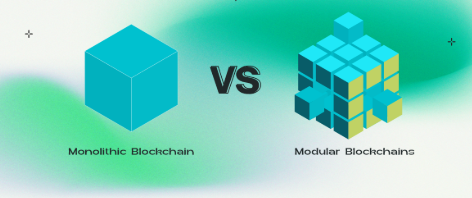
Future developments in blockchain technology show that both modular and monolithic designs will co-exist, with each serving a different purpose. Modular blockchains like Celestia and Avail, will be best positioned for high-throughput, experimental, and specialized applications in DeFi, gaming, and enterprise use cases (and others), where scalability,
flexibility, and interoperability is critical. Modular blockchains fit best with more decentralized, and complex ecosystem approaches due to rollup, layer-2, and multi-chain modular design cloud frameworks.
Monolithic blockchains will also be a major contributor to mainstream blockchain adoption with secure, stable, and straightforward platforms for digital payment, NFT, and general smart contract use cases. Developers choosing reliability and security to be more important than hyper-scalability will continue to prefer projects like Monad and Ethereum’s core chain.
Hybrid approaches may also be developed that offer monolithic layers for additional security, with modular layers for increased scalability. Evolution here will lead to blockchain ecosystems that are more secure, flexible, and efficient for a variety of use cases; leading to more options available to developers when it comes to choosing the architecture best aligned with their application use case.
Monolithic systems will continue to be used in critical infrastructure and legacy use cases, but for Regulators, developers, and enterprises, modularity is becoming key to scalability and innovation. In this sense, the blockchain landscape is transitioning toward ecosystems that are modular and interoperable, albeit with monolithic systems still in use.
Conclusion
The trade-off between modular and monolithic blockchain structures is between scalability, flexibility and innovation, or simplicity, safety and stability. Blockchains that are modular like Celestia and Avail are better for high throughput and customizable execution environment plus inter-chain communication.
Hence, these are better suited for experimental initiatives and future generation decentralized ecosystems. Monad and the Ethereum core chain monolithic blockchains position themselves as the others and offer robust security, proven reliability, and simplicity which is needed for mainstream adoption and legacy blockchain use cases.
A mixed ecosystem is what the future is likely to be, with both monolithic and modular blockchain designs making concurrent use possible, and giving the developers, enterprises, and users options as to their preferred architectural design choice for their particular use cases. Blockchain developers, investors, and adopters need to be grounded and informed on the basics that social, economic, and technological systems will be predicated on these structures.
FAQ
What is a modular blockchain?
A modular blockchain separates core functions—consensus, execution, and data availability—into independent layers. This design improves scalability, flexibility, and interoperability, allowing multiple execution environments or rollups to run in parallel.
What is a monolithic blockchain?
A monolithic blockchain integrates all core functions into a single layer. Consensus, execution, and data availability happen together, providing simplicity, robust security, and proven reliability, though scalability is limited compared to modular systems.
What are the cons of modular blockchains?
Higher complexity and coordination requirements
Potential latency between layers
Security depends on proper layer management
Which blockchain type is better?
Neither is strictly “better.” Modular blockchains excel in scalability and innovation, ideal for DeFi, rollups, and experimental projects. Monolithic blockchains are better for stability, security, and mainstream adoption. The choice depends on the project’s goals.
Can a blockchain be both modular and monolithic?
Yes, hybrid approaches are emerging, combining the security of monolithic designs with the scalability and flexibility of modular layers. This approach aims to balance performance, security, and innovation.