I’ll talk about the US Bitcoin Reserve in this post and examine how the market is affected by government-level Bitcoin holdings. We’ll look at how these holdings influence investor confidence, provide a price “floor,” and influence the stability of cryptocurrencies.
Investors and enthusiasts who wish to understand the relationship between national power and the decentralized Bitcoin ecosystem must have a solid understanding of the US Bitcoin Reserve.
Understanding a Strategic Bitcoin Reserve
Like nations holding gold or foreign currency reserves to support their economies, a strategic Bitcoin reserve is the purposeful stockpiling of Bitcoin by a government or national authority. In contrast to conventional reserves, a Bitcoin reserve can be used as a tool to affect cryptocurrency markets as well as a store of value.

A government can indicate stability, build market confidence, and lessen excessive price volatility by holding substantial amounts of Bitcoin. These reserves could come from treasury purchases, legal seizures, or public-private partnerships.
Although centralization in a decentralized ecosystem is also called into question by the existence of a government-level Bitcoin reserve, its principal objective is still to protect national financial interests while subtly bolstering the “floor” price of Bitcoin on international markets.
The US Bitcoin Reserve
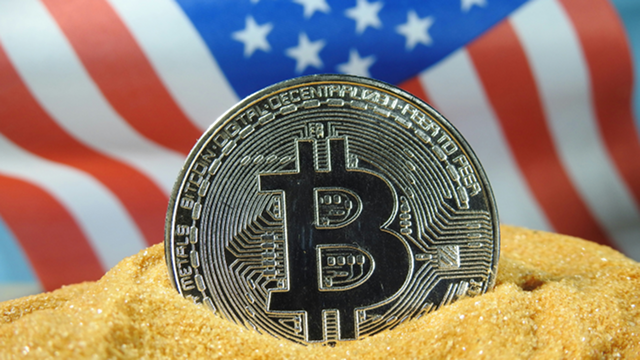
Origin of Holdings:
- Acquisitions have mostly been made through law enforcement confiscations of illegal crypto activities.
- Some BTC may be held for other treasury management purposes.
Scale of Reserve:
- BTC reserves are estimated to be in the tens of thousands but this number is often left undisclosed.
- The US government periodically auctions some of the confiscated Bitcoin, releasing them to the market.
Purpose:
- To ensure the assets of law enforcement are disposed of legally, and in turn, Bitcoin confiscations can be used to keep the market balanced.
- The Reserve can control Bitcoin’s floor price as it may be able to suggest that a significant number of Bitcoin are held and can be available for purchase.
Management:
- The Treasury and Department of Justice (DOJ) manage and control the Reserve.
- To prevent market shocks, the government sells Bitcoin through public auctions.
Impact on Market:
- Potential investors and institutions have increased confidence in Bitcoin.
- It is a deterrent to market manipulation, knowing the govt. has significant reserves.
Mechanisms Impacting BTC’s Floor Price
Government Holdings Signal Stability
BTC large reserves from the US government calms a portion of supply panic selling, securing a selling price “floor.”
Market Supply Is Controlled
Auctions and gradual releases of government-held Bitcoin prevent sudden oversupply, price stabilization, and reduced volatility.
Investor Confidence & Institutional Participation
Knowledge of a government-level reserve boosts institutional investor participation and reinforces demand, sustaining minimum price levels.
Price Benchmarking
Government sales or reserves serve as reference points, psychologically or technically, for traders and exchanges.
Indirect Market Effect
Government BTC reserves calm extreme range speculation, creating a safety net for the crypto market, even when no trading occurs.
Potential Risks and Criticisms
Possible Manipulation of the Market
Holding a large number of Bitcoins can allow the government to manipulate the prices of Bitcoin and that goes against the concept of a free market.
Decentralization and Centralization
Bitcoin is intended to be decentralized and the government holding a large number of coins defeats the purpose of decentralization which is one of the main principles of cryptocurrencies.
Risk of Liquidation
The government holding Bitcoins poses a risk to the market if there is a sudden large sell order, the price of Bitcoin would be affected greatly and most likely there would be a sell-off.
Lack of Transparency
Investors may have to deal with the government holding Bitcoin, and there is always a possibility of the government having secret strategies for buying and selling.
Regulation Risk
The government holding Bitcoin may impact how markets are regulated and potentially stop the government from controlling or protecting investors.
Case Studies / Historical Examples
Silk Road Seizures (2013-2014):
- US authorities seized more than 144,000 BTC from the Silk Road marketplace.
- The seized Bitcoins set prices and helped shape market expectations.
Liberty Reserve & Other Enforcement Actions:
- The auctioned BTC seized in fraud and money laundering cases.
- Each auction supported the market and the idea of a government-imposed price floor.
Auction Strategies by the DOJ:
- Gradual government BTC auctions aim to avoid price drops.
- Past auctions have provided price support and avoided significant price drops.
Institutional Perception:
- The US government’s BTC holdings provide institutional investors with confidence in the market.
- Increased market participation from funds and businesses with low-risk preferences.
Indirect Market Influence:
- The government reserve’s value as low-risk support for traders and retail investors is real, even if it is not actively traded.
Can the government sell its Bitcoin?
The government is able to sell its Bitcoin, but it does so with extreme caution to prevent market disruption. Legal seizures account for the majority of Bitcoin holdings in the US, and organizations such as the Department of Justice (DOJ) progressively release the cryptocurrency through public auctions.
These deals don’t result in significant price reductions because they are transparent, well-organized, and typically occur in little chunks. Because it can generate market instability and erode investor confidence, abrupt, extensive liquidation is avoided.
To put it briefly, the government exercises its power to sell, but it does so strategically, striking a balance between the necessity of getting rid of confiscated property and the objective of preserving market stability and the floor price of bitcoin.
Implications for Investors

Market Crash Protection
Investors know that the government reserve holds Bitcoin, meaning its price can’t ever be lower than a certain point, reducing the chance of a market crash.
Unrestricted Investment
Government reserves likely means more investment from big players in the market, enhancing liquidity and growth potential in years to come.
Potential for Price Increase
As the government reserves hold Bitcoin, investors can bet on its price increasing in the future with a degree of certainty.
Uncertainty with Government Action
The reserve may support the price of Bitcoin, but still can be negatively impacted by government sales and regulations.
Market Price Government Closures
Investors have the ability to make price predictions based on government closures, auctions, and want to help government Bitcoin seize statements.
Conclusion
The US Bitcoin Reserve serves as an example of how the dynamics of a decentralized market can be impacted by accumulation at the government level. The US government indirectly supports a price floor by holding sizable amounts of Bitcoin, which increases investor confidence and promotes institutional participation.
These holdings contribute to market stabilization, but they also carry hazards, such as possible regulatory influence and centralization issues. Investors’ long-term strategy, risk assessment, and market timing all depend on their ability to comprehend the presence and management of such reserves.
The US Bitcoin Reserve concludes by highlighting the relationship between contemporary cryptocurrencies and conventional government authority, demonstrating how national-level initiatives can influence the direction of Bitcoin and the larger cryptocurrency ecosystem.
FAQ
What is the US Bitcoin Reserve?
The US Bitcoin Reserve consists of Bitcoin holdings acquired by the government, primarily through legal seizures, and occasionally managed as part of strategic financial considerations.
How does it impact Bitcoin’s price?
By holding large amounts of BTC, the reserve indirectly creates a price “floor,” boosting investor confidence and helping stabilize the market.
Who manages the US Bitcoin Reserve?
Agencies like the Department of Justice (DOJ) and the Treasury oversee the reserve, often conducting auctions to release seized Bitcoin gradually.
Can the government sell its Bitcoin?
Yes, but sales are typically structured to avoid destabilizing the market, often through public auctions.
Does the reserve violate Bitcoin’s decentralized nature?
While Bitcoin is decentralized, government holdings concentrate influence, sparking debates about centralization versus market freedom.