
This article will cover the Top Crypto Exchange APIs for Seamless Integration and detail the most suited platforms for developers and traders for the purpose of connecting applications with real-time data and automated trading.
You’ll discover important aspects of these APIs along with performance, security, and ease of use so by the end, you’ll be able to make an informed decision on which API to use to create efficient, scalable, and reliable crypto solutions in 2026.
Key Point & Top Crypto Exchange APIs for Seamless Integration
| API | Key Points |
|---|---|
| Binance API | High liquidity, low fees, extensive endpoints (spot, futures, margin), fast execution, strong global adoption |
| Coinbase Exchange API | User-friendly, strong regulatory compliance, reliable infrastructure, ideal for institutional use |
| Kraken API | Advanced order types, strong security reputation, margin & futures support, stable performance |
| OKX API | Wide product range (DeFi, derivatives), high-speed trading, WebSocket support, good liquidity |
| Bybit API | Derivatives-focused, fast execution, robust WebSocket streams, popular for leveraged trading |
| KuCoin API | Supports many altcoins, flexible trading options, good for bots, competitive fees |
| Gemini API | Highly secure, compliance-focused, ideal for US institutions, clean and stable API |
| Huobi API | Strong global presence, diverse trading products, good liquidity, reliable performance |
| Gate.io API | Large altcoin selection, advanced trading features, flexible API integration |
| Crypto.com Exchange API | Growing ecosystem, supports spot & derivatives, competitive fees, strong mobile-first platform |
1. Binance API
The Binance API is an important instrument for builders of crypto trading platforms and automation systems. It facilitates access to spot, margin, futures and options trading. Users can also access real time trading data via Web Socket streams. It is known for its high liquidity and low latency, as well as offering advanced order types and high level security features.
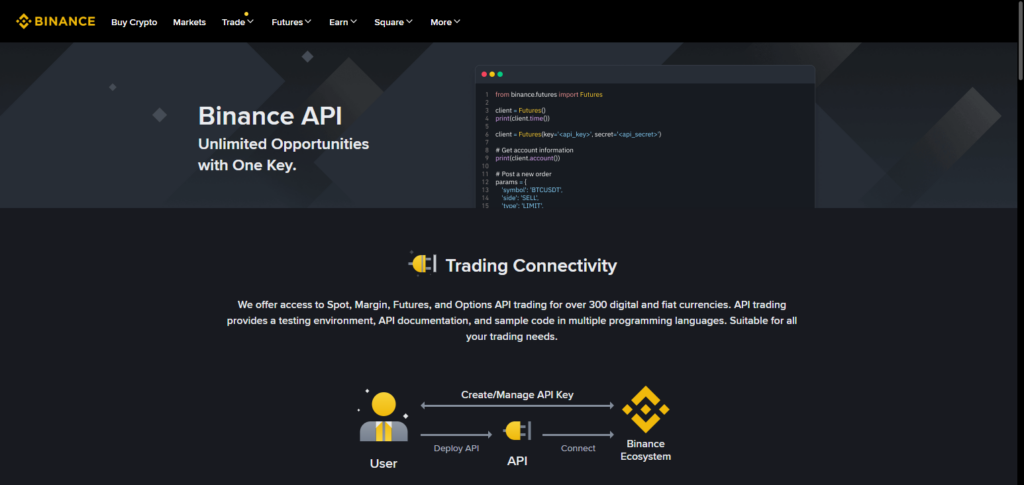
While integrating Top Crypto Exchange APIs for Seamless Integration, Binance has proven to be the most flexible and high value for its documentation and ability to support multiple developers. It is also highly valued for its lowered rate limits and high trading bot support.
Binance API Features, Pros & Cons
Features:
- Market data and sockets in real time
- Spot, margin, and futures trading
- High limit and rate scalability.
- Other advanced orders.
- Developer Testnet environment
Pros:
- Very high liquidity
- Very low trading fees
- Very fast execution.
- Very extensive documentation.
- Very advanced for documentation
Cons:
- Very advanced and complex for beginners.
- Very strict limits that are enforced.
- Issues with regulations in multiple regions.
- Multi
- Very limited for exchanges.
- Very high risks of temporary IP bans.
2. Coinbase Exchange API
Coinbase Exchange API is built for trust, protection, and purpose, making it the most versatile API for institutional clients and regulated environments. It offers both REST and WebSocket endpoints for trading, account management, and market data retrieval. Developers can easily integrate trading services, and its architecture simplifies the authentication process.
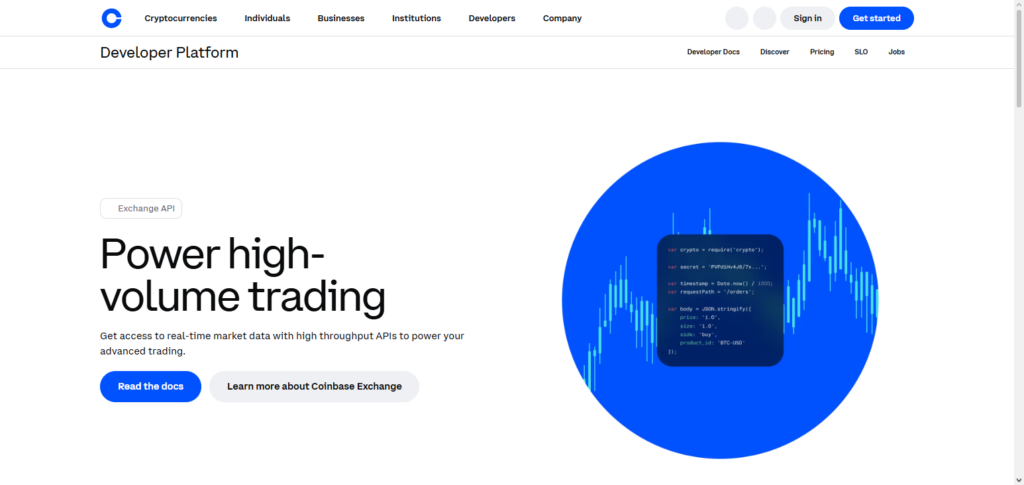
Among Top Crypto Exchange APIs for Seamless Integration, Coinbase stands out for stability and transparency. It also offers institutional trading in FIX, ensuring accuracy and speed. Due to enhanced trust, security and system protective measures, extended fiat integration, and long-term and professional uses, it is the most expensive from Coinbase.
Coinbase Exchange API Features, Pros & Cons
Features:
- Support for REST, sockets, and FIX protocol
- Very secure authentication.
- Very good portfolio/account management.
- Real time market data.
- Institutional infrastructure
Pros:
- High security and compliance.
- Easy integration
- Very good real time data.
- Very good support for fiat.
- Highly trusted brand
Cons:
- Highly high trading fees.
- Very limited support for altcoins.
- Very limited derivatives.
- Slowness during high volatility.
- Very dynamic trading fees.
3. Kraken API
The Kraken API is distinguished by advanced trading options and industry-leading security measures. There is a whole range of API trading services such as spot trading, margin trading, futures and comprehensive market data and account management services. API developers value unique order types such as take-profit and stop-loss. Kraken is noted among Top Crypto Exchange APIs for Seamless Integration due to its great uptime and reliability.
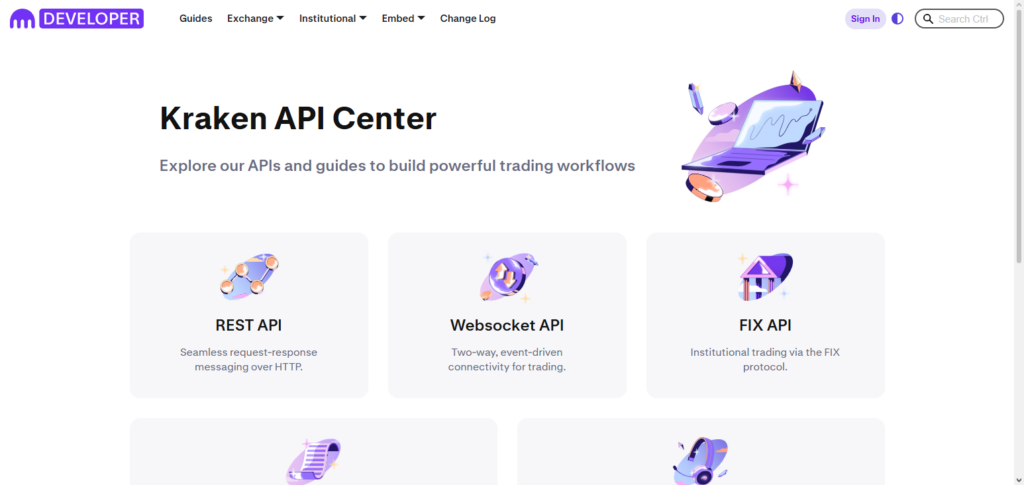
Advanced and layered authentication means that API trading is conducted safely and with WebSocket trading feeds, instant market updates are delivered. There is a steep learning curve for novice developers but it offers a comprehensive toolset developers trading bots or analytics systems who require reliability, security and access to a deep order book.
Kraken API Features, Pros & Cons
Features
- REST and socket APIs
- Multiple orders
- Margin and futures trading
- Tiered rate limits
Pros:
- Strong Reputation for Security
- Consistent Performance
- Supports Fiat
- Custom API Permissions
- Excellent for Professional Traders
Cons:
- Complicated Initial Setup
- Execution Slower than Competitors
- User Interface Deficiency
- Liquidity Lower than Binance
- Not Suitable for HFT
4. OKX API
The OKX API permits access to a broad range of financial offerings such as spot, margin, derivatives, DeFi, and more; all of which have a rich set of functionalities and features. With the OKX API, you can trade more financial products than with other Top Crypto Exchange APIs.
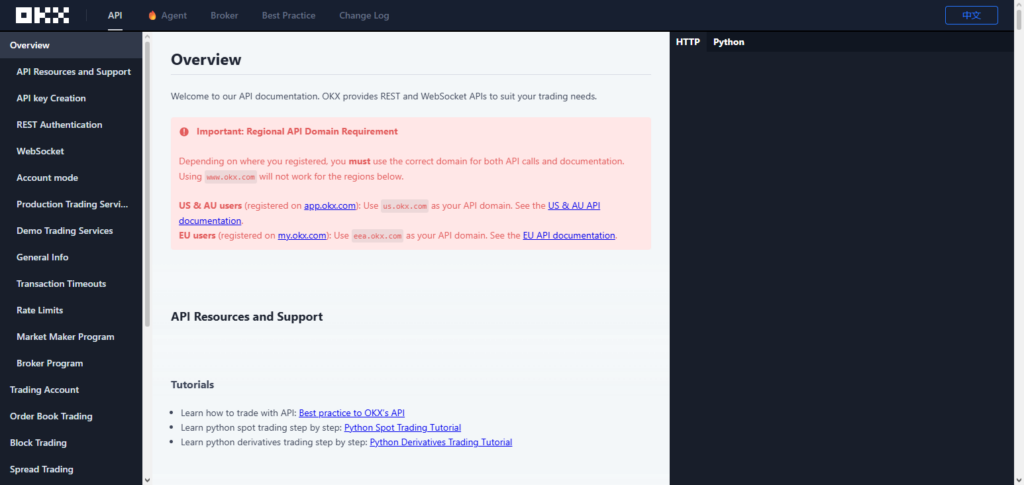
Developers can create simplified trading bots with the tools the API provides; including advanced order types, endpoints, and SDK support. OKX offers the perfect melting pot of trading and financial service tools, with unparalleled global liquidity and an ever-growing ecosystem.
OKX API Features, Pros & Cons
Features:
- Unified account structure
- Access to spot, futures, options & DeFi
- REST & WebSocket APIs
- Advanced order routing
- Execution at high speed
Pros:
- Broad product ecosystem
- Solid liquidity
- Excellent trading resources
- Good for algo trading
- Prices are extremely competitive
Cons:
- Above average skills required
- API is complicated
- Restrictions by region
- Thin documentation
- Latency spikes are frequent
5. Bybit API
Among Top Crypto Exchange APIs, Bybit API provides the fastest and most reliable service. Bybit API is the best API for creating perpetual contract trading bots because unrivaled WebSocket streams and complete market access for futures and spot trading create a unique environment for bots built for volatility.
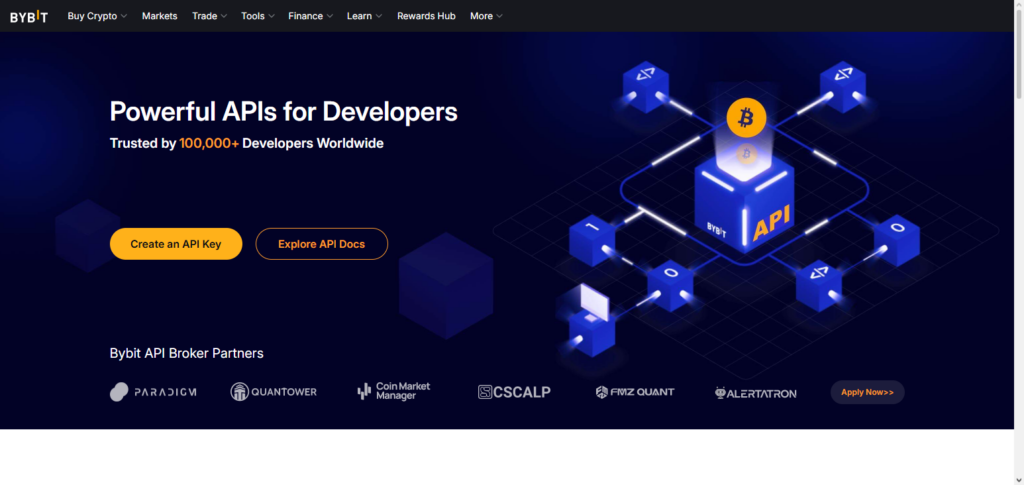
The greatest bots that trade on Bybit can fully automate leveraged trading strategies because of the risk management tools and advanced order types that the API offers. The continual updates and clear documentation ease the integration process.
Bybit API Features, Pros & Cons
Features:
- API geared to derivatives
- Supports REST & WebSocket
- Unified trading accounts
- Execution at high speed
- Supports test environment
Pros:
- Outstanding for leveraged trading
- WebSocket feeds are fast and stable
- Low fees especially for derivatives
- API is clean
- Strong trading tools
Cons:
- Limited support for Fiat
- Not the best for beginners
- Named restrictions
- Focus on derivatives too much
- Smaller spot market
6. KuCoin API
With Decentralized Applications (dApps) constructed on the Ethereum (ETH) blockchain or Ethereum layer-2 solutions, developers can leverage the KuCoin API to build trading bots that can guide the buying and selling of altcoins, utilizing KuCoin’s margin trading, futures trading, and spot trading services, as well as its liquidity and competitive pricing for a variety of trading pairs.
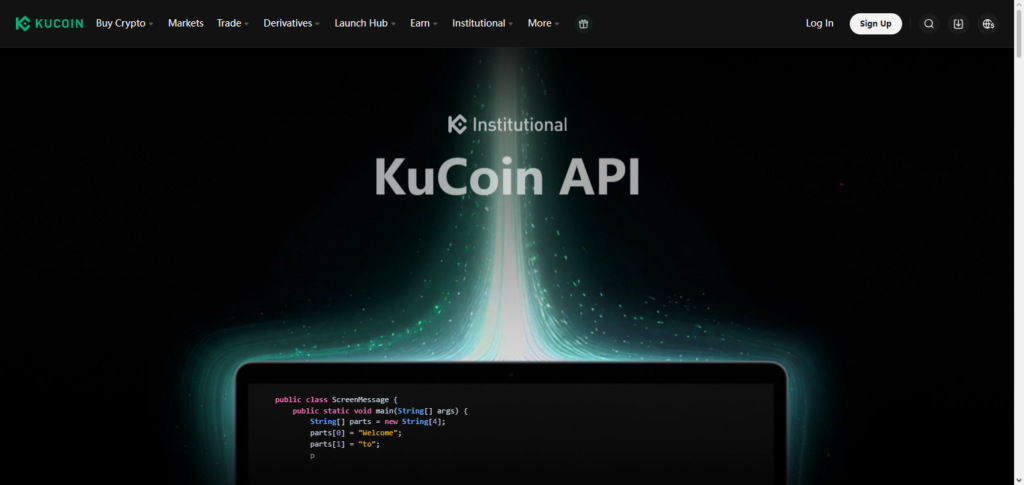
Also, the KuCoin API provides developers with access to detailed descriptions of their services. For developers who seek flexible APIs, assistive documentation, and a functioning community to assist, the KuCoin API provides the versatile API you seek for your trading solutions. KuCoin accommodates all levels of developers, from novice to expert.
KuCoin API Features, Pros & Cons
Features:
- Support for spot, margins, and futures
- Wide access to altcoins
- APIs for REST and WebSocket
- Integration for trading bots
- Flexible options for API keys
Pros
- Good options for altcoins
- Low fees for trading
- Good for trading bots
- Easy integration for APIs
- Support from the active community
Cons
- Lack of regulatory clarity
- Lower liquidity than Binance
- Security issues in the past
- Support for fiat is limited
- Can be complex for the interface
7. Gemini API
The Gemini API is built with simplicity, transparency, compliance, and security as its cornerstones. For the purposes of trading, the Gemini API offers a Rest and Web Socket (WS) interface, through which developers can interact with the API for the purposes of acquiring market data and the management of their trading accounts.
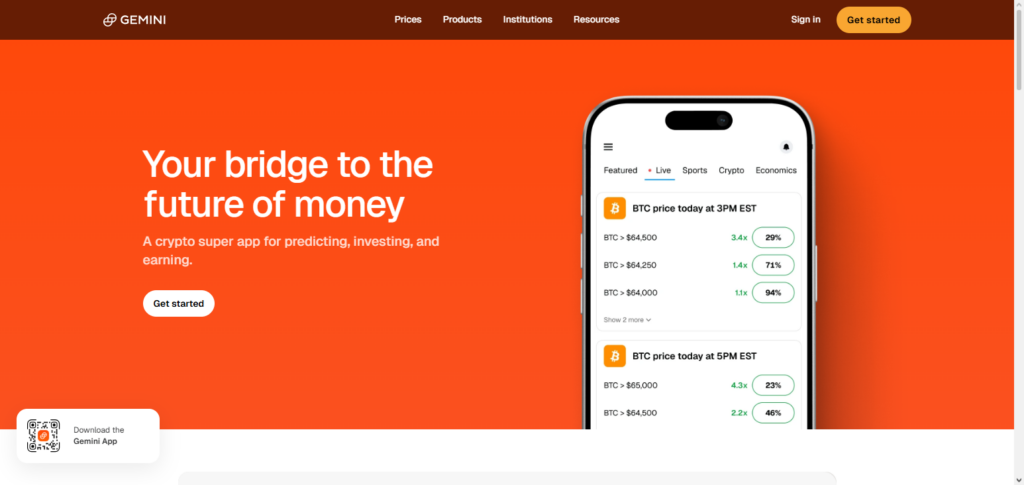
Gemini is aptly designed for use by institutional clients and businesses who require their environments to be regulated, as they maintain a high reliance on compliance and closure to rigidity with their security and protections.
Other APIs may offer more trading pairs than others, but the lack of trading pairs is compensated through safety. Developers seeking to build secure proprietary applications to the business should turn to Gemini for enterprise grade APIs and finite security.
Gemini API Features, Pros & Cons
Features
- APIs for REST and WebSocket
- Institutions use FIX protocols
- Compliance that is strong
- Key management that is secure
- Market data in real time
Pros
- Highest security on the platform
- Compliance with regulations
- Suitable for institutions
- Clean design for the API
- Infrastructure that is reliable
Cons
- The fees are higher
- Limited selection for crypto
- Pace of slower innovation
- Less suitable to altcoin traders
- Tools for trading that are less advanced
8. Huobi API
Huobi API provides several trading functionalities including spot, margin, future trading, and staking. It also allows streaming of real-time data via its WebSocket and offers several trading pairs.
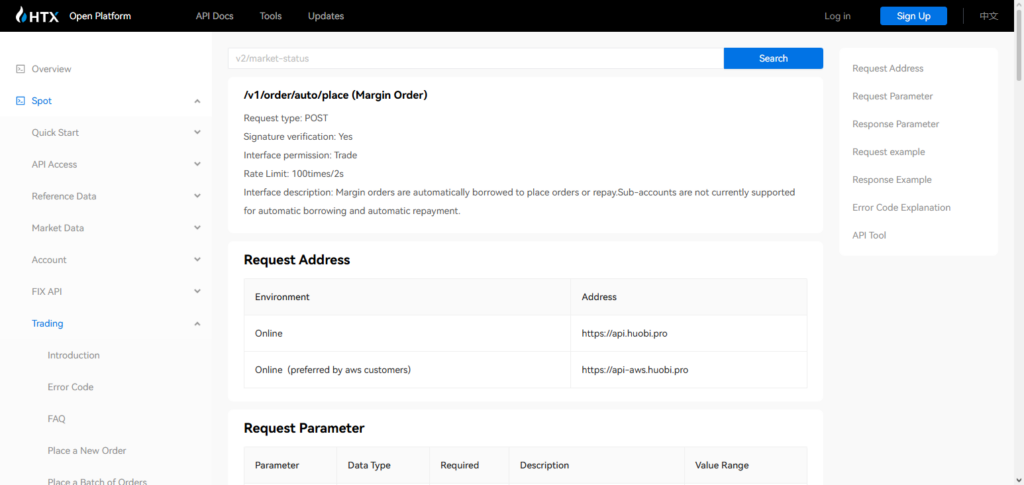
As one of the Top Crypto Exchange APIs for Seamless Integration, Huobi Offers global reach and a robust liquidity. Its advanced trading tools and efficient API structure allow developers to create scalable systems. It also provides clear and detailed documentation along with a robust infrastructure for seamless API integration.
Therefore, the API provides ample resources for developers in the global marketplace and those looking to add sophisticated diversity in crypto financial solutions to their applications. Huobi Geek API is your best option.
Huobi (HTX) API Features, Pros & Cons
Features
- Trading for spot and derivatives
- WebSocket data in real time
- Integration for REST APIs
- Global access to liquidity
- Tools for trading that are advanced
Pros
- Assets in a wide range
- Strong presence in the world
- Good liquidity
- Trading options in multiple ways
- API that is scalable
Cons
- Uncertainty in regulation
- Complexity of the interface
- Transparency is limited* Impact of regional regulation
- Less interest in some countries
9. Gate.io API
Gate.io API is recognized for its rich altcoin ecosystem and provides advanced trading functionalities. It also provides endpoints for spot, margin, and futures, and options trading as well as provides streaming of real-time market data.
Gate.io is also among the Top Crypto Exchange APIs for Seamless Integration, meaning developers looking for easy integration with diverse tokens and sophisticated financial solutions can also rely on Gate.io. It offers the capability for flexible integration for automated trading strategies. The API also provides copy trading and lending functionalities.
Gate.io also has a competitive fee structure and offers liquidity in niche markets, making the API a good option for developers looking to create a wide range of sophisticated applications in the crypto ecosystem.
Gate.io API Features, Pros & Cons
Characteristics:
- APIs for Spot, Margin, & Futures
- Lots of Margin trading coins
- Extra trading options
- Derivative coins
- Data feed APIs
- Flexible APIs
Pros:
- Lots of coins
- Newer options
- Above average costs
- Best for small segments
- Automation is accepted
Cons:
- Complicated UI/API
- Some pairs have little liquidity
- Compliance
- Little support for fiat
- Hard for beginners
10. Crypto.com Exchange API
Integrating with the Crypto.com Exchange API will allow you to participate in the fast expanding trading, payments and financial services ecosystem. Spot and derivatives trading, real-time market data and account management, and market data and account management.
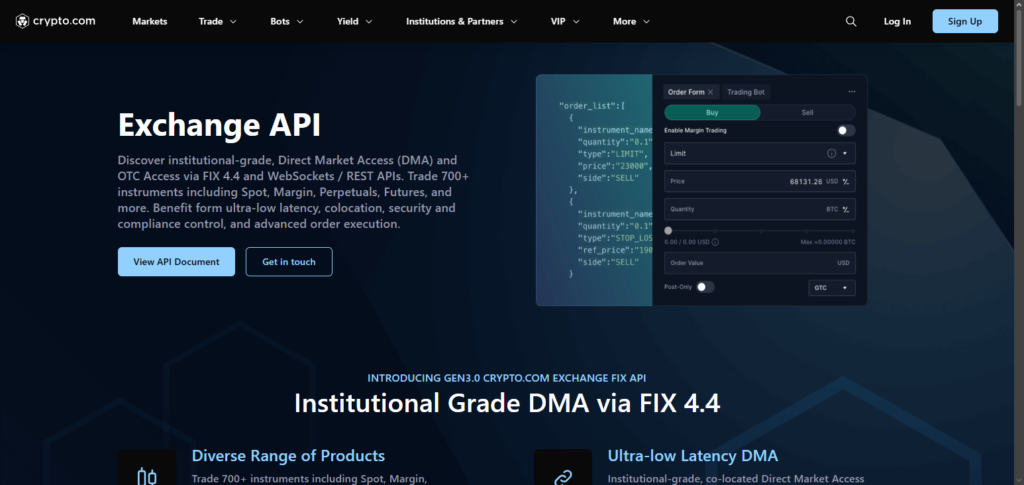
Among the Top Crypto Exchange APIs for Seamless Integration, it has the most user-centric design and the most global reach. Developers can integrate trading functionality with the API into mobile and web applications easily.
The API has secure authentication, which combined with its low fees, makes it appealing for start-up and scaling services. The API’s ecosystem integrates with its strong branding to make it a great choice for consumer-centric crypto applications that are modern.
Crypto.com Exchange API Features, Pros & Cons
Features:
- APIs for REST & WebSocket
- APIs for Spot trading
- Testing in Sandbox
- Auth is safe
- Crypto.com has integrated ecosystem
Pros:
- Strong ecosystem (app, DeFi, payments)
- Competitive costs
- Good mobile integration
- Beginner-friendly
Cons:
- Lesss advanced tools
- Less liquidity than major exchanges
- API is not as mature as Binance
- Less coins
- Flashier features
Conclusion
Prime Crypto Exchange APIs for Easy Integration are crucial to developing speedy, secure, and expandable crypto applications in 2026. As each API has its own strengths, whether it be liquidity at Binance, compliance at Coinbase, or derivatives at Bybit, there are different APIs for different use cases.
By looking at these factors, developers can choose the right API for their trading bots, analytics, or complete platforms. This will ensure optimal performance and sustainable success in the rapidly changing crypto ecosystem.
FAQ
What are crypto exchange APIs?
Crypto exchange APIs allow developers to connect their applications to trading platforms to access market data, execute trades, and manage accounts programmatically.
Which are the Top Crypto Exchange APIs for Seamless Integration?
Popular options include Binance, Coinbase Exchange, Kraken, OKX, Bybit, KuCoin, Gemini, Huobi, Gate.io, and Crypto.com Exchange.
Are these APIs suitable for beginners?
Yes, some APIs like Coinbase Exchange and Gemini are beginner-friendly due to simple documentation and strong security, while others may require advanced knowledge.
What is the difference between REST and WebSocket APIs?
REST APIs handle standard requests like placing trades, while WebSocket APIs provide real-time data streams such as live price updates.
Are crypto exchange APIs free to use?
Most APIs are free, but exchanges charge trading fees. Some may also have rate limits or premium access tiers.