I’ll talk about the top games with dedicated servers for competitive play in this post. Dedicated servers are necessary for ranked matches and esports because they offer fair competition, seamless gaming, and low latency.
They are essential to games like Dota 2, Valorant, Call of Duty: Warzone, and Counter-Strike 2 in order to provide players all over the world with accurate, competitive gameplay.
10 Best Games With Dedicated Servers for Competitive Play
| Game | Key Competitive Advantage (Dedicated Servers) |
|---|---|
| Counter-Strike 2 | 128-tick official and community servers deliver ultra-low latency, precise hit registration, and consistent competitive matchmaking for esports-level tactical gameplay. |
| Valorant | Riot’s 128-tick dedicated servers reduce peeker’s advantage, ensure stable global routing, and maintain competitive integrity in ranked and tournament matches. |
| Call of Duty: Warzone | Dedicated regional servers provide stable large-scale battle royale matches, minimizing lag spikes and maintaining fair gunfights in high-player-count lobbies. |
| Apex Legends | Server-side hit detection and consistent matchmaking infrastructure enhance ranked stability and competitive balance across global tournaments. |
| Rainbow Six Siege | Dedicated servers eliminate host advantage, ensuring synchronized tactical gameplay and accurate operator ability interactions in ranked matches. |
| Fortnite | Epic’s scalable server architecture supports massive competitive events with reliable performance and synchronized builds in fast-paced tournaments. |
| Overwatch 2 | Blizzard’s dedicated servers maintain consistent team-fight synchronization, precise ability tracking, and balanced matchmaking in competitive queues. |
| Dota 2 | Globally distributed dedicated servers ensure stable 5v5 matches, low packet loss, and reliable competitive integrity for professional esports. |
| League of Legends | Centralized dedicated server clusters provide consistent tick rates, reduced disconnect issues, and structured ranked ladder competition. |
| PUBG: Battlegrounds | Dedicated servers improve bullet registration, reduce desync issues, and maintain fair survival gameplay in high-stakes ranked environments. |
1. Counter-Strike 2
The most recent game in the storied tactical shooter series, Counter-Strike 2, is well-known for its accurate gunplay, strategy, and cooperation. Map control, economic management, and well-coordinated team tactics are critical components of competitive encounters.
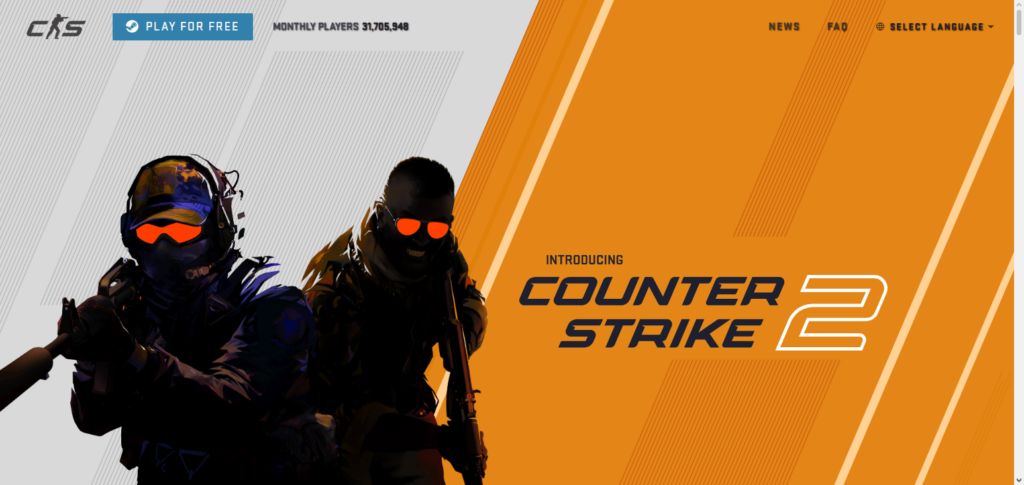
For esports contests and ranked matching, the game’s dedicated servers guarantee low latency, reliable hit registration, and fair play. Professional competitions such as BLAST Premier and ESL are ideal for Counter-Strike 2.
Fast server replies and highly tuned netcode provide players an advantage in reaction times and precise aim. The competitive meta is constantly changing thanks to its community-driven maps and frequent updates.
Counter-Strike 2 Features, Pros & Cons
Features:
- Only one team can win, so there’s FPS style team based gameplay.
- Gun mechanics and game play feel realistic.
- Comp play of ranked modes and game tourneys.
- Classic bomb and hostage maps.
- Game servers are made to be low latency.
Pros:
- Precision gunplay is more skilled based.
- Competitive servers grant stability and reliability.
- Esports tourneys and communities are massive.
- Lightweight and function on a variety of PCs.
- Community maps are a huge variety.
Cons:
- Novices have steep learning curves.
- Game graphics aren’t very modern.
- Community can be very toxic.
- Comp modes are the limited.
- No character abilities are simplistic style.
2. Valorant
Riot Games’ tactical first-person shooter Valorant blends hero-based skills with accurate gunplay. Map control, agent synergy, and team collaboration are key components of competitive play. Dedicated servers are necessary for ranked matches and high-level play because they reduce latency and preserve a fair competitive environment.

The server infrastructure of Valorant guarantees consistent tick rates and low ping, which are essential for timing-based tactics and headshot accuracy. Its competitive depth is demonstrated by its esports sector, which includes the Valorant Champions Tour (VCT).
To further improve competitive integrity, the game has strong anti-cheat mechanisms. Every game is strategically interesting and satisfying because of Valorant’s combination of tactical shooting and special skills.
Valorant Features, Pros & Cons
Features:
- Hero based abilities, shooter game is tactical.
- Team game play is objective based.
- Ladder systems are comp ranked.
- Playing styles can vary based on map.
- Cheaters can’t defeat you in the game.
Pros:
- Game play can be pierced based on strategy.
- Game play requires low latency.
- Comp tourneys are hosted in the esports area.
- Game play requires a lot of system specs.
- Game requirements are low.
Cons:
- New players have high skill gaps.
- Good team communication is a must.
- Single game queues can be extremely hard.
- Some abilities seem too strong
- Casual game modes are limited
3. Call of Duty: Warzone
The battle royale game Call of Duty: Warzone places a strong emphasis on quick-paced fighting, strategy, and map knowledge. In a genre where survival depends on milliseconds, dedicated servers offer dependable connections and minimal latency.
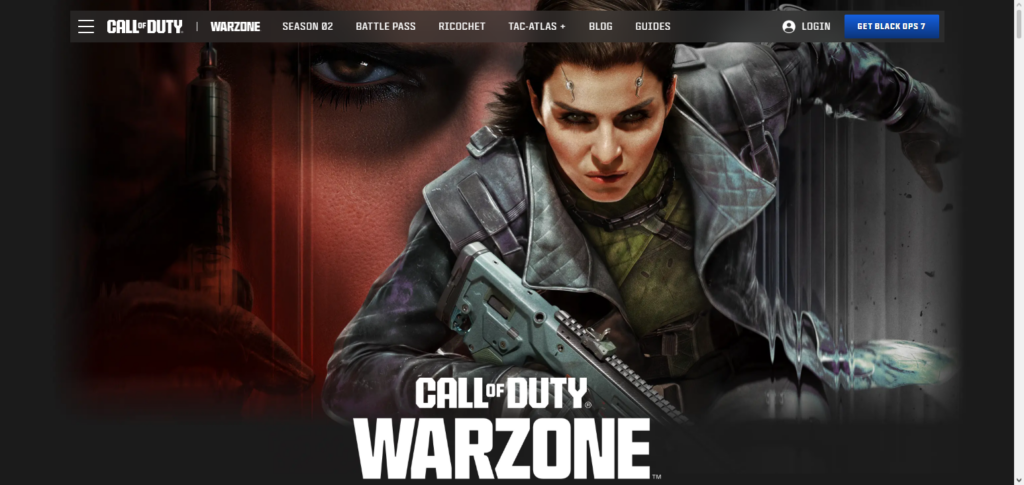
Players must communicate and make tactical decisions while working in squads, duos, or solos. Tournaments and ranking ladders are examples of competitive activity where server performance has a direct impact on the dependability and fairness of competition.
Warzone maintains strategies current with regular updates and seasonal material. Additionally, dedicated servers prevent cheating and lag, maintaining the integrity of competition. Warzone’s competitive environment rewards talent, speed, and adaptation in everything from loadout management to placement and gunplay.
Call of Duty: Warzone Features, Pros & Cons
Features:
- Large battle royale with teams
- Realistic weapon use and mechanics
- Customizable loadouts
- Play with friends on any platform
- Fair play with dedicated servers
Pros:
- Combat is very fast-paced and action-filled
- Good assortment of weapons and gear
- Cross-platform play increases matchmaking
- New content every season
- Steady servers lead to less lag and cheating
Cons:
- High-end PCs required for optimal experience
- High learning curve
- Cheating is still an issue
- Luck can dictate whether a game is won or lost
- New seasonal content can feel stale
4. Apex Legends
The team-based battle royale game Apex Legends places a strong emphasis on hero skills, movement, and tactical placement. Map knowledge, character synergy, and communication are all essential in competitive encounters. Low-latency gameplay is made possible by dedicated servers, which guarantee responsive and fluid movement, gunfights, and abilities.
High levels of cooperation and skill are displayed in Apex Legends esports competitions, where player success is directly impacted by server stability. Fair competition is made possible worldwide by the game’s ping-based matchmaking and improved network infrastructure.
To gain the greatest advantage, players must strike a balance between squad tactics and individual talent, making use of special legends. Competitive play is dynamic and rewards flexibility, timing, and accuracy due to frequent updates and meta changes.
Apex Legends Features, Pros & Cons
Features:
- Team battle royale with different legends
- Vertical and horizontal movement focus
- Ping system for voice-less communication
- New content every season
- Competitive matches on dedicated servers
Pros:
- Great mechanics for combat and movement
- Team-based strategies promote coordination
- Competitive play is made better with stable servers
- Good communication is possible with the innovative ping system
- New content and seasonal updates are constant
Cons:
- Solo play is less effective
- Some characters are seemingly overpowered
- Team coordination is critical
- Learning abilities is required for some Legends
- Matchmaking is not always balanced
5. Rainbow Six Siege
In the tactical shooter Rainbow Six Siege, precision collaboration is combined with environmental damage. For competitive play, dedicated servers are necessary because every frame influences firefights, breaches, and strategic planning.
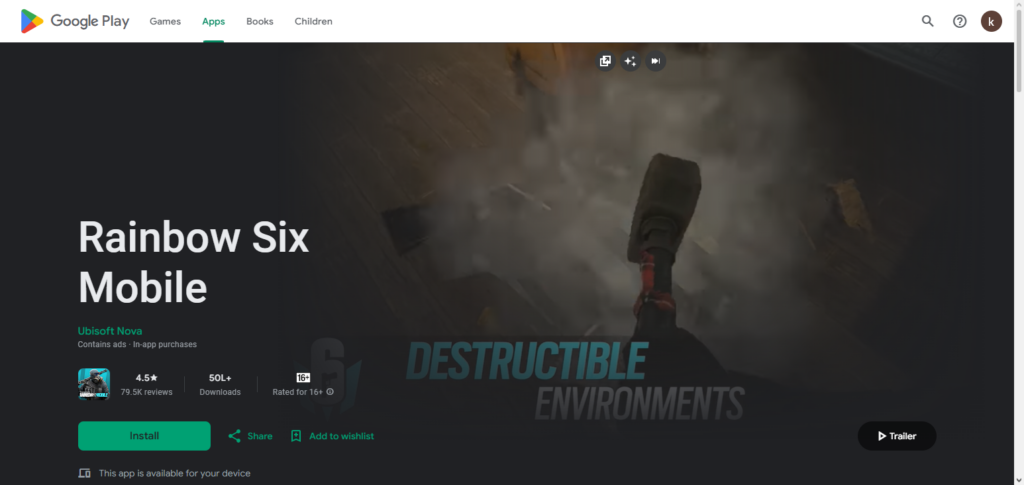
To carry out attacks or defenses, players depend on the operators’ special devices and teamwork. Fair esports competitions like Six Invitational are made possible by Siege’s competitive ecosystem, which thrives on consistent server performance. Low-latency connections are necessary for the game’s emphasis on map knowledge, angles, and strategy in order to guarantee precise actions.
Siege maintains a demanding and dynamic competitive environment with ranked matching and seasonal improvements. This is supported by dedicated servers, which stop lag or desync problems from giving unfair advantages.
Rainbow Six Siege Features, Pros & Cons
Features:
- Tactical FPS with destruction mechanics
- Operator-style gameplay with unique abilities
- Ranked and competitive game modes
- Strategy for specific maps
- Official game servers
Pros:
- High level of strategic complexity
- Sufficient competitive fairness from operational game servers
- Established esports scene
- Different operators encourage diverse playstyles
- New content is added frequently
Cons:
- Learning and adjustment required
- Compared to other shooters, is slow
- Ranked games tend to have toxic players
- In solo queue, wining is doubly challenging
- Some operators are disproportionately strong
6. Fortnite
Building, aiming, and quick reflexes are the main competitive aspects of Fortnite, a battle royale and creative shooter. For seamless player mobility, shooting accuracy, and construction dynamics in high-stakes events, dedicated servers are essential. For fair results, Fortnite events like the FNCS (Fortnite Champion Series) depend on server stability.
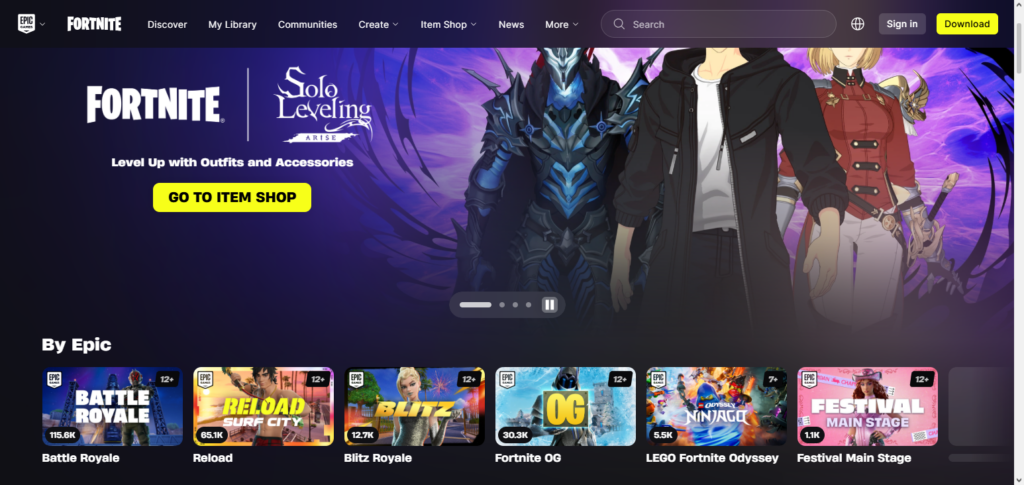
Its network architecture reduces latency spikes that could interfere with editing or reaction speed, which are essential for competitive gaming. Players have to strike a balance between aggressive playstyles, positioning, and resource management. Fortnite’s unique combination of gunplay and building mechanics makes dedicated servers crucial for responsive and equitable competitive gameplay.
Fortnite Features, Pros & Cons
Features:
- Building mechanics integrated into battle royale
- Creative game mode
- Updated content and changed battle royale map each season
- Officially sanctioned esports tournaments FNCS
- Official game servers
Pros:
- Additional game mechanics from building increases strategy
- Game servers have low ping
- Players appreciate the evolving map and game strategy
- Large established competitive Fortnite scene
- Game has casual and competitive modes
Cons:
- Game mechanics require practice to master
- In fully populated games, player chaos is prevalent
- Game aesthetics and graphics are polarizing
- Game has inconsistent matchmaking
- Frequent game updates impact players competitive “skill” and game understanding
7. Overwatch 2
The hero-based team shooter Overwatch 2 places a strong emphasis on abilities, coordination, and map management. Precise mechanical skills, teamwork, and quick decision-making are critical components of competitive play. In ranked modes and esport competitions, dedicated servers provide minimal latency, fluid ability interactions, and reliable hit detection.
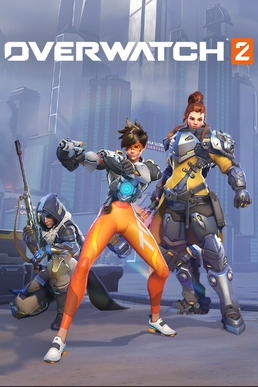
The server architecture of the game ensures regional fairness by enabling worldwide matchmaking with little interruption. Stable server performance directly affects results because each hero’s special powers demand exact timing.
Overwatch 2 is a mainstay for tactical team-based shooters because of its commitment to competitive integrity, which is demonstrated by its changing meta, seasonal upgrades, and professional leagues.
Overwatch 2 Features, Pros & Cons
Features:
- Team objectives set in an heroe-based shooter
- Multiple unique arenas and gamemodes
- Decent competitive ranked ladder
- Combat system based on ability
- Servidores específicos
Pros:
- The variety of strategies thanks to different unique heroes
- Servers with low latency for a better experience
- Good support for esports
- Updates to maintain the balance of the game
- Good interactive maps
Cons:
- High level of cooperation required
- Long difficulty of the heroes
- Match ranked player toxicity
- Frustrating frequent changes of the meta for casual players
- Hero-lock system
8. Dota 2
Success in the intricate multiplayer online battle arena (MOBA) Dota 2 is determined by timing, strategy, and cooperation. Stable connections are essential for competitive matches, and dedicated servers make sure that abilities, creep control, and item usage all work as intended.
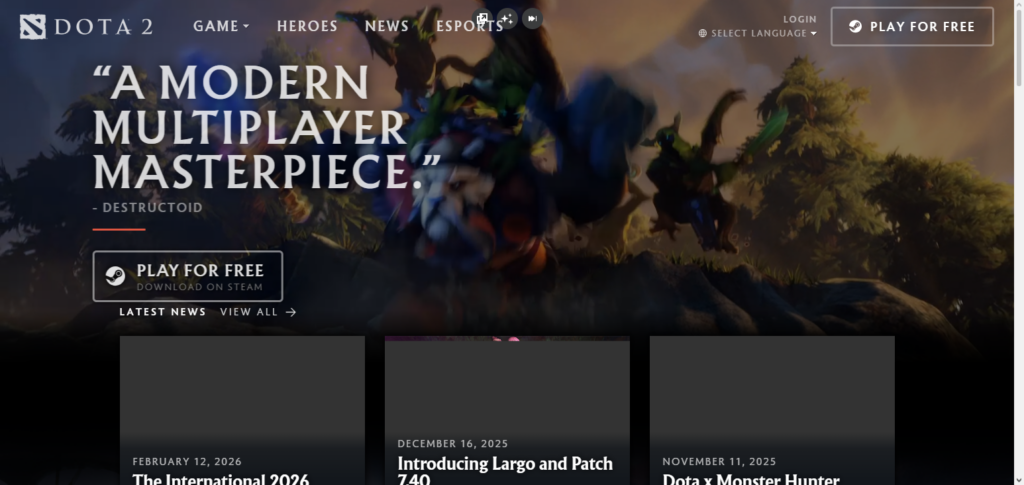
Reliable servers are essential to maintaining fairness and skill-based results in its ranked ladder and professional esports sector, which includes The International. Players have to manage map objectives, farm effectively, and coordinate hero abilities.
Because even small delays might change team conflicts or strategic choices, server stability is crucial. Dota 2’s depth and strong server support create a competitive atmosphere that incentivizes communication, strategic thinking, and mechanical execution.
Dota 2 Features, Pros & Cons
Features:
- MOBA with complex mechanics of the heroes
- Ladder ranked competitively
- Tournaments professionally at large scale
- Regular balance updates of heroes in the season
- Servers dedicated for a more stable game
Pros:
- Deep strategic gameplay
- Servers dedicated to reducing lag
- Ecosystem for the esports massive
- The updates of the heroes along with balancing are constant
- An active community large
Cons:
- The curve for learning is very steep
- The duration of the matches can be prolonged
- The ranked games have toxicity
- Some heroes appear to be unbalanced.
- The cooperation of the entire is essential for the success
9. League of Legends
A well-known MOBA with a robust competitive ecosystem is League of Legends. In ranked and professional play, dedicated servers guarantee steady gaming, minimal latency, and precise ability execution. To win, players coordinate team tactics, map objectives, and champion skills.
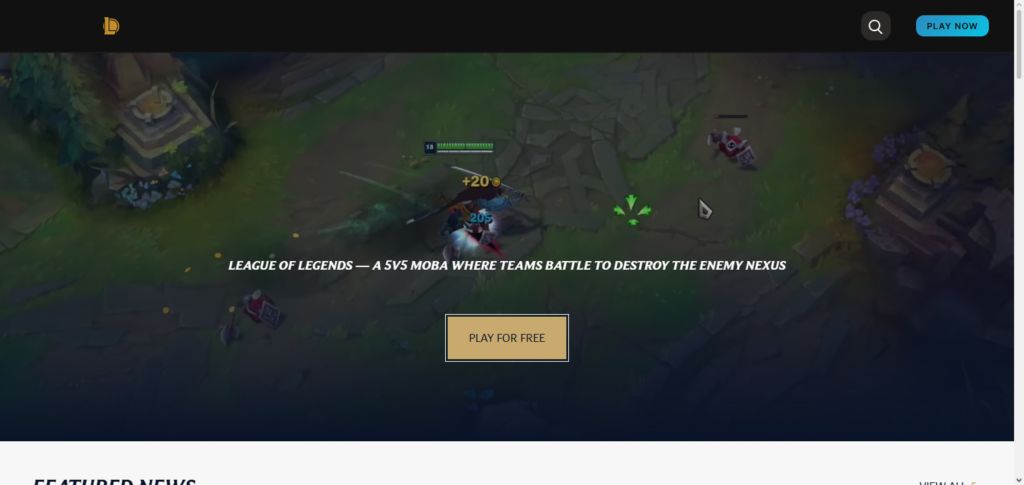
For esport competitions like the League of Legends World Championship to remain competitive, server stability is crucial. Server performance has a direct impact on the precision needed for each champion’s mechanics and timing.
Competition is kept dynamic by frequent upgrades, meta shifts, and ranked systems. Millions of players worldwide are guaranteed fair, skill-based competition thanks to League of Legends’ dedicated server infrastructure.
League of Legends Features, Pros & Cons
Features:
- MOBA with champion based combat
- Ranked skill based matchmaking
- Frequent meta resets with patch updates
- Major tournaments with prize pool
- Region based servers
Pros:
- Big tournaments for joinable esports
- Patch updates make way for new metas
- Easily accessible for most players
- Lots of champions and different ways to play
- Improved play experience with low lag servers
Cons:
- Ranked games have little interactivity and teambuilding
- High champion learning curves
- Players are frustrated by long games
- Servers are often unresponsive
- Some champions are better than others
10. PUBG: Battlegrounds
The tactical battle royale game PUBG: Battlegrounds places a strong emphasis on shooting accuracy, placement, and survival. In order to keep latency low, minimize lag, and avoid desync during stressful situations, dedicated servers are essential. These servers are essential for ensuring fair competition in competitive games like the PUBG Global Championship.
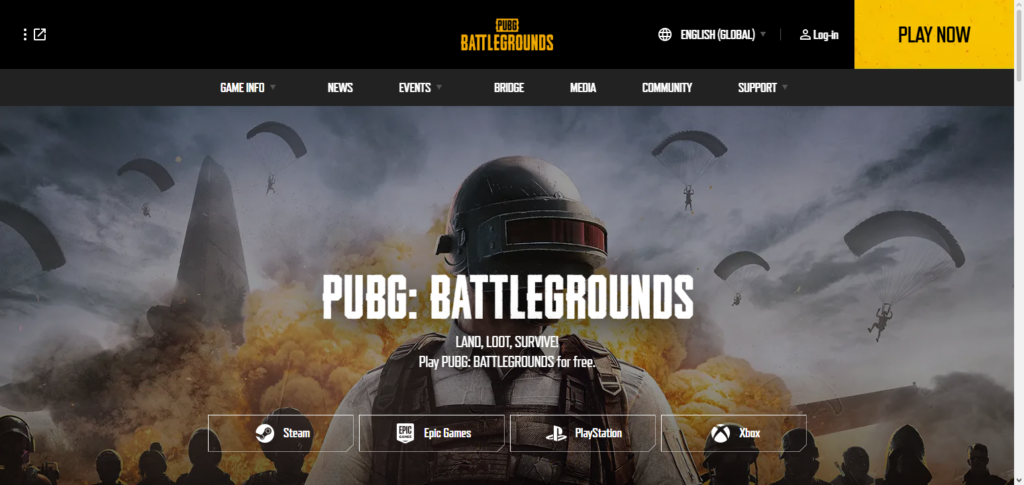
To win, players need to combine map knowledge, weapon expertise, and strategy. Reaction speeds, aim accuracy, and in-game decision-making are all directly impacted by server performance.
Because PUBG emphasizes realistic mobility and gunplay, server stability is crucial. The competitive experience is improved by frequent upgrades and better server management, which fosters an atmosphere where talent, cunning, and cooperation are regularly rewarded.
PUBG Features, Pros & Cons
Features
- Thought-out maps with variety of vehicles
- Compresetive play with ranking
- Realistic battle royale
- Surviving mechanics
Pros
- Realistic gunplay
- Stable servers
- Large maps
- Solo and team modes
- Esports
Cons
- Tactical gameplay
- Slow matched
- High system requirements
- Cheating issues
- Long matches
Conclusion
In summary, games with dedicated servers offer a dependable and equitable setting that is necessary for competitive play, guaranteeing consistent performance, minimal latency, and solid connections.
Dedicated server technology is used by games such as Counter-Strike 2, Valorant, Call of Duty: Warzone, Apex Legends, Rainbow Six Siege, Fortnite, Overwatch 2, Dota 2, League of Legends, and PUBG: Battlegrounds to improve accuracy, responsiveness, and the overall player experience.
Dedicated servers enable players to compete at the highest level, sustain esports ecosystems, and preserve the integrity of ranked and tournament matches, whether they are playing MOBAs, tactical shooters, or hero-based shooters.
These games are the best options for competitive gamers around the world because they perfectly capture how server stability affects skill-based gameplay, teamwork, and fair competition.
FAQ
What are dedicated servers, and why are they important for competitive gaming?
Dedicated servers are remote servers hosted specifically for a game, ensuring stable, low-latency connections. They are crucial for competitive play because they provide consistent hit registration, fair matchmaking, and prevent unfair advantages caused by lag or peer-to-peer connection issues.
Which games are best known for their dedicated servers?
Some of the top games include Counter-Strike 2, Valorant, Call of Duty: Warzone, Apex Legends, Rainbow Six Siege, Fortnite, Overwatch 2, Dota 2, League of Legends, and PUBG: Battlegrounds. These games rely heavily on server stability for esports and ranked competitions.
How do dedicated servers improve competitive performance?
They reduce latency, minimize lag spikes, ensure smooth gameplay, and maintain fair conditions for all players. In fast-paced shooters or MOBAs, even milliseconds of delay can affect aiming, ability timing, and decision-making, so dedicated servers are essential.
Can I play these games competitively without dedicated servers?
While some casual modes may work on peer-to-peer or regional servers, competitive ranked play and tournaments require dedicated servers for fairness. Without them, gameplay may suffer from lag, desync, or unfair hit detection.