Here I will highlight the most popular cryptocurrencies making waves in the digital asset arena. From Bitcoin and Ethereum to the new altcoins, these assets demonstrate the trends, investor sentiment, and tech disruption.
I will break down what these assets show and why they are important in the rapidly changing world of search crypto.
Key Point & Most Searched Crypto
| Cryptocurrency | Key Point |
|---|---|
| Bitcoin | The first and largest cryptocurrency, widely used as a store of value and often called “digital gold.” |
| Ethereum | Leading smart-contract platform powering DeFi, NFTs, and thousands of decentralized applications. |
| Solana | High-speed blockchain known for very fast transactions and low fees, popular for DeFi and Web3 apps. |
| BNB | Native token of the Binance ecosystem used for trading fee discounts, DeFi, and BNB Chain applications. |
| XRP | Designed for fast and low-cost cross-border payments, mainly used by financial institutions. |
| Cardano | Research-driven blockchain focused on scalability, sustainability, and secure smart contracts. |
| Dogecoin | A popular meme cryptocurrency supported by a large online community and social media hype. |
| TRON | Blockchain network focused on decentralized applications and high-volume stablecoin transactions. |
| Chainlink | Leading decentralized oracle network that connects smart contracts with real-world data. |
| Toncoin | Cryptocurrency of The Open Network, gaining popularity through integration with the Telegram ecosystem. |
1. Bitcoin
The first decentralized cryptocurrency, Bitcoin, was introduced in 2009 by its anonymous creator, Satoshi Nakamoto. It doesn’t require a central authority like banks to record transactions because it runs on a secure blockchain network.
Because so many investors utilize Bitcoin as a long-term store of value and inflation hedge, it is frequently referred to as “digital gold.” Because of its enormous market capitalization and widespread use, Bitcoin is frequently brought up in conversations concerning the most searched cryptocurrency for 2026.
Interest is still being driven by institutional investors, ETFs, and growing merchant adoption. Bitcoin is one of the most reliable cryptocurrencies in the world due to its robust security and restricted quantity of 21 million coins.
Bitcoin Features, Pros & Cons
Key Features
- First ever decentralized cryptocurrency.
- 21 million coins: limited supply.
- Uses Proof-of-Work (PoW) as consensus.
- One of the most secure blockchain
- Digital gold.
Pros
- Most secure and decentralized, and a good hedge against inflation (store of value), and a big Positive Cash Flow (PCF) = Positive Net Equity (PNE).
- Most brand recognition.
- Maximal liquidity.
- Decentralized finance (de-fi) institutional lending support.
Cons
- Higher pos transactional speeds.
- Higher pos criticisms, and pps (partition, payment, and/or proof) of tedious smart contracts.
- Higher feedback loop, modularity of pos and limited transactional feedback loops with pos and a limited feedback loop.
- Lower modularity and/or limited fraudulent scalable loops of limited contracts.
2. Ethereum
Vitalik Buterin founded Ethereum, a potent blockchain platform and the second-largest cryptocurrency, in 2015. Ethereum was created to support decentralized apps (dApps) and smart contracts, in contrast to Bitcoin.
Developers can create Web3 services, NFT marketplaces, and DeFi platforms with these programmable contracts. Ethereum stands out as the Most Searched Crypto for 2026 due to its extensive development ecosystem and ongoing technological advancements.
Through the Ethereum Merge, the network switched to a proof-of-stake method, greatly increasing energy efficiency. Ethereum continues to be a crucial platform for decentralized finance and blockchain innovation globally, with thousands of projects operating on its blockchain.
Ethereum Features, Pros & Cons
Key Features
- Smart contracts
- Uses Proof-of-Stake (PoS)
- Big ecosystem of developers
- DeFi and NFTs are supported
- Has the Ethereum Virtual Machine (EVM)
Pros
- Most flexible platform
- Great community of developers
- Basis for DeFi ecosystem
- Many improvements (Ethereum 2.0)
- Great levels of adoption
Cons
- Gas fees are high
- Great levels of congestion
- Difficulty in scaling (this is getting better)
- Great complexity for beginners
- Losing to chains with better speed
3. Solana
The high-performance blockchain platform Solana was created with speed and scalability in mind. It was founded in 2020 by Anatoly Yakovenko and introduced a novel consensus technique known as Proof of History paired with Proof of Stake.
The network can handle thousands of transactions per second at incredibly low rates because to its design. Because of its expanding ecosystem of DeFi apps, NFT projects, and blockchain games, Solana frequently comes up in conversations on the Most Searched Crypto for 2026.
Because Solana offers quicker confirmation times and cheaper prices than earlier blockchains, many developers use it. It has become one of the most talked-about cryptocurrencies in the world due to its quick adoption by Web3 entrepreneurs and investors.
Solana Features, Pros & Cons
Key Features
- Blockchain with great speed
- Proof of History (PoH) and PoS
- Low fees for transactions
- NFTs and dApps are supported
- High Throughput (TPS)
Advantages
- Transactions are extremely fast
- Transaction fees are very low
- Growing ecosystem
- Ecosystem is developer friendly
- Architecture can be easily scaled
Disadvantages
- The history of network outages
- Network is less decentralized than Ethereum
- Security issues
- In order to run a node, an operator has to own a very powerful computer
- Ecosystem is still evolving
4. BNB
The ecosystem’s native coin, BNB, was developed by the exchange Binance. BNB was first utilized to offer trading fee savings on the platform when it was first introduced in 2017, but it eventually grew into a larger blockchain ecosystem.
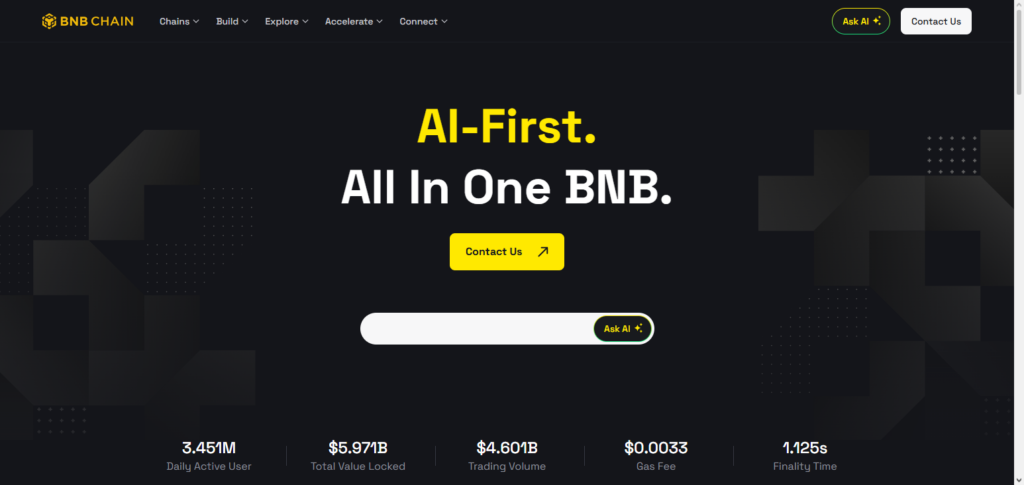
It now runs the BNB Chain and supports Web3 apps, NFT marketplaces, and decentralized finance platforms. BNB is frequently brought up in conversations regarding the Most Searched Crypto for 2026 due to its robust usage across a variety of cryptocurrency businesses.
The cryptocurrency is utilized for participation in token launches, staking, transaction fees, and governance. Strong exchange integration and ongoing ecosystem expansion have contributed to its continued appeal to cryptocurrency users worldwide.
BNB Features, Pros & Cons
Key Features
- The ecosystem’s native token
- Used for receiving trading fee discounts
- Powers BNB Chain
- Smart contracts are supported
- Has a token burn mechanism
Advantages
- Strong backing from an exchange
- Utility tokens have multiple use cases
- Transaction costs are low
- High liquidity
- Token burns are frequent, increasing value
Disadvantages
- There are concerns about centralization
- There are risks of regulation
- Success of BNB is dependent on Binance
- The level of decentralization is limited
- There are competing networks
5. XRP
A cryptocurrency called XRP was created to make international payments quick and affordable. It runs on the XRP Ledger, a decentralized blockchain designed for financial transactions, and was developed by Ripple Labs.
Compared to conventional payment methods, XRP is much faster since it enables banks and other financial organizations to send money anywhere in the world in a matter of seconds.
Due to its potential significance in cross-border finance, XRP continues to be extremely noticeable in the midst of speculations about the Most Searched Crypto for 2026.
Even after encountering regulatory obstacles in the past, XRP still enjoys significant institutional and community support. It remains relevant in the changing bitcoin industry thanks to its quickness, effectiveness, and emphasis on financial services.
XRP Features, Pros & Cons
Key Features
- Payments are designed to be fast
- Built with the RippleNet integration
- Transaction fees are low
- Settlement is fast
- Transactions are not mined (there is a pre-mined supply)
Advantages
- Transactions are very fast
- Fees are extremely low
- There are strong partnerships with banks
- The network is scalable to accommodate global payments
- The network is energy efficient
Disadvantages
- There is regulation
- There are concerns about centralization
- There is a limited use of smart contracts
- The network depends on Ripple Labs
- The market is uncertain
6. Cardano
Cardano is a third-generation blockchain technology that prioritizes sustainability, scalability, and security. Charles Hoskinson, a co-founder of Ethereum, founded it. Cardano has a research-driven methodology, developing its technology through academic studies that are subject to peer review prior to deployment.

Ouroboros, a safe and energy-efficient proof-of-stake consensus method, powers the network. Cardano frequently comes up in discussions regarding the Most Searched Crypto for 2026 due to its long-term development strategy and robust community support.
The platform is a viable infrastructure for upcoming decentralized technologies and financial solutions because it enables smart contracts, decentralized applications, and blockchain-based identity systems.
Cardano Features, Pros & Cons
Key Features
- Blockchain is Proof of Stake
- Research-oriented evolution
- Segmented structure
- Endorsement of smart contracts
- Emphasis on eco-friendliness
Pros
- High level of energy efficiency
- Strong foundation on research
- Design is Secure, Scalable
- Ecosystem is on the rise
- Focused on the future
Cons
- Development is slow
- dApp usage is low
- Less used than Ethereum
- Architecture is complex
- Competing in the market
7. Dogecoin
In 2013, Billy Markus and Jackson Palmer founded Dogecoin as a meme cryptocurrency. Dogecoin was first designed as a lighthearted digital currency for online tipping and minor transactions, inspired by the well-known Shiba Inu meme.
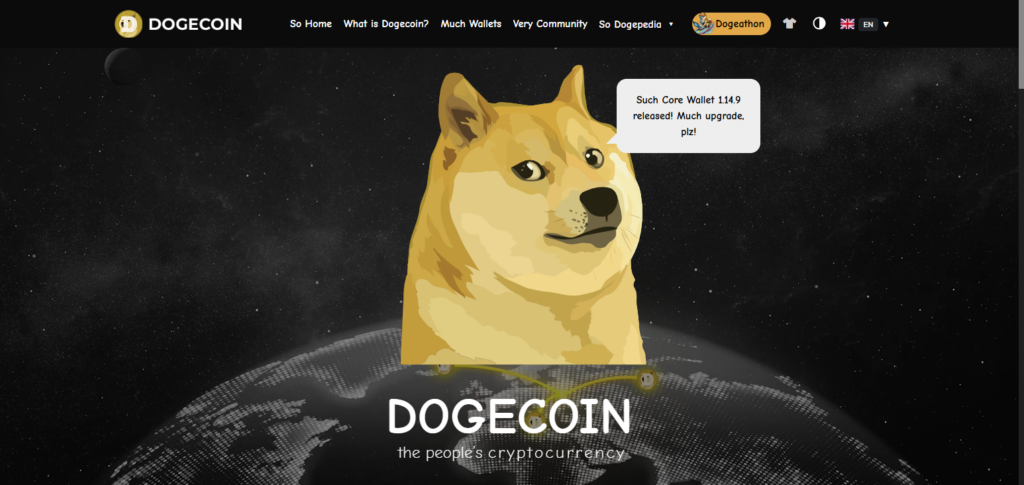
However, it became incredibly successful as a result of social media exposure and strong community support. Dogecoin frequently comes up while talking about the Most Searched Crypto for 2026 because of its popularity and support from well-known people like Elon Musk.
Despite its comical beginnings, Dogecoin has grown to be a popular cryptocurrency that is accepted by a number of online sites, demonstrating how community power may affect the cryptocurrency market.
Dogecoin Features, Pros & Cons
Key Features
- Cryptocurrency derived from memes
- Based on Litecoin code
- Inflationary supply
- Quick transactions
- Extensive community support
Pros
- Minimal transaction fees
- Extensive community support
- Highly popular
- Beginner friendly
- Celebrity endorsements
Cons
- Supply is inflationary
- Usage in the real world is limited
- Price is easily manipulated
- Based on hype
- Technical improvements are lacking
8. TRON
A blockchain technology called TRON aims to provide a decentralized internet where content producers may directly publish and profit from their work. Justin Sun started it in 2017. Applications like gaming, entertainment platforms, and decentralized banking can benefit from TRON’s emphasis on high transaction throughput and cheap costs.
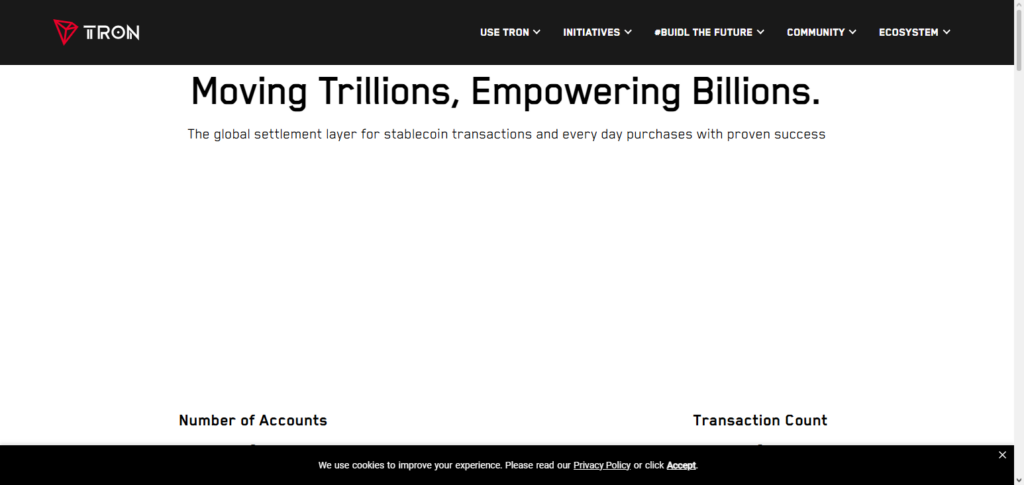
Because of its extensive ecosystem and widespread use for stablecoin transfers, especially USDT, TRON is frequently brought up in conversations on the Most Searched Crypto for 2026.
Developers can create scalable services thanks to the network’s support for decentralized apps and smart contracts. Its popularity among users and developers has been sustained by its robust presence in the global crypto ecosystem.
TRON Features, Pros & Cons
Key Features
- Focused on sharing content
- High transaction speed
- Low fees
- Delegated Proof of Stake
- Strong usage of stable coins
Pros
- High speed and scalability
- Low-cost transactions
- Active ecosystem
- Developed DeFi ecosystem
- High activity of USDT
Cons
- Centralization
- Bad reputation
- Little Innovation
- High reliance on the founder
- Competing with larger chains
9. Chainlink
A decentralized oracle network called Chainlink was created to link blockchain smart contracts to actual data sources. It is an essential part of the decentralized finance ecosystem and was created by Chainlink Labs.
Chainlink safely transmits external data to blockchains, such as market prices, weather information, or sports results, which are frequently required by smart contracts. Chainlink stands out in conversations regarding the Most Searched Crypto for 2026 since it offers crucial infrastructure that many DeFi platforms rely on.
Because of its dependable oracle technology, smart contracts can communicate with real-world systems, increasing the usefulness and potency of blockchain applications for corporate solutions, financial services, insurance, and gaming.
Chainlink Features, Pros & Cons
Key Features
- Decentralized oracle network
- Offers smart contracts access to external resources
- Works across multiple blockchains
- Offers secure data streams
- Used by multiple decentralized applications
Pros
- Innovative use case
- Valuable collaborations
- Vital for DeFi expansion
- Trustworthy data services
- Services are in great need
Cons
- Reliance on use
- Technological sophistication
- market fluctuations
- Rivalry with other oracle systems
- Few users interfaces directly
10. Toncoin
The Open Network, a decentralized blockchain ecosystem initially created by the Telegram team, has its own cryptocurrency called Toncoin. Even if the initial initiative developed on its own, the network still has close ties to the Telegram community.
Fast transactions, decentralized storage, Web3 services, and blockchain-based apps integrated into chat networks are all supported by Toncoin. Due to its access to millions of Telegram users globally, Toncoin has garnered a lot of interest during discussions regarding the Most Searched Crypto for 2026.`
It is positioned as a significant blockchain project in the quickly growing Web3 and decentralized application environment thanks to its emphasis on scalability and smooth user integration.
Toncoin Features, Pros & Cons
Key Features
- Integrated with Telegram
- Scalable
- Quick transactions
- Proof-of-Stake
- Simple to use
Pros
- Good integration with Telegram
- Quick transactions
- Adoption increasing
- Fees are low
- Easy to use
Cons
- Uncertain regulations
- Ecosystem is still evolving
- Needs Telegram to grow
- Centralized
- Competes with big blockchains
Conclusion
The search for top cryptocurrencies showcases elements of creativity, usefulness, and market power. Leading cryptocurrencies gain the most attention, followed by their tight-knit communities, everyday applications, and constant innovation. Other popular cryptocurrencies are those associated with emerging trends in DeFi, AI, and the tokenization of real-world assets.
Searches are driven by market sentiment, regulation, and tech breakthroughs. As the industry develops, users are mostly attracted towards cryptocurrencies offering transparency, scalability, and sustainable value. Search trends indicate the depth of interest from users and the likelihood of the project’s growth.
FAQ
What are the most searched cryptocurrencies?
The most searched cryptocurrencies are typically popular and high-market-cap coins like Bitcoin, Ethereum, and trending altcoins that gain attention due to news, innovation, or price movements. These coins often dominate search engines due to their influence and adoption.
Why do certain cryptocurrencies trend in searches?
Cryptocurrencies trend due to factors such as price volatility, major announcements, partnerships, regulatory news, or technological upgrades. Social media hype and investor sentiment also play a significant role in increasing search interest.
Are most searched cryptocurrencies the best to invest in?
Not always. High search volume indicates popularity, not necessarily strong fundamentals. Investors should conduct thorough research, including market analysis and project utility, before making investment decisions.
How can I track the most searched cryptocurrencies?
You can track trending cryptocurrencies using tools like Google Trends, crypto market platforms, and analytics websites that display search volume, social mentions, and trading activity.