

In this article, I am going to discuss what I consider to be the Best Crypto Fiat-To-Crypto Banking Partners, explaining which platforms and banks integrate traditional fiat banking with cryptocurrency services and how they do so.
While some offer easy-to-use applications, others provide institutional-level services. These partners facilitate secure crypto purchases, trades, and custody. Knowing these options is invaluable for digital asset management, whether you’re just starting or running a company.
Key Poinst & Best Crypto Fiat-To -Crypto Banking Partners
| Banking Partner | Key Point |
|---|---|
| Revolut | Supports 30+ cryptocurrencies with seamless fiat integration |
| Coinbase Bank Accounts | Unified fiat and crypto management with lending & staking |
| Silvergate Bank | Fast transactions and strong support for crypto businesses |
| Wirex | Crypto-linked debit card for global spending |
| JPMorgan Chase | Institutional crypto support with JPM Coin for cross-border payments |
| Bank Frick | European leader offering regulated crypto services |
| Fidor Bank | Early crypto adopter with strong fintech partnerships |
| SEBA Bank | Swiss-based fully regulated crypto banking solutions |
| Sygnum Bank | Licensed digital asset bank with institutional-grade services |
| Signature Bank | Known for Signet payment platform enabling real-time crypto settlements |
10 Best Crypto Fiat-to-Crypto Banking Partners
1. Revolut
Revolut is a digital banking app that integrates cryptocurrency trading functionality within the platform. Users can buy, sell, and hold multiple cryptocurrencies from their banking app.
Revolut allows immediate conversion from fiat to crypto. If a user wants to buy a coffee for example, they can make that purchase in crypto after the instant conversion.


All features within the app provide users a budgeting capability, expense analytics, and allow global crypto spending.
Revolut is one of the most flexible fiat-crypto banking options and has card payments and global crypto spending.
Features Revolut
- Holds a range of crypto assets
- Instant transfers to and from crypto to fiat
- Crypto debit cards to spend anywhere in the world
- In-app spending and budgeting tools
| Pros | Cons |
|---|---|
| Instant crypto-fiat conversion | Limited crypto selection compared to dedicated exchanges |
| Global spending and card integration | Fees on crypto trading can be high for frequent users |
| User-friendly app with budgeting tools | Not a full-fledged bank in some regions |
| Strong regulatory compliance | Some advanced crypto features unavailable |
2. Coinbase Bank Accounts
Coinbase banking solutions allow crypto users to freely make deposits into Coinbase and to sell their crypto instantly. Users can transfer the crypto they purchase instantly to other Coinbase accounts.
Coinbase is highly regulated and participates in the FDIC coverage for accounts that hold fiat currency. Users’ cryptocurrencies are held within Coinbase are protected by industry leading access protocols, crypto cold storage, and other risk management best practices.
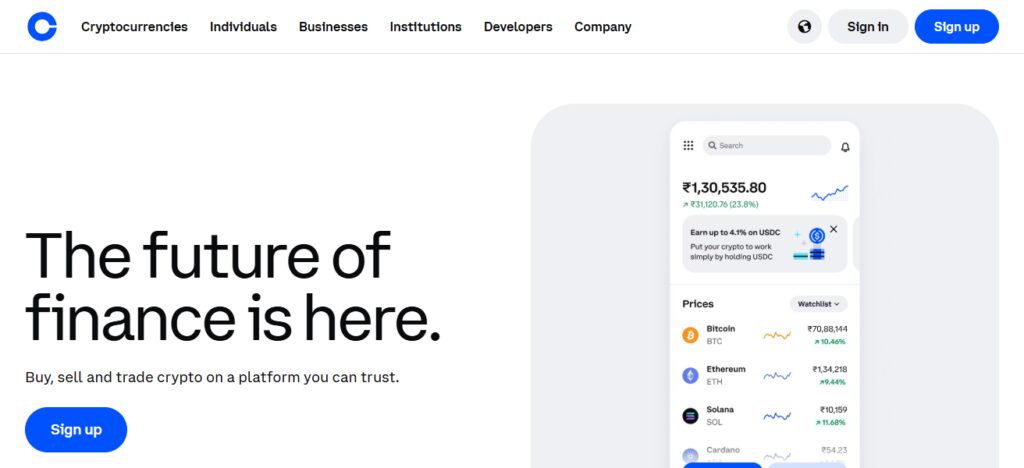
Coinbase extends banking services to commercial accounts, allowing businesses to gain liquidity in cryptocurrencies and seamlessly manage their fiat bank accounts.
Coinbase is most efficient at enabling users to transact in both fiat and cryptocurrency, and serves businesses well.
Features Coinbase Bank Accounts
- Provides banking for businesses to manage crypto
- FDIC insurance on your fiat balances
- Allows seamless exchange from fiat to crypto
- Cold storage for your assets and 2FA for your account
| Pros | Cons |
| FDIC-insured fiat balances | Crypto custody fees can be high |
| Seamless fiat-crypto transfers | Limited interest-earning options for crypto |
| Strong security with 2FA and cold storage | Primarily U.S.-focused banking features |
| Business banking solutions | Customer service can be slow during high traffic |
3. Silvergate Bank
Silvergate has developed a niche for servicing specifically digital currency businesses such as exchanges, institutional investors, and crypto startups.
Silvergate pioneered an electronic payment network known as the Silvergate Exchange Network (SEN), which allows customers to electronically transfer dollars in real-time to and from crypto exchanges.
Silvergate has earned a stellar reputation for compliance and transparency and for its deep understanding of the crypto market. Silvergate services include lending, deposit accounts, and payment processing for crypto businesses.
As the only U.S. bank that solely focuses on the intersection of traditional banking and digital assets, Silvergate Bank has become an invaluable resource for crypto businesses and individuals looking for a trustworthy fiat-to-crypto banking partner.
Features Silvergate Bank
- Instant transfers in USD through SEN
- Banking for crypto focused businesses and exchanges
- Provides banking services in deposit accounts, integrated payments and loans
- Excellent clearances in terms of regulation
| Pros | Cons |
| Real-time USD transfers via SEN | Primarily focused on institutional clients |
| Specialized in crypto industry banking | Not ideal for casual retail users |
| Strong regulatory compliance | Limited international coverage |
| Offers lending and deposit services | Higher banking minimums for accounts |
4. Wirex
Wirex provides its customers with accounts that have banking capabilities, support a variety of fiat currencies, and provides access to bitcoin and other cryptocurrencies to spend.
As a global crypto bank, Wirex cards with which customers can derive cryptocurrencies as spend crypto assets and accrue crypto.
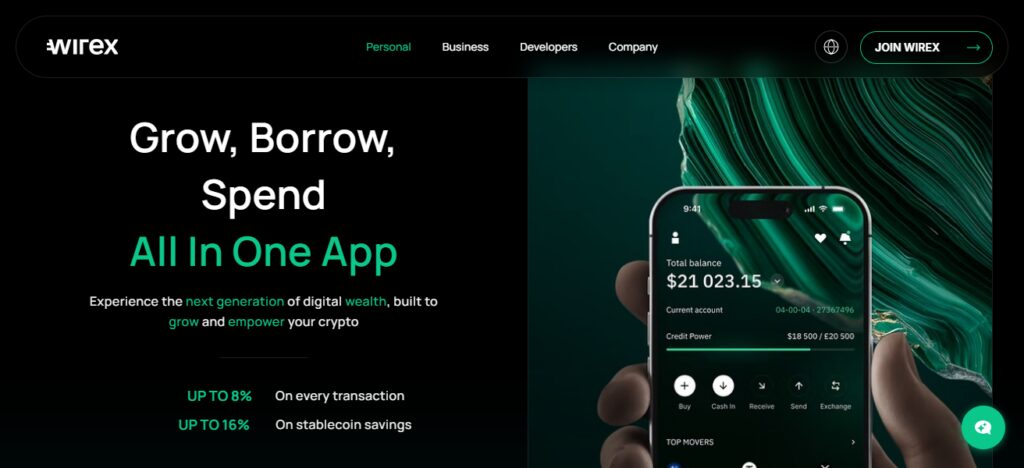
Wirex supports restrictive jurisdictions and is a regulated bank, counterpart to US banking systems. Wirex provides a mobile application, to manage fiat and crypto, with budget and spending analytics, and exchange.
All crypto is maintained access, and spendable with a layer of multi-signature security. For users wishing for a real-time connection to crypto assets, Wirex is the choice.
Features Wirex
- Holds multiple fiat and crypto in one account
- Instantly exchange crypto for fiat and vice versa
- Games and rebates for crypto spending
- Provides in-app expense, budget management, analytics
| Pros | Cons |
| Multi-currency crypto-fiat accounts | Limited high-value banking services |
| Crypto rewards for transactions | Regulatory availability varies by country |
| User-friendly app with analytics | Some fees on card transactions |
| Global card acceptance | Not suited for large institutional operations |
5. JPMorgan Chase
JPMorgan Chase specializes in the U.S. banking sector, and offers services to the crypto domain, where they offer services to institutional and retail customers of high value.
The bank offers services such as digital asset custody, trading and advisory services, and traditional banking services.
The bank’s experience in the corrido of risk, regulation, and financial structure helps ensure the safe management of traditional and crypto currencies.

The bank continues to implement crypto currencies in their services through JPM coins and others, facilitating advanced and efficient crypto banking services.
JPMorgan Chase also serves as a banking partner for customers who wish to incorporate services with crypto currencies along with reliable banking services in traditional currencies.
Features JPMorgan Chase
- Custody and trading for large institutions
- Payments through JPM Coin and other blockchain solutions
- Intense risk and compliance management
- Crypto services overlay on traditional banking services
| Pros | Cons |
| Trusted, large-scale banking infrastructure | Crypto services mostly for institutional clients |
| Offers custody and trading solutions | Not ideal for casual retail crypto users |
| Strong risk management | Limited cryptocurrency offerings to select assets |
| Global financial reach | High account minimums for services |
6. Bank Frick
Bank Frick provides pioneering services in banking and crypto integrations. They provide customers with fiat accounts that can trade, custody and tokenize crypto.
Bank Frick is a trustworthy partner for both flexible and institutional clients; clients can move fiat and cryptocurrencies back and forth and receive banking services that include profit and capital management.

They partner modern banking with cryptocurrency. This model, combined with security and compliance, makes Bank Frick a trusted partner in the European crypto-asset economy. Based in Liechtenstein, Bank Frick integrates financial services with crypto as no other bank does.
Features Bank Frick
- Holds fiat to allow trading of crypto in your account
- Secure banking practices and regulation anywhere close to optimal
- Provides services in loans and asset management
- Regulatory support of crypto through tokenization and digital asset services
| Pros | Cons |
| Combines banking with crypto trading | Mainly focused on European clients |
| Regulatory compliance and security | Less accessible for small retail investors |
| Supports lending and asset management | Fees can be higher for advanced crypto services |
| Tokenization services available | Not widely known outside crypto circles |
7. Fidor Bank
Fidor Bank specializes in strategically partner with fintech and blockchain startups to offer crypto-friendly banking solutions.
Users are able to access deposits, and withdrawals, as well as crypto transactions. Fidor Bank is known for its innovative banking solutions which include lending and payments.
Due to its partnerships with cryptocurrency platforms, users are able to access crypto and fiat through Fidor seamlessly.

Fidor is also known for their communtity banking which allows users to communicate with each other and share their financial knowledge and experiences.
Targeting both companies and individual clients, Fidor Bank combines regular banking with cryptocurrency in a very innovative way.
Features Fidor Bank
- Friendly services for crypto banking in Fintech and Blockchain
- Accounts with support for fiat and crypto
- Lending and payment innovations
- Bank insights driven from the community
| Pros | Cons |
| Crypto-friendly accounts | Limited international availability |
| Supports fintech and blockchain startups | Small branch network |
| Innovative banking products | Mainly digital operations |
| Community-driven banking insights | Not suitable for high-value institutional needs |
8. SEBA Bank
Based in Switzerland, SEBA Bank provides a fully fledged banking service offering a versatile banking platform for all digital and fiat currencies.
With a fully regulated banking license in Switzerland, it does cryptocurrency custody, trading, lending, and investment.
Clients can move seamlessly between fiat and crypto, and use all the standard features of a bank. SEBA services mainly institutions and UHNWIs and focuses on security, compliance, and innovation.

SEBA’s infrastructure enables tokenization, digital asset management, and crypto investment services. Switzerland’s banking systems and practices are among the best in the world, so it is no wonder
SEBA Bank is a trusted banking partner for many looking to do large and complex crypto transactions in a compliant and regulated banking framework.
Features SEBA Bank
- Banking services via fiat and crypto integrated
- Investment, Lending, Trading, and Custody services
- Security and regulatory compliance in Switzerland
- For clients that are Institutions and High Net Worth
| Pros | Cons |
| Fully regulated Swiss bank | Mainly targets high-net-worth clients |
| Integrated fiat and crypto services | Not cost-effective for small investors |
| Offers custody, trading, lending | Requires compliance with strict KYC processes |
| Institutional and retail support | Less accessible to global retail clients |
9. Sygnum Bank
Sygnum Bank, which is a digital asset bank located in Switzerland, renders a variety of services that are a bridge between traditional finance and cryptocurrency.
Customers of the bank are able to hold, trade, and invest in cryptocurrency as well as fiat assets, and Sygnum offers regulated custody, compliant and secure lending, and asset management services.
Customers can convert between fiat currencies and cryptocurrencies seamlessly, and the bank supports transactions across borders and investments across borders.
With Sygnum’s expertise in crypto and their banking services, they are one of the most reputable banks that are integrated crypto-banking.
Features Sygnum Bank
- Comprehensive Banking for digital assets and fiat
- Structured crypto products, and Tokenization
- Lending, management of assets, and Custody under the regulations
- Provision of services for the retail and institutional clients
| Pros | Cons |
| Swiss-based digital asset bank | Focused on institutional and affluent clients |
| Fiat and crypto integration | High fees for small-scale users |
| Offers tokenization and structured products | Limited branch network |
| Strong compliance and security | Not ideal for casual traders |
10. Signature Bank
Located in New York, Signature Bank is known for their crypto friendly banking services, specifically tailored to their institutional clients.
Signature Bank offers digital platform compatible deposit accounts and lending as well as payment processing services.
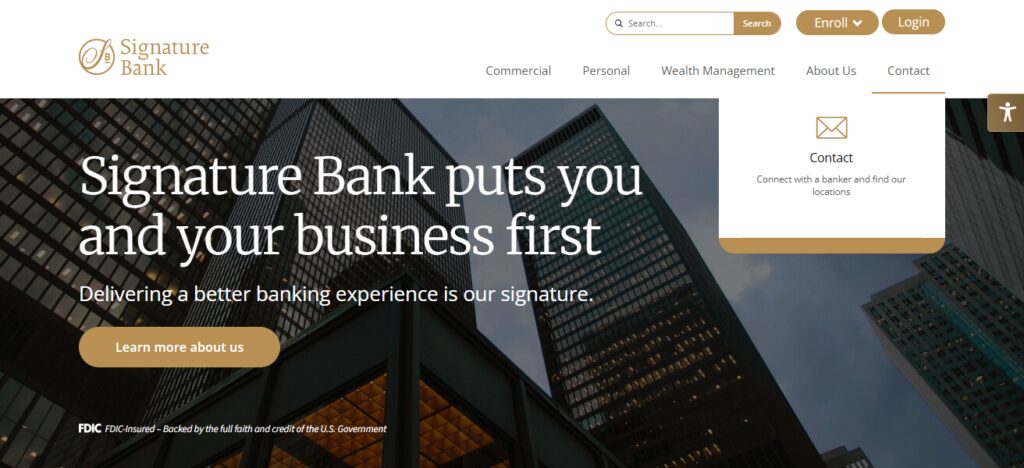
Signature Bank operates a real time payment network for crypto firms which allows for seamless fiat currency transfers. With both traditional and digital asset transactions, Signature Bank is a versatile partner for most businesses and investors.
By combining the traditional banking framework with crypto, Signature Bank can offer efficient payment systems for crypto to fiat transactions in the fast growing digital finance systems.
Features Signature Bank
- Payments network in real time for crypto companies
- Banking services for deposit, lending and payments
- Banking services embracing crypto for institutions
- Fusion of assets in digital and traditional services
| Pros | Cons |
| Real-time payments network for crypto | Mainly serves institutional clients |
| Crypto-friendly banking services | Limited retail accessibility |
| Secure deposit and lending services | Higher minimum balance requirements |
| Integrates traditional and digital assets | Primarily U.S.-based operations |
How To Choose Best Crypto Fiat-to-Crypto Banking Partners
- Compliance with Regulations – Verify that the bank adheres to strong regulations and holds licenses with financial authorities for both fiat and crypto services.
- Security Measures – Seek strong security, particularly with regards to FDIC coverage on fiat, cold storage on crypto, and the bank uses multi-factor authentication.
- Convenience of Fiat-to-Crypto – Seek banks that allow you to convert to and from crypto and fiat with no friction.
- Costs – Always check to make sure that there are no hidden and exorbitant costs for transactions, conversions, or account maintenance.
- Worldwide Availability – Confirm that the bank services your region and that they provide services in multiple currencies.
- Service to the Client – Support that is available and responsive is necessary for support to be able to provide assistance with issues that arise.
- Other Services – Other services available are always a plus and may include crypto rewards or crypto lending, or other investment vehicles.
Cocnlsuion
FAQ
What is a fiat-to-crypto banking partner?
A bank or financial platform that allows seamless conversion and management of both fiat currencies and cryptocurrencies.
Are these banks safe for crypto transactions?
Yes, most operate under strict regulations and offer security measures like FDIC insurance, cold storage, and multi-factor authentication.
Can I use these banks globally?
Availability varies; some banks like Revolut and Wirex offer global access, while others are region-specific.
Are there fees for crypto-fiat conversions?
Yes, fees differ by bank and transaction type; always check the fee structure before use.
Do these banks support crypto rewards or interest?
Some, like Wirex and Revolut, offer crypto rewards and interest programs for transactions or holdings.