

Iran Uses Crypto to Sell Guns Internationally
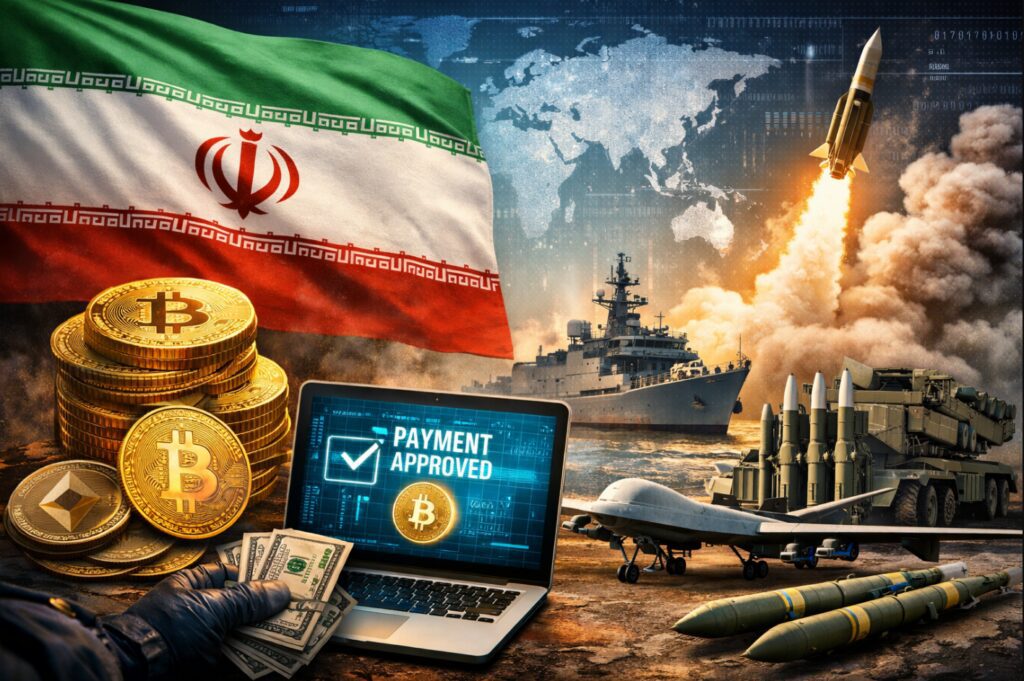
Iran has begun to use digital currencies to sell its weapons abroad. This is a new approach to the country’s use of state trade. Using crypto is a new option for trade through Iran’s official defense export channels. Other options include Iranian rials or barter trade. This change shows how digital currencies are becoming more accepted in economies under sanctions.
With the Iranian Mindex company, which is the official defense export center for Iran’s weapons, crypto can be ied to finalize export relations for payment. Mindex is known for its export of military equipment, such as ballistic missiles, drones, warships, and air defense systems, and he is known to have trade relations with 35 of the world’s countries. Mindex also has a history of regulating the export trade of military equipment.
The Financial Times used archived data to confirm the use of crypto option by Mindex. Data shows the company’s servers are on Iranian cloud service which is also limited by USA for being close to American government agencies. Even with these restrictions, the Iranian platform is actively used to trade military equipment.
Mindex has a system with a chatbot that helps foreign buyers understand how to use the site. It also explains how to deliver, legal compliance, and how to pay, even with cryptocurrencies. It also has a section on non-compliance with sanctions and explains that contracts can still be executed regardless of international payment restrictions.

Mindex doesn’t publish prices, but buyers can have payment terms that are compatible with their country, and with the appropriate security clearance, buyers can do on-site inspections in Iran.
Purchases of Iranian arms with cryptocurrencies are a direct result of the ability of digital currencies to allow countries that are under sanctions to avoid traditional payment methods, which are usually dictated by controlling sanctions from the West. U.S. officials, in the case of Iran, have used the same strategy as they have used with Russia to avoid sanctions. Iran has also been using cryptocurrencies with a great deal of interest in oil exports.
U.S. authorities have been interested in large transactions that are conducted outside of traditional banking systems using cryptocurrencies. This also includes oil exports, in addition to arms sales, from Iran. Individuals tied to Iran’s Revolutionary Guards were sanctioned by the U.S. Treasury in September for making state-level transactions with cryptocurrencies through a shadow banking system.
While most of the world continues to impose sanctions against Iran, the country adopting new digital payment methods for its defense exports demonstrates the ability of increasingly hi-tech methods to operate within the constraints of modern digital payment systems, indicating the greater potential for the use of commercial cryptocurrency for international trade circumventing international banking restrictions.
To conclude, the use of commercial cryptocurrency by Iran integrated within Mindex’s export system for defense exports represents an important breakthrough for state trading systems operating at the crossroads of modern technology, international sanctions, and defense trade.