I’ll go over Binance Margin Trading Simplified in this post to help newcomers grasp how it operates.
Along with detailed instructions, examples, and crucial advice, you will discover important concepts like leverage, margin, and borrowed capital. By the conclusion, you’ll understand how to maximize Binance’s margin trading capabilities, control risks, and trade safely.
What is Margin Trading?
Through the use of margin trading, investors can trade larger positions than their real account balance permits by borrowing money from a broker or exchange, such as Binance. Traders can maximize potential gains by employing leverage, but doing so also raises risk.
Both long positions—bets that the price will rise—and short positions—bets that the price will fall—are made possible by margin trading in the cryptocurrency space.

Leverage, collateral, interest on borrowed money, and margin calls—which happen when losses lower collateral below necessary levels—are important ideas. Although it has a greater potential for profit, liquidation can be avoided with smart risk management.
Binance Margin Trading Simplified Steps By Steps

Step 1: Creating and Verifying a Binance Account
- Create an account on Binance and do the identity verification (KYC) steps.
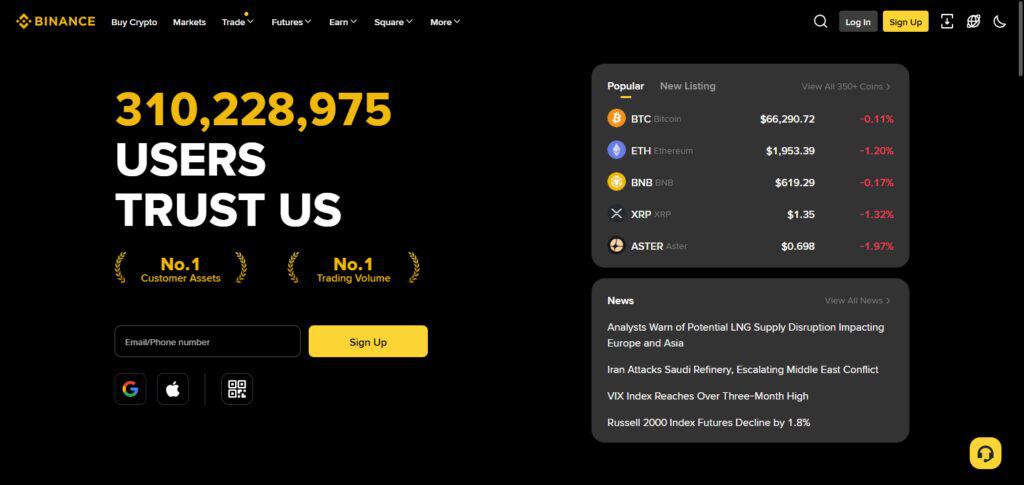
- Go to account settings, and make sure margin trading is activated.
Step 2: Margin Wallet Funds Transfer
- Go to Wallet → Margin.
- Move funds from the Spot Wallet to the Margin Wallet.
- This will serve as your collateral for borrowing.
Step 3: Selecting a Type of Margin
- Cross Margin: All of the margin funds serve as collateral on all the positions.
- Isolated Margin: Only the funds in the margin position are at risk.
- Most beginners use isolated margin to reduce the risk of losses.
Step 4: Choosing Your Leverage
- Depending on the coin, Binance gives the ability to use 10x leverage, or even more.
- Example: For 5x leverage, you are allowed to trade 5 times more than what you deposited.
- Tip: High leverage is more likely to lead to liquidation.
Step 5: Funding Yourself
- Based on your collateral and chosen leverage you may borrow the requisite crypto.
- Binance will indicate interest rates and the conditions for repayment.
Step 6: Place a Trade
- Determine your position:
- Long: Buy when you think the price will increase.
- Short: Sell when you think the price will decrease.
- Specify the amount, leverage, and type of order (market/limit).
Step 7: Manage Your Trade
- Watch the margin level and liquidation price closely.
- Manage your risk using stop-loss and take-profit orders.
Step 8: Trade Closure and Repayment
- Close your position when you are ready to either take a profit or cut a loss.
- Repay the borrowed amount along with the interest.
- Your profit will equal the remaining amount.
Step 9: Tips for Managing Risk
- Don’t use money you cannot afford to lose.
- Use low leverage when starting out until you are confident.
- Identify successful and unsuccessful trades to improve your strategy.
Advantages of Binance Margin Trading
Bursting Profit Potential – Margin trading employs leverage so you may trade larger amounts creating the possibilities for larger returns.
Profits From Declines – Your account may profit from declines in the market by opening short positive positions. This is not available in individuals spot trades.
Control Over Leverage – Different levels of maximum risk control are provided by margin trading through different levels of adjustable leverage.
Increased Trading Strategies – Margin trading is responsible for a greater number of advanced trading strategies like arbirtage.
Borrowed Capital – Margin allows you to trade truly free for the first time.
Margin Trading Anytime – Instant borrowing for trade on a global scale at anytime in the day.
Trading on Your Time – Integrated risk management as in stop loss, take profit, and liquidation alert are provided by Binance for managing risk.
How Binance Margin Trading Works
Fund Your Margin Wallet
Move money from your Spot Wallet to your Margin to use money as a reference point.
Choose Your Margin Type:
- Cross Margin: All of your funds will work as a reference point as you open each position.
- Isolated Margin: Only the trade money you choose will be at stake, so the losses will be limited.
Set Your Leverage
Choose how much you want to extend your trade, for example you can choose 3x, 5x, and 10x. The more leverage, the higher the potential profit and/or loss.
Borrow Money
You can borrow extra funds from Binance based on your reference point and your chosen leverage. Binance will charge interest on these funds.
Open a Trade:
- Long: Buy if you think the asset is going to increase.
- Short: Sell if you think the asset is going to decrease.
Monitor Your Margin level
Keep track of your margin level to avoid unnecessary margin calls and liquidations.
Close Trade and Loan Repayment
Close the position whenever you want, then repay the loan and interest, and you will keep the profit.
Risk Management
You can use the stop loss and take profit features to protect your reference point, and make sure you do not over-leverage.
Key Terms You Must Know
Margin – The margin is the portion of your funds you own that you use as collateral to fund a leveraged position.
Leverage – Refers to the multiplication of funds you can use as collateral to place your trade. With 5x leverage, you can execute a trade equal to 5 times your deposit. This includes both potential profits and potential losses.
Borrowed Funds – Refers to the crypto or fiat you borrow from Binance in order to increase your trading position. This amount must be paid back with a fee.
Interest Rate – The rate of the fee charged for borrowing funds for the purposes of margin trading. This rate fluctuates depending on the specific coin but is compounded over a period of time.
Long Position – Refers to the act of buying an asset with the expectation that the asset’s price will increase.
Short Position – Refers to the act of selling an asset with the expectation that the asset’s price will decrease.
Margin Call – This is a notice that occurs when you collateral is getting low and you run the risk of getting liquidated if you do not put in more money.
Liquidation – The act of automatically closing your position, when your margin is low enough that closing position will decrease your financial losses.
Profit & Loss (P/L) – The gain or loss that is realized when a margin trade is closed.
Risks and Safety Measures
Risks of Binance Margin Trading
Risk of High Volatility – Changes in the market are frequent and reach far the more money you have.
Risk of Liquidation – If your margin is too low, Binance will automatically close your position in order to prevent more losses.
Risk of Leverage – Over leveraging can result in you losing your collateral in a short amount of time.
Cost of Interest – If you are making a lot of trades, the time will cause your net profits to decrease as you pay more in interest.
Emotional Trading – Trading in panic can cause the exact outcome that you fear.
Ways to Manage Risk and Protect your Funds
Low Leverage – To manage risk, use low leverage, like 2 to 5.
Use Stop-Loss and Take-Profit** – Profit can be secured and losses can be avoided via the automation of trade closures.
Regularly Check Margin Levels – Liquidation and margin calls can be avoided.
Use Small Amounts – Use money you can afford to lose.
Educate Yourself – Understanding the profit and loss system and the trends are vital.6. Diversify Trades – Don’t invest all your money into one trade or one coin.
Tips for Beginners
Practice with small amounts of capital
Each trading pair has its own rules and margin mechanics. Use small amounts of capital until you become familiar with margin trading mechanics.
Use low leverage
Keep your leverage between 2x – 5x until you are comfortable with taking profits as well as losses.
Do your homework
Analyze the market as much as you can. Research the crypto market, its trends, charts, and other relevant factors before you initiate a trade.
Use stop-loss and take-profit
Set limits on how much profit you want to leave on the table as well as how much of your capital you are willing to lose to protect your funds.
Use the test net
Test net provides you with the opportunity to trade and gain experiences without having the risk of losing real money.
Journal your trades
Updating your journal as you trade will allow you to see what mistakes you made as well as what your winning strategies are.
Do not trade emotionally
Trading is not a fantasy. Set a plan and do not let your emotions drive your decisions.
Pay back your loans on time
Interests are charged on the money you borrow, so the sooner you pay it back the less you will pay.
Do not concentrate your trades
Each trade has its own risks and it is better to keep the collateral spread out over multiple trades and coins.
Do not stop learning
For margin trading, the risks keep increasing, which is why you need to learn how to keep the risk to a minimum as well as learn how to increase the margin trading into a profit.
Common Mistakes to Avoid
Leveraging Too Much
If you take on too much leverage and the market moves against you, you could lose your collateral in seconds.
Ignoring Notifications and Warnings
If you decide not to respond to margin calls, your position will get liquidated automatically.
Lack of a Trading Plan
Trading on impulse without having the proper research and strategy will result in more risk.
Risk Management
If you do not implement a take profit or stop loss, you will lose more than you need to.
Trading While Emotions Are High
Fear and greed will result in poor trading decisions and strategy.
Trading With Money You Will Need
Only money that will not be needed in the future should be used in margin trading.
Move Trades, Don’t Track Them
If you do not review your trades, you will not improve.
Interest Cost
Money that is borrowed to trade will accumulate interest. If your trade is open too long, this will be a loss.
Not Trading More Than One Coin
In a trading environment, especially margin trading, risk is bound to a single market. Move your positions to multiple markets.
Knowledge
The rules of a platform like Binance, how leverage works, and market trends can be too costly to ignore.
Conclusion
An exciting chance to increase profits and experiment with sophisticated trading techniques, such going long or short on cryptocurrency, is provided by Binance margin trading. Higher dangers are associated with it, nevertheless, such as liquidation and increased losses.
Beginners can trade more safely by utilizing minimal leverage, establishing stop-loss/take-profit orders, practicing disciplined risk management, and comprehending important concepts like leverage, margin, and margin calls. Start small, keep learning, and only trade with money you can afford to lose. When used properly, margin trading is a potent instrument that may improve your cryptocurrency trading experience.
FAQ
What is Binance Margin Trading?
Margin trading lets you borrow funds from Binance to trade larger positions than your actual balance, using leverage to amplify potential profits.
What is leverage?
Leverage is a multiplier of your own funds. For example, 5x leverage allows you to trade five times your deposit, increasing both potential profits and risks.
How do I open a margin trade?
Fund your margin wallet, choose your margin type, select leverage, borrow funds, then open a long (buy) or short (sell) position.
What is a margin call?
A margin call occurs when your collateral falls below the required level. You must deposit more funds to avoid liquidation.