
In this article, I will explain Decentralized LLMs to Earn Passive Crypto, which is the first of its kind to use the innovative technology of blockchain to decentralize AI.
Participants can contribute to the model, data, or processing power, and in return, they will receive crypto as a reward for their participation in the creation of decentralized AI.
Combining AI and blockchain creates new possibilities for earning passive income, as seen in Bittensor, SingularityNET, and Numerai.
How To Choose Decentralized LLMs to Earn Passive Crypto
Tokenomics & Rewards – Analyze their reward system, distribution of tokens, and the potential to earn so you can identify platforms and systems that will provide you the opportunity to earn passively.

Network Activity & Demand – More active networks give rise to more potential passive income opportunities through the provision of AI models, data, or computable resources.
Participation Difficulty – Determine if you would require a deep understanding of AI or blockchain to use the platform, or if it is more than a beginner friendly platform.
Security & Privacy – Examine if blocks, data monopolization, and strong privacy encryption means you can safely participate without concerns.
Community & Ecosystem – Stagnant networks will never grow. Look for active developers, a solid community, and strong partnerships to provide you long-term stability.
Key Point & Decentralized LLMs to Earn Passive Crypto
| Platform | Key Point |
|---|---|
| Bittensor (TAO) | Incentivizes running AI models via blockchain, rewarding contributions with TAO tokens. |
| Fetch.ai | Autonomous agents perform tasks on a decentralized network to earn crypto rewards. |
| SingularityNET (AGIX) | Marketplace for AI services where developers monetize AI models using AGIX tokens. |
| Ocean Protocol | Enables sharing and monetizing data securely for AI training on a decentralized platform. |
| Gensyn | Decentralized compute network for AI models, allowing users to earn by providing resources. |
| Cortex (CTXC) | Allows smart contracts to incorporate AI models, rewarding model providers on-chain. |
| Ora Protocol | Connects AI models to decentralized data and compute for passive token rewards. |
| Numerai (NMR) | Crowdsourced hedge fund where data scientists stake NMR on predictive models to earn rewards. |
| DeepBrain Chain | Provides decentralized GPU computing for AI tasks, rewarding participants in DBC tokens. |
| Akash Network | Decentralized cloud computing platform for AI workloads, paying crypto for available compute power. |
1. Bittensor (TAO)
Bittensor is a decentralized ML network. Participants run their own machine learning models, and the models become part of the Bittensor ecosystem, where they can earn TAO tokens for validating, training, and improving machine learning models.

This network is designed for participants to collaborate with one another, and together deploy their intelligent networks to quickly distribute machine learning models across all participants.
Users can stake models, train models, or serve the network. Bittensor is one of the best examples of decentralized LLMs to earn passive crypto and also serves as one of the best networks of the open-source AI economy.
Bittensor (TAO) Features, Pros & Cons
Features
- AI training network based on blockchain
- TAO tokens as rewards
- Consensus layer and model validation
- Community driven and open source
- Scoring system for contributions is dynamic
Pros
- Growth of AI is encouraged
- Passive income from crypto for compute providers
- Rewards system is transparent, and passive income is provided
- Quality contributions are highly incentivized
- Community of researchers is highly active
Cons
- Requires technical knowledge and setup
- Earnings from crypto are impacted by volatile token values
- Competition is fierce for big rewards
- Network is resource intensive
- Network is still young
2. Fetch.ai
Fetch.ai is a decentralized network that incorporates multiple “agents” (like AIs, but more specific). Each agent can run separate tasks, and those tasks may be traded for different “currencies/values” in the network without needing a facilitator.

While participants can earn FET tokens for running an agent and contributing either computing power or data to the network.
Furthermore, it can run decentralized AI services, perform predictive analytics, and run a marketplace. Fetch.ai is another example of decentralized LLMs to earn passive crypto that incorporates AI with a blockchain, enabling passive crypto to be generated through the hosting of decentralized AI structures.
Fetch.ai Features, Pros & Cons
Features
- Autonomous economic agents
- Marketplace is decentralized
- AI and prediction tools offered planning
- Incentives from FET tokens
- Other chains offered interoperability
Pros
- Automation of real world tasks
- Rewards from passive income through hosting agents
- Quality ecosystem offered for developers
- Architecture of agents is scalable
- DeFi and IoT are positively impacted
Cons
- For beginners, highly complex
- Network activity results in income, and activity is required
- Management of agents must be active and intentional
- Risk from FET price fluctuations
- Traditional LLMs are focused on less
3. SingularityNET (AGIX)
On SingularityNET, developers and businesses can create, share, and monetize AI models. Users who host models or use AI services are paid in AGIX tokens. This platform creates an environment of collaboration where AI developers can add data, documents, and models at any level.
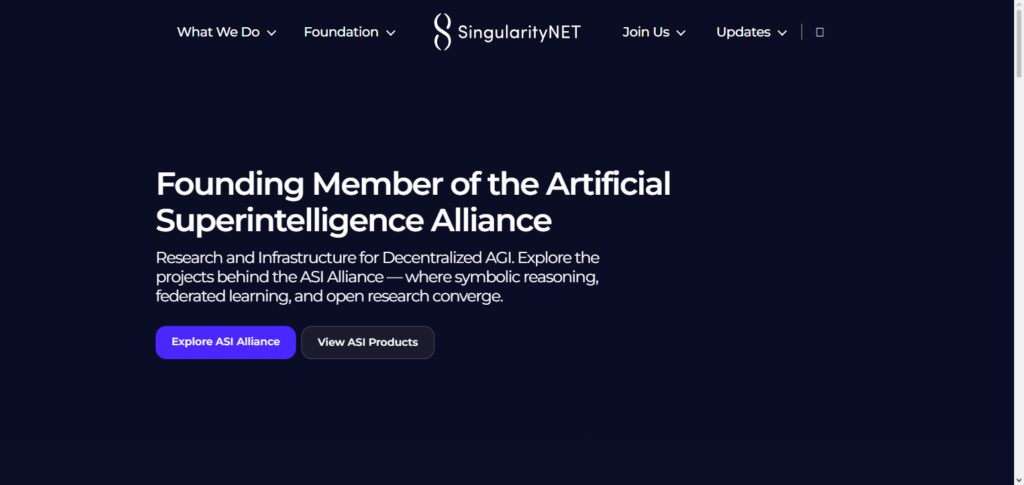
Members can stake tokens to provide and support AI services, enhancing their efficiency and providing passive rewards. SingularityNET exemplifies decentralized LLMs to earn passive crypto. Everyone can monetize their AI capabilities while providing services and models to the public.
SingularityNET (AGIX) Features, Pros & Cons
Features
- Marketplace for decentralized AI services
- Utility of AGIX tokens
- Developers can monetize models
- Integrated tools for AI discovery
- Options in governance of the network
Pros
- Publishing services allows for easy access to income
- Diverse range of AI models is encouraged
- Rewards from staking are increased
- Environment is friendly for developers
- Use cases for commercial AI are supported
Cons
- Competition in the market lowers income
- Marketing is required to gain consumers
- Earnings are affected by model performance
- Volatility of AGIX tokens
- Non-developers may find setup complex more than usual
4. Ocean Protocol
Ocean Protocol primarily focuses on the decentralized sharing and monetization of data, providing secure environments at the same time to train models of Artificial Intelligence (AI).
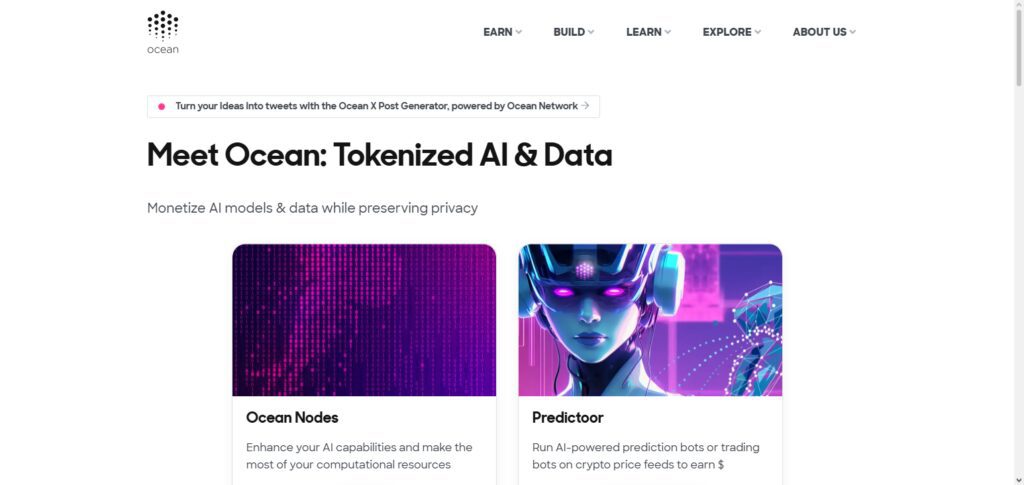
Participants of Ocean Protocol can share datasets, provide computation, create models of AI and are rewarded with OCEAN tokens from every activity. With privacy technology, the data owner maintains all control, while AI can be trained in a decentralized way.
This allows participants to earn money without doing much while enhancing the AI framework. Ocean Protocol exemplifies decentralized LLMs to earn passive crypto. Participants are rewarded while providing secure and decentralized data to train AI and enhance the framework.
Ocean Protocol Features, Pros & Cons
Features
- Marketplace for decentralized data
- Maintains user privacy
- Incentive structure based on OCEAN
- Process data without sharing it
- Monetization strategies for data providers
Pros
- Profits for your data that trains AI
- Data privacy maintained
- Data privacy maintained
- Data ecosystem potentially large
- Lots of institutional engagement
Cons
- Profits dependent on AI training data volume
- Token value uncertainty
- Data sets must be high quality
- Data ownership may allow for legal complications
- High technical knowledge required
5. Gensyn
Gensyn is a decentralized network of computing for AI developers to run and monetize machine learning models. AI developers run the models and contributors supply computing resources for the network to allocate to AI workloads, hence rewarding the contributors with cryptocurrency.
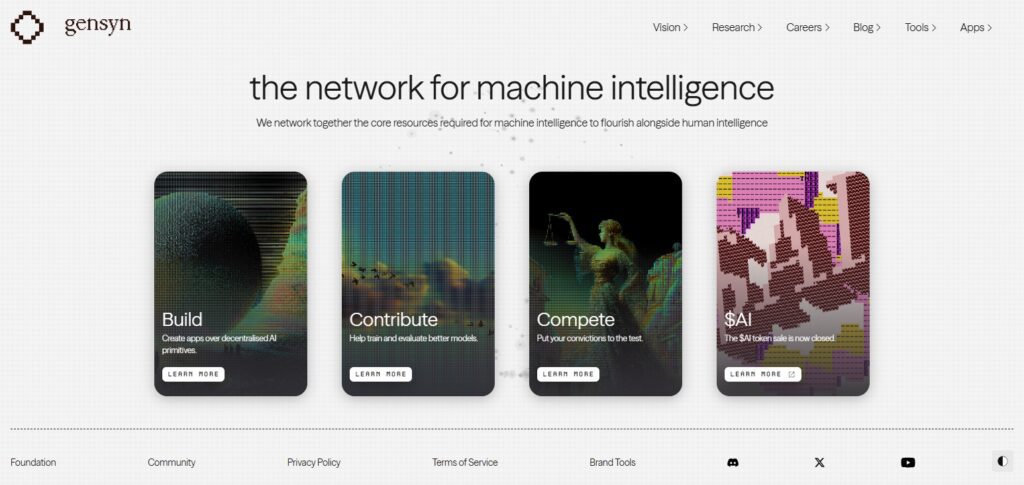
As a result, users earn and facilitate a decentralized AI network. Gensyn distributes AI workloads and therefore easy, scalable, and secure AI model execution is possible. Users can sustain earning through either their computing power or by training an AI model. It is a significant example of decentralized LLM to earn passive crypto where AI and blockchain technology reward contributors from all over the world.
Gensyn Features, Pros & Cons
Features
- Marketplace for decentralized computation
- Computing power can be shared for crypto
- AI job scheduling
- Compute pooling by community
- Resource allocation open
Pros
- Idle GPU/CPU power can be profit centers
- Many AI workloads benefitted
- Minimal effort required to earn passive income
- Flexible commitment to compute.
- Supports open market
Cons
- May be underdeveloped
- Network demand dictates payment
- Technical knowledge required for decent setup
- Token economics create confusion
- May be underdeveloped
6. Cortex (CTXC)
Cortex allows smart contracts to use AI models, thereby giving the contract the capacity to make selections. Host users of AI models, and those who validate computations receive CTXC tokens.

With Cortex, a DApp ( decentralized application) can be created to provide automated services and for that, developers upload their trained models to the blockchain where the model can be accessed.
By either staking or serving AI models, users earn crypto and this enhances the use of decentralized AI. Cortex is a good example of how decentralized LLM to earn passive crypto where smart contracts on a blockchain interface with AI to develop an explosive decentralized framework for productive use of AI.
Cortex (CTXC) Features, Pros & Cons
Features
- AI inference can be integrated with smart contracts
- Hosting and running models incentivized with CTXC
- Execution of models on chain
- SDK for Developers
- AI decentralized smart contracts
Pros
- Combine AI and blockchain for apps
- Incentives for models
- New DApps
- Transparency on chain with models
- Developer support increasing
Cons
- Less emphasis on training large LLMs
- Increased smart contract costs
- Increased technical difficulty
- Smaller compared to competitors
- Volatility on CTXC
7. Ora Protocol
Ora Protocol combines decentralized AI models with dispersed computing and data resources. Users can contribute AI models, computing power, or data and receive cryptocurrency rewards. Its structure facilitates the smooth flow of resources and promotes the use of AIs in decentralized fashion.
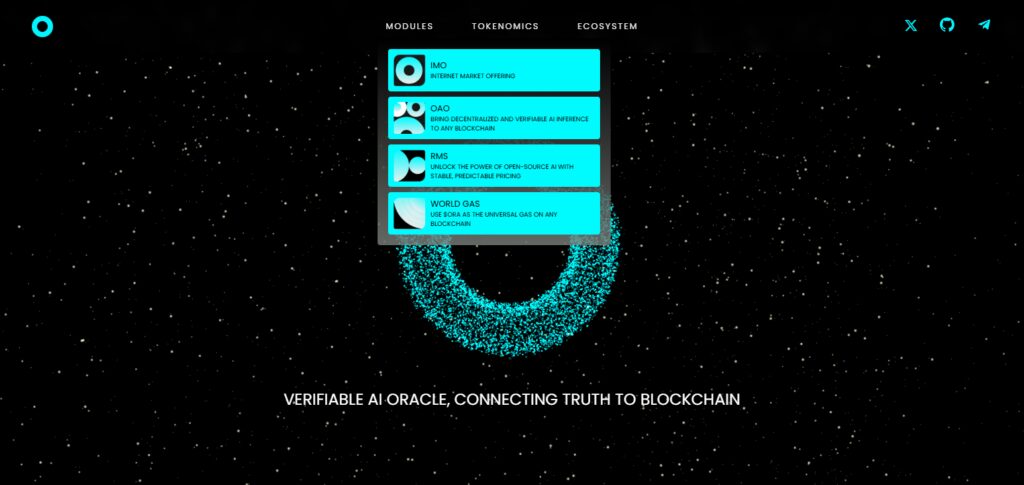
Network participants can earn money without active participation by hosting models or contributing AI workloads. Ora Protocol is an example of decentralized LLMs to earn passive crypto, symbiotically providing decentralized AI ecosystem to AI developers, data providers and computaional resources contributors simultaneously.
Ora Protocol Features, Pros & Cons
Features
- Decentralized models for the accessibility layer
- Computing and data marketplaces
- Crypto rewards for data and model creators
- Models can be deployed flexibly
- AI resource networking
Pros
- Provide compute, data, or models to earn
- All AI use cases can be supported
- Built for co-creation
- Resources can be shared and can also be scaled
- All use cases can be included
Cons
- Passive participation is needed
- Only early stages of adoption
- Demand determines earnings
- Complexity of setups
- Crypto tokens are at risk
8. Numerai (NMR)
Numerai is a hedge fund platform that is based on crowdsourcing and allows data scientists to build prediction models on encrypted data sets. Participants in this network stake NMR tokens on their models, and, based on the prediction results, they can obtain cryptocurrencies.
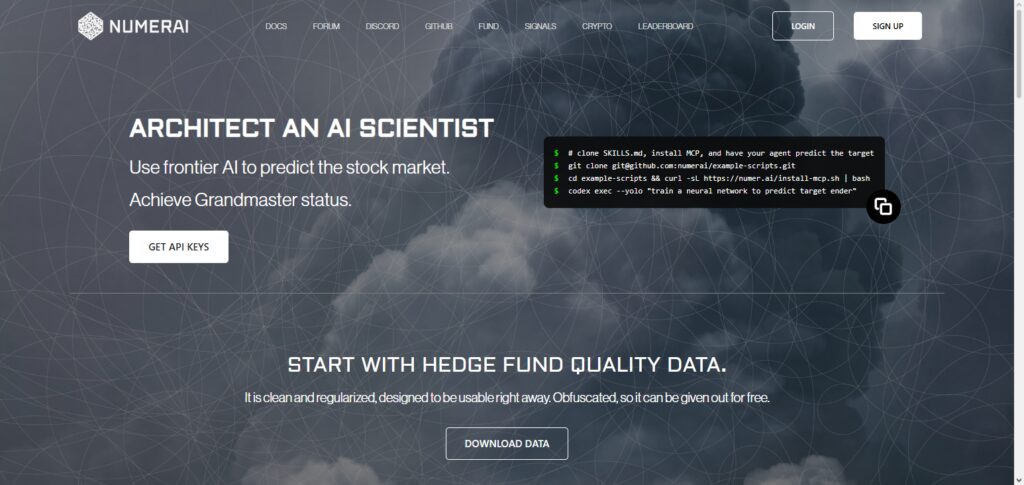
Creating a model without disclosing private data allows participants to earn passive income. Numerai stands out by offering incentives for collaborative and quality AI development in a decentralized manner. Merging AI modeling, blockchain, and finance, it creates a fully rewarding environment for contributors to predictive analytics.
Numerai (NMR) Features, Pros & Cons
Features
- AI models for hedge fund competition
- Submission of the dataset is encrypted
- Staking rewards from the NMR tokens
- Models reset every week
- Aggregation of models
Pros
- Passive income for models that are strong
- Data privacy is retained
- Predictive analytics is levelled up
- Data scientists are engaged
- Payout structure is clear
Cons
- Models must be accurate
- If the model is incorrect, staking can be devalued
- No classical compute rewards
- The NMR price is volatile
- Non-data scientists face a higher barrier
9. DeepBrain Chain
DeepBrain Chain is an AI computing platform that is decentralized. Participants can volunteer their GPU resources for AI workloads. Contributors obtain passive income through the DBC tokens awarded for the computational power supplied.
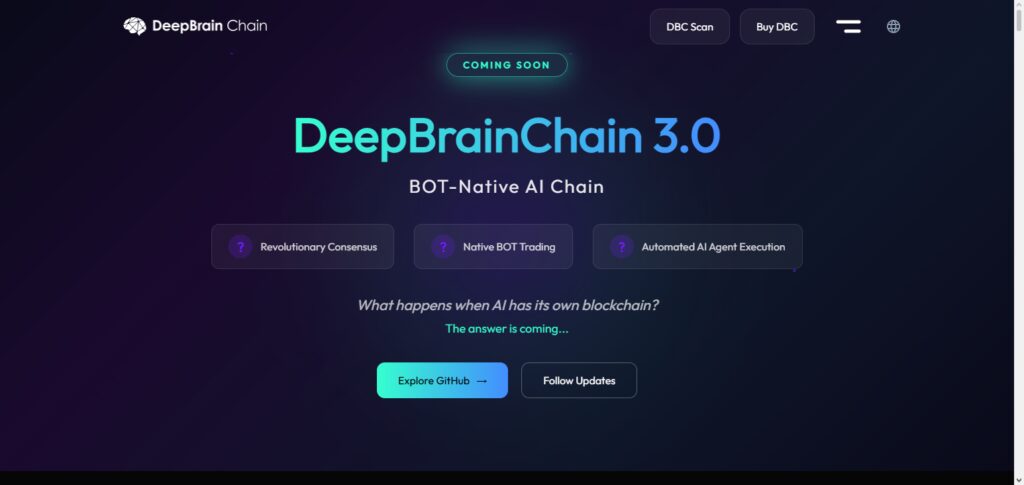
The network costs AI development while promoting a distributed network. Users who host AI models or provide resources benefit directly from the network’s growth.
DeepBrain Chain is an excellent example of decentralized LLMs to earn passive crypto. Global collaboration through crypto passive methods helps optimize AI training while LLMs and crypto methods eliminates central intermediaries.
DeepBrain Chain Features, Pros & Cons
Features
- Sharing of decentralized GPU computing
- Compensation in DBC tokens
- Marketplace for AI computing workloads
- Pricing of computing solutions is cost-efficient
- Contributors globally are networked
Pros
- GPU resources can be monetized
- Many AI tasks can be supported
- Reward options are flexible
- The contributed base is scalable
- Training of AI can be done at lower costs
Cons
- Rewards are based on demand
- The setup for GPU sharing is technical
- The DBC price is not stable
- There is a lot of competition for high earnings
- The ecosystem is smaller than in cloud computing
10. Akash Network
Akash Network is decentralized cloud computing where users can rent their spare computing resources to AI developers and other workloads. Contributors earn crypto for their computing power, storage, or hosting. The network supports training AI models, deploying LLMs, and decentralized applications.
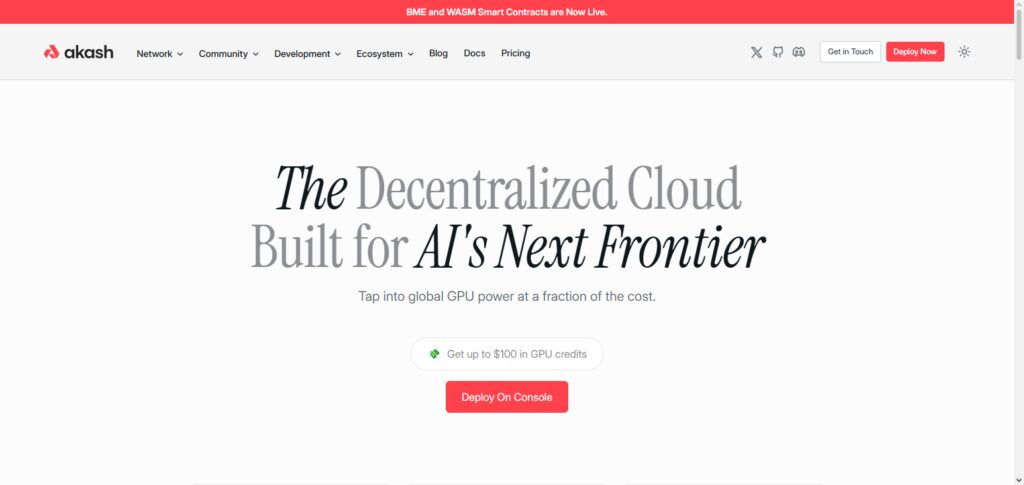
Users earn passive income and help build a secure computing ecosystem on the blockchain. Akash Network is a perfect example of decentralized LLMs to earn passive crypto. Users can decouple their cloud storage and computing systems and support AI innovation through decentralized cloud systems and resources.
Akash Network Features, Pros & Cons
Features
- Marketplace for decentralized cloud compute
- crypto rewards for providers
- AI work loads are supported
- Bidding system in the marketplace
- Deployment based on Kubernetes
Pros
- Monetize by leasing unused resources
- User prices are lower
- Dev ecosystem is closed
- Provider contributions help scaling
- Supports multiple workloads, LLMs included
Cons
- Monetization is demand-based
- Initial configuration is needed
- Earning payouts in crypto are unstable
- Earnings in the network tend to be lower
- It may be necessary to have cloud knowledge
Conclusion
New decentralized large language models (LLMs) have the potential to create an entirely new fusion of artificial intelligence (AI) innovation and blockchain technologies. With new models, data, or computing, participants can earn passive cryptocurrency.
Bittensor, SingularityNET, and Numerai are examples of growing decentralized ecosystems that reward participation monetarily, and offer full transparency. These participants strengthen the network and help create new safe and collaborative ecosystems for artificial intelligence.
As more people participate in these networks, new decentralized large language models will change the way people access artificial intelligence, empower participants, and provide passive income opportunities in the blockchain ecosystem.
FAQ
What are decentralized LLMs?
Decentralized LLMs (Large Language Models) are AI models hosted on blockchain-based networks. They allow participants to contribute computing power, data, or AI models while earning cryptocurrency as rewards.
How can I earn passive crypto from decentralized LLMs?
You can earn by hosting AI models, providing datasets, staking tokens, or offering computational resources to the network. Rewards are typically distributed in the platform’s native token.
Are decentralized LLMs safe to use?
Yes, most platforms use blockchain security and encryption to protect data and AI models. However, users should research each network’s protocols and token economics before participating.
Do I need technical knowledge to participate?
Some platforms are beginner-friendly, like SingularityNET or Ocean Protocol, but others may require technical skills in AI, cloud computing, or blockchain to maximize rewards.
Which platforms are best for earning passive crypto?
Popular options include Bittensor (TAO), Fetch.ai, SingularityNET (AGIX), Numerai (NMR), and Akash Network. Each platform offers unique earning methods depending on your skills and resources.