

In this article, Most Anticipated Token Unlocks to Watch This Quarter we analyze the most anticipated token unlocks this quarter featuring notable projects such as .
Team, investor, and ecosystem allocation unlocks, as well as ecosystem allocation unlocks, are important events where supply, market liquidity, and prices are impacted for traders, investors, and crypto enthusiasts.
What is a token unlock?
A token unlock means that certain cryptocurrency tokens that were previously restricted or vested are now free to enter the open market. The crypto project will usually lock tokens for team members, investors, or ecosystem incentives so that they are less likely to manipulate the market.
After a certain amount of time, the tokens can be traded, staked, or used in other ways within the project ecosystem. Depending on the amount of tokens that are released, investors may feel a little more empowered to make trades.

Key Point & Most Anticipated Token Unlocks
| Token | Key Reason It’s Anticipated |
|---|---|
| Wormhole (W) | Largest % supply release — high potential sell pressure. |
| Hyperliquid (HYPE) | High‑risk unlock to core holders — historically volatile. |
| Optimism (OP) | Core contributors unlock — major L2 with strong market interest. |
| Arbitrum (ARB) | DAO/Treasury release — key L2 ecosystem event. |
| LayerZero (ZRO) | Core contributor unlock linked to Zero L1 narrative. |
| Celestia (TIA) | One of the largest high‑impact community/investor unlocks. |
| ZKsync (ZK) | Huge supply event with broad ecosystem implications. |
| Eigenlayer (EIGEN) | Substantial investor unlock — major restaking infrastructure token. |
| Pyth Network (PYTH) | Large ecosystem unlock for oracle network token. |
| Ethena (ENA) | Medium‑size ecosystem unlock that may affect price. |
1. Wormhole (W)
Wormhole (W) is one of the most important cross-chain interoperability protocols. It focuses on the integration of a significant number of blockchains to assist with the transfer of assets and information.
With the upcoming token unlock, a large number of W tokens that were previously withheld from early investors and ecosystem contributors will be released.
The release of Wormhole (W) is predicted to reduce the value of the tokens as more are available and impact the market as more will be available to trade. The release of these tokens is to show the commitment to long-term ecosystem development.
Wormhole (W) Features, Pros & Cons
Features:
- Cross-chain bridge with multiple blockchain connections.
- NFTs and tokens can both be transferred.
- Validators on the network are decentralized.
- Finality is completed quickly across all moving chains.
Pros:
- Assets can be moved across many chains.
- Bridges are less commonly used and relied upon.
- Liquidity is expanded across many different ecosystems.
- The community and developers both have a strong backing.
Cons:
- Exploits involving smart contracts are a potential risk.
- There may be centralized challenges to decentralized validators.
- New users may be confused with reasoning of complex bridges.
- Unlocks have the potential to increase supply pressure on the token.
2. Hyperliquid (HYPE)
Hyperliquid (HYPE) is the native token of a decentralized derivatives trading platform that has been designed for perpetual contracts and high-liquidity markets.
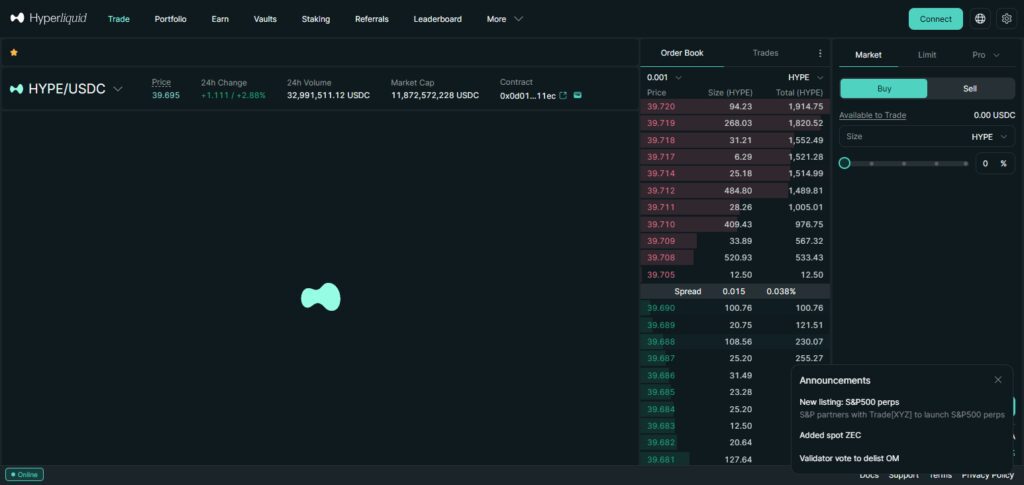
The unlock will see the release of the tokens allocated to the core development team and early investors. The release of Hyperliquid (HYPE) tokens will impact concordant market sentiment as large holders will possess the ability to dictate the value by either selling or holding.
This unlock will be critical for the maintenance of incentives on the platform as it will allow for the provision of liquidity, the expansion of the ecosystem and the maintenance of competitiveness of Hyperliquid.
Hyperliquid (HYPE) Features, Pros & Cons
Features:
- There are perpetual trading options that are decentralized.
- Derivatives have an order book structured for high liquidity.
- Governance and rewards are linked to the native token HYPE.
- The trading framework is decentralized and low-fee.
Pros:
- Markets that are decentralized for derivatives can be used.
- HYPE tokens that are rewarded increase the liquidity of the Market.
- Increased participation of the community in governance will occur.
- Little slippage occurs in the Market and trades are executed quickly.
Cons:
- The price of the token is very high when market-Threatening events occur.
- The token is at risk for price drops do to smart contract bugs involved in derivatives.
- Other DeFi DEXs will be a competing force to the token.
- Liquidity and price will be affected by market-Threatening events.
3. Optimism (OP)
Optimism (OP) is a governance and utility token on an Ethereum Layer‑2 scaling network that implements optimistic rollups to enhance speed and cost-efficiency.
The impending unlock will put newly vested tokens meant for the dev team and early backers into circulation. The entrance of Optimism (OP) tokens will affect governance and market behavior for short periods.
The community is particularly interested in these unlocks because they determine how people stake, vote, and manage the treasury.
The unlocked tokens also have a market effect on the network by granting resources to strengthen the network and supporting developer funding and liquidity initiatives that will bolster long-term adoption of the Optimism Lower-Level Ecosystem.
Optimism (OP) Features, Pros & Cons
Features:
- Ethereum Layer-2 scaling via optimistic rollups.
- Users experience gas fees that are reduced.
- OP tokens are used for governance and subsidizing the protocol being developed.
- Ethereum-compatible smart contracts are supported.
Pros:
- Transactions are processed significantly faster.
- Developers and users save money as it is cost-efficient.
- Strong ecosystem development from many projects.
- The governance is community-based.
Cons:
- Ethereum Mainnet security is risky.
- There is uncertainty with rollup finality.
- There is direct competition from Arbitrum and ZK-based rollup solutions.
- Unlocks can change the supply and demand of the market.
4. Arbitrum (ARB)
Arbitrum (ARB) is one of the leaders in Ethereum Layer‑2 solutions, offering scalability through optimistic rollups while keeping Ethereum’s safety intact.
The token unlock schedule for this quarter will release previously locked tokens from the DAO treasury and investor buckets. The circulation of Arbitrum (ARB) tokens is likely to impact liquidity and overall price stability.
This kind of unlock is very important for governance of the protocols, as it will allow ARB token holders to vote and to fund initiatives in the ecosystem.
In addition to this, the tokens provide resources for developer grants, partnerships in the ecosystems, and adoption initiatives, thereby affirming Arbitrum’s place as one of the leading Layer‑2s and supporting the exponential growth in transactions and dApps in the ecosystem.
Arbitrum (ARB) Features, Pros & Cons
Features:
- Ethereum has Optimistic roll-ups.
- Ethereum has EVM-compatible smart contracts.
- The ARB token is used for governance and treasury votes.
- Developer ecosystem is priority.
Pros:
- There is great transaction throughput.
- The gas fees are cheaper compared to Ethereum L1.
- There is a great developer ecosystem and a robust set of tools.
- The community involvement from the DAO-based governance is great.
Cons:
- There are risks to a centralized sequencer.
- The security of Layer 2 comes from Ethereum L1.
- Competing Layer 2s can take the market.
- The unlocks can create selling pressure.
5. LayerZero (ZRO)
Omnichain protocol LayerZero (ZRO) is able to facilitate secure cross-chain communication for smart contracts without needing a middleman. The first token milestone is distributing ZRO tokens to early investors, contributors, and ecosystem participants.
The ZRO tokens for LayerZero that people will receive will cause short-term price volatility based on how they choose to distribute or sell the tokens. The unlocked tokens will encourage developers, validators, and ecosystem builders, and will cause the network to strengthen.
This unlock will help LayerZero to further scaling and improve cross-chain systems to help projects that use omnichain communication, improving its multi-chain application use.
LayerZero (ZRO) Features, Pros & Cons
Features:
- There are smart contracts with Omnichain messaging so that there is cross-chain communication.
- There is a secure way to communicate with no central authority.
- The ZRO token is used to incentivize the ecosystem and for governance.
- There are fast and secure low latency on multiple chains.
Pros:
- There are dApps on multiple chains.
- There is a reduced dependency on bridges.
- With the token, new developers are incentivized.
- There is a scalable system with multiple chains.
Cons:
- There is new complexity for the integration of the new projects.
- There are risks to centralization with the validator network.
- Cross-chain exploits can happen.
- There are token unlocks that can affect liquidity.
6. Celestia (TIA)
As a modular blockchain platform, Celestia (TIA) allows developers to create optimized and customized rollups by decoupling consensus and data availability.
The first token milestone will result in the release of a portion of TIA that is reserved for investors and community incentives. The TIA tokens that are unlocked will cause the circulating supply and liquidity to rise, which will cause the trading to be more active.
The unlocked tokens will allow for rollup project ecosystem building, urge developers to community engagement programs, and create grants.
Through the allocation of TIA tokens, Celestia aims to enhance and encourage adoption and scalability across its modular blockchain framework to support builders utilizing the flexible, high-performing systems for decentralized applications and Layer-2 solutions.
Celestia (TIA) Features, Pros & Cons
Features:
- Consensus and data availability are divided with the modular blockchain.
- There are rollup options that can be created on top of the data layer.
- The TIA token is used for governance and staking.
- There is a focus on custom blockchains.
Pros:
- Developers can flexible.
- The complexity of the new blockchains is reduced.
- The ecosystem of staked blockchains grows.
- Scalability without threatening security.
Cons:
- Adoption challenges for new modular model.
- Non-technical users may find the complexity daunting.
- Market share may be limited by rollup competing solutions.
- Market liquidity may be impacted short-term by token unlocks.
7. ZKsync (ZK)
ZKSync (ZK) is an Ethereum Layer-2 solution that uses zero-knowledge rollup technology to improve scalability and security through the use of cryptographic proofs.
The upcoming token event is a release of investments made by investors, contributors, and early adopters. The release of ZKSync (ZK) tokens may affect market supply and demand, as more tokens may mean an increased circulating supply and a decrease in value.
Besides market trading, the ZKSync tokens support validator tokens, network governance, and the Ecosystem Incentives program.
This allows ZKSync to adopt new projects and improve developer rewards. Effective token management allows ZKSync to balance its growth with community governance and liquidity, ensuring a healthy ecosystem.
ZKsync (ZK) Features, Pros & Cons
Features:
- Zero-knowledge rollup solution for Ethereum Layer-2.
- Rapid transaction processing with minimal costs.
- Ethereum-compatible smart contracts are supported.
- Governance and ecosystem incentives use the ZK token.
Pros:
- Excellent scalability and security.
- Low transaction fees are beneficial.
- Adoption of Ethereum ecosystem is supported.
- Token incentives for development and staking.
Cons:
- New technology may be relatively buggy.
- Competes with optimistic rollup solutions.
- Developer integration is convoluted.
- Circulating supply increases with unlocks.
8. Eigenlayer (EIGEN)
Eigenlayer (EIGEN) is a new protocol that allows Ethereum owners to restake their tokens and provide a security layer to other chains and applications.
The token release are EIGEN tokens due to investments, contributions, and infrastructure. The introduction of Eigenlayer (EIGEN) tokens causes an increase in market supply and decreases liquidity, but steers sustainable growth of the protocol through restaking and validator activity.
Unlocked tokens are used to fund the ecosystem projects, governance, and network security, ensuring the network’s security and growth. By distributing tokens to ecosystem stakeholders, Eigenlayer combines interests of developers, validators, and investors to promote safe growth.
Eigenlayer (EIGEN) Features, Pros & Cons
Features:
- Ethereum holders restaking protocol.
- Multiple networks can be secured using ETH.
- Governance and incentives are supported by the EIGEN token.
- Shared security frameworks supported.
Pros:
- Security is improved across networks.
- Restaking rewards ETH holders.
- Decentralized validator involvement is incentivized.
- Strengthened multi-chain ecosystem.
Cons:
- Smart contract risk in the restaking logic.
- Participation may be discouraged by the complexity.
- Limited network effects with early adoption.
- Liquidity and price volatility are subject to unlocks.
9. Pyth Network (PYTH)
The Pyth Network (PYTH) is a real-time financial market data provider for blockchains and allows decentralized finance (DeFi) applications to use trusted oracle feeds.
As a result of token unlocks, PYTH tokens will be available for ecosystem incentive programs, investor distribution, and community initiative distributions.
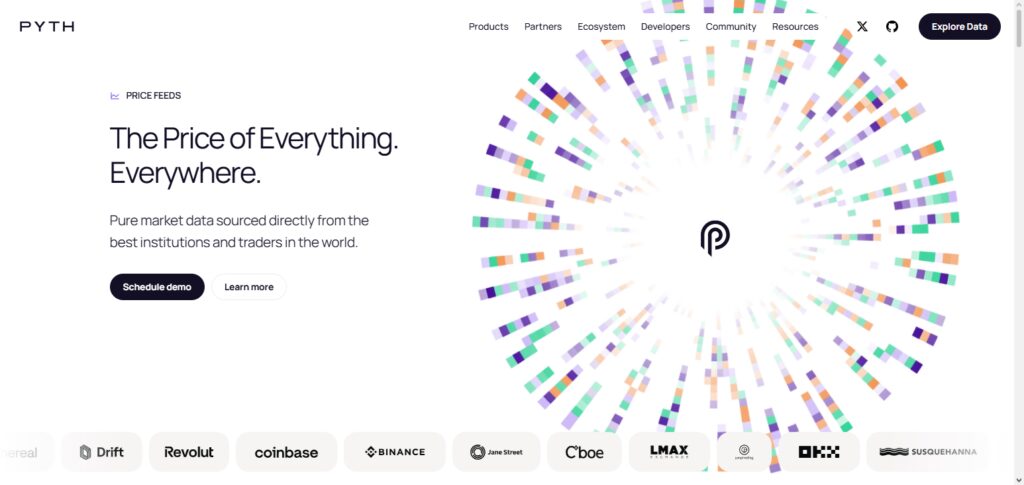
The expected impact of Pyth Network (PYTH) token circulation will affect liquidity and trading to a certain degree, however, it is necessary for the continued development of the protocol.
The incentive programs for publishers, developers, and ecosystem contributors through the unlocked tokens will ensure the oracle network remains decentralized and reliable. Well-planned unlocks improve governance, platform usage, and operational strength to ensure Pyth Network remains a vital component of the DeFi and cross-chain ecosystems data infrastructure.
Pyth Network (PYTH) Features, Pros & Cons
Features:
- Provides Financial data in real time using Decentralized oracles.
- Governance and ecosystem incentives use the PYTH token.
- Data is available on multiple chains.
- Supports high-quality market price feed.
Pros:
- Fast and reliable data source for oracles.
- DeFi and cross-chain projects are supported.
- Contributors are incentivized to provide accurate data.
- Fosters ecosystem adoption across multiple chains.
Cons:
- Oracle manipulation risk due to poor management.
- Slow network adoption.
- High developer integration effort.
- Token unlocks could increase selling pressure.
10. Ethena (ENA)
Ethena (ENA) is a governance and utility token for a synthetic stablecoin protocol, allowing users to establish dollar-pegged assets with cryptocurrency collateral.
Token unlocks will distribute ENA tokens to investors, team members, and ecosystem development contributors. The circulation of Ethena (ENA) tokens will likely result in short-term market fluctuations.
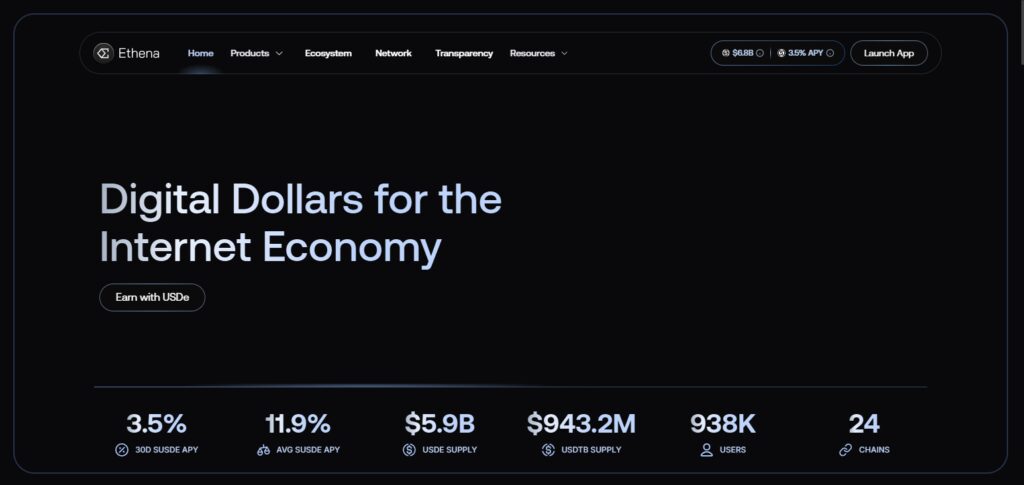
In addition to trading activity, unlocked tokens will finance protocol advancement, liquidity incentives, governance participation, and adoption programs. This is to ensure Ethena has the capacity to further develop its synthetic stablecoin ecosystem, enhance user acquisition, and support long-term viability.
Effectively controlled token unlocks will strengthen network development and ensure adequate liquidity, open market space, and community participation.
Ethena (ENA) Features, Pros & Cons
Features:
- Uses crypto collateral for synthetic stablecoin protocol.
- ENA is for governance and staking reward.
- Enables creation of assets pegged to the dollar.
- Promotes financial stability in a decentralized manner.
Pros:
- Options for decentralized synthetic dollars.
- Token rewards for participation.
- Ability to take part in governance.
- Growth and adoption of the ecosystem.
Cons:
- Extreme market conditions bring stability risks.
- Complex collateral management.
- Other synthetic stablecoin protocols for competition.
- Unlocks will bring short-term liquidity and market sentiment impact.
Criteria for Selecting the Most Anticipated Token Unlocks
Market Cap & Popularity – Market capped tokens, or those with greater community hype will have more price and trade activity impact than those with lower market cap or community hype.
Supply Unlock Percentage – Events are anticipated more for larger unlocks, as they impact the supply, liquidity, and market volatility in the short term.
Function/Utility & Governance Tokens – Governance, staking, or incentive tokens that are used in protocols are more significant when they impact participation, governance, and the ecosystem’s growth.
Investors & Team Allocation – Unlocks of early investor or core contributor tokens are watched closely because they will impact selling pressure, and market sentiment.
Impact on Ecosystem & Project Development – Tokens expected to grow the ecosystem in the short, medium, and long term are called growth tokens.
Market Behavior in the Past – Past unlocking events that have had volatility or price movements are expected to have those same events in the future.
Market Condition Related Timing – Unlocks during a bullish or bearish market can magnify the overall impact on price and liquidity to the overall investor sentiment.
Layer 2 & Cross-Chain Tokens – Interoperability or multi-chain tokens when unlocked are used to predict movement and overall market strength.
Risk Factors and Considerations
Liquidity Risk
Sudstantial token unlocks can increase token supply and even cause an increase in sell pressure as token holders might sell their tokens on an exchange.
Market Volatility
An unlock may lead to an increase in token supply which may cause a dip in the token’s price. This can negatively affect traders and investors and also DeFi protocols that rely on the token for collateral.
Team & Investor Selling Pressure
Unfavorable market conditions might lead to a sentiment shift that negatively impacts the market if unlocks that are given to early investors and team members are large.
Regulatory Uncertainty
There are increased risks associated with these tokens in the time preceding the unlock that may pertain to security instruments or governance tokens.
Protocol or Smart Contract Risks
Smart contracts that are responsible for the vesting, staking, or distribution of tokens may result in lost tokens, delays, or other random releases of tokens.
Adoption and Ecosystem Impact
If the unlocked tokens do not spark development, governance, or staking, it could greatly hinder the development of the network.
Timing and Market Conditions
Unlocks during bearish trends might increase downward pressure while bullish periods might use up the supply of tokens more easily which may affect investor strategies.
Speculative Trading Behavior
Traders sell or short a token to increase volatility which may lead to an increase in prices, not associated with the fundamentals of the project.
Conclusion
This quarter’s token unlocks for Wormhole (W), Hyperliquid (HYPE), Optimism (OP), Arbitrum (ARB), LayerZero (ZRO), Celestia (TIA), ZKsync (ZK), Eigenlayer (EIGEN), Pyth Network (PYTH), and Ethena (ENA) will impact liquidity and volatility and overall supply.
These unlocks are the first of many over the years and will be the first of many token unlocks for contributors.
Most investors will want the unlocks to take place as quickly as possible so they can receive their tokens and sell them, however, the average investor will need to wait a weeks to months, if the unlocks even occur. This is good for the overall market.
FAQ
Why do token unlocks matter?
Unlocks can influence short-term market volatility, price trends, and investor sentiment. They also enable governance participation, ecosystem growth, and funding for development initiatives.
How can token unlocks affect price?
Large unlocks may create selling pressure if recipients liquidate tokens, leading to temporary price declines, but ecosystem or staking allocations can mitigate this effect.
Are all unlocks risky?
Not necessarily. Team or investor unlocks carry higher sell pressure risk, while ecosystem, staking, or governance-focused unlocks often support network growth and adoption.
How can I track upcoming token unlocks?
Investors can monitor project announcements, vesting schedules, and blockchain explorers to track dates, supply percentages, and allocations for upcoming unlocks.
Which tokens are most critical this quarter?
Key tokens include Wormhole (W), Hyperliquid (HYPE), Optimism (OP), Arbitrum (ARB), LayerZero (ZRO), Celestia (TIA), ZKsync (ZK), Eigenlayer (EIGEN), Pyth Network (PYTH), and Ethena (ENA) due to large unlocks or ecosystem influence.