

As businesses face the pressure of handling intricate global Tax Compliance Platforms Growing Fast. As GST, VAT, and digital tax requirements grow, organisations are transitioning from manual processes to automated cloud solutions.
These platforms automate tax calculations, reports, and filings while maintaining accuracy and in real-time compliance. In 2026, demand is surging as AI-integrated solutions are adopted, e-commerce grows, and the need for faster, error-free financial processing across global markets intensifies.
What Are Tax Compliance Platforms?
Specialized software systems that help businesses manage, calculate, report, and file taxes according to local & international regulations are more likely called tax compliance platforms. They take care of different types of taxes like GST, VAT, sales tax, and corporate tax by integrating with accounting software, ERP systems, and e-commerce platforms.
They eliminate error-prone manual processes, utilizing automation and real-time data processing along with tax rules that are accurately updated on a consistent basis.

With global tax laws ever-more complex and digital reporting requirements expanding, these platforms are becoming increasingly critical in driving down errors, saving time, and helping businesses stay compliant across multiple jurisdictions.
10 Tax Compliance Platforms Growing Fast in 2026
| Platform | Key Strength (2026 Trend) |
|---|---|
| Avalara | Real-time global tax calculation + AI-driven compliance engine |
| Vertex Inc. | 16,000+ jurisdiction tax engine with ERP integrations |
| Sovos | Strong global e-invoicing & regulatory reporting automation |
| Thomson Reuters ONESOURCE | Advanced tax content library + global regulatory updates |
| Wolters Kluwer CCH Axcess | Cloud tax prep + compliance automation tools |
| Stripe | Built-in real-time tax collection for digital businesses |
| TaxJar | Simple API-based sales tax compliance for SMBs |
| TaxCloud | Cost-effective automated filing + reporting tools |
| ClearTax | AI-driven GST reconciliation and automation (India focus) |
| Zoho | Integrated GST billing, accounting, and compliance suite |
1. Avalara
Avalara is a cloud-based tax compliance platform for global sales tax, VAT, GST, and cross-border taxes. It boasts features such as real-time tax calculation, automated filing, and a worldwide database of tax regulations that help businesses to remain compliant in multiple jurisdictions.
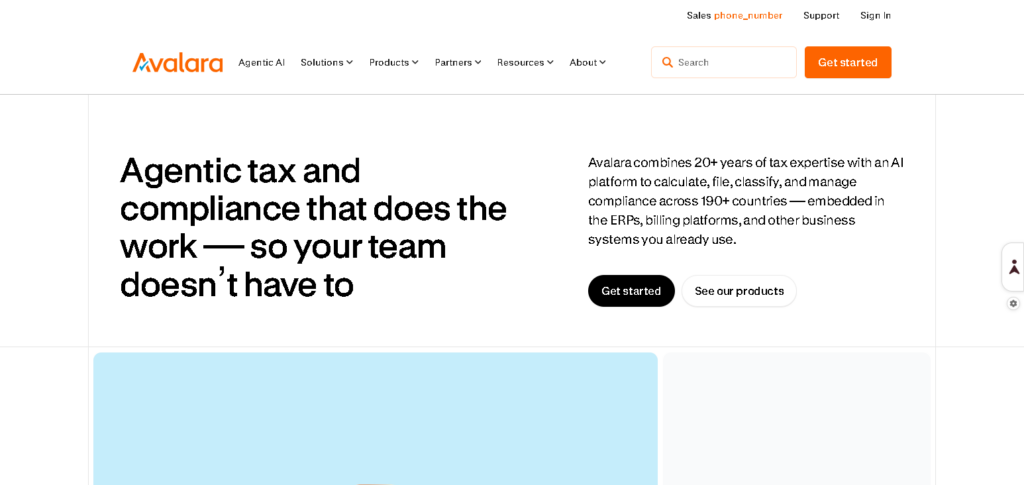
You get SAP, Oracle, Shopify, and NetSuite integration out of the box. Because Avalara scales well and is an enterprise-preferred solution, pricing can be prohibitive for small businesses due to transaction-based bills as well as complex features.
Why Does it Grow in 2026
- The need for automation of Global tax across 190+ countries has grown exponentially.
- Strongly used by e- commerce and SaaS businesses scaling globally.
- Growing demand for tax on real-time calculation and filing automation.
- Good integration with ERP systems such as SAP, Oracle, NetSuite and Shopify.
Best Use Case
- Multinational Enterprises With Cross-border Taxation Management
- E-commerce companies handle high-volume transactions.
- SaaS businesses with automated subscription tax requirements
- Enterprise around end-to-end tax filing and compliance automation
2. Vertex Inc.
Vertex Inc. A complete enterprise-grade tax compliance solution for the most complex indirect tax environment. This is particularly powerful around complexities of multi-jurisdiction tax rules and for tight coupling with ERP systems such as SAP and Oracle.
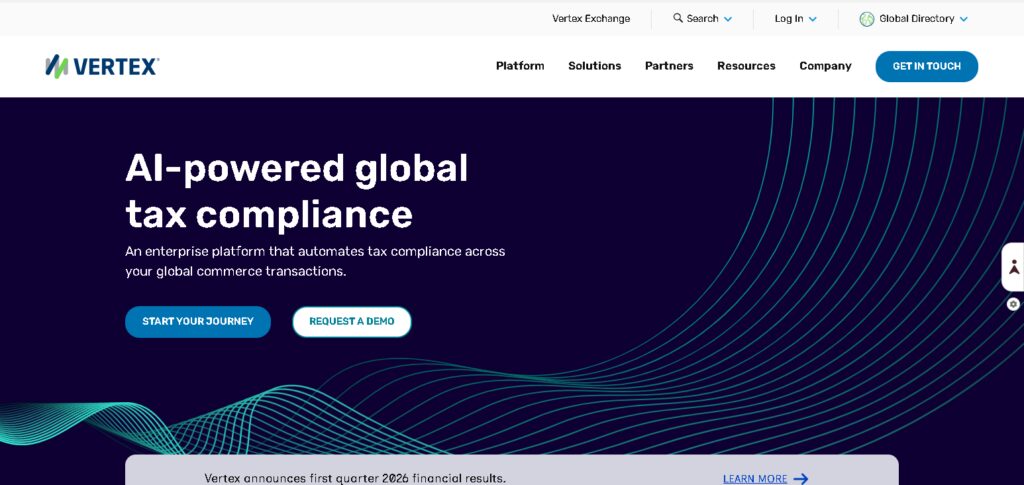
Thrown on the platform (which is used extensively by the major multinational corporations, because of its accuracy in determining taxation impact and sophisticated customization features). But it needs expertise to implement and is complicated and expensive to set up, making it unpopular with small firms.
The reason behind its growth in 2026
- Firm demand across ERP-native tax engines in SAP and Oracle environments
- Complicating compliance—an increasing complexity of multi-jurisdiction tax compliance rules.
- Expansion in Large Enterprise Digital Transformation Projects
- Well, if in terms of Tax logic customization, you may need a lot in global corporations.
Best Use Case
- Large manufacturing and distribution enterprises.
- SAP, Oracle, or Microsoft Dynamics ERP users.
- Enterprises with a complicated indirect tax framework.
- Multinational companies require greater control over their tax configurations.
3. Sovos
Sovos is the global tax compliance platform for regulatory reporting, e-invoicing, and continuous transaction control systems. This is the most common in countries with strict tax mandates like Brazil, Mexico, and parts of Europe.
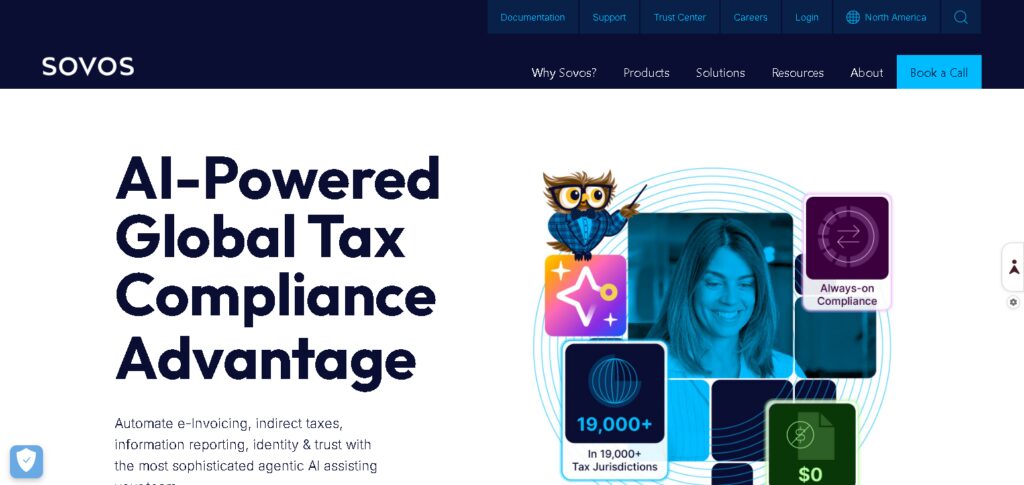
The platform offers extensive regulatory coverage & automated compliance workflows in 100+ countries. Its enterprise-oriented structure limits access for smaller companies, but it is excellent for multinational corporations.
Why is it expanding in 2026
- Increased worldwide adoption of e-invoicing mandates (EU, LATAM, Asia).
- Government transition from a real-time transaction-based reporting system.
- Accelerating compliance pressure in high VAT regions
- Increase in the scope of continuous tax monitoring (CTC) requirements.
Best Use Case
- Multinational corporations are based in regions where taxes are regulated.
- Businesses need e-invoicing compliance automation.
- Enterprises with cross-border supply chains.
- Businesses needing real-time tax reporting systems.
4. Thomson Reuters ONESOURCE
ONESOURCE is a collection of enterprise tax management solutions geared for standalone and integrated functionality, offering features that meet the full range of tax compliance, reporting, and data management needs. Facilitates enterprises to centralize corporate tax, indirect tax, and transfer pricing on a single platform
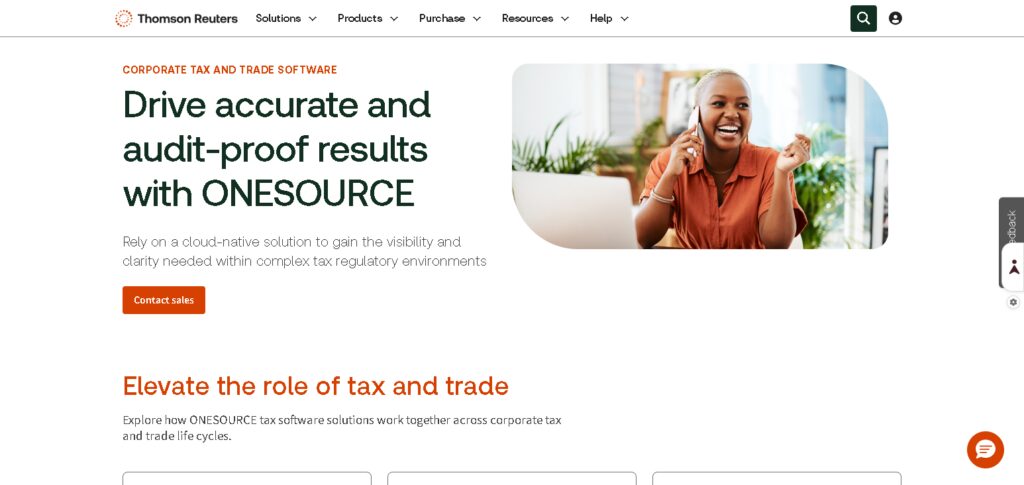
Being one of the biggest tax software providers, large corporations love to use it owing to its extensive library of tax content and regulatory intelligence updates. It does require a significant amount of setup effort and hence is applicable mostly with dedicated tax departments in very large organizations.
The reason for its growth in 2026.
- Necessity of a centralized platform for corporate tax management.
- Making global tax compliance more difficult for enterprises.
- Constant updates with robust regulatory intelligence.
- A requirement for global income, indirect, and transfer pricing systems.
Best Use Case
- Large corporate tax departments.
- Global Tax Reporting of Multinational Companies
- Corporate income tax compliance from finance teams
- Business: Need systems to provide tax documentation audit-ready.
5. Wolters Kluwer CCH Axcess
CCH Axcess is a cloud platform for tax workflow and compliance used by accounting firms and tax professionals. It automates tax preparation and filing, while also providing the management of client data in one place.
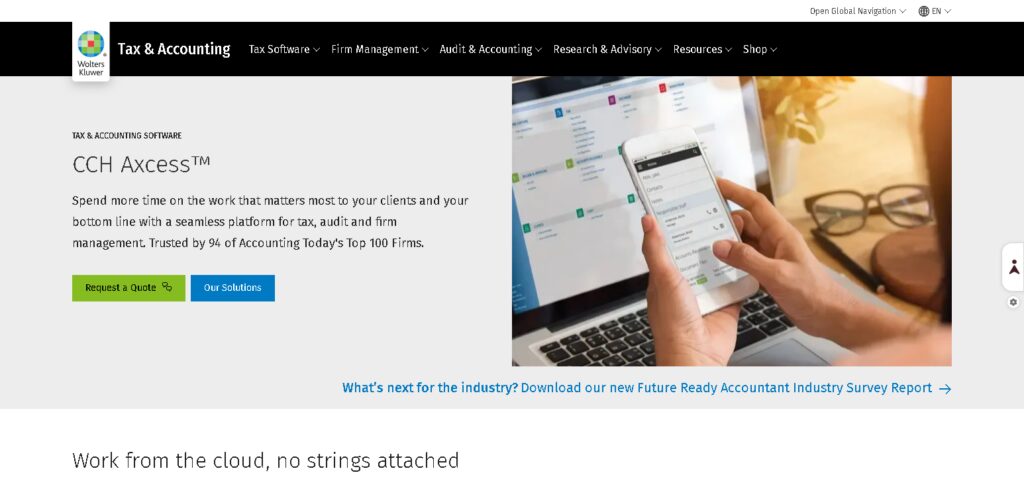
Tax professionals are then able to work more efficiently due to this accurate, automated, cloud-based platform. But it’s more for accounting firms instead of enterprise tax ops.
How it will grow in 2026
- Accelerating move to cloud accounting and tax workflows.
- Demand for Automation Tools Among CPA Firms
- Remote collaboration for tax preparation is needed.
- Rise in the digitization of tax management systems of clients.
Best Use Case
- Accounting and CPA firms.
- Tax consultants managing multiple clients.
- Cloud-based tax preparation workflows.
- Businesses that need automated tax submission systems.
6. Stripe Tax
Stripe Tax is a built-in tax automation tool for users within the Stripe payment system. Automatically calculates and collects taxes at checkout for digital businesses & SaaS companies.
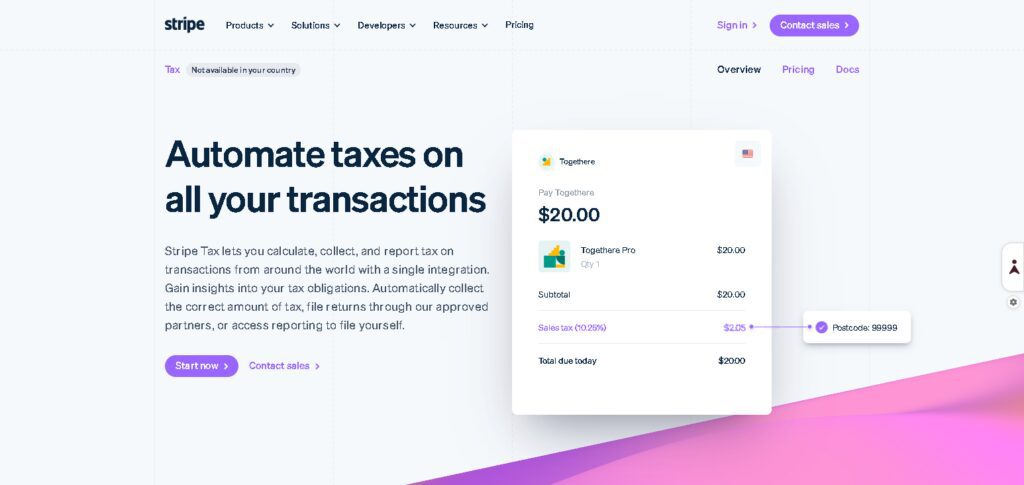
Because of its ease of use and great integration into payment workflows, it is commonly used by startups and online businesses. But it does not completely manage tax filing or registrations, which require firms to have other tools.
Why is it rising in 2026
- Expansion of digital-oriented companies and SaaS models
- Increased demand for tax calculation embedded in payment systems
- Expansion of subscription-based global commerce.
- Fully integrated with the existing Stripe payment ecosystem.
Best Use Case
- Startups and SaaS companies.
- Online businesses use Stripe payments.
- Subscription-based platforms.
- Developers need embedded tax APIs.
7. TaxJar
TaxJar is a widely marketed sales tax automation solution for small and mid-sized e-commerce businesses. It is useful for automating tax calculations, reporting, and filing across multiple U.S. states.
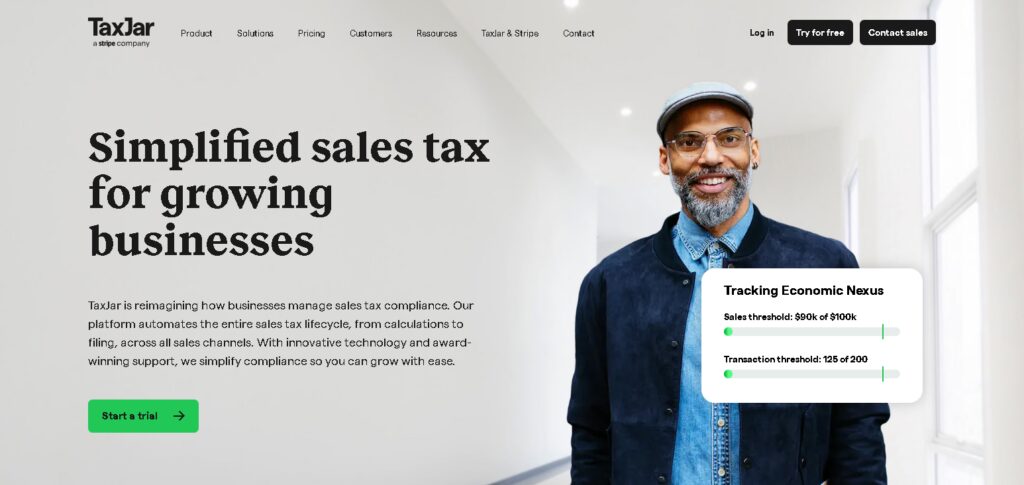
The platform is user-friendly, API-integrated, and provides auto-file services for compliance. It is quite popular among Shopify and Amazon sellers, but lacks enterprise-grade functionality.
Reason it will grow in 2026
- Deeply adopted by SMB e-commerce sellers.
- The demand for more basic integrations and tools to digitize U.S. sales tax processes
- Integration with Shopify & Amazon using API
- The kind of nexus complexity is facing marketplace sellers when it comes to growth.
Best Use Case
- Small and mid-sized e-commerce businesses.
- Amazon, Shopify, and WooCommerce sellers.
- Businesses expanding across U.S. states.
- Sellers who need some level of automated filing without the complexity of an enterprise solution.
8. TaxCloud
TaxCloud: Tax Compliance Automation for U.S. Sales tax at a low price It provides tools for tax calculation, filing, remittance, and exemption management of e-commerce firms.
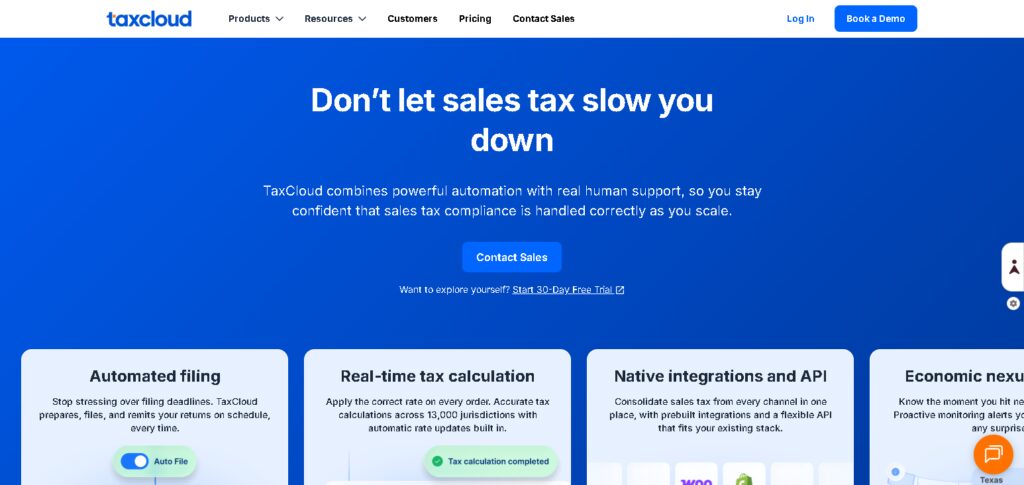
It is loved for its affordability and easy integration with platforms like Shopify and WooCommerce. Ideal for SMEs seeking end-to-end tax compliance without the high-touch costs of an enterprise-sized solution.
Why its growing in 2026
- Growing need for low-cost tax compliance tools.
- Simplicity of the platform and ease of usage is preferred among SMBs.
- Greater complications for online sellers’ sales tax edge.
- Cost-effective solution for enterprise software solutions such as Avalara.
Best Use Case
- Small businesses and startups.
- E-Commerce stores that have a short budget for taxes
- Shopify and WooCommerce sellers.
- Businesses that are looking for very straightforward sales tax filing tools.
9. ClearTax
ClearTax is the largest GST and income tax returns and financial reporting platform in India. It uses artificial intelligence-led automation to make tax reconciliation and compliance much simpler for businesses in India.
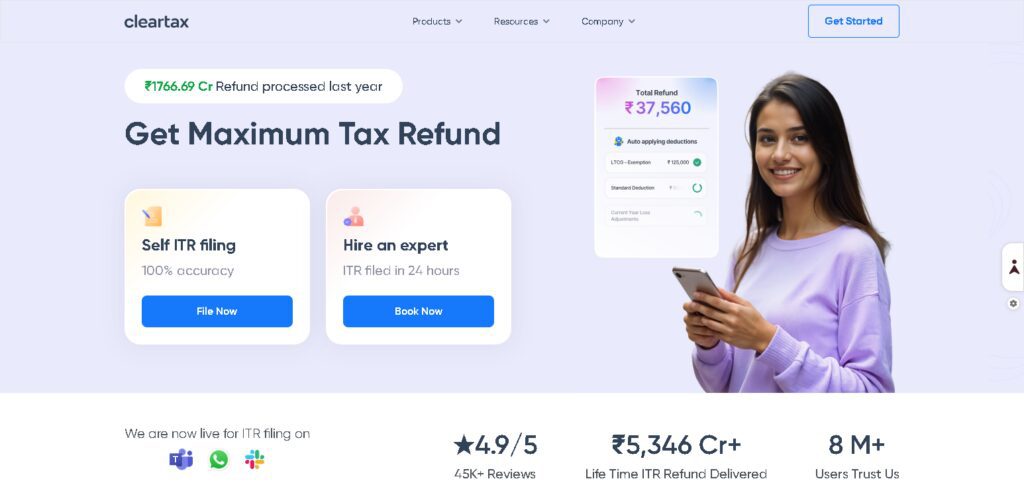
With the power of GST ecosystem integration and an easy user interface, it has become a popular choice among SMEs, accountants, and professionals. Which is also a quite dominant sector in India for digital tax filing.
What makes it grow in 2026
- 4% Faster digitization of GST compliance in India
- Wise AI-Powered Reconciliation & Data Automation
- Grow cloud tax platform adoption among small and medium businesses (Inventiva)
- This has encouraged governments to move towards digital tax filing systems.
Best Use Case
- Indian SMEs managing GST compliance.
- CA firms and tax professionals.
- Businesses need GST return automation.
- Businesses that need to reconcile their invoices create input credit.
10. Zoho
Zoho is another tax compliance software that provides an all-in-one accounting hub supporting GST billing, invoicing, and financial reporting. This is part of the larger Zoho ecosystem, connecting finance | CRM, and business tools.
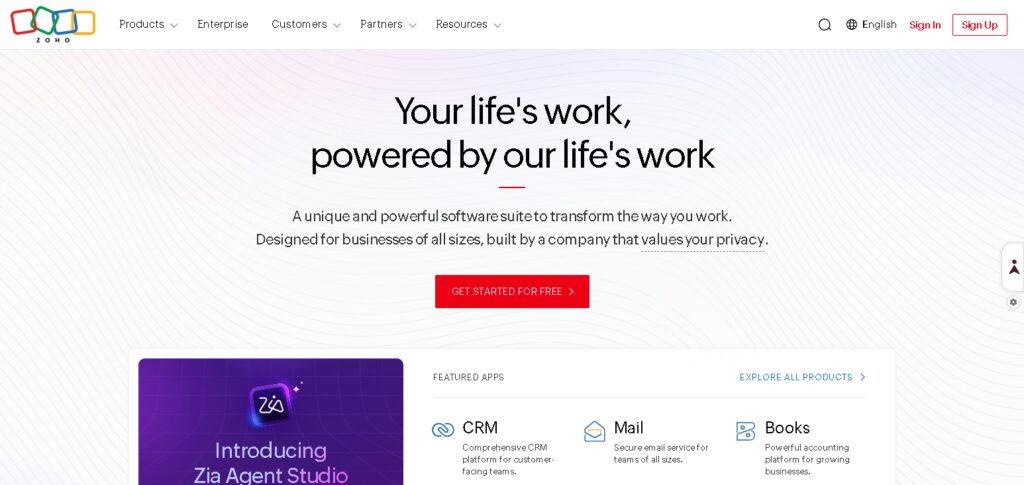
It is very popular among small businesses with its low price and simple cloud-based platform. Particularly suitable for startups and SMEs wanting a single solution to manage business with ease.
Reasons for it to Grow in 2026
- The rise in demand for all-in-one business management platforms.
- Cloud accounting for tax ecosystems in SMEs
- Pricing that is lower than the enterprise tools
- Tight integration across the Zoho finance suite (Books, Inventory, Payroll)
Best Use Case
- Small and medium-sized businesses.
- Accounting + tax in one system by startups continuity needed.
- Freelancers and service businesses.
- Companies want integrated financial ecosystems.
Key Factors Driving Growth in 2026
AI-Powered Tax Automation
AI is changing tax compliance through automating calculations, filings and error detection. This helps businesses running complex global tax systems to increase accuracy, reduce manual effort, and facilitate real-time decision-making.
Increasing Global Tax Complexity
Escalating VAT/GST and digital finance-related tax regulations in a variety of countries are mounting up challenges to compliance. In order to stay compliant with new laws and avoid costly penalties, businesses must stay in the know—this is where automated platforms come into play.
Rapid Growth of E-Commerce
E-commerce growth has resulted in high turnover transactions across borders involving specific tax treatment. A compliance platform automates sales tax, VAT, and reporting, so online sellers operating in multiple regions and marketplaces can stay compliant with complex global regulations.
4. Real-Time Reporting Requirements
Governments are moving towards systems of real-time tax reporting. Businesses literally need a set of instant data processing tools designed to calculate, record, and report taxes on the fly to meet stringent regulatory deadlines and compliance standards.
5. Cloud-Based System Adoption
More companies are switching over to cloud-based financial systems in search of scalability and flexibility. When tax platforms are integrated with cloud-based ERP and accounting tools, updates happen automatically, access to data can be wherever an Internet connection is found, and time-to-deployment cycles are shorter.
Cross-Border Trade Expansion
Multi-jurisdiction tax obligations rise as global trade grows. Across businesses operating in countries with different tax laws, currencies, and reporting rules, there is a need for centralized systems managing all these aspects accurately while working towards lessening operational complexities right across the process.
Cost and Efficiency Optimization
Synthetic movement-based manual tax processes do incur costs and are prone to errors. Automated tax compliance platforms, which lower costs and boost accuracy while alleviating time spent on menial processing are a key part of any modern financial management strategy.
Why These Platforms Are Growing Fast
Shift Toward Automation
Replacing manual tax processes with automated tax solutions enables businesses to minimize human error and maximize accuracy, while speeding and scaling compliance across jurisdictions and complex tax structures.
Rising Global Tax Regulations
Countries are frequently changing VAT, GST, and digital tax laws. So companies need the kind of platforms that automatically adjust in response to regulatory changes and prompt compliance without human intervention or downtime.
Expansion of Digital Commerce
The rise of e-commerce, SaaS, and subscription models. Such businesses need automated tools to calculate and report taxes for high-volume, cross-border transactions.
Demand for Real-Time Compliance
Real-time or instant tax reporting compliance is being mandated by governments. Immediate processing and secure submission of tax data are critical in order to avoid penalties and be compliant with standards.
Cloud Adoption in Finance
More and more organizations are migrating their financial operations to the cloud. Cloud ERP tools are scalable, accessible from anywhere in the world, and easily updated; as such, they integrate with supply chains and tax compliance platforms.
Growth in Cross-Border Trade
Expanding international trade multiplies the complex tax compliance burdens for businesses located across different jurisdictions. Multi-currency, rules, and compliance management with unified tax platforms are a necessity for businesses.
Cost Reduction Pressure
To excel, companies look for efficiency parameters such as a reduction in operational costs owing to manual workload. In fact, automated tax tech platforms streamline the staffing requirements to operate them, increase operational efficiencies, and reduce costly tax errors, which would otherwise expose the business to possible non-compliance.
Conclusion
Once in 2026, the tax compliance platforms are booming due to three interacting forces: global regulatory complexity, AI automation, and the rise of digital business models. Increasingly, enterprises and SMEs are moving away from manual tax processes towards cloud-based compliance systems, where real-time verification ensures accuracy whilst reducing the burden of operational risk.
As your business manages cross-border transactions, changing GST / VAT regulations, and instant reporting, platforms such as Avalara.com, Vertex.com. Sovos.com, Stripe.com, and cleartax.in gaining importance. In essence, the overarching theme is a movement toward fully automated, intelligent tax ecosystems that enhance efficiency, reduce costs, and enable global scale.
FAQ
What are tax compliance platforms?
Tax compliance platforms are software solutions that automate tax calculation, filing, reporting, and regulatory compliance across GST, VAT, sales tax, and corporate tax systems for businesses of all sizes.
Why are tax compliance platforms growing so fast in 2026?
They are growing due to rising global tax complexity, AI-driven automation, real-time reporting requirements, expansion of e-commerce, and increased adoption of cloud-based financial systems.
Which companies use tax compliance software the most?
Large enterprises, e-commerce businesses, SaaS companies, accounting firms, and SMEs use tax compliance platforms to manage multi-jurisdiction tax obligations efficiently and reduce compliance risks.
What are the most popular tax compliance platforms in 2026?
Some leading platforms include Avalara, Vertex Inc., Sovos, Thomson Reuters ONESOURCE, Stripe Tax, TaxJar, TaxCloud, ClearTax, Wolters Kluwer CCH Axcess, and Zoho.
How do these platforms help businesses?
They automate tax calculations, ensure regulatory compliance, reduce manual errors, streamline reporting, and support global operations with real-time tax updates and integrations.