


With rising global demand for commodities, traders and investors have their eyes on the Top 10 Commodity-Linked Currency Pairs for the 2026 Bull Run. As global demand for gold, oil, and agricultural commodities increases, the currencies of Canada (USD/CAD), Australia (AUD/USD), and New Zealand (NZD/USD) will benefit.
In addition, the cross currency pairs AUD/JPY and NZD/JPY provide further opportunities. To take advantage of the 2026 bullish trend, it is important to understand the commodity, currency pair and commodity, central banking, and economic driver relationships.
Key Point
| Currency Pair | Key Point for 2026 Bull Run |
|---|---|
| AUD/USD | Australian dollar likely to strengthen as gold and iron ore demand rises in global markets. |
| NZD/USD | New Zealand dollar benefits from rising dairy and agricultural commodity prices. |
| USD/CAD | Canadian dollar appreciates with higher oil prices and strong energy exports. |
| AUD/CAD | Strong correlation to commodities; positive commodity cycle favors both AUD and CAD gains. |
| USD/NOK | Norwegian krone strengthens as oil exports benefit from higher energy demand. |
| USD/RUB | Russian ruble may gain on high global energy prices despite geopolitical risks. |
| USD/ZAR | South African rand benefits from rising precious metals while maintaining commodity-driven volatility. |
| CAD/JPY | CAD strengthens with oil, JPY may weaken, offering profitable commodity-linked spreads. |
| AUD/JPY | AUD rises on commodity demand; JPY weakness amplifies bullish trend. |
| NZD/JPY | NZD gains with commodity exports; paired with JPY provides strong bullish potential. |
1. AUD/USD
The pair AUD/USD reacts strongly to price changes in gold and iron ore. This is as Australia is a leading exporter of gold and iron ore. By 2026, due to increasing global demand for gold and iron which is seen as an industrial metal, a positive reaction for the AUD is expected.
Economic growth and increase in demand from Australia’s gold and base metals trading partners (which are China and other Asian countries) will be beneficial for the AUD.

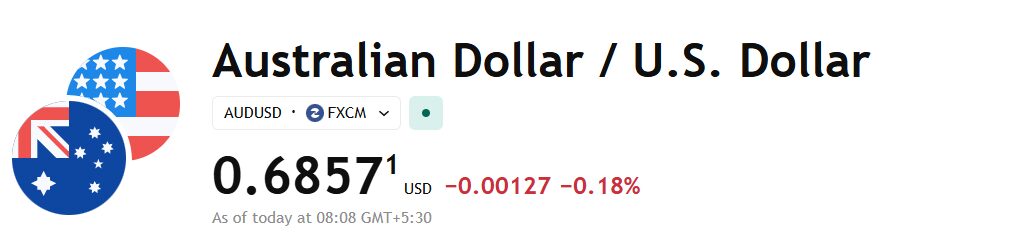
In combination with central bank policy, geopolitical conditions in the Asia Pacific and commodity prices, all of these are expected to determine the conditions for the AUD/USD trading pair.
Due to the pair’s association to the gold price, as well as base metals price, the pair is seen as one of the top commodity-linked currencies for the upcoming 2026 bull run.
AUD/USD Features
- Prices of gold and iron ore exhibit a strong correlation with the AUD/USD.
- Economic growth in China increases demand for metals, which increases demand for the AUD.
- Strongly influenced by the interest rates set by the RBA and policies of the USD.
- Strongly liquid with moderate volatility.
Pros
- Trends driven by commodities tend to have strong directional signals, thereby creating less uncertainty.
- Strongly liquid, which makes it easy for traders to enter and exit.
- Bullish positions are available for traders in times of recession due to gold.
- In times of recession, relatively easy to create a strong position due to a combination of technical indicators and fundamentals.
Cons
- Geopolitical events in the Asia-Pacific region create a strong volatility.
- Strongly liquid, which makes it easy for traders to enter and exit.
- Strongly depends on commodity prices.
2. NZD/USD
NZD/USD reacts strongly to New Zealand’s dairy, meat and agriculture exports. The expected increase in demand and prices of commodities globally and especially in Asia, the NZD is expected to react positively to the USD by 2026.

This will be as a result of the expected positive interest rates of the Reserve Bank of New Zealand as well as positive inflation of the country. Players in the market are expected to monitor the supply and trade agreements as well as the seasonal agreements that affect the exports of dairy and livestock.
This is one of the best commodity-linked currencies expected in the upcoming 2026 bull run, whereby the agricultural prices are expected to increase globally, resulting to the NZD to also increase and providing an opportunity for traders to access the bullish potential and become active in the commodity cycle.
NZD/USD Features
- Strongly influenced by the imports of dairy, meat, and other foods.
- Movement of the NZD/USD imitates the demand for commodities in Asia.
- Strongly influenced by the RBNZ, which creates strong volatility.
- Strongly liquid, which makes it easy for traders to enter and exit.
Pros
- During times of prosperity for Asia, the growth of the NZD occurs due to the imports of agriculture.
- Growth of commodities creates strong positions in the NZD.
- Strongly liquid, which makes it easy for traders to enter and exit.
- In times of prosperity for Asia, the growth of the NZD occurs due to the imports of agriculture.
Cons
- Strongly liquid, which makes it easy for traders to enter and exit.
- High volatility during unexpected policy changes in the Asia-Pacific region.
- Strongly liquid, which makes it easy for traders to enter and exit.
3. USD/CAD
As it exports crude oil, Canada’s USD/CAD pair is affected by crude oil prices. The Canadian dollar is expected to strengthen compared to the US dollar as Canadian oil exports increase due to increased global energy demand.

Canada’s USD/CAD also appreciates due to trade relations with the US, the building of oil pipelines, the power of the OPEC+ cartel, and the inflation and the policies of the Bank of Canada.
USD/CAD is expected to be a top-performing commodity-linked currency due to CAD’s appreciation as a result of inflation, and policies of the Bank of Canada, CAD depreciates as a result of the increase in crude oil prices.
USD/CAD Features
- Strongly correlates with the prices of crude oil.
- Strongly influenced by the trade and energy policies of Canada.
- Cycles driven by oil prices provide high liquidity.
Pros:
- Distinct bullish/bearish patterns based on commodities.
- Immediate trading execution due to high liquidity.
- Positive market correlation with oil price fluctuations.
- Good for trend-following equestrian strategies.
Cons:
- Instant price reversals due to crashing oil prices.
- Canadian exports may be subject to geopolitical disruptions.
- Volatility may arise due to sudden changes in Bank of Canada policies.
4. AUD/CAD
CAD’s oil dependency and AUD’s gold and iron ore dependency is expressed in the AUD/CAD pair. As demand for global commodities increases, demand for both currencies increases due to increase CAD and AUD.

However, due to the pipeline in the USA CAD may depreciate due to the metal and energy market’s divergence. Trader’s cheers and celebrates the pair due to it’s predictability with commodities.
As gold and oil rates increase the pair also increases. However, due to the energy market’s volatility the pair is also affected by geo-political risks and global slowdowns.
AUD/CAD Key Features
- Exposure to both oil and metal commodities.
- Correlation with AUD/USD and USD/CAD pairs.
- Central bank policies impact both countries.
- Suitable for swing trading due to average volatility.
Pros:
- Commodity prices diverging may create arbitrage.
- Exposure to large economies with significant commodities.
- Bullish cycles on metals and oil may be profitable.
- During a global bull market in commodities, strong trends will develop.
Cons:
- Unpredictable swings may arise due to changing correlations.
- Increased spreads with low liquidity.
- Geopolitical tensions are sensitive to both countries.
5. USD/NOK
The pair USD/NOK has a direct correlation with oil prices, being a major energy exporter, Norway’s currency tends to appreciate with the rise of oil prices. Oil prices are expected to rise in 2026 due to the emerging demand for oil in Europe and Asia.

Other factors that affect the USD/NOK include the inflation rates and the interest rate policies of the Norges banks, as well as the flow of the country’s sovereign fund. Because of the oil driven trends, USD/NOK is viewed as a highly liquid and top commodity linked currency for the 2026 bull run.
There are expected to be highly liquid and strong bullish opportunities when the overall economic metrics are at an optimal level and the energy sector is in its active bullish phase. However, geopolitical tensions and oil prices corrections remain a constant short term bearish threat.
USD/NOK Key Features:
- Oil market direct influence.
- European energy demand and macro trends affect oil.
- Sensitive to changes in the Norges Bank policy.
- Low volatility seasonal cycles of oil.
Pros:
- Reliable trading signals due to oil trends.
- Bull markets in oil provide strong trends.
- Energy-focused medium-term traders may find it attractive.
- USD exposure may be hedged by correlations to energy.
Cons:
- Sudden oil price changes may cause strong movements.
- Smaller liquidity may widen spreads.
- Low Oil demand from Europe may impact NOK.
6. USD/RUB
RUB is also justified on the tie to oil and gas exports, as Russia is a global supplier of oil and gas. Geopolitical tensions are the risks associated with the appreciation of the Ruble in 2026 due to the expected rise in the prices of energy.
Other factors that affect the volatility of the Ruble include the policies of the Russian central bank, inflation, and sanctions. Analysts check the Russian central bank’s policies and inflation and Glob el energy market to anticipate the rate of exports.

The price of oil is expected to be a top energy linked currency for the 2026 bull run due to strong energy driven flows. There are expected to be highly liquid and strong bullish opportunities when the overall economic metrics are at an optimal level.
Geopolitical tensions are expected to stifle commodity traders from a bullish opportunity, though high oil prices are expected to appreciate the ruble.
USD/RUB Key Features
- Natural gas and oil exports driving the market.
- Russian geopolitical events impact this a lot.
- Responsive to energy demand globally.
- Moderate liquidity and high volatility.
Pros:
- Energy prices increases offer potential bullish movement.
- High volatility commodity cycles offer trading potential.
- Useful for portfolio diversification with energy exposure.
- Short-term profits can be achieved through directional trend exploitation.
Cons:
- Geopolitical uncertainty risks trading more unpredictable.
- Regulatory and sanction risks can impact a market’s flow.
- Increased volatility can also increase losses.
7. USD/ZAR
The USD/ZAR pair has a close correlation with gold and platinum, given South Africa’s position as a producer. If gold and platinum prices increase in 2026, we can expect a stronger USD. In addition, local inflation, interest rates, and mining output fluctuations affect the USD.
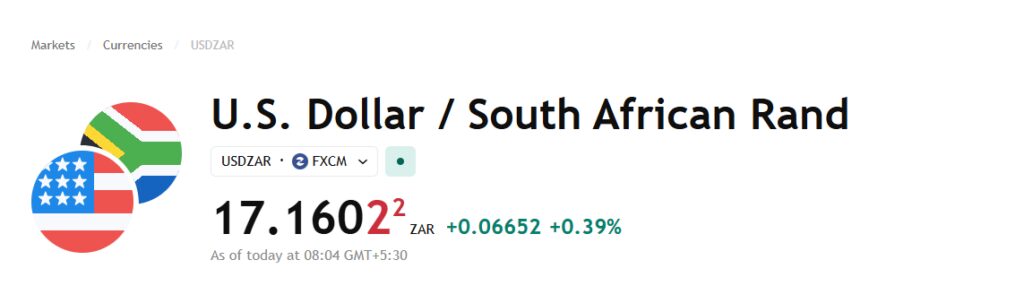
The global economic growth and commodity cycles can influence market sentiment. USD/ZAR is expected to be among the best commodity-linked currencies and accessible to precious metals trends in the 2026 bull run.
Economic and political issues can increase the rate of fluctuations, and gold and platinum prices can be relied on, making an increase in bullish trades more likely.
USD/ZAR Key Features:
- Gold and platinum prices.
- Changes occurring at an economic and political South African level impact this.
- Moderate liquidity which shifts between high and low during volatility commodity cycles.
- Precious metals trading.
Pros:
- Bullish trading potential comes from precious metals.
- Active traders thrive.
- Hedging is possible with the positive correlation with gold.
- Strong fundamentals in commodity tend to support the LT positive basis.
Cons:
- Sudden reversals are caused by local political occurrences.
- ZAR may experience inflation and interest changes.
- Increased risk is caused by Increased volatility.
8. CAD/JPY
The pair CAD/JPY combines the oil exposure of Canada and the safe haven JPY of Japan. In 2026, the forecast JPY weakness under a risk-on scenario is expected. In addition, estimated increasing oil prices will trigger a CAD increase.

Moving factors include Bank of Canada and Bank of Japan policies, trade flow, and commodity markets. Because of all these, traders consider CAD/JPY as a top commodity-linked currency for the 2026 bull run. It is also expected that as gold prices increase, the demand for CAD will grow compared to JPY.
CAD/JPY Key Features:
- Combines oil-driven CAD with a volatile JPY.
- Changes in monetary policy from the BoC and BoJ impact this.
- Influenced by global risk appetite.
- Moderate to high liquidity ideal for cross-currency trading.
Pros:
- CAD oil-driven market movements provide clear directional movement.
- JPY values in risk-on periods increase profits.
- Good for carry and swing trading.
- High values during commodity bull cycles.
Cons:
- Movements of JPY as a safe haven may ease the gains from CAD.
- Oil prices volatility in the short to medium term is a concern.
- Different policies from BoC and BoJ can cloud trading strategies.
9. AUD/JPY
The AUD/JPY pair appreciates Australia’s exports of commodities, especially gold and iron ore, alongside Japan’s weakness of the yen, which occurs in risk-on periods. With predicted increases in metal prices and global economic growth, the AUD is expected to strengthen in 2026.

Central bank decisions, trade, and the global commodity cycle are the most important drivers for traders. For the 2026 bull run, the AUD/JPY is predicted to be a top commodity linked currency, due to the leverage to be taken off commodity driven trends.
With increasing Yen volatility, traders are able to take a more volatile and attractive position on the pair for momentum. Demand for metals seasonally, along with global investment, supports bullish trends in this cross.
AUD/JPY Key Features
- Australian gold and iron ore exports driving
- Global risk-on sentiment.
- Policy divergence from RBA and BoJ.
- High liquidity and moderate to high volatility
Pros:
- Bullish trends based on commodities are clear.
- Upward sentiment increases with risk-on.
- Good for technical and fundamental strategies.
- Metals and industrial commodities cycles are exposed.
Cons:
- Trend reversals can occur with safe-haven yen rallies.
- Volatility can be affected by the seasonal production of Australian metals.
- In the short term, RBA policy shifts can cause swings.
10. NZD/JPY
The NZD/JPY pair correlates the exports of dairy and agriculture of New Zealand with the yen. Based on global fundamentals, the NZD/JPY pair is predicted to have strong momentum for the 2026 bull run due to commodity driven trends.

Based on the global trend for the prices of dairy and livestock, the demand for the NZD will increase. Based on the policies of the Reserve Bank of New Zealand, inflation, and trade flows, demand will shift.
Traders focus on the global agriculture market and risk sentiment. Natural events will lead to supply volatility, and the demand driven fundamentals focus on a positive outcome of this pair due to the expected bullish strategies.
NZD/JPY Key Features
- Dairy and agriculture exports linked.
- Global commodity prices and Asian demand.
- Policy divergence from RBNZ and BoJ.
- Moderate liquidity and commodity based volatility
Pros:
- Bullish fundamental signals are clear.
- Strengthening JPY weakness will be.
- Medium-term trends are beneficial for swing trading.
- Global agriculture cyclical exposure is div.
Cons:
- Seasonal spikes in supply can cause volatility.
- Reversals can occur due to NZ and Japan policy divergence.
- Global risk sentiment shifts can affect the trends.
Key Factors Driving Commodity-Linked Currencies
Commodity Prices – Currency strength is directly affected by the demand and price of the gold, oil, iron ore, dairy, etc. The flow of trade means more revenue for exporters.
Global Trade Flows – A country’s currency becomes more valuable with more trade, especially with China, Europe, and the developing countries. If demand for commodities increases, trade value increases.
Central Bank Policies – Currency value is rooted in the guidance of central bank means inflation control, interest rates, and the way central bank traders expect concerning commodity-linked pairs.
Geopolitical Risks – Conflicts, sanctions, and trading issues cause disruption in the supply of commodities, currency volatility, and safe-haven flow commodities.
Risk Sentiment – A strong market encourages trade in a commodity-linked pair. A bullish market strengthens commodity-linked currencies, and a strong market of the USD, JPY, or CHF is a bullish market.
Features of Commodity-Linked Currency Pairs
Strong Commodity Correlation – Predictable trends can be observed in the movement of currency pairs and the rise and fall in relative prices of gold and dairy. Increased movement in prices can create new trends and trading opportunities.
Sensitivity to Global Demand – Circumstances driving demand for exports can influence the value of the currency. This may be the result of a busy or prosperous time in global production and trade.
Central Bank Policy Influence – Changes in interest rates or adoption of a loose monetary policy and inflation targeting by the relevant central banks may influence these pairs. This can help limit or fuel the activity of commodities in the FX markets.
Moderate to High Volatility – Currency trading can carry a lot of risk, due to political situation changes, market conditions, and the supply and demand of the currencies trading.
Liquidity Variations – Changes in the level of currency trade can affect possibilities of maximizing tradable pairs, but large changes can detrimentally affect the stability and ultimate success of a trader.
Correlation with Risk Sentiment – Changes linked to commodities currencies tend to become stronger in a boisterous market, and become weaker in a down market, showing bias against safe currency.
Export Revenue Dependence – Countries whose economy is almost singularly reliant on commodities trading see their currency become directly responsive to the open market prices of the global commodities. This fully determines the trade balance, rate of growth and value of their currency.
Sensitivity to Seasonal and Supply Cycles – Due to their seasonal production cycles or supply disruption, commodities from agriculture or mined metals can cause regular and irregular shifts in the corresponding currency pairs at different times of the year.
Conclusion
The anticipated 2026 bull run in commodity-linked currency pairs will provide an opportunity to traders and investors due to their strong positive correlations with global commodities such as gold, oil, iron ore, and agricultural exports.
The anticipated increase in demand for these commodities from China, Europe, and other emerging markets will create sustained bullish trends for commodity-linked currency pairs such as AUD/USD, NZD/USD, and USD/CAD.
Central Bank policies, geopolitical stability, and risk appetite all play a significant role in Volatility and Momentum and, while Higher volatility may be viewed as a risk, the fundamentals of the commodities in this cycle provide strong directional guidance.
Ultimately, the 2026 commodity cycle will provide a strong basis for data-driven and strategically focused trading on these ten currency pairs.
FAQ
What are commodity-linked currency pairs?
Commodity-linked currency pairs are FX pairs whose values are strongly influenced by global commodity prices. For example, AUD/USD correlates with gold and iron ore, while USD/CAD is tied to crude oil exports.
Why are they important for the 2026 bull run?
In 2026, rising demand for commodities like oil, gold, iron ore, and dairy will strengthen exporter currencies, providing bullish opportunities and predictable trends for traders in commodity-linked pairs.
What factors drive these currency pairs?
Key factors include commodity prices, global trade flows, central bank policies, geopolitical risks, and overall market risk sentiment, all influencing supply-demand dynamics and currency strength.
What are the main advantages of trading them?
Clear directional trends driven by commodities
Diversification via exposure to global resources
Medium-term and swing trading opportunities
Hedge opportunities using correlated commodity movements
How can traders leverage these pairs in 2026?
Traders can use trend-following strategies, carry trades, and hedging based on commodity price movements and macroeconomic indicators. Monitoring global demand and geopolitical risks improves decision-making.