


I will analyze the Best Forex Pairs to Trade During the 2026 U.S. Midterms Elections in this article. The U.S. Midterm Elections create unique market volatility, which means new trading opportunities.
For example, large cap pairs like USD/JPY, USD/EUR, and USD/GBP, and developing market pairs like USD/BRL and USD/ZAR exhibit large price fluctuations. Therefore, trading opportunities arise. Knowing the pairs’ price movement will help in devising an effective trading strategy.
Key Point & Best Forex Pairs to Trade During 2026 U.S. Midterms
| Forex Pair | Key Point / Trading Insight |
|---|---|
| USD/JPY | Highly liquid; sensitive to U.S. interest rates and Bank of Japan policy decisions. |
| USD/EUR | Most traded pair; reacts strongly to U.S. and Eurozone economic data and elections. |
| USD/CAD | Commodity-linked; influenced by oil prices and U.S.-Canada trade dynamics. |
| USD/CHF | Safe-haven pair; moves during global risk-off events and political uncertainty. |
| USD/GBP | Volatile during U.S. and U.K. economic announcements and elections. |
| USD/CNY (CNH) | Offshore yuan; sensitive to China-U.S. trade relations and policy changes. |
| USD/BRL | Emerging market pair; influenced by commodity prices and political events in Brazil. |
| USD/ZAR | Emerging market pair; reacts to gold prices, interest rate changes, and political risk. |
| USD/INR | Influenced by Indian economic data, RBI policies, and global market sentiment. |
| USD/KRW | Sensitive to South Korea’s economic growth, exports, and geopolitical developments. |
1. USD/JPY
One of the most traded currency pairs is USD/JPY. Because of potential shifts in the U.S. political landscape and U.S. interest rate change expectations, the 2026 U.S. Midterm Elections will likely cause increased volatility concerning the USD/JPY pair.
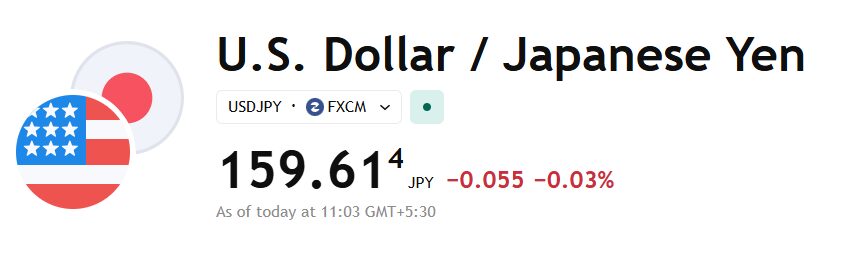
Traders look towards the Bank of Japan’s operational policy statements, as unanticipated changes can cause rapid shifts. The pair also acts as a safe haven during elections, and because of the uncertainty in U.S. politics, the yen will likely appreciate. A thorough analysis of these factors is critical for adequately positioning during the elections.

USD/JPY Features, Pros & Cons
Features:
- Major, highly liquid pair
- U.S. interest rate + Bank of Japan policy driven
- Safe haven in uncertain times
- Trading has tight spreads.
- Very responsive to geopolitical uncertainty
Pros:
- Execution is easy due to high liquidity.
- Policy change reactions are predictable.
- Suitable for short-term trading and swing trades.
- Transaction costs tend to be low due to lower spreads.
- Trading safe haven movements can be used to hedge.
Cons:
- Calm market conditions can lead to low volatility.
- Interventions by the BOJ can be sudden and sensitive.
- Global risks are often predictable and sentiment driven.
- If a position is highly leveraged, the margin needed for a position may be lost due to market volatility.
- In periods of low market volatility, the profit potential is low.
2. USD/EUR
The USD/EUR pair is the most traded in the world. It reflects the political and economic equilibrium of both the U.S. and the Eurozone. The 2026 U.S. Midterm Elections will likely impact the strength of the dollar, and if a risk-off sentiment dominates the market, the impact will be more pronounced.

The elections will increase volatility for investors in the Eurozone, especially concerning economic statistics, decisions regarding the European Central Bank (ECB), and cross-border investment flows. Due to U.S. Treasury yields and volatile politics, midterm elections will favor short-term investors. A longer-term outlook will help identify elections that will increase spending or enacting regulations.
USD/EUR Features, Pros & Cons
Features:
- Most traded forex pair
- U.S. and Eurozone data driven
- Very liquid and stable
- ECB + Fed policies are forex pair driven
- Global equities correlation + driven
Pros:
- Liquidity and spreads are traded
- Technical + fundamental analyses support is strong.
- All trading styles are conducive.
- Major economic news reactions are predictable.
- Position exits and entries are easy.
Cons:
- Gradual economic volatility may constrain short-term economic profit.
- Economic shocks can trigger an increase in market volatility.
- Overexposure can increase leveraged trading.
- News trading can lead to economic shocks.
- In times of economic crises, the long-term trend of the pair may reverse.
3. USD/CAD
The USD/CAD exchange rate can be influenced by the U.S.-Canada trade relationship, and the price of crude oil, and other commodities, and as of recent, the 2026 midterms are likely to cause trade policy and energy market political changes.
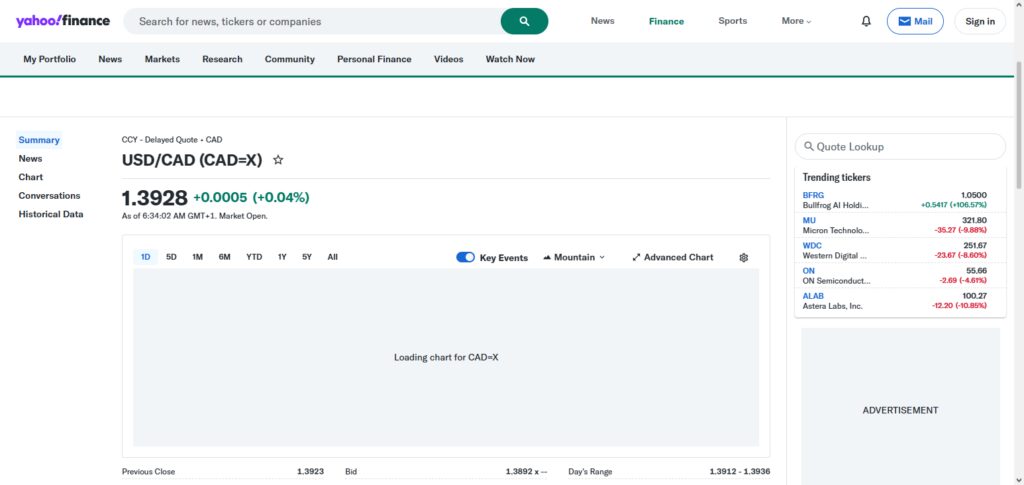
Crude oil is likely to strengthen the Canadian dollar, and when the market is risk averse due to the imminent elections, the Canadian dollar will weaken.
It’s prudent to prepare for high volatility as the Canadian economy will likely be impacted due to changes in U.S. government spending, Canadian trade policies, and the Canadian economy. In conjunction, USD/CAD volatility and the elections will likely result in increased interest rates and polling predictions to cater to the risk-on and risk-off.
USD/CAD Features, Pros & Cons
Features:
- Tied to commodities (oil & energy)
- Based on U.S. and Canada trade policy
- Moderate liquidity
- Linked to price of crude oil
- Reports sensitive
Pros:
- Strategies on the fundamentals and technicals can be employed
- Predictive trading is possible due to oil correlation
- Trend market can be profited due to volatility
- Swing trading is solid here
- Medium risk versus emerging market pairs
Cons:
- Commodity dependance may cause sudden volatility
- U.S. and Canada policy shifts could surprise the market
- Spreads > majors (a bit)
- Low commodity = Less predictability
- Stops can be hit due to reversals
4. USD/CHF
The USD/CHF pair is considered a safe-haven pair, meaning that it will strengthen in times of political or economic turmoil. The 2026 U.S. midterms are likely to cause an increase in safe-haven USD/CHF demand as there are expected to be a great deal of disarray surrounding the elections.
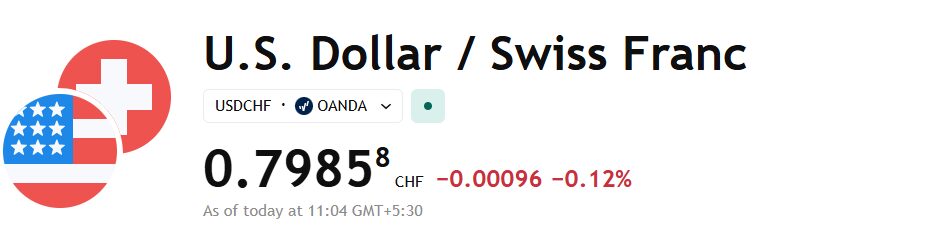
Mid-paragraph, division in the interest rates between the U.S. and Switzerland, is also a contributing factor to the demand for USD/CHF, particularly when it is combined with political unrest. Using these principles, an informed trader will be able to take advantage of the expected volatility or long-term bets with the elections on the horizon.
USD/CHF Features, Pros & Cons
Features:
- A safe haven pair
- Global risk off = moves
- Policies of the Swiss National Bank (SNB)
- Moderate liquidity
- U.S. dollar correlation
Pros:
- Provides ability to hedge during volatility
- Very reliable during geopolitical changes
- Provides the ability to take risk-off approaches
- Tight spreads normal trade
- Less influenced by commodities
Cons:
- Low in range markets
- No SNB moves = no volatility
- Little ability to trend (long term)
- Can act the opposite of expectations in the global equities markets
- Elections need a watchful eye
5. USD/GBP
Changes in political and economic conditions in both the U.S. and the U.K. have a major influence on the USD/GBP pair. Depending on how the U.S. Midterm Elections 2026 impact policies, the USD/GBP pair could determine how investors feel about USD/GBP.
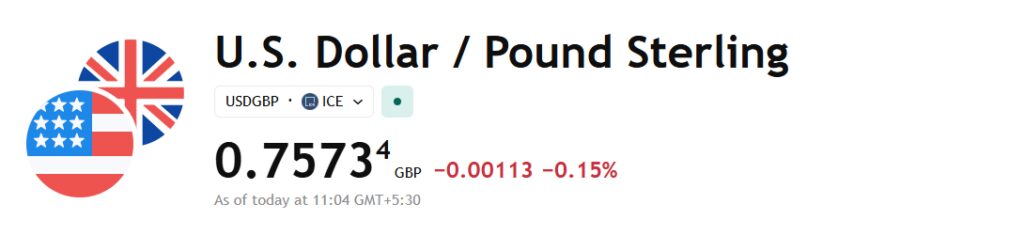
In the short-term, investors should analyze the U.K. post Brexit policies, U.K. economic data releases, and the monetary policies of the Bank of England due to their effects on volatile USD/GBP pair. There could be both short and long-term trading horizons on the pair.
In addition to the above factors, traders should also be aware of the movements of the equity markets in the U.K. and how they have a correlation with the GBP. This is especially the case during the U.K. Elections and the U.S elections as a result of the potential impact of the elections on the economic policies of the countries.
USD/GBP Features, Pros & Cons
Features:
- Influenced by U.S. and U.K. economic data
- Volatility is observed during periods of high political instability
- Integrated into global markets
- Medium to high liquidity
- Sensitive to the Bank of England and Federal Reserve
Pros:
- Both short and long term trading strategies can be long
- There is a high potential for the pair to become
- The pair is reliable, and news analysis is supported.
- Active market during London and New York sessions
- Provides value with the potential for risk-on trading strategies
Cons:
- Sharp swings can increase trading risk
- Uncertainty related to Brexit might impact the trends
- Unforeseen flows can provoke unexpected fluctuations
- Off-peak hours mean higher spreads
- Requires risk management
6. USD/CNY (offshore CNH)
Chinese policies and U.S. macroeconomic factors influence the USD/CNH pair. U.S. Midterm Elections 2026 could impact trade policies, tariffs and sanctions, hence heightening the possibility of increased volatility. In the process, factors like the economic growth of China, the PBoC policies, and the liquidity of the off-shore market could be tracing effects of the politics in the U.S. The USD/CNH pair tends to be more volatile when trade risks are high, hence is more aligned for speculative type positions.
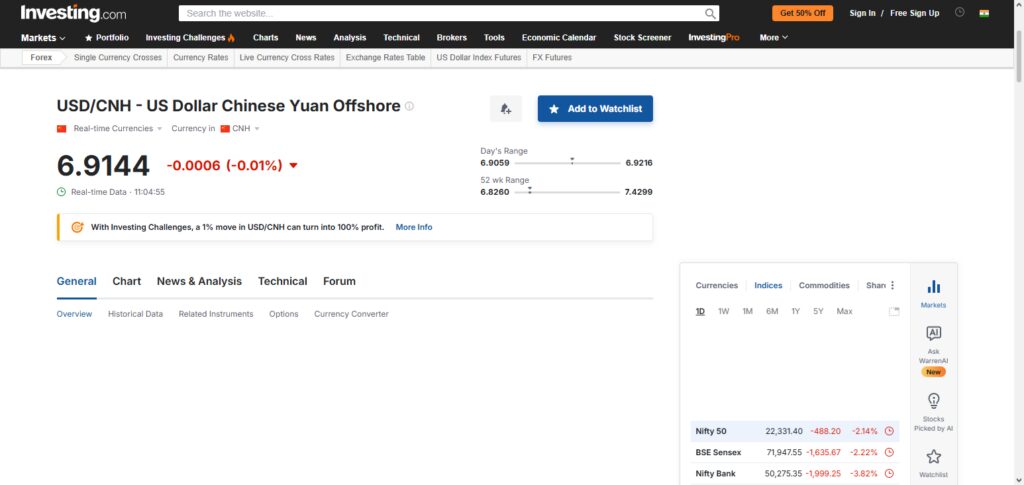
A good political condition allows trading to proceed easily and smoothly. Using a blend of technical and political analyses, traders are able to prepare for breaks and retracements, as well as identify the need for positions that would decrease the level of risk that is present due to the elections.
USD/CNY (Offshore CNH) Features, Pros & Cons
Features:
- Offshore yuan; reflects relations between China and the U.S.
- Moderate liquidity
- PBOC policies govern this currency
- Trade and geopolitical worries impact this market
- Less correlation with most major forex pairs
Pros:
- Speculative trading can be profitable due to the volatility
- Emerging market risks can be added to a diversified portfolio
- Risk related trading sentiment can be
- Useful for trading strategies related to macroeconomics
- Limited correlation reduces risks from multiple pairs trading
Cons:
- Considerable government intervention
- Less liquidity than major pairs
- Wide spreads can occur.
- Price movements can be abrupt and unpredictable
- Requires extensive knowledge of policies between China and the U.S.
7. USD/BRL
Because USD/BRL is the U.S. dollar compared to the Brazilian real, it is an emerging market currency pair. They are both responsive to the political situation in Brazil, and the macroeconomic changes in the U.S.
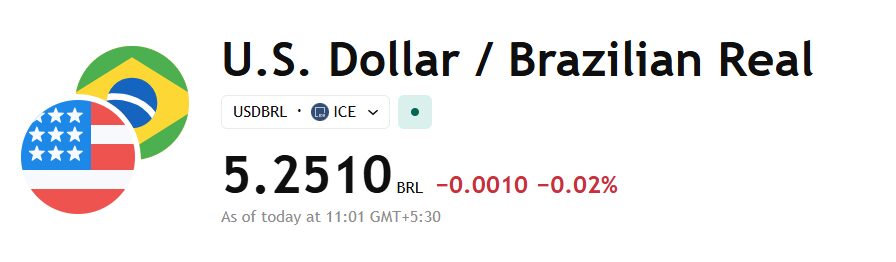
During the 2026 midterms, any expected changes with the U.S. trading system, commodity policy, or overall risk sentiment, the BRL is expected to be more volatile. Changes to the mid paragraph commodity prices, especially in the BRL, soy, oil and metals, will changes the pair.
Due to the influence of inflation and the central bank in Brazil, there has been greater volatility, as midterm elections draw closer. USD/BRL gives short term traders and emerging market risk investors more election-based hedging strategies against emerging market risks.
USD/BRL Features, Pros & Cons
Features:
- Emerging market currency
- Highly volatile
- Influenced by economic and political occurrences in Brazil
- Linked to commodities (soy, oil, metals)
- Moderate liquidity
Pros:
- Potential returns can be extremely high in trending markets
- Sharp reactions to political occurrences
- Good for short-term speculative trading
- Provides diversification from majors
- Opportunities during swings in prices of commodities
Cons:
- Extreme volatility increases the risk
- Wide spreads can occur during low liquidity
- Political instability can suddenly trigger losses
- Less predictable than major pairs
- Requires close monitoring
8. USD/ZAR
Because of USD/ZAR, risk is political and economic, and the most responsive is the 2026 U.S. midterms. The South African rand is viewed as a risk-based currency, so greater U.S. political uncertainty leads to greater volatility. In the mid paragraph, commodities are of particular importance, especially gold and platinum, as South Africa is a large exporter.
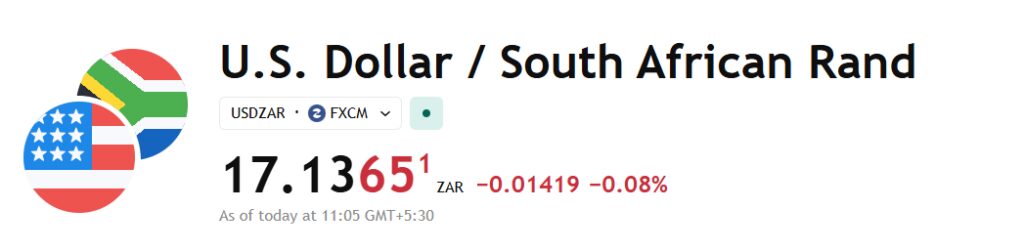
Changes in the South African Reserve Bank’s interest rates will also impact this pair. By using great technical and fundamental strategies, volatility can be taken advantage of as an emerging market risk by election driven volatility.
USD/ZAR Features, Pros & Cons
Features:
- Emerging market pair
- Risk sentiment impacts pricing
- Responsive to price fluctuations for gold and platinum
- Average liquidity
- Pricies react to changes in interest rates
Pros:
- Honest and open capital markets creating liquidity
- Desirable both for risk-on and risk-off strategies
- Major pairs have little to no correlation creating good diversification
- News about the economy and politics will create strong moves
- Possibility to trade gold and platinum prices
Cons:
- Market moves can create very high risk
- Wide margin gaps are common in off-peak hours
- Economic emergencies create risk
- Economic emergencies create risk
- Protective risk management is required.
9. USD/INR
The dollar rupee pair displays USD versus INR. The rupee has INR rupee volatility as a result of India’s economic strategies as well as the worldwide risk sentiment. The INR volatility is also influenced by the RBI monetary policy, the trade balance, and the geopolitical situation in South Asia. Investors look for patterns in the fundamentals of the economy.
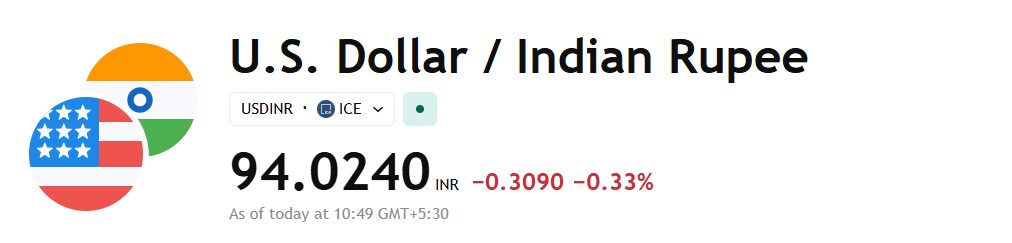
Analysts look for patterns in the fundamentals and the patterns of USD/INR in long-term and medium-term positioning opportunities.
Political strategies employed by the United States have the potential to influence trade strategies, whether they pertain to developed markets or markets that are emerging. Implementing a hedging strategy may minimize the risk of sudden election-driven changes.
USD/INR Features, Pros & Cons
Features:
- Currency from an emerging market
- Governed by Indian economic data and the RBI policy
- Average liquidity
- Impacts global risk sentiment
- Impacted by capital movements
Pros:
- Medium to long term positions can be taken
- Indian economy reacts predictably to set macro data
- Forex
- Imbalances caused by volatile external economic conditions
- Weak dollar positions can be offset
Cons:
- When positioned down liquidity is a problem
- The predictability of emerging market currency increases the risk
- News driven events can trigger external economic conditions
- Compared to majors there are weaker
- Technical analysis will be weaker
- Post-events require strong monitoring
10. USD/KRW
The USD/KRW currency pair measures South Korea’s economic health as well as its trading relationships with America and China. Given USD political risk sentiment, the Korean won could either appreciate or depreciate as the elections draw nearer, influencing Korean exports.
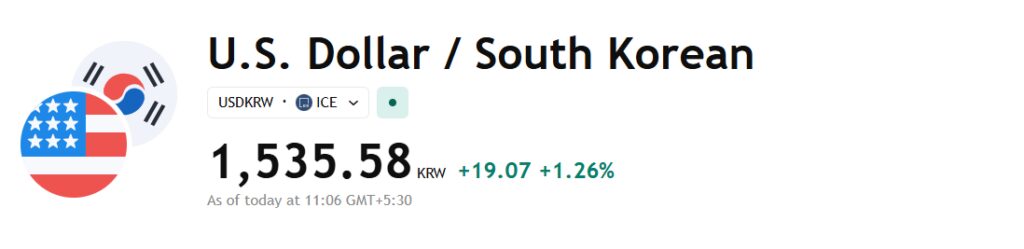
Middle of the paragraph, USD/KRW traders should factor in the Bank of Korea’s future monetary policy, the state’s future in relation to the polity and South Korean semiconductors, and the future of geopolitics.
USD/KRW pair is ideal for long-term hedging and short trading coming from news. Traders, especially when risks are in balance with the rewards globally, should properly place their positions to cover significant volatility in the emerging markets’ currencies, all during the uncertainties of the coming mid-term elections.
USD/KRW Features, Pros & Cons
Features:
- Currency from emerging markets
- Skewed to Economic Growth and Exports of South Korea
- Geopolitics of the US and China
- Average liquidity
- Driven by the rates of the Bank of Korea
Pros:
- Can trade the growth of the economy and exports
- Trading can be done in the median and short run
- Can be used to create diversification away from majors
- Price is easily accessible
- Can be used to trade the risk sentiment of the economy
- Opportunities during geopolitical developments
Cons:
- Moderate liquidity may widen spreads
- Geopolitical tensions can trigger sudden swings
- Requires awareness of regional economic data
- Emerging market risks increase unpredictability
- Abrupt central bank interventions possible
Conclusion
Forex trading during the U.S. midterm elections of 2026 could be both a perilous and a profitable activity. Trading could become more dangerous or more profitable due to the effects of the elections on the political climate.
They could create a great deal of volatility in the market. The major pairs of the emerging markets, such as the pairs of the major currencies and the USD/JPY, USD/EUR, and USD/GBP, offer excellent liquidity. The emerging market pairs such as the USD/BRL, USD/ZAR, and USD/INR offer greater volatility with the potential of a good trading strategy.
Interest rates, commodities, and geopolitical situations affect each pair differently. The best trading strategy lies in the combination of the technical analysis of the said currency pairs and the political and economic analysis as influenced by the midterm elections. Potential risks can be controlled while volatility can be captured.
FAQ
Which forex pairs are most affected by the 2026 U.S. midterm elections?
Major pairs such as USD/JPY, USD/EUR, and USD/GBP are highly sensitive due to their liquidity and correlation with U.S. economic policies. Emerging market pairs like USD/BRL, USD/ZAR, and USD/INR may experience amplified volatility based on risk sentiment and political developments.
Why does USD/JPY often move during U.S. political events?
USD/JPY is a safe-haven and highly liquid pair. Political uncertainty, such as the midterm elections, can strengthen the yen as investors seek stability, while shifts in U.S. interest rates or Treasury yields also influence price movements.
How does USD/EUR react to midterm elections?
USD/EUR reacts strongly to U.S. political developments because it reflects the economic balance between the U.S. and Eurozone. Changes in fiscal policy expectations, Treasury yields, or market risk sentiment can trigger short-term volatility.
Are emerging market pairs like USD/BRL and USD/ZAR risky during elections?
Yes. These pairs are sensitive to both U.S. political shifts and global risk sentiment. Commodities, interest rates, and investor confidence heavily influence these currencies, making them more volatile than major pairs during midterm periods.
How can traders prepare for midterm-driven forex volatility?
Traders should monitor U.S. economic indicators, election outcomes, interest rate expectations, and global risk sentiment. Using stop-loss orders, position sizing, and hedging strategies can help manage risks and take advantage of short-term trading opportunities.