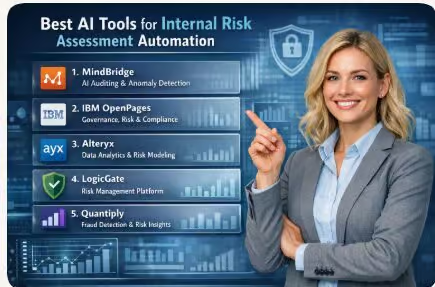
In this article, we discuss the Best AI Tools for Internal Risk Assessment Automation that assist companies in risk identification at a quicker rate as well as enhance compliance management and internal audit process automation.
AI-powered platforms have the ability to provide valuable insights based on real-time analytics and predictive insights while automating decision-making workflows, enabling businesses to mitigate operational risks and move towards building a strong, more efficient and scalable risk management system.
What are AI tools for internal risk assessment automation?
An AI tool for internal risk assessment automation is a software platform that automates the identification, evaluation, and management of risks within the organization using artificial intelligence (AI), machine learning, and advanced analytics.
These types of tools track operational activities, compliance requirements, financial data, cybersecurity threats and third-party risks in real time. They streamline the risk assessment process to minimize manual work and enhance accuracy, offering predictive insights that support informed decision-making.

AI risk tools help businesses enforce governance, comply with regulations, detect vulnerabilities early and build proactive and predictive risk management plans that enhance operational resilience and improve overall organizational performance.
Key Point & Best AI Tools for Internal Risk Assessment Automation
| AI / Risk Platform | Key Point |
|---|---|
| Deel HR | Automates global HR compliance, workforce risk monitoring, and contractor compliance management using intelligent workflows. |
| Mitratech Alyne | Provides AI-driven governance, risk, and compliance management with automated regulatory assessments and policy tracking. |
| OneTrust | Specializes in privacy, security, and third-party risk automation with AI-powered compliance and data governance tools. |
| Anaconda | Supports risk analytics through secure AI and data science environments used for model validation and risk analysis workflows. |
| Resolver | Centralizes incident, compliance, and enterprise risk management with automated assessment and reporting capabilities. |
| LogicGate | Offers customizable AI-driven risk workflows and no-code automation for enterprise risk and compliance programs. |
| ServiceNow GRC | Automates governance, risk, and compliance processes with real-time risk monitoring and integrated enterprise workflows. |
| Riskonnect | Provides integrated risk intelligence, analytics, and automated reporting for enterprise-wide risk visibility. |
| MetricStream | Delivers AI-powered enterprise risk management, regulatory compliance automation, and continuous risk monitoring. |
| IBM OpenPages | Uses advanced analytics and AI to automate risk assessments, internal audits, and regulatory compliance management. |
1. Deel HR
Deel HR is a global workforce management solution created to fully automate hiring, payroll and compliance, as well as contractor risk monitoring in numerous countries.
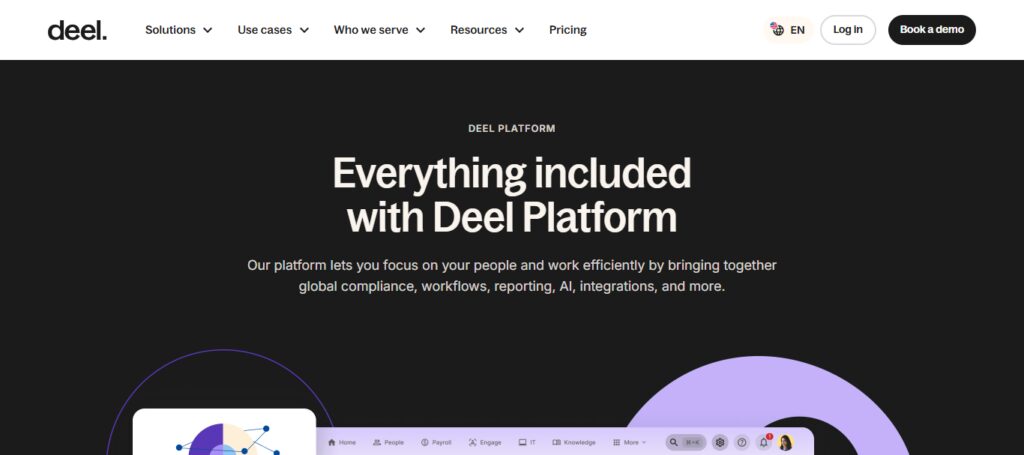
Deel is used by organizations to mitigate the risks of legal exposure from employment classification, international labor laws and payroll compliance. Powered by intelligent automation, the platform offers automated contract generation, tax documentation tracking, and compliance alerts.
Deel’s HR could prevent global complexities while mitigating workforce risks efficiently, making it one of the Best AI Tools for Internal Risk Assessment Automation. Its centralized dashboard improve visibility into employee compliance status, enabling HR risk assessments to be faster, scalable and leverage high accuracy for growing enterprises.
Deel HR Features
- Automate payroll and workforce compliance around the world.
- Contractor and employee onboarding workflows, automated
- Monitoring of International Labor Law Compliance Built In
- Centralized HR risk tracking dashboard.
- Automation of tax documentation and compliance reporting
| Pros | Cons |
|---|---|
| Simplifies global workforce compliance | Limited deep enterprise risk analytics |
| Automates payroll and contractor risk checks | Focused mainly on HR risks |
| Strong compliance monitoring across countries | Not a full GRC platform |
| Easy onboarding automation | Customization limitations |
| User-friendly dashboard | Advanced reporting requires integrations |
2. Mitratech Alyne
Alyne by Mitratech is a governance, risk and compliance platform designed to tackle regulatory complexity through automation. This allows organizations to do continuous risk assessments based on structured frameworks that match up with international standards, such as ISO and GDPR.
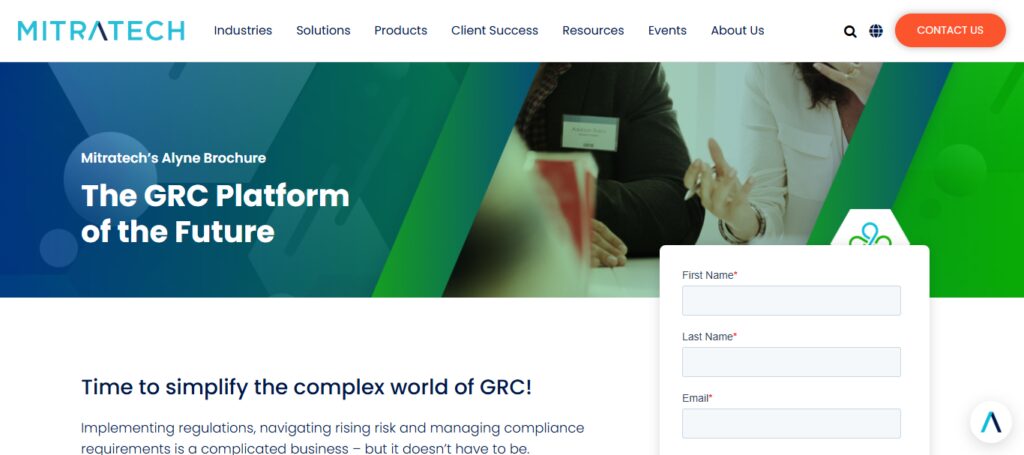
Alyne’s automatic AI-Driven risk scoring and recommendations for mitigations highlight areas of non-compliance. Vanta, a Best AI Tools of Internal Risk Assessment Automation solution that enables teams to align policies toward unified controls and automated audits within the same platform.
Its easy-to-use risk visualization tools allow leadership teams to clearly see levels of exposure while enabling monitoring of enterprise-wide compliance as well as operational resilience.
Mitratech Alyne Features
- Intelligent governance, risk, and compliance assessments.
- Out-of-the-box regulatory frameworks and control libraries.
- Automated Policy and Risk Control Management
- Real-time compliance monitoring and alerts.
- Visual analytics dashboards and risk scoring.
| Pros | Cons |
|---|---|
| Strong compliance and risk assessment automation | High implementation cost |
| Real-time regulatory intelligence | Requires training for beginners |
| AI-driven risk scoring | Complex setup for small firms |
| Centralized control framework | Heavy enterprise focus |
| Excellent audit readiness features | Custom workflows may need experts |
3. OneTrust
OneTrust is the privacy, security, and data governance platform used By 25%+ of the world’s population to comply with numerous regulatory risk & digital compliance obligations.
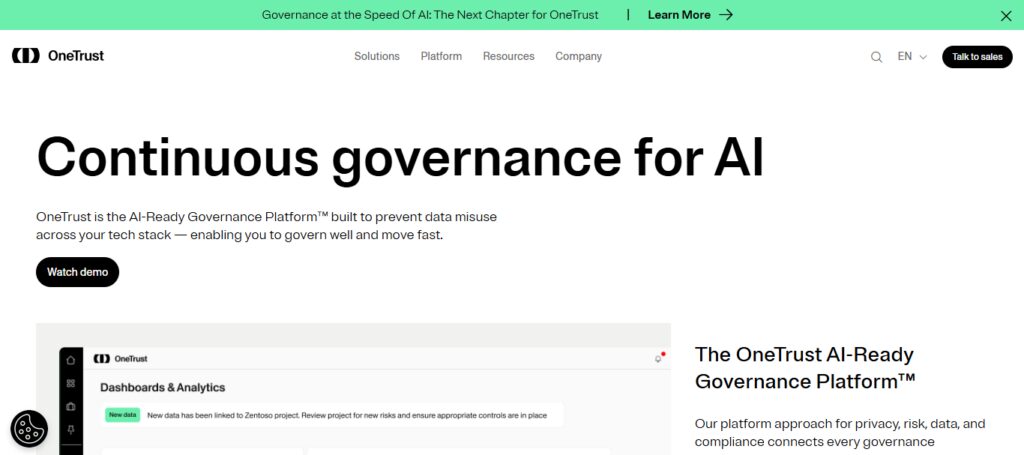
It uses AI-based workflows to automate processes such as data mapping, vendor risk management, consent tracking and privacy impact assessments. OneTrust is used by businesses to ensure compliance with global privacy laws including the GDPR and CCPA.
Best AI Tools for Internal Risk Assessment Automation: OneTrust Continuous monitoring of risks to sensitive data and third party exposures Its automation functionality helps to reduce the amount of manual work required for compliance, whilst enhancing internal governance functions and increasing visibility throughout enterprise risk management programs.
OneTrust Features
- He’s looking for automated data privacy and consent management.
- Third-party vendor risk assessment tools.
- Data discovery and mapping automation.
- Regulatory compliance tracking (GDPR, CCPA etc.)
- AI-powered privacy impact assessments.
| Pros | Cons |
|---|---|
| Industry leader in privacy risk automation | Expensive licensing tiers |
| AI-based compliance monitoring | Interface can feel complex |
| Strong ESG and third-party risk tools | Setup takes time |
| Extensive regulatory coverage | Overkill for small companies |
| Automated data governance workflows | Requires ongoing management |
4. Anaconda
Anaconda offers a safe data science and artificial intelligence development domain that is extensively used for hazard modeling, analytics, and predictive decision-making. Organizations use Anaconda to develop machine learning models to evaluate operational, financial and cybersecurity risks based on advanced statistical methods Anaconda.
It also enables secure collaboration and reproducible workflows, as well as governance of AI models used in risk evaluation. Chosen as one of the Best AI Tools to Automate Internal Risk Assessment, Anaconda allows data teams to automate risk forecasting and anomaly detection processes. Its Python-based tools help enterprises transform raw data into actionable insights that can strengthen internal risk assessment strategies.
Anaconda Features
- Pen-test-ready AI and data Science development environment.
- Risk modeling using machine learning tools.
- Package management for analytics workflows.
- Collaborative data science project management.
- Deploying AI models in a reproducible and governed manner.
| Pros | Cons |
|---|---|
| Secure AI and data science environment | Not a dedicated GRC solution |
| Open-source ecosystem flexibility | Requires technical expertise |
| Strong governance for AI models | Limited non-technical usability |
| Supports risk modeling and analytics | Manual compliance configuration |
| Scalable for enterprise AI projects | Needs integration with risk tools |
5. Resolver
Resolver is an integrated risk management platform used for incident management, compliance and enterprise risk. Its operational data, investigations, and risk analytics create a complete picture of threats to an organization.
Resolver automates risk identification through incident reporting workflows and intelligent analytics that help highlight emerging vulnerabilities. Awareness of the top 20 risks helps align risk, security, and compliance teams coalesce in collaboration for continuous improvement, positioning Numa as one of the Best AI Tools for Internal Risk Assessment Automation.
The system’s reporting dashboards allow leadership to effectively prioritize mitigation strategies and minimize such manual administrative burden inherent in traditional risk management processes.
Resolver Features
- Compromise between incident and risk management.
- Automated risk assessment workflows.
- Compliance and audit tracking tools.
- Centralized risk intelligence dashboard.
- Investigation and case management automation.
| Pros | Cons |
|---|---|
| Integrated risk intelligence platform | Interface learning curve |
| Incident and threat management automation | Premium pricing |
| Centralized risk visibility | Reporting customization limited |
| Good operational risk monitoring | Implementation time required |
| Strong analytics dashboard | Smaller ecosystem integrations |
6. LogicGate
LogicGate is an automated governance, risk and compliance platform constructed upon a no-code environment. Credeb is a risk assessment platform that enables organizations to create bespoke risk flows, develop automated internal controls and harmonize methodologies with minimum engineering resources required.
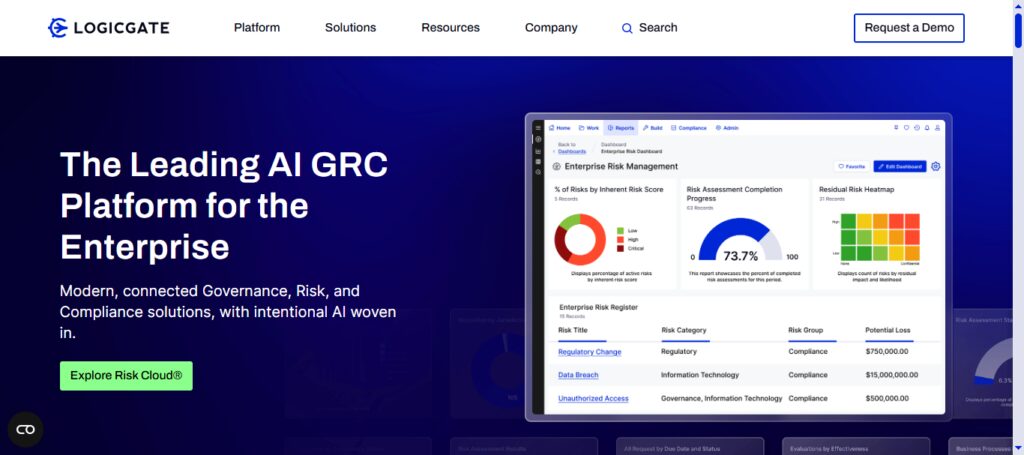
LogicGate allows continuous monitoring of operational risks and easily integrates with other enterprise systems for real-time insights. Sitting pretty in the Top AI tools for automating Internal Risk assessment the platform makes compliance processes easy through automation and custom dashboards.
Faster risk evaluations, greater accountability, and scalable governance frameworks that respond to changing regulatory and operational challenges all benefit businesses.
LogicGate Features
- Workflow automation for risk management, with no code.
- Customizable governance and compliance processes.
- Continuous risk monitoring capabilities.
- Automated internal control testing.
- Real-time reporting and analytics dashboards.
| Pros | Cons |
|---|---|
| No-code workflow automation | Advanced features cost extra |
| Highly customizable risk workflows | Initial configuration effort |
| Excellent third-party risk management | Requires governance planning |
| Scalable cloud-based system | Training required for admins |
| Strong automation capabilities | Reporting complexity for beginners |
7. ServiceNow GRC
With ServiceNow GRC, the power of the ServiceNow platform can be extended to automagically enable governance, risk and compliance activities into enterprise flows. This embeds risk management into the business by automating control testing, issue tracking and policy enforcement.
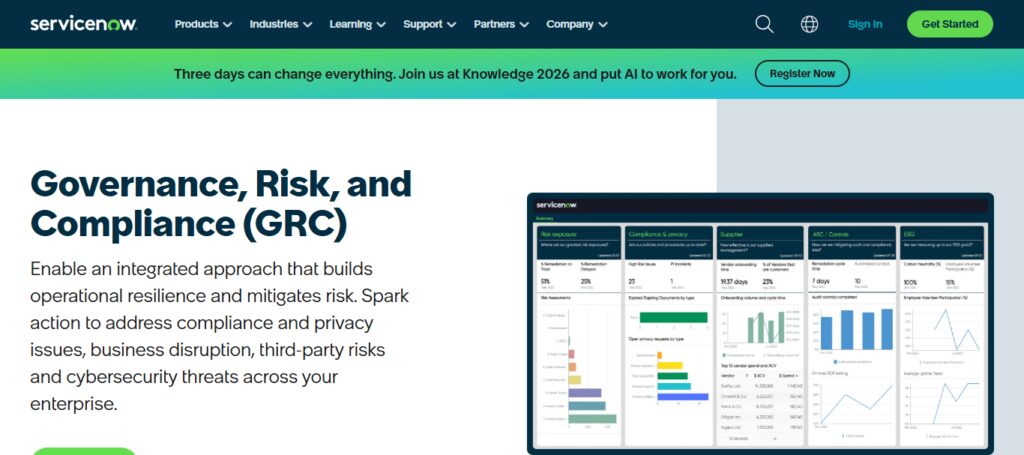
AI-driven workflows enables monitoring of organizational risks and performing remediation actions when thresholds are breached. Named as one of the Best AI Tools for Automating Internal Risk Assessments, ServiceNow GRC increases operational transparency across a business and connects risk data with IT, security, and other business processes.
Its unified risk register and automation capabilities enable organizations to actively address hazards while enhancing compliance efficiency and decision-making precision.
ServiceNow GRC Features
- Bots for governance, risk and compliance workflows
- Ongoing risk monitoring and remediation tracking.
- Integrated policy and control management.
- Risk lifecycle automation across departments.
- Centralized enterprise risk visibility platform.
| Pros | Cons |
|---|---|
| Enterprise-grade risk automation | High deployment cost |
| Seamless IT and security integration | Needs dedicated administrators |
| AI-powered risk insights | Complex customization |
| Continuous compliance monitoring | Long implementation cycle |
| Strong enterprise scalability | Best suited for large organizations |
8. Riskonnect
Riskonnect is the only enterprise risk intelligence platform that connects all your risk management, compliance and operational resilience efforts across one system. It offers advanced analytics, automated risk scoring and real-time monitoring to help organizations detect vulnerabilities as early as possible.
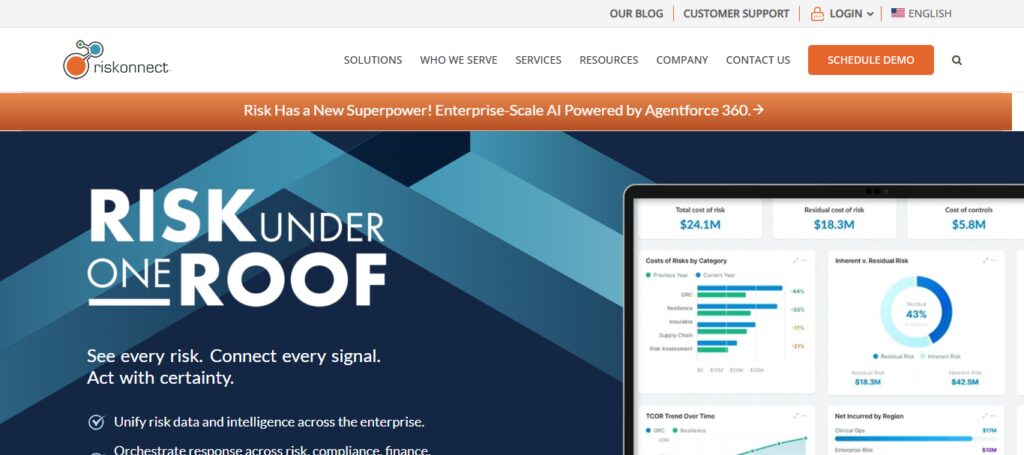
Riskonnect links together financial, operational and strategic risk data to enable better executive decisions. Following is the list of Top AI Tools for automating Internal Risk Assessment which brings together organizations to automate assessments, reduce hours on reporting, and keep departments in sync.
Its predictive analytics features enable companies to foresee disruptions, enhance governance frameworks, and provide consistent risk management across global operations.
Riskonnect Features
- Enterprise-wide risk intelligence management.
- Tools for predictive risk analytics and reporting.
- Integrated compliance and audit management.
- Real-time operational risk monitoring.
- Tools for business continuity and resilience planning
| Pros | Cons |
|---|---|
| Unified enterprise risk management | Interface customization limits |
| Real-time risk analytics | Can be expensive |
| Strong business continuity tools | Requires training |
| Good reporting automation | Smaller third-party ecosystem |
| Cloud-based accessibility | Setup may take time |
9. MetricStream
MetricStream offers a enterprise-grade risk, governance and compliance platform tailored for large organizations dealing with complex regulatory landscapes. It leverages AI-driven analytics to continuously monitor risks, automate internal audits and maintain auditing compliance with global standards.
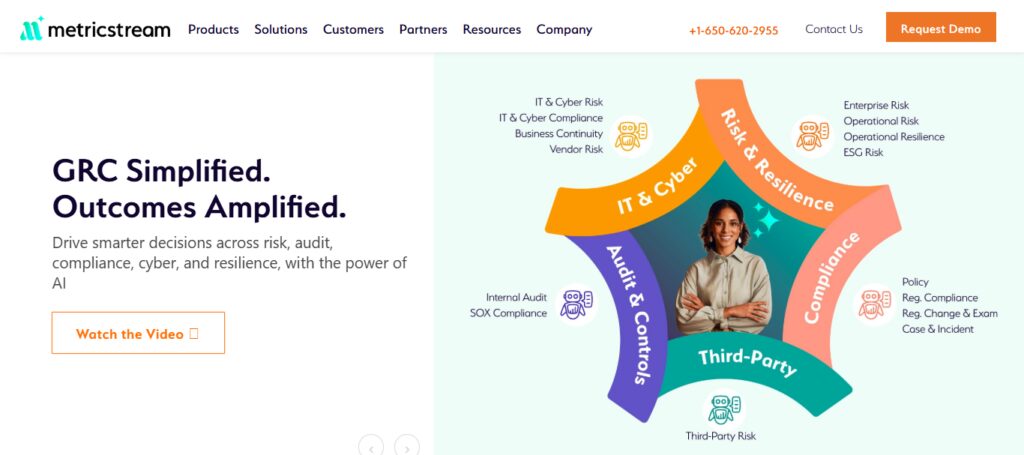
MetricStream is a provider of risk intelligence solutions that help integrate risk across departments within an organization, serving up real-time dashboards and automatic workflows to mitigate against risks.
It is one of the Best AI Tools for Internal Risk Assessment Automation and improves transparency into enterprise risk exposure and accountability. The platform enables organizations to move from reactive risk management approaches to a proactive data driven decision framework around risk intelligence.
MetricStream Features
- AI-powered enterprise risk management platform.
- Automated regulatory compliance tracking.
- Automation in internal audit and policy management
- Centralized risk dashboards and analytics.
- Risk Mitigation Workflows with Continuous Monitoring
| Pros | Cons |
|---|---|
| Comprehensive GRC capabilities | Complex onboarding process |
| Advanced risk analytics engine | Higher licensing costs |
| Excellent audit and compliance tracking | Requires expert configuration |
| Scalable enterprise solution | Not ideal for small businesses |
| Strong regulatory framework support | Heavy system architecture |
10. IBM OpenPages
It is IBM OpenPages, an enterprise-grade governance risk and compliance solution with advanced analytics and AI capabilities. It streamlines risk identification, policy management, regulatory tracking, and internal audit processes on a single platform.

OpenPages | Used by organizations to assess risk scenarios, improve governance transparency and monitor compliance performance. Best AI Tools for Internal Risk Assessment Automation: The solution works natively with much greater IBM analytics ecosystems, serving up risk insights ahead of the curve.
Its scalable architecture can accommodate complex enterprises in their efforts to modernize internal risk management through automation, intelligent analytics and continuous compliance monitoring.
IBM OpenPages Features
- AI-enabled risk identification and assessment.
- Comprehensive management of governance, risk and compliance
- Automated internal audit management system.
- Policy management tools and regulatory reporting
- Intermediary analytics and predictive risk insights.
| Pros | Cons |
|---|---|
| AI-powered risk management automation | Enterprise pricing model |
| Integrated with AI analytics tools | Needs technical setup |
| Strong governance and compliance workflows | Training required |
| Advanced reporting and dashboards | Implementation complexity |
| Highly scalable architecture | Smaller teams may find it heavy |
Why Businesses Need AI Risk Assessment Tools?
Faster Risk Detection
AI risk assessment tools perform running analyses over large volumes of organizational data that help detect operational, financial, cybersecurity and compliance risks on an organization before they can escalate into major issues.
Improved Compliance Management
AI streamlines regulatory monitoring and policy enforcement, assisting organizations in keeping up with evolving global regulations while cutting down on manual compliance work and lowering the chances of facing expensive penalties or breaches.
Reduced Human Errors
Risk assessment processes done manually often result in inconsistencies and errors. AI systems normalize risk assessment, eliminate manual work and at the same time guarantee real-time reporting of risk decisions via data-based analysis and automated decision support.
Real-Time Risk Monitoring
AI tools offer real-time surveillance of internal operations, enabling businesses to set alerts on risks dynamically and respond rapidly to evolving threats or disruptions in activities.
Better Decision-Making
Through providing predictive analytics, AI risk assessment platforms also offer actionable insights that allow executives to make informed strategic decisions, prioritize mitigation initiatives, and enhance overall organizational resilience and long-term performance.
Challenges of AI Risk Automation
Implementation Complexity
Establishing AI risk automation systems necessitates technical knowledge, upgrades to infrastructure and meticulous planning. This makes it sometimes really frustrating for AI technologies considering it takes some effort to integrate the new tools with old legacy systems and workflows.
Data Privacy and Security Concerns
Sensitive organisational data is heavily used by AI platforms. The significance of data protection, privacy compliance, and secure access controls becomes paramount to avoid breaches, misuse, or regulatory non-compliance.
High Initial Investment
The AI risk automation solutions require an initial investment in software licensing, customization, employee training, and system integration that can be a burden for small or mid-size enterprises.
Skill and Training Requirements
It inevitably means sending employees for training to properly interpret analytics generated by AI, manage automated workflows and skills. Insufficient skilled professionals can delay adoption and diminish system effectiveness in organizations.
Over-Reliance on Automation
Human supervision might be compromised by excessive reliance on AI systems. To help contextualize those environmental variables, organizations need to balance getting the maximum out of automation with expert judgment and understanding of what matters most when it comes to ethical decision-making and risk assessment.
Benefits of Using AI for Internal Risk Management
Enhanced Risk Visibility
Especially since AI systems are continuously analyzing enterprise data to give organizations an all-year-round view of operational, financial and compliance-related risks, allowing leaders to take quick action on exposures before they escalate into major systemic risks.
Faster Decision-Making
With AI providing real-time analytics and predictive insights, executives can now evaluate the risk effectively, quickly prioritize the mitigation measures and make informed business decisions powered by accurate data-driven intelligence.
Improved Compliance Efficiency
From policy monitoring to regulatory tracking and audit preparation, AI automates the compliance burden with maximum accuracy.
Cost Reduction and Operational Efficiency
Automation reduces manual risk assessment tasks, brings down operational costs, decreases resource dependency and enhances workflow efficiency enabling teams to concentrate on long-term risk management functions.
Proactive Risk Prevention
Predictive AI models detect early patterns and deviations so that businesses can stop possible diversions, security threats, or financial losses before the company is halted in its tracks or organizational efficiency takes a hit.
Conclusion
The Best AI Tools for Internal Risk Assessment Automation Zenate offers including a specific plugin for organizations, which provides tools based on their size and complexity of the risk considering industry requirements.
Deel HR streamlines compliance for the workforce; Mitratech Alyne and OneTrust drive governance and privacy management. Enterprise solutions like ServiceNow GRC, MetricStream, and IBM OpenPages offer higher levels of automation all combined with real-time risk intelligence.
For example, tools such as LogicGate, Resolver and Riskonnect provide enhanced operational visibility while Anaconda can facilitate predictive risk analytics via AI modeling. In short, AI-enabled risk automation enhances compliance accuracy whilst minimizing manual effort and empowering proactive decision-making, enabling firms to establish robust, scalable and future-ready risk management capabilities.
FAQ
Why do businesses need AI for risk assessment?
AI helps businesses detect risks faster, reduce human errors, automate compliance monitoring, and provide real-time insights that support proactive risk management strategies.
Which industries benefit most from AI risk assessment tools?
Finance, healthcare, IT, manufacturing, government, and global enterprises benefit greatly because they face complex regulatory requirements and operational risks.
Are AI risk management platforms suitable for small businesses?
Yes. Platforms like LogicGate and Deel HR offer scalable solutions suitable for startups and mid-sized organizations, while enterprise tools support large corporations.
How does AI improve internal audits and compliance?
AI automates policy tracking, control testing, anomaly detection, and reporting, allowing auditors to focus on strategic risk evaluation instead of manual processes.
Is data security maintained in AI risk assessment tools?
Most leading platforms provide strong encryption, role-based access control, and regulatory compliance features to ensure secure data handling.