
In this article, we will discuss the: Best Crypto Exchange Software with Built-in Smart Contract Engine and how these smart platforms automate trading, settlements, and blockchain processes.
Through smart contract integration, exchanges can enhance security, transparency and efficiency while also making DeFi features, automated workflows to optimize the trading experience as well as introducing a scalable crypto trading infrastructure for today’s digital asset businesses.
What is Crypto Exchange Software with Built-in Smart Contract Engine?
A crypto exchange software that is built with a smart contract engine means that the trading platform uses blockchain-based smart contracts to automatically execute the main operation of an exchange, including actions related to order execution, asset settlement, token listing and fee distribution.
Its an intermediary system rather than a dispersed mediation but smart contracts are self executing codes that provide automation of rules defined on the blockchain. It increases transparency, lowers operational overheads, and reduces human error while allowing for smooth integration with DeFi services; these factors all lead to more efficient, secure, and automated crypto trading ecosystems.

Key Point & Best Crypto Exchange Software with Built-in Smart Contract Engine
| Crypto Exchange Software | Key Points |
|---|---|
| Openware (OpenDAX) | Open-source exchange framework with smart contract support, DeFi integration, customizable trading modules, and scalable architecture. |
| AlphaPoint Exchange Software | Institutional-grade platform supporting tokenization, automated smart contracts, liquidity management, and advanced security infrastructure. |
| Devexperts DXtrade Crypto | Enterprise trading solution with programmable automation, smart contract integrations, multi-asset trading, and high-performance matching engine. |
| B2Broker B2Trader | High-liquidity crypto exchange engine featuring smart contract execution, institutional tools, deep liquidity connectivity, and risk management. |
| ChainUP Exchange Solution | Modular exchange system supporting smart contract deployment, staking services, token issuance, and global compliance features. |
| Coinsclone Exchange Script | Ready-made exchange solution enabling smart contract automation, token trading, wallet integration, and customizable UI/UX. |
| Antier Exchange Development | Blockchain-focused exchange development platform offering custom smart contract creation, DeFi compatibility, and enterprise-level security. |
| Soft-FX Crypto Exchange | Liquidity-focused exchange software with smart contract automation, brokerage integration, secure wallet management, and scalable infrastructure. |
| Kraken Exchange Infrastructure | Institutional trading infrastructure supporting automated settlement processes, smart contract compatibility, and advanced risk controls. |
| Coinbase Exchange APIs | Developer-friendly APIs enabling smart contract interaction, automated trading workflows, secure custody integration, and scalable exchange operations. |
1. Openware (OpenDAX)
OpenDAX is an ultra-flexible open-source crypto exchange framework designed to be suit both startups and enterprise platforms. It features native smart contract capabilities that allow for automatic listings of tokens, decentralized trading logic, staking and DeFi integrations.
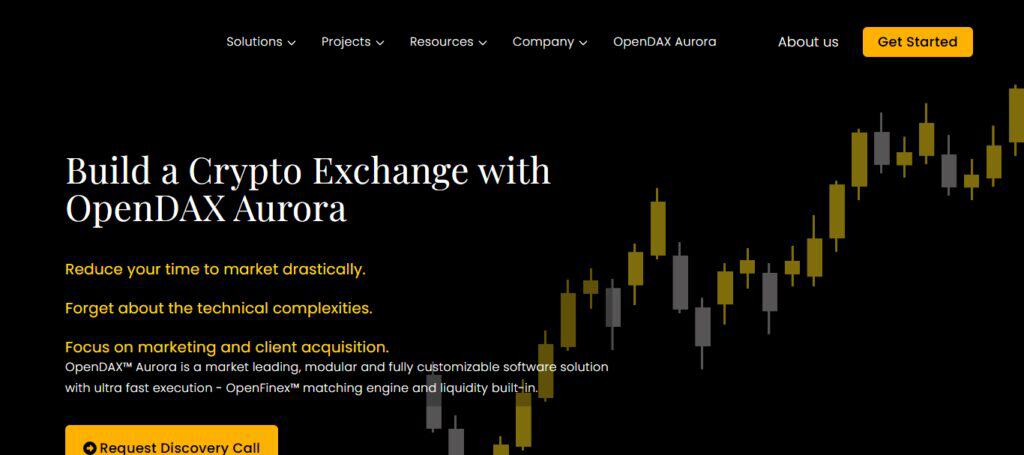
The motley of offerings includes customizable trading engines, wallet management solutions, liquidity connectivity and advanced layers ofapp security. With source code readily available, businesses can easily adapt it for hybrid CeFi-DeFi environments.
OpenDAX makes its way to the 10 Best Crypto Exchange Software with Built-in Smart Contract Engine through scalability, microservice architecture, and developer-friendly ecosystem that expedites exchange deployment while promoting transparency and automation via blockchain smart contracts.
| Feature | Description |
|---|---|
| Open-Source Architecture | Fully customizable open-source framework allowing developers to modify exchange functionality based on business requirements. |
| Smart Contract Integration | Supports automated trading logic, token listing automation, staking systems, and decentralized financial operations. |
| Multi-Wallet Management | Provides secure hot and cold wallet integration for efficient asset storage and transaction processing. |
| Modular Microservices | Microservice-based infrastructure ensures scalability, flexibility, and faster deployment for growing exchanges. |
| Liquidity Connectivity | Enables integration with external liquidity providers and market makers to improve trading volume. |
Openware (OpenDAX) Pros & Cons
Pros
- Is an open-source and gives you full freedom to customize and develop.
- Native smart contract functionality for DeFi automation.
- Scalable microservices architecture for startups and enterprises
- Robust developer ecosystem and community support
- Seamless integration with liquidity providers and third-party tools.
Cons
- Deployment and maintenance require technical knowledge.
- This may be confusing for non-technical teams during initial setup.
- Operational costs may increase due to the custom development.
- Needs continuous security monitoring.
- Less out-of-the-box enterprise support than on commercial platforms
2. AlphaPoint Exchange Software
AlphaPoint Exchange Software offers an institutional-grade, regulatory-ready infrastructure built on a foundation of reliability when it comes to digital asset trading. Its smart contract engine enables automation of settlement, tokenization, custody automation and programmable asset management.
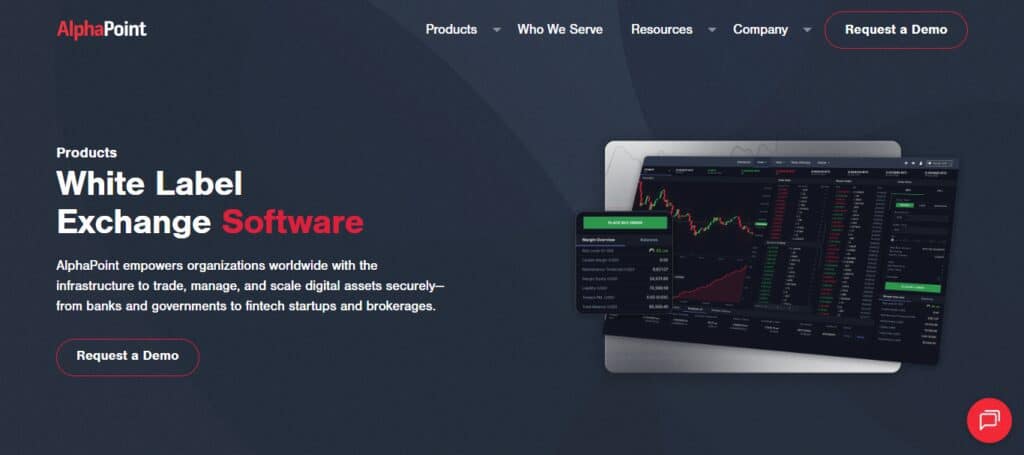
Exchanges can launch these advanced trading tools such as margin trading, staking services, and digital asset issuance. AlphaPoint is one of the 10 Best Crypto Exchange Software with Built-in Smart Contract Engine, Enterprise security and high transaction throughput, liquidity integration are available for banks, brokers, and fintechs. With white-label deployment, the platform is perfect for organizations looking to enter the market quickly with robust automation capabilities.
| Feature | Description |
|---|---|
| Institutional Trading Engine | High-performance matching engine designed for enterprise-level crypto trading platforms. |
| Smart Contract Automation | Enables automated settlement, token issuance, and digital asset management workflows. |
| Regulatory Compliance Tools | Built-in compliance modules supporting KYC, AML, and global regulatory standards. |
| Tokenization Support | Allows businesses to create and manage tokenized assets and digital securities. |
| Enterprise Security | Advanced security infrastructure including encryption, monitoring, and custody solutions. |
AlphaPoint Exchange Software Pros & Cons
Pros
- High performance reliability infrastructure, fit for institutions.
- Sophisticated smart contract automation for tokenization and settlements
- Tools for regulatory compliance such as KYC and AML.
- Enterprise-level trading environment with high scalability
- Data until October 2023 for Training Purpose.
Cons
- High licensing and implementation costs.
- More of an enterprise solution than a startup one.
- For custom features, you might need the help of a vendor.
- Deployment timeline can be longer.
- Less flexible than open-source offerings.
3. Devexperts DXtrade Crypto
Devexperts DXtrade Crypto, a professional crypto trading platform built by Devexperts for brokers, exchanges and institutional trading environments. It offers high-performance order execution, advanced charting features and multi-asset trading functionality within a customizable interface.
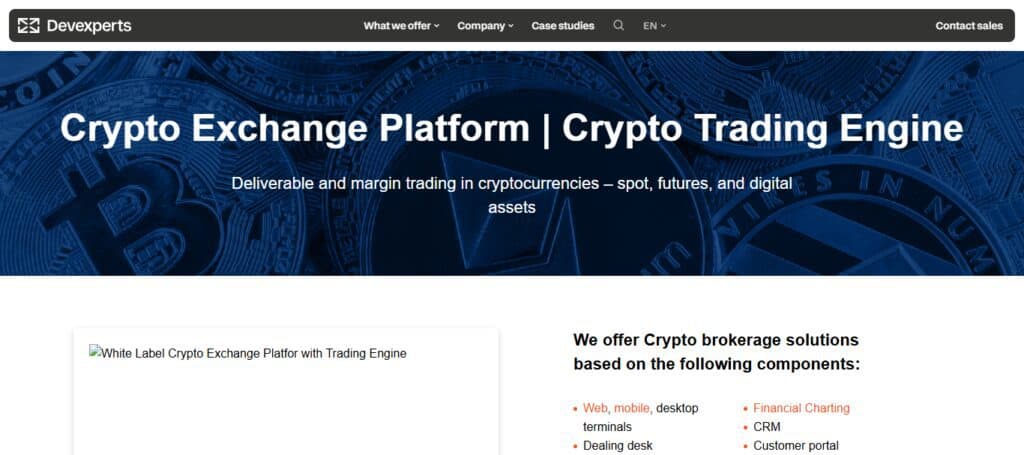
It facilitates crypto spot and CFD trading, liquidity connectivity, as well as robust risk management systems. The DXtrade Crypto also features API integration, smart automation features and enterprise scalable infrastructure for exchanges. Its modern architecture enables businesses to launch secure, flexible and high-speed cryptocurrency trading platforms fit for global digital asset markets.
| Feature | Description |
|---|---|
| Advanced Trading Interface | Professional-grade trading dashboard with analytics, charts, and order management tools. |
| Smart Contract Execution | Supports automated derivatives trading and programmable financial instruments. |
| Multi-Asset Trading | Enables trading across crypto, forex, and digital derivatives markets. |
| High-Speed Matching Engine | Delivers ultra-fast order execution for institutional trading environments. |
| API Customization | Flexible APIs allow integration with liquidity providers and external platforms. |
Devexperts DXtrade Crypto Pros & Cons
Pros
- Institutional user-focused professional trading interface.
- A high speed matching engine for speedy order execution
- Incorporating smart Contracts for automated trading operations.
- Multi-asset trading capabilities.
- Analytics, risk analysis and management tools.
Cons
- Premium pricing structure.
- Complex configuration for beginners.
- Requires experienced operational teams.
- Vendor support may be needed for customization.
- Not great for small crypto startups.
4. B2Broker B2Trader
B2Broker B2Trader is high-performance crypto matching engine & trading platform created by B2Broker for brokers, exchanges, and institutional traders. It also allows for spot and crypto CFD trading with ultra-fast order execution, deep liquidity integration, and advanced risk management tools.
Customizable UI, multi-asset trading with strong security architecture This technically advanced portal serves to aid companies in creating easy-to-scale crypto exchanges and comes with powerful order-book/Event-based matching, liquidity aggregation, professional markets trading infrastructure for the evolving digital asset space.
| Feature | Description |
|---|---|
| High Liquidity Access | Connects exchanges with deep liquidity pools for improved market efficiency. |
| Smart Contract Automation | Automates settlement processes and trading operations using blockchain contracts. |
| Ultra-Fast Matching Engine | Processes large trading volumes with minimal latency. |
| Risk Management Tools | Includes monitoring systems for exposure control and trading risk analysis. |
| Institutional Infrastructure | Designed for brokers and enterprise crypto trading businesses. |
B2Broker B2Trader Pros & Cons
Pros
- High Frequency trading optimized ultra-fast matcher
- Market efficiency expanding through deep liquidity integration.
- Automation of settlements and workflows by smart contracts
- Institutional-grade risk management tools.
- Platforms with strong API connectivity for expansion.
Cons
- Expensive infrastructure for small businesses.
- Requires professional trading environment setup.
- Without vendor assistance, customization options can be limited.
- Advanced features require technical expertise.
- Operational costs can be expensive as they are ongoing.
5. ChainUP Exchange Solution
They provide a modular crypto exchange ecosystem with built-in smart contract capabilities. It has capabilities for issuing tokens, staking them, adding NFTs and DeFi services, as well as automating governance processes.

Their platform offers wallet security systems, access to global liquidity and compliance-ready features for regulated markets. Under the 10 Best Crypto Exchange Software with Built-in Smart Contract Engine category, ChainUP provides exchange businesses easy access to scalable exchanges within plug-and-play modules.
Its cloud deployment options and a flexible architecture enable companies to integrate automation based on blockchain seamlessly while also supporting high transaction volumes and providing secure asset custody management.
| Feature | Description |
|---|---|
| Modular Exchange System | Plug-and-play modules for spot, derivatives, staking, and NFT trading. |
| Smart Contract Support | Enables DeFi integration, token issuance, and governance automation. |
| Cloud Deployment | Offers scalable cloud hosting for global crypto exchange operations. |
| Wallet Security System | Multi-layer wallet protection with asset custody management. |
| Compliance Ready | Supports international regulatory requirements and risk controls. |
ChainUP Exchange Solution Pros & Cons
Pros
- Lightweight modular system allowing configuration of Exchange
- Provides for smart contracts, staking, and DeFi services
- Cloud deployment enables rapid launch.
- Good asset management and wallets security
- Compliance-ready infrastructure for global markets.
Cons
- Licensing costs may be significant.
- Vendor dependency for upgrades.
- Custom integrations may need extra development.
- Certain advanced features are based on additional fee services.
- Learning curve for new operators.
6. Coinsclone Exchange Script
Coinsclone Exchange Script is a pre-built crypto exchange software solution for fast-track exchange development. Smart contract automation itself for the trading of tokens, payment settlements, and escrow services all make up a feature of this software which is completely decentralized.
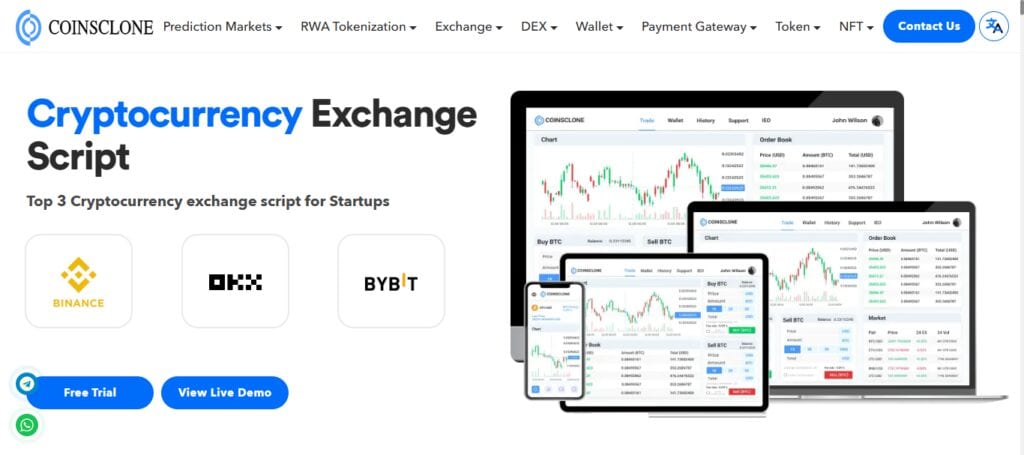
Without needing eons of dev time, your business can customize branding, trading pairs and platform functionalities. CoinsClone has built-in wallet integration, multi-currency support and high-end security protocols & furthermore it is one of TOP 10 Best Crypto Exchange Software with Built-in Smart Contract Engine in the list.
It is ideal for startups and entrepreneurs looking to minimize cost effective exchange deployment with automated blockchain operations and options for flexible scalability.
| Feature | Description |
|---|---|
| Ready-Made Exchange Script | Pre-built crypto exchange solution enabling rapid platform launch. |
| Smart Contract Automation | Supports automated escrow services, token trading, and payment processing. |
| Multi-Currency Support | Allows trading across multiple cryptocurrencies and token pairs. |
| Customizable UI/UX | Fully editable design and feature configuration options. |
| Integrated Wallet System | Secure crypto wallet integration for deposits and withdrawals. |
Coinsclone Exchange Script Pros & Cons
Pros
- A pre-built exchange solution for quick deployment.
- Cost-effective option for startups.
- Automated trading and payments via smart contracts.
- Custom design and trading capabilities.
- Multi-currency trading support.
Cons
- Requires customization for enterprise scalability.
- Security depends on implementation quality.
- Limited institutional-level features.
- Some performance optimization may be needed for large volumes.
- Operators are responsible for continued maintenance.
7. Antier Exchange Development
Antier Xchange Development specializes in Blockchain Based exchange solutions with smart contract extension. It powers automated DeFi trading, staking mechanisms, liquidity pools and decentralized governance implementation.
It enables developers to create custom smart contracts that can suit business logic and meet compliance needs. Antier offers end-to-end development, security auditing, and enterprise-grade blockchain integration which make it one of the 10 Best Crypto Exchange Software with Built-in Smart Contract Engine.
Well-attuned for innovative Web3 and Digital asset trading ecosystems, it facilitates decentralized transparent models while maintaining the performance capabilities of centralized exchanges.
| Feature | Description |
|---|---|
| Custom Smart Contract Development | Tailor-made smart contracts designed for business-specific trading logic. |
| Hybrid Exchange Model | Supports centralized performance combined with decentralized transparency. |
| DeFi Integration | Enables staking, liquidity pools, and decentralized governance features. |
| Security Auditing | Smart contract auditing and vulnerability testing for safe deployment. |
| Enterprise Blockchain Solutions | Provides end-to-end exchange development and consulting services. |
Antier Exchange Development Pros & Cons
Pros
- Custom smart contract development according to the requirement of your business
- Trained on data until October 2023.
- A robust consulting and development services on blockchain.
- Smart contract testing and security auditing
- Flexible exchange architecture.
Cons
- Development costs may be high.
- Project timelines are determined by the level of customization.
- Requires clear technical planning.
- Startup budgets leave little room for enterprise solutions.
- Heavy reliance on development partnership.
8. Soft-FX Crypto Exchange
Soft-FX Crypto Exchange is addressed to brokers and liquidity providers wishing to become part of the cryptocurrency market. Its smart contract functionality allows for automation of transaction processing, trading execution, and asset settlement over blockchain networks.
It combines the liquidity aggregation, risk management tools, and secure wallet solutions. Soft-FX is listed as one of the 10 Best Crypto Exchange Software with Built-in Smart Contract engine, provides an efficient scalable infrastructure that meets all requirements for institutional trading.
Other features include enhanced reporting systems, brokerage integrations and customized interfaces, allowing enterprises to construct productive exchanges using blockchain automation technologies.
| Feature | Description |
|---|---|
| Liquidity Aggregation | Connects multiple liquidity providers to ensure stable trading markets. |
| Smart Contract Settlement | Automates transactions and blockchain-based asset settlements. |
| Brokerage Integration | Designed for brokers entering cryptocurrency trading markets. |
| Advanced Reporting Tools | Real-time analytics and performance monitoring dashboards. |
| Scalable Infrastructure | Supports business expansion with high-performance system architecture. |
Soft-FX Crypto Exchange Pros & Cons
Pros
- Targeted at brokers entering crypto trading markets.
- Liquidity aggregation improves trading execution.
- Smart contract-based automated settlements.
- Advanced reporting and analytics tools.
- Scalable infrastructure for growing exchanges.
Cons
- Better fit for brokerage models vs retail exchanges
- Licensing fees can be expensive.
- Requires technical setup expertise.
- Expansion of certain custom features may incur additional costs.
- Limited open-source flexibility.
9. Kraken Exchange Infrastructure
Kraken Exchange Infrastructure is world-leading technology designed for institutions based on one of the world’s largest crypto trading platforms. It enables automated fulfillment, smart contract integration, and safe digital asset custody platforms.
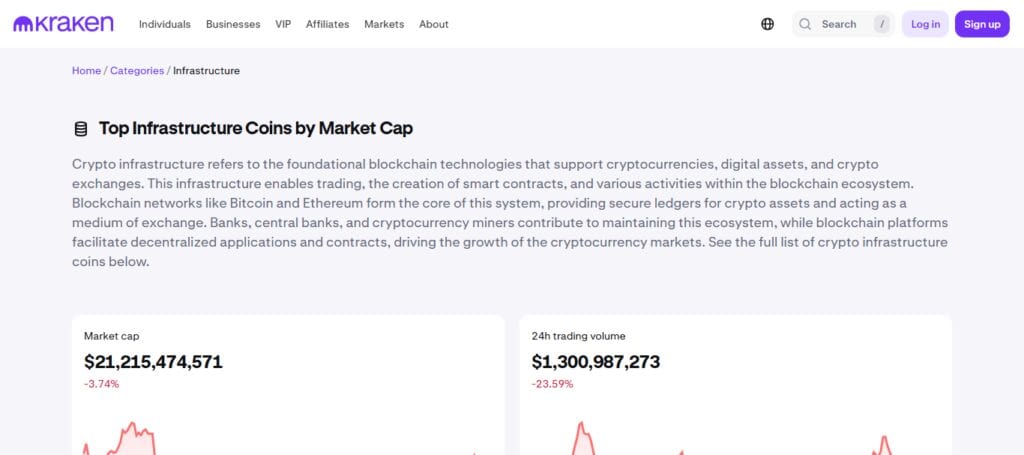
Exchanges that use this infrastructure enjoy high liquidity standards, sophisticated risk controls, and strong security frameworks. Under the Top 10 Crypto Exchange Software With Integrated Smart Contract Engine list, Kraken infrastructure focuses on reliable performance, regulatory compliance and enterprise-grade performance.
Its architecture is designed to scale trading operations while permitting automated settlements with smart contract execution validating transactions on the blockchain.
| Feature | Description |
|---|---|
| Institutional-Grade Technology | Infrastructure based on enterprise-level exchange performance standards. |
| Smart Contract Compatibility | Supports automated transaction validation and settlement workflows. |
| Secure Custody System | Advanced asset protection with cold storage and security monitoring. |
| High Liquidity Environment | Ensures reliable trading execution and deep market access. |
| Regulatory Alignment | Designed to meet strict compliance and operational standards. |
Kraken Exchange Infrastructure Pros & Cons
Pros
- Institutional-grade reliability and performance.
- Robust security standards and asset custody protection
- Smart contract-compatible trading operations.
- High liquidity and market stability.
- Regulatory-focused infrastructure design.
Cons
- Limited availability for independent deployment.
- Enterprise-level cost structure.
- Less customization freedom.
- Requires regulatory compliance readiness.
- Not ideal for early-stage startups.
10. Coinbase Exchange APIs
Coinbase Exchange APIs allows developers to create an automated trading platforms on top of smart contract ecosystem. DeFi APIs allow programmable trading strategies, blockchain interactions and custody management with automated transaction processing.
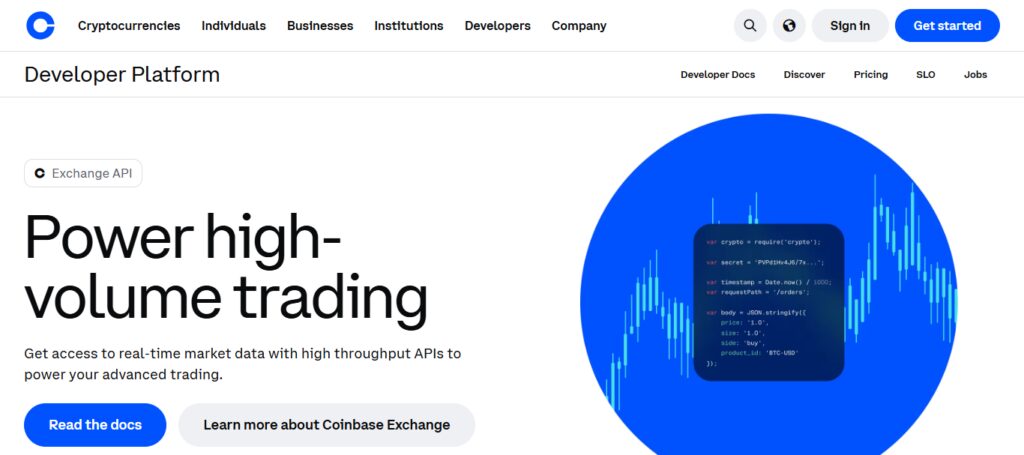
With secure API endpoints, developers can build sophisticated exchange services, wallets, and DeFi integrations. Coinbase APIs are one of the 10 Best Crypto Exchange Software with Built-in Smart Contract Engine, known for reliability, compliance readiness, and scalability.
Businesses can provide secure, automation-driven exchanges while taking advantage of one of the most-matured infrastructures in the global cryptocurrency ecosystem.
| Feature | Description |
|---|---|
| Developer-Friendly APIs | Powerful APIs for building trading platforms and crypto applications. |
| Smart Contract Interaction | Enables automated blockchain operations and programmable trading workflows. |
| Secure Custody Integration | Provides institutional-grade digital asset storage solutions. |
| Automated Trading Support | Allows algorithmic trading and order automation. |
| Scalable Infrastructure | Reliable global infrastructure supporting high transaction volumes. |
Coinbase Exchange APIs Pros & Cons
Pros
- Automated exchange builder APIs for developers.
- Secure and globally trusted infrastructure.
- Support of smart contract interaction and automation
- Scalable trading and custody services.
- Strong compliance and security standards.
Cons
- Dependency on Coinbase ecosystem.
- May have some form of API rate limits which impact high-frequency trading
- Transaction fees can be higher.
- Less backend control than with self-hosted solutions
- Full implementation requires development expertise.
Why Smart Contract Engines Matter in Crypto Exchanges
Automated Transaction Execution
Smart contract engines autonomously process trades and settlements that are automatically executed once predefined conditions have been met, removal of manual intervention helps eliminate operational delays while contributing to faster, accurate, safe and transparent processing of transactions across different blockchain networks.
Enhanced Security and Trust
This is due to the fact that smart contracts are executed on top of immutable blockchain tech, which ensures no one can change them without authorization. This adds an extra layer of security to the platform, reduces the risk of fraud, and fosters user faith in the system due to ensuring that all transactions are governed by predefined conditions that can be verified.
Reduced Dependence on Intermediaries
By allowing for peer-to-peer execution of transactions, smart contract exchanges eliminate the need for third-party intermediaries, lowering operational costs and increasing efficiency while also enabling decentralized governance of trading and asset management processes.
Faster Settlement and Clearing
Most exchanges have several layers of verifications one must undergo, however thanks to the nature of smart contracts, we can get instant settlement on-chain, which minimizes the transaction time at the cost of liquidity-moving-intervals and allows users to access their funds almost immediately after execution.
Improved Transparency and Auditability
Blockchain ledgers record all smart contract transactions, ensuring greater transparency and verification capabilities, real-time auditing and complete visibility over transaction history, which can help exchanges stay compliant and accountable for operational behaviors.
DeFi Integration Capability
Crypto traders and exchanges are at the heart of decentralized finance, with smart contract engines enabling features like staking for all tokens, liquidity pools that integrate seamlessly into order books mainstream and rendering lending protocols or yield farming as a button on the trading platform.
Programmable Trading Logic
Smart contracts allow exchanges to deploy automated trading algorithms, conditional orders, derivatives settlement, and algorithmic activity – making for complex financial products without the constant supervision of human operators.
Cost Efficiency and Operational Automation
Smart contracts automate processes, decreasing administrative workload, operational overhead and human errors for exchanges to run efficiently while enabling them scale trading services with minimal incremental operational costs.
How Smart Contract Exchange Platforms Work
Creating an Account or Connect a Wallet
Exchanges platform users register or connect their blockchain wallets. Smart contracts verify ownership, enabling you access to trading functionality while ensuring you never have to share a private key or rely on centralized accounts.
Asset Deposit and Token Verification
Users lock cryptocurrencies in wallets controlled by smart contracts. “The contract also checks for token authenticity by confirming whether the transaction has been written to the blockchain and stores assets in a secure “locked” storage before allowing trading or liquidity participation.
Order Placement and Trade Request
Orders can be placed by traders via the exchange interface to buy or sell. Order details are recorded by smart contracts on-chain along with execution conditions based on price, liquidity availability and previously defined rules for trading.
Order Matching Mechanism
The matching engine or the decentralized protocol matches compatible buy and sell orders. Smart contracts are able to independently verify conditions and initialize the process of executing trades once specified criteria match, with no human oversight.
Smart Contract Execution
Following order confirmation, the smart contract autonomously carries out trade logic — transferring assets between participants as per rules coded at the protocol level. This automatically helps to avoid manipulation or alteration of transactions without proper authorization.
Transaction Validation on Blockchain
A consensus mechanism helps the blockchain network validate executed transactions. After being confirmed, trade records are irreversible — this ensures transparency, security and permanent storage of exchange activity.
Automated Settlement Process
Smart contracts settle trades instantaneously by transferring their corresponding assets to the user wallets, removing clearing delays and automating balance updates right after the transaction is confirmed.
Fee Calculation and Distribution
Smart contracts automatically calculate and allocate trading fees paid through predefined fee structures and reward mechanisms to the exchange, liquidity providers, or governance pools.
Key Benefits of Built-in Smart Contract Exchange Platforms
Automated Trading Operations
Integrated smart contracts enable the automation of order execution, settlements and trading workflows between platforms, but also help minimize manual intervention while improving operational efficiency, accuracy and speed across 24/7 global crypto exchange networks.
Enhanced Security Protection
Smart contracts function on the principle of tamper-proof nature of blockchain networks, able to eliminate fraud with immutable logic and an unchangeable transaction history for securing asset transfers via a transparent manner.
Faster Transaction Settlement
Also known as smart contract exchanges, they execute transactions directly on blockchain networks, offering almost instant settlement that can eliminate traditional clearing delays for traders and provide them improved access to funds along with superior liquidity management options.
Reduced Operational Costs
By removing intermediaries and manual administrative processes from the equation, automation allows exchanges to lower operational expenses, staffing needs, and infrastructure costs while retaining efficient trading and financial management mechanisms.
Improved Transparency and Trust
Transactions are recorded on blockchain-ledgers and are visible to the public, which means that transactions can be verified in real time; allows transparent auditing; increases user confidence by allowing users to verify trade execution and immutability of transaction histories.
DeFi Integration Capabilities
By leveraging built-in smart contracts for easy integration of Decentralized Finance (DeFi) services like staking, lending, liquidity mining and yield farming; platforms can become more functional by attracting wider communities of crypto users.
Challenges and Considerations
Smart Contract Vulnerabilities
However, smart contracts that are built poorly may have coding bugs or loopholes in security that hackers can exploit. It is necessary to have proper auditing, testing and continuous monitoring, in order to prevent financial losses and systemic failures.
Gas Fees and Transactions Costs Are High
This becomes interesting at the smart contract level, where many blockchain networks charge a “gas” fee. On the other hand, on days when the network is congested; transaction costs can increase significantly without greatly affecting trading efficiency, thereby reducing user profitability on exchange platforms.
Scalability Limitations
Certain blockchain networks can be sluggish when handling high volumes of transactions instantly. These limitations can result in slower confirmations, network congestion and decreased performance during peak trading activity periods.
Regulatory and Compliance Challenges
Regulatory compliance: The changing global regulation, such as KYC, AML and data protection requirements must be followed by smart contract exchanges. The lack of regulatory clarity gives rise to legal threats for both exchange operators and users.
Complex Development Requirements
Exchange based on smart contracts requires skilled blockchain developers, advanced technical work is required to maintain them and regular updates of newly released protocols and technologies on the blockchain.
Irreversibility of Transactions
The transactions on blockchain done via smart contracts are final. Even simple mistakes in execution, wrong wallet addresses, or faulty contract logic can lead to permanent loss of assets with no point for recoverability.
Security Management Responsibilities
It should be noted that despite significant automation, exchanges also need to invest in strong cybersecurity tactics like penetration testing, key management systems and infrastructure monitoring to keep themselves safe from cyberattacks and practical threats.
Integration Complexity
Connecting smart contracts to wallets, liquidity providers, payment gateways and multiple blockchains can be complicated on a technical level that requires significant development time as well as infrastructure planning.
User Experience Challenges
The use of smart contract platforms may be painful from a usability perspective as they require management of wallets, understanding gas fees in the ecosystem, and working through decentralized trading processes that can turn away less-tech-savvy users.
Upgrade and Governance Difficulties
Because blockchain code is immutable, it can make updating deployed smart contracts challenging. Exchanges also need to carefully design upgradeable contracts or governance mechanisms that will allow them to make improvements in the future without interrupting operations.
Conclusion
The crypto exchange software powered by smart contracts is revolutionizing the trading of digital assets as it enables automation, transparency, protection, and decentralized functionality. General architecture Smart contract engines are integrated to facilitate trade execution, settlement, liquidity management and DeFi integration that lowers operational costs and reliance on intermediaries.
Single Point Solutions of crypto exchange like Openware, AlphaPoint, DXtrade Crypto and B2Trader showcase how exchanges can scale up and have advanced automation functionalities. Nonetheless, numerous challenges must be addressed on the path to optimizing blockchain technology; these include regulatory compliance, security risks, and scalability limitations.
Ultimately, opting for crypto exchange software with embedded smart contract functionality enables companies to establish a forward-looking infrastructure that facilitates the development of effective, secure, and innovative trading ecosystems within the expanding blockchain economy.
FAQ
What is crypto exchange software with a built-in smart contract engine?
It is a trading platform that uses blockchain smart contracts to automatically execute trades, settlements, token listings, and financial operations without manual intervention or third-party intermediaries.
How do smart contracts improve crypto exchanges?
Smart contracts automate trading processes, enhance transparency, reduce operational costs, eliminate human errors, and provide secure, trustless transaction execution directly on blockchain networks.
Are smart contract crypto exchanges secure?
Yes, when properly audited and developed. Smart contracts offer strong security through blockchain immutability, but regular audits, monitoring, and secure coding practices are essential to prevent vulnerabilities.
Can centralized exchanges use smart contracts?
Yes. Many centralized and hybrid exchanges integrate smart contracts for automated settlement, staking, token issuance, and DeFi services while maintaining centralized order management systems.
Can smart contract exchanges integrate DeFi services?
Yes. Built-in smart contract engines allow exchanges to integrate staking, liquidity pools, lending, yield farming, and decentralized governance features seamlessly.