

In this article I will explain How to Start Dropshipping Business Without Inventory, showing you a detailed simple guide on how to create an online store without inventory.
Through this article, you will learn the necessary steps from choosing a good niche to the right suppliers and how to work on setting up the online shop. You will be able to understand how an easy dropshipping business can be started and also help you grow.
What is dropshipping?
Dropshipping is a form of e-commerce where you sell products over the internet without actually having the products in your inventory. You don’t need to store products because you can work with a supplier who will ship the products out to your customers for you.
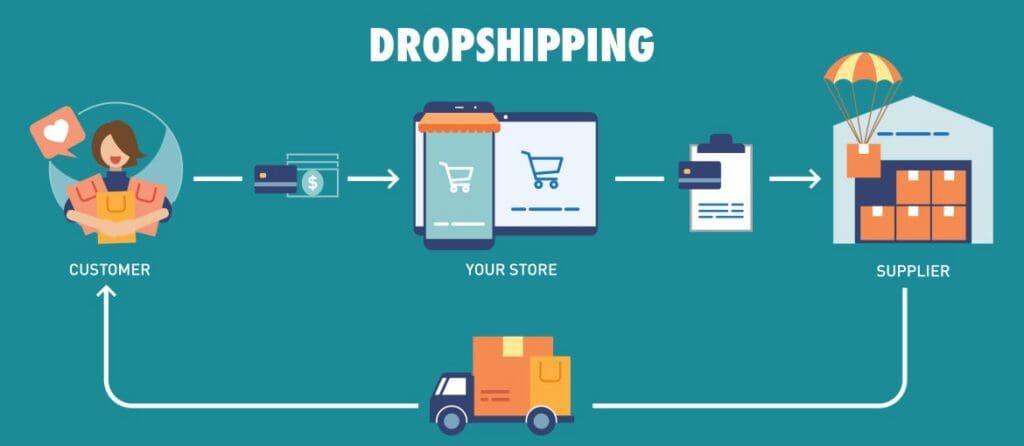
This business model eliminates the need for you to invest a lot of money into a warehouse to store the products, and you also will not have to do any inventory management.

The only tasks you need to fulfill are the creation of a website to host your store, listing the products, and your marketing and customer service. When a customer buys from your store, the supplier will ship the product to your customer. Because of the low costs of starting the business the dropshipping model is very appealing to new business owners.
How to Start Dropshipping Business Without Inventory
Step 1. Select a Niche with Profit Potential
Choose a niche (fashion, fitness, home decor, gadgets, etc.). You want a niche with demand, good profit potential, and lower competition.
Step 2. Discover Winning Products
Use trending products lists on Google Trends, Amazon Best Sellers, and TikTok to find good product ideas. You want products that will sell quickly.
Step 3. Locate Dependable Suppliers
Use AliExpress, CJ Dropshipping, or Private Agents to find product suppliers. Make sure to check product reviews, shipping times and product quality.
Step 4. Select a Dropshipping Platform
Dropshipping is easy with tools like Shopify or WooCommerce. Use these platforms to set up your online store then use them to manage your store.
Step 5. Set Up Your Store
Design your store in a way that looks professional and is easy to use. It should also include a logo with a clean design and a user-friendly interface.
Step 6. Product Uploads
When uploading a product, add high quality images and clear descriptions. When setting prices, make sure to offer competitive prices.
Step 7. Connect Payments
Make your store shopping and checkout easy by setting up integrated payments. Accept credit and debit cards, PayPal, or even cash for local payments.
Step 8. Advertise
Use social media, influencer marketing, and SEO to promote your store. Also be sure to promote your store using short video marketing with platforms such as Instagram Reels and TikTok.
Step 9: Process Orders Automatically
Forward customer orders to your supplier or use automation so that orders are fulfilled without your involvement.
Step 10: Provide Customer Support
Answer customer inquiries, process return requests, and manage issues promptly to earn their repeat business.
How Dropshipping Business Works
Customer Order: The shopper completes a transaction on your site.
Receipt of Order: Order information appears on your sales dashboard (e.g. Shopify, WooCommerce, etc.)
Transmit Order: You, or an automation app, send the order data to your dropshipping vendor.
Order Fulfillment: The vendor chooses a fulfillment method, boxes the order, and schedules a shipment.
Order Delivery: The vendor sends the order to the shopper directly.
Profit Earned: You keep the profit which is the difference between the retail price and the vendor’s price.
Customer Service: You are responsible for customer engagement, order status queries, request for refunds, and other support issues.
Benefits of Starting a Dropshipping Business
Minimal Investment Required: No need to buy a lot of stock or pay for space to store it.
No Need to Handle Stock: Don’t need to deal with lost, broken, or tampered stock or anything else inventory-related.
Simple Business Model: Your online shop is set-up in minutes courtesy of convenient online services like Shopify and WooCommerce.
Limitless Shopping Opportunities: You’re not limited to selling a certain number of products.
No Restrictions on Location: As per carrying around a laptop and accessing an internet connection, you have no restrictions on where you work.
Easy to Grow: Easily add additional products or even categoreis to sell whatever you like.
Minimal Financial Demands: Risk is virtually eliminated as you only pay for requested products.
Time-saving Automations: Take care of time-sensitive order fulfillment by establishing an automation process.
Have More Time to Spend on Advertising: Less time managing the inventory, the more time you can spend attracting potential buyers.
Finding Reliable Suppliers
One of the most crucial parts of starting a dropshipping business is finding a reliable supplier. Suppliers are the source of product quality and are responsible for order fulfillment and shipping. All these factors affect customer satisfaction. Some good supplier finding platforms are AliExpress and CJ Dropshipping; there are others.
When finding one, make sure to look at customer reviews and ratings in addition to shipping times and return policies. Consider ordering some product samples before adding them to your store. An effective supplier will fulfill your orders, keep clarity in communication, and maintain quality. All of these will also help you build an effective dropshipping business.
Adding Products to Your Store
The most important part of running a successful dropshipping business is adding products to a store to cultivate interest from customers which grows your sales. High demand products should first be imported from your supplier to your ecommerce platform of choice, be it Shopify or WooCommerce.
Each product should be described as clearly and effectively as possible to convey benefits to the customer through product features, and product images should be of the highest quality in the case that product videos are unavailable.
Price products competitively, factoring your supplier’s costs and shipping fees as well as desired profit margins. Make the products list easy to use by adding categories. Listings of products that are optimized to the fullest extent will strengthen customer relations and result in higher sales conversion.
Tips for Scaling Your Dropshipping Business
Winning Product Focus: Find best-selling items, and push more money to obtain more ad spend.
Product Range Expansion: Add more items so that more customers are attracted.
Marketing Campaign Optimization: Lower the cost to sell and obtain the highest return from Facebook/Instagram/Google ads.
Building Brand Identity: Increase the trust of the customer by creating a brand name and store consistent identity.
User Experience Improvement: Fast support responses, easy returns, and support will lead to customers repeatedly purchasing.
Use Automation: Save time with the automation of order processes, emails, drops, and inventory.
Supplier Change: More reliable suppliers will greatly decrease the delivery time of items.
Influencer Marketing: Working with Influencers will greatly increase your audience in a targetable way.
Store Review All Data: Sales, customer actions, and analytics should dictate your next course of action.
Common Mistakes to Avoid

Picking the Wrong Niche: Low or no demand niches mean no sales.
Finding Reliable Suppliers: If you partner with bad suppliers, expect refunds and bad reviews.
Empirical Product Research: If you don’t analyze your market, you’ll end up with expensive, useless inventory.
Website Design: A bad website equals a bad business.
Pricing: No one will buy your product if you overcharge.
Bad Marketing: Only marketing one way means your reach is low.
Customer Perks: Bad customer service means a bad reputation.
Product Testing: If you do not test your products, you might end up with a terrible product.
Budgeting: You’ll lose money if you overly spend on advertisement with no justification.
Pros & Cons
| Pros | Cons |
|---|---|
| Low startup cost, no inventory needed | Low profit margins in competitive niches |
| Easy to start for beginners | Heavy competition in popular markets |
| No need for warehouse or storage | Dependence on suppliers for quality & shipping |
| Flexible location (work from anywhere) | Shipping delays can affect customer satisfaction |
| Wide range of products to sell | Limited control over branding and packaging |
| Scalable business model | Customer service issues can be more complex |
| Easy to test new products | Marketing costs can become high |
Conclusion
Launching a dropshipping business and starting e-commerce is really simple and budget-friendly because you do not have to deal with inventory.
Availability of storage and a warehouse is not the biggest concern and neither is the financial burden of purchasing in bulk. As long as you pick a good niche, partner with reliable suppliers, and develop solid marketing skills, the business can be highly scalable and profitable.
One thing to be cautious of is that the dropshipping business doesn’t succeed without smart product choices and impeccable customer service. If you are persistent and constantly better your online store, a dropshipping business is a long-term and reliable online earning method.
FAQ
What is dropshipping in simple words?
Dropshipping is an online business where you sell products without keeping inventory. When a customer orders, the supplier ships the product directly to them.
Do I need money to start dropshipping?
Yes, but very little. You mainly need money for website setup, marketing, and ads. You don’t need to buy inventory upfront.
Is dropshipping profitable in 2026?
Yes, dropshipping can be profitable if you choose the right niche, work with reliable suppliers, and use effective marketing strategies.
Which platform is best for dropshipping?
Shopify is the most popular platform for beginners, while WooCommerce is also a good option for more control and customization.