

Institutional adoption of digital assets is quickly growing. Consequently, businesses are turning to the Best Crypto Staking-as-a-Service (SaaS) Providers for Corporate Wallets to earn passive rewards from staking instead of dealing with complex validation infrastructure.
These services, which particularly focus on the enterprises’ needs, combine secure custody, multi-chain staking, compliance with laws, and automation of rewards to ease the management of digital assets.
Picking the best staking provider enables organizations to achieve the most operative processes, the most secure services, and the most rewarding future from the corporate crypto.
Top 10 Crypto Staking-as-a-Service Providers for Corporate Wallets
| Provider | Key Corporate Features |
|---|---|
| Figment | Non-custodial staking, 700+ institutional clients, API integration, governance support, extensive PoS network coverage. |
| Blockdaemon | Validator infrastructure, staking APIs, institutional SLAs, monitoring dashboards, multi-chain support. |
| Kiln | White-label staking, wallet SDKs, API-first architecture, compliance tools. |
| Fireblocks | MPC wallet security, integrated staking, governance workflows, policy engine, institutional custody. |
| Coinbase Prime | Qualified custody, staking, reporting, compliance, portfolio management. |
| BitGo | Qualified custody, insured assets, multi-signature wallets, institutional staking. |
| Anchorage Digital | OCC-chartered digital asset bank (U.S.), custody, staking, governance participation. |
| P2P.org | Non-custodial staking, validator services, API integration, institutional support. |
| Cobo | MPC custody, Wallet-as-a-Service, native staking, treasury management. |
| Kraken Institutional | Institutional accounts, staking services, reporting, multiple Proof-of-Stake assets. |
1. Figment
Figment is a top SaaS Option for Corporate Crypto Wallets and has prominent Proof-of-Stake blockchains among its staking solutions. Corporate Wallets can access enterprise blockchains with optimal validator uptime and automated reward updates through the infrastructure of Figment’s enterprise solutions. Many institutional customers place their trust in Figment’s robust staking solutions, including exchanges, custodians, and asset managers.

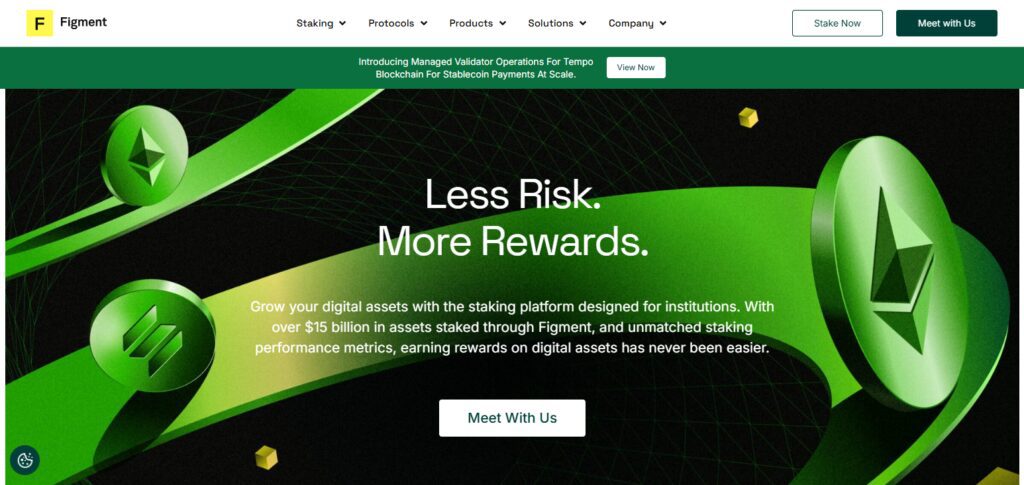
Management of Digital Assets is made easier for corporate customers with advanced APIs, updated reports, governance updates, and assurance of compliance responsiveness with customized solutions backed by professional support. Figment places a high value on security and infrastructure redundancy of validators. Through ease of operations and integrated custody solutions, rewards are easily and reliably tracked.
Pros & Cons
| Pros | Cons |
|---|---|
| Institutional-grade staking infrastructure | Premium enterprise pricing |
| High validator uptime | Limited retail-focused features |
| Strong enterprise API support | Institutional onboarding may take time |
| Detailed reporting and analytics | Some advanced services require larger allocations |
| Trusted by major asset managers | Less suitable for small businesses |
Key Features
- Staking infrastructure for institutions
- Enterprise API and SDK
- Automatic distribution of staking rewards
- High reliability with full-time validators
- Analytics and reporting is simple and effective
Why Enterprises Choose This Provider
- Institutions and asset managers can rely on the service
- Validators are secure, scalable, and flexible
- Validator infrastructure meets enterprise compliance
- Integrates with most custody providers
Supported Blockchains
- Ethereum
- Solana
- Polygon
- Cosmos
- Near Protocol
2. Blockdaemon
With institutional validators and agent infrastructure, Blockdaemon is a highly rated corporate crypto SaaS staking service provider especially for organizations wishing to securely stake among the 70 supported blockchains. Corporate clients also appreciate and rely upon the validated infrastructure and agent services of Blockdaemon to manage the risk of staking.
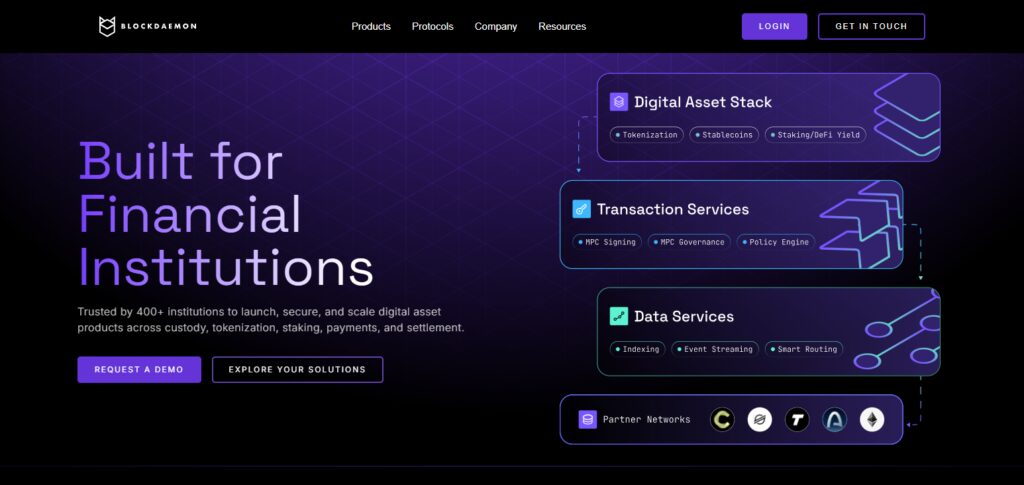
For institutional clients, Blockdaemon offers a comprehensive suite of services and integrated solutions, including automated governance, compliance, and oversight via operational dashboards. Blockdaemon also focuses on safety and compliance of its services.
Businesses value Blockdaemon as one of the top providers for enterprise staking for many reasons. Simplified staking management and reliable infrastructure make enterprise blockchain staking easier. Stakeholders and management appreciate the reporting of staking rewards as well as the analytics.
Pros & Cons
| Pros | Cons |
|---|---|
| Supports a large number of blockchains | Higher enterprise costs |
| Reliable validator infrastructure | Complex setup for some integrations |
| Enterprise-grade APIs | Primarily designed for institutions |
| Global infrastructure coverage | May be excessive for small portfolios |
| Strong security standards | Advanced features can require technical expertise |
Key Features
- Managed validators and nodes
- Staking services for institutions
- Blockchain infrastructure with enterprise REST APIs
- High availability
- Validators are easy to manage and monitor in real time
Why Enterprises Choose This Provider
- Enterprise Blockchains (> 15 supported)
- Institutions and exchanges can rely on the service
- Security is enterprise grade
- Flexible infrastructure
Supported Blockchains
- Ethereum
- Solana
- Avalanche
- Cosmos
- Polkadot
3. Kiln
Kiln is a Crypto Staking as a Service (SaaS) provider for enterprises. It offers validator infrastructure to assist institutional customers with the management of their digital assets. Staking management for many of the major Proof of Stake networks is supported.
Kiln helps customers with performance of their validators, safety of their staking, and management of rewards. Additionally, it provides infrastructure for banks, custodians, exchanges, and asset managers.
Kiln is a favorite among its corporate clientele due to its easy to use APIs for integrations, its offer for white label staking, advanced service tools, and reporting that meets regulatory requirements.
Kiln focuses on high uptime for its validators, safety, and trust in operations. Companies can start offering staking services to their customers without building their own staking infrastructure. From Kiln, they have the service and support to scale their staking needs.
Pros & Cons
| Pros | Cons |
|---|---|
| Excellent API integrations | Enterprise-focused pricing |
| High validator performance | Limited retail functionality |
| White-label staking solutions | Smaller brand recognition than some competitors |
| Strong compliance focus | Institutional onboarding required |
| Multi-chain support | Advanced features may need technical support |
Key Features
- Validator-as-a-Service
- Staking solutions are white-label
- Integrates enterprise APIs
- Rewards are automatically distributed
- Tools for participation in governance
Why Enterprises Choose This Provider
- Focus on staking for institutions
- Validators are reliable
- Simple to integrate
- Compliance and security are validated
Supported Blockchains
- Ethereum
- Solana
- Polygon
- Aptos
- Tezos
4. Fireblocks
Fireblocks is a top digital asset service that provides Crypto Staking as a Service (SaaS) through its highly secure institutional wallets. Fireblocks combines staking for many of the Proof of Stake assets, safety, and the wallet technology of MPC (Multi-Party Computation) with advanced security. Many of its customers range from traditional finance to corporate crypto to tech-fin customer assets.
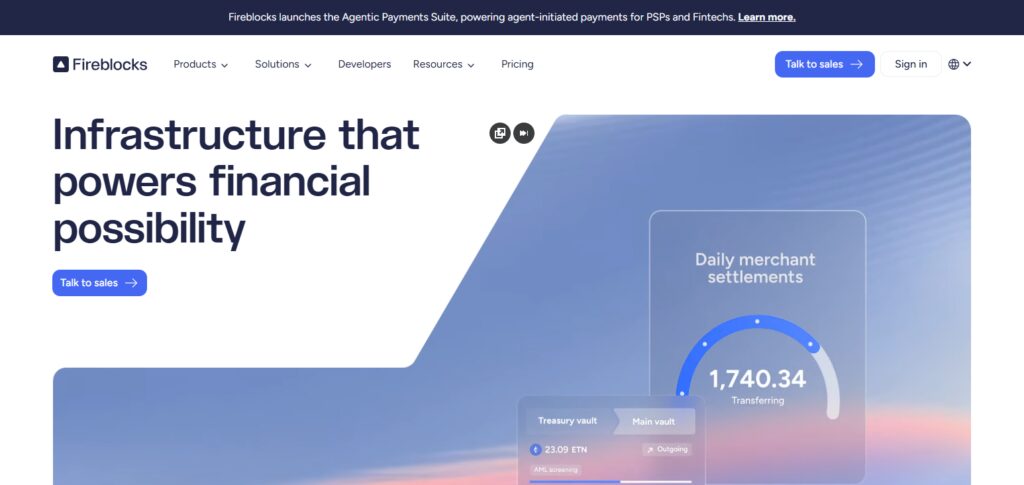
With Fireblocks, customers are able to access staking providers, automate their asset management tasks, and orchestrate their own staking governance to receive and manage rewards through a simple interface. Many custodians and validators are integrated as staking options with Fireblocks, and all options provide safety and a regulatory compliant stance.
Its flexible design allows companies to use its services to maximize staking yields, all while defending institutional digital assets from the concerns of operational and cybersecurity risks.
Pros & Cons
| Pros | Cons |
|---|---|
| Industry-leading MPC security | Premium pricing structure |
| Integrated custody and staking | Complex onboarding process |
| Trusted by major financial institutions | May be expensive for smaller firms |
| Extensive ecosystem integrations | Enterprise setup can be time-consuming |
| Advanced policy management | Primarily targeted at institutions |
Key Features
- Wallet security with MPC
- Staking for institutions is built in
- Digital asset custody is secure
- Workflow automation
- Enterprises can manage policies in the app
Why Enterprises Choose This Provider
- Wallet security rated top in the industry
- Used by banks and other financial institutions
- Custody and staking combined
- Multiple enterprise integrations
Blockchains
- Ethereum
- Solana
- Polygon
- Avalanche
- BNB Chain
5. Coinbase Prime
Coinbase Prime offers institutional customers Crypto Staking-as-a-Service (SaaS) and custody, trading, financing, and portfolio management services for institutional customers. Coinbase Prime is focused on the needs of institutins and offers the ability to stake the leading
Proof-of-Stake cryptocurrencies and the assurance of enterprise-level security and compliance, along with regulatory and custody insurance. Its integrated solution creates ease of digital asset management for institutions of any size.
Coinbase Prime provides institutional customers integrated custody, governance, reward tracking, and reporting services along with account services. Institutions have the ability to stake crypto easily and at the same time utilize the operational experience and the assurance of regulatory compliance, liquidity, and an institutional staking infrastructure.
Pros & Cons
| Pros | Cons |
|---|---|
| Strong regulatory reputation | Geographic availability varies |
| Integrated trading and custody | Institutional eligibility requirements |
| Secure staking services | Higher service fees |
| Professional account management | Limited customization compared to infrastructure providers |
| Easy institutional onboarding | Dependent on Coinbase ecosystem |
Key Features
- Custody for institutions
- Staking integrated
- Management of portfolios
- Secure storage of assets
- Trading for enterprise
Why Enterprises Choose This Provider
- Backing of a globally prominent exchange
- Strong regulations and compliance
- Institutional support is reliable
- Staking and custody are simple
Blockchains
- Ethereum
- Solana
- Polygon
- Cosmos
- Cardano
6. BitGo
BitGo, a leading digital asset custodian, offers Crypto Staking-as-a-Service (SaaS) to institutional and corporate clients. BitGo offers custodial services and staking with secure multi-signature Proof-of-Stake wallet technology. BitGo services institutions, exchanges, funds, and enterprises with secure digital asset management that meets the governance standards of institutions.
BitGo customers experience custodial services, staking, policy management, and reporting with the security of an enterprise grade wallet. Operational burdens for corporate treasury management are greatly reduced while digital assets maintained in the vault are protected. BitGo offers institutional asset management of crypto in a secure frame and allows clients to earn staking rewards.
Pros & Cons
| Pros | Cons |
|---|---|
| Qualified institutional custody | Enterprise pricing model |
| Multi-signature wallet security | Retail features are limited |
| Trusted by financial institutions | Advanced services may require approval |
| Integrated staking support | Less beginner-friendly |
| Strong compliance controls | Customization can require technical resources |
Key Features
- Custody of institutions is qualified
- Wallet security with multiple signatures
- Staking for enterprises
- Assets are managed via policy
- Secure APIs
Why Enterprises Choose This Provider
- Established provider of institutional custody
- Controls of security and compliance are robust
- Trusted by financial enterprises
- Staking and custody integrated
Blockchains
- Ethereum
- Solana
- Polygon
- Cosmos
- Avalanche
7. Anchorage Digital
Anchorage Digital is a chartered bank of digital assets that offers Crypto Staking-as-a-Service (SaaS) for institutional clients, and corporate clients.
Combining custody, secure staking, governance participation, and digital asset banking services on one platform, Anchorage offers enterprise clients a fully regulated, integrated solution. Anchorage supports a variety of Proof-of-Stake networks and offers enterprise clients a robust compliance, cyber security, and operational framework.
Clients choosing Anchorage Digital enjoy institutional level custody and staking services, along with automated staking reward generation, a wealth of governance and participation reporting, and secure validator services.
Anchorage Digital is among a select few providers authorized to offer regulated staking services and works within a framework of compliance, risk management, and security to protect client assets.
Pros & Cons
| Pros | Cons |
|---|---|
| Federally chartered digital asset bank | Premium institutional pricing |
| Banking-grade security | Limited availability in some regions |
| Strong compliance framework | Enterprise onboarding process |
| Trusted by institutional investors | Not focused on retail users |
| Integrated custody and staking | May require larger minimum commitments |
Key Features
- Digital bank of assets with a charter
- Crypto custody is qualified
- Staking for institutions
- Participation in governance is aided
- Security of banking grade
Why Enterprises Choose This Provider
- Operates with a framework of regulated banking
- Trusted by institutions
- Custody services of high security
- Compliance done for every requirement
Blockchains
- Ethereum
- Solana
- Polygon
- Cosmos
- Avalanche
8. P2P.org
As a global Crypto Staking-as-a-Service provider, P2P.org specializes in institutional validator services and secures staking across various Proof-of-Stake networks. P2P.org offers a performance guaranteed enterprise grade staking service on a multitude of networks, including Ethereum, Solana, Polkadot, Cosmos, and Avalanche, among others. Its secure staking services are trusted by institutional investors, custodians, and exchanges.
Through P2P.org, businesses gain access to governance support, reward analytics, infrastructure monitoring, and professional staking services, all via API integration. P2P.org strikes a balance between the secure operations of a highly efficient and fully protected staking service and optimal validator uptime. Staking for corporate wallet operators is made easier and design protected by the service’s extensive and transparent reporting, along with a scalable design.
Pros & Cons
| Pros | Cons |
|---|---|
| Large validator network | Enterprise-oriented platform |
| High validator uptime | Limited retail functionality |
| Broad blockchain support | Some features require technical integration |
| Reward optimization tools | Smaller brand recognition than major exchanges |
| Enterprise API access | Advanced analytics may require setup effort |
Key Features
- Validator infrastructure for enterprises
- Staking services for multiple chains
- Tools for optimizing rewards
- Governance tools
- Performance tools
Why Enterprises Choose This Provider
- Validator experience
- High uptime of the validators
- Staking support for major blockchains
- Staking solutions tailored for enterprises
Supported Blockchains
- Ethereum
- Solana
- Polkadot
- Cosmos
- Avalanche
9. Cobo
Cobo offers institutional custody for digital assets along with Crypto Staking-as-a-Service for enterprises with corporate cryptocurrency portfolios. Combining custody and wallet infrastructure with staking and digital asset management, Cobo offers enterprises all in one service.
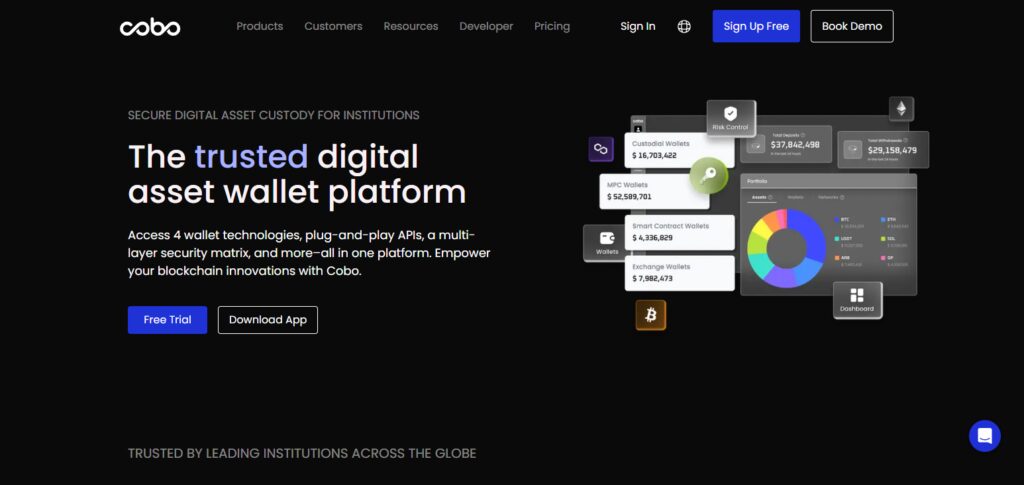
Cobo facilitates a variety of Proof-of-Stake assets with an emphasis on both enterprise security and compliance concerning the operational needs of institutional clients. Organizations using Cobo have the ability to stake their digital assets safely through custody integration, automatic reward collection, advanced analytics, and governance frameworks.
The platform’s security is enhanced through advanced wallets, enterprise level role governance, and system integration through enterprise APIs. Their flexible, scalable structure allows organizations to stake assets while retaining control of their digital assets.
Pros & Cons
| Pros | Cons |
|---|---|
| Flexible wallet infrastructure | Premium enterprise pricing |
| MPC wallet security | Advanced setup can be complex |
| Integrated custody and staking | Retail support is limited |
| Scalable enterprise APIs | Some features require technical expertise |
| Multi-chain asset management | Enterprise onboarding process |
Key Features
- MPC wallet infrastructure
- Institutional crypto custody
- Enterprise Staking
- Wallet-as-a-Service (WaaS)
- Asset management dashboard
Why Enterprises Choose This Provider
- Enterprise grade secure wallet infrastructure
- Custody and staking services that are flexible
- Digital asset management that is scalable
- Powerful API integration
Supported Blockchains
- Ethereum
- Solana
- Polygon
- BNB Chain
- Avalanche
10. Kraken Institutional
Kraken Institutional uses enterprise-based models of Crypto Staking-as-a-Service (SaaS) to cater to professional investors, treasury teams, and financial institutions. As a product built on Kraken’s broad crypto ecosystem, the service offers staking support for many major Proof-of-Stake assets, in addition to on-demand custody and trading services, portfolio management, and assistance with institutional accounts. It provides a focus on ease of use, safety, and stake management.
For its corporate clientele, Kraken Institutional makes staking simple with reward reporting, security frameworks, dedicated account management, and an assured regulatory posture in its operations.
Staking rewards can be generated in an effortless manner without the obligation of maintaining a validator service, in addition to benefiting from Kraken’s digital asset expertise. Given its broad offering and focus, Kraken Institutional is an outstanding enterprise level offering to crypto staking.
Pros & Cons
| Pros | Cons |
|---|---|
| Trusted global exchange brand | Geographic restrictions apply |
| Integrated trading and staking | Institutional eligibility requirements |
| Strong security standards | Premium service fees |
| Dedicated enterprise support | Less customizable than infrastructure-focused providers |
| Easy staking experience | Dependent on Kraken ecosystem |
Key Features
- Staking for enterprises
- Staking crypto with custody
- Professional trading
- Advanced portfolio tools
- Enterprise dedicated API
Why Enterprises Choose This Provider
- Leading worldwide crypto exchange
- Institutional grade security
- Staking and trading in one
- Focused support for enterprises
Supported Blockchains
- Ethereum
- Solana
- Polkadot
- Cosmos
- Cardano
Benefits of Using Crypto Staking-as-a-Service for Corporate Wallets
Passive Income with Staking Rewards
By incorporating Corporate wallets into Proof-of-Stake (PoS) blockchain networks, corporate wallets stand to earn PoS’s staking rewards for the wallets’ balance. This means that corporate treasury functions can earn additional “trading-free” revenues by improving the treasury functions’ earnings on the corporate wallets’ digital assets.
Enterprise-Grade Security and Asset Safety
Crypto Staking-as-a-Service provides the protection of a cyber fortress around corporate digital assets as a result of the security features built into PoS systems like, Multi-Party Computation, multi-signature wallets, and encrypted key management and secure validator systems.
No Longer Need to Manage Your Own Validator Infrastructure
To assist businesses for ease of staking, a PoS system Staking-as-a-Service will take care of and fully perform all validator system tasks such as, deploying validators, updating the validating software, and ensuring the validating system has full uptime and participation in the network.
Staking Across Multiple Blockchains is Possible
The top tier enterprise staking systems contain a plethora of supported Proof-of-Stake blockchains, including but not limited to Ethereum, Solana, and Polygon. Corporate entities are thus empowered to stake across multiple blockchains.
Eases Compliance, Reporting and Internal Audit
To aid corporate treasury operations, institutional staking providers simplify and perform governance functions, report the rewards earned, and provide a post audit trail. This aids treasury functions in reporting and preparing for external reviews and regulatory compliance, while facilitating internal audits.
Scalable Integration with Enterprise Wallets and Custodians
The majority of providers are able to integrate with institutional custody solutions and enterprise wallets like Fireblocks, BitGo, Coinbase Prime, Cobo, and Anchorage Digital. API-led integrations are designed to help businesses automate their staking while still keeping custody of their digital assets.
Reliable Validator Performance and Professional Support
Enterprise staking providers have highly available validated infrastructure with an emphasis on continuous performance and support of customer service. High uptime of validators helps maximize staking rewards and reduce operational risks, making professional staking services a good choice for corporate digital asset management.
Factors to Consider Before Choosing a Staking Provider
Security and Protection of Assets
Select a staking provider that has security features at an enterprise level and includes Multi Party Computation (MPC), multi-signature wallets, cold storage, encryption, and security audits. If a provider has security features at this level, they have the best interests for their stakeholders.
Supported Blockchain Networks
Determine whether the provider supports the blockchain networks your organization plans to stake on. Select providers that offer cross-chain capabilities.
Validator Performance and Uptime
Staking providers should have consistently high validator performance. To ensure consistent performance and reliable staking, consider their historical validator uptime, slashing, and validator performance.
Custody and Wallet Integration
Staking providers should integrate with your preferred institutional custody or corporate wallet solution. Custody concerns for your corporate assets on staking providers should be mitigated by integrating custody providers.
Fee Structures and Rewards
Examine the fee structure and reward policies of potential staking providers, as transparent pricing structures and reward policies will signi?cantly decrease the likelihood of unanticipated costs.
Compliance and Reporting
Choose a staking provider that will meet your organization’s regulatory compliance requirements. Select staking providers that will relieve your organization of a majority of the financial reporting burden by providing features such as audit reports or tax compliance.
Enterprise Support and Scalability
Consider vendors offering personalized account management, technical assistance, API connections, and flexible infrastructure. As the digital asset portfolios of your organization expand, the staking solution must accommodate higher transaction volumes and additional blockchains without degrading the quality of service.
Common Risks of Enterprise Crypto Staking
Slashing Risk
With PoS blockchain, validators may be subject to slashing if they act maliciously or fail to uphold their obligations to the network. Though slashing risk is minimized by trustworthy staking infrastructure, businesses should keep in mind that slashing may affect a portion of staked assets.
Validator Downtime
In order for staking to be fruitful, nodes that are participating in the validation of the blockchain should remain online to uphold their position in the consensus and receive staking rewards. Prolonged downtime of a node may diminish rewards and affect the total staking.
Market Price Volatility
Though staking is a reward generating activity, the price of the cryptocurrency of concern can still be volatile. A decrease in the price of a token can diminish the value of the staking reward, and thus, market volatility should be taken into account in treasury management.
Lock-Up and Unstaking Periods
Some blockchain networks may require that assets be locked for a period of time before they are redeemed or transferred. These periods of locking and unbonding can create a liquidity risk for an organization and can hinder their ability to access funds rapidly.
Regulatory and Compliance Risks
With the rapid change of cryptocurrency regulation, other forms of compliance and obligations may be affected by alterations in the law. Corporate investors may be particularly affected by changes in tax law, compliance with the law of digital assets, and the compliance with staking and reporting.
Smart Contracts and Tech Risks
Some of the staking services and protocols that require third-party smart contracts may have software bugs or other vulnerabilities. Even with security audits from most of the providers, the remaining technical risks should be assessed before staking the assets.
Custody and Cyber Risks
Corporate wallets with massive digital assets may be highly attractive targets for data breaching, phishing attempts, and illicit access. To safeguard institutional funds, a staking provider with advanced security, custody, and access control is critical.
Conclusion
It is important for companies adopting Crypto Staking-as-a-Service (SaaS) to generate a stream of passive income from digital assets to consider enterprise security and the effectiveness of daily operations.
SaaS companies such as Figment, Blockdaemon, Kiln, Fireblocks, Coinbase Prime, BitGo, Anchorage Digital, P2P.org, Cobo, and Kraken Institutional, provide secure validator infrastructure, multisystem staking, institutional custody, automated reward and compliance services.
These services allow corporate customers to partake in Proof of Stake (PoS) ecosystems without the burdens of managing and administering a validator node.
While considering a Crypto Staking-as-a-Service company, the security design of the company, the custody of the tokens, compliance, and uptime for validators are a few of the key considerations for the business.
While staking presents a variety of interesting opportunities, the market also presents business risks related to slashing, validators suffering downtime, and the rapidly changing regulatory environment.
The corporate treasury and institutional investors that stake crypto can incorporate a staking service to support the business’ digital assets in a safe manner while participating in blockchain operations and scaling business activities.
FAQ
What is Crypto Staking-as-a-Service (SaaS)?
Crypto Staking-as-a-Service (SaaS) is a managed solution that allows businesses and institutional investors to stake their digital assets on Proof-of-Stake (PoS) blockchain networks without operating their own validator nodes. The service provider manages validator infrastructure, security, maintenance, and reward distribution on behalf of clients.
Why should corporate wallets use a staking provider?
Corporate wallets benefit from staking providers because they offer enterprise-grade security, reliable validator infrastructure, automated reward distribution, regulatory support, and seamless integration with institutional custody solutions. This enables organizations to earn staking rewards while minimizing operational complexity.
Which cryptocurrencies can be staked through enterprise staking providers?
Most institutional staking providers support major Proof-of-Stake cryptocurrencies such as Ethereum (ETH), Solana (SOL), Polygon (POL), Cosmos (ATOM), Avalanche (AVAX), Polkadot (DOT), Aptos (APT), Near Protocol (NEAR), Tezos (XTZ), and several other blockchain networks.
Is Crypto Staking-as-a-Service secure for businesses?
Yes, leading enterprise staking providers implement advanced security measures such as Multi-Party Computation (MPC), multi-signature wallets, encrypted key management, cold storage integration, continuous monitoring, and regulatory compliance to protect corporate digital assets.
What factors should businesses consider before choosing a staking provider?
Organizations should evaluate security standards, supported blockchain networks, validator uptime, custody integration, staking fees, reward transparency, regulatory compliance, API availability, customer support, and the provider’s overall reputation before selecting a staking partner.