

With the growth of decentralized finance, identifying the Best Non-Custodial Multi-Chain Wallets for DeFi Staking has become crucial for the safe management and staking of digital assets over several blockchains.
This article considers the Best Non-Custodial Multi-Chain Wallets for DeFi Staking and discusses the features, advantages, and disadvantages of each to assist you in determining the most appropriate wallet for your needs.
Why Choose Non-Custodial Multi-Chain Wallets for DeFi Staking
Asset Ownership – Trusting custodians to hold your assets is no longer necessary as users own their keys and assets.
Improved Security – Non-custodial wallets lessen the risks of centralized security hacks and account freezing.

Multi-Chain Accessibility – Stake and manage assets on Ethereum, Solana, Cosmos, Polygon, BNB Chain and beyond.
Native DeFi Accessibility – Direct connections to decentralized exchanges, lending protocols, yield farming, and staking are available.
Increased Staking Options – A variety of decentralized validators and staking pools across multiple ecosystems are available.
Financial Privacy – There is a low requirement for personal information, allowing users to retain financial privacy.
Cross-Chain Management – Monitor and manage crypto assets on multiple blockchain networks.
Governance Participation – Non-custodial wallets may enable users to stake assets while voting on governance and protocol changes.
NFT and Web3 Support – Storage and access for NFTs, gaming, DeFi marketplaces, and Web3 Services.
Less Reliance on Centralized Services – Access to DeFi services and staking rewards without using a centralized exchange.
Security via Hardware Wallets – The top wallets integrate with hardware wallets.
Internal Token Swap – Swap tokens within the wallet without relying on third-party platforms.
Greater Transparency – All activities and transactions on the DeFi staking platform are recorded on the public blockchain. Hence, everyone can verify all transactions, DeFi staking activities, and rewards earned.
Global Accessibility – DeFi staking can be accessed any time, anywhere across the globe where there is an internet connection.
Future-Proof Crypto Management – With DeFi staking that utilizes multi-chain technology, all future innovations and improvements in the blockchain and DeFi technologies will be accommodated.
Key Point & Best Non-Custodial Multi-Chain Wallets for DeFi Staking
- MetaMask
- Trust Wallet
- Keplr
- Phantom
- Rabby
- XDEFI Wallet
- Frontier Wallet
- Argent
- Exodus
- Leap Wallet
10 Best Non-Custodial Multi-Chain Wallets for DeFi Staking
1. MetaMask
MetaMask is a preferred non-custodial crypto wallet for many due to its support for multiple blockchains. In addition to Ethereum, MetaMask wallets can interact with EVM-compatible blockchains such as BNB Chain, Polygon, Arbitrum, Optimism, and Avalanche.
Since MetaMask is a non-custodial wallet, users have full control over their private keys and funds. This makes it popular among Decentralized Finance (DeFi) users. MetaMask integrates easily with thousands of DeFi applications, staking platforms, NFT marketplaces, as well as Decentralized Exchanges (DEX).
As one of the Best Non-Custodial Multi-Chain Wallets for DeFi Staking, MetaMask provides many features across blockchain ecosystems enabling security, hardware wallet support, and custom networks, as well as a user interface that allows users to stake and swap assets easily.
MetaMask – Key Features
| Feature | Description |
|---|---|
| Multi-Chain Support | Supports Ethereum, Polygon, BNB Chain, Arbitrum, Optimism, Avalanche, and other EVM networks. |
| Self-Custody Security | Users maintain full control of private keys and recovery phrases. |
| DeFi Integration | Connects directly to thousands of DeFi platforms and dApps. |
| Hardware Wallet Support | Compatible with Ledger and Trezor for enhanced security. |
| Built-in Token Swaps | Allows token exchanges directly within the wallet interface. |
MetaMask Benefits & Drawbacks
Benefits
- Multiple EVM-compatible blockchains are supported.
- Able to connect to thousands of DeFi applications.
- Complete control over private keys and assets.
- Compatible with Ledger and Trezor hardware wallets
- Token swaps and management tools are built in.
Drawbacks
- Limited support for non-EVM networks.
- Configuration can be tedious for new users.
- Wallet is vulnerable to phishing attacks with careless users.
- Network gas fees can be cost prohibitive.
- Some custom networks need to be added manually.
2. Trust Wallet
Trust Wallet is another popular multi-chain self-custody wallet and supports millions of digital assets across 100+ blockchains. It enables users to store, swap, and stake cryptocurrencies directly from the mobile wallet while giving full ownership of the private keys.
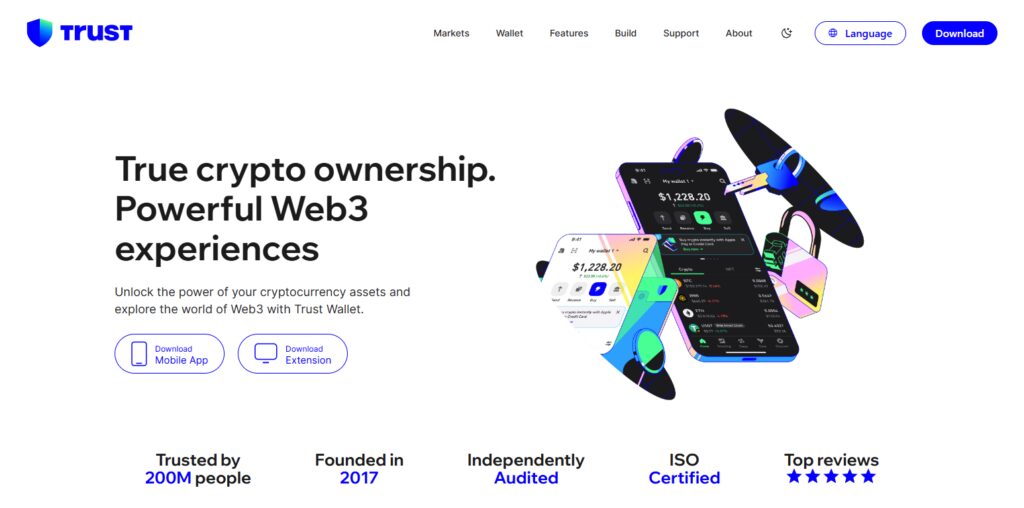
The Trust Wallet app supports staking for multiple Proof of Stake networks, so users can earn staking rewards without leaving the app. Among the Best Non-Custodial Multi-Chain Wallets for DeFi Staking, Trust Wallet is a user-friendly, well designed wallet that supports numerous tokens and has a built in Web3 browser that can access many decentralized applications.
Trust Wallet – Key Features
| Feature | Description |
| Extensive Blockchain Support | Supports over 100 blockchains and millions of digital assets. |
| Built-in Staking | Enables staking for multiple cryptocurrencies directly in the app. |
| Web3 Browser | Provides access to decentralized applications and DeFi services. |
| Self-Custody Control | Users retain complete ownership of private keys. |
| NFT Management | Supports storing and viewing NFTs across supported networks. |
Trust Wallet Benefits & Drawbacks
Benefits
- Over 100 supported blockchain networks.
- Mobile interface is beginner friendly.
- Built in staking for multiple cryptos.
- Self-custody for all assets.
- Built in NFT management.
Drawbacks
- No desktop wallet.
- Limited trading features.
- DeFi functionality is limited.
- Portfolio features are lacking.
- Limited support for users.
3. Keplr
Keplr has established itself as an excellent wallet for the Cosmos Community and IBC networks. It enables Cocmos-Chain wallet users to have custody of their wallet and manage their assets across various chains. Keplr has built-in staking functionality.
Hence, users can stake by delegating their tokens to any active validators and vote on governance proposals. Keplr has also been awarded the Best Non-Custodial Multi-Chain Wallets for DeFi Staking due to its excellent cross-chain asset management, DeFi integration, hardware wallet support, and many features.
Its focus on interoperability makes it a strong contender for customers that want to use the Cosmos wallet the most.
Keplr – Key Features
| Feature | Description |
| Cosmos Ecosystem Focus | Optimized for Cosmos and IBC-enabled blockchains. |
| Native Staking Tools | Direct validator delegation and staking reward management. |
| Governance Participation | Allows voting on network proposals from within the wallet. |
| Cross-Chain Transfers | Supports seamless asset movement across Cosmos chains. |
| Hardware Wallet Integration | Compatible with Ledger devices for additional security. |
Keplr Benefits & Drawbacks
Benefits
- Designed for the Cosmos ecosystem.
- Easy to stake and delegate to validators.
- IBC cross-chain transfers supported.
- Hardware wallet support and cross-chain governance.
Drawbacks
- Limited Ethereum DeFi.
- Some advanced features may be confusing to new users.
- Smaller ecosystem than mainstream wallets.
- Limited NFT features than competitors.
4. Phantom
Even though Phantom started as a Solana wallet, it has now rendered wallet support on Ethereum, Polygon, Bitcoin, and many more. DeFi staking, NFT, swaps, and staking have been integrated into Phantom wallet for user experience and convenience.
Users have the custody of their keys and wallets, while also having high levels of wallet security due to the protections from the previews. Because it gives users the support to access DeFi from many ecosystems,
Phantom has become one of the Best Non-Custodial Multi-Chain Wallets for DeFi Staking. The clean interface also counts in Phantom’s favor as the wallet has become popular very quickly.
Phantom – Key Features
| Feature | Description |
| Multi-Chain Compatibility | Supports Solana, Ethereum, Polygon, and Bitcoin ecosystems. |
| Integrated Staking | Stake supported assets directly through the wallet. |
| NFT Support | Comprehensive NFT storage, viewing, and management features. |
| Built-in Token Swaps | Swap cryptocurrencies without leaving the wallet. |
| Security Protection | Includes phishing detection and transaction previews. |
Phantom Benefits & Drawbacks
Benefits
- Built in staking and NFT management.
- Modern user interface.
- Supports Solana and has built in security protections.
Drawbacks
- The Solana ecosystem remains the primary focus.
- Fewer DeFi integrations than MetaMask.
- Fewer customization options.
- Some multi-chain capabilities are being implemented.
- Compared to older wallets, the ecosystem is smaller.
5. Rabby
Developed by DeBank, Rabby Wallet is a browser-integrated, custodial wallet, designed specifically for DeFi. Compared to other wallets, Rabby is less hands-on; it changes between EVM networks in order to facilitate engagement with DApps.
Rabby helps users by simulating transactions, providing risk notifications, and performing safety checks before users confirm transactions. Rabby is one of the Best Non-Custodial Multi-Chain Wallets for DeFi Staking.
It supports Ethereum and BNB Chain, in addition to Polygon, Arbitrum, Optimism, and other networks. Rabby’s safety and transparency features empower users to staked, provide liquidity, and stake other advanced DeFi operations with confidence.
Rabby – Key Features
| Feature | Description |
| Automatic Network Switching | Detects and switches to the correct EVM network automatically. |
| Transaction Simulation | Previews transactions before approval. |
| Enhanced Security Alerts | Warns users about suspicious transactions and risks. |
| Multi-Chain EVM Support | Works with Ethereum, Polygon, BNB Chain, Arbitrum, and more. |
| DeFi-Focused Design | Built specifically for advanced DeFi users and investors. |
Rabby Benefits & Drawbacks
Benefits
- Automatic network switching.
- Enhanced transaction simulations.
- Security alerts before a transaction is approved.
- Optimized for DeFi.
- Supports multiple EVM networks.
Drawbacks
- Limited support for non-EVM blockchains.
- Steeper for beginners.
- Smaller user base compared to MetaMask.
- Less mature mobile support.
- Advanced features may be too much for casual users.
6. XDEFI Wallet
XDEFI Wallet is a multi-chain wallet that is suitable for users that engage with DeFi, NFTs, and cross-chain systems. XDEFI wallet supports many blockchains, including Bitcoin, Ethereum, and Solana as well as Cosmos, and ThorChain. It lets users manage all of their assets in one place, and self-custody is still guaranteed.

XDEFI Wallet is also one of the Best Non-Custodial Multi-Chain Wallets for DeFi Staking, so users have easy access to DeFi staking and trading, as well as NFTs. Being DeFi-oriented, XDEFI wallet is great for managing diversified blockchain assets.
XDEFI Wallet – Key Features
| Feature | Description |
| Cross-Chain Asset Support | Supports Bitcoin, Ethereum, Solana, Cosmos, and other networks. |
| Fast DeFi Connectivity | Quick access to decentralized applications and exchanges. |
| NFT Management | Supports NFTs across multiple blockchain ecosystems. |
| Self-Custody Security | Users control their own private keys and assets. |
| Cross-Chain Functionality | Designed for seamless interaction between blockchain networks. |
XDEFI Wallet Benefits & Drawbacks
Benefits
- Supports Bitcoin, Ethereum, Solana, Cosmos, and cross-chain.
- Exceptional NFT support.
- Quick connection to DeFi.
- Full self-custody ownership.
Drawbacks
- Beginners may find the interface complex.
- Limited market adoption wallet.
- Advanced features may require technical knowledge.
- Supported mobile experience is inconsistent.
7. Frontier Wallet
Frontier Wallet is a mobile multi-chain wallet. It combines DeFi, staking, asset management, and NFT features in one wallet. Users can manage their NFTs and stake coins within the wallet. Frontier also provides the user analytics on their portfolios and the ability to connect to decentralized apps.
Frontier Wallets has a custody model, which means that users have complete control over their private keys. Frontier Wallet is known to be one of the Best Non-Custodial Multi-Chain Wallets for DeFi Staking.
Frontier Wallet – Key Features
| Feature | Description |
| Unified Portfolio Tracking | Manage assets across multiple blockchains from one dashboard. |
| In-App Staking | Stake supported cryptocurrencies directly within the wallet. |
| DeFi Access | Connects to leading DeFi applications and protocols. |
| NFT Monitoring | Track NFT collections and digital assets. |
| Multi-Chain Support | Supports numerous blockchain ecosystems through one interface. |
Frontier Wallet Benefits & Drawbacks
Benefits
- NFT organization and tracking.
- Access to a multitude of DeFi.
- Built-in staking and earning.
- Comprehensive portfolio tracking.
Drawbacks
- A limited few features require external support.
- Fewer users.
- May have an overwhelming interface.
- Performance varies on user supported networks.
8. Argent
Argent is a smart contract wallet that provides security and management features that improve the user experience. Traditional seed phrases are eliminated using social recovery and account abstraction features. Users have straightforward access to Ethereum and its Layer 2s, and can also use DeFi and staking services.
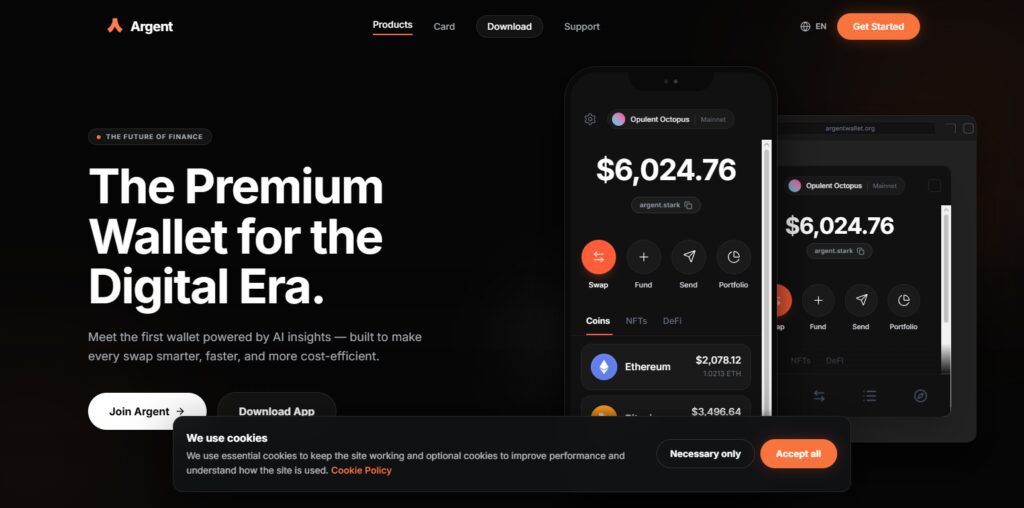
Argent is also one of the Best Non-Custodial Multi-Chain Wallets for DeFi Staking. Argent’s focus on safety and easy to use features at low costs, coupled with the spending limits, guardian protection, and more, make Argent a great option for users looking for protection while maintaining control over their assets.
Argent – Key Features
| Feature | Description |
| Smart Contract Wallet | Uses account abstraction for enhanced usability and security. |
| Social Recovery | Recover wallet access without relying solely on seed phrases. |
| Guardian Protection | Additional security layer against unauthorized access. |
| Layer-2 Compatibility | Optimized for Ethereum Layer-2 networks. |
| Integrated DeFi Access | Easily connect to staking and DeFi applications. |
Argent Benefits & Drawbacks
Benefits
- Innovative smart contract wallet technology.
- Social recovery removes reliance on seed phrases.
- Guardian security system adds protection.
- Optimized for Ethereum Layer-2 networks.
- Easy onboarding for new users.
Drawbacks
- Primarily Ethereum-focused.
- Limited blockchain support compared to competitors.
- Smart wallet features may be unfamiliar.
- Fewer third-party integrations.
- Some features depend on smart contract infrastructure.
9. Exodus
Exodus can be found on mobile and desktop and is versatile and easy to use. Exodus users can store, swap, and stake their assets via built-in features.
BackupAndRestoreTogether believes Exodus is easier to use than others, and combines self-custody and hardware wallet security by allowing Exodus users to connect hardware wallets.
Exodus has received recognition as one of the Best Non-Custodial Multi-Chain Wallets for DeFi Staking and can be used by advanced and novice users. Users can even stake assets via Exodus’s built-in features and can earn directly from their assets.
Exodus – Key Features
| Feature | Description |
| Multi-Asset Support | Supports hundreds of cryptocurrencies across various blockchains. |
| Built-in Exchange | Swap digital assets directly inside the wallet. |
| Staking Rewards | Earn rewards through supported staking networks. |
| Desktop and Mobile Apps | Available across multiple devices with synchronized access. |
| Hardware Wallet Integration | Compatible with Ledger hardware wallets. |
Exodus Benefits & Drawbacks
Benefits
- Supports numerous coins.
- Appealing design and easy to use.
- Integrated crypto exchange.
- Staking offered for supported assets.
- Works with Ledger hardware wallets.
Drawbacks
- Not fully open-sourced.
- Basic DeFi functions.
- Staking can be costly.
- MetaMask supports more Web3 relations.
- Less control over wallet functions.
10. Leap Wallet
Leap Wallet concentrates on staking and multi-chain management of assets. Leap Wallet is an improving wallet within the Cosmos and includes many of the staking features needed to participate in governance and select validators.

Because leap includes many of the tools needed to participate in governance and select validators, it is one of the Best Non-Custodial Multi-Chain Wallets for DeFi Staking and is secure and easy to use. Using Leap Wallet can help advanced Cosmos users participate in DeFi and staking, as it is solely concentrated on the Cosmos.
Leap Wallet – Key Features
| Feature | Description |
| Cosmos Multi-Chain Support | Supports numerous Cosmos and IBC-enabled networks. |
| Advanced Staking Tools | Simplifies validator selection and reward tracking. |
| Governance Features | Participate in on-chain voting and community decisions. |
| Cross-Chain Asset Transfers | Move tokens efficiently across interconnected Cosmos chains. |
| User-Friendly Interface | Designed for both beginners and experienced DeFi users. |
Leap Wallet Benefits & Drawbacks
Benefits
- High functionality with Cosmos.
- Simple staking and tracking.
- Integrated Blockchain transfers.
- Tools for participating in governance.
- Intuitive design.
Drawbacks
- Focused internally on Cosmos.
- Limited Ethereum support.
- Less popular than mainstream wallets.
- Limited external DeFi connections outside Cosmos.
- Limited support for assets outside Cosmos.
Conclusion
Deciding on Non-Custodial Multi-Chain Wallets for DeFi Staking may depend on what you prefer from your staking wallet, what level of security you prefer, and what your staking goals are. For those using EVM, MetaMask, Trust Wallet, and Rabby work best, whereas, for users on Cosmos, Keplr and Leap are applicable.
Phantom is a strong option for staking on Solana and beyond, while Exodus and Frontier are good options at the start. Non-custodial wallets mean the user has full control and access of their funds. Users can easily stake their assets on DeFi with safety over their funds, and can also access other blockchains to potentially earn more.
FAQ
What is a non-custodial multi-chain wallet?
A non-custodial multi-chain wallet is a cryptocurrency wallet that gives users complete control of their private keys while supporting assets across multiple blockchain networks. Unlike custodial wallets, no third party controls your funds, making them ideal for DeFi staking and decentralized applications.
Why should I use a non-custodial wallet for DeFi staking?
Non-custodial wallets provide full ownership of your crypto assets and allow direct interaction with staking platforms, decentralized exchanges, and DeFi protocols. This reduces reliance on centralized services and enhances security and transparency.
Which wallet is best for beginners?
Trust Wallet and Exodus are often considered the most beginner-friendly options due to their simple interfaces, built-in staking features, and support for a wide range of cryptocurrencies and blockchain networks.
Which wallet is best for Ethereum-based DeFi staking?
MetaMask and Rabby are among the best choices for Ethereum and EVM-compatible networks. They offer extensive integration with DeFi protocols, staking platforms, decentralized exchanges, and Layer-2 ecosystems.