Bitcoin Falls Below $63,000 with Increased Market Uncertainties Related to the Strait of Hormuz
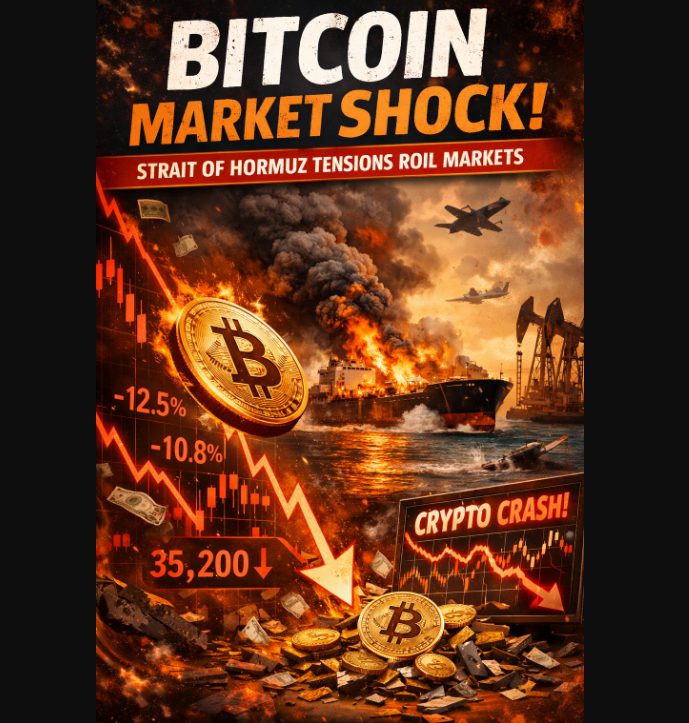
Today, Bitcoin continued its bearish trend after crossing above $64,000 in the previous rally. Bitcoin fell below the crucial $63,000 psychological threshold. After the reported attacks on oil tankers in the Strait of Hormuz, the situation became even more difficult. With the increased reports of the United States vs. Iran situations, the markets became fearful of the increased volatility in the energy sector and the other risk assets, including Bitcoin.
The UK Military Center posted reports on X (Twitter) stating that an oil tanker in the Strait of Hormuz was attacked and suffered minimal structural damage. This was the second reported attack on a tanker in the region on the same day.
The security of the Strait of Hormuz, one of the busiest oil transit routes, became a concern. The UK Military also reported that another tanker suffered damage, resulting in an increased number of reported cases of attacks in the Strait of Hormuz in the last 24 hours.
The reported cases of attacks of the Strait of Hormuz highlighted the risk-off nature of the global markets. Based on the trading data from TradingView, Bitcoin suffered a greater decrease below $63,000 and was trading near $62,800. Digital assets are sensitive to macro and geopolitical events. Bitcoin is considered a hedge against economic uncertainty. In the short term, the global risk factors and market liquidity and sentiment also affect the price of Bitcoin.

The United States-Iran negotiations started with talks held in Switzerland. Those negotiations have broken down, and more aggressive actions and greater sanctions from the United States, as stated by then President Trump, would be more likely. With more aggressive actions anticipated, concerns in the market have grown with respect to energy and trade supply disruptions.

Given the importance of the Strait of Hormuz to the world oil market, potential disruption to oil transportation will cause oil prices to rise. To contribute to already stressed world markets, oil prices rising creates demand and increases inflation concerns. Increased inflation creates greater interest in cryptocurrencies. Many saw the risk of inflation and the Fed reducing interest rates in the near future.
With the risk of the U.S.-Iran nuclear deal reaching an end, the likelihood of U.S.-Iran diplomatic negotiations has ceased as there have been more tanker collisions. Current predictions have the Polymarket data placing the expected deal at a 30% likelihood by September 30, greatly improving the odds to the end of the year, to 46%. These odds demonstrate that the decreased interest in deal making.
With respect to the combination of the geopolitical risk, of demand disruption in the energy market, and the shifting of the interest rates, Bitcoin’s movement below $63,000 represents these factors. The geopolitical risk is what the market is primarily interested in given uncertainty with respect to Middle East oil and the greater interest in greater central banking policy.