In the rapidly changing world of finance, enterprise teams need systems beyond ERP, and they need them fast. The gap between corporate finance and blockchain technology is quickly shrinking thanks to the innovative technology of crypto-compatible ERP. At the cutting edge of enterprise infrastructure, these platforms provide seamless integration, provide real-time reports, and are designed to adhere to the standards of IFRS/GAAP.
For CFOs, the finance leaders of multi-entity structures, they enable device of records for automated reconciliations and maintenance of records in a format that is audit ready, all while growing internationally. The best crypto-compatible ERP systems optimize security, transparency, and automation to help corporations manage the challenges that come with digital finance, all while retaining control.
Why Crypto-Compatible ERP Systems Matter
Regulatory Compliance
Crypto-compatible ERPs assure IFRS/GAAP compliance, SOC certifications, and IRS standards, helping enterprises adapt to changes in international regulations whilst maintaining compliance with best practices in auditing and reporting of digital assets.
Integrations
They integrate easily with NetSuite, SAP, Oracle, QuickBooks, and Xero, thus facilitating direct journal entries and eliminating much of the work needed to ensure crypto transactions become part of the enterprise finance systems.

Multi‑Entity Consolidation
Enterprises having subsidiaries, DAOs, or funds, benefit from real‑time consolidation, thus enabling the accurate roll‑ups of multiple entities and portfolios to offer greater transparency and financial oversight at scale.
API Flexibility
ERPs integrate custodial services, exchanges, wallets, and DeFi, thus enabling treasury automation, asset tracking, and the integration of crypto into the enterprise finance system.
Financial Automation
Automation of workflow incorporates transactions, the calculation of taxes, and the automatic creation of audit trails as well as the accounting of smart contracts, thus eliminating the need for numerous manual entries.
Real‑Time Reporting
Crypto ERPs allow reporting of digital assets, treasury balances, and taxable events, thus allowing the CFO to make sensitive reports regarding the risk exposure of the enterprise.
Scalability & Security
Enterprise ERPs process millions of transactions per month, thus ensuring enterprise‑grade security for the financial systems of global corporations.
What Is a Crypto-Compatible ERP System?
Crypto-enabled ERP systems serve as enterprise resource management systems for finance departments integrating digital assets. They offer connections to custodians, exchanges, wallets, and DeFi protocols to ensure automated journal entries to NetSuite, SAP, or QuickBooks. Built for regulated companies, they offer audit-ready reporting, comply with IFRS/GAAP, and support consolidation of multiple entities.
Automation of reconciliations and tax calculations eases the burdens of the complexities of treasury workflows. Dashboards are available, offering real-time visibility of crypto positions and treasury balances. They process millions of transactions while maintaining the highest encryption and controls. API Flexibility is offered for ease of customization of the product to fit clients’ needs.
Key Point
| ERP System | Best For | ERP Integrations | Compliance & Features | Key Point |
|---|---|---|---|---|
| Cryptio | Regulated multi-entity enterprises | NetSuite, SAP, Xero | SOC 1 & SOC 2, IFRS/GAAP | Direct ERP journal push, $3T+ volume handled |
| Bitwave | DeFi-heavy corporates, DAOs | NetSuite, QuickBooks, Oracle ERP Cloud | IFRS + US GAAP | Treasury dashboard for stablecoins, strong DeFi support |
| SoftLedger | Unified fiat + crypto ledger | QuickBooks, Xero | Full ledger, multi-entity | Real-time consolidation across fiat & digital assets |
| Integral | Crypto-native startups & funds | Coinbase Prime, APIs | IFRS/GAAP | Backed by Coinbase Ventures, fund-focused workflows |
| Cryptoworth | Mid-market firms | QuickBooks, Xero | Published pricing | $300/month for 50k transactions, transparent pricing |
| TaxBit | US corporate compliance | Proprietary API | US GAAP | Handles corporate + individual tax in one platform |
| Ledgible | Institutions & tax professionals | QuickBooks, CCH, GoSystem | SOC 2 | Risk-conscious firms, strong audit posture |
| NODE40 | Audit-ready enterprises | Standalone, API | Verifiable trails | Independently verifiable audit-trail exports |
| Lukka | Funds & custodians | Advent, Geneva, SS&C | IFRS + US GAAP | Institutional-grade crypto fund accounting |
| Koinly | SMEs & individuals | QuickBooks, Xero | Basic GAAP | Affordable option ($49–$279/yr), good for smaller teams |
1. Cryptio
Cryptio helps enterprise finance teams manage complicated crypto treasuries. It easily integrates with NetSuite, SAP, and Xero into direct journal entries in ERP systems. It’s strong with compliance having SOC 1 and SOC 2, along with alignment with IFRS and GAAP. Multi-entity consolidation makes it ideal for global corporate teams. Its API flexibility easily integrates with custodians, exchanges, and wallets.
It has financial automation with reconciliation, audit trails, and automated journal postings. With real-time reporting, you get visibility into your digital asset positions. It has proven to be scalable with the capability of handling trillions in volume. There are security controls in place including enterprise-grade encryption and audit readiness so finance teams can meet regulatory and operational demands.
Key Compatibility Advantages
- ERP Integration: Direct Journal Push to NetSuite, SAP, and Xero
- Compliance: Alignment with SOC 1 and SOC 2, and IFRS/GAAP
- Multi-Entity: Global Subsidiaries Consolidation
- API Connections: Custodians, exchanges, wallets
- Financial Processes: Automated reconciliation and audit trails
Best For
- Finance Teams of Large Enterprises
- International Corporations
- Institutions with Extensive Audits
- Large Volume Crypto Treasury Operations
2. Bitwave
Bitwave is designed for enterprise teams with DeFi exposure and DAO treasury management. It has deep ERP connectivity integrations with NetSuite, QuickBooks, and Oracle ERP Cloud. It has IFRS and US GAAP compliance along with designed workflows for crypto tax and accounting. Multi-entity support offers consolidation across subsidiaries and DAOs. Its API flexibility makes connections to DeFi protocols, stablecoins, and custodians.
Automation includes treasury dashboards, staking income tracking, and smart contract accounting. Reporting also provides real-time visibility into DeFi positions. It is designed with high-volume, multi-chain scalability. Security controls emphasize audit readiness and enterprise governance, making it the best ERP solution for crypto-native finance teams.
Key Compatibility Advantages
- ERP Integration: NetSuite, QuickBooks, and Oracle ERP Cloud
- Compliance: IFRS and US GAAP
- DeFi: Support for Stablecoins, Staking, and DAO Treasuries
- Automation: Accounting for Smart Contracts and Dashboards
- Supports: Multi-chain, High Volume Transactions
Best For
- Decentralized Finance Businesses
- DAO Treasury Management
- Crypto-Focused Businesses
- Treasury Teams Dealing with Stablecoins
3. SoftLedger
Balancing traditional assets and digital assets? SoftLedger has you covered with its unified ledger of traditional and digital/crypto assets. SoftLedger integrates with Quickbooks and Xero, along with its own ERP-style ledger. It is compliant with reporting standards of the IFRS and GAAP. Its systems support multi-entity consolidation and real-time roll up of subsidiaries. Flexible APIs allow integration with crypto exchanges, wallets and fiat banking systems.
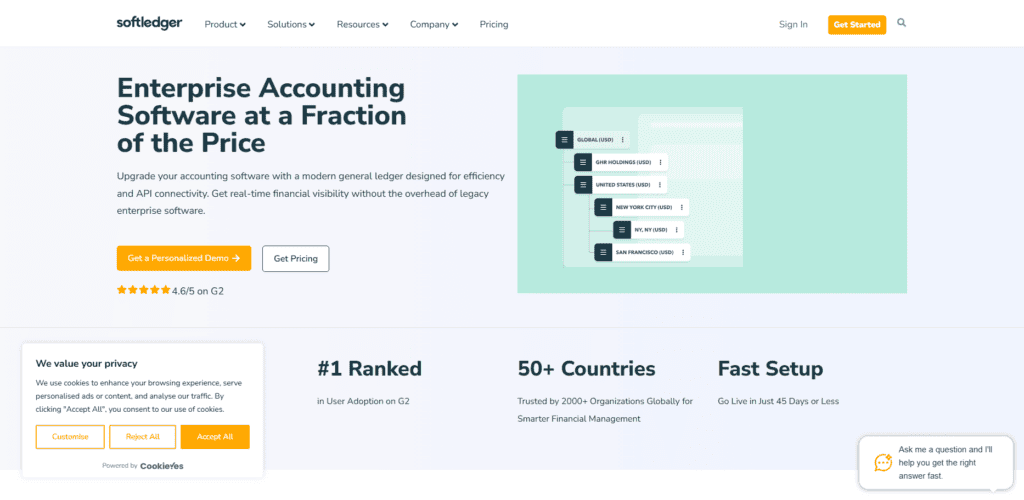
Automation includes real-time reconciliations and consolidations, reducing manually intensive work. Reporting allows users to see real-time balances of fiat and crypto. Systems are built to support large transaction volumes. Security controls are focused on supporting financial governance and auditready export controls. SoftLedger is a flexible ERP for finance systems that span traditional and digital/crypto assets.
Key Compatibility Advantages
- Unified Ledger: Crypto and Fiat in One Ledger
- ERP Integration: QuickBooks and Xero
- Multi-Entity: Consolidation and Roll-up of Subsidiaries
- Automation: Reconciliation and Consolidation
- Reporting: Visibility for Both Stable and Crypto Funds
Best For
- Mixed Team Finances
- Medium-Sized Businesses
- Multi-Entity Businesses
- Organizations Prepared for Audits
4. Integral
Integral provides its services to crypto-native startups, funds, and institutional investors. Integral integrates with Coinbase Prime and APIs to offer custodian connection. Fund accounting standards and reporting using the IFRS and GAAP compliance standards are available. Integral offers funds multi-entity consolidation to manage multiple portfolios. Flexible APIs facilitate integration with DeFi protocols and custodians.
Automation provides fund workflow and NAV computations and management of crypto treasury. Reporting allows real-time visibility of fund positions. Integral provides powerful systems with institutional transaction volumes. Security controls target enterprise governance and audit readiness. Integral, backed by Coinbase Ventures, positions itself as a trusted ERP for funds and enterprises managing crypto portfolios.
Key Compatibility Advantages
- ERP Integration: Coinbase Prime and APIs
- Compliance: IFRS/GAAP and Fund Accounting
- Multi-Entity: Fund Portfolio Consolidation
- Automation: Treasury Tasks and NAV
- Protection: Audit Prepared Design with Coinbase Ventures
Best For
- Cryptocurrency Investment Funds
- Institutional Cryptocurrency Investors
- Cryptocurrency Technology Startups
- Cryptocurrency Portfolio Management Services
5. Cryptoworth
Cryptoworth is a mid-market ERP system with flexible pricing. QuickBooks and Xero integrations help it reach finance teams. Alignment with IFRS/GAAP ensures proper reporting. Support for multi-entity consolidation is targeted towards mid-market firms. API accessibility supports integrations with exchanges and wallets. Automating transaction reconciliations and journal postings decreases manual efforts.
Real-time reporting gives visibility into crypto positions. Security controls of the published pricing levels are designed to support scalability of up to 50,000 transactions. Cryptoworth’s transparent pricing helps enterprises implement mid-market crypto ERP functionalities in their businesses.
Key Compatibility Advantages
- ERP Integrations: QuickBooks, Xero
- Compliance: IFRS/GAAP
- Price Openness: $300/month for 50k transactions
- Automation: Transaction reconciliations and postings
- Reporting: Crypto transaction visibility
Best For
- Mid-Market Firms
- Budget-Conscious Firms
- Small and Medium Enterprises Finance Teams
- Price Openness
6. TaxBit
TaxBit is focused on US corporate compliance and tax reporting. Via its proprietary APIs, it is able to integrate with custodians and wallets. Its focus on US GAAP and IRS compliance makes it valued by regulated firms. Multi-entity consolidation enables both corporate and individual tax reporting. API flexibility facilitates integrations with custodians and exchanges.
Automation reduces the burden of compliance. Reporting enables real-time visibility into tax positions and events. Security controls are designed to support audit readiness and compliance with IRS standards. TaxBit is beneficial for enterprises emphasizing crypto ERP functionality with tax compliance.
Key Compatibility Advantages
- Compliance: US GAAP and IRS
- ERP Integrations: Custom API
- Automation: Tax calculations and reconciliations
- Reporting: Taxable event visibility
- Security: IRS audit compliant
Best For
- Corporations in the US
- Tax Compliance
- Audit Risk IRS Exposure, Enterprises
- Crypto Tax Compliance
7. Ledgible
Ledgible caters to both institutions and tax professionals. Ledgible integrates with QuickBooks, CCH, and GoSystem to provide connectivity with many tax and ERP software solutions. Ledgible also offers SOC 2 compliance for audit readiness. Ledgible also facilitates multi-entity consolidations to streamline enterprise workflows. API integrations with custodians, exchanges, and wallets can all be built by Ledgible.
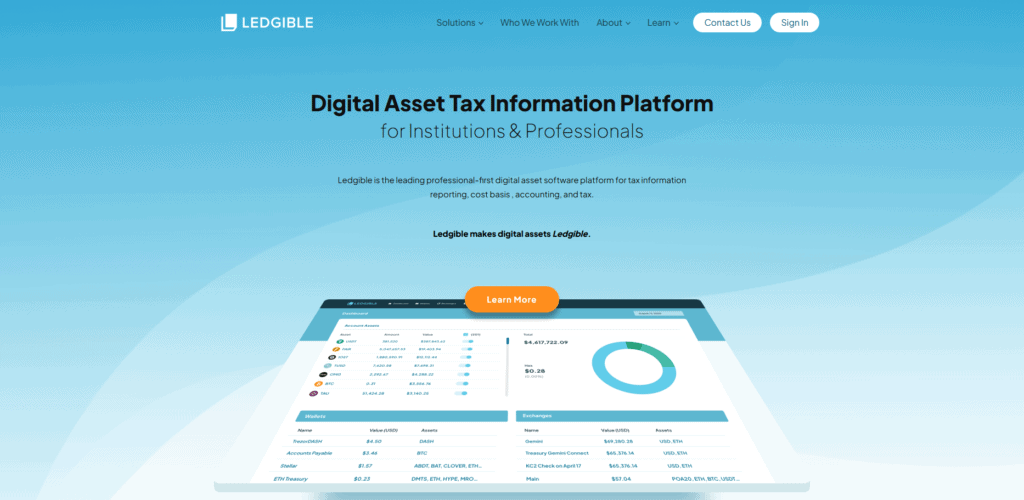
Ledgible can also automate tax reporting and create audit trails. Crypto transactions and reporting on tax events can both be done in real-time. Ledgible provides solutions to accommodate the high volume of transactions that large institutions often process. Ledgible, as an ERP solution, also manages the risk of processing complex financial transactions that deal with cryptocurrency.
Key Compatibility Advantages
- ERP Integrations: QuickBooks, CCH, GoSystem
- Compliance: SOC 2
- Automation: Tax Reporting and Reconciliations
- Security: Audit Risk Focus
Best For
- Enterprises
- Tax Professionals
- Audit Intensive Firms
- Enterprise Finance Teams
8. NODE40
NODE40 excels in providing audit-ready accounting for cryptocurrency. NODE40 also integrates with exchanges and wallets via APIs. NODE40 also focuses on comprehensive audit trails to enhance transparency. NODE40 also supports multi-entity consolidations to create enterprise workflows. API integrations with custodians and other ERP software can be built by NODE40.
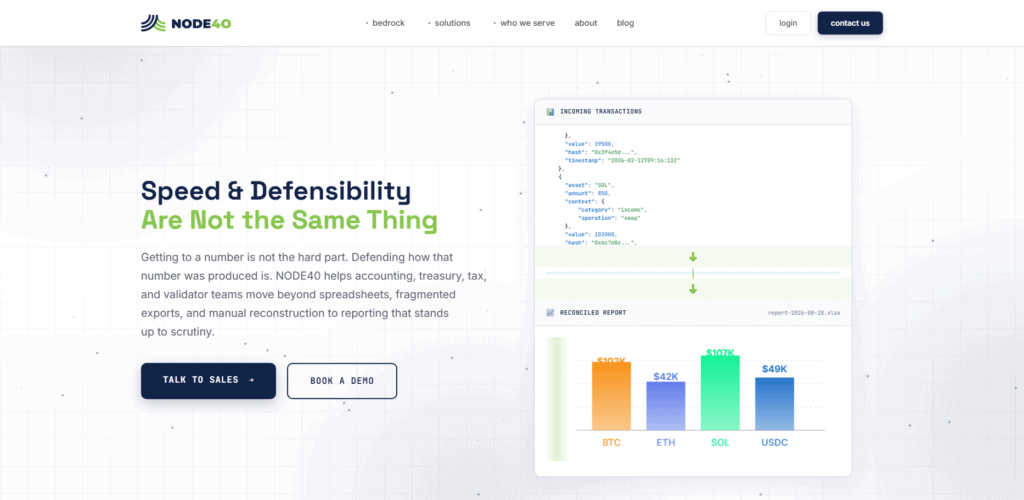
NODE40 also can automate the exporting of audit trails and the reconciling of data, thus reducing the need for a lot of work. NODE40 also provides reporting on positions of cryptocurrency that is verified. NODE40 also allows large institutions to process high volumes of transactions while still maintaining compliance. NODE40 is a strong ERP solution to provide transparency and security in cryptocurrency accounting.
Key Compatibility Advantages
- Audit Trail: Exports verifiable through independent means
- ERP Integrations: API and Workflow Interconnections
- Compliance: Workflows compliant with audit and task exposure
- Automation: Reconciliation and audit trail creation
- Security: Focused enterprise audit governance
Best For
- Enterprises with a Focus on Auditing
- Focused Transparency
- Crypto Accounting
- Regulated Institutions
9. Lukka
Lukka focuses on funds, custodians, and institutional investors. It integrates with Advent, Geneva, and SS&C, with deep ERP and fund accounting integration. Compliance is IFRS/GAAP, targeting institutional standards. It supports multi-entity consolidation and fund workflows. API flexibility means custodian and exchange integration is possible.
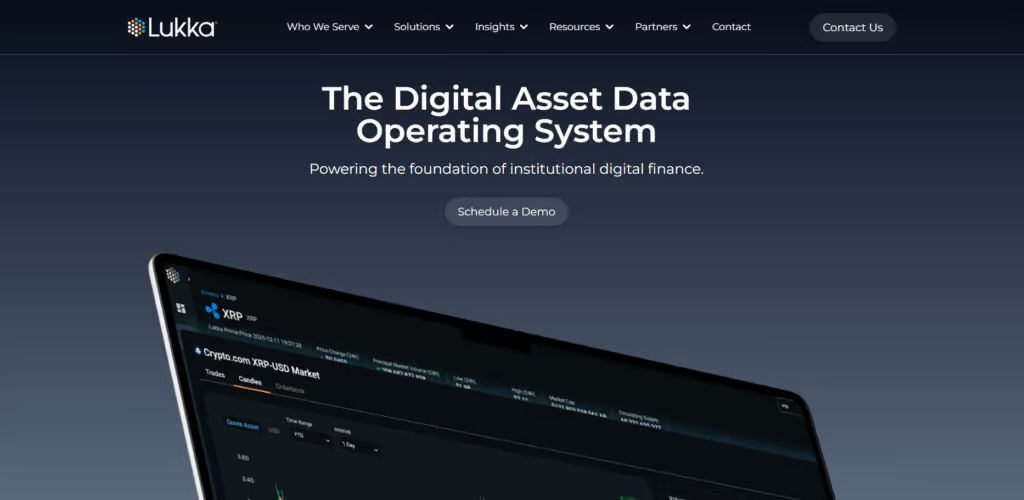
Fund accounting, NAV calculation, and reconciliation are automatable. Reporting provides real-time fund position visibility. It is built to handle institutional transaction volumes. Security focuses on audit readiness and enterprise governance. Lukka provides the crypto ERP solution trusted by institutions with solid fund accounting capabilities.
Key Compatibility Advantages
- Lukka makes deep Advent, Geneva, SS&C integrations for fund accounting.
- Lukka’s fund accounting software meets both GAAP and IFRS standards, providing trust to funds and custodian banks.
- Lukka helps clients with fund consolidation.
- Their software helps with fund accounting and reconciliation with automation.
- Lukka’s software helps counterparties get real-time updates on their institutional crypto positions.
Best For
- Funds
- Custodian banks
- Institutional investors
- Finance teams at enterprises
- Koinly
10. Koinly
Koinly provides SMEs and individuals an ERP solution at an affordable price. Integration with QuickBooks and Xero provides ERP connectivity. GAAP addresses basic reporting standards and compliance. Multi-entity consolidation is limited but adequate for SMEs. API flexibility means integration with exchanges and wallets.
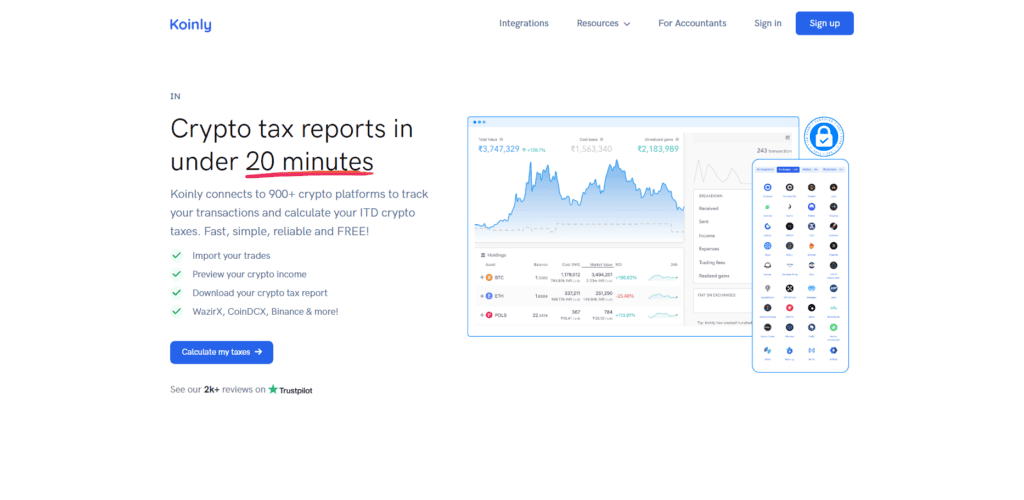
Tax reporting and reconciliation automation is possible. Reporting provides visibility into positions and taxable events. Affordable pricing tiers ($49–$279 annually) mean scalability is possible for higher transaction volumes. Security is audit-ready and means encryption is present. Koinly provides an affordable crypto ERP solution to smaller enterprises.
Key Compatibility Advantages:
- Koinly has integrations to QuickBooks and Xero geared towards SMEs.
- GAAP alignment for tax and reporting.
- Their software automates tax reporting and reconciliation, and tracks transactions.
- Reasonably priced tiers that support thousands of transactions.
- Their software encrypts data and allows for audit exports for compliance.
Best For:
- SMEs
- Individual investors
- budget-conscious enterprises
- tax reporting teams
Key Features to Look for in a Crypto-Compatible ERP
ERP Integrations
Automated crypto financing system integration with NetSuite, SAP, Oracle, QuickBooks, and Xero minimizes manual transactions in corporate finance. It reduces human errors and improves the efficiency of corporate finance across multiple regions.
Regulatory Compliance
Systems and processes designed to continuously align with the accounting standards and regulatory frameworks of the International Accounting Standards Board (IASB), the Securities and Exchange Commission (SEC), the Internal Revenue Service (IRS), and the U.S. Department of the Treasury (Treasury) enhance a firm’s preparedness for audits, and improve the firm’s defensible reports and compliance with international accounting.
Multi‑Entity Consolidation
It supports real-time roll-up of subsidiaries, DAOs, funds, and other entities, and improves transparency and oversight for enterprise structures.
API Flexibility
APIs connect custodians, exchanges, wallets, and DeFi protocols and automate treasury functions while providing seamless integration of crypto assets in enterprise finance systems.
Financial Automation
It automates reconciliations, tax computations, audit trails, smart contracts, and enhances systems of record to reduce errors and increase productivity.
Real‑Time Reporting
The performance of enterprise financial functions is enhanced by the real-time reporting of digital asset positions, taxable events, and treasury balances to provide risk management and financial planning insights.
Scalability & Security
Scalability and compliance are enhanced by enterprise-grade governance, while SOC-certified audit readiness ensures secure financial controls for global corporations.
Conclusion
Crypto-compatible ERP systems now serve a critical function for enterprises that manage digital assets on a large scale. They integrate traditional finance with blockchain. Crypto‑compatible ERP systems support compliance with IFRS/GAAP, multi-$ $entity consolidations, and reporting that is suited for audits. Integration with leading ERP suites like NetSuite, SAP and Oracle eliminates the need to key in data and reduces the likelihood of data entry errors.
Their APIs provide integration with custodians, exchanges, wallets, and DeFi protocols. Automation eliminates the need to perform reconciliation and calculates the taxes owed. Real-time dashboards provide CFOs with the tools they need to make strategic decisions. Transactions are secured with enterprise-grade security controls, and crypto-compatible ERP systems allow finance teams to confidently manage digital asset ecosystems with a high degree of governance and transparency.
FAQ
What is a crypto‑compatible ERP system?
A crypto‑compatible ERP system integrates digital assets into enterprise finance workflows, connecting exchanges, wallets, and custodians with ERP suites like NetSuite, SAP, or Oracle for compliant, automated reporting.
Why do enterprises need crypto‑compatible ERPs?
They ensure IFRS/GAAP compliance, automate reconciliation, provide audit‑ready reporting, and deliver real‑time visibility into crypto treasuries, enabling CFOs to manage risk and scale operations confidently.
Which ERP systems are crypto‑compatible?
Leading platforms include Cryptio, Bitwave, SoftLedger, Integral, Cryptoworth, TaxBit, Ledgible, NODE40, Lukka, and Koinly, each tailored for enterprise, institutional, or SME finance teams.
How do these systems handle compliance?
They align with IFRS, GAAP, IRS standards, and SOC certifications, ensuring enterprises meet regulatory requirements while maintaining defensible audit trails and transparent reporting.
Can crypto ERPs support multi‑entity consolidation?
Yes, they consolidate across subsidiaries, DAOs, and funds in real time, enabling accurate roll‑ups and improved oversight for complex enterprise structures.