

This article will cover the Best Crypto-Friendly Banks in the UK. I will be looking at banks that make it easy to transfer money to crypto exchanges, have embedded crypto services, and have better policies for users of crypto.
Banks from all areas of the industry, from challenger banks like Revolut and Monzo, to more traditional banks like Barclays and NatWest, are included. I will be analyzing transfer limits and fees, as well as the different types of accounts.
What is Crypto-Friendly Banks in the UK?
Crypto-friendly banks in the UK let customers use their accounts for lawful cryptocurrency tasks like sending GBP to backed crypto exchanges, receiving exchange withdrawal payments, and making allowed crypto-related card payments. Being crypto-friendly does not mean a bank supports all cryptocurrencies and all exchanges in an unrestricted way.
Banks can put transaction limits and fraud monitoring can be combined with KYC checks and other risk controls. This is necessary in the UK because the FCA is creating a wider regulatory framework for cryptoasset activities, with the new FSMA regime expected to start on 25 October 2027.

Key Points
| Bank | Core Services | Best For |
|---|---|---|
| Revolut | Retail crypto trading, wallets, staking | Retail investors & SMEs |
| ClearBank | Banking‑as‑a‑Service, crypto exchange settlement | Exchanges & fintechs |
| Zodia Custody (Standard Chartered) | Institutional crypto custody, FCA‑regulated | Asset managers & funds |
| Barclays | Crypto exchange partnerships, payment rails | Institutional clients |
| HSBC | Tokenized securities pilot, custody services | Global enterprises |
| Monzo | Retail crypto integration via APIs | UK retail customers |
| Starling Bank | Embedded crypto payments, fintech partnerships | SMEs & startups |
| NatWest | Institutional crypto custody, compliance‑first | Corporate clients |
| Lloyds Banking Group | Tokenized asset pilots, crypto risk management | Enterprises & funds |
| Standard Chartered | Zodia Custody + crypto settlement services | Institutional investors |
1. Revolut
Revolut was launched in 2015 with multi-currency accounts and flexible transfer limits with tiered pricing on the plans. Standard accounts offer free transfers up to a certain limit with Premium tier accounts offering unlimited transfers.
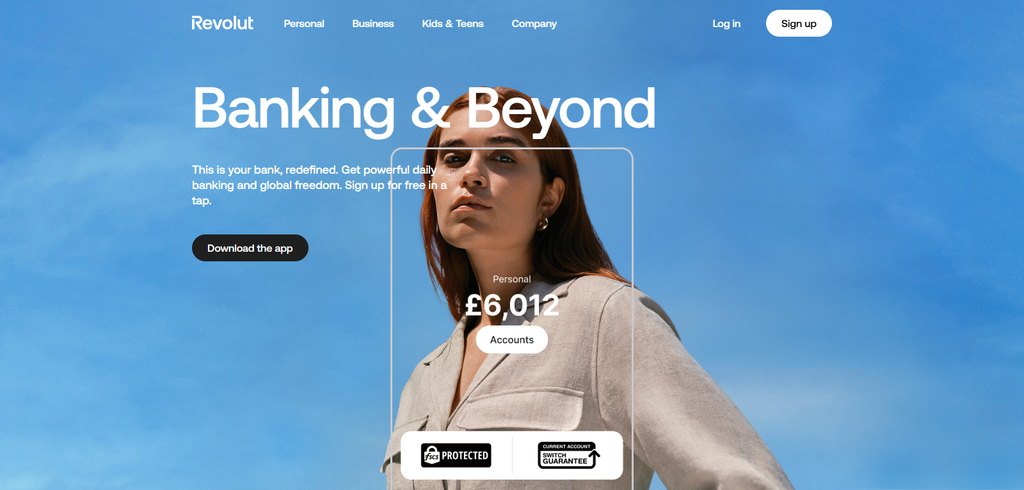
Fees are competitive with the company offering domestic transplications for free with a small FX margin. Revolut protects its customers with a robust security and regulatory framework. Card crypto purchases are available within the app for Bitcoin and other cryptocurrencies.
Crypto is accessed through a seamless, but custodial, framework, meaning Revolut is the custodian of the assets. Overall Score: 8.5/10. Revolut is innovation-minded and accessible, but advanced users of crypto may find it lacking, particularly with a self-custody framework.
Characteristics
- Mobile-first banking with integrated crypto services.
- Can buy and sell crypto, and hold them in the app.
- Great option for international users with strong multi-currency functionality.
- Has personal and business financial offerings.
- Obtained a UK banking licence in 2026, which changed its status in the UK ([Financial Times][2]).
Advantages
- Crypto services are provided by the bank, so users don’t have to look for them elsewhere.
- Convenient for users who like to keep their funds in both crypto and fiat.
- Great for international payments and FX transactions.
- Excellent mobile app.
- Great option for users who want to keep their banking and crypto services separate.
Disadvantages
- Depending on the customer and the asset, the bank may offer different crypto services and features.
- There may be risk control frameworks for crypto transactions.
- Fees depend on the plan and the type of transaction.
- Expanding its product offerings may create more regulatory complexity.
- Not the best option for complex institutional-level custody of digital assets.
2. ClearBank
ClearBank was launched in 2015 as a clearing and embedded banking provider, without any operations in retail banking. Transfer limits are set by client integrations, as ClearBank provides infrastructure only. Business-focused account types offer agency and settlement banking. Fees are set by partner agreements and are not disclosed to the end-user.
Protecting clients’ funds is a priority, and ClearBank is regulated by the FCA. ClearBank does not support card crypto purchases or provide retail crypto services. Overall Score: 7/10. ClearBank is strong in infrastructure, but lacking in consumer crypto and card services.
Characteristics
- Heavily focused on financial institutions and fintechs within the UK banking infrastructure.
- Account and payment infrastructure focus with a consumer crypto bank model.
- Real-time payment infrastructure is a focus area.
- Can help provide banking infrastructure to businesses.
- More applicable to institutional crypto and fintech businesses than to the everyday retail crypto user.
Advantages
- A strong banking model focused on infrastructure.
- Can help fintechs build regulated financial products in conjunction with their payment infrastructure.
- Real-time payment infrastructure enables the movement of funds in a matter of seconds.
- More applicable to a business than a traditional retail banking relationship.
- Can help establish a banking infrastructure for digital-asset companies.
Disadvantages
- Was not built to be a direct crypto-investment platform.
- Retail users cannot use it like a normal crypto-friendly current account.
- Crypto businesses will still have to jump through compliance and onboarding hoops.
- They will have to understand its institutional banking model.
- Not applicable to the individual crypto trader looking for an all-in-one app.
3. Zodia Custody (Standard Chartered)
A subsidiary of Standard Chartered, Zodia Custody was established in 2020 to provide institutional crypto custody services. With respect to enterprise clients who use their services in bulk, Zodia Custody has set transfer limits on their custodial accounts. As mentioned above, the exact fees charged by Zodia Custody are negotiated on a case-by-case basis. From what is publicly available,

Zodia Custody has strong security measures, and the custody services they provide are heavily insured and comply with strict regulatory frameworks. Like the other institutions outlined in this report, Zodia Custody does not offer retail services, and for that reason, they score an 8/10 on our institutional security framework.
Characteristics
- An institutional digital-asset custody specialist with no ties to a traditional retail bank.
- Provides secured custody of digital assets.
- Has backing from Standard Chartered through their venture arm.
- Is designed to serve the needs of institutional and professional clients.
- Its custody business will be absorbed by Standard Chartered following their 2026 announced acquisition.
Advantages
- More appropriate for funds and professional investors than retail users.
- Close relations to a major global banking group.
- Could integrate with institutional trading and settlement infrastructures.
- Provides a digital-asset custody solution with an emphasis on institutional control and security
Disadvantages
- Not a typical current-account provider.
- Not for basic retail banking.
- Only of interest to a select group of institutional holders of digital assets.
- Custody services are different from buying or selling crypto through a bank.
- The announced acquisition will change the corporate structure and ownership.
4. Barclays
One of the oldest banks in the UK, Barclays was established in 1690. There are varying transfer limits based on the type of account. The premier accounts have higher transfer limits. Barclays has traditional fees, charging a fee for international transfers and for using the bank’s premier services.

Barclays has strong security and protection with the FSCS and advanced fraud monitoring. Like the other banks in this report, Barclays does not offer card crypto purchases, and indirect crypto access is through Barclays’ partnerships and investment platforms. Barclays earns a 7.5/10 for this report for their strong traditional banking services and cautious approach to crypto.
Characteristics
- One of the largest UK high-street banking groups with a large retail and corporate banking operation.
- Offers traditional GBP accounts and payment services.
- Has a large institutional and investment banking arm.
- May impose limits and controls for crypto-related transactions.
- Should be viewed as a traditional bank with a limited integration of crypto services rather than a native crypto bank.
Advantages
- Has a well-established infrastructure for banking in the UK.
- Has a good reputation and a wide financial services offerings.
- Has a wide range of personal and business banking offerings.
- Good option for banking customers that want to keep their money in a traditional bank while also transacting crypto a limited number of times.
- Good for international and corporate banking.
Disadvantages
- May limit or restrict crypto transactions.
- Not a native crypto platform.
- Does not offer an integrated retail crypto service like native crypto platforms.
- Large crypto transactions may trigger added compliance.
- Not the best choice for a crypto trader compared to other platforms.
5. HSBC
HSBC 100 years ago HSBC opened its doors with a goal of providing global banking with high transfer limits for premium clients. Today they offer a variety of accounts from personal to corporate, all of which are internationally transacting. Fees consist of service charges and FX margins, but premium accounts help reduce these costs.
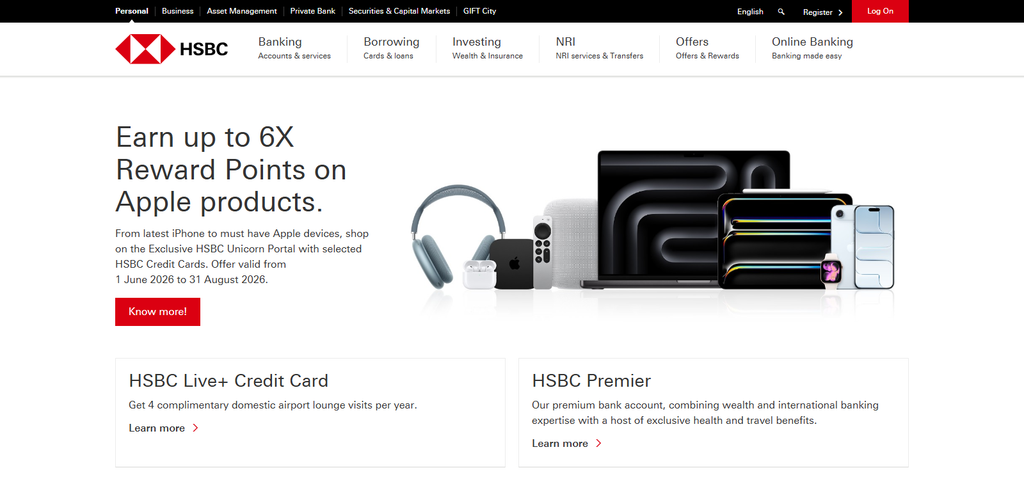
HSBC provides a robust protection service with FSCS coverage and compliancy with global standards. For now, HSBC is not able to facilitate the purchase of cryptocurrencies with their cards, and access to crypto is limited to investment products in a few regions. We give HSBC a score of 7/10 for having a strong global presence but not innovating with crypto.
Characteristics
- Global banking group with significant UK retail and corporate operations.
- Strong international banking and foreign-exchange capabilities.
- Primarily operates as a traditional financial institution.
- Applies risk-management controls to cryptocurrency-related transactions.
- Its international scale makes it more relevant to cross-border banking than crypto-native trading.
Advantages
- Strong global banking network.
- Useful for customers with international financial requirements.
- Established business and corporate banking infrastructure.
- Broad range of traditional financial products.
- Suitable for users who prioritise conventional banking over integrated crypto features.
Disadvantages
- Crypto-related transfers may be restricted or monitored.
- Not designed specifically for active cryptocurrency traders.
- Limited native crypto functionality compared with crypto-focused platforms.
- Large or unusual crypto-related payments can face additional scrutiny.
- May not be the best choice for users who frequently move funds between exchanges and bank accounts.
6. Monzo
Monzo In 2015 Monzo opened its doors as a digital challenger bank in the UK. They have moderately high transfer limits with daily caps for security. Account types consist of personal, joint, and business accounts. Domestic transfers are free, and fees are charged clearly with transparency. FSCS coverage and strong app security make protection robust.

At the moment Monzo does not facilitate card purchases of crypto, and access to crypto is not available. We give Monzo a score of 7.5/10 for strong user experience but lacking innovation with crypto.
Characteristics
- It is a digital, app based, personal banking service focused in the UK.
- It offers a simple account and payment experience.
- It has a newer, more advanced version of a budgeting tool.
- It is more crypto friendly than a bank that is solely a crypto bank.
- Because it allows limited and controlled exchange transfers, it has attracted the attention of the crypto community.
Advantages
- Its focus on mobile banking makes it more convenient to transfer GBP to crypto exchanges that it supports.
- It has excellent visibility and management of transaction based accounts.
- It is the most mainstream bank that provides any crypto services, making it a good options for users that want to dabble in crypto.
Disadvantages
- Its limits on crypto transfers will inconvenience users that do high volume crypto transactions.
- It is not a dedicated crypto trading platform.
- Transactions may be investigated for fraud and risk-related reasons.
- Not ideal for professional/high-frequency crypto activities.
- Crypto features are supplementary to standard banking features.
7. Starling Bank
Starling Bank Opening in 2014 as another digital challenger bank in the UK, Starling has practical transfer limits with daily caps that are adjustable with the account type. Account types consist of personal, joint, and business banking. Fees are low with competitive FX and free domestic transfers.
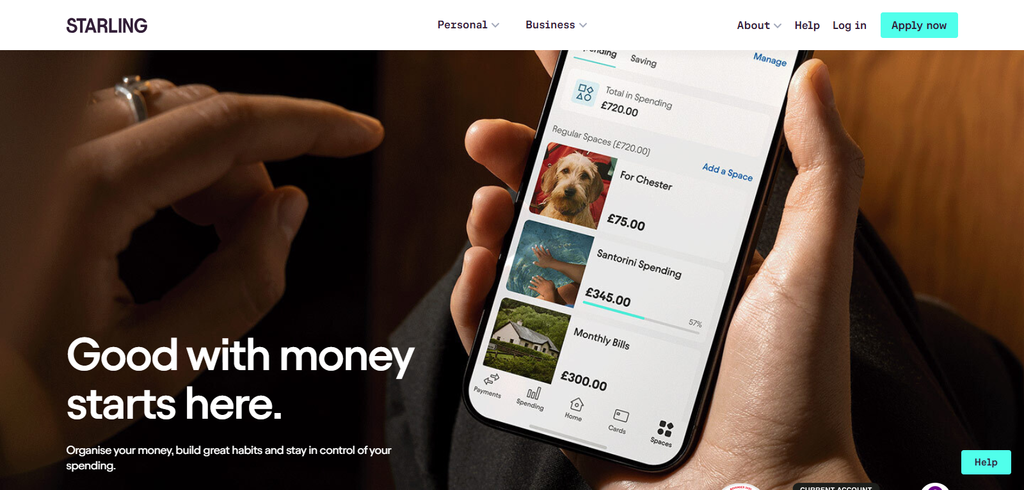
Strong protection is provided with fractional liability coverage and protection from fraud. Similar to the other banks, Starling does not allow card purchases of crypto and does not have crypto services. We give Starling a score of 7.5/10 for strong banking but no innovation with crypto.
Characteristics
- UK digital bank with a strong mobile-first banking model.
- Provides personal and business current accounts.
- Known for payment and account-management features.
- Takes a conservative approach to certain cryptocurrency-related transactions.
- More appropriate for conventional digital banking than active crypto trading.
Advantages
- Clean and intuitive mobile banking experience.
- Strong everyday payment functionality.
- Useful conventional banking services for individuals and businesses.
- Digital account management is straightforward.
- Suitable for users whose crypto activity is limited and who prioritise everyday banking.
Disadvantages
- Crypto exchange transfers can be heavily restricted.
- Not suitable for frequent crypto traders.
- No major built-in cryptocurrency trading ecosystem.
- Crypto-related payments may be blocked or declined.
- Users may need a separate crypto-compatible banking relationship.
8. NatWest
NatWest is a major UK retail bank that was founded in 1968. There are different transfer limits for each account type, with premier clients having higher limits. There are options for personal, business, and premier banking.

There are fees for international transfers and for kicking on an account. NatWest has strong protection with the FSCS and has safeguards for fraud. NatWest does not allow crypto purchases on their cards and has limited crypto services. Overall Score: 7/10, as NatWest is strong with traditional banking but avoids crypto.
Characteristics
- Major UK banking group serving retail, business and corporate customers.
- Provides extensive conventional banking infrastructure.
- Maintains specific controls around cryptocurrency transactions.
- Focuses heavily on fraud prevention and customer protection.
- More traditional in its approach to crypto than digital-first competitors.
Advantages
- Large and established UK banking network.
- Wide range of personal and business accounts.
- Strong fraud-monitoring infrastructure.
- Useful for customers who need traditional banking services alongside limited crypto exposure.
- Extensive branch, digital and customer-service infrastructure.
Disadvantages
- Crypto transfers can be subject to limits.
- Large cryptocurrency transactions may receive additional scrutiny.
- Not suitable for high-frequency crypto trading.
- No comprehensive crypto-native banking experience.
- Users may encounter more friction than with crypto-focused providers.
9. Lloyds Banking Group
Lloyds Banking Group, with its roots tracing back to 1765, is one of the largest banking groups in the UK. Transfer limits are higher for premier clients, as are the caps for each account type (personal, business, and wealth management).
There are fees for international transfers and for banking service. Protection is strong with the FSCS and fraud monitoring. Lloyds does not allow crypto purchases on their cards and has no crypto services. Overall Score: 7/10, as Lloyds provides stability but no crypto innovation.
Characteristics
- Major UK banking group covering brands including Lloyds Bank and other financial-services businesses.
- Strong retail, business and mortgage banking presence.
- Primarily focused on traditional financial services.
- Crypto-related payments can be affected by fraud-prevention and risk controls.
- Better suited to conventional banking than crypto trading.
Advantages
- Large established UK banking infrastructure.
- Broad personal and business banking options.
- Strong digital banking capabilities.
- Suitable for customers who want mainstream banking services.
- Extensive financial-services ecosystem for long-term banking needs.
Disadvantages
- Crypto transactions may face restrictions or monitoring.
- No native crypto ecosystem comparable with crypto-focused platforms.
- Less attractive for frequent exchange transfers.
- High-value crypto activity may trigger additional verification.
- Not designed specifically for digital-asset businesses or professional traders.
10. Standard Chartered
Standard Chartered, with its strong emerging market presence, was founded in 1969 and is a global bank. Transfer limits for premier and corporate clients are high. Personal and business banking is offered, as is institutional banking.
There are FX margins and service fees. Protection is global compliance and FSCS coverage in the UK. Standard Chartered does not allow crypto purchases with their cards and have no crypto services, but with Zodia Custody, they offer their services to institutions. Overall Score: 8/10, as Standard Chartered balances global reach with cautious crypto adoption.
Characteristics
- Global banking group with strong corporate, institutional and international banking operations.
- Has developed significant interest in digital assets and blockchain infrastructure.
- More focused on institutional finance than UK retail crypto banking.
- Connected to institutional digital-asset custody through Zodia.
- Does not operate as a conventional UK retail banking option in the same way as major high-street banks.
Advantages
- Strong institutional banking expertise.
- Significant international banking network.
- Well positioned for institutional digital-asset infrastructure.
- Experience across custody, trading and digital-asset initiatives.
- Strong potential relevance for professional investors and financial institutions.
Disadvantages
- Not a straightforward choice for UK retail crypto users.
- Limited relevance for everyday personal crypto transactions.
- Institutional services can involve more complex onboarding.
- Not designed as an all-in-one retail crypto app.
- Its digital-asset offerings are more relevant to institutions than casual investors
Conclusion
The number of crypto-friendly banks in the UK is still low, with even fewer banks actively engaging with crypto. Revolut is the most popular of these banks, with its users able to trade cryptocurrencies directly within the app. However, users should be aware of custodial restrictions.
Monzo and Barclays, who are also challenger banks, provide reliable transfers to crypto exchanges, but these transfers are monitored for fraud and are only allowed up to a certain amount. The traditional banks, HSBC, Lloyds, and Starling Bank, are also cautious or have restricted crypto, likely due to the pressure from regulations.
For users in the UK, if you want to be able to easily purchase crypto, you will have to use a bank like Revolut, which has restrictions, or use a transfer-friendly bank like Monzo or Barclays. The FCA is still watching over the industry, so it is in a nascent stage, and users must keep in mind that the industry is still developing.
FAQ
What is a crypto‑friendly bank?
A crypto‑friendly bank is one that allows smooth transfers to FCA‑registered exchanges, supports card payments for crypto purchases, or even integrates crypto trading directly in its app.
Which UK bank is most crypto‑friendly?
Revolut is the most crypto‑friendly, offering in‑app trading of 100+ coins. Monzo and Barclays are also supportive of transfers to exchanges.
Do traditional banks like HSBC or Lloyds allow crypto?
HSBC, Lloyds, and Starling Bank remain restrictive, often blocking or limiting payments to exchanges due to fraud concerns.
Can I buy crypto directly with my bank card?
Yes, with Revolut you can purchase crypto directly. Other banks only allow card transfers to exchanges, subject to limits.