This article will cover the Best Crypto-Friendly Banks in Switzerland. I will be focusing on banks that provide digital asset services while keeping the stability and security of traditional finance. Switzerland has some of the best regulations when it comes to cryptocurrency and has quickly become the global center for integrating cryptocurrency.
Banks such as SEBA and Sygnum, which are fully licensed, provide services such as digital asset custody and trading, along with fiat support. Swissquote and PostFinance offer similar services for a broader client base.
What Are Crypto-Friendly Banks in Switzerland?
Crypto-Friendly Banks in Switzerland offer a way to merge digital asset services with traditional banking, all while keeping the safety and regulatory standards of Switzerland. Banks within this sector enable their clients to transact, store, and control both fiat and crypto currencies. Some of these banks provide custody services, tokenization, and effortless conversion between crypto and traditional money.
Banks within this sector come under the supervision of FINMA, and provide a regulated environment for both retail and institutional investors, thanks to Swiss deposit protection laws. Some of these innovator compliant banks are SEBA Bank, Sygnum Bank, and Swissquote, making Switzerland the global exemplar for crypto compliant banking.

Why Choose Best Crypto-Friendly Banks in Switzerland
Strong Regulation
Swiss banks under FINMA’s supervision strictly comply with KYC/AML and deposit protection, thereby creating a safe environment for crypto banking.
Secure Custody
Banks like SEBA and Sygnum provide institutional custody for digital assets with advanced security frameworks.
Fiat & Crypto Integration
These banks let you effortlessly switch between fiat and crypto, provide you with multi-currency accounts, and even give you debit cards linked to those accounts.
Global Accessibility
Being one of the top financial centers, Switzerland provides clients with international banking services and regulated crypto services.
Tailored Services
Banks like Swissquote and PostFinance offer services for retail clients, whereas Julius Baer offers services for private banking clients.
Key Points
| Bank | Core Services | Best For |
|---|---|---|
| SEBA Bank | Fully licensed crypto bank, custody + trading | Institutions & HNW investors |
| Sygnum Bank | Tokenized assets, staking, DeFi integration | Asset managers |
| BBVA Switzerland | Crypto trading + custody for private clients | Private banking customers |
| Julius Baer | Digital asset custody, wealth management | High‑net‑worth individuals |
| Hypothekarbank Lenzburg | API‑based crypto integration, fintech partnerships | Crypto startups |
| Zuger Kantonalbank | Crypto custody + tokenized securities | Regional institutions |
| Maerki Baumann | Crypto trading desk, custody | Private banking & family offices |
| Swissquote | Retail crypto trading, 40+ coins | Retail investors |
| PostFinance | Crypto trading for retail clients | Mass‑market Swiss customers |
| Credit Suisse (UBS Group) | Institutional crypto custody, tokenization pilots | Global enterprises |
1. SEBA Bank
SEBA Bank is a Swiss bank that has received a full license from FINMA to operate a crypto bank, and provides institutional clients with a fully integrated platform for cryptocurrency custody and trading as well as fiat currency. SEBA’s Crypto Score is high because of its strong compliance and security frameworks.
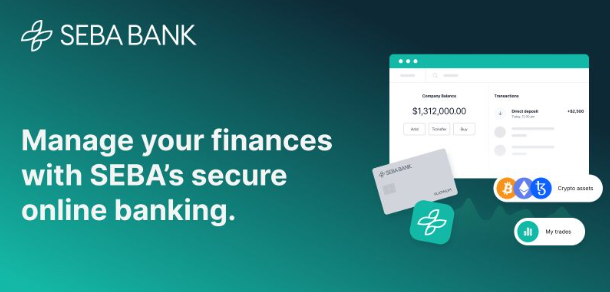
From a banking perspective, SEBA offers multi-currency accounts and fiat-crypto conversion. Additionally, SEBA offers debit cards. Safety and regulatory frameworks are strong because of Swiss deposit protection laws.
SEBA’s fees are higher than other fintechs, and trading fees are 0.5-1% depending on the volume. SEBA focuses on institutional clients, so the retirement trading platform is more complex for individual clients. Overall, SEBA balances safety and innovation as a cryptobank.
SEBA Bank Details
- Key Crypto Services: Institutional grade custody, trading, staking, and tokenization as well as fiat-crypto conversion.
- Best For: High net-worth individuals and clients as well as institutions and corporates interested in regulated crypto banking.
- Regulation & Safety: Licensed by FINMA, Swiss deposit protection, and a strong compliance framework.
- Core Services: Wealth management, multi-currency accounts, and debit cards.
- Fees/Trading: Premium fees, trading fees 0.5-1% (approx.)
| Advantages | Disadvantages |
|---|---|
| Fully licensed Swiss crypto bank under FINMA | Higher fees compared to fintechs |
| Institutional-grade custody and trading | Complex onboarding for retail clients |
| Strong deposit protection under Swiss law | Limited global accessibility |
| Debit card linked to fiat and crypto | Premium services geared to institutions |
2. Sygnum Bank
Sygnum Bank, headquartered in Switzerland and also regulated by FINMA, is another option for a crypto bank. Sygnum’s Crypto Score is excellent because of its staking and tokenization offerings, as well as regulated custody.
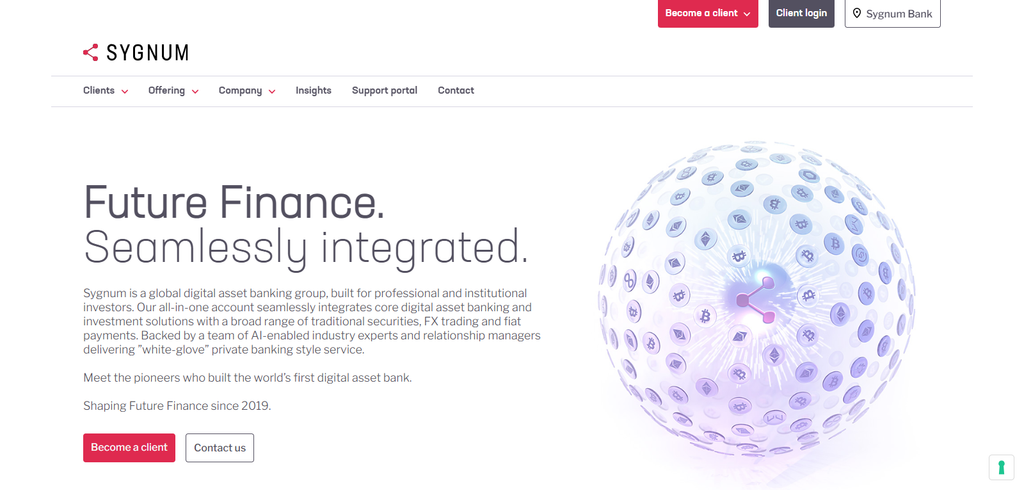
From a banking and fiat perspective, Sygnum offers both personal and corporate accounts, debit cards, and integrated crypto services. Safeguarding and regulation are ensured because of Swiss compliance checks.
Trading fees are 0.5-1% and are higher than neighbor banks. Sygnum focuses on high-net-worth clients and institutions, making its services less accessible to retail clients. Traditional banking safety is ensured, and Innovation is amplified because of its strong offering in crypto.
Sygnum Bank Details
- Key Crypto Services: Crypto trading, tokenization, and custody as well as staking.
- Best For: Wealthy clients and institutions interested in integrating advanced crypto-finance.
- Regulation & Safety: FINMA regulation, Swiss compliance checks, and deposit protection.
- Core Services: Debit cards and accounts (personal/corporate).
- Fees/Trading: Higher than neobanks, trading fees 0.5-1% (approx.)
| Advantages | Disadvantages |
|---|---|
| Regulated Swiss crypto bank | Fees higher than neobanks |
| Offers staking and tokenization | Limited retail crypto flexibility |
| Institutional-grade custody | Requires Swiss compliance checks |
| Personal and corporate accounts | Focused on high-net-worth clients |
3. BBVA Switzerland
BBVA Switzerland offers crypto trading and custody services for its private banking clients. Their Crypto Score is positive, thanks to their regulated business and Swiss deposit protection. Beyond banking and fiat services, such as multi-currency accounts and debit cards, BBVA offers global banking services.
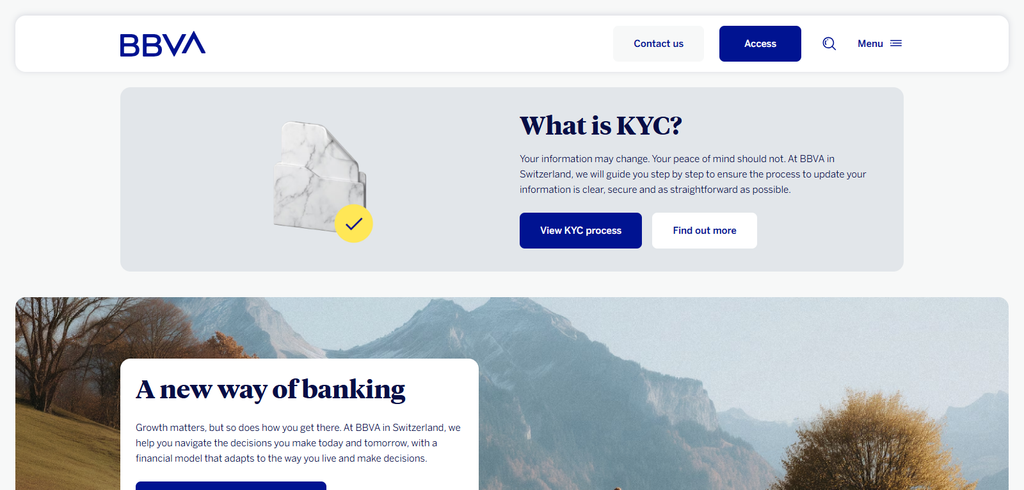
While their regulation and safety services are comprehensive, their onboarding process is complex and is geared towards high-net-worth clients. BBVA charges trading fees in the range of 0.5-1% (higher than most fintechs). BBVA’s combination of a strong global banking reputation with Swiss regulatory safety is positive, but their services remain inaccessible to the retail client. Overall, it is a premium option for institutional and wealthy clients.
BBVA Switzerland Details
- Key Crypto Services: Crypto trading and custody integrated in private banking.
- Best For: High net-worth clients interested in global banking with exposure to crypto.
- Regulation & Safety: Swiss deposit protection and a regulated crypto service.
- Core Services: Global banking, debit cards, and multi-currency accounts.
- Fees/Trading: Premium fees, trading fees 0.5-1% (approx.)
| Advantages | Disadvantages |
|---|---|
| Swiss private banking strength | Focused on wealthy clients |
| Regulated crypto trading and custody | Higher fees than fintechs |
| Strong deposit protection | Limited retail accessibility |
| Global banking reputation | Complex onboarding process |
4. Julius Baer
Julius Baer is a major Swiss private banking player that offers crypto services through regulated partnerships. Their Crypto Score is positive, thanks to their institutional-grade custody and trading services. Beyond banking and fiat services, Julius Baer offers global accounts, debit cards, and wealth management services. Swiss law and private banking standards create a strong regulatory and safety framework.

Like other private banks, Julius Baer caters to ultra-high-net-worth clients, so trading fees in the range of 0.5-1% are to be expected. Security and exclusivity are positive for Julius Baer, but make their services less accessible to the retail user. Overall, Julius Baer is a positive integrate of crypto services to Swiss banking.
Julius Baer Details
- Key Crypto Services: Crypto trading and custody.
- Best For: High net-worth clients and institutions.
- Regulation & Safety: Private banking in Switzerland, strong compliance.
- Core Services: Global accounts, debit cards, and wealth management.
- Fees/Trading: Premium fees, trading fees 0.5-1% (approx.)
| Advantages | Disadvantages |
|---|---|
| Trusted Swiss private bank | Premium fees |
| Institutional-grade custody | Limited retail accessibility |
| Global wealth management expertise | Crypto services via partnerships only |
| Strong compliance and safety | Focused on high-net-worth individuals |
5. Hypothekarbank Lenzburg
A regional Swiss bank, Hypothekarbank Lenzburg, offers progressive crypto services through its partnerships. Its Crypto Score shows moderate to strong ratings, thanks to its forward thinking fintech integrations. Along with traditional banking services, it offers personal accounts and SME services, plus debit cards. While it’s missing the large institutional commitments to regulation and safety found in larger banks, it does operate under Swiss law.
Fees are transparent, with niche services being charged NPS, and trading fees falling in the range of 0.5-1%. Offering a broad range of services makes it an attractive option for retail as well as small businesses. It strikes a good balance between traditional and cryptocurrency banking services.
Hypothekarbank Lenzburg Details
- Key Crypto Services: Crypto services via fintech partnerships, custody, trading.
- Best For: Retail clients and SMEs seeking accessible crypto banking.
- Regulation & Safety: Swiss law compliance, deposit protection.
- Core Services: Personal accounts, debit cards, SME banking.
- Fees/Trading: Transparent fees; trading fees ~0.5–1%.
| Advantages | Disadvantages |
|---|---|
| Progressive Swiss regional bank | Smaller institutional presence |
| Crypto services via fintech partnerships | Limited global reach |
| Personal and SME accounts | Trading fees slightly higher |
| Transparent fee structure | Less advanced than larger banks |
6. Zuger Kantonalbank
One of the Swiss cantonal banks, Zuger Kantonalbank, offers regulated crypto services through partnerships. Its Crypto Score reflects a more cautious approach to adoption, resulting in a moderate rating. Banking and fiat services include personal and business accounts, as well as debit cards and local services.
Strong regulation and safety are provided by cantonal guarantees and Swiss deposit protection. Fees are competitive, with trading fees in the range of 0.5-1%. It places regional trust and safety first, making it a good choice for local clients. While it has limited crypto integrations, it is a good choice for safe, regulated services.
Zuger Kantonalbank Details
- Key Crypto Services: Crypto custody and trading through regulated partners.
- Best For: Local clients preferring cantonal safety with crypto exposure.
- Regulation & Safety: Cantonal guarantees, Swiss deposit protection.
- Core Services: Personal/business accounts, debit cards, regional banking.
- Fees/Trading: Competitive fees; trading fees ~0.5–1%.
| Advantages | Disadvantages |
|---|---|
| Cantonal guarantees ensure safety | Limited crypto offerings |
| Strong deposit protection | Focused mainly on local clients |
| Personal and business accounts | Less competitive for global users |
| Regional trust and accessibility | Crypto adoption cautious and slow |
7. Maerki Baumann
Maerki Baumann is a Swiss private bank that provides crypto custody and trading services. Their Crypto Score is strong, which indicates that they provide institutional-grade services. In terms of banking and fiat, they offer private accounts, debit cards, and wealth management. Swiss law regulates their operations, which ensures robust safety and protection for clients.

Premium fees are charged by the bank, and trading fees are in the range of 0.5-1%. The bank provides security and exclusivity, and limits accessibility for retail users. Maerki Baumann is a private bank that provides a bridge for traditional wealth management and crypto services
Maerki Baumann Details
- Key Crypto Services: Crypto trading, custody, and private wealth integration.
- Best For: High-net-worth clients who want a secure way to add crypto to their portfolio.
- Regulation & Safety: Compliance with Swiss laws and institutional-grade safety.
- Core Services: Wealth management, private banking, and debits cards.
- Fees/Trading: Trade-related fees are between 0.5-1% and other fees are listed.
| Advantages | Disadvantages |
|---|---|
| Swiss private bank with crypto custody | Premium fees |
| Institutional-grade safety | Limited accessibility for retail |
| Wealth management integration | Focused on high-net-worth clients |
| Strong compliance under Swiss law | Smaller crypto service range |
8. Swissquote
Swissquote is a major player in the integration of crypto services in Swiss online banks. Their Crypto Score is also high, and direct trading of multiple cryptocurrencies is provided. Their banking and fiat services include multi-currency accounts, debit cards, and global access. Safety and robust regulations are ensured by Swiss law and protected deposits.
Fees are competitive, and trading fees are in the range of 0.5-1%, depending on volume. Swissquote provides a good balance of convenience and security, with regulation coupled with online banking and crypto trading.
Swissquote Details
- Key Crypto Services: Direct crypto trading and custody on a multi-asset platform.
- Best For: Crypto-related services for traders and clients in the retail market.
- Regulation & Safety: Protection for Swiss deposits and an online bank that is regulated.
- Core Services: Online trading, multi-currency accounts, and debit cards.
- Fees/Trading: Trade-related fees are between 0.5-1% and other fees are listed.
| Advantages | Disadvantages |
|---|---|
| Leading Swiss online bank | Fees slightly higher for small trades |
| Direct crypto trading access | Custody less institutional-grade |
| Multi-currency accounts | Focused more on retail than institutions |
| User-friendly online platform | Limited premium wealth services |
9. PostFinance
PostFinance, a subsidiary of Swiss Post, provides crypto services through regulated partnerships. Their Crypto Score is moderate due to cautious adoption. PostFinance offers banking and fiat services with personal accounts and debit cards, and has nationwide accessibility. Regulation and safety are strong, with Swiss law and deposit protection.

Competitive fees are offset by crypto trading fees of 0.5-1%. PostFinance strives for accessibility and trust, making it a good choice for retail clients. It is a secure and widely available option for everyday banking that provides crypto services.
PostFinance Details
- Key Crypto Services: Regulated partners for crypto trading and custody.
- Best For: Clients in the retail market in Switzerland who want to participate in the crypto market.
- Regulation & Safety: Protection for Swiss deposits and a banking system that is trusted nationwide.
- Core Services: Every day banking, debit cards, and personal accounts.
- Fees/Trading: Trade-related fees are between 0.5-1% and other fees are listed.
| Advantages | Disadvantages |
|---|---|
| Nationwide accessibility | Limited crypto services |
| Strong deposit protection | Crypto via partnerships only |
| Personal accounts and debit cards | Less advanced than specialized crypto banks |
| Trusted Swiss brand | Trading fees ~0.5–1% |
10. Credit Suisse (UBS Group)
Now part of UBS Group, Credit Suisse offers crypto services at the institutional level. Their Crypto Score is strong, with regulated custody and trading. Banking and fiat services include global accounts and debit cards, as well as wealth management.
Regulation and safety are strong, with Swiss law and UBS’s global reputation. Premium fees reflect trading services for institutional and high-net-worth clients, with fees of 0.5-1% set by Credit Suisse. Credit Suisse focuses on security and exclusivity, making retail services less accessible. As a global bank, it is strongly trusted with good crypto integration.
Credit Suisse (UBS Group) Details
- Key Crypto Services: Wealth integration for institutional crypto custody and trading.
- Best For: Global crypto-banking Institutions and high-net-worth individuals.
- Regulation & Safety: Compliance with Swiss laws. UBS global safety standards.
- Core Services: Global accounts, debit cards, wealth management.
- Fees/Trading: Expect high fees with trading between 0.5%-1%.
| Advantages | Disadvantages |
|---|---|
| Global banking reputation | Premium fees |
| Institutional custody and trading | Limited retail accessibility |
| Strong compliance and safety | Focused on wealthy clients |
| Wealth management integration | Complex onboarding requirements |
Comparison table
| Bank | Key Crypto Services | Best For | Regulation & Safety | Fees/Trading |
|---|---|---|---|---|
| SEBA Bank | Custody, trading, staking, tokenization | Institutions & HNW clients | FINMA licensed, Swiss deposit protection | Premium fees, ~0.5–1% trading |
| Sygnum Bank | Staking, tokenization, custody, trading | Wealthy clients & institutions | FINMA regulated, strong compliance | Higher fees, ~0.5–1% trading |
| BBVA Switzerland | Crypto trading & custody | High-net-worth global clients | Swiss deposit protection | Premium fees, ~0.5–1% trading |
| Julius Baer | Custody & trading via partnerships | Wealthy clients & institutions | Swiss private banking standards | Premium fees, ~0.5–1% trading |
| Hypothekarbank Lenzburg | Custody & trading via fintech | Retail & SMEs | Swiss law compliance | Transparent fees, ~0.5–1% trading |
| Zuger Kantonalbank | Custody & trading via partners | Local/regional clients | Cantonal guarantees, Swiss deposit protection | Competitive fees, ~0.5–1% trading |
| Maerki Baumann | Custody & trading with wealth integration | High-net-worth individuals | Swiss law compliance | Premium fees, ~0.5–1% trading |
| Swissquote | Direct crypto trading, custody | Retail traders & investors | Regulated Swiss online bank | Competitive fees, ~0.5–1% trading |
| PostFinance | Trading & custody via partnerships | Retail clients nationwide | Swiss deposit protection | Competitive fees, ~0.5–1% trading |
| Credit Suisse (UBS Group) | Institutional custody & trading | Institutions & wealthy clients | Swiss law, UBS global compliance | Premium fees, ~0.5–1% trading |
Conclusion
Switzerland’s crypto-banking system uniquely combines traditional financial safety and innovative digital technologies. Banks like SEBA and Sygnum offer institutional-grade custody and trading services, catering mainly to high-net-worth clients and corporations. Other banks, like BBVA Switzerland and Julius Baer, offer crypto services in private banking, although at a higher price.
Banks like Hypothekarbank Lenzburg and Zuger Kantonalbank, which operate on a more localized level, offer more accessible and trusted services, but have a smaller operating scope. Other private banks, like Maerki Baumann, focus on integrating crypto services with wealth management. Banks like Swissquote and PostFinance offer services to the general public and have easier to use platforms.
Credit Suisse (UBS Group) has a dominating presence for good compliance, along with other global institutional services. All of these banks operate in Switzerland, a safe and regulated crypto hub, providing a wide range of services for both the retail market and global institutional clients.
FAQ
Is SEBA Bank regulated?
Yes, SEBA is fully licensed by FINMA, ensuring compliance and safety.
What crypto services does SEBA offer?
Custody, trading, staking, tokenization, and fiat-crypto conversion.
What are the fees?
Trading fees ~0.5–1%, higher than fintechs.
Is Sygnum Bank safe?
Yes, it is FINMA-regulated with strong compliance.
What crypto services are available?
Staking, tokenization, custody, and trading.