

Best Movement Labs Rivals for Move-Based L2s are gaining attention as developers are seeking scalable blockchain infrastructure with stronger asset-oriented programming. Movement Labs is one example of this work, but it is not the only one. There are a number of network and infrastructure projects that offer different approaches to Move execution, Ethereum compatibility, interoperability, and application-specific scaling. In this article I will review the best Movement Labs competitors and compare their main features, use cases, architecture and limitations.
What Are Move-Based L2s?
Move-based Layer-2s (L2s) are scaling networks that rely on another blockchain (usually Ethereum) for settlement or security, and the Move programming language or Move-based virtual machines to run intelligent contracts. They blend Move’s resource-oriented asset model with L2 technologies such as rollups, sequencing and cross-chain messaging.
This strategy provides secure asset management, faster transactions and application-specific scalability. Move-based L2s are particularly relevant for DeFi, gaming, payments and other applications that require efficient and programmable blockchain infrastructure.
Why Look for Movement Labs Rivals?
Different Architecture: Depending on their application needs, developers may look into other architectures with alternative approaches to Move execution, rollups, app-specific chains, sequencing, or Ethereum settlement.

Scalability Requirements: Each network has its own execution and scaling model. Projects can benchmark against throughput, transaction finality, latency and resource efficiency for demanding blockchain workloads.
Ethereum Compatibility: Some of the alternatives provide varying degrees of EVM compatibility, Ethereum connectivity or interoperability, which can influence migration needs and access to the existing Ethereum infrastructure.
Developer Experience: Developers may consider programming environments, SDKs, testing frameworks, documentation, deployment tools, and development resources available prior to selecting a Move-based infrastructure platform.
Interoperability Needs: Interoperability is a key consideration for applications that span multiple blockchain networks, as cross-chain messaging, bridges, asset transfers, and ecosystem connectivity can vary significantly.
Ecosystem and Liquidity: Developers are able to compare differences in DeFi applications, wallets, infrastructure providers, users, liquidity, partnerships, and overall ecosystem activity when evaluating alternative networks.
Application Requirements: Move-based networks support various workloads, such as DeFi, gaming, payments, trading, and consumer applications, so projects may seek infrastructure that meets their technical requirements.
Key Points
| Movement Labs Rival | Key Point |
|---|---|
| Initia | Modular blockchain infrastructure supporting application-specific rollups with MoveVM alongside other VM options. |
| Sui | Move-based Layer 1 built around an object-centric data model and parallel transaction execution. |
| Aptos | Move-based Layer 1 using Block-STM for optimistic parallel transaction execution. |
| Supra | Move-based blockchain infrastructure focused on high-performance execution and cross-chain functionality. |
| Linera | Move-inspired blockchain architecture centered on microchains for parallel application execution. |
| Pontem Network | Move-focused Web3 infrastructure and developer ecosystem with tooling built around Move-based applications. |
| Movement Network | Ethereum-integrated network combining Move execution with EVM compatibility and ZK-rollup architecture. |
| Minitia / Initia Stack | Application-specific chains can use MoveVM within Initia’s broader modular stack. |
| Starcoin | Move-based blockchain designed around asset-oriented smart contracts and the Move language. |
| Econia | Move-native on-chain financial infrastructure designed for order-book-based trading applications. |
1. Initia
Initia is a Layer-1 blockchain and infrastructure platform for rollups that is built around its Interwoven Stack. It launched its mainnet in 2025. The architecture is made up of an L1 coordination layer and application-specific rollups. Initia is particularly relevant to Move-based L2 comparisons because its rollup infrastructure supports multiple virtual machines, including MoveVM, in addition to EVM and WasmVM environments.
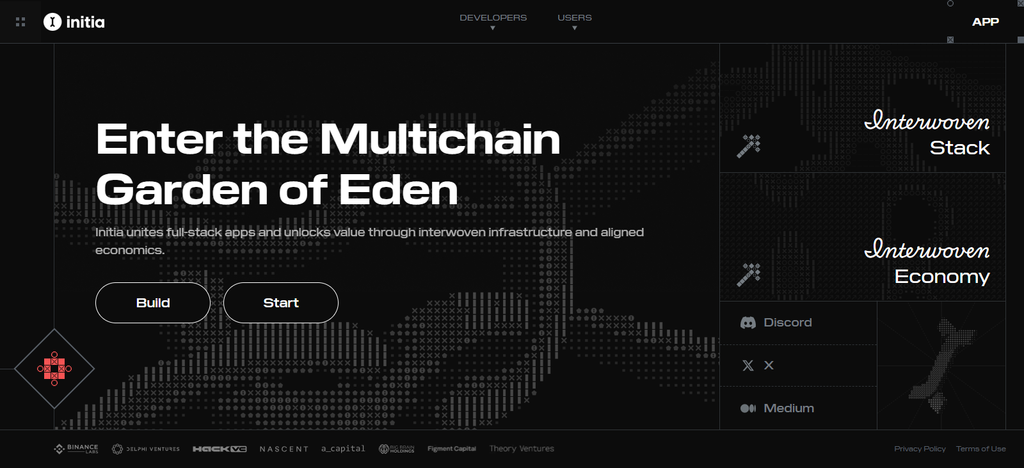
Its OPinit framework is designed to coordinate security, liquidity, routing and interoperability across rollups. Initia is a more general multi-VM approach and Movement is specifically focused on bringing Move execution into an ethereum-oriented environment. This makes its Ethereum relationship different from Movement’s L2 thesis which is directly Ethereum-focused.
Key Features
- Interweaved Rollups: Initia utilizes a shared Layer-1 infrastructure to connect app-specific rollups, enabling diverse appchains to operate within a unified ecosystem.
- MoveVM support: Initia supports Move-based execution environments for building applications that require resource-based smart-contract logic.
- Interoperability: It is designed to enable communication and asset transfer between linked rollups and the Initia Layer 1.
- Shared Liquidity: Applications can access liquidity at the ecosystem level, rather than being completely siloed chains.
- Modular Architecture: Initia breaks down blockchain functions into distinct layers and allows developers to develop application-specific networks with flexibility.
Main Limitations
- Ecosystem Maturity: Initia is young in comparison to mature Layer-1 networks, so its ecosystem and developer adoption are still developing.
- Architecture Complexity: Technical complexity can be introduced by building and maintaining an appchain that is connected to multiple infrastructure layers.
- Small Developer Community: The developer community is not as big as ecosystems like Ethereum, Sui, or Aptos.
- Interoperability Dependence: Applications may rely on the security and robustness of the larger Initia infrastructure and interoperability mechanisms.
2. Sui
Sui is a Move-based Layer 1 blockchain that uses an object-centric execution and data model. Its network went live in 2023. Its Move implementation, called Sui Move, is a variation of the original Move language that is adapted for Sui’s object-oriented architecture. Sui, however, does not use Move in the same way as Aptos or Movement. Instead, it treats programmable objects as first class elements of its execution model.
Programmable Transaction Blocks let you compose multiple Move actions inside of transactions. Sui is not an Ethereum L2 but has its own Layer-1 network, making it an alternative to the wider Move ecosystem rather than a direct Movement L2 equivalent. Object-centric architecture is the main differentiator.
Key Features
- Move Language: Sui uses Move, allowing developers to create intelligent contracts based on explicit digital asset ownership and safety of resources.
- Object-centric model: Assets are programmable objects, so Sui can process many transactions in parallel.
- Parallel Execution: Transactions can run in parallel independently of each other, improving throughput for the right workloads.
- Fast Finality: Sui is built for low-latency transaction processing and fast finality.
- Developer Ecosystem: Sui offers SDKs, development tools, wallets, and infrastructure to support consumer and DeFi applications.
Main Limitations
- Move learning curve Developers familiar with solidity and the account model of ethereum will need to learn Sui’s object model based on Move.
- Ecosystem Competition: Sui is competing with many other high-performance Layer-1 networks in terms of developers, applications and liquidity.
- Infrastructure needs: Certain applications need specific infrastructure to fully leverage Sui’s architecture.
- Newer Network History: Sui is a newer blockchain with less operating history than older blockchains and less long term performance data.
3. Apto
Aptos is a Layer-1 blockchain built on Move, with its mainnet launching on October 12, 2022. Move modules are used to implement the smart contract standard. Move is the backbone of the Aptos network.
The architecture has a pipelined and modular transaction processing design, which includes transaction dissemination, ordering, parallel execution, storage and ledger certification. Aptos is built with scalability, safety, reliability and upgradeability at its foundation.
With parallel execution, Aptos gets higher transaction-processing efficiency. Aptos is an independent L1 and not an Ethereum L2, so its relationship with Movement is mainly at the Move execution and developer-ecosystem level. The main architectural difference is that Aptos offers native Move execution in an L1 environment.
Main Limitations
- **Move-based Smart Contracts ** Aptos uses Move to introduce resource-oriented programming and stronger guaranties on digital resources.
- Concurrent Transaction Execution: Its Block-STM execution system enables compatible transactions to run concurrently.
- High Throughput Design: Aptos is designed to process a large number of transactions quickly and provide relatively fast confirmation.
- Modular Architecture: The network’s modular design allows for independent optimization of different components to enhance scalability and performance.
- Developer Tooling: Aptos offers SDKs, documentation, developer frameworks, and ecosystem infrastructure for Web3 applications.
Main Limitations
- Move Ecosystem Learning: Move developers must invest additional time to learn the Move programming model.
- Strong Competition: Aptos faces competition from Sui, Solana, Ethereum layer-2s and other scalable networks.
- Ecosystem Concentration – Smaller Usage and Liquidity ecosystem than the broader Ethereum ecosystem.
- Infrastructure Complexity: The execution architecture of Aptos may require specialized tooling to leverage the advanced applications that could be built on top of it.
4. supra
Supra is a Layer-1 blockchain that uses MoveVM as one of its smart-contract environments. Vertically integrated blockchain stack with services like native oracles, automation, randomness, and cross-chain communication in its architecture. MoveVM is described by Supra as its high-performance Move environment for building decentralized applications, while its larger network also supports an EVM environment.
A distinguishing feature of Supra compared to Movement’s Move-centered architecture is this multi-VM model. Supra is not an Ethereum Layer 2. It is an independent Layer 1 with its own native services and infrastructure. Its relevance for a Movement comparison is to provide MoveVM execution with additional blockchain infrastructure, not to copy the Ethereum-leaning L2 architecture of Movement.
Key Features
- Integrated Oracle Network: Supra brings external data into intelligent contracts via a decentralized oracle infrastructure.
- Cross-Chain Infrastructure: Its technology is built to enable data and interoperability between various blockchain environments.
- Low-Latency Data Delivery: Supra is specialized in low-latency data delivery for external data to power DeFi and trading applications.
- Automation: Its infrastructure enables automated blockchain actions, removing the need for separate off-chain automation systems.
- Developer APIs and Tooling Supra’s data and infrastructure services are available for developers to integrate into their decentralized applications.
Main Limitations
- Dependency on Oracles: Applications dependent on external data are still at the mercy of trust and security of oracle infrastructure.
- Complexity of Integration: Additional development and testing may be needed for the integration of oracle and cross-chain infrastructure.
- Competitive Market: Supra is entering a very crowded oracle and interoperability space with a number of entrenched providers.
- Use-Case Specificity: Best suited for applications that require external data or infrastructure, and not all blockchain applications.
5. Linear
Linera is a blockchain infrastructure project based on a microchain architecture optimized for highly parallel application execution. It breaks from traditional single-chain constructions by allowing applications to run across separate microchains, while still contributing to a larger network. Linera is also related to development and execution concepts based on Move, making it relevant when comparing alternative approaches to Move-oriented scalability.
Unlike Movement, Linera is not a mere Ethereum L2 that is built on top of MoveVM; its architecture is focused on parallel microchains and application-level scalability. The comparison is therefore mainly technological and not L2-versus-L2 comparison first of all. Its key differentiator is the microchain model that distributes application activity across different execution environments.
Key Features
- Microchains: Linera isolates workloads with lightweight, application-specific chains called microchains.
- Parallel Processing: The activity can be processed by multiple microchains independently, enabling scalable application architectures.
- Smart contract functionality on WebAssembly:** Linera supports running intelligent contracts in WebAssembly, which offers flexibility to developers.
- Application-specific scaling. Developers are able to create dedicated execution environments instead of depending entirely on a common chain.
- Inter-Microchain Messaging: Linera enables microchains to communicate with each other using its network architecture.
Main Limitations
- Younger Ecosystem: The Linera ecosystem is relatively new, having fewer mature applications and integrations.
- Architecture Learning Curve: Microchains introduce concepts that developers familiar with traditional Layer-1 architectures need to learn.
- Limited adoption: The developer and application ecosystem is still in its infancy compared to mature networks.
- Operational Complexity: Application-specific chains can add operational complexity regarding deployment, monitoring, and infrastructure.
6. Pontem Network
Pontem Network is not a usual standalone Move L1, but a infrastructure ecosystem and Move-focused product development studio. Pontem builds Move products on Aptos and other networks and has built tools like Liquidswap, Pontem Wallet and Move development resources.
Its current Lumio technology is described as a VM abstraction framework that supports rollups with a variety of virtual machines, including MoveVM, SVM, and parallelized EVM, and settles to networks like Ethereum and Solana.
This makes Pontem relevant to Movement alternatives via developer infrastructure and rollup technology, not a direct native-L1 comparison. The biggest differentiator is its flexibility across VMs and settlement environments.
Key Features
- Pontem develops tooling and applications for the Move programming language and Move-based ecosystems.
- Liquidswap: Liquidswap is part of its ecosystem, a decentralized exchange built for blockchain platforms that support the Move programming language.
- Developer Infrastructure: Pontem offers tools to simplify the development of Move and the deployment of applications.
- Multi-Chain Focus: Its products have supported Move ecosystems like Aptos and other compatible ecosystems.
- DeFi Apps: Pontem combines developer infrastructure with DeFi apps and ecosystem services.
Main Limitations
- Move Ecosystem Reliance: The expansion of Pontem is heavily reliant on the adoption of blockchain ecosystems based on Move.
- More Focused: More ecosystem and application-centric than a general Layer-1.
- Competitive DeFi Market: Pontem’s applications are competing with many decentralized exchanges and infrastructure providers.
- Ecosystem Dependency: The relevance and reach of Pontem’s products may be affected by changes to the underlying Move-based networks.
7. Networks of Movements
Movement Network is the benchmark project for this comparison and should therefore be considered the technical reference architecture, not a competitor. The architecture of Movement marries MoveVM execution with Ethereum-oriented infrastructure.
Movement Mainnet is a Move-based chain that includes Celestia for data availability, decentralized shared sequencing, optimistic-rollup technology, and MoveVM execution as originally described in its whitepaper, with plans to bridge Move and Ethereum.
The materials for the Current Movement now refer to the network as a MoveVM-based Layer-1 blockchain, indicating architectural evolution and terminology changes. Hence, the main points of reference when comparing alternatives are Move execution, Ethereum connectivity, modular infrastructure, sequencing, data availability and application scalability.
Key Features
- Move-Based Development: Move-based technology is used for developing intelligent contracts and blockchain applications.
- Ethereum Compatibility: It’s designed to tie Move execution into the wider Ethereum ecosystem.
- Layer-2 Approach Movement provides the infrastructure to scale Ethereum-centric applications using a Move-based runtime.
- Interoperability: The network aims to connect Move applications with Ethereum-compatible assets and infrastructure.
- Developer Flexibility: Developers are able to leverage Move’s resource-oriented programming and still engage with certain parts of the Ethereum ecosystem.
Main Limitations
- Complex Architecture The integration of Move execution and Ethereum infrastructure adds more technical pieces.
- Emerging Ecosystem: Movement has a shorter history of ecosystem than established Ethereum scaling networks.
- For Developers : Ethereum developers may need to familiarize themselves with Move specific concepts before writing applications.
- Reliance on Infrastructure: Applications may rely on the reliability of bridges, sequencing, and other infrastructure of the network.
8. Initia Stack / Minitia
Minitia is Initia’s application-specific L2 environment and should not be considered a separate blockchain from Initia. It is part of the larger Initia Stack, enabling developers to build custom rollups that are connected to Initia’s Layer-1 coordination layer. The stack is VM agnostic, supporting different execution environments including MoveVM.
This is why Minitia is relevant to L2 discussions with Move: developers are able to leverage Move-oriented execution without committing to Movement’s specific architecture. Instead of following Movement’s direct Ethereum-focused model, its relationship with Ethereum is dependent on the rollup and the configuration. For accuracy, Minitia is better introduced as a Initia-based L2 deployment framework rather than an independent rival in itself.
Key Features
- Application Specific Chains: Minitia allows developers to build custom blockchain environments for specific applications or use cases.
- Initial Integration: Minitia chains are built to connect with the Initia Layer-1 ecosystem and shared infrastructure.
- Move-based execution: The stack offers Move-based smart contract development for resource-oriented application development.
- Shared Liquidity and Interoperability Instead of siloed chains, applications can communicate with the rest of the Initia ecosystem.
- Modular Infrastructure: Developers are able to tailor blockchain environments but depend on shared infrastructure for particular network functions.
Main Limitations
- Technical Complexity: Building an application-specific blockchain requires a deeper knowledge of the underlying infrastructure than deploying a traditional smart contract.
- Early Ecosystem: The Minitia ecosystem is still in its early stages, with fewer established applications than major Layer-1 ecosystems.
- Dependence on Initia: Minitia apps rely heavily on the broader Initia infrastructure and ecosystem adoption.
- Developer Resources: Teams may need to have additional engineering resources to support deployment, monitoring, and blockchain-specific infrastructure.
9. Starcoin
Starcoin is a Move-based Layer-1 blockchain and it launched its mainnet on May 18, 2021. It combines Move smart contract technology with an advanced Proof-of-Work consensus architecture. Starcoin’s architecture has been evolving through technologies such as FlexiDAG and TurboSTM to improve block production and parallel transaction execution.
It runs Move smart contract software in its MoveVM and is more focused on decentralized infrastructure rather than being an Ethereum L2. Starcoin also launched Ethereum interoperability through an Ethereum bridge.
So this is an L1 architecture based on Move, rather than a direct Movement-style L2. Its main differentiators are: Move intelligent contracts, PoW consensus, DAG-based improvements and parallel execution.
Key Features
1. Move Language: Starcoin uses Move to write smart-contracts and manage digital resources.
2. Hierarchical Blockchain: The architecture utilizes a layered blockchain structure designed for scalability and application-specific functionality.
3. Proof of Work: Starcoin is built with a PoW consensus, which is different from most of the other newer networks based on Move.
4. Asset-Oriented Programming: Move provides asset-oriented controls to prevent certain classes of digital-asset programming errors.
5. EVM Compatibility Efforts: Starcoin has supplied tooling and infrastructure to make interoperability with the wider blockchain ecosystems more convenient.
Main Limitations
- Smaller Ecosystem: Starcoin has a much smaller amount of application and developer activity than larger Layer-1 ecosystems.
- Reduced Liquidity: A smaller DeFi space may result in less liquidity and fewer options for applications.
- PoW Trade-offs: The infrastructure and resource requirements of the Proof-of-Work model are different from those of the modern PoS based networks.
- Less Developer and market attention: Starcoin receives less developer and market attention compared to major Move ecosystems like Sui and Aptos.
10. Econia
Econia is a Move-native on-chain order-book infrastructure project that is part of the Aptos ecosystem, not a standalone Layer-1 or Ethereum L2. The heart of it is to provide the financial market infrastructure for applications that need an on-chain central-limit-order-book model.

Econia is built on top of the Move and Aptos infrastructure and its relevance to Movement is the wider use of Move for financial applications and high performance execution. So it shouldn’t be pitched as a direct, blockchain-level competitor to Movement.
Instead, Econia is a alternate Move-based application platform especially for trading and market infrastructure. In an article, this distinction helps to differentiate Move ecosystems, L2 frameworks, and individual Move-native infrastructure projects.
Key Features
- On-Chain Order Book: Econia is building infrastructure for decentralized trading based on order books, instead of relying on automated market makers.
- Aptos Integration: Econia is built on top of the Aptos ecosystem and its Move-based execution environment.
- Permissionless Markets: Its architecture allows for the building of markets and trading infrastructure without being fully dependent on centralized intermediaries.
- Composable infrastructure: At the core of Econia is infrastructure upon which developers are able to build trading interfaces, applications and financial products.
- High-Performance Trading Design: Econia is built to leverage Aptos’s execution capabilities for decentralized market activity.
Main Limitations
- Aptos Dependency: Econia’s ecosystem reach is closely tied to Aptos adoption and infrastructure.
- Trading Scope: It mainly applies to decentralized trading, not general-purpose blockchain development.
- Liquidity Fragmentation: Order-book markets could experience liquidity problems if there are many markets on which trading activity takes place.
- Smaller ecosystem: Econia’s ecosystem is more specialized than those of the major, general-purpose DeFi platforms.
Conclusion
Move-based Layer-2 infrastructure has piqued interest, in part due to Movement Labs, but the broader ecosystem encompasses a variety of architectures and approaches. Sui and Aptos are built on top of high-performance Move execution, while Initia and Minitia are built on top of modular and application-specific infrastructure.
Linera takes a microchain approach, while Pontem and Econia are more focused on the Move ecosystem and DeFi infrastructure. Starcoin is another Move-based blockchain architecture, and Supra provides complementary infrastructure capabilities.
These alternatives vary on the basis of scalability, Ethereum compatibility, interoperability, developer tooling and ecosystem maturity. Projects should weigh these factors against their application requirements before choosing a Move-based L2 or other infrastructure.
FAQ
What are Movement Labs rivals?
Movement Labs rivals are projects offering Move-based blockchain infrastructure, Layer-2 solutions, application-specific networks, or related ecosystems. Examples include Initia, Sui, Aptos, Linera, Pontem Network, and Starcoin.
Is Sui a Movement Labs competitor?
Sui can be considered a broader Move ecosystem alternative because it uses the Move programming language and focuses on high-performance blockchain execution. However, Sui is a Layer-1 rather than a direct Movement-style Ethereum L2.
Is Aptos a Movement Labs alternative?
Aptos is a Move-based Layer-1 that provides high-throughput execution, parallel transaction processing, and Move smart contracts. It can be evaluated as an alternative for projects primarily seeking Move-based infrastructure rather than an identical L2 architecture.
What is the difference between Movement and Initia?
Movement focuses on Move-based Ethereum scaling, while Initia uses a modular architecture connecting application-specific networks with its broader ecosystem. Their execution, interoperability, and application-chain approaches therefore differ.