


Choosing the Best Liminal Custody Competitors for Digital Assets looking to secure cryptocurrencies, manage transactions securely and scale their operations. While Liminal Custody has solutions for institutional digital asset management, there are other options that provide different advantages in wallet infrastructure, security technology, regulatory compliance, and blockchain integration.
In this guide, we will review the 10 best Liminal Custody alternatives for digital and standard assets, including the best features, best use cases and key considerations to select the right provider for your business.
How to Choose the Best Liminal Custody Alternative?
Security Technology: Assess MPC wallets, multi-signature protection, cold storage, private key management, and transaction approval controls to ensure digital resources are protected against unauthorized access and operational risks.
Supported Cryptocurrencies: Make sure the provider supports the cryptocurrencies, stablecoins, tokens and blockchain networks that you need. Also think about any future digital currencies you might want to hold, as well as any specific network custody capabilities.

Custody Models: Investigate custodial wallets, self-custody infrastructure, MPC wallets, and institutional custody options to find the best model for your business’s security and operational needs.
Regulatory Compliance: Review relevant licenses, regulatory registrations, independent audits, governance policies and jurisdictional restrictions to check the provider’s compliance with your organisation’s legal and compliance obligations.
Wallet Infrastructure: Check API availability, wallet creation, transaction signing, blockchain connectivity and integration capabilities to make sure that they are compatible with your existing applications and business systems.
Pricing and Fees: Review custody fees, transaction fees, withdrawal costs, staking fees, implementation costs, and custom enterprise pricing to get a sense of the provider’s total cost of ownership.
Scalability & Performance: Choose a provider that can support a growing portfolio of assets, more transactions, more blockchain networks, and growing business operations without sacrificing security or operational efficiency.
Customer Support and Reliability: Assess the availability of technical support, incident response procedures, service-level agreements, onboarding assistance, and operational reliability to ensure consistent support for critical digital asset activities.
Key Factors to Evaluate Before Switching Custody Providers
Security and Key Management: Review private-key security, MPC technology, multi-signature controls, cold storage, access permissions, and transaction approvals to ensure strong security during and after the transition.
Regulatory Compliance: Confirm that the new provider has the necessary licenses, regulatory registrations, jurisdictional coverage, compliance procedures, and reporting capabilities to meet your organization’s legal obligations.
Integration Compatibility: Search for APIs, wallet infrastructure, blockchain connectivity and compatibility with existing exchanges, banking systems, and applications to minimize disruption during implementation.
Pricing and Contract Terms: Review the costs of custody, withdrawal, transaction and minimum commitment fees, termination clauses and implementation costs to assess the financial implications of moving providers.
Supported Assets and Networks: Verify that the new provider accommodates your current cryptocurrencies, tokens, and blockchain networks, along with necessary asset-management features and future scalability needs.
Operational Continuity: Define migration timelines, contingency processes, transaction monitoring, control of access, and recovery plans to reduce downtime and maintain continuous digital asset operations throughout the transition.
Customer Support and Service Reliability: Assess the availability of technical support, incident response procedures, service-level agreements, onboarding support, and recovery procedures to enable reliable support for critical custody operations.
Key Points
| Competitor | Key Point |
|---|---|
| BitGo | Institutional-grade digital asset custody with multi-signature security, qualified custody services, staking, and trading support. |
| Fireblocks | MPC-based custody platform focused on secure digital asset transfer, treasury management, and DeFi access. |
| Copper | Digital asset custody provider offering secure storage, collateral management, and exchange connectivity. |
| Hex Trust | Licensed institutional custodian supporting cryptocurrencies, staking, and digital asset fund services. |
| Coinbase Custody | Regulated custody solution designed for institutions seeking secure storage of digital assets. |
| Cobo Custody | Comprehensive custody platform featuring MPC wallets, staking, DeFi access, and treasury management tools. |
| Anchorage Digital | Federally chartered digital asset bank providing custody, staking, governance, and trading solutions. |
| Zodia Custody | Institution-focused crypto custodian backed by traditional finance expertise and strong regulatory compliance. |
| Taurus | Enterprise-grade platform enabling banks and financial institutions to custody and manage digital assets. |
| Cactus Custody | Institutional custody service offering secure digital asset storage, staking, and risk management controls. |
1. BitGo
BitGo is an institutional digital asset custody provider offering secure storage, wallet management, staking, trading and settlement solutions. It provides custody solutions such as offline cold storage, multi-signature technology and multi-party computation (MPC). Depending on the service and network, the platform supports more than 1,700 digital resources.
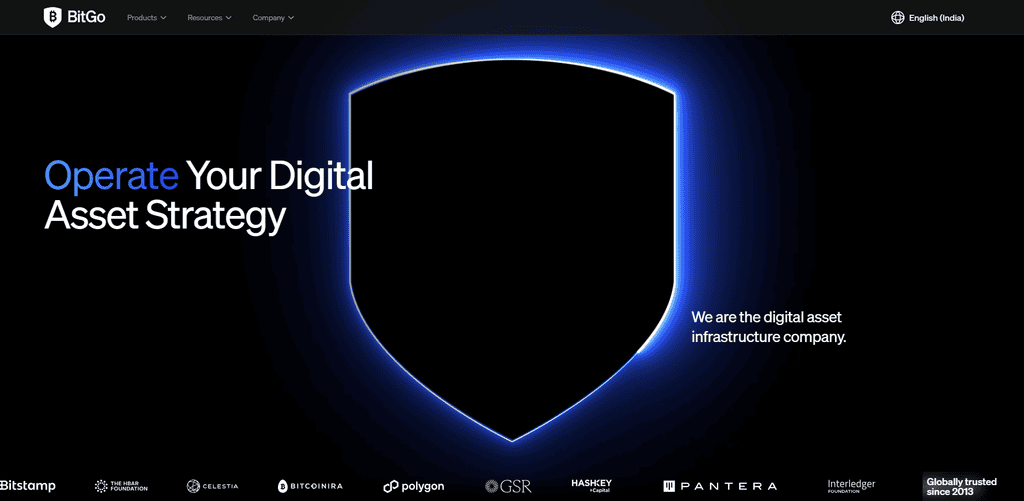
Its wallet infrastructure includes withdrawal controls, address whitelisting, transaction approvals and role-based permissions. Prices are usually based on custody needs, holdings and services chosen. BitGo’s scalable infrastructure supports exchanges, investment firms and businesses that need institutional security, asset segregation, operational controls and compliance support.
Features
- Institutional-grade custody: provides secure digital asset storage for institutional clients like exchanges and investment firms.
2. Multi-Signature Security: Uses multi-signature technology and other key-management options to enhance transaction authorization.
3. Wallet & Transaction Controls: Includes withdrawal policies, address whitelisting, and role-based permissions.
4. Digital Asset Services Integrated: Custody with eligible staking, trading and settlement services.
Best Use Cases
- Cryptocurrency Exchanges: Secure customer asset and operational wallet requirements.
- Investment Funds: Secure crypto assets for institutional investors.
- Digital asset businesses: conduct deposits, withdrawals and authorizations of transactions.
- Institutional Asset Management: Integrate custody with eligible staking and settlement flows.
2. Fireblocks
Fireblocks provides digital asset custody technology and wallet infrastructure for financial institutions, cryptocurrency exchanges, fintechs, and Web3 businesses. Its platform offers MPC-based security, configurable transaction approvals, access permissions and automated policy controls. Supported assets and blockchain networks may differ by integration and service availability.
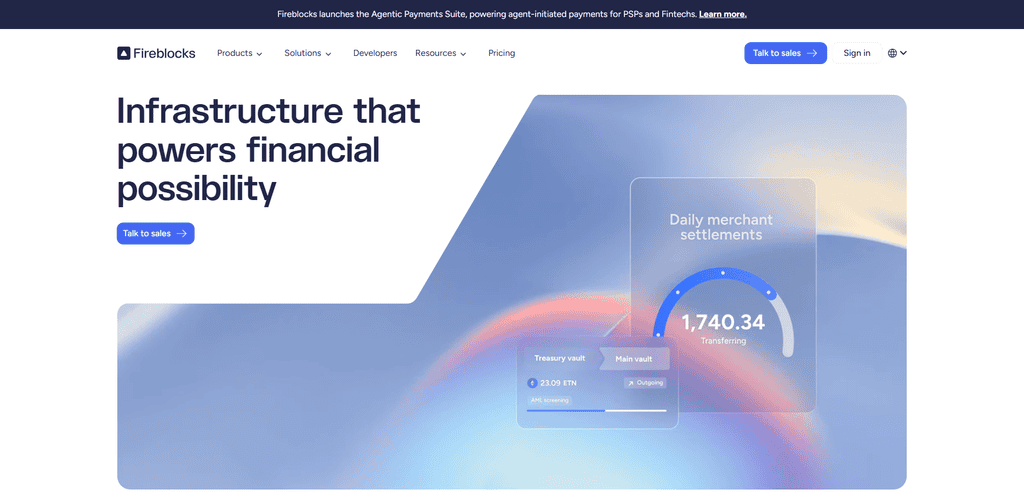
Wallet infrastructure allows businesses to build and manage wallets, automate transactions, and integrate blockchain capabilities via APIs. Pricing is generally tailored to platform requirements, usage and features selected.
Fireblocks supports business growth with multi-network connectivity, programmable transaction workflows and scalable wallet management for organizations with expanding digital asset operations.
Distinctive Features
- Multi-party computation (MPC) Wallet Security: Employs multi-party computation technology to protect digital asset signing operations.
- Automated Transaction Policies: Customizable approval and control over operational transactions.
- Broad Blockchain Integration: Enables connections with various blockchain platforms and cryptocurrencies.
- API-based Infrastructure: Helps businesses to integrate wallet creation, transfers and blockchain operations into their applications.
Best Use Cases
- Fintech Applications: Embed digital asset wallets and transfers in financial products.
- Crypto Exchanges: Control wallet operations and transaction authorization.
- Web3 Businesses: Develop blockchain-enabled apps with wallet infrastructure built-in.
- Payment Providers: Build digital asset payment and settlement flows
3. COPPER
Copper offers institutional digital asset custody, collateral management and trading infrastructure. It offers custody solutions, including secure asset storage and connectivity to participating exchanges and trading venues. Its ClearLoop network supports off-exchange settlement arrangements, enabling eligible clients to manage trading collateral without having to move assets to each exchange prior to each transaction.
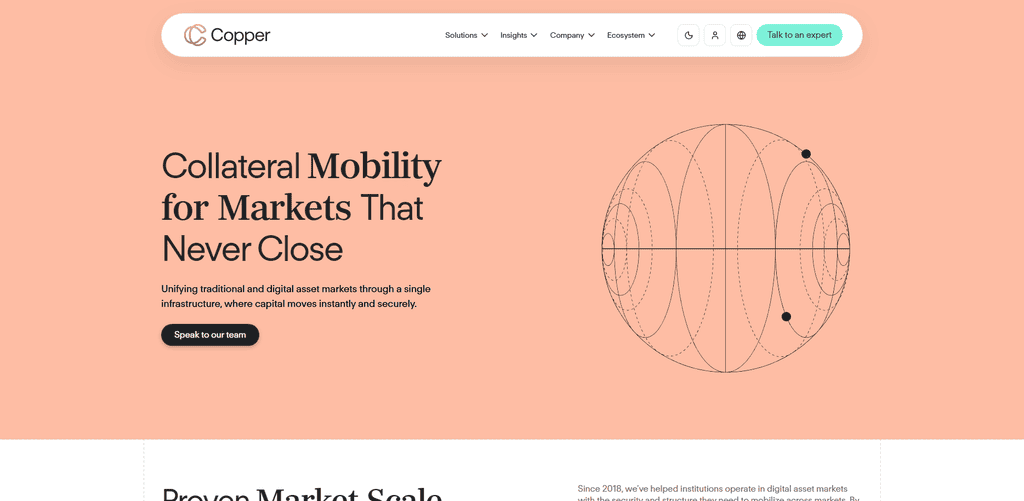
Supported assets include Bitcoin, Ethereum, stablecoins, and many more cryptocurrencies and tokens, if available. Wallet infrastructure has institutional account controls and trading integrations.
Prices are usually negotiated on services, custody requirements and trading requirements. Copper’s infrastructure is particularly relevant to trading firms, funds and institutions needing safe custody and operational efficiency.
Features
- Institutional Custody: Offers secure digital asset storage for professional investors and trading firms.
- ClearLoop Network: Provides for off-exchange settlement arrangements with participating trading venues.
- Collateral Management: Assists eligible clients in managing their electronic assets used for trading activities.
- Trading Connectivity: Links custody operations to supported exchanges and institutional trading workflows.
Top use cases:
- Hedge Funds: Management of digital asset holdings and trading.
- High-volume trading firms: Simplify collateral and settlement workflows.
- Institutional Exchange Clients: Trade on supported venues, but keep custody arrangements.
- Digital Asset Investment Managers: Custody, trading and collateral management
4. Hex Trust
Hex Trust offers institutional custody and management services for electronic assets to financial institutions, investment firms and blockchain companies. Hex Safe’s platform provides secure asset storage, control of access, governance processes, and operational institutional use safeguards.
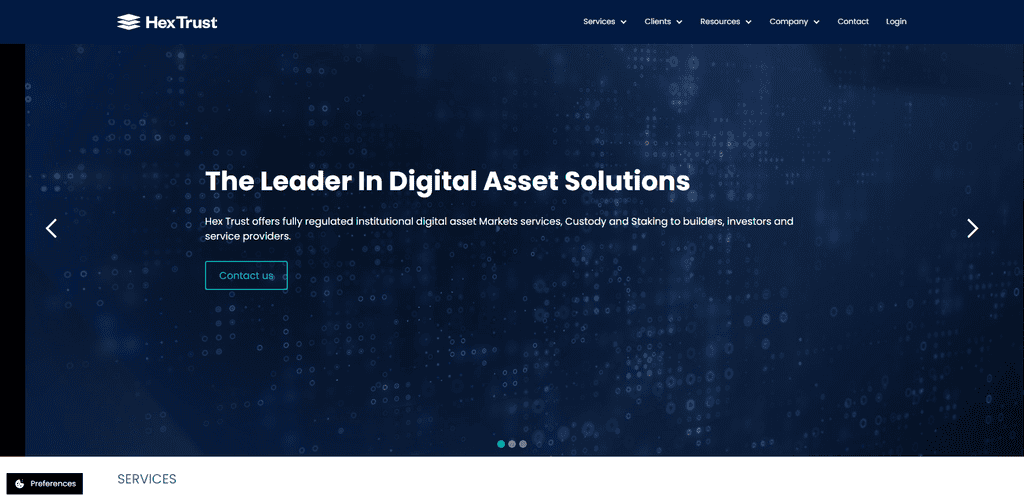
We support Bitcoin, Ethereum, stablecoins, and tokens on multiple blockchain networks, subject to availability. It also supports services like staking and digital asset management infrastructure. Pricing is generally based on custody model, assets under custody and other services provided.
Hex Trust can serve as a multi-network infrastructure and integration partner for institutional growth, which is relevant to businesses looking for secure custody, operational oversight, and jurisdiction-specific compliance support.
Features
- Institutional Custody Platform: Offers secure digital asset custody via its Hex Safe platform.
- Governance and Controls of Access: Provides for institutional operating processes and controlled access.
- Staking Services: Allows eligible customers to stake supported cryptocurrencies.
- Multi-Asset Infrastructure Supports selected cryptocurrencies, tokens and blockchains.
Best Use Cases
- Financial Institutions – Extend digital asset custody to existing financial services.
- Blockchain Foundations: Secure project treasuries and supported digital resources.
- Institutional Investors: Rely on professional custodians for your cryptocurrency.
- Staking Participants – Custody and execute eligible staking activities on institutional infrastructure
5. Coinbase Custody
Coinbase Custody provides institutional digital asset custody through its custody services and Coinbase Prime offering. Its security model incorporates offline cold storage, controlled authorization procedures and institutional operational safeguards. Supported cryptocurrencies and tokens will vary by custodian, location and qualification for services.
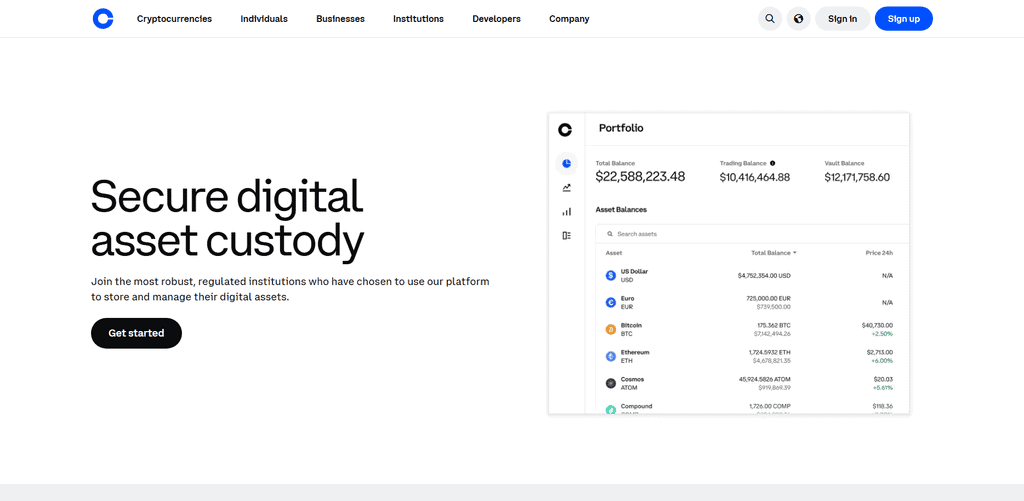
The institutional infrastructure can combine custody with eligible trading, staking and portfolio management. Commercial agreements, custody requirements and chosen services are generally the determinants of prices, not one public rate.
The institutional infrastructure currently in place at Coinbase is designed for organizations that hold large amounts of digital property and need both custody and trading capabilities, subject to applicable account terms and regulatory requirements.
Features that Stand Out
1.Cold Storage Security: Uses off-line storage arrangements and controlled authorization procedures.
2. Institutional Custody Services: supports qualified organizations that require professional digital asset safekeeping.
3. Integrated Prime Services: Qualified clients can combine custody with trading and other institutional services.
4. Staking Capabilities: Provides access to staking for eligible accounts and assets supported.
Top Use Cases
- Institutional Investment Funds: Safeguard crypto portfolios.
- Asset Managers: Managing digital and standard assets under institutional custody arrangements.
- Corporate Treasury Teams: Maintain eligible digital resources within defined custody controls.
- Institutional Trading Firms: Integrate custody with eligible trading in a single service environment.
6. Cobo
Cobo offers digital asset custody, wallet infrastructure, and MPC wallet technology to exchanges, institutions, and Web3 companies. It provides custodial wallets, MPC-based wallets and wallet-as-a-service capabilities, allowing businesses to choose the operating model that best suits them.
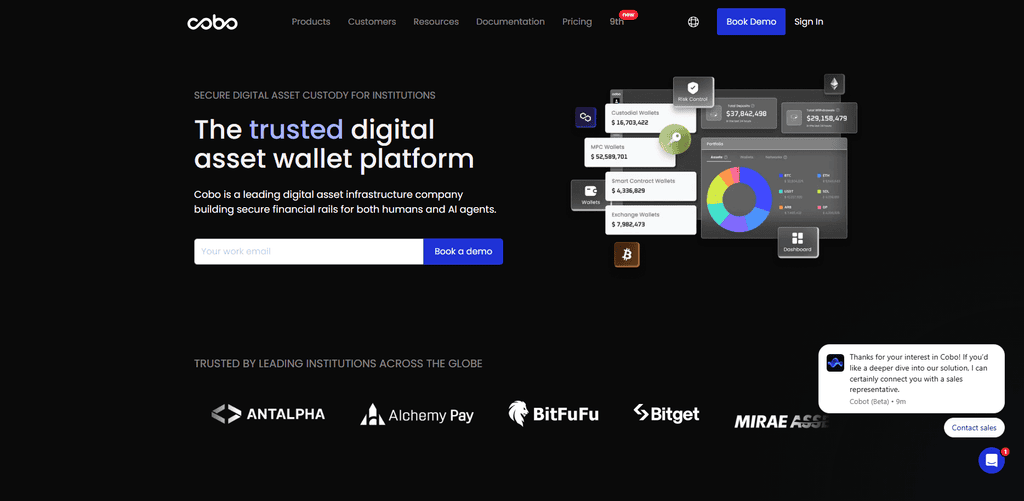
Security features include secure key management, configurable signing arrangements, access permissions and transaction controls. The supported assets depend on your wallet configuration and blockchain integration, including major cryptocurrencies and selected tokens.
APIs and software development tools enable integration with business applications. Prices vary with selected products, deployment requirements and usage. Cobo’s infrastructure enables businesses to scale their wallet operations while ensuring security, governance and transaction workflows are maintained.
Key Features
- Variety of Wallet Models: Custodial, MPC-based, and other wallet infrastructure options.
- Key management security: Supports secure key management and signing arrangements.
- Wallet-as-a-Service: Allows companies to embed wallet capabilities into their offerings.
- Developer Integrations: Offers APIs and software development kits for digital asset operations.
Top Use Cases
- Crypto Exchanges: Handle customer wallet and operations transfers.
- Web3 Applications: Embed wallet features into blockchain products.
- Digital Asset Platforms: Automate wallet creation and transaction workflows
- Businesses That Need Flexible Custody: Choose wallet models based on their operational and control needs
7. Anchorage Digital
Anchorage Digital offers institutional digital asset custody and financial services to investment firms, asset managers and other eligible organizations. Its custody infrastructure is built on institutional security, governance and regulated asset safeguarding.
We support cryptocurrencies and select tokens, depending on eligibility and product availability. The additional services may include staking and other digital asset financial activities.
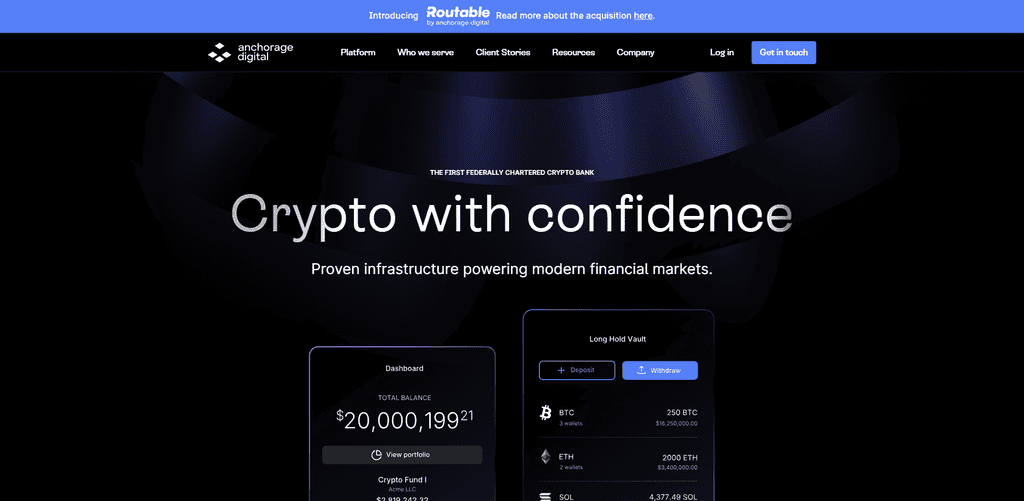
Its wallet and custody systems allow institutions to oversee assets without having to develop every aspect of their security infrastructure from the ground up. The pricing is usually customized to client’s needs, underlying assets and chosen services.
Anchorage Digital is especially relevant for institutions focused on institutional custody, regulatory oversight and integrated digital asset management.
Special Features
- Institutional Custody: Offers secure custody of electronic assets to professional financial organizations.
- Regulatory Focus: Focuses on regulated custody and institutional governance per applicable law.
- Staking Services: Provides staking for supported assets to eligible clients.
- Integrated Financial Services: Combine custody with selected digital asset financial products.
Top Use Cases
- Institutional Investors: Protect your crypto assets by using professional custody services.
- Asset Managers: Control digital asset portfolios using institutional controls.
- Staking Clients: Available for staking in conjunction with custody.
- Financial Organizations: Build digital asset operations on institutional custody infrastructure
8. Zodia-Custody
Zodia Custody is an institutional digital asset custodian that specializes in servicing financial institutions, investment managers and crypto businesses. Its custody solutions focus on secure storage, governance, operational controls and institutional asset management.
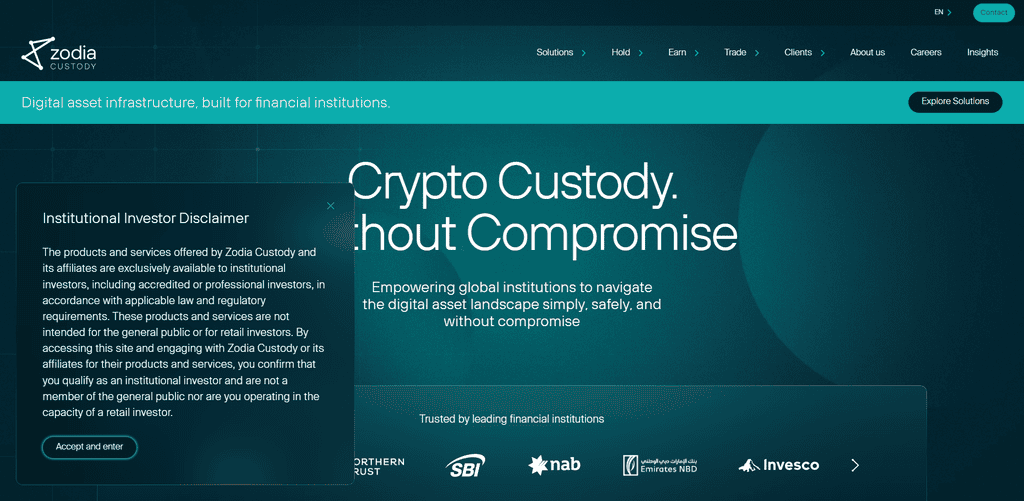
The supported cryptocurrencies and blockchain networks are dependent on the current service offering, client jurisdiction and asset eligibility. The infrastructure is built for institutions to be able to manage digital asset holdings without having to build a full custody operation in-house.
Pricing is usually established by way of commercial agreements based on custody requirements and any additional services. For businesses seeking institutional-grade asset protection, operational governance and infrastructure built to financial-sector requirements, Zodia Custody is relevant.
Key Features
- Institutional Asset Safekeeping: Provides safe custody services for professional financial clients.
- Governance Controls Facilitates Formalized Operational Procedures & Access Control
- Financial-sector focus. Tailors its services to the needs of institutional custodians.
- Digital Asset Infrastructure: Provides qualified clients with the ability to manage supported electronic assets through dedicated custody arrangements.
Top Use Cases
- Banks and Financial Institutions: Develop institutional digital asset custody capabilities.
- Investment Managers: Safeguard qualifying crypto holdings.
- Institutional Crypto Businesses: Professional custody infrastructure for holding digital currencies.
- Governance-Focused Organizations: Introduce formal custody and operational controls
9. The Taurus
Taurus offers the digital asset infrastructure for banks, financial institutions and companies that manage cryptocurrencies and tokenized assets. Its product suite comprises Taurus-PROTECT for custody, Taurus-CAPITAL for digital asset lifecycle management and Taurus-EXPLORER for blockchain connectivity.
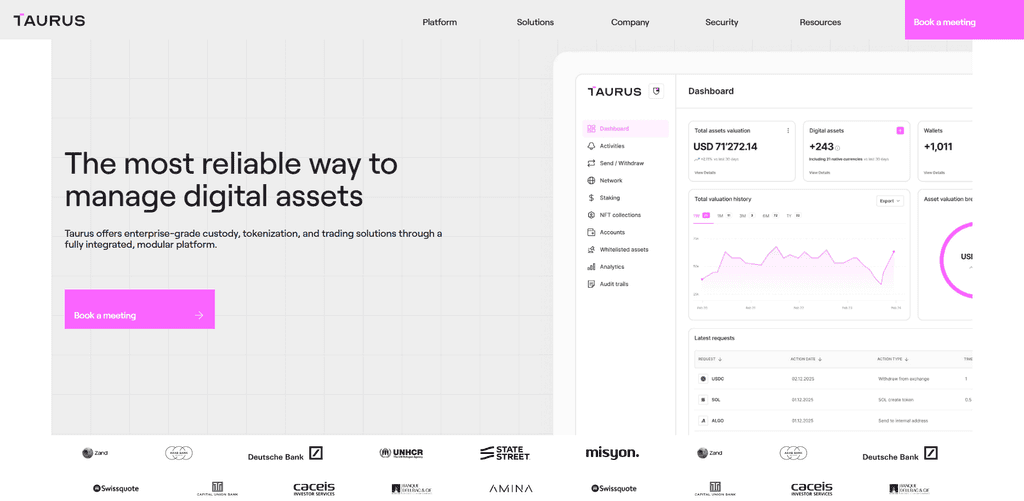
Depending on the deployment and the networks supported, the infrastructure can accommodate cryptocurrencies and tokenized financial assets. Security & governance capabilities support institutional operations and integration options enable the connection of digital asset services to existing banking systems.
The price is usually tailored to the chosen products, the complexity of implementation and the service requirements. Taurus is especially important for institutions that want custody alongside tokenization, blockchain integration and a full lifecycle management of electronic assets.
Main Features
- Taurus-PROTECT: Custody infrastructure for digital assets that are standard.
- Taurus-CAPITAL: Supports digital asset life cycle management and related financial workflows.
- Taurus-EXPLORER: Connects to the blockchain and has asset-operation capabilities.
- Banking-System Integration: Assists banks in integrating digital asset services into their existing systems.
Use Cases at the Top
- Banks: Offer crypto custody and digital asset services.
- Tokenization Platforms: Access infrastructure for the management of tokenized financial assets.
- Financial Institutions: Embed blockchain connectivity into your current operations.
- Digital Asset Issuers: Support custody and lifecycle workflows for eligible tokenized assets
10. Custody of a Cactus
Matrixport-backed Cactus Custody provides digital asset custody services to institutional clients such as funds, exchanges and blockchain businesses. Its offering focuses on secure asset storage, operational governance and institutional custody controls.
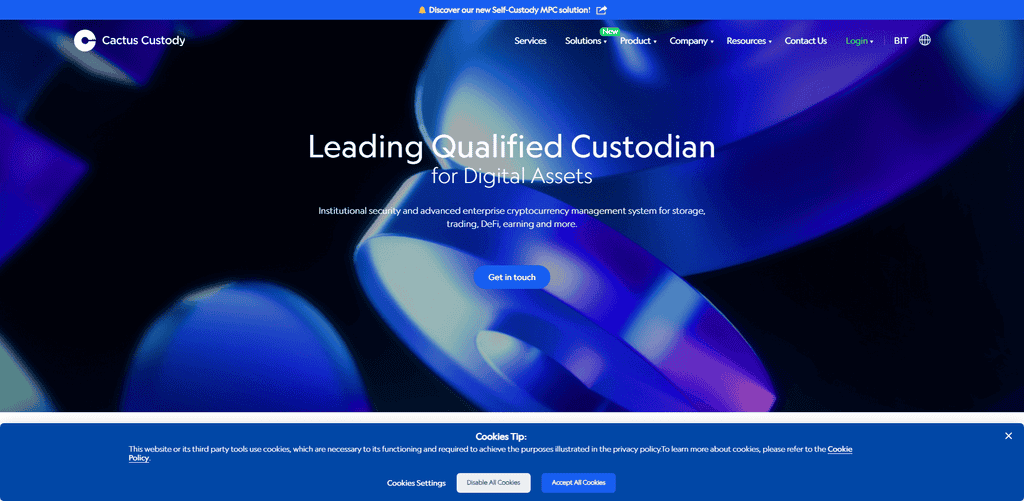
The cryptocurrencies, tokens and blockchain networks supported are subject to the services provided and client’s eligibility. Its custody infrastructure is designed to allow organizations to secure digital asset holdings while maintaining appropriate operational oversight.
Pricing is usually determined by individual commercial agreements, depending on custody needs, asset classes and services selected. Cactus Custody is relevant to institutions that require segregated digital asset safekeeping, structured operational processes, and custody infrastructure for professional asset management.
Key Features
- Institutional Digital Asset Custody: Provides secure custody service for cryptocurrencies held by institutional clients.
- Operational Governance: Provides for formalized custody processes and asset-management controls.
- Institutional Client Focus Serving entities like funds, exchanges and blockchain companies.
- Custody Infrastructure: Provides dedicated custody services for qualified digital property.
Best Use Cases
- Investment Funds: Safeguard eligible crypto assets.
- Cryptocurrency Exchanges: Help with institutional custody and asset storage needs.
- Blockchain Businesses: Manage project treasuries and supported digital resources.
- Professional asset managers – Employ dedicated custody infrastructure to facilitate digital asset operations.
Conclusion
The right Liminal Custody alternative for you will depend on your business requirements, security priorities and digital asset management goals. Institutional custody, wallet infrastructure, transaction management, and trading integration are all areas in which providers like BitGo, Fireblocks, Copper, Hex Trust, and Coinbase Custody have different strengths.
Cobo Custody, Anchorage Digital, Zodia Custody, Taurus and Cactus Custody also serve specific institutional and blockchain business requirements.
Before choosing a provider, compare supported assets, security technology, regulatory compliance, pricing, scalability, and integration capabilities. The best solution is one that provides reliable asset protection, operational efficiency and flexibility for long-term business growth.
FAQ
What are the best Liminal Custody competitors for digital assets?
Some notable alternatives include BitGo, Fireblocks, Copper, Hex Trust, Coinbase Custody, Cobo Custody, Anchorage Digital, Zodia Custody, Taurus, and Cactus Custody. Each provider offers different custody, wallet infrastructure, security, and institutional services.
Why should businesses consider alternatives to Liminal Custody?
Businesses may consider alternatives to compare security technologies, supported digital assets, custody models, regulatory coverage, pricing, integrations, and scalability. The right choice depends on their operational requirements and institutional risk policies.
Which Liminal Custody competitor is best for institutional custody?
BitGo, Coinbase Custody, Anchorage Digital, and Hex Trust are worth evaluating for institutional custody. Businesses should compare their custody arrangements, regulatory status, supported assets, governance controls, and jurisdictional availability before choosing.
Which digital asset custody provider is best for wallet infrastructure?
Fireblocks and Cobo are worth considering for wallet infrastructure, API integrations, transaction automation, and digital asset operations. The best fit depends on the required wallet model, blockchain support, and level of operational control.
Which custody provider is best for off-exchange settlement?
Copper is notable for its ClearLoop network, which supports off-exchange settlement with participating trading venues. Zodia Custody also offers institutional settlement connectivity through its Interchange service. Availability depends on the participating counterparties and terms.