

One of the biggest challenges facing lenders today is finding the right borrower, especially when traditional credit scores don’t tell the whole financial story. However, alternative data credit scoring platforms are disrupting this process by analyzing cash flow, income patterns, transaction histories and other financial signals to assess creditworthiness.
These solutions enable lenders to make better decisions, evaluate borrowers with thin credit files and improve underwriting efficiency. In this guide I’ll explore the best alternative data credit scoring platforms, their key features, capabilities and use cases.
How to Choose the Best Alternative Data Credit Scoring Platform for Lenders?
Alternative Data : Select a platform that examines reliable alternative data such as cash flow, rent payments, income records and transaction history to assess borrowers with thin traditional credit files.
Accuracy of Credit Scoring Assess the scoring models, predictive performance, and validation results of the platform to ensure accurate borrower assessment, consistent risk grading, and informed lending decisions across various customer segments.

Artificial Intelligence and Automation Look for platforms that provide AI-powered scoring, automated underwriting and streamlined decisioning workflows to cut down on manual evaluations, speed up loan origination and boost operational efficiency for lending teams.
Thin File Borrower Evaluation Focus on platforms that provide alternative financial data for borrowers with thin or no credit profiles, enabling lenders to broaden their eligibility criteria and responsibly serve underserved consumers.
Capabilities for Fraud Detection Look for features such as identity verification, suspicious-pattern detection and fraud risk assessment that help lenders to identify potentially fraudulent applications and bolster the application screening processes.
Integration and Compatibility Check the compatibility of the platform with the current loan origination systems, banking software, credit bureaus and APIs to ensure seamless implementation and efficient data sharing.
Compliance and Data Security Assess data security, borrower consent management, model explainability and fair lending requirements to ensure responsible credit decisions and secure handling of sensitive financial information.
Pricing and Scalability Compare implementation costs, subscription or usage fees, integration costs and contract terms. Choose a scalable option that can support your current lending operations and future growth.
Future Trends in Alternative Data Credit Scoring
AI-Based Credit Scoring Machine Learning and AI will enhance the evaluation of borrowers by analyzing all kinds of financial data, recognizing repayment trends, and helping make better-informed credit decisions.
Cash-Flow-Based Underwriting: Lenders will increasingly examine bank transactions, income patterns, account balances and spending behavior to assess repayment capacity beyond conventional credit scores.
Real-time credit assessment: Lenders will be able to access financial data in real-time to assess changing borrower circumstances, speeding up underwriting processes and making faster credit decisions.
Expanded Financial Inclusion: Alternative data will enable lenders to evaluate thin-file and underbanked borrowers, resulting in increased credit availability for consumers who are underserved by conventional scoring systems.
Better Fraud Detection: Enhanced analytics, identity verification and behavioral intelligence will improve fraud prevention by identifying suspicious applications and unusual financial activity.
Explainable AI models: Credit scoring providers will emphasize transparent AI models that allow lenders to understand decisions, identify any potential bias and promote responsible lending.
Deeper Data Integration. Platforms will increasingly integrate banking systems, financial applications, payroll services and alternative data providers to give a full picture of the borrower.
Better Data Privacy and Regulatory Compliance: As regulations tighten, alternative credit scoring platforms will need to improve their consent management, data security, model governance, and fair lending practices.
Key Points
| Platform | Key Point |
|---|---|
| Zest AI | Uses machine learning and alternative borrower data to help lenders improve underwriting accuracy, expand approvals, and support fair-lending compliance. |
| Upstart | Applies AI-driven risk models and non-traditional variables to assess borrowers who may have limited conventional credit histories |
| Credolab | Specializes in smartphone metadata and behavioral analytics to score thin-file and credit-invisible applicants. |
| Nova Credit | Enables lenders to evaluate immigrants and newcomers using cross-border credit data and alternative financial records. |
| Plaid | Provides cash-flow and bank transaction data that lenders can use to strengthen underwriting decisions beyond bureau scores. |
| LenddoEFL | Combines digital footprint data, behavioral signals, and machine learning models to help assess borrower risk. |
| Trusting Social | Uses telecom, mobile, and behavioral data to build creditworthiness profiles for underserved consumers. |
| MicroBilt | Delivers alternative credit, identity, and public-record data to help lenders evaluate applicants with limited bureau information |
| LexisNexis Risk Solutions | Provides identity, public-record, and risk intelligence data that can enhance credit decisioning and fraud prevention |
| Scienaptic AI | Offers AI-powered credit decisioning that integrates alternative and traditional data sources to improve lending outcomes |
1. Zest AI
Zest AI is an AI-powered credit underwriting platform for banks, credit unions, and lenders who want to assess risk more accurately. It uses machine-learning models to assess applicants beyond traditional credit scores, helping institutions find creditworthy borrowers with limited credit histories. Pricing is usually enterprise-style, and varies by size of institution and volume of loans.
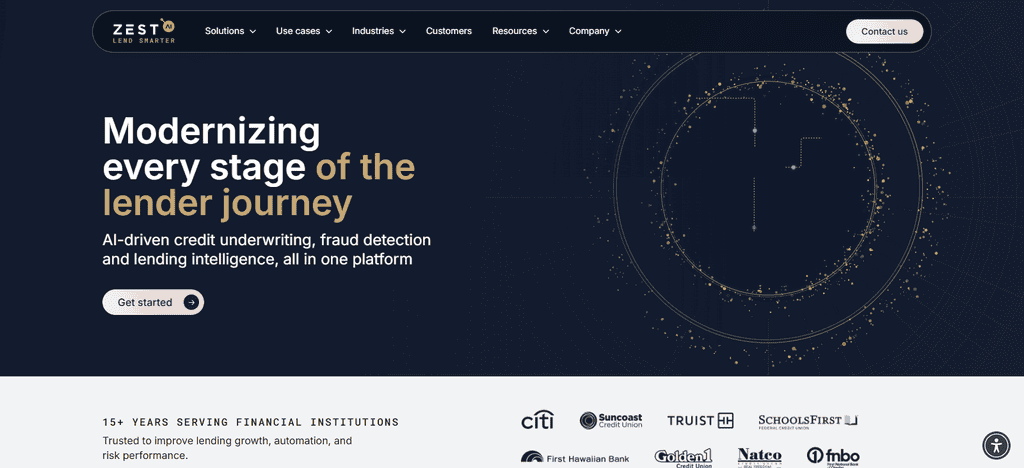
The platform has good predictive analytics for credit risk assessment and allows automated lending decision. Its models help increase approvals for thin file borrowers while maintaining risk controls. Zest AI also offers monitoring tools and fraud detection capabilities that allow lenders to make faster and more consistent decisions.
Main Features
- Explainable Models for Machine Learning
- AI-powered credit underwriting
- Automated lending decisions
- Built-in fraud detection
- Supervision of the credit portfolios
Top Use Cases
- Underwriting of consumer credit
- Lending by credit unions
- Auto and personal loan approvals
- Credit risk monitoring Upstar
2. Upstart
Upstart is a lending technology company that employs artificial intelligence to assess consumer credit. It uses more than credit bureau data to paint a fuller picture of borrower risk. It is especially useful for lenders that service thin-file borrowers who may not qualify under traditional scoring systems.
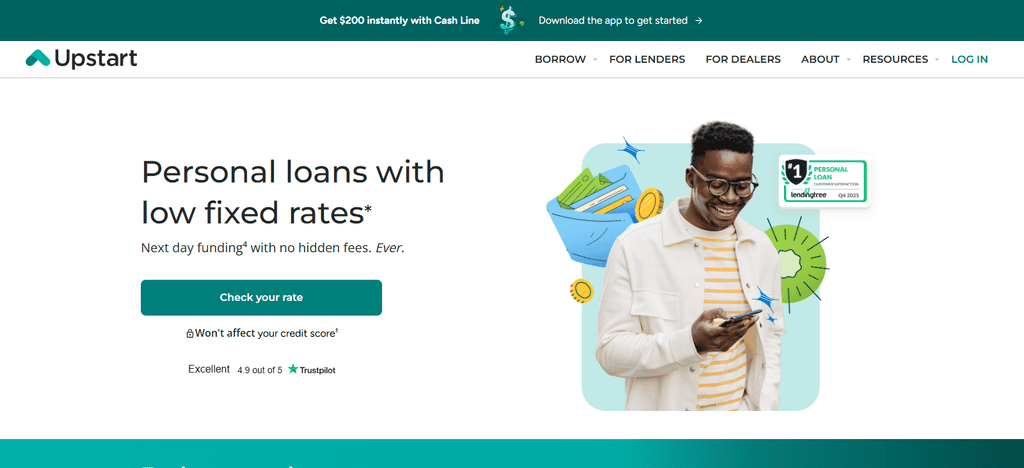
Pricing and scalability work for banks, credit unions, and lending partners looking to automate underwriting processes. Upstart’s credit risk models help you make decisions faster, reduce manual reviews and increase approval rates. Automated verification systems and risk monitoring tools also help prevent fraud and improve the efficiency of loan origination.
Main Features
- AI-powered credit assessment
- Analysis of non-traditional data
- Automated underwriting of loans
- Risk based price loans
- Digital lending processes
Best Use Cases
- Underwriting of personal loans
- Financing for auto loans
- Home equity loans
- Assessing consumer credit risk # Credolab
3. CredoLab –
Credolab focuses on alternative credit scoring, utilizing metadata from smartphones and behavioral analytics. The platform helps lenders evaluate applicants who lack formal credit history or have limited history, a key feature in underserved markets. Pricing is generally based on usage and can be scaled from fintech start-ups to large lending institutions.
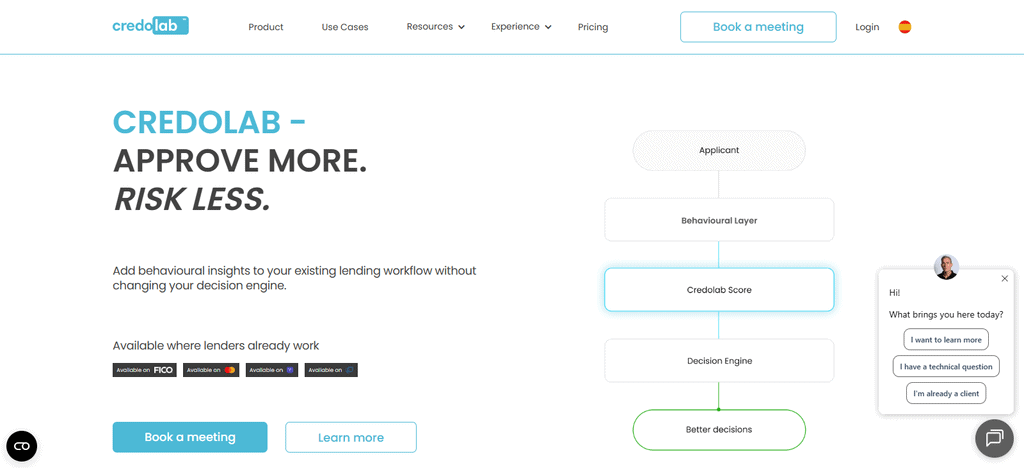
Credolab’s scoring methodology uses behavioral patterns collected with user consent to provide additional insights beyond traditional credit data. The platform also supports real-time credit risk assessments and automated decision-making flows. Fraud detection features analyze device signals to flag suspicious activity, helping lenders improve loan quality and boost financial inclusion.
Main Features
- Analysis of smartphone and web metadata
- Alternative data scoring of behavior
- Risk insights in real time
- Data processing with a focus on privacy
- Compatibility with established credit models
Top Use Cases
- Thin-file borrower scoring
- Online loan applications
- Credit card application filtering
- Identification of fraud risk at an early stage
4. Nova Credit.
Nova Credit provides lenders with tools to assess borrowers using international and alternative credit data, which is especially helpful for immigrants and newcomers. Its platform translates credit data from multiple countries into formats that can be used by lenders in their existing underwriting systems. The price is normally based on the integration requirements and also the number of applications, which means the pricing can be scaled for different sizes of lender.
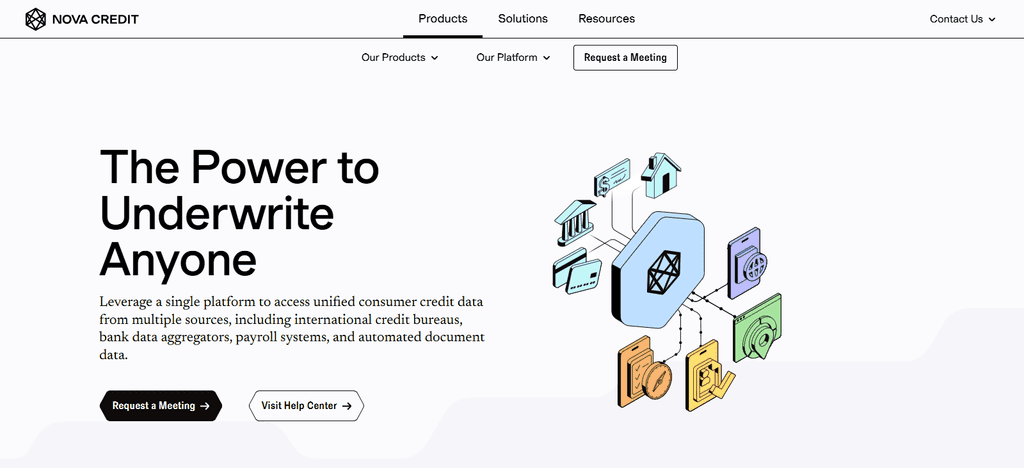
Nova Credit assists thin-file and newly arrived consumers in building creditworthiness, and in turn, improves credit scoring. The platform can automate risk assessments and lending decisions, eliminating the need for manual underwriting. Identity verification and data validation processes are also useful for reducing fraud risk and speeding up access to credit.
Key Features
- Access to international credit data
- Assessment of credit history across borders
- Cash flow underwriting products
- Permissioned consumer financial data
- Integration with lending workflows
Best Use Cases
- Immigrant credit evaluation
- underwriting of foreign borrowers
- Consumer Lending for Thin-file Consumers
- Loan decisions based on cash flow Plaid
5. Plaid
Plaid gives lenders access to consumer-permissioned financial account data for underwriting and risk assessment. Plaid provides a more detailed view of borrower financial health by analyzing transaction histories, income patterns, and cash-flow behavior. Its pricing model is primarily API-based and scalable for fintech firms, banks and lending platforms.
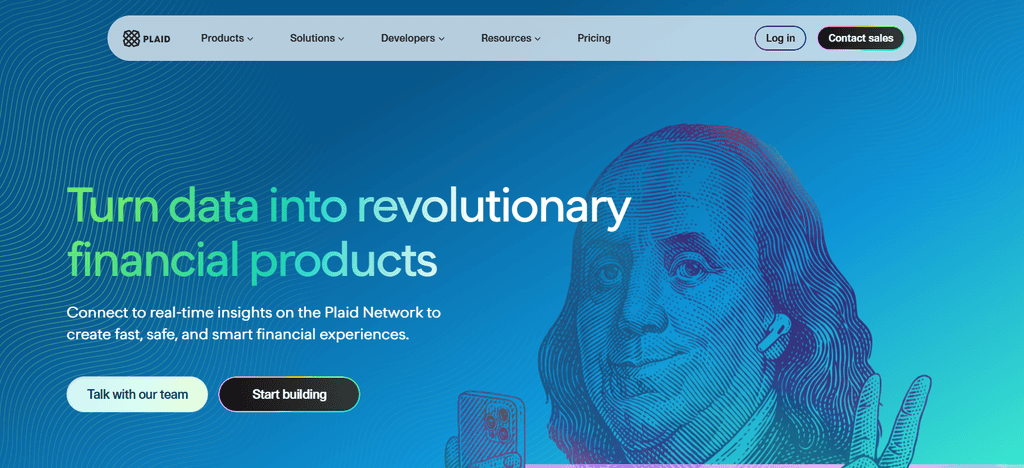
Plaid is especially helpful in underwriting borrowers with thin traditional credit files. Automating data retrieval and analysis enhances the speed and accuracy of decision making. Real-time financial insights make credit risk assessment more dynamic and account verification and identity checks help prevent fraud.
Main Features
- Banking accounts connectivity
- Access to bank transactions
- Cash flow analysis
- Assistance with income verification
- Financial data integration via API
Best Use Cases
- Proof of income and employment
- Credit analysis on the basis of cash flow
- Underwriting of personal loans
- processing of digital loan application #LenddoEFL
6. LenddoEFL
LenddoEFL focuses on alternative credit scoring by using a combination of machine learning, behavioral data and digital footprint analysis. The platform enables lenders to reach the underbanked who may not have traditional credit histories. The pricing is scalable and flexible to the institution’s lending volume and size of deployment, rendering it suitable for institutions in emerging and developed markets.

It employs behavioral and digital indicators in its credit scoring methodology to improve risk assessment. LenddoEFL uses automated decision-making systems that facilitate faster approvals and lower operational costs. Fraud detection capabilities analyze digital patterns and inconsistencies to help lenders identify suspicious applications and enhance portfolio performance.
Key Features
- Alternative credit scoring
- historical psychometric score calculation methods
- Analysis of behavioral data
- Credit risk predictive modeling
- Evaluation with focus on financial inclusion
Top Use Cases
- Lending to developing markets
- First time borrower assessment
- Understanding the underbanked consumer
- Alternative credit risk modeling
7. Trusting Social
Trusting Social is a fintech platform that uses telecom, financial and behavioral data to assess creditworthiness. Its solutions are built to help lenders reach consumers with little to no traditional credit history. Pricing models are usually designed to fit the integration of the market and data needs.
The platform’s alternative scoring methodology builds borrower profiles using non-traditional datasets, promoting financial inclusion. Credit risk assessment models help with automated underwriting and faster decision making. The company’s risk monitoring and identity-related checks help reduce fraud and also keep loan approval processes efficient for lenders and financial institutions.
Main Features
- AI-enabled alternative credit scoring
- Forecasting credit risk
- Identity verification solutions
- Digital fraud detection
- Data-driven customer acquisition
Top Use Cases
- Analysis of underbanked borrower
- Digital consumer lending
- Credit risk assessment alternative
- Financial institution customer acquisition
8. MicroBilt
MicroBilt offers credit, identity and risk data services that enable lenders to underwrite applicants beyond traditional bureau data. Its solutions are widely used by financial institutions serving thin-file borrowers and underserved consumer segments. Pricing varies based on product selection and transaction volume, providing scalability for diverse lending operations.
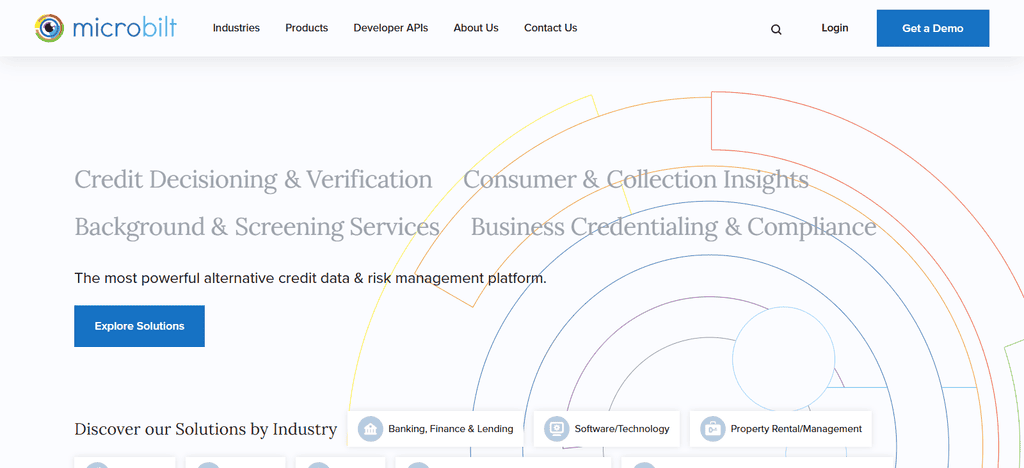
MicroBilt’s credit scoring methodology blends alternative credit data, public records and verification tools to enhance risk evaluation. Automated decisioning aids lenders in reducing manual effort and increasing consistency. Features for fraud detection include identity verification and risk screening tools to help prevent fraudulent applications and support sound lending decisions.
Important Features
- Alternative consumer credit information
- Consumer reporting service
- Data for the assessment of credit risk
- Electronic access to data
- Information on identity and risk
Best Uses
- Underwriter, consumer finance
- Alternative Credit Information Evaluation
- Evaluation of applicant risk
- Credit decisions for underserved borrowers
9. LexisNexis
LexisNexis Risk Solutions offers identity intelligence, public records data and risk analysis to help inform lending decisions. The platform helps financial institutions to improve customer verification and assess borrowers beyond traditional credit metrics. At the enterprise level, pricing is usually customized based on usage, data access and integration needs.

Its credit risk assessment tools pull together identity, behavioral and public-record data to help create more complete borrower profiles. Automated decision-making workflows make lending operations more efficient and consistent. Lenders favor security and compliance and widely use it for its robust fraud detection capabilities, including identity verification and risk monitoring.
Main Features
- Identity and intelligence verification.
- Risk of detecting fraud
- Insights from alternative data
- consumer risk evaluation
- Data-driven decision support
Leading Use Cases
- Identity fraud protection
- Review of consumer loan applications
- Assessment of credit risk
- Risk management of digital lending Scienaptic AI
10. Scienaptic.ai
Scienaptic AI provides AI-powered credit decisioning solutions using traditional and alternative data sources. The platform is designed to help banks, credit unions and lenders to improve underwriting performance and expand access to credit. Pricing is generally tied to institution size and lending volume, offering scalability for growing organizations.
Scienaptic’s scoring methodology examines a host of borrower characteristics to create predictive risk insights. It’s especially powerful for assessing thin-file applicants and automating complex lending decisions. Built-in risk management, continuous model monitoring and fraud detection capabilities support safer and more efficient credit operations.
Main Features
- Machine learning for underwriting
- AI-powered credit decisions
- Integrating alternative data
- Automated identity and fraud screening
- Risk based pricing of loans
Key Use Cases
- Credit Union Loans
- Underwriting of personal and auto loans
- Assessment of borrower thin file
- Automatic Credit Risk Management
Conclusion
Lenders are beginning to use alternative data credit scoring platforms to evaluate borrowers, which provide more comprehensive insights than traditional credit reports. Zest AI, Upstart, Credolab, Nova Credit, and Scienaptic AI all have solutions that enable financial institutions to take advantage of AI, cash-flow information, behavioral data and automated underwriting to enhance credit risk assessment.
These technologies also offer opportunities to better assess thin-file and underbanked borrowers. But lenders should compare carefully data quality, scoring accuracy, integration capabilities, pricing, fraud detection and regulatory compliance when choosing a platform. The right solution can help drive smarter lending decisions, boost operational efficiency, provide responsible access to credit and achieve long-term business growth.
FAQ
What is alternative data credit scoring?
Alternative data credit scoring evaluates borrowers using financial and non-financial information beyond traditional credit reports, including cash flow, rental payments, income patterns, and transaction histories.
How does alternative data improve credit scoring?
It provides lenders with additional insights into borrowers’ financial behavior, repayment capacity, and spending patterns, helping them make more informed credit decisions.
What are the best alternative data credit scoring platforms for lenders?
Some notable platforms include Zest AI, Upstart, Credolab, Nova Credit, Plaid, LenddoEFL, Trusting Social, MicroBilt, LexisNexis Risk Solutions, and Scienaptic AI.
How does AI help in alternative credit scoring?
AI and machine learning analyze large datasets, identify financial patterns, predict potential repayment risks, and support automated underwriting and credit decision-making.
Can alternative data help borrowers with no credit history?
Yes. Alternative data can help lenders evaluate applicants with limited traditional credit histories by analyzing permitted financial information, cash flow, income, and other relevant behavioral indicators.