

Selecting a Best Debt Settlement Companies for Americans can be difficult, particularly if your credit-card balances, medical bills and personal loans are difficult to keep up with. Debt settlement enables many Americans to negotiate lower payoff amounts and get their finances back on track without having to file for bankruptcy.
But not all companies offer the same level of transparency, customer support, and results. This guide looks at the best debt settlement companies and compares their fees, minimum debt requirements, timelines, services and potential drawbacks. Knowing the differences can help you choose a company that suits your long-term goals and financial situation.
How to Choose the Right Company?
Check availability of state: Make sure the company is licensed to do business in your state, as debt-settlement laws, fees and program eligibility can differ widely from state to state.
Check minimum debt requirements: Check each provider’s minimum enrolled balance, since some companies accept smaller debts, while others require $7,500 or more.

Learn all fees: Before you sign up, get a written statement of the total fees you will be required to pay, such as settlement, account and legal plan fees and any monthly service fees.
Verify performance-based pricing: Choose a company that does not charge you its primary settlement fee until after a creditor agrees to a settlement and you approve it.
Ask about settlement timeframes. Find out how long it usually takes similar clients to complete the program. Many debt-settlement programs require deposits over several years.
Look at customer support: Check how quickly they respond during the consultation, make sure you have a dedicated specialist, an online account and regular updates on your progress.
Check reputation and complaints: Before signing up with any debt-relief provider, research BBB ratings, Trustpilot reviews, complaint patterns, regulatory actions, and customer experiences.
Shop around: Get written estimates from at least three companies, then compare projected savings, fees, timeline, risks and alternatives before signing.
Are Debt Settlement Companies Safe and Legitimate?
Debt settlement companies can be safe and legitimate, but only if they are properly licensed, transparent about fees, and clear that results are not guaranteed. Legitimate companies generally deal in unsecured debt, will have a dedicated savings account, and will only take their main fee after a settlement has been reached and approved. But the industry also has its share of companies making unrealistic promises, charging upfront fees or not disclosing serious risks.
Debt settlement can reduce your balances but it can harm your credit, result in collection calls or lawsuits, and take years to complete. Before enrolling, check state availability, read the contract carefully, check BBB and Trustpilot reviews, compare several providers, and consider alternatives like credit counseling, debt consolidation, or debt negotiation directly with creditors.
Key Points
1. Debt Relief for National
National Debt Relief is a large, well established debt settlement company that helps consumers settle unsecured debts, primarily credit cards, personal loans, medical bills and some business debts. In general, that means you have enrolled debt between $7,500 and $10,000, financial hardship, and can put money into a special savings account.
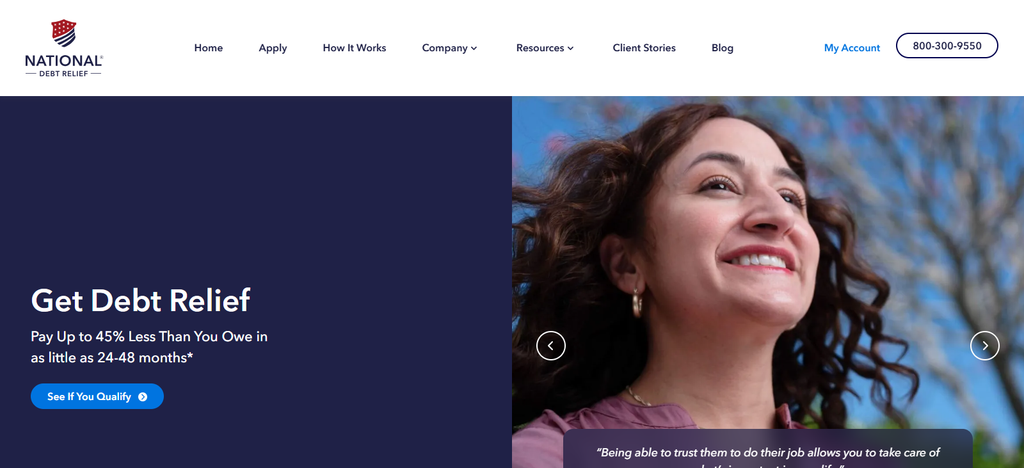
It typically charges up to 25% of enrolled debt and charges it only once a settlement is reached and authorized. Programs generally run for 24 to 48 months. Negotiators deal directly with creditors Customer service features complimentary consultations, online access to your account, phone support and high third-party ratings
Characteristics
- Dealing with unsecured debts such as credit cards, medical bills, personal loans and some business debts.
- Provides a free consultation and personalized debt-relief analysis.
- Allows clients to collect settlement money in a separate savings account.
- Charges fees only after a settlement has been reached, approved, and funded.
- Offers online account tracking, creditor negotiation, and comprehensive customer support.
Restrictions
- Usually requires a fairly large minimum debt enrolled balance.
- Not available in all states in the U.S.
- Settlements may take years to complete.
- Missed creditor payments while on the program could lead to increased collection activity and legal risk
- Accounts can become delinquent during negotiation, lowering credit scores.
2. Freedom Debt Relief
Freedom Debt Relief is one of the most recognizable U.S. debt settlement providers, and it helps consumers reduce the amount they owe on unsecured debts, including credit cards, retail cards, personal loans, and certain medical or collection accounts. You need $7,500 in enrolled debt and a demonstrated hardship.
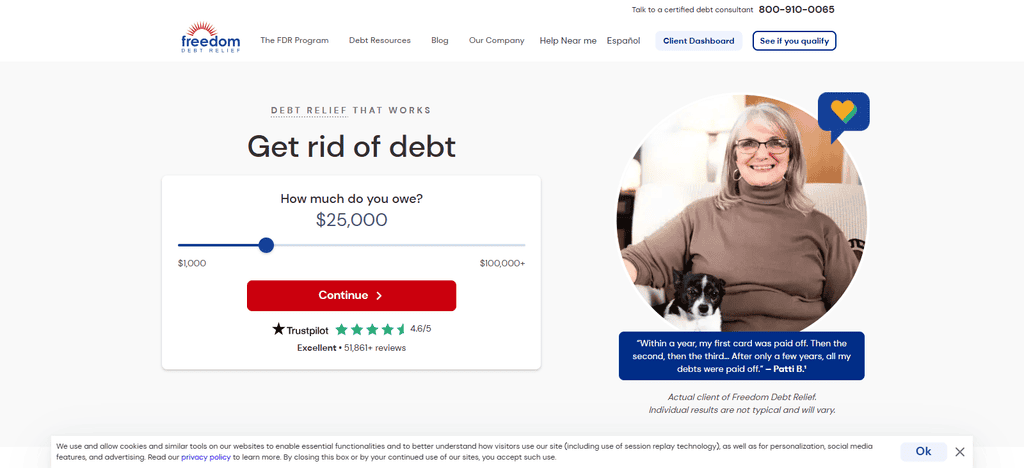
Depending on the state and amount of debt, fees typically range between 15% and 25% of each enrolled balance, plus a $9.95 setup fee and a $9.95 monthly account-maintenance fee. Settlements usually take 24-48 months. Its team negotiates with creditors, and customers are provided with dedicated support, online resources, and clear authorization before any settlement is paid.
Features
- Negotiates lower payoffs on credit cards, retail cards, personal loans, and medical debts.
- Offers free consultation and personalized settlement plan.
- Has a dedicated bank account for building settlement funds.
- Our fees are performance based and only charged on a successful settlement.
- Provides a program guaranty and a strong customer service infrastructure.
Limitations
- Has a minimum enrolled-debt amount, which may exclude smaller balances.
- Services are not available in certain states.
- Fees can be as substantial as a percentage of enrolled debt.
- It can take a few years and you have to put money in every month.
- Unpaid accounts can hurt credit, result in collection calls and even lawsuits.
3. Accredited Debt Relief
Accredited Debt Relief is a national debt settlement and related relief company focusing on unsecured credit-card debt, personal loans, medical bills, and collections. It has a low enrollment threshold of $5,000, so it’s accessible to consumers with smaller debt loads. The company takes 15%-25% of the debt enrolled, but only collects after a successful settlement.
Some accounts may also have a one time $9 set up fee and $9.75 monthly account fee. Average time for completion is 24-48 months. Accredited negotiates with creditors on the client’s behalf and offers consultations, online account management and customer support backed by high Trustpilot and BBB ratings.
Main Features
- Applies to credit-card debt, retail cards, medical bills, personal loans and certain business debts.
- Features a relatively low minimum debt hurdle.
- Free consultations and multiple paths of relief including settlement and referrals to counseling services.
- No upfront settlement fee, payment is on completed settlements.
- Online account management and responsive customer service.
Limitations
- Fees still represent a large percentage of enrolled debt.
- Outcome of settlement is not guaranteed.
- Programs generally require disciplined deposits over a number of years.
- Additional account or monthly service charges may apply to certain clients.
- Paying off a debt can hurt your credit score and may trigger collection efforts by the creditor.
4. Americor
Americor is a technology-driven debt relief company that provides debt settlement, debt consolidation and customized financial guidance to consumers with unsecured debt, including credit cards and personal loans. You usually need at least $7,500 in qualifying debt and evidence of hardship. Published estimates of fees range from about 14% to 29% of enrolled debt, with no upfront fee.
Fees are charged only on settled accounts under performance-based terms. The time can vary per individual but programs usually run two to four years. Americor’s negotiators communicate with creditors to negotiate lower payoff amounts and clients are assigned dedicated specialists, digital dashboards and regular progress reports throughout the course of the program.
Features at a glance
- Offers debt settlement, consolidation options, credit counseling, and customized financial plans.
- Offers affiliated consolidation-loan solutions when settlement is not optimal.
- Performance based pricing with no upfront settlement fees.
- Creates a special account to set aside money for paying debts.
- Provides negotiators, electronic instruments, and constant contact with the customer.
Restrictions
- Must have minimum unsecured debt to qualify.
- Its fee range may be higher than some competitors depending on the case.
- Not available everyplace.
- Consolidation loans may carry interest charges, longer terms and require credit approval.
- Settlement is not a sure thing and credit scores could suffer in the meantime.
5. CuraDebt
CuraDebt is a debt relief marketplace and service provider that connects consumers with independent settlement, tax-relief and debt-management providers. It covers unsecured debts such as credit cards, medical bills, personal loans and some business debts . Traditionally, it has catered to consumers with about $5,000 or more in debt .
Specific fees vary but typically are 15%–25% of enrolled or settled debt. No upfront settlement fees as it matches clients with providers. The settlement process normally takes two to four years. CuraDebt also provides free consultations, creditor negotiation through partner providers, and customer support. However, reviews say support only works on weekdays and that email response is slow.
Main Features
- Matches clients with providers of debt settlement, tax relief and debt management solutions.
includes credit cards, medical bills, personal loans and some business debt. - Provides free initial consultations to assess the best course of relief.
- No upfront fees for settlement services that are covered.
- Negotiation with creditors and access to multiple specialized service providers.
Restricted
- May refer customers to outside providers, so pricing and service quality may vary.
- Fees and minimums are less standardized than for direct settlement firms.
- Support may be restricted to business hours only and e-mail responses seem to be slow.
- Settlement programs are still generally multi-year commitments.
- Credit impact and creditor actions can still occur while the debt is unpaid
6. New Age Debt Solutions
New Era Debt Solutions is a nonprofit affiliated debt settlement company that helps consumers with large amounts of unsecured debt, including credit cards, personal loans, medical bills and collections. It generally takes $10,000 plus of enrolled debt and a real financial hardship.
There are no upfront fees, and it charges a fee only after a settlement is reached, with customer-reported maximums of about 23% of enrolled debt. The company says average program length is about 28 months, but some are longer. New Era has great ratings on Trustpilot and BBB, works directly with creditors, provides consultations, account monitoring and support.
Highlights
- Negotiating unsecured debts, such as credit cards and medical bills
- no upfront fees, pay after recovery.
- Free consultations and individual programs of settlements.
- Uses a separate savings account for settlement funding.
- Solid third-party ratings and a long operating history.
Constraints
- Usually requires a large minimum balance of debt.
- Availability may vary by state regulations.
- settlement timelines could be more than two years.
- Deposits must be made regularly, which can be a burden on monthly budgets.
- Credit damage, collection or legal actions may occur before settlement offers are finalized.
7. Pacific Debt Relief
Pacific Debt Relief is a debt settlement company that operates in 49 states and helps consumers settle unsecured debts such as credit cards, personal loans, medical bills, and collection accounts.
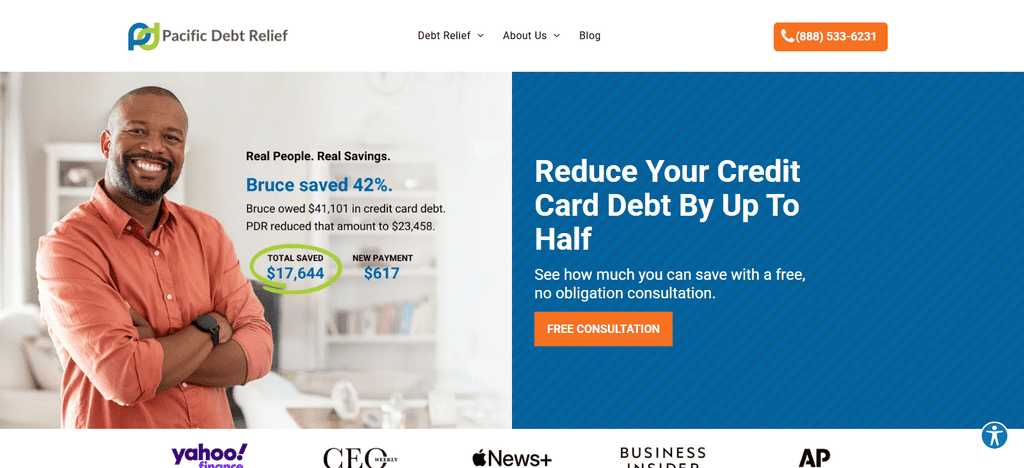
It requires a minimum debt load of $10,000 in eligible debt and generally expects financial hardship. Its settlement fee is quoted after a consultation, but generally falls within the industry range of 15%-25% of enrolled debt and is only collected on a successful settlement.
Programs usually last 24-48 months. Experts at Pacific Debt Relief negotiate with your creditors, set up a dedicated settlement fund, and offer customer support via consultations, account updates, and online tools. It has solid ratings on Trustpilot and the BBB.
Main Features
- Operates in almost every state in the U.S.
- Negotiates settlements for credit cards, personal loans, medical bills and collections.
- Offers free consultation and customized repayment or settlement plan.
- Saves for negotiated payoffs using a dedicated client account.
- Only charges fees upon the completion and approval of settlements.
Constraints
- The percentages of the fees can be high and depend on the case.
- There is a somewhat high minimum debt requirement.
- Programs may take from two to several years to complete.
- Clients are forced to stop paying creditors in many instances, heightening delinquency risk.
- Settlements depend on the willingness of creditors and on consistent funding
8. JG Wentworth Debt Relief
JG Wentworth Debt Relief is part of a larger financial-services company known for its work with structured settlements and consumer-lending services. It offers debt-resolution services for unsecured debts such as credit-card and personal-loan debt.
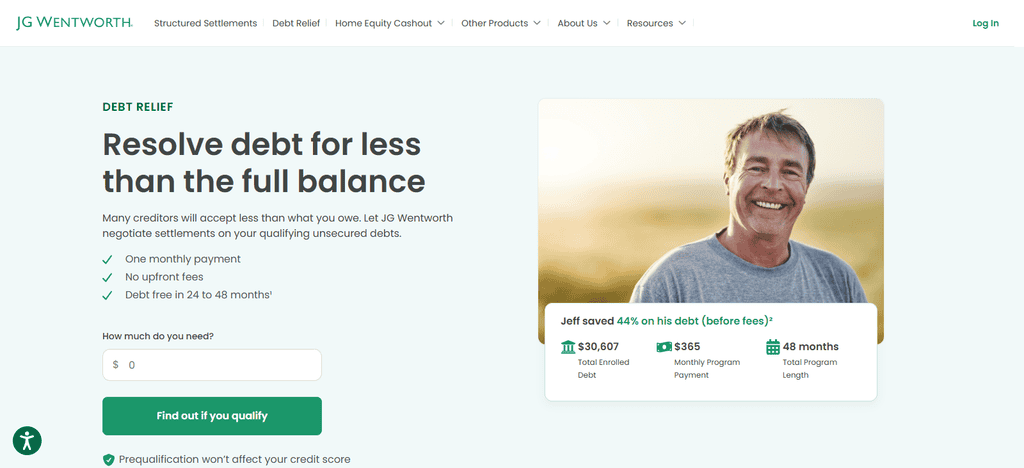
Its fee is a percentage of each debt enrolled and settled, usually averaging 18%–25%, and is baked into the quoted monthly payment from the beginning; the company says there are no hidden fees.
Third party account-provider fees may apply. The length of the program depends on the amount of debt, deposits, and the participation of creditors. In general, the settlement takes several years. JG Wentworth works with creditors, provides dedicated program support and online resources, and boasts an A+ BBB rating.
Main Features**
- Debt settlement for unsecured debts such as credit cards and personal loans.
- The settlement fee is included in the quoted monthly program payment.
- Structured savings-and-settlement process with clear monthly payments.
- Offers dedicated program support and online educational resources.
- Utilizes the broader financial-services expertise of the JG Wentworth brand.
Limitations
- Fees as a percent can be high relative to enrolled debt.
- Program costs may be increased by fees from third-party account providers.
- Time frames are concrete and can span multiple years.
- Outcome of settlement depends on participation of creditors and deposits of clients.
- Debt settlement can damage credit and may result in collections or lawsuits
9. DebtBlue
DebtBlue is a debt settlement company that helps consumers settle unsecured debt including credit cards, personal loans, medical bills and collection accounts. There is no universal minimum, but eligibility is based on hardship, account status, state rules and the ability to fund a special-purpose savings account.
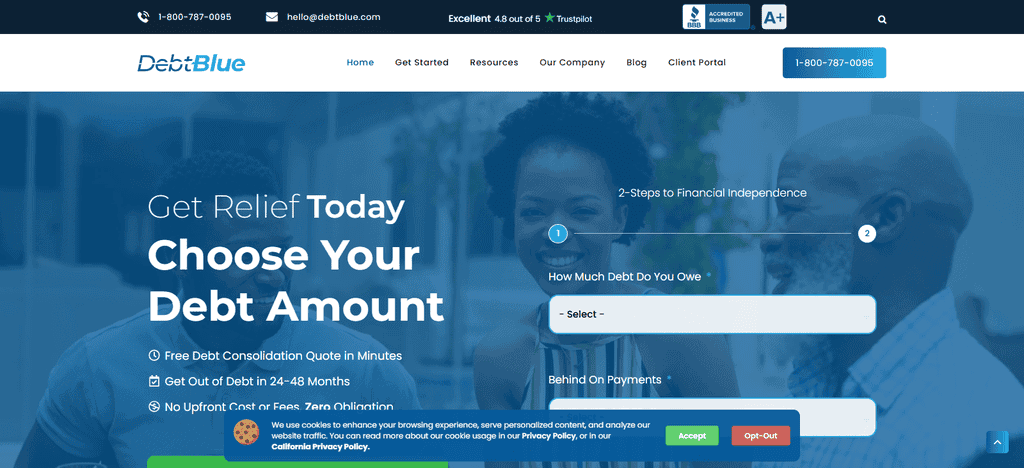
Its performance fee is generally around 25% of enrolled debt, and is only collected after an account is paid and settled. Optional legal plans are $39.95 a month and deposit-account fees are typically less than $10 a month. The typical program is about 32 months. DebtBlue works directly with creditors and has support for clients through consultations and account servicing.
Features
- Negotiates unsecured debt such as credit cards, personal loans, medical bills, and collections.
- Free consultations and tailored debt-relief plans are available.
- Has a success fee model based on successful settlements.
- Offers eligible clients optional legal-plan assistance.
- Provides clients with access to account servicing and tracking.
Limitations
- Its programs are quite long with an average length of about thirty-two months.
- Total program cost may increase because of fees, legal plans and account charges.
- Eligibility varies by hardship, account status and state rules.
- Collection activity can continue while negotiations are taking place.
- Credit scores may be lowered because accounts are often allowed to go delinquent.
10. Century Support Services
Century Support Services is a debt settlement provider based in Pennsylvania that negotiates reductions on unsecured consumer debts such as credit cards, personal loans, medical bills and collections. It does not publish a clear single minimum-debt requirement, but rather looks at hardship, account balances, state eligibility and the client’s ability to make regular deposits.
Its fee is per settled account, after the client has approved the settlement and at least one payment has been made. Separate fees from the account provider may apply. Century says it has seen historical savings of over 40% before fees or ~16% after fees over 24-48 months. It provides creditor negotiation, consultations and customer support during the program.
Features**
- Negotiates reduced settlements on personal loans, medical bills, credit cards and collection accounts.
- Will only charge fees after a settlement has been negotiated, approved and funded.
- Offers one-on-one consultations and a structured settlement process.
• Demonstrates significant historic savings for clients who complete the program. - Provides continuous customer support and creditor communication.
Constraints
- Does not clearly publish a universal minimum-debt requirement, so eligibility is less predictable.
- Separate account-provider fees and/or settlement fees may apply.
- Programs usually require a multi-year commitment.
- Settlement results are not guarantyd and depend on the cooperation of creditors.
- The process may include damage to your credit, collection calls, and possible legal action.
Conclusion
If you are an American struggling with a large amount of unsecured debt, such as credit cards, medical bills and personal loans, debt settlement is a realistic option. The strongest companies, like National Debt Relief, Freedom Debt Relief, Accredited Debt Relief, and Pacific Debt Relief, provide transparent performance-based fees, creditor negotiation, dedicated savings accounts, and structured support.
But settling isn’t without risk: Credit scores can take a hit, creditors can pursue collections, fees can be hefty, and programs typically take 24 to 48 months to finish. The right choice depends on how much debt you have, what’s available in your state, your monthly budget and how dire your hardship is. Consumers should compare several providers, get all fees in writing, and consider consolidation or credit counseling before signing up.
FAQ
What is debt settlement?
Debt settlement is a process where a company negotiates with creditors to accept less than the full balance owed on unsecured debts, such as credit cards, medical bills, personal loans, and collections.
Which debts can usually be settled?
Most companies handle unsecured debts, including credit cards, retail cards, personal loans, medical bills, and collection accounts. Secured debts, federal student loans, and taxes are generally not eligible.
How much debt do I need to qualify?
Minimum requirements vary by company. Some providers accept around $5,000, while others require $7,500 to $10,000 or more in enrolled unsecured debt.
How much do debt settlement companies charge?
Many companies charge 15% to 25% of the enrolled debt. In most cases, the fee is collected only after a settlement is successfully negotiated and approved.
How long does debt settlement take?
Most programs take about 24 to 48 months. The exact timeline depends on the debt amount, monthly deposits, creditor cooperation, and the number of accounts enrolled.