
The forex industry is changing globally as brokers expand their trading services to reach clients in different countries and financial markets. Today’s traders are looking for more than just basic currency trading. They want advanced platforms, flexible payment options, multiple financial instruments and reliable regional support.
In this article, I will talk about Forex Brokers Expanding Their Global Trading Services worldwide. I will talk about their key features, presence in the international market, developments in their services and important risks that traders should consider before choosing a broker.
What Does Global Expansion Mean for Forex Brokers?
Entering New International Markets: Global expansion means forex brokers entering new countries and regions to reach more traders, increase their Forex Brokers Expanding Their Global Trading Servicespresence and offer trading services to customers around the world.
Acquiring Regulatory Licenses: Brokers go international by obtaining licenses from various financial regulators, enabling them to operate legally, comply with local regulations, and offer regulated trading services.

Boosting Trading Instruments: Going global usually means adding more forex pairs, indices, commodities, stocks and other CFDs to the list, giving global traders more market access through a single brokerage platform.
Upgrading Payment Infrastructure: Brokers add more options for deposits and withdrawals by integrating regional payment systems, local banking services, digital wallets and multiple currencies, which makes it easier for global clients to fund their accounts.
Trading Technology Development: As brokers expand globally, they face the necessity to improve their platforms, mobile applications, execution infrastructure and trading tools to cater to the requirements of clients in different countries and under diverse market conditions.
Multilingual Support: Forex brokers extend their global reach through localized websites, multilingual customer service, regional educational material, and communication services for diverse international trading communities.
Building Strategic Alliances: Brokers partner with financial institutions, payment providers, technology companies and regional businesses to enhance operational capabilities, improve service delivery and facilitate expansion to new markets.
Regional Requirements Adaptation: When expanding globally, brokers have to adjust their account conditions, the leverage limits, the available instruments, the payment methods and the client protections to the local regulations and the needs of their customers.
Why Forex Brokers Are Expanding Their Global Trading Services
Entering New Customer Markets: Forex brokers go international to access emerging and existing economies, attract more traders, increase their customer base, enhance brand awareness, and create additional opportunities for business expansion.
More revenue opportunities: By entering new geographic markets, brokers can reach new customer segments, diversify their sources of income, increase trading volumes and reduce their reliance on specific regional markets.
Meeting Increasing Trading Demand: With the rise of online forex and CFD trading, brokers enhance their services, improve platform accessibility, and cater to traders looking for access to international financial markets.
Enhanced Market Competitiveness: Brokers who expand globally can compete with international brokerage firms by improving trading conditions, offering novel services, broadening product portfolios, and enhancing customer experiences.
Enhancing Customer Accessibility: Brokers provide localized payment options, multilingual services, and region-specific assistance to facilitate account registration, deposits, withdrawals, and trading for international clients.
More Trading Opportunities: Brokers can attract a wider range of traders and meet different trading preferences and investment strategies by offering new currency pairs, commodities, indices, stocks and other instruments.
Investment in Advanced Technology: Competition at the international level forces brokers to improve mobile applications, trading platforms, execution infrastructure, analytical tools and digital account services to improve the overall efficiency of their operations.
Forming International Partnerships: Collaborating with payment providers, financial institutions, technology companies, and local businesses helps brokers enhance service delivery, expand local operations, and achieve sustainable international growth.
Key Points
| Forex Broker | Global Trading Services – Key Point |
|---|---|
| Exness | Expands international trading access through multi-region operations, flexible account services, localized payment options, and forex and CFD trading products. |
| IC Markets | Strengthens its global reach with multi-platform trading, competitive execution infrastructure, deep liquidity, and international access to forex and CFDs. |
| Pepperstone | Broadens its international services with multi-market trading, platform integrations, regional regulatory entities, and support for traders across different markets. |
| XM | Focuses on worldwide retail accessibility through multilingual services, international client support, flexible account options, and forex and CFD markets. |
| IG | Expands cross-market access with a broad range of instruments, advanced trading platforms, global market coverage, and digital trading tools. |
| OANDA | Builds international trading services around forex access, currency tools, trading technology, regional market operations, and analytical capabilities. |
| HFM | Extends its global footprint with regional operations, diverse trading accounts, multi-asset CFDs, and localized customer support services. |
| AvaTrade | Strengthens its global presence through regulated regional entities, multiple trading platforms, forex education, and accessible trading solutions. |
| FP Markets | Develops international trading access through multi-platform support, extensive CFD markets, pricing options, and technology-driven execution services. |
| MultiBank Group | Grows its international trading network through global offices, multi-jurisdictional operations, broad financial instruments, and expanded digital trading services. |
1. Exness
Exness is pursuing global expansion through a multi-jurisdictional model covering Europe, Africa, the Middle East, Asia and offshore markets. It is licensed by CySEC, UK FCA, FSCA for South Africa, Seychelles FSA, CMA in Kenya, and more, allowing it to operate with regional customization.

It offers forex, metals, commodities, indices, stocks and crypto CFDs trading services on the MT4 and MT5 platforms, Exness Terminal and its mobile app. Payment expansion Local & global methods 3D Secure cards E-wallets Automated withdrawals The upgrades to technology are aimed at speed of execution, APIs and reliability of the platform. Partnerships with affiliates and introducing brokers are focused on client acquisition.
Key Features:
- Multi-asset trading including forex and CFDs.
- Multiple trading platforms, including MT4, MT5 and Exness Terminal.
- Different account types to suit different trading styles.
- Offers a variety of deposit and withdrawal methods based on your location.
- Provides international customer service and language support.
**Risks
- Availability of products and leverage differs by country.- With high leverage, trading losses can be multiplied many times.
- Trading conditions are different for different account types and instruments.
- Some services may be subject to regional restrictions.
2. IC Markets
Regulated entities in Australia, Cyprus, Seychelles and other jurisdictions allow IC Markets to operate internationally, giving it credibility in established markets and access to emerging ones. It is regulated by ASIC and CySEC as well as other offshore licenses for international clients. The broker focuses on raw spread forex and CFD trading with deep liquidity, low latency execution and institutional pricing.
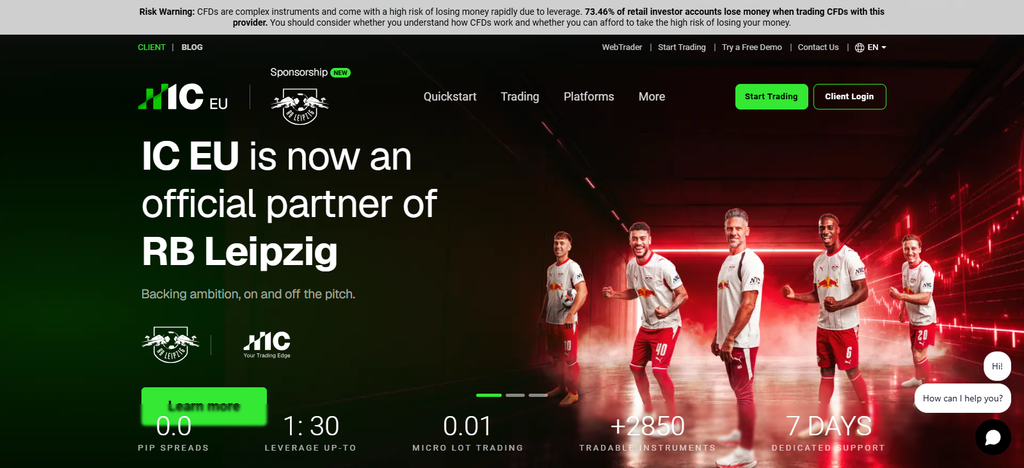
We are focused on the development of platforms like MT4, MT5, cTrader and trading tools for manual and algorithmic traders. Payment expansion includes cards, bank transfers and major e-wallets. Technology investment focuses on execution speed, server infrastructure and API connectivity. It has a global distribution that is supported by strategic alliances with liquidity providers and introducing brokers
Main Features
- Trading Forex & CFDs on multiple asset classes.
- Compatible with MetaTrader 4, MetaTrader 5 and cTrader.- Commission based pricing options for raw spread accounts.
- Trading technology optimized for speed of execution.
- Supports Expert Advisors and automated trading strategies.
Main Risks
- Leverage multiplies exposure to market volatility.
- In volatile market conditions, execution prices could be different.
- Account conditions, protections and services differ by regulatory entity.
- Frequent trading may increase commissions and spread costs.
3. Pepperstone UK Ltd
With regulated operations in Australia, the United Kingdom, Europe, the UAE, Kenya, Germany and the Bahamas, Pepperstone’s global expansion allows it to service retail, professional and institutional clients across regions. It holds licenses from ASIC, FCA, CySEC, DFSA and The Bahamas Securities Commission.
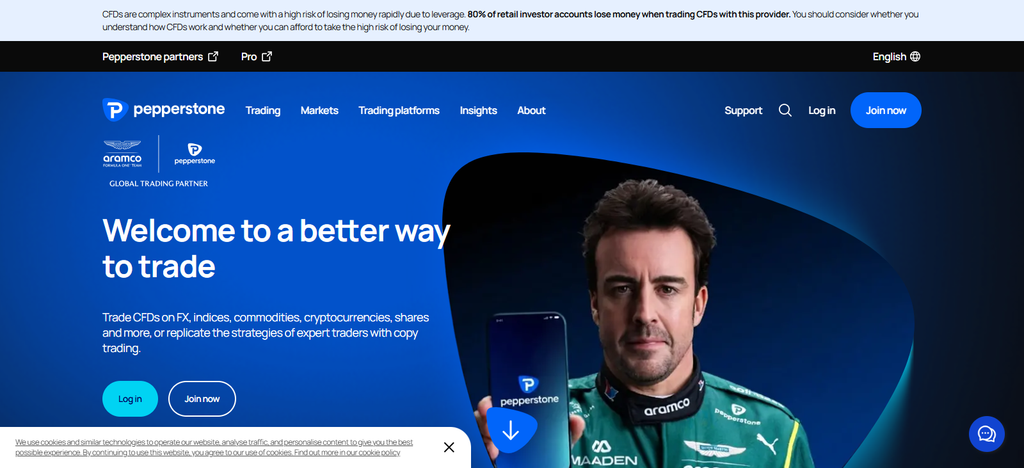
Trading services include forex, CFDs, commodities, indices and shares, with competitive spreads and fast execution. The broker supports MT4, MT5, cTrader, TradingView and proprietary tools and is investing in low latency infrastructure and API based trading.
Payment expansion includes cards, bank transfers and digital wallets. It enhances its institutional-grade offering through collaborations with technology providers, liquidity providers and introducing brokers.
Key Features
- Forex and CFD markets access across multiple asset classes.
- Integration of MT4, MT5, cTrader & TradingView in selected regions.
- Available in Razor and Standard account types.
- Offers trading tools, automation support and analytical functions.
- International operations with multiple regulatory bodies.
Main Risks
- Trading costs depend on the account type and the instrument.
- CFD trading is high risk and you may lose your capital.
- Regional availability and terms of execution may differ.
- Some features and instruments are not available in all jurisdictions.
4. XM
XM maintains international expansion through entities and licenses in Cyprus, Australia, UAE, South Africa, Kenya, Belize, British Virgin Islands, Mauritius and Seychelles. Recent regulatory developments include a Kenyan Capital Markets Authority license, supporting its African growth strategy. It offers forex, stock CFDs, commodities, indices, precious metals and energies, with account types suitable for beginners to professional traders.
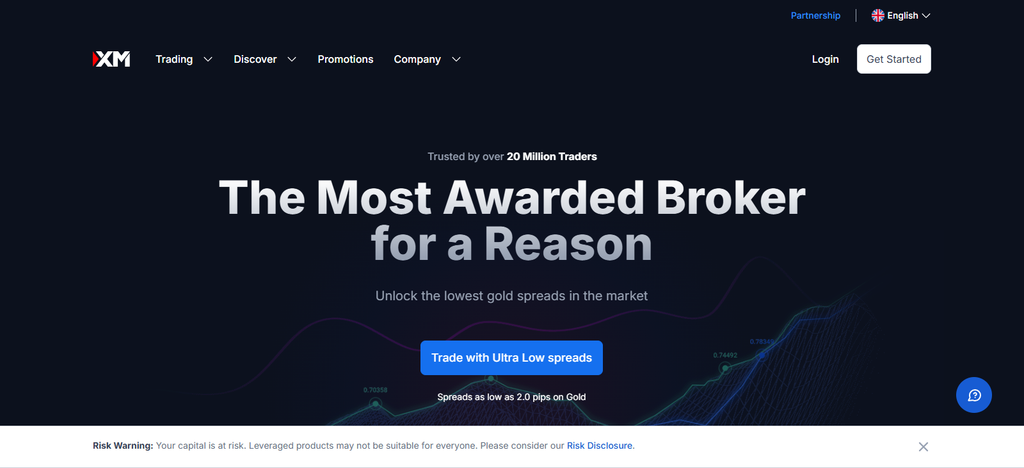
The platform development covers MT4, MT5, XM’s web platform and mobile apps. Payment expansion includes local bank transfers, cards, e-wallets and region-specific methods. Technology upgrades are geared toward execution quality, research tools and multi-lingual support, with affiliate, IB and partnership programs continuing to be important client acquisition channels.
Main Features
- Forex and CFD trading on multiple asset classes
- MT4 and MT5 trading platforms available.
- Multiple account options for various trading preference
- International client services and multilingual customer support.
- Education, market analysis and trading tools.
Main risks
- Spreads and trading costs are subject to change with market conditions.
- Large losses can occur from leveraged positions.
- The instruments and account conditions vary from region to region.
- A bonus or promotion may be subject to eligibility restrictions and withdrawal conditions.
5. IG
IG is following a global expansion strategy and has a wide international presence with operations in the United Kingdom, Europe, Australia, the United States, Singapore, South Africa and other markets. It holds regulatory licenses from the UK FCA, Australia’s ASIC and the U.S. CFTC/NFA framework, suggesting a strong compliance-first approach.
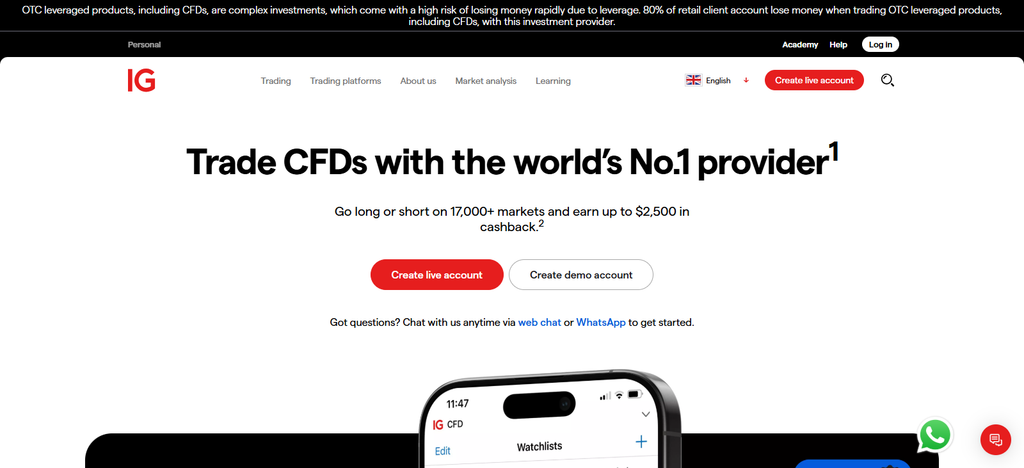
In addition to forex, the company provides a number of products such as CFDs, spread betting, shares, ETFs, options, futures and bonds. Development focuses on IG’s proprietary web and mobile platforms, as well as MT4 and sophisticated trading tools.
Payment expansion includes cards, bank transfers and digital methods, while technology investment covers risk management, market data, automation and institutional-grade infrastructure. Strengthen its multi-asset distribution through partnerships and acquisitions.
Main Features
- Trading on forex, indices, shares, commodities and other markets.
- Proprietary trading platform, access via mobile and web.
- Sophisticated charting, analysis and risk management tools.
- Regulated entities with broad international market coverage.
- TradingView, MT4 and applicable other platform integrations.
Main Risks
- CFDs and leveraged products may result in losses that exceed expectations.
- Fees and spreads vary by product and market.
- Advanced tools may be difficult for novice traders.
- Client protections and trading access vary by country and legal entity.
6. OANDA
OANDA has a global expansion strategy with regulated operations in the US, UK, Australia and other markets, with licenses from the CFTC/NFA, FCA and ASIC. It has a strategy of established market credibility coupled with technology-led trading services for retail and institutional clients. The broker offers forex, CFDs, commodities, indices and cryptocurrency related products where permitted.
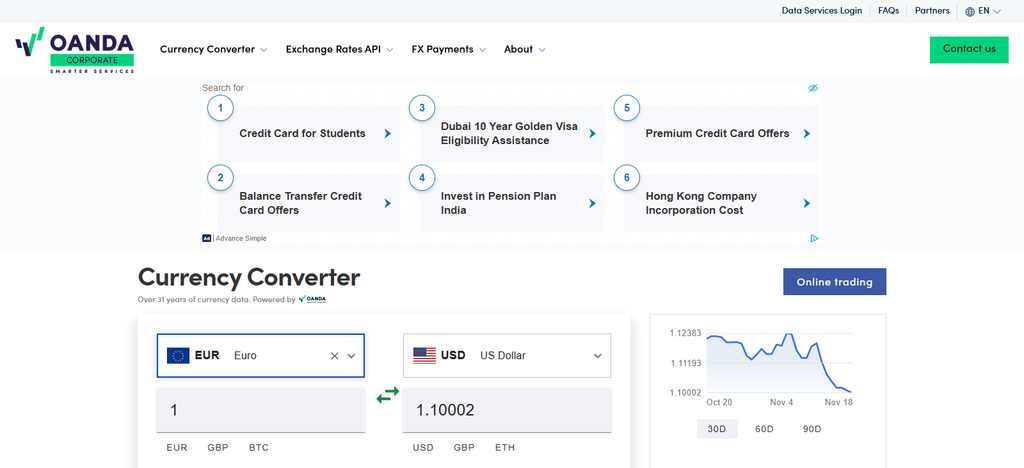
OANDA proprietary web and mobile platforms, MT4, MT5, TradingView integration and API access for algorithmic traders. Platform development. Payments expansion includes cards, bank transfers and selected e-wallets. Technology upgrades target execution reliability, data analytics, pricing infrastructure and risk controls. It supports its digital-first growth model with strategic alliances with fintechs, liquidity providers and platform developers.
Main Features
- A strong focus on currency markets and forex trading.
- Mobile trading apps and proprietary trading platform.
- MT4 & other integrations on supported markets.
- Currency converter, analytical tools and past prices data.
- Operations in multiple jurisdictions, including regulated services.
Main Risks
- Pricing, margin rules and products vary by jurisdiction.
- Spreads may widen in volatile or illiquid conditions.
- Leverage opens up the possibility of quick losses.
- Market gaps can lead to slippage and unexpected trade outcomes.
7. HFM
HFM is seeking to grow globally via a broad network of regulated entities across Europe, Middle East, Africa, Asia and offshore jurisdictions. It is regulated by the UK FCA and CySEC and has licenses for international markets. The broker provides CFDs on forex, metals, energies, indices, shares, commodities, bonds and cryptocurrency, and has account options for retail, professional and Islamic-finance clients.
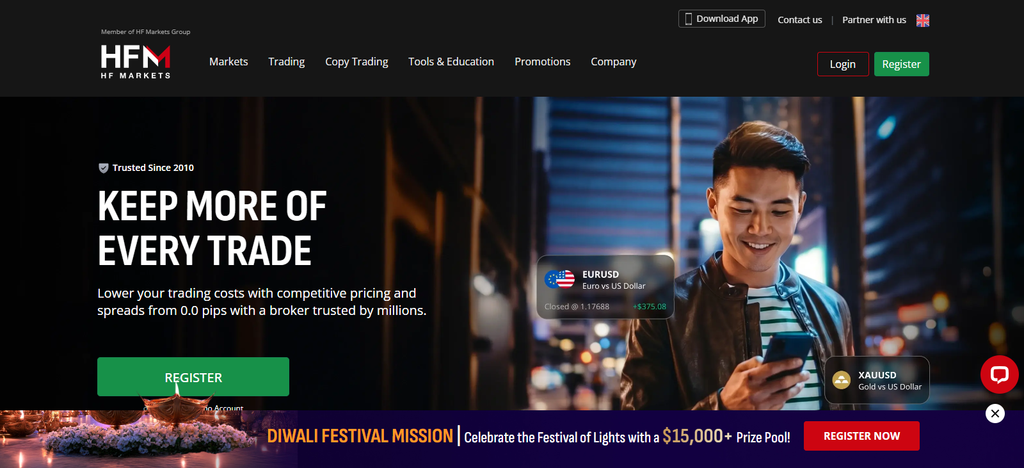
The platforms we develop are MT4, MT5, the HFM app and web based trading tools. Payment expansion includes cards, bank wires, e-wallets and local payment methods. The upgrades to technology are intended to improve execution speed, mobile capabilities, analytics and automated trading. A key regional growth channel is affiliate and introducing-broker and partnership programs.
Main Features
- Trading Forex and CFDs on a range of asset classes.
- Trading platforms available MT4 and MT5.
- Different account types and trading conditions.
- Support for multiple languages and international client services.
- Educational material, market analysis, and trading tools.
Risks
- Leverage can amplify losses and margin pressure.
- Spreads and trading fees depend on the instrument and account.
- Regional bodies may provide different levels of protection and conditions.
- Slippage or forced closure of a position may occur in volatile markets.
8. AvaTrade
AvaTrade’s regulated business is spread across Europe, Australia, Asia, Africa, the Middle East and offshore markets, contributing to its international growth. It has licenses from the Central Bank of Ireland, ASIC, the FSCA in South Africa, Japan’s FSA and other regulators, allowing it to operate under different compliance regimes. The broker offers forex, CFDs, stocks, indices, commodities, ETFs, bonds and crypto currencies.
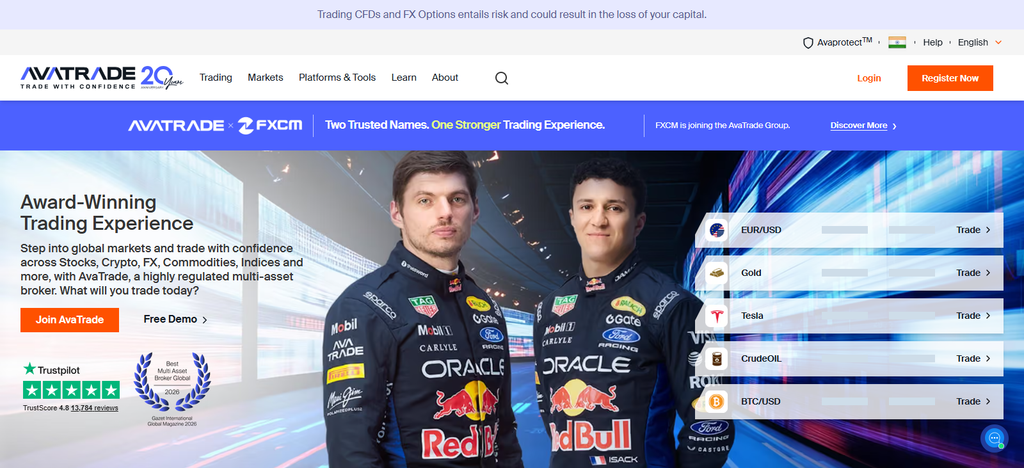
We have MT4, MT5, AvaTradeGO, AvaOptions, DupliTrade and ZuluTrade platforms and we offer manual and copy trading. Payment expansion includes cards, bank transfer, e-wallets and localized methods. Technology investment is focused on mobile experience, automated trading, education and risk-management tools with affiliate and partnership networks fueling its international reach.
Features
- Trading on financial markets through CFDs and Forex.
- Proprietary platform and choice of MT4, MT5.
- AvaTradeGO mobile trading platform.
- Trading tools, educational resources and market analysis.
- Local regulatory institutions supporting cross-border operations.
Main Risks
- CFDs carry a high level of risk due to leveraged exposure.
- The platforms available and the products available on them may differ from region to region.
- Longer-term positions may be affected by overnight holding costs.
- Fast market movements may lead to slippage or unexpected losses.
9. FP Markets
FP Markets is expanding globally through regulated entities in Australia, Cyprus, South Africa, Kenya, Mauritius and Seychelles, combining established-market oversight with access to high-growth regions. It holds regulatory licenses including the ASIC, CySEC, FSCA, CMA Kenya, and the Mauritius FSC. They offer trading in forex, metals, commodities, indices, shares, crypto and CFDs. They offer ECN-style pricing and multiple account types.
We develop for platforms like MT4, MT5, cTrader, IRESS and mobile apps. Payment expansion covers cards, bank transfers, e-wallets and local payment methods. Technology upgrades focus on speed of execution, aggregation of liquidity, VPS hosting and API connectivity. It is distributed globally with the support of partnerships with liquidity providers, introducing brokers and technology firms.
Main Features
- Forex and CFD access across a range of asset classes.
- MT4, MT5, cTrader and TradingView options where supported.
- Pricing of Standard and Raw accounts.
- Trading tools, analytics and automated trading compatibility.
- International client services with regional operation.
Main Risks
- Some account types may have commission charges.
Leverage can significantly increase exposure to trading. - Execution prices can vary during periods of market volatility.
- The contracting entity sets the regulatory protections and account conditions.
10. MultiBank Group’s
MultiBank Group’s global expansion strategy is based on the multi-entity structure which serves clients across Asia, Middle East, Europe, Latin America and offshore. It holds regulatory licenses with entities such as Australia’s ASIC, the Cayman Islands’ CIMA and other regional authorities, which supports a wide international client base.
The group offers forex, metals, commodities, indices, shares, cryptocurrencies and CFDs on MT4, MT5 and its MultiBank-Plus platform. We provide retail brokerage, institutional liquidity and prime-of-prime trading services.
The payment expansion includes cards, bank transfers, e-wallets and select local methods. Technology upgrades are centered on execution infrastructure, mobile trading and institutional connectivity, while introducing-broker and white label partnerships continue to be key to growth.
Main Features
- Forex and CFD trading on multiple markets.
- MT4 and MT5 platform availability.
- Many account types and trading conditions.
- International operations and local brokerage firms.
- Digital trade infrastructure and access to multi-assets.
Key Risks
- Leverage increases the risk of large losses.
- Trading costs are affected by spread, commissions and overnight fees.
- Trade conditions may vary between regional organizations.
- Regulatory protection varies based on the registered entity and the jurisdiction of the account.
Conclusion
Forex brokers are expanding globally to increase their global footprint, making trading more accessible and serving clients in a range of financial markets. Brokers including Exness, IC Markets, Pepperstone, XM, IG, OANDA, HFM, AvaTrade, FP Markets and MultiBank Group are looking to expand their trading services through platform development, greater market access, local operations, payment options and customer support.
But there are still important things to consider like regulatory differences, trading costs, leverage risks and regional restrictions. Before you select a suitable international trading provider, compare each broker’s licensing, available instruments, platform features, fees, and regional services.
FAQ
What does global expansion mean for forex brokers?
Global expansion means entering new international markets, obtaining regional regulatory licenses, improving trading platforms, expanding payment options, and providing localized services to traders worldwide.
Why are forex brokers expanding their global trading services?
Forex brokers are expanding to reach new customers, increase revenue opportunities, strengthen market competitiveness, meet growing trading demand, and improve accessibility across international financial markets.
Which forex brokers are expanding their global trading services?
Notable internationally active brokers include Exness, IC Markets, Pepperstone, XM, IG, OANDA, HFM, AvaTrade, FP Markets, and MultiBank Group.
How does global expansion benefit forex traders?
It can provide traders with broader market access, localized payment methods, multilingual support, improved trading technology, additional financial instruments, and more accessible customer services.
Why are regulatory licenses important for international forex brokers?
Regulatory licenses establish the legal framework under which brokers operate, define client protection requirements, and help traders identify the entity responsible for their accounts.