
As financial markets evolve, today’s traders are seeking brokers that offer more than just currency pairs. With forex brokers offering multi-asset trading accounts, you can discover markets like stocks, indices, commodities, ETFs and cryptocurrencies from a single platform. In this article, I will discuss forex brokers that offer multi-asset trading accounts, focusing on their key features, available instruments, trading platforms, account options, and limitations, so that traders can compare their options.
Why Do Traders Choose Forex Brokers With Multi-Asset Accounts?
Access to Diverse Markets: Traders have the ability to access forex, stocks, indices, commodities, ETFs, and cryptocurrencies from a single brokerage account, making it easier to explore various financial markets.
Diverse Portfolio – Multi-asset accounts allow traders to diversify their investments across different asset classes, reducing dependence on a single market while offering more flexible portfolio management options.
Simple Account Management: Traders can manage multiple financial instruments, manage positions, and review account performance all in one place instead of having to manage many brokerage accounts.

Variety of Trading Strategies: Exposure to various asset classes enables traders to pursue different strategies including short-term trading, long-term investing, hedging, and market-specific strategies based on their objectives.
Exposure to Global Markets: Multi-asset brokers offer qualified traders access to international financial instruments, giving them the opportunity to explore opportunities across different regions, markets, and economic sectors.
Advanced Trading Tools: Brokers usually offer charting software, technical indicators, market research, price alerts and analytical tools to help traders assess various asset classes effectively.
Multiple Investment Opportunities: Traders can trade different markets based on economic conditions, market trends and asset performance without the need to open accounts with different brokers.
Cost and Time Efficiency: Having more than one asset class in a brokerage account can help with account management, reduce operational complexity and make it easier to keep track of trading activities.
How to Choose the Best Forex Broker With a Multi-Asset Account?
Check the Asset Classes You Can Trade: Pick a broker that offers the instruments you like to trade, such as forex, stocks, indices, commodities, ETFs and cryptocurrencies, so you can access multiple financial markets all from the same account.
Check Regulatory Status: Choose a broker that is well-regulated with recognized financial licenses, transparent operating policies, client fund protection measures and clear regulatory information for your country.
Compare Trading Costs: Look at spreads, commissions, overnight financing charges, currency conversion fees, and other transaction costs to compare the total cost of trading across different asset classes.
Evaluate Trading Platforms: Find platforms like MT4, MT5, cTrader, or proprietary applications that provide reliable execution, advanced charting tools, technical indicators, and easy-to-use account management features.
Compare Account Types: Look at the different types of accounts provided, minimum deposit amounts, execution models, spread structures, and commission policies to find the conditions that best suit your trading style and experience.
Understand Leverage Options: Review the leverage limits, margin requirements and restrictions on specific assets, as different financial instruments can have varying leverage conditions that affect potential gains and losses.
Check Deposit and Withdrawal Options: Select brokers that offer convenient funding methods, straightforward withdrawal policies, reasonable processing times, and clear payment fees to manage your trading capital.
Evaluate Customer Support and Education: Think of brokers as providing customer service, educational material, market research, tutorials and trading tools to help you make informed decisions in the financial markets.
Key Comparison Table: 10 Multi-Asset Forex Brokers
| Forex Broker | Key Asset Classes | Key Trading Features |
|---|---|---|
| IG | Forex, stocks, indices, commodities, ETFs, cryptocurrencies | Extensive global market coverage and multiple trading platforms |
| Saxo | Forex, stocks, ETFs, bonds, futures, options, CFDs | Direct investing and multi-asset trading |
| Pepperstone | Forex, shares, indices, commodities, cryptocurrencies | Multiple platforms and CFD market access |
| Exness | Forex, stocks, indices, metals, energies, cryptocurrencies | Multi-asset CFD trading and flexible account options |
| Axi | Forex, shares, indices, commodities, cryptocurrencies | MT4 trading and multi-market CFD access |
| CMC Markets | Forex, shares, indices, commodities, ETFs, cryptocurrencies | Broad instrument selection and advanced charting |
| XTB | Forex, stocks, ETFs, indices, commodities, cryptocurrencies | xStation platform and investment options |
| eToro | Forex, stocks, ETFs, commodities, cryptocurrencies | Multi-asset investing and social trading features |
| Plus500 | Forex, shares, indices, commodities, ETFs, cryptocurrencies | CFD-focused trading through a proprietary platform |
| XM | Forex, shares, indices, commodities, metals | MT4 and MT5 trading with multiple CFD markets |
1. IG
IG is a long established global multi-asset broker, well known for CFDs, spread betting and access to a broad range of institutional-style markets. It offers forex, indices, shares, ETFs, ETCs, commodities, metals, energies, bonds, interest rates, options and futures, with spread betting available on eligible markets.
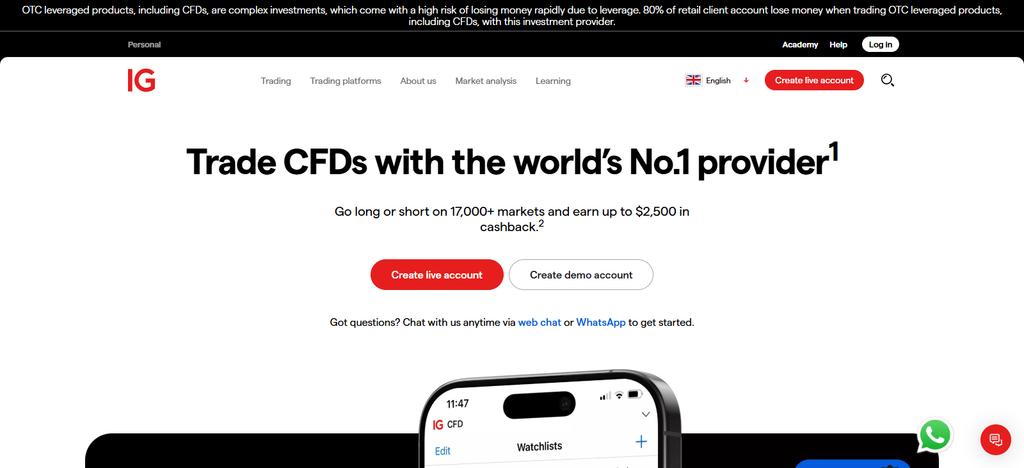
Account types include spread betting, share dealing, CFD and professional accounts. IG’s web and mobile platforms are available to traders, along with integrations for MetaTrader 4, ProRealtime and TradingView. Retail leverage is typically capped at 1:30 for major FX, 1:20 for major indices, 1:10 for commodities and 1:5 for shares, although professional or offshore clients can sometimes access higher limits.
IG is regulated by major authorities including the UK FCA, ASIC, MAS and JFSA, with client money segregated and robust risk controls in place. Costs for CFDs are based on spreads, commissions on share CFDs and financing charges on overnight positions.
Key Highlights
- Lets you access forex, shares, indices, commodities, ETFs and other financial markets.
- Offers a variety of trading platforms including its own platform, MT4 and TradingView.
- Provides sophisticated charting, technical analysis and market research tools.
- allows multiple ways of trading including CFD trading and eligible investment products.
- Provides risk-management tools, such as stop-loss and guarantyd stop features, where available.
Disadvantages
- Transaction costs vary considerably between different instruments and account types.
- Some products and investment services are not available in all countries.
- Overnight financing charges may apply to CFD positions.
- More advanced platform features and tools may require additional learning.
2. Saxo
Saxo is a premium multi-asset broker and bank for serious investors who want direct market access and derivatives. It offers stocks, ETFs, bonds, mutual funds, forex, commodities, futures, options, CFDs, and crypto-related products, with a catalog of over 70,000 instruments in many regions.
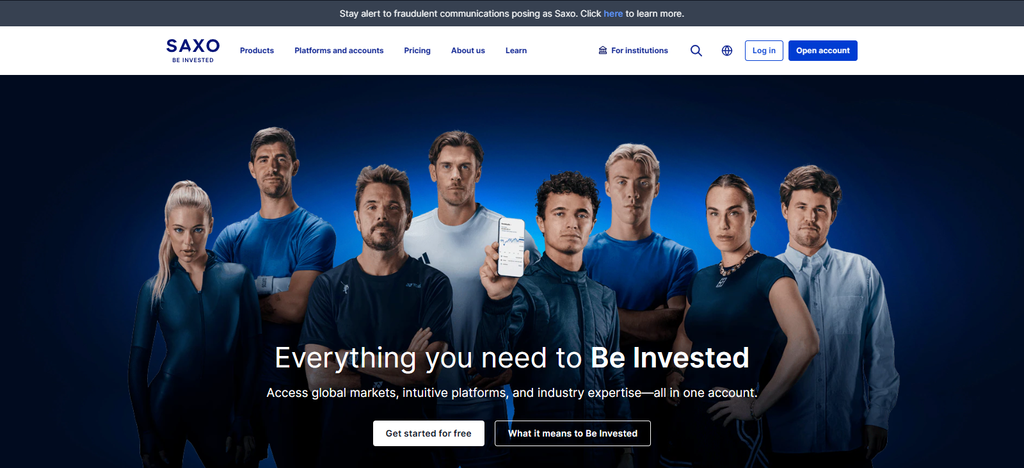
Accounts are typically standard investment/trading accounts and professional-client relationships, subject to product availability based on residency and regulation. Its investor platform is SaxoInvestor, and SaxoTraderGO/PRO is for active traders and both can be accessed via web, desktop and mobile. Leverage for typical retail clients is 1:30 for major FX, 1:20 for gold and major indices, 1:10 for other commodities and 1:5 for equities, with higher professional-client leverage available.
Saxo is regulated by a number of major regulators such as the FCA, MAS, FINMA, JFSA and DFSA. Costs include spreads, commissions on exchange traded products, custody/currency fees and where applicable overnight financing. # What products can I trade with a Saxo account?
Characteristics
- Access to forex, stocks, ETFs, bonds, futures, options & CFDs.
- Provides proprietary SaxoTraderGO and SaxoTraderPRO trading platforms.
- Allows direct investment in eligible securities and the trading of derivatives.
- Offers sophisticated research, portfolio management and analytical tools.
- Single account access to various international financial markets.
Limitations
- Higher deposits or account balances may be required for some account tiers.
- Commissions and other charges for trading vary according to market and instrument.
- The platform’s advanced features might be hard for a beginner to use.
- Certain investment products and markets are subject to regional restrictions.
3. Pepperstone Broker
Pepperstone is a specialist forex and CFD broker, focusing on low cost, fast execution for active traders. It provides CFDs on forex, metals, indices, shares, commodities, energies and cryptocurrency, although the full offering depends on the client’s entity and location. It offers Standard and Razor accounts, Razor using tight spreads plus commission, Standard embedding costs in the spread.
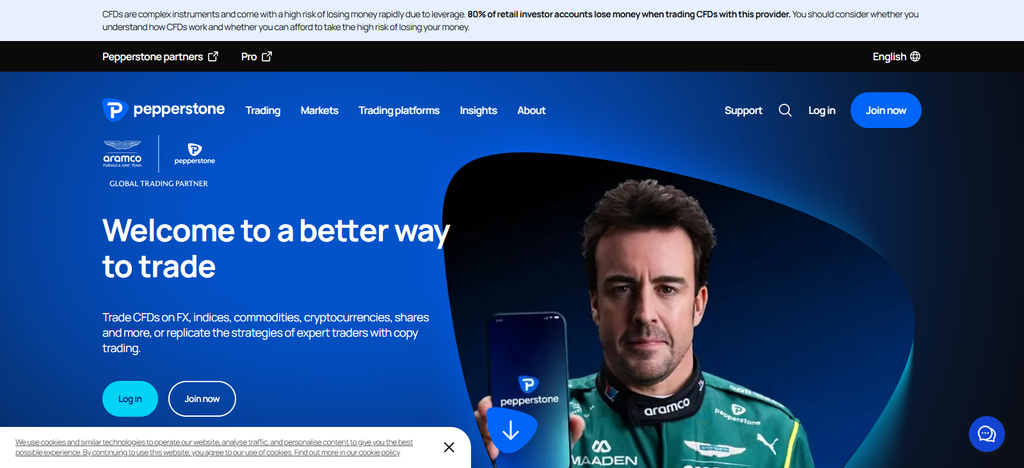
Traders can trade on MetaTrader 4, MetaTrader 5, TradingView, cTrader and Pepperstone’s proprietary platforms. Major global FX pairs, equity indices, commodities and selected share CFD’s are included in market access.
The retail leverage is dependent on the regulator. The maximum retail leverage offered via its Seychelles entity is up to 1:200 for FX, 1:200 for major indices, 1:20 for shares and 1:20 for BTC/USD. Professional clients can get up to 1:500. Pepperstone is regulated by FCA, ASIC, CySEC, DFSA, CMA, BaFin and SCB. It also has segregated clients funds.
Main Features
- Offers CFDs on forex, shares, indices, commodities and cryptocurrency.
- Offers MT4, MT5, cTrader and TradingView platforms.
- Offers Standard and Razor account types with different pricing.
- Supports automated trading and works with Expert Advisors.
- Provides advanced charting, technical indicators and trading tools.
Constraints
- The majority of multi-assets are traded as CFDs, rather than through direct ownership.
- Commissions on Razor accounts are charged in addition to spreads.
- Eligible leveraged positions are subject to overnight financing costs.
- Products availability and leverage depends on the client’s regulatory entity.
4. Exness
Exness is a forex-focused broker with flexible leverage, various account types and trading on MetaTrader. It provides forex, metals, energies, indices, commodities, selected stocks and cryptocurrency CFDs, but the instrument list and leverage vary significantly by entity and region.
Account types are: Standard, Standard Cent, Raw Spread, Zero and Pro. This gives beginners and heavy traders the choice of spread only or raw-spread-plus-commission pricing. Available platforms include MetaTrader 4, MetaTrader 5, Exness Trade app, Exness Terminal and web-based MetaTrader terminals.

FX and metals have the best market access, although equity and ETF coverage is less extensive than multi-asset brokers. Exness is regulated by CySEC, FCA, FSCA, FSA of Seychelles, CBCS, BVI FSC, FSC of Mauritius, CMA Kenya and JSC. Leverage can be high – up to 1:2,000 or higher in certain offshore conditions – but retail leverage in tightly regulated jurisdictions is much lower.
Main Features
- Access to forex, stocks, indices, metals and energy markets via CFD.
- It works with MT4, MT5, and its own Exness Terminal.
- Provides Standard, Pro, Raw Spread and Zero accounts, depending on availability.
- Flexible leverage conditions based on eligibility and regulatory restrictions.
- Provides trading calculators, analytical tools and account management features.
Limitations
- Most of the instruments available offer derivative exposure and not ownership of the asset.
- Certain types of accounts pay commissions.
- Restrictions on leverage vary by jurisdiction and client classification.
- Not all products and services are available under certain regulators.
5. Axii
Axi is a forex and CFD broker built around simple pricing, No Dealing Desk execution and MetaTrader trading. It has over 290 CFDs on forex, indices, global shares, commodities and cryptocurrencies, with the deepest coverage on currency pairs. Account options usually consist of standard and pro style accounts: Standard has spread pricing.
Pro has tighter spreads plus a separate commission charge. MetaTrader 4, MetaTrader 5, Mobile and web access is available for trading. “Axi’s market access is mainly via OTC derivatives, not direct exchange-traded shares or bonds, making it best for FX and CFD traders.
FCA, CySEC and ASIC jurisdictions: Retail clients are limited to 1:30 leverage on major FX pairs, 1:20 on minor FX pairs and gold, 1:10 on other commodities and indices, 1:5 on shares and 1:2 on crypto CFDs. Offshore: Up to 1:1,000. Axi is regulated by FCA, CySEC and ASIC, and each has different client fund protections
Main Features
- Provides CFD trading on a variety of asset classes such as forex, shares, indices, commodities and cryptocurrencies.
- Support for MetaTrader 4 and other trading tools and integrations.
- Offers Standard and Pro account options with varying pricing.
- Supports automated trading using Expert Advisors and algorithmic strategies.
- Provides market analysis, trading education and account management resources.
Shortcomings
- Limited trading platform options for those looking beyond MT4.
- Most instruments available are offered as CFDs.
- The spreads and trading commissions depend on the type of account you choose.
- Market availability and account conditions differ by regulatory entity.
6. CMC Markets
CMC Markets is a well-established multi-asset CFD and spread betting broker with good market coverage and strong charting tools. It offers forex, indices, shares, ETFs, commodities, treasuries, bonds, cryptocurrencies, share baskets and futures related products, giving access to tens of thousands of instruments depending on jurisdiction.
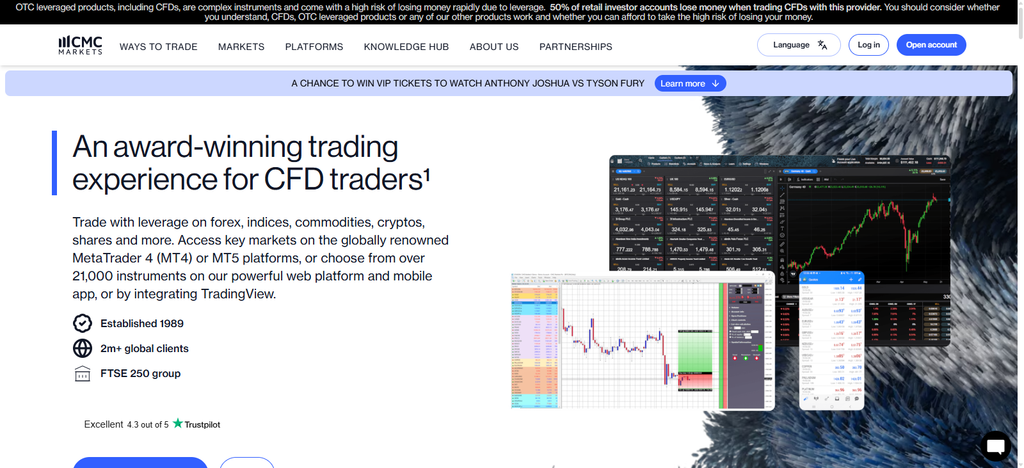
Account types include a standard CFD Trading account, FX Active account, MT4 account and corporate/professional arrangements. A proprietary Next Generation platform with advanced charting, pattern recognition and risk-management tools is a key strength. MetaTrader 4 is also an option.
Market access includes global equities, major indices, FX, commodities and sovereign debt products. Maximum retail leverage is 30:1 for major FX, 20:1 for major indices, 10:1 for commodities, 5:1 for shares and 2:1 for crypto, with eligible professional clients able to access leverage of up to 500:1. We are regulated by the FCA, ASIC, BaFin, CIRO, MAS and FMA, we segregate client funds and provide negative-balance protection where applicable.
Salient Features
- Offers trading products on Forex, Shares, Indices, Commodities, ETFs and Cryptocurrency.
- Offers its proprietary Next Generation trading platform.
- Supports MT4 and TradingView integration where applicable.
- Provides advanced charting, technical indicators and market analysis tools.
- Offers risk management tools such as guarantyd stop-loss orders on eligible instruments.
Limitations
- Certain advanced risk management tools will be subject to an additional fee.
- Trading costs are dependent on the instrument and account you select.
- CFD trading means there are overnight financing expenses on any applicable positions.
- Not all regional entities provide direct investment products.
7. XTB
XTB is a European regulated broker offering commission-free real stocks and ETFs and CFD trading, appealing to both investors and active traders. Its asset classes include real shares, ETFs, forex, indices, commodities, cryptocurrencies and equity CFDs. Real shares and ETFs are unleveraged, CFDs can be leveraged.
It mainly provides a Standard account, with no commission on CFD trading but a slightly higher spread. For actual stock and ETF investments, there is 0% commission for up to €100,000 nominal monthly turnover, then 0.2%, plus a 0.5% FX conversion fee for trades in a currency other than the base currency. Trading is possible through xStation 5, xStation mobile and MetaTrader 4 in selected markets.
The market access focus is on European and global equities, ETFs, major FX pairs, indices and commodities. Retail leverage is capped at EU/UK-style limits: 1:30 for major FX, 1:20 for gold and major indices, 1:10 for other commodities, 1:5 for share CFDs and 1:2 for crypto CFDs. XTB is regulated by FCA, CySEC and IFSC.
Features**
1.access to forex, stocks, ETFs, indices and commodity markets.
2. Offers its own trading platform xStation 5.
3. Supports CFD trading and eligible real stock and ETF investments.
4. Offers advanced charting, market sentiment and analytical tools.
5. Provides educational resources, market insights, and trading calculators.
Limitations
- Does not offer MT4 or MT5 platform support.
- Real stock and ETF availability depends on the client’s country.
- Some markets are only available via CFDs.
- Transaction costs may be affected by currency conversion or other charges.
8. eToro
eToro is a social-investing and multi-asset platform that is best known for its copy trading, community features, and easy-to-use interface. It offers stocks, ETFs, cryptocurrencies, forex, indices, commodities, CFDs and options and futures in eligible regions. These include real money investment accounts, demo accounts and professional client status where eligible. eToro also offers CopyTrader and Popular Investor features.
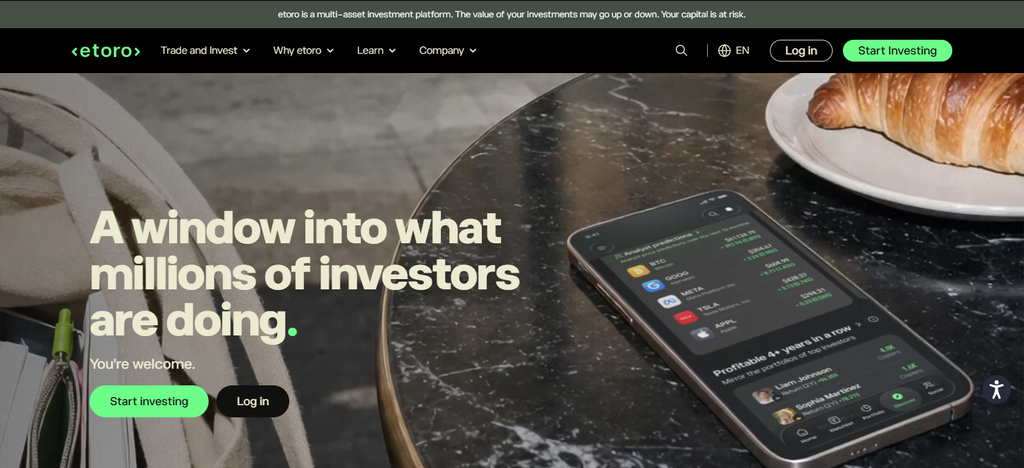
Instead of MetaTrader or cTrader, it has its own web and mobile platform that supports manual trading, copy trading, portfolios and social feeds. Market Access is wide but more investment than execution, with thousands of tradeable symbols. Major regulators limit retail leverage to: 1:30 on major FX pairs, 1:20 on gold and major indices, 1:10 on other commodities, 1:5 on ETFs and single stock CFDs and 1:2 on crypto CFDs.
Eligible professional clients can request to be classified as a professional client, where higher limits may apply. eToro is regulated by CySEC, the FCA, ASIC and other local regulators. Fees include spreads, withdrawal and conversion fees, and overnight financing on leveraged positions.
Highlights
- Provides you with access to stocks, ETFs, forex, commodities and cryptocurrencies.
- CopyTrader functionality to follow the strategies of other investors.
- Offers Smart Portfolios to access grouped investment opportunities.
- Supports real asset investments and CFD products, where available.
- Provides a proprietary trading platform for both web and mobile.
Limitations
- No support for cTrader, MT4, MT5.
- Copy trading does not guaranty profits or successful investment results.
- Some leveraged positions and asset classes are only available to be traded through CFDs.
- Country-specific restrictions on cryptocurrency and other investment services.
9. Plus500
Plus500 is a CFD-centric broker with a simplified platform for traders looking for easy access to leveraged derivatives. Its main asset classes are forex, indices, commodities, shares, ETFs, options CFDs and cryptocurrencies, typically without physically owning the underlying assets. It offers one CFD trading account as standard, with professional client status available to qualifying traders, while a separate service, Plus500 Invest, provides real-share dealing in select jurisdictions.
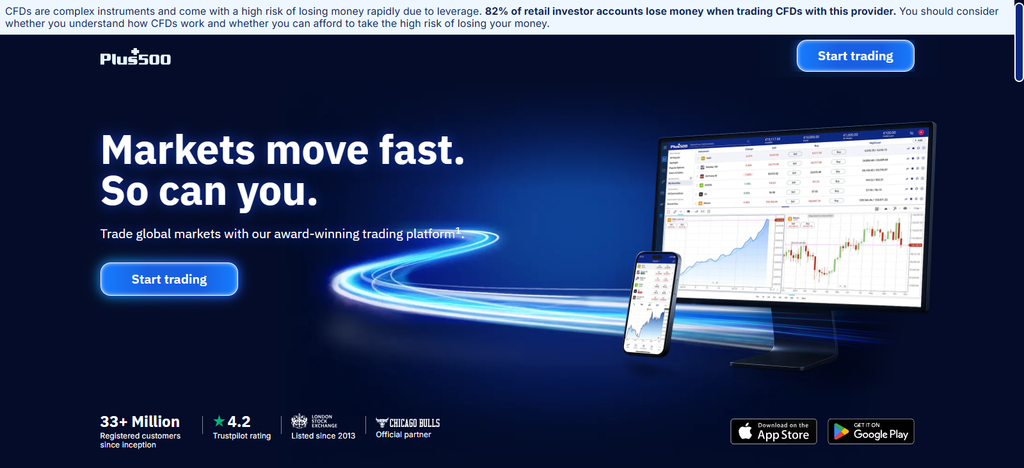
The proprietary Plus500 web, desktop and mobile platform offers risk-management tools, price alerts and guarantyd stop-loss options where offered. Markets are wide open offering access to global indices, FX, commodities and share CFDs and a dedicated platform for futures.
The level of retail leverage varies depending on the jurisdiction. Typically, it is 1:30 for major FX, 1:20 for major indices and gold, 1:10 for commodities, 1:5 for shares and ETFs, and 1:2 for crypto CFDs. Plus500 is regulated by FCA, CySEC, ASIC, MAS, FSCA, DFSA, JFSA and numerous other authorities
Main Features
- Trade CFDs on forex, shares, indices, commodities, ETFs and cryptocurrencies.
- Provides a proprietary web-based and mobile trading platform.
- Offers an economic calendar and tools for market analysis.
- Supports risk management orders including stop-loss and guarantyd stop orders where these are available.
- Provides a demo account to test out trading strategies with no risk to real money.
Restrictions
- Mainly involves CFD trading rather than actual ownership of the underlying asset.
- Not compatible with MT4, MT5 or cTrader.
- Leveraged positions incur overnight funding fees.
- Guarantyd stop orders may incur additional fees and/or restrictions.
10. XM
XM is a forex and CFD broker for retail traders with flexible leverage, multiple account levels and MetaTrader-focused trading. Asset classes include forex, metals, energies, indices, commodities, share CFDs and cryptocurrency CFDs. Availability of crypto and shares differs per regulator. There are Micro, Standard, XM Ultra Low and Shares accounts available.
Micro accounts are good for smaller position sizes and Ultra Low accounts have tighter spreads. XM offers trading via MetaTrader 4, MetaTrader 5, its web trader and mobile apps. Equity and ETF coverage is more limited than at multi-asset brokers, but FX and metals have the strongest market access.
Depending on the entity, instrument and account equity, leverage can be as high as 1:1000 via XM Global and as low as 1:30 in the EU. XM is regulated by CySEC, ASIC, DFSA and IFSC. Client protection and the leverage offered depends on the jurisdiction. Costs are mainly spread-based with commissions on selected account types and overnight swap charges on leveraged positions.
Key Features
- Offers forex, stock CFDs, indices, commodities, precious metals and energy markets.
- Compatible with trading platforms MetaTrader 4 and MetaTrader 5.
- Offers various account types with varying spreads and commission arrangements.
- Provides educational resources, webinars and market research.
- Supports automated trading with compatible MetaTrader platforms and Expert Advisors.
Limitations
- Multi asset instruments can be traded via CFDs.
- Direct stock and ETF ownership is not typically part of its CFD accounts.
- Instruments and account conditions available depend on regulatory entity.
- There could be commissions or wider spreads depending on the pricing structure of certain account types.
Conclusion
A multi-asset trading account with the right forex broker, allows traders to explore different financial markets on one platform. IG, Saxo, Pepperstone, Exness, Axi, CMC Markets, XTB, eToro, Plus500 and XM are all brokers that give traders access to a range of instruments, trading tools and account options. However, their asset availability, fees, leverage, and platform features are different. Before finalizing on a broker, traders should compare their regulatory status, trading costs, account flexibility and risk management facilities. A well regulated broker, with transparent conditions and appropriate market access, can help to make trading decisions that are more informed and flexible.
FAQ
What is a multi-asset forex trading account?
A multi-asset forex trading account allows traders to access different financial instruments, such as forex, stocks, indices, commodities, ETFs, and cryptocurrencies through one brokerage platform.
Which forex brokers offer multi-asset trading accounts?
Popular brokers include IG, Saxo, Pepperstone, Exness, Axi, CMC Markets, XTB, eToro, Plus500, and XM. Their available instruments vary by country and regulatory entity.
What assets can traders access through multi-asset accounts?
Depending on the broker, traders can access currency pairs, stocks, indices, commodities, precious metals, ETFs, bonds, futures, options, and cryptocurrency-related products.
Are multi-asset trading accounts suitable for beginners?
Yes, they can suit beginners because they provide access to different markets through one account. However, beginners should understand trading costs, leverage, and market risks before investing.
What is the difference between multi-asset investing and CFD trading?
Multi-asset investing may involve direct ownership of financial assets, while CFD trading provides exposure to price movements without owning the underlying asset.