The global forex market continues to be attractive for traders looking for flexible trading opportunities, advanced platforms and access to international currency pairs. With increased competition, a number of forex brokers are catching the eyes of international traders with different account types, pricing models, trading tools and market access.
But selecting the right broker is about more than comparing spreads or platforms. Here, I will talk about Forex Brokers Gaining Attention Among International Traders, their key features, possible risks, and important considerations for traders before deciding.
Why Are Forex Brokers Gaining Attention Among International Traders?
Global Market Access: Forex brokers globally offer traders access to major, minor and exotic currency pairs, enabling them to explore opportunities in various global foreign exchange markets.
Multiple Account Types: Brokers offer standard, raw spread, zero and commission-based accounts which allow traders to choose pricing structures and trading conditions that are more suitable for their individual strategies.

Competitive Trading Costs: Brokers offer different spreads and commissions, allowing international traders to compare transaction costs and choose platforms based on their trading frequency.
Advanced Trading Platforms: Traders enjoy access to MT4, MT5, cTrader, TradingView, and proprietary platforms for charting, technical indicators, automated strategies, and order management.
Regulatory Oversight: Established brokers operate through regulated entities in various jurisdictions, providing different degrees of oversight, transparency, and client protection depending on the trader’s location.
Leverage Flexibility: International brokers offer different leverage limits based on the eligibility of the account and regulatory requirements, enabling traders to adjust their market exposure while managing potential financial risks.
Modern Trading Technology: Today’s brokerage infrastructure offers electronic execution, real-time pricing, analytical tools and mobile access, giving traders the ability to track currency markets and manage their positions effectively.
Research and Educational Resources: To assist international traders in understanding market movements and improving decision-making, many forex brokers offer market analysis, economic calendars, webinars, trading guides, and educational materials.
Key Factors to Consider When Choosing an International Forex Broker
Regulatory Licences: Verify that the broker is regulated by recognized financial regulators and check which legal entity serves your country to understand which protections and oversight are available to you.
Trading Costs: Take a look at spreads, commissions, overnight financing, currency conversion fees and withdrawal fees to get a sense of the overall cost of trading between different account types.
Currency Pairs on Offer: Look at the list of major, minor and exotic currency pairs that the broker offers to make sure that you will have enough market access for the trading strategies and currencies that you prefer.
Types of Account: Compare Standard, Raw Spread, Zero and commission-based accounts to find the pricing structure, minimum deposit and trading conditions that are ideal for your level of experience.
Trading Platforms: Look for MT4, MT5, cTrader, TradingView or proprietary platform support; make a note of the charting tools, execution features, automated trading and user-friendliness.
Order Execution Quality: Examine execution speed, slippage, requotes, liquidity arrangements, order processing to see how efficiently the broker handles trades under varying market conditions.
Deposit and Withdrawal Payment Methods: Check for available payment methods, processing times, transaction fees, withdrawal requirements and supported currencies to ensure easy access to your trading funds.
Availability and Support Globally: Verify that the broker accepts clients from your country and that it has adequate customer support and operates through a properly regulated local or international entity.
Key Points
| Forex Broker | Founded | Key Point | Main Trading Appeal |
|---|---|---|---|
| IG | 1974 | Established international broker with extensive market access and multiple regulatory authorisations. | Advanced platforms, research, forex and CFD trading. |
| Interactive Brokers | 1978 | Provides access to international financial markets through a multi-asset brokerage platform. | Professional trading tools, currency trading and global market access. |
| Saxo | 1992 | Danish investment bank offering forex and multi-asset trading services. | Advanced platforms, extensive instruments and professional tools. |
| FOREX.com | 1999 | Established forex-focused brand operating through multiple regulated entities. | Currency trading, market research and trading technology. |
| CMC Markets | 1989 | International trading provider known for its proprietary trading platform and broad market selection. | Advanced charting, forex and CFD markets. |
| Pepperstone | 2010 | International forex and CFD broker offering multiple trading platforms. | Competitive pricing, MT4, MT5 and cTrader support. |
| IC Markets | 2007 | Forex and CFD broker known for its execution-focused trading environment. | Raw spread accounts, algorithmic trading and platform flexibility. |
| Exness | 2008 | International broker attracting attention through its trading infrastructure and account options. | Flexible account types, forex trading and trading technology. |
| XM | 2009 | International forex and CFD broker offering different account options and educational resources. | Multiple account choices, MetaTrader platforms and trader education. |
| OANDA | 1996 | Established forex provider with international operations and currency market expertise. | Forex pricing, research, analytical tools and platform options. |
1. IG.com.
Broker Overview: IG is one of the world’s oldest online trading brokers, founded in the United Kingdom in 1974. It is regulated by major authorities like the FCA, ASIC, and MAS, and traders can have a high level of trust and security. IG offers access to forex, stocks, indices, commodities, cryptocurrencies, options and CFDs on thousands of markets.
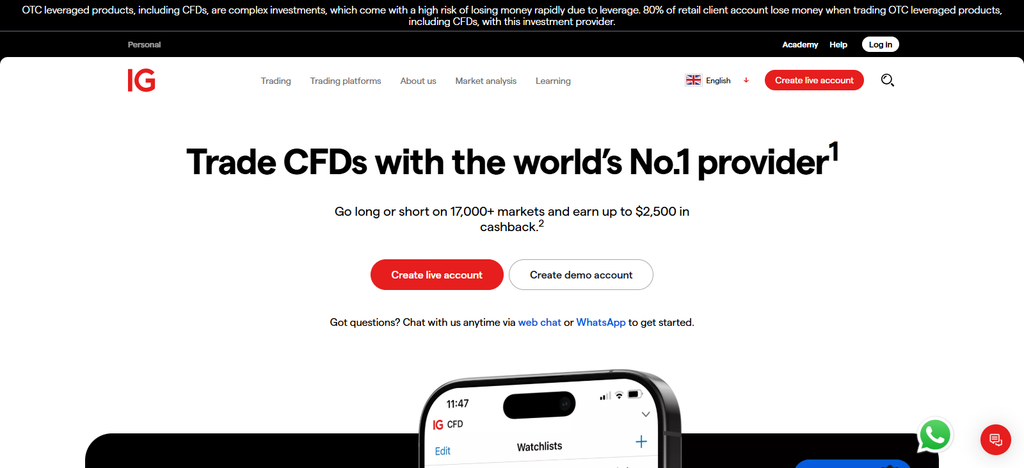
Traders have the option of standard retail or professional accounts. Trading costs are competitive with forex spreads typically starting from around 0.6 pips. The broker offers its own trading platform, MetaTrader 4, TradingView integration and professional level tools.
Top Features
- Access to a wide range of forex pairs and the global financial markets.
- Offers proprietary web and mobile trading platforms.
- Compatible with MetaTrader 4 and ProRealTime in eligible countries.
- Provides market research, trading signals, and educational tools.
- Operates through a number of regulated entities in international jurisdictions.
Major Risks
- Product availability and terms of account vary by country.
- Cost of spreading can increase in volatile market conditions.
- Substantial financial losses can arise from CFDs and leveraged positions.
- Some advanced platform features may need extra learning.
2. Interactive Brokers
Broker Overview Interactive Brokers (IBKR) is a top-tier global brokerage firm founded in 1978 by Thomas Peterffy. The company is regulated by top-tier authorities such as the SEC, FINRA, FCA and ASIC. It has one of the widest selections of tradable assets including stocks, ETFs, options, futures, forex, bonds, funds and cryptocurrencies.
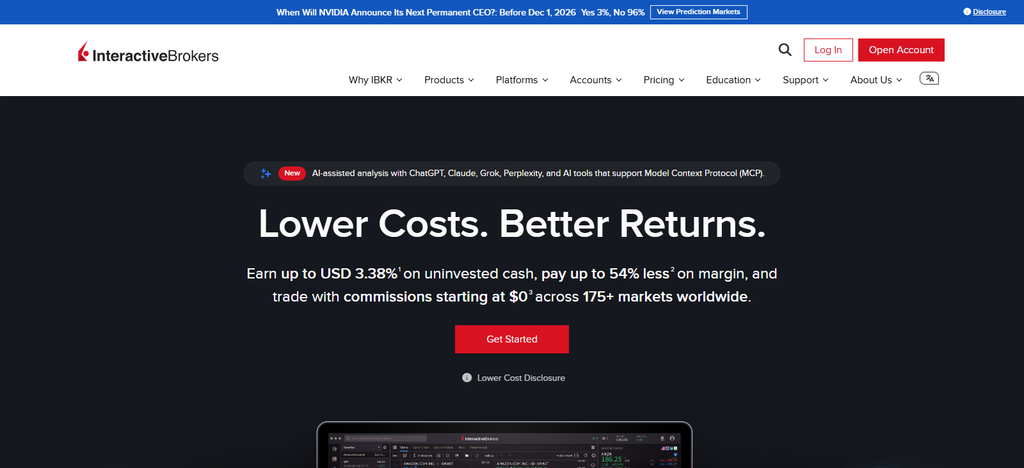
Account types include individual, joint, retirement, institutional and advisor accounts. IBKR is known for its low commissions and very competitive margin rates. Clients can access markets through Trader Workstation (TWS), IBKR Desktop, the Client Portal and mobile applications for retail and professional users.
Main Features
- It provides access to international currency markets and multiple asset classes.
- Offers competitive commission-based pricing on forex.
- Provides support for Trader Workstation, IBKR Desktop and mobile trading.
- Offers professional analytical tools and advanced order types.
- Offers institutional execution infrastructure and API connectivity.
Key Risk
Advanced interface can be a challenge for beginners.
2. Some residents are not allowed to trade Forex due to regulatory restrictions.
3. Make sure you calculate commissions and currency conversion costs.
4. Complex order tools can increase operational errors.
3. Saxo
Saxo Bank was founded in 1992 in Denmark and is a fully licensed bank regulated by the Danish Financial Supervisory Authority (FSA). The broker provides access to forex, stocks, ETFs, bonds, options, futures, mutual funds and CFDs. Saxo offers account types for retail and institutional/professional investors.
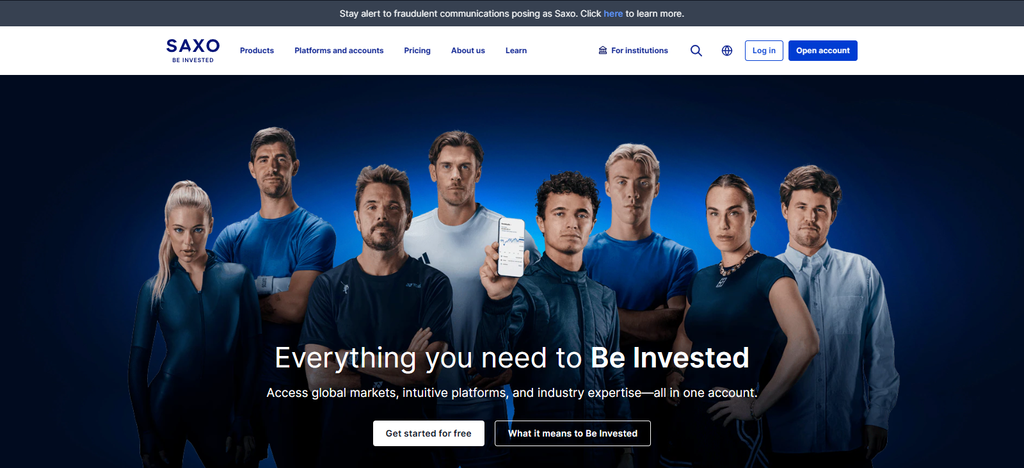
Competitive commission structures and spreads on trading costs per asset class. Traders love the award-winning SaxoTraderGO and SaxoTraderPRO platforms, offering advanced analytics, charting and portfolio management tools. Saxo is particularly appealing to investors seeking broad access to global markets and institutional-grade trading technology.
Characteristics
- Provides access to a wide range of forex currency pairs.
- Provides SaxoTraderGO and SaxoTraderPRO platforms.
- Supports forex, options, stocks etc. and other financial instruments.
- Offers sophisticated charting and risk-management tools.
- Operates through regulated financial entities in various markets.
Main Risks
- Prices and minimum trade sizes can vary between account tiers.
- Some services may be less available to smaller traders.
- Advanced platforms take time and experience to learn.
- Local restrictions may limit the choice of instruments and services.
4. FOREX.com®
FOREX.com is a popular forex and CFD broker established in 2001 by GAIN Capital, now part of StoneX Group. The broker is regulated by some of the top leading bodies like FCA, ASIC, NFA and MAS. Traders can trade forex pairs, indices, commodities, stocks and cryptocurrency CFDs, depending on their region.
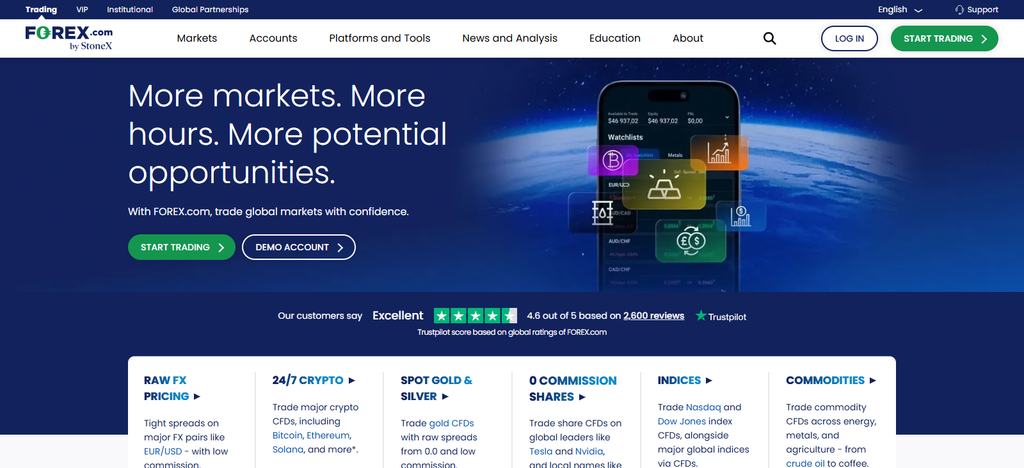
Standard, Commission, STP Pro and DMA accounts. The broker provides competitive spreads, which vary depending on the selected account model. FOREX.com offers its own web platform, MetaTrader 4, MetaTrader 5, TradingView integration, and NinjaTrader for both beginner and advanced traders.
Highlights
- Specializes in forex trading and has access to the major currency pairs.
- Provides proprietary web and mobile trading platforms.
- Supports MetaTrader 4 and 5 in specific regions.
- Offers market analysis, educational material and trading tools.
- Has different pricing and account structures depending on the jurisdiction.
Principal Risks
- Different spreads and commissions for account models.
- Availability of instruments depends on the client’s legal entity.
- Financing charges incurred overnight can raise holding costs.
- Trading in forex and CFDs can lead to quick losses.
5. CMC Markets
CMC Markets is a UK based broker, founded in 1989 and regulated by the Financial Conduct Authority (FCA), as well as ASIC and MAS in other regions. It offers access to forex, indices, commodities, shares, ETFs and treasuries, with over 12,000 tradable instruments. Account offerings include both professional and retail trading accounts.
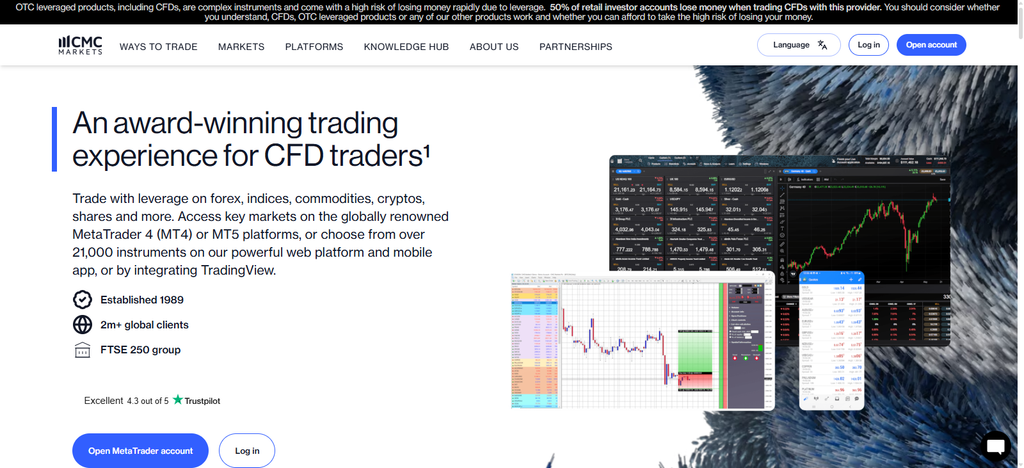
Trading costs are competitive, with forex spreads typically starting from around 0.7 pips on major pairs. CMC Markets is best known for its proprietary Next Generation platform, which offers advanced charting, market analysis and risk management features, as well as MetaTrader 4 compatibility.
Characteristics
- Access to a great variety of forex and CFD’s.
- Offers proprietary trading platform, Next Generation.
- Provides advanced charting and technical analysis tools.
- Provides market education and trading education.
- supports web and mobile based trading environments.
Important Risks**
- Products may not be available in all international jurisdictions.
- In low-liquidity periods, spreads may widen.
- Long-term positions may be affected by overnight holding charges.
- New traders can be overwhelmed by the sheer number of platform functions.
6. Pepperstone
Pepperstone is an Australian forex and CFD broker established in 2010 in Melbourne. Regulated by trusted authorities including ASIC, FCA, CySEC, DFSA, and BaFin. The broker provides CFDs on forex, indices, commodities, shares, cryptocurrencies. Clients can open either Standard or Razor accounts, the latter being designed for low-spread trading and commission pricing.
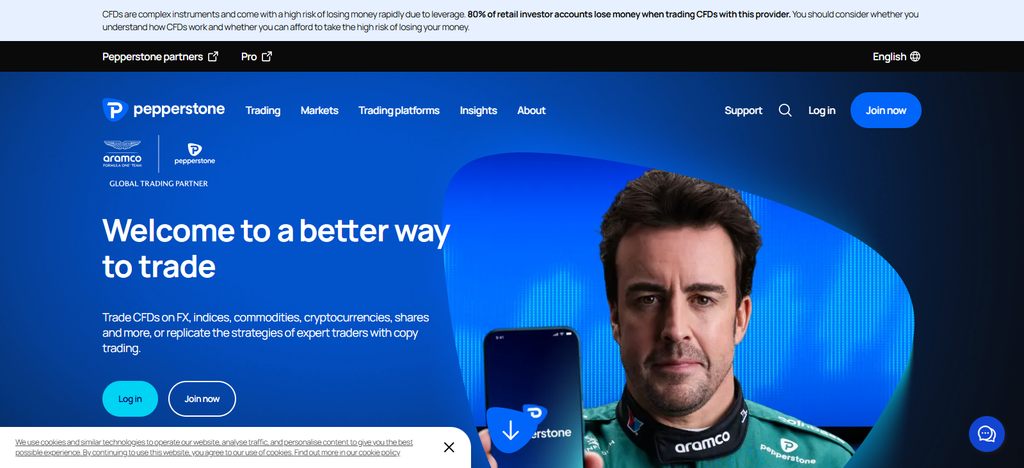
Pepperstone is known for its fast execution speeds and institutional-grade liquidity. Trading platforms include MetaTrader 4, MetaTrader 5, cTrader, TradingView and Pepperstone’s proprietary solutions, which makes it a popular choice for scalpers and algorithmic traders.
Highlights of the study
- Provides Standard and Razor account types.
- Supports MetaTrader 4, MetaTrader 5, cTrader and Trading View.
- Access to Forex and multiple CFD markets.
- Raw spread pricing with separate commissions on qualified accounts.
- Supports automated trading strategies and softwares
Principal Risks
- Razor account commissions make total cost calculations more relevant.
- In volatile market conditions, spread can change.
- Availability of leverage depends on the client’s jurisdiction.
- CFD trading has high leveraged losses for traders.
7. IC Markets
Established in 2007 in Sydney, Australia, IC Markets is now one of the largest ECN-style forex brokers globally. The company is regulated by such authorities as ASIC and CySEC. It allows you to trade forex, commodities, indices, stocks, bonds, futures and cryptocurrency CFDs.
Available accounts include Standard, Raw Spread, cTrader Raw Spread and Islamic. IC Markets is liked by active traders for its very low spreads, and commission-based ECN pricing. Supported platforms include MetaTrader 4, MetaTrader 5, cTrader, TradingView, and WebTrader, providing flexibility for a variety of trading strategies.
Features
- Provides Raw Spread and Standard accounts.
- Supports MT4, MT5, cTrader and Trading view.
- Offers access to major, minor and exotic forex pairs.
- Provides commission raw spread trading conditions.
- Supports automated trading systems, Expert Advisors and algorithmic strategies.
Key Risks
- Additional commission charges on raw accounts.
- Spreads may widen on major economic announcements.
3.Different trading conditions between regulated entities. - High leverage can lead to losses and margin closeouts.
8. Exness
Broker Overview Exness is an international Forex and CFD broker founded in 2008. The company is registered in Cyprus. The broker is regulated by authorities like FCA, CySEC, FSCA, FSA Seychelles and others. With Exness you can trade forex, stocks, indices, commodities, cryptocurrencies, and metals.
Traders can select from five account types: Standard, Standard Cent, Raw Spread, Zero and Pro. One of the advantages of Exness is low spreads and fast processing of withdrawals. Both beginner and professional market participants can trade with MetaTrader 4, MetaTrader 5, Exness Terminal and the Exness Trade mobile app.
Main Features
- Provides Standard, Standard Cent, Raw Spread and Zero account models.
- Compatible with MetaTrader 4 and MetaTrader 5. 3. Offers a range of forex currency pairs.
- Different spreads and commissions on different accounts.
- Offers proprietary trading tools and account management features.
Main Risks
- Availability of accounts and trading conditions varies by jurisdiction.
- Some account types have additional commission costs.
- High leverage can result in very large losses.
- Traders should verify the regulatory body that regulates their accounts.
9. XM
Broker Overview XM was founded in 2009 by Trading Point Holdings and has become a leading global forex and CFD broker. It is regulated by authorities such as CySEC, ASIC, DFSA and FSCA. XM provides trading access to forex, indices, commodities, stocks, precious metals and other CFD products.
You can open a Standard, Micro, Ultra Low or Shares account so traders with any level of experience can trade. The broker is known for its relatively low entry requirements and competitive trading conditions. Clients can trade via MetaTrader 4, MetaTrader 5, WebTrader and XM’s own mobile applications.
Main Features
- Provides Standard, Micro and Zero account types in eligible regions.
- MetaTrader 4, 5 support.
- Allows trading of forex and other CFD instruments.
- Provides educational resources, webinars and market analysis.
- Offers different trading conditions depending on account type and jurisdiction.
Risks
- Trading cost varies depending on the account model and instrument.
- Zero accounts may be subject to separate commission charges.
- Leverage and products offered may be subject to regional restrictions.
- Using CFDs for trading can lead to losses that are more than you expect.
10. OANDA Corporation
Broker Profile OANDA is a pioneer in online forex trading, founded in 1996. Top-tier regulators like the CFTC, NFA, FCA, ASIC, MAS and CIRO regulate the broker. OANDA offers forex trading and CFDs on indices, commodities, bonds and cryptocurrencies in eligible jurisdictions. Account offerings typically come in Standard and Premium solutions catering to various trading needs.
There are no minimum deposits in most countries and the spreads are competitive so the costs of trading are mainly from the spreads. OANDA offers support for its proprietary fxTrade platform, MetaTrader 4, MetaTrader 5, TradingView integration and API trading services for advanced users.
Main Features
- Provides major, minor and selected exotic currency pairs.
- OANDA Trade web and mobile platforms are proprietary.
- Integrated with MetaTrader 4 and TradingView in applicable countries.
- Offers forex market analysis and technical trading tools.
- Offers spread-based and alternative pricing structures in select jurisdictions.
Risks
- Spreads can widen in times of market volatility.
- Trading instruments and account conditions differ by country.
- Overnight financing charges may affect longer-term positions.
- Trading forex on margin carries a large risk of losses.
Conclusion
10 forex brokers for international traders to consider. When selecting one, you need to carefully weigh up regulation, trading costs, account flexibility, platform support and global market access. IG, Interactive Brokers, Saxo, FOREX.com, CMC Markets, Pepperstone, IC Markets, Exness, XM and OANDA offer different trading environments to meet different trader needs.
Availability, leverage, spreads and account conditions however are subject to regional regulations and broker entities. International traders should check the features, understand the potential risks, verify the regulatory licenses and review the withdrawal conditions before opening an account. In the end, the right broker for you will depend on your individual trading goals, experience and risk tolerance.
FAQ
Which forex brokers are gaining attention among international traders?
IG, Interactive Brokers, Saxo, FOREX.com, CMC Markets, Pepperstone, IC Markets, Exness, XM, and OANDA are established brokers offering different trading platforms, account structures, and market access.
What should international traders consider when choosing a forex broker?
Traders should evaluate regulatory licences, spreads, commissions, account types, available currency pairs, trading platforms, execution quality, and deposit and withdrawal facilities.
Are international forex brokers regulated?
Many established international forex brokers operate through regulated entities. However, regulatory coverage and client protection depend on the specific legal entity and jurisdiction.
Which trading platforms do international forex brokers support?
Depending on the broker and region, platforms include MetaTrader 4, MetaTrader 5, cTrader, TradingView, and proprietary trading applications.
What are the common account types offered by forex brokers?
Common options include Standard, Raw Spread, Zero, commission-based, professional, Islamic, and demo accounts. Availability varies between brokers and jurisdictions.