I’ll talk about the Account Abstraction SDKs in this post, which are influencing how programmers create more intelligent, safe, and intuitive blockchain apps.
These SDKs facilitate smooth Web3 experiences across Ethereum, Layer 2 networks, and developing multi-chain ecosystems by streamlining onboarding, improving transaction control, and enabling programmable wallets, gas abstraction, session keys, and modular authentication.
Understanding Account Abstraction SDKs
Account Abstraction SDKs offer a simplified way to implement account abstraction in Ethereum-based solutions, SDKs enable simplified account abstraction for Ethereum-based solutions.

Account abstraction enables users to design accounts in a way that modifies how accounts are managed by decoupling the control of transaction validity from the externally owned accounts (EOAs). With SDKs, developers and enterprises are able to provide end users with sophisticated wallet functionalities, including gasless transactions, programmable permissions, multi-sig, and easy onboarding, all without users having to manage complex private keys or pay gas.
These SDKs have a modular structure with tools, APIs, and pre-built components that lowers the complexity of development and enhances the user experience. This approach provides wallet solutions that are enterprise scalable, practical, and secure, enabling businesses to adopt blockchain technology.
Comparison Table Biconomy vs Pimlico
| Criteria | Biconomy | Pimlico |
|---|---|---|
| Core Focus | Modular smart accounts, gasless transactions, multi-chain orchestration | ERC‑4337 infrastructure, bundler & paymaster services |
| Ease of Integration | Plug-and-play SDK with AbstractJS for fine-grained control | Lightweight SDK focused on ERC‑4337 compliance |
| Gas Management | Offers paymaster services for sponsoring gas; supports gasless UX | Strong paymaster integration; optimized for ERC‑4337 gas sponsorship |
| Developer Tools | AbstractJS SDK, Supertransaction API, Nexus Smart Accounts | Bundler APIs, Paymaster APIs, ERC‑4337 tooling |
| Scalability | 4M+ deployed smart accounts; supports multi-chain flows | Designed for scalable ERC‑4337 operations across chains |
| Security | Audited contracts, modular smart account architecture | Security rooted in ERC‑4337 standardization and bundler validation |
| Enterprise Readiness | Proven adoption in DeFi, stablecoin workflows, and dApps | Early-stage but strong alignment with Ethereum’s account abstraction future |
| Unique Strengths | Gasless transactions, multi-chain orchestration, large ecosystem adoption | Deep ERC‑4337 compliance, specialized bundler/paymaster infrastructure |
| Limitations | More complex setup for enterprises needing only ERC‑4337 features | Less mature ecosystem compared to Biconomy; narrower focus |
Use Cases for Enterprises
User Onboarding Made Simple
Allow new users to easily create accounts without having to worry about complex seed phrases, increasing adoption for enterprise applications.
Free Transactions
Allow companies to pay for the transaction fees, creating a frictionless experience for users in fintech, gaming, e-commerce, etc.
Custom Roles & Permissions
Create custom rules on employee or customer accounts, like spend limits, role-based access, or automatic approvals.
Additional Multi-Sig Enterprise Security
Enhance enterprise accounts by adding a layer of security with multi-sigs so that some transactions are required to be signed by multiple people.
Multi-Chain Functionality
Provide support for multiple chains so that your business can grow in new partnerships and ecosystems.
Built-in Evidence and Compliance
Provide evidence and transaction history with programmable compliance that can help your business meet regulatory requirements.
Complex Account Automation
Connect smart accounts to enterprise systems so that payments, subscriptions, or supply chain actions can be automated.
Are Account Abstraction SDKs secure?
Account Abstraction SDKs are built using smart contract driven wallets along with the secure standards like ERC‑4337 from Ethereum. They also provide security through multi-signature approvals, programmable permissions, proxy, and the session keys.
These features reduce the risk linked to externally owned accounts (EOAs). Most SDKs get hand to hand audited to certify the infrastructure and the smart contracts thereby reducing the chances of exposure. Also, the bundler and paymaster services are designed to eliminate the misuse of transaction validation and gas sponsorship.
Although every system has a certain level of risk, account abstraction SDKs offer an enterprise level system to the customers. When the system is implemented in the right way, it increases the flexibility and security when compared to other wallet solutions.
Strengths & Limitations
Biconomy
Strengths
- AbstractJS added as a plug-and-play component SDK for easier integration
- Offers gasless transactions, therefore onboarding becomes easier
- Ecosystem contains millions of deployed smart accounts
- Offers multi-chain orchestration for enterprises requiring cross-chain
- Good developer resources (Nexus Smart Accounts, Supertransaction API)
Limitations
- More complicated configurations for enterprises focusing on ERC-4337
- Teams new to modular smart accounts will encounter a steeper learning curve
- In heavily regulated industries, there may be a need for custom solutions
Pimlico
Strengths
- Infrastructure that is Deeply Aligned and Future-Proof with ERC-4337 Standards
- Efficient gas solutions and specialized paymaster and bundler for gas management
- Lightweight SDK aimed at Wallet Integration and Simplification
- Standardized validation with great security
- Ethereum-Native Operations that are Scalable and Optimized
Limitations
- Migration is easier to Pimlico, but the ecosystem is smaller than Biconomy’s with less adoption
- A limited amount of multi-chain features for a narrower focus on ERC-4337
- Less established SDKs in the market means less Enterprise Case Studies
Pros & Cons
| Pros | Cons |
|---|---|
| Simplifies wallet integration for enterprises with ready-to-use SDKs | Requires technical expertise for proper implementation and customization |
| Enables gasless transactions, improving user onboarding and UX | Dependency on third-party SDK providers for updates and maintenance |
| Provides programmable permissions and automation for enterprise flows | Limited ecosystem maturity compared to traditional wallet solutions |
| Enhances security with multi-signature, session keys, and smart wallets | Potential compliance challenges in highly regulated industries |
| Supports multi-chain interoperability, expanding enterprise reach | Performance may vary depending on blockchain network congestion |
| Offers developer-friendly tools and APIs for faster deployment | Enterprises may face integration costs and resource allocation hurdles |
| Improves auditability and compliance with transparent transaction logs | Still evolving standards (e.g., ERC‑4337) may require future adjustments |
Future Outlook
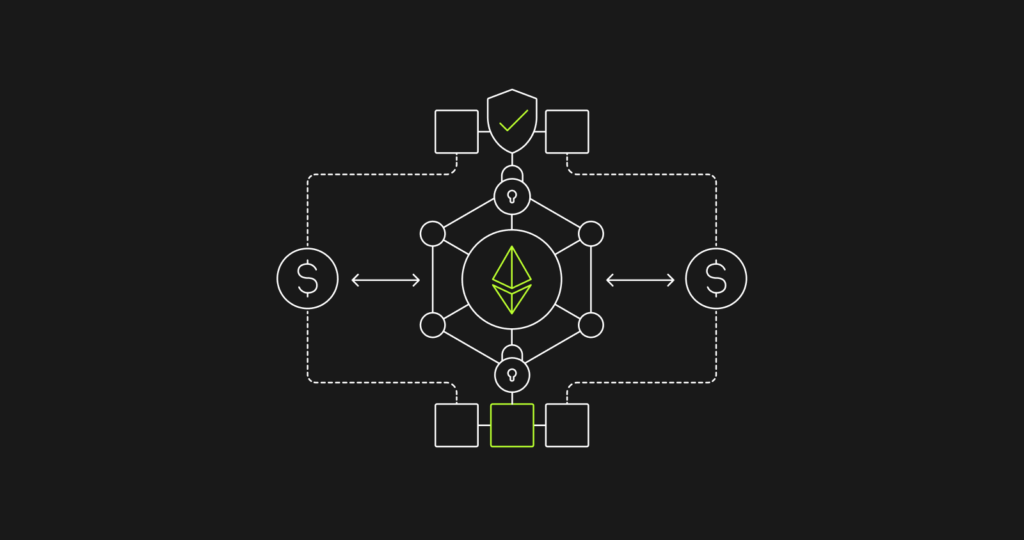
The anticipated growth of Account Abstraction SDKs aligns with the expected maturity of Ethereum’s ERC-4337 standard and the increasing popularity of smart contract wallets.
As long as customers require blockchain solutions to be secure, scalable, and easy to use, SDKs such as the ones offered by Biconomy and Pimlico will be very important to fit the technical and business requirements of the customer. Biconomy will likely enhance its multi-chain orchestration and gasless transactions, potentially attractive to enterprises desiring cross-chain interoperability and mass onboarding.
Pimlico is likely to be seen as central as a deep partner of ERC-4337 and will likely provide primary infrastructural support for Ethereum-based wallets with a focus on compliance streamlined bundler and paymaster transaction sponsorship.
Likely, both SDKs will move towards more converged solutions to provide features such as programmable compliance, additional automation, and integrated solutions with legacy systems of finance.
This means account abstraction SDKs will be primary Middleware for enterprises transitioning to Web3. Providing real utility and enterprise grade modifications to shielded access and compliance, account abstraction SDKs will provide enterprises with unrestrained decentralization and security.
Conclusion
The Account Abstraction SDKs improve ease of access, security, and enterprise-level readiness for blockchain technology, as it removes barriers related to gas fees, private key management, and transaction validation.
These SDKs help businesses build user-friendly architectures while balancing security and compliance. Biconomy and Pimlico showcase distinct approaches to this paradigm. Biconomy specializes in gasless transactions combined with multi-chain orchestration, while Pimlico has a focus on bundlers and paymasters in conjunction with ERC‑4337 infrastructure.
Together, they demonstrate the varied potential of programmable wallets, account abstraction, automated processes, and end users at the enterprise level. These Account Abstraction SDKs will undoubtedly form the backbone of enterprise level integration to allow traditional systems to interface with fully decentralized systems as they continue to evolve.
FAQ
What are Account Abstraction SDKs?
Account Abstraction SDKs are developer toolkits that simplify the integration of smart contract wallets and advanced account features into blockchain applications. They abstract away complex transaction validation and gas management, making Web3 apps more user-friendly and enterprise-ready.
Why are they important for enterprises?
They enable seamless onboarding, gasless transactions, programmable permissions, and compliance features, helping businesses adopt blockchain without burdening users with technical complexity.
What benefits do they provide to users?
Users enjoy simplified wallet creation, no need for seed phrases, sponsored gas fees, and secure programmable accounts that improve usability and trust.
Are Account Abstraction SDKs secure?
Yes. They rely on audited smart contracts, multi-signature setups, and standardized validation processes (like ERC‑4337) to ensure enterprise-grade security.
Which industries can benefit most?
Fintech, gaming, DeFi, retail, and supply chain enterprises benefit by offering frictionless transactions, automated workflows, and secure wallet solutions.