I will share information about the Best AI Platforms For Enterprise Data Consistency Monitoring in this article which helps enterprises ensure consistent, accurate, reliable, and well-governed data across complex ecosystems.
As enterprises become increasingly reliant on analytics for automation, AI-powered platforms are paramount in identifying inconsistencies and improving data quality while also ensuring compliance and enabling smarter decision-making through trusted and standardized enterprise data systems.
Key Point & Best AI Platforms for Enterprise Data Consistency Monitoring
| Platform | Key Points |
|---|---|
| Collibra Data Intelligence Cloud | Enterprise data governance platform focused on data cataloging, lineage tracking, compliance automation, and AI-driven data quality monitoring across hybrid environments. |
| SAP Data Intelligence | Unified data orchestration solution that connects distributed data sources, manages pipelines, and ensures consistent enterprise data flows across cloud and on-premise systems. |
| Oracle Enterprise Data Quality (EDQ) | Advanced data profiling and cleansing platform designed to standardize, validate, and monitor enterprise data accuracy using automation and rule-based intelligence. |
| Microsoft Purview + AI Copilot | AI-powered data governance and compliance platform offering automated data discovery, classification, lineage visualization, and real-time consistency monitoring. |
| IBM Watson Knowledge Catalog | Intelligent metadata and data governance solution using AI to organize data assets, enforce policies, and maintain trusted enterprise data ecosystems. |
| Snowflake Data Cloud + Snowflake Cortex AI | Cloud-native data platform combining centralized data sharing with AI analytics and automated consistency validation across enterprise data environments. |
| Databricks Lakehouse AI | Unified analytics and AI platform integrating data lakes and warehouses to ensure scalable governance, quality monitoring, and consistent data pipelines. |
| Qlik Sense + AI | Augmented analytics platform that uses AI insights, automated data preparation, and anomaly detection to maintain reliable and consistent enterprise reporting data. |
| SAS Data Management AI | Enterprise-grade data management system delivering data integration, quality monitoring, governance automation, and AI-driven validation processes. |
| Ataccama ONE | AI-powered data trust platform specializing in data quality, master data management, automated monitoring, and continuous enterprise data consistency control. |
1. Collibra Data Intelligence Cloud
Collibra Data Intelligence Cloud is best known as one of the Top AI Platforms for Enterprise Data Consistency Monitoring, it unifies data governance, cataloging, lineage tracking and policy automation in a single place. It acts as a nutritional supplement for the organization’s departments by building a shared layer of data intelligence.
Auto-gen metadata discovery through AI recognizes and connects data with less human governance. But, it also allows business teams and technical users to work closely together so analytics and reporting are done on trusteed datasets.
Collibra: Enables compliance preparedness, data transparencyand data integrity across the enterprise to help make confident strategic decisions and execute operationally consistent.
Collibra Data Intelligence Cloud — Features
- Unified Data Governance Platform – Integrated data catalog, governance, privacy, lineage and quality in a single cloud-native environment.
- Active Metadata Management – Fills the gap using metadata automation to deliver complete visibility and trusted data usage in enterprises.
- Automated Data Quality Scoring – AI automatically assesses how trustworthy datasets are and helps analysts pick trusted data sources.
- Entire Data Lineage – Follows the journey of the data from its origin and path it takes, includes where does it get transformed; aids compliance and transparency.
- Deployment Models:Self-Service Data Access — Give business users the ability to securely discover and access data with minimal (IT) dependency.
Collibra Data Intelligence Cloud
| Pros | Cons |
|---|---|
| Strong enterprise data governance and catalog management | High implementation cost |
| AI-powered data lineage and metadata automation | Requires skilled governance teams |
| Excellent compliance and regulatory support | Setup can be time-consuming |
| Centralized data intelligence platform | Complex for small organizations |
| Integrates with major cloud and analytics tools | Customization may need consultants |
2. SAP Data Intelligence
SAP Data Intelligence is one of the top AI Platforms For Monitoring the Consistency of Enterprise-Wide Artificial Intelligence to orchestrate, govern and manage all stages of the AI lifecycle across hybrid enterprise ecosystems.
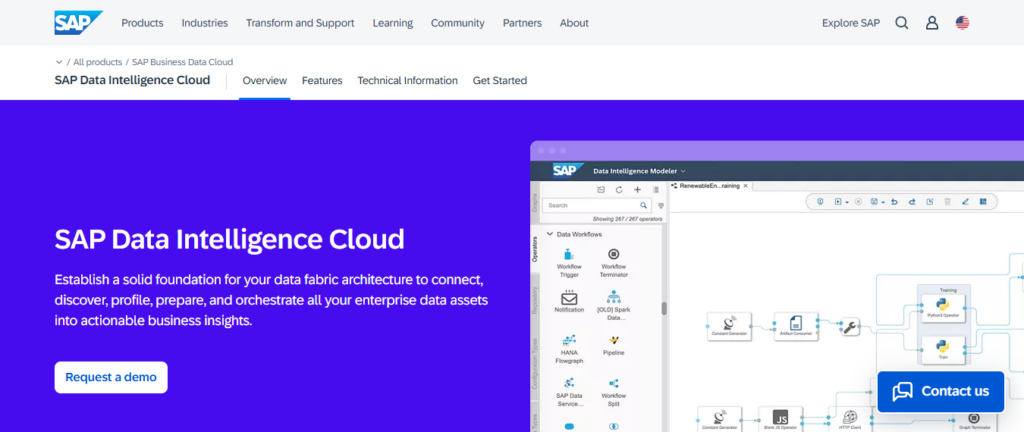
It links SAP infrastructures and non-SAP environments by providing standardized data pipelines across a distributed environment. It offers automated data processing workflows wived with consistent metadata management and governance controls across the environment. Real-time monitoring of data quality and integration health empowers organizations.
With machine learning capabilities, it enables automatic detection of anomalies and predictive data validation, number that helps enterprises keep their datasets reliable. SAP Data Intelligence integrates and orchestrates distributed data assets using consistent processes across analytics, operations, and business applications to power scalable digital transformation initiatives.
SAP Data Intelligence — Features
- Enterprise Data Integration — Integrate structured, unstructured and streaming data across systems.
- **Hybrid Data Management – Manage cloud and on-premise environments in one interface.
- Pipeline Orchestration – Automates your data workflows and processing pipelines.
- Data Discovery & Cataloging – Provide searchable catalog for enterprise data discovery.
- AI & Machine Learning Enablement – Powers Intelligent Processes and Advanced Analytics Operations.
SAP Data Intelligence
| Pros | Cons |
|---|---|
| Deep integration with SAP ecosystem | Best suited mainly for SAP users |
| Real-time data orchestration capabilities | Expensive licensing model |
| Strong enterprise data pipeline management | Steep learning curve |
| Supports hybrid and multi-cloud environments | Requires infrastructure expertise |
| Built-in AI and ML workflow automation | Complex initial deployment |
3. Oracle Enterprise Data Quality (EDQ)
When it comes to AI platforms enabling enterprise data consistency monitoring, Oracle Enterprise Data Quality (EDQ) is considered one of the Best for its powerful capabilities around data profiling, cleansing, and matching. EDQ employs sophisticated algorithms to supercharge the standardization, validation and enrichment of enterprise data by removing duplicates and inconsistencies that shatter reporting accuracy.
It provides ongoing monitoring of data health across systems and is highly integrated with Oracle enterprise applications and master data management solutions. Automated quality rules help businesses enforce governance standards across data sets. Oracle EDQ ensures organizations have trusted information assets and improves enterprise-level analytical performance by ensuring the reliability of customer, financial, and operational data.
Oracle Enterprise Data Quality (EDQ) Features
- Comprehensive Data Profiling – Analysis to find data discrepancies and anomalies.
- Data Cleansing & Standardization – Enhances accuracy through validation and correction of datasets.
- Match & Deduplication Engine – Identifies duplicate records between systems.
- Consumer Data Quality Monitoring in Real Time – Continuously monitors the reliability of enterprise data.
- Enterprise-Master Data Governance Support – Fortifies enterprise master data governance frameworks.
Oracle Enterprise Data Quality (EDQ)
| Pros | Cons |
|---|---|
| Advanced data cleansing and profiling tools | Works best inside Oracle ecosystem |
| Strong master data consistency features | UI feels outdated to some users |
| AI-driven anomaly detection | Requires trained data specialists |
| High data accuracy and validation reliability | Costly enterprise pricing |
| Excellent compliance and governance support | Limited flexibility outside Oracle stack |
4. Microsoft Purview + AI Copilot
Among the Best AI Platforms for Enterprise Data Consistency Monitoring: Microsoft Purview + AI Copilot Combining governance and compliance solutions across your enterprise with Microsoft Purview powered by artificial intelligence. It science off data environments in cloud-, on-premise, and multi-cloud systems automatically to classify sensitive information and apply policies. AI Copilot Help users create governance insights, recommend controls and simplify data management tasks.
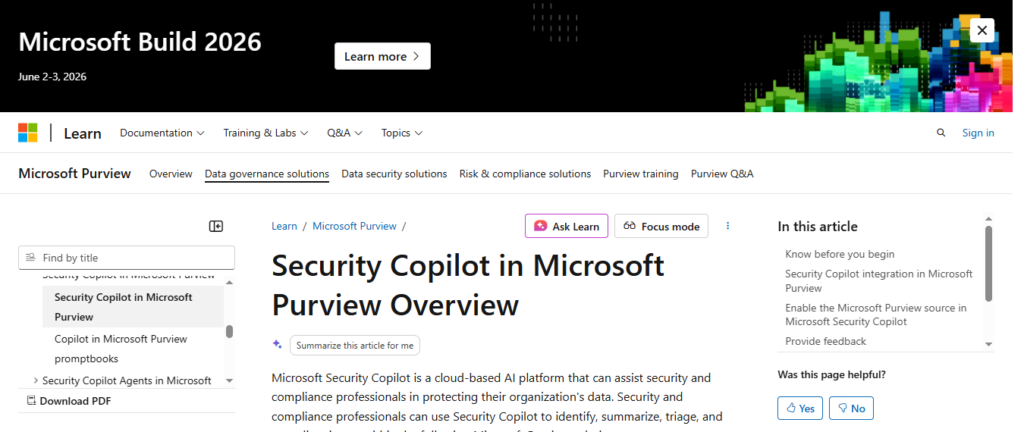
By visualizing data lineage, organizations can see how information flows through their systems — and whether it is consistent or compliant. Purview enhances trust in our data through automated governance workflows, improved collaboration, and ensuring that enterprises have accurate (and consistent) datasets across their modern data estates.
Microsoft Purview + AI Copilot Features
- One Stop Data Governance Portlet – A holistic view of the entire data estate.
- AI Copilot Helps – Automates governance tasks for you, helping generate intelligence insights.
- Automated Data Classification – AI-powered sensitive information detection
- Schema Review Data Lineage Visualization – Movement of data across Microsoft and third-party systems
- Compliance & Risk Management – Facilitates regulatory compliance and audit readiness.
Microsoft Purview + AI Copilot
| Pros | Cons |
|---|---|
| Unified data governance across Microsoft ecosystem | Heavy reliance on Azure services |
| AI Copilot enables natural language data discovery | Can become expensive at scale |
| Automated data classification and lineage | Requires Microsoft expertise |
| Strong security and compliance framework | Performance depends on Azure setup |
| Easy integration with Power BI and Fabric | Limited non-Microsoft optimization |
5. IBM Watson Knowledge Catalog
It joins IBM Watson Knowledge Catalog around the Best AI Platforms for Enterprise Data Consistency Monitoring by virtue of its integration for AI-driven data cataloging, governance automation, as well as intelligent metadata management.
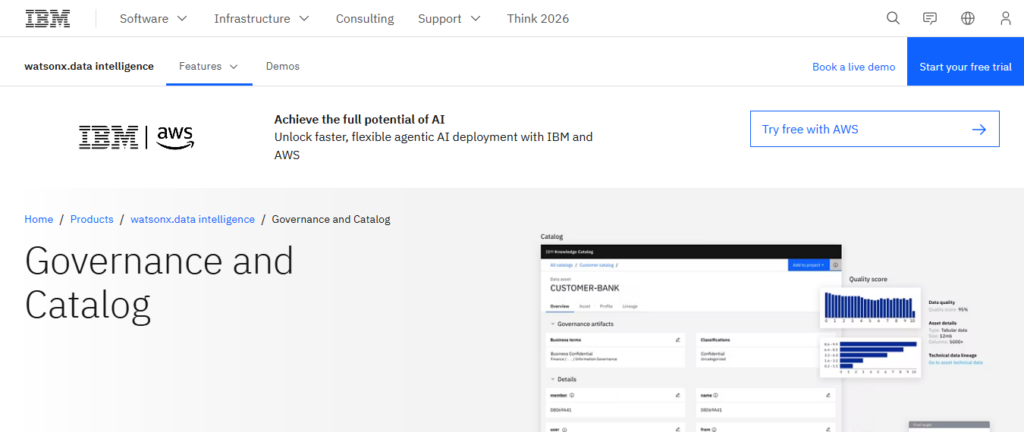
The platform creates a knowledge graph that relates datasets, business vocabulary and governance policies so that organizations can remain consistent in their understanding of data. Automated quality scoring uncovers unreliable datasets before they can impact reports. Watson AI features help with data discovery and enforce compliance standards throughout enterprise environments.
Secure self-service access to trusted data assets for business users (minimizes dependence on IT teams) It helps foster collaboration, speeds up analytics adoption, and keeps enterprise data accurate, governed and trusted.
IBM Watson Knowledge Catalog — Features
- Data Catalog (powered by AI) – Automatically classifies enterprise data assets
- Policy-Based Governance – Automates access control and governance enforcement.
- **Data Quality Monitoring — Leverages AI rules for continuous quality enhancement.
- Knowledge Graph Technology — Links associated datasets for context.
- Self-Service Analytics Access – Leverage trusted data for your business teams.
IBM Watson Knowledge Catalog
| Pros | Cons |
|---|---|
| AI-powered metadata management | Complex configuration |
| Automated data discovery and classification | Higher operational cost |
| Strong governance and compliance controls | Requires IBM ecosystem familiarity |
| Built-in data quality monitoring | Deployment takes time |
| Supports hybrid cloud environments | Not ideal for small teams |
6. Snowflake Data Cloud + Snowflake Cortex AI
Snowflake Data Cloud with Snowflake Cortex AI considered one of the Best AI platforms for enterprise data consistency monitoring because of its adaptable architecture and built-in artificial intelligence features.
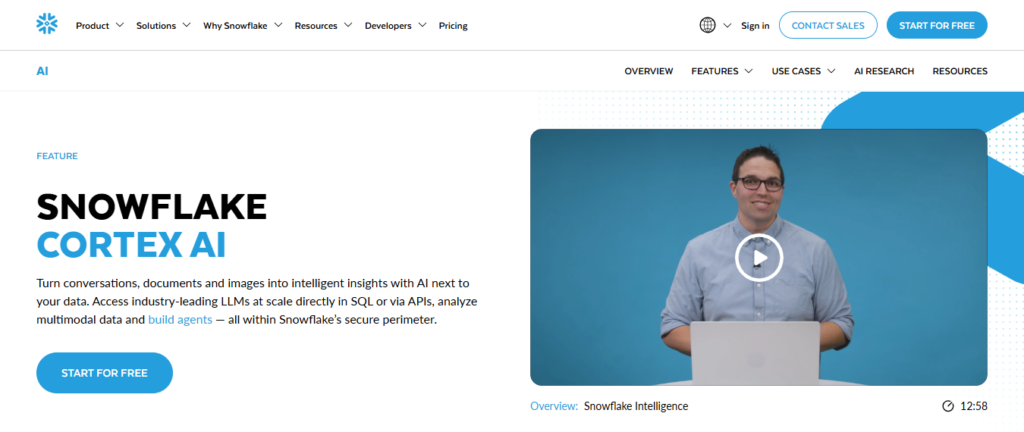
The platform supports the centralization of enterprise data into a single governed environment where companies can securely share, analyze and monitor data. With Cortex AI, users can leverage natural language query capabilities for advanced automation and intelligent analytics workflows. By breaking down silos and maintaining unified data governance guidelines,
Snowflake guarantees that all departments are following the same data structures. Enterprise, AI Link Data Metrics Tools Real-time Processing Elastic Scalability Devs Live data StreamingIdeally, real-time processing and elastic scalability allow enterprises to continuously monitor their data consistency while simultaneously supporting AI-driven analytics, collaboration and performance optimization.
Snowflake Data Cloud + Snowflake Cortex AI — Capabilities
- Unified Data Cloud Platform – Unified storage, analytics and governance in one place
- AI & LLM Native Integration – Cortex AI facilitates semantic querying and intelligent analytics. (arXiv)
- Secure Data Sharing – Enables organizations to share data cross-organizationally without moving data.
- Elastic Scalability – Scales compute resources automatically, and based on workload.
- Streaming Analytics Processing – Enables the analytics and AI workloads on streaming.
Snowflake Data Cloud + Snowflake Cortex AI
| Pros | Cons |
|---|---|
| Highly scalable cloud-native architecture | Consumption-based pricing may rise quickly |
| Cortex AI enables intelligent analytics automation | Requires cloud cost management |
| Strong data sharing and collaboration features | Governance setup needed separately |
| High performance for large datasets | Learning curve for new users |
| Supports structured and semi-structured data | Advanced features need expertise |
7. Databricks Lakehouse AI
Databricks Lakehouse AI ranks among the Best AI Platforms for Enterprise Data Consistency Monitoring because it combines data lakes and data warehouses into a unified lakehouse architecture. It supports structured, semi-structured and unstructured data along with comprehensive governance through Unity Catalog.
Anomaly detection: AI-powered monitoring tools can detect anomalies, schema drift and data inconsistencies in real time. Databricks helps data engineering, analytics and machine learning teams work from a common trusted platform.
Its open ecosystem makes it compatible with various cloud providers and data tools. Organizations see increased scalability, collaborative workflows, and consistent data pipelines driving next-gen enterprise analytics programs.
Databricks Lakehouse AI — Features
- Lakehouse Architecture – Merges flexibility of data lake and warehouse performance.
- Unified Analytics & AI Platform – End-to-end ML life-cycle development.
- Processing of Data in Real-Time – Deals with batch and streaming workloads side by side.
- Centralized Governance (Unity Catalog) – for access management and compliance.
- **Open Data Ecosystem Support – Works with open-source formats and tools.
Databricks Lakehouse AI
| Pros | Cons |
|---|---|
| Combines data lake and warehouse architecture | Technical setup complexity |
| Powerful AI/ML and analytics platform | Requires engineering skills |
| Excellent real-time data consistency monitoring | Higher operational overhead |
| Open-source ecosystem compatibility | Governance must be configured carefully |
| Scalable big data processing | Cost optimization needed |
8. Qlik Sense + AI
As augment analytics, intelligent data integration help in better implementation of self-service BI with AI capabilities; hence Qlik Sense is one of the 12 Best AI Platforms for Enterprise Data Consistency Monitoring. You can automatically prepare and harmonize data from multiple sources so that dashboards and reports display consistent metrics.
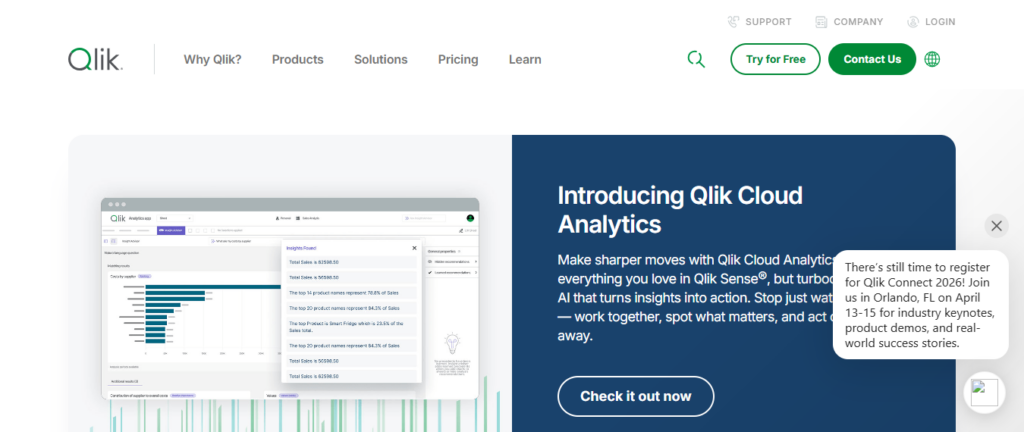
Users can quickly identify anomalies, trends, and inconsistencies from AI-generated insights quickly without the need for deep technical expertise. Its associative analytics engine maintains data relationships, minimizing reporting discrepancies.
Qlik Sense delivers self-service analytics with governance, empowering business teams to work on trusted information. This ensures greater accuracy in decision-making while enabling transparency and consistency of data across the enterprise.
Qlik Sense + AI — Features
- Augmented Analytics Engine – Insights are suggested automatically by AI.
- Self-Service Data Visualization — Interactive dashboards for business users
- Data Integration Capability – Integrates multiple enterprise data sources.
- Predictive Analytics – Forecasting & trend analysis are built in.
- Automated Insight Generation – AI reveals the patterns and anomalies.
Qlik Sense + AI
| Pros | Cons |
|---|---|
| AI-driven augmented analytics | Limited enterprise governance depth |
| Strong data visualization capabilities | Advanced features require licensing upgrades |
| Associative analytics engine improves consistency insights | Less robust for large-scale data engineering |
| Easy self-service analytics | Requires training for advanced use |
| Supports multiple data sources | Not a full data governance platform |
9. SAS Data Management AI
SAS Data Management AI in Best AI Platforms for Enterprise Data Consistency Monitoring because its integrated, advanced data integration and governance with automated quality management in one enterprise platform. Keeping datasets coherent over different operational and analytical systems using AI-driven data cleansing and verification processes.
The platform also encompasses metadata management, lineage tracking, and compliance monitoring features to assist organizations in maintaining regulatory alignment. SAS has high-level automation built into SAS that will spot errors, enforce policies and keep data structures uniform.
SAS have been utilized by enterprises to enhance data accuracy, mitigate operational risk and increase the efficacy of analytics initiatives while ensuring business decisions are made based on trusted and governed information assets.
SAS Data Management AI — Features
- AI-Driven Data Quality Management – Automates cleansing and validation processes.
- Enterprise Data Integration – Power features for ETL and transformation.
- Metadata Management Framework – Enterprise Data Context Store.
- Governance & Compliance Controls – Meets regulatory monitoring needs.
- Integration with Risk Analytics – Boosts enterprise risk and performance analytics.
SAS Data Management AI
| Pros | Cons |
|---|---|
| Industry-leading data quality tools | Premium enterprise pricing |
| Advanced AI and statistical data monitoring | Implementation complexity |
| Strong governance and compliance features | Requires SAS expertise |
| Reliable data integration workflows | Less flexible cloud-native experience |
| Highly accurate data profiling and cleansing | Smaller community ecosystem |
10. Ataccama ONE
Ataccama ONE is recognized as one of the Top AI Solutions for Advancing Enterprise Data Consistency Monitoring to provide integrated data quality, master data management and governance solutions that are driven by artificial intelligence.
The platform monitors enterprise data continually and automatically identifies inconsistencies, missing values, and anomalies. One such innovation that has emerged is AI-driven trust scoring, which allows applications to assess the reliability of data, helping organizations prioritize remediation efforts. Workflows correct the data issues automatically, so there is no extensive manual intervention needed.
The proprietary features of Ataccama ONE allow organizations to maintain a single source of truth across all business units for improved operational efficiency and analytics outcomes. It unifies monitoring and data usage, enhancing data governance with its consistent, accurate, complete, and trustworthy enterprise data ecosystems.
Ataccama ONE — Features
- Monitoring Data Quality of AI – Ongoing checks for data health and validity.
- *Unified Data Fabric Platform — Combines governance, catalog and MDM capabilities.
- *Automated Issue Resolution * — AI recommends and executes remediation workflows.
- Data Trust Scoring – It assigns trust metrics to the enterprise datasets.
- Metadata Discovery & Cataloging – Automatically identifies and catalogs data assets.
Ataccama ONE
| Pros | Cons |
|---|---|
| Unified data quality and governance platform | Initial setup effort required |
| AI-driven anomaly detection and monitoring | Licensing cost may be high |
| Automated data lineage tracking | Requires trained administrators |
| Strong master data management capabilities | Custom workflows take time |
| Modern user-friendly interface | Integration complexity in legacy systems |
Conclusion
Data consistency, accuracy and trust are fundamental requirements of data both for reliable analytics and strategic decision making in a modern enterprise world where decisions are driven by data. Top Enterprise Data Consistency Monitoring AI Systems eliminate data silos, automate governance and compliance, trace the origin of issues, and uncover inconsistencies in your systems while maintaining an accurate source of truth across multiple platforms.
Examples of solutions such as Collibra, SAP Data Intelligence, Microsoft Purview, Databricks and Snowflake provide even more evidence of how large scale artificial intelligence creates magical improvements in the management of data quality. Leveraging these state-of-the-art platforms, enterprises can enhance operational efficiency, refine data governance frameworks and establish a single source of truth that enables innovation, analytics accuracy and sustainable business growth.
FAQ
What are AI platforms for enterprise data consistency monitoring?
AI platforms for enterprise data consistency monitoring are advanced data governance and management solutions that use artificial intelligence to automatically detect data errors, maintain accuracy, enforce policies, and ensure data reliability across cloud, hybrid, and on-premise systems. These platforms continuously monitor data pipelines, metadata, and lineage to prevent inconsistencies before they affect analytics or business decisions.
Are AI data governance platforms suitable for large enterprises only?
No. While large enterprises benefit the most, mid-size organizations also adopt AI data platforms to scale analytics operations, support digital transformation, and prepare data environments for AI adoption and automation.
How do AI platforms support regulatory compliance?
AI platforms help organizations comply with regulations like GDPR, financial reporting rules, and industry standards by automatically enforcing policies, maintaining audit trails, monitoring data access, and documenting data lineage across systems.