
The Best Corporate Credit Card Programs for Businesses will be covered in this article, with a focus on the best choices that assist businesses in tracking employee spending, managing budgets, and earning rewards.
These programs, which range from conventional bank cards like the American Express Corporate Card to cutting-edge fintech options like Brex and Ramp, offer resources, advantages, and flexibility to maximize financial operations and effectively manage corporate expenditures.
Key Point & Best Corporate Credit Card Programs for Businesses
| Corporate Card | Key Point |
|---|---|
| American Express Corporate Card | Offers robust rewards programs and premium travel benefits for businesses of all sizes. |
| Brex Corporate Card | Designed for startups with no personal guarantee and seamless expense management integrations. |
| Ramp Corporate Card | Focuses on automated expense management and high cashback on business essentials. |
| Stripe Corporate Card | Integrated with Stripe’s platform, offering instant payouts and expense tracking for online businesses. |
| Capital One Spark Business | Provides flexible cashback/rewards options and strong employee card controls. |
| Chase Ink Business Preferred | High rewards on travel and business spending with extensive bonus categories. |
| Bank of America Business Advantage Card | Offers tailored rewards, cashback, and bonus points for common business expenses. |
| Citi Corporate Card | Provides global acceptance, detailed reporting, and expense management tools for corporations. |
| PNC Corporate Card | Supports corporate expense tracking with customizable credit limits and reporting. |
| Wells Fargo Business Elite Card | Designed for larger businesses with high spending, offering rewards and flexible credit management. |
1. American Express Corporate Card
With centralized billing, adjustable spending caps, and comprehensive data that streamlines accounting and compliance, the American Express Corporate Card is intended to assist medium-sized and big organizations in controlling employee spending.
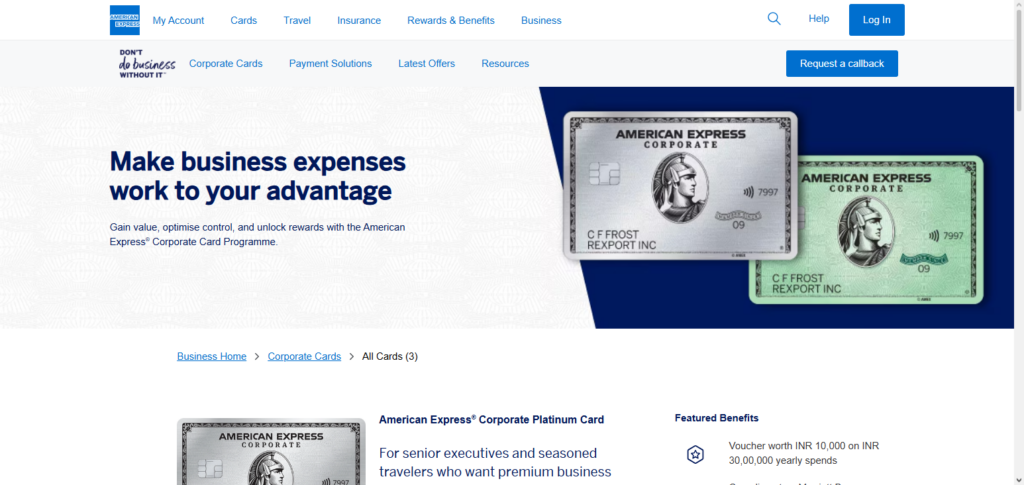
It is integrated with the larger AmEx Corporate Program and offers incentives through the Membership Rewards® structure, which allows participating companies to accrue points on qualified purchases and exchange them for statement credits, gift cards, or travel.
Corporate Card programs are a flexible option for businesses with frequent travel and cost requirements because they also offer employee card management, insurance and travel perks, and enterprise-specific support services.
American Express Corporate Card – Key Features
| Feature | Description |
|---|---|
| Rewards Program | Earns Membership Rewards points on eligible business spend. |
| Travel Benefits | Includes travel insurance, lounge access, and concierge services. |
| Expense Controls | Customizable employee card limits and centralized billing. |
| Reporting Tools | Detailed monthly statements with spend analytics. |
| Global Acceptance | Widely accepted internationally with strong corporate support. |
American Express Corporate Card Pros & Cons
Pros
- Great travel, restaurant, and business spending rewards.
- Great travel coverage (insurance, lounge, and concierge) protections.
- Spend reports are detailed which makes accounting easier.
- Card controls for employees and limits can be customized.
- Corporate support is premium and broad acceptance is global.
Cons
- Some plans have an annual fee which can be pricing.
- The rewards structure may be confusing to new users.
- Businesses that spend less on travel may not benefit.
- A few perks come with enrollment or spending thresholds.
- Some cards have foreign transaction fees.
2. Brex Corporate Card
For rapidly expanding businesses and startups, the Brex Corporate Card stands out because it provides a cutting-edge, fintech-focused solution with substantial benefits and no annual charge. In contrast to conventional bank cards, Brex does not require a personal guarantee and sets credit limits based on corporate financials, frequently permitting far greater limits than legacy cards.
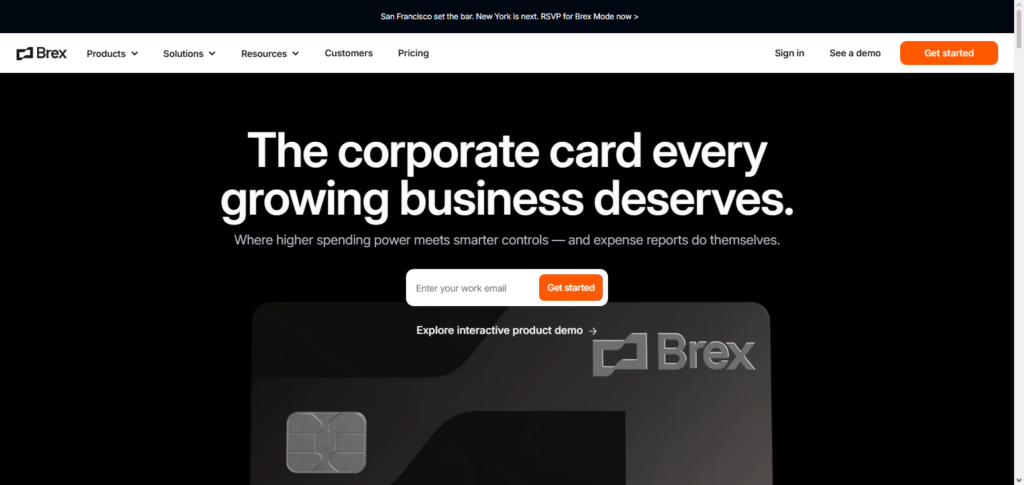
Rewards can be redeemed for statement credits, travel, or business experiences. They are designed to match typical business spending, such as higher points on travel, ridesharing, meals, and software subscriptions. Additionally, the site offers partner discounts and connectivity with expenditure management software.
Brex Corporate Card – Key Features
| Feature | Description |
|---|---|
| No Personal Guarantee | Approves limits based on business financials, not personal credit. |
| High Rewards | Elevated points on travel, software, dining, and rideshare. |
| Expense Integrations | Syncs with accounting tools for easy reconciliation. |
| Instant Issuance | Fast setup with physical & virtual cards. |
| Startup Focus | Tailored for tech startups and fast‑growing companies. |
Brex Corporate Card Pros & Cons
Pros
- Credit approvals do not require a personal guarantee.
- Common business categories have high rewards.
- Accounting software marries well with the card.
- Startups and business of tech are simplified to fast.
- Most plans have no annual fee.
Cons
- Monthly rewards may be rotated.
- Businesses without financial data may struggle more.
- Some merchants have less acceptance than banks.
- Travel perks are less for traditional users.
- High credit users are not a good fit.
3. Ramp Corporate Card
The Ramp Corporate Card combines robust spend restrictions and reporting features with a flat cash-back incentive on all transactions, emphasizing simplicity and automation for finance teams. Businesses may optimize spending without complicated reward categories because to its no-annual-fee structure and real-time expense insights.
Ramp offers capabilities that are easily connected with widely used accounting systems, such as automatic receipt reconciliation, spend policy enforcement, and unlimited virtual and physical card issuance for staff members. Businesses wishing to receive consistent cash back while streamlining financial processes may find the card particularly tempting.
Ramp Corporate Card – Key Features
| Feature | Description |
|---|---|
| Unlimited Cashback | Flat cashback rate on all purchases. |
| Expense Automation | Auto receipt capture and categorization. |
| Smart Controls | Real‑time policy enforcement and alerts. |
| No Annual Fee | No recurring annual cost for cardholders. |
| Accounting Sync | Integrates with major accounting platforms. |
Ramp Corporate Card Pros & Cons
Pros
- All purchases have a flat unlimited cashback.
- Automatic capturing of receipts and categorization of expenses.
- Spend controls and alerts in real-time.
- No fees annually.
- Finance teams have a simple and clear interface.
Cons
- Less reward cards rate may be lower than specialized cards.
- Limited premium travel perks or offers status.
- Less reward brand partner options.
- Not the best option for global businesses with local banks.
- Less integration with legacy banking.
4. Stripe Corporate Card
The Stripe Corporate Card is designed for internet-native and tech companies that use Stripe’s platform. It allows enterprises to instantly provide virtual and physical cards and monitor spending in real time.
It offers dynamic rewards (usually a % back on top spending categories each month) without the setup hassles associated with bank-based corporate cards, and it is free of yearly and foreign transaction fees.
It is perfect for firms that value agility and visibility because of its built-in spend controls and smooth integration with the Stripe Dashboard, which allow businesses to rapidly manage spending, set custom limits, and reconcile transactions.
Stripe Corporate Card – Key Features
| Feature | Description |
|---|---|
| No Fees | No annual or foreign transaction fees. |
| Instant Virtual Cards | Create virtual cards for team spend instantly. |
| Dynamic Rewards | Monthly changing rewards based on spend behavior. |
| Stripe Dashboard | Full transaction management inside Stripe. |
| Spend Controls | Set limits and permissions by card or team. |
Stripe Corporate Card Pros & Cons
Pros
- No fees annually or for foreign transactions.
- Cards can be virtual and issued instantly.
- Monthly spending creates dynamic tailored rewards.
- Stripe Dashboard has deep integration.
- Controls and tracking of spending is easy.
Cons
- Best for businesses already utilizing Stripe.
- Physical bank branches have limited support.
- Month-to-month varying rewards.
- Travel protection is less than usual cards.
- Not all accounting systems may be compatible.
5. Capital One Spark Business
Small and mid-sized firms that desire flexible spending power and robust flat-rate rewards are drawn to Capital One’s Spark Business cards, which include choices like Spark Cash Plus. In addition to significant welcome or annual incentives that offer instant value, these cards usually offer unlimited cash-back on all transactions (e.g., 2% back on every dollar spent).
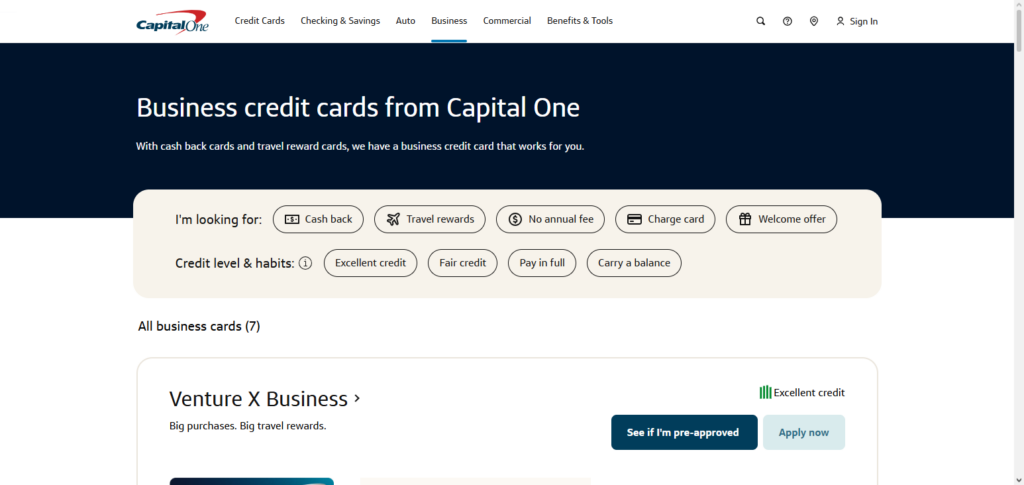
They include free employee cards, connectivity with accounting software, and the capacity to scale expenditures as the company expands. Spark Business cards are useful for a variety of business applications because they also offer fraud protection and round-the-clock customer service.
Capital One Spark Business – Key Features
| Feature | Description |
|---|---|
| Rewards Options | Cash back or points depending on card version. |
| Employee Cards | Free additional cards for employees. |
| Welcome Bonus | Generous introductory rewards offer. |
| Flexible Redemption | Redeem for travel, cash, or statement credits. |
| 24/7 Support | Customer service available anytime. |
Capital One Spark Business Pros & Cons
Pros
- Cash-back or reward points have a flat competitive rate.
- Welcomes bonuses are generous.
- Employee cards can be added at no additional cost.
- Many versions have no foreign transactions fees.
- Options for redemption are simple.
Cons
- Annual fees apply for some versions.
- Not all businesses suit reward categories.
- Travel perks are less than premium cards.
- Increases are tied to credit profile.
- Less corporate expense tools than tailored platforms.
6. Chase Ink Business Preferred
Businesses with marketing and travel needs would benefit greatly from the high-reward Chase Ink Business Preferred® card. In important business areas including travel, advertising, shipping, and internet services, it usually offers enhanced points.
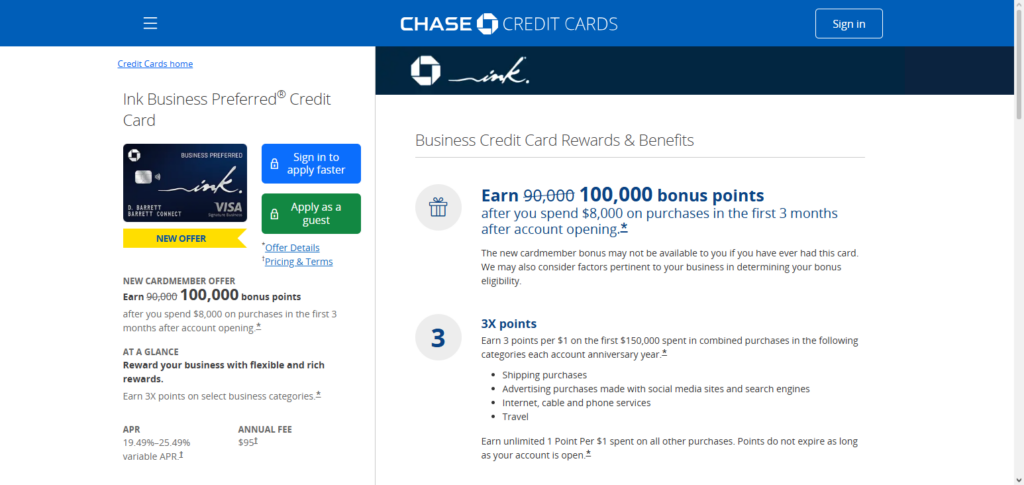
These points can be redeemed for travel, gift cards, cash back, or transfers to airline and hotel partners under the Chase Ultimate Rewards® program.
The card is a great option for companies trying to optimize rewards on daily operations because it strikes a mix between strong bonus categories and corporate-friendly features like employee cards, spend restrictions, and excellent fraud protection.
Chase Ink Business Preferred – Key Features
| Feature | Description |
|---|---|
| High Bonus Categories | Elevated points in travel, shipping, Internet, and more. |
| Ultimate Rewards | Points can transfer to travel partners for value. |
| Travel Protections | Includes trip interruption/cancellation cover. |
| Employee Cards | Manage spending with multiple card users. |
| Strong Analytics | Rich reporting for business expense insights. |
Chase Ink Business Preferred Pros & Cons
Pros
- Solid bonus categories for business spend and travel.
- In Chase Ultimate Rewards, it is worth high points.
- Centralized billing employee cards.
- Options for redemption are flexible.
- Travel and purchase protections are included.
Cons
- Annual fee may not suit all.
- Category spend strategically to get best value.
- Not great for smaller businesses with less travel.
- Transfer points to partners requires some navigation.
- Less expense automation tools.
7. Bank of America Business Advantage Card
The advantages and rewards offered by Bank of America Business Advantage Cards are customized to meet the usual spending habits of businesses.
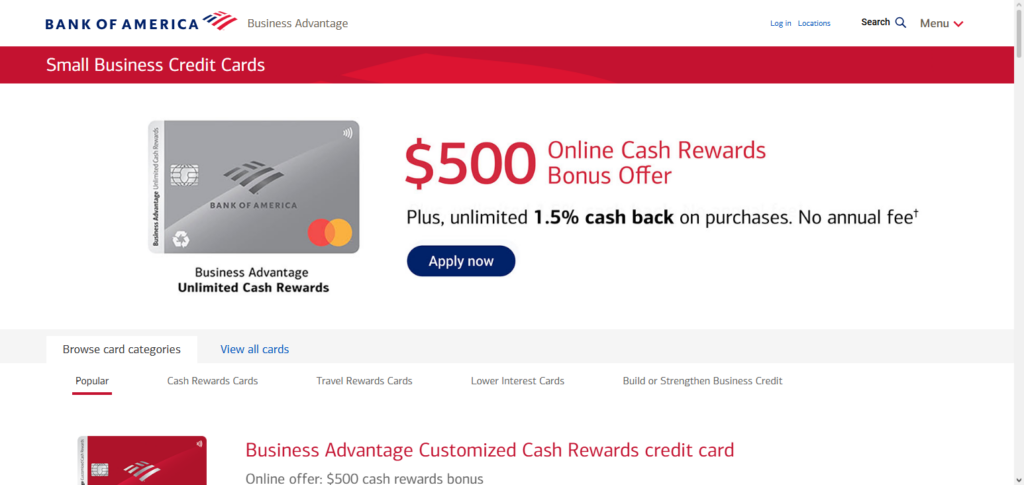
While some versions offer flexible category selections where businesses can select the rewards areas that fit their spending profile, others give improved cash back in categories including office supplies, travel, and utilities.
These cards have robust security features, adjustable spending controls, and industry-leading reporting tools. Additionally, for companies with sizable deposit or investment accounts, Bank of America’s Preferred benefits for Business program can increase benefits even more, rewarding loyalty and expanding financial ties.
Bank of America Business Advantage Card – Key Features
| Feature | Description |
|---|---|
| Custom Rewards | Select categories that match your business spend. |
| Banking Integration | Syncs with Bank of America accounts for convenience. |
| Preferred Rewards | Enhanced earnings for bank loyalists. |
| Spend Controls | Assign limits to employee cards. |
| Cash Back or Points | Card options with different reward types. |
Bank of America Business Advantage Card Pros & Cons
Pros
- Customizable reward categories.
- Bonus cash back for banking customers.
- There are good spend controls and reporting.
- It is business account integrated with Bank of America.
- Business benefits are tiered (relationship rewards, etc.).
Cons
- Some versions have an annual fee.
- Compared to competitors, rewards could be below average.
- Fewer bonus categories.
- It is possible to have foreign transaction fees.
- Travel perks are underwhelming.
8. Citi Corporate Card
Larger companies looking for extensive reporting features, comprehensive expense control, and worldwide acceptance are the target market for the Citi Corporate Card suite. With features including adjustable credit limits, centralized billing, and connectivity with enterprise finance systems, Citi’s corporate solutions assist companies in combining employee spending, travel, and procurement under a single program.
Points on business purchases that can be exchanged for merchandise, travel, or statement credits are examples of reward schemes. These cards are ideal for international firms or businesses with extensive operational needs when combined with Citi’s global network and corporate customer care.
Citi Corporate Card – Key Features
| Feature | Description |
|---|---|
| Global Acceptance | Widely used internationally by corporations. |
| Central Billing | Consolidates all employee spend into one bill. |
| Analytics Tools | Detailed reporting for finance teams. |
| Custom Limits | Tailor credit limits by employee or group. |
| Rewards Options | Points or cashback depending on program. |
Citi Corporate Card Pros & Cons
Pros
- Employee card control customization.
- Billing and reporting Centralization.
- Loyalty points for qualifying purchases.
- Exceptional assistance for corporate travel.
Cons
- The structure of rewards competition can be more lacking.
- Program fees change from annual fee.
- Numerous perks mandate elevated expenditures.
- The expense platform has more issues than fintech cards.
- Fees for foreign transactions can be applied.
9. PNC Corporate Card
The PNC Corporate Card is intended to give companies strong expenditure control features and flexible spending options. Customizable controls for individual cardholders, comprehensive reporting for accounting teams, and the capacity to combine purchases into central billing are all common features of these cards.
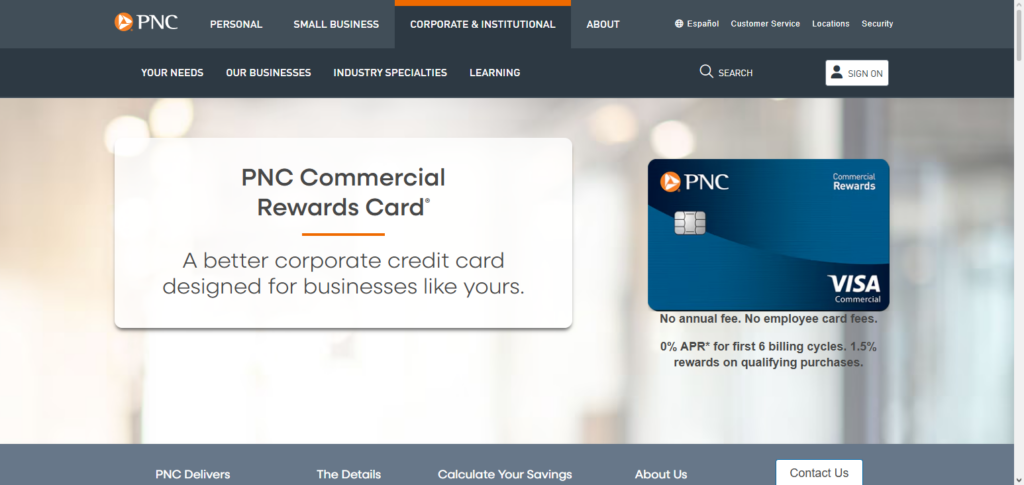
Reward programs that pay points or cash back on qualified transactions can be matched with business expenses. PNC’s banking environment is a good option for mid-size businesses since it offers integrated treasury services, fraud monitoring, and scalable credit solutions that grow with the company.
PNC Corporate Card – Key Features
| Feature | Description |
|---|---|
| Flexible Limits | Adjustable credit limits by user and business. |
| Reporting | Detailed purchase data for accounting teams. |
| Reward Earnings | Cash back or points on eligible spend. |
| Controls & Alerts | Spend controls with customizable alerts. |
| Banking Ecosystem | Integrates with PNC business services. |
PNC Corporate Card Pros & Cons
Pros
- Credit lines are flexible.
- Solid reporting for accountants.
- Employee control customization.
- Business category rewards.
- PNC commercial banking has strong integration.
Cons
- Reward rates can be lower than others.
- Fewer perks for foreign use than larger issuers.
- Annual fees can be added.
- Competitors have more modern interfaces.
10. Wells Fargo Business Elite Card
The Wells Fargo Business Elite Card, which offers huge credit lines and rewards geared toward regular expenses, is designed for larger organizations with high monthly spending needs. Along with employee card management features and comprehensive account controls, its program may offer cash back or point benefits across major company sectors.
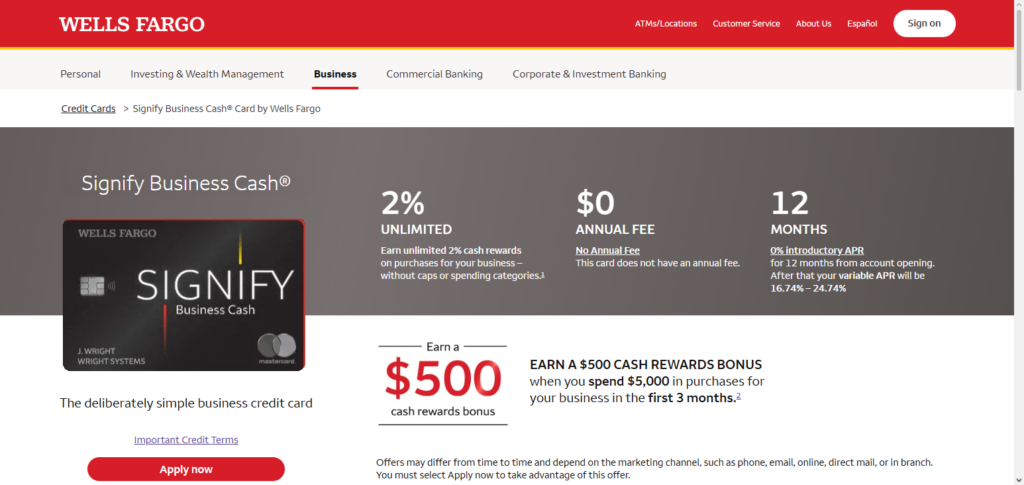
Purchase protections, emergency and travel support, and sophisticated fraud monitoring are examples of extra features. When used in conjunction with Wells Fargo’s commercial banking services, this card helps businesses optimize returns on operational expenditures, enhance cash flow visibility, and streamline corporate spending.
Wells Fargo Business Elite Card – Key Features
| Feature | Description |
|---|---|
| High Credit Lines | Designed for large expenses and enterprise use. |
| Rewards Program | Earn points or cashback on business purchases. |
| Purchase Protection | Includes travel and purchase protection benefits. |
| Spend Management | Detailed reporting and card controls. |
| Business Integration | Works with Wells Fargo’s business banking tools. |
Wells Fargo Business Elite Card Pros & Cons
Pros
- High expenditure design with high credit limits.
- Business category rewards.
- All controls for accounts.
- Included travel and purchase protection.
- Linked with Wells Fargo business services.
Cons
- The annual fee can be high.
- Specialized cards have more rewards than these.
- Fewer travel bonuses than premium travel cards.
- Outdated tools not suited for fintech are the interface.
- Fees for foreign transactions can be applied.
Conclusion
Optimizing business costs, simplifying accounting, and optimizing rewards all depend on selecting the appropriate corporate credit card. Flexible spending restrictions, strong staff card management, integrated expenditure tracking, and worthwhile incentives catered to corporate requirements are all features of the Best Corporate Credit Card Programs for Businesses.
While Brex, Ramp, and Stripe Corporate Card concentrate on cutting-edge finance solutions for startups and tech enterprises, American Express Corporate Card and Chase Ink Business Preferred excel in rewards and travel advantages.
Corporate reporting solutions and significant worldwide acceptability are offered by traditional banking options such as Citi, PNC, and Wells Fargo Business Elite. Your company’s size, spending patterns, and desired rewards all play a role in choosing a card that will optimize your business’s financial efficiency and growth prospects.
FAQ
What are corporate credit cards and why do businesses use them?
Corporate credit cards are business accounts issued to companies (rather than individuals) to manage employee spending, control expenses, and simplify accounting. They help businesses centralize billing, track purchases, set spending limits for employees, and often earn rewards or cashback on business expenses.
How do corporate cards differ from small business cards?
Corporate cards are typically designed for medium to large companies with multiple employees and higher spending needs. They often require a business financial profile rather than a personal guarantee. Small business cards are geared toward smaller companies and may require a personal credit check.
What rewards or benefits should businesses look for?
The best programs offer generous rewards on categories such as travel, software subscriptions, advertising, dining, and office supplies. Other benefits include detailed reporting tools, employee card controls, travel perks, insurance protections, and seamless accounting integrations.
Do all corporate cards have annual fees?
Not all do. Some programs (like Brex or Stripe Corporate Card) offer no annual fee, while others (like American Express Corporate Card or Chase Ink Business Preferred) may have annual fees but compensate with higher rewards and premium benefits.
Can corporate cards help improve business cash flow?
Yes. Many cards offer flexible payment terms, extended pay options, and rewards that reduce expenses. Effective use of corporate cards can improve cash flow management while providing insight into spending patterns.