
The Best Crypto Cross-Chain Messaging Platforms, data transmission, and smart contract execution across numerous networks, cross-chain messaging platforms are revolutionizing the way blockchains interact.
These platforms remove fragmentation, enhance scalability, and enable genuine interoperability as the Web3 ecosystem grows beyond single-chain constraints. Cross-chain messaging infrastructure is essential for creating safe, effective, and future-ready multi-chain applications, from DeFi and NFTs to business blockchain solutions.
Why Cross-Chain Messaging Platforms Matter?
Cross-chain messaging services help in resolving silos between blockchains by allowing crypto assets, information, and smart contracts to communicate securely and move to locked networks without intermediaries.
Projects like this are ideal for silos between blockchains. For example, in DeFi and NFT, blockchains for games, or in enterprise blockchains. They improve liquidity, /composability, and interoperability by resolving silos between blockchains.
With synchronized parallel processing, they reduce congestion and costly transactions on a single blockchain and improve scalability by dispersing work across chains.
With cross-chain messaging, there are more opportunities to create omnichain applications, which improves user experience by allowing users to have the ability to interact with multiple networks from a single interface.
With standardized message verification, cross-chain messaging improves security. They also reduce over-dependence on custom-developed bridges, which are prone to exploits and hacks.
With cross-chain messaging services, modular blockchain architectures, rollups, and app chains are able to work together without sacrificing decentralization, sparking more innovation.
For the safe transfer of enterprise data, cross-chain settlements, and interchain operability, cross-public, private, and permissioned blockchains, cross-chain messaging services are essential.
With cross-chain messaging services, DAOs are able to manage cross-chain governance, coordinating decisions, votes, and treasury management across multiple blockchains.
Blockchain cross-chain messaging improves the cross-chain management of liquidity, placing assets where there is the most yield, fees, or demand across different ecosystems.
Cross-chain messaging services reinforce the Web3 infrastructure by allowing each blockchain to advance separately while maintaining the ability to communicate within a single cohesive and interoperable ecosystem.
Key Point
| Platform | Key Strength |
|---|---|
| Polkadot (XCMP / XCM) | Shared security and trust-minimized communication |
| Cosmos (IBC) | Trustless, standardized cross-chain data & asset transfer |
| LayerZero Labs | Low-latency, flexible cross-chain messaging |
| Axelar | General message passing for smart contracts |
| Chainlink CCIP | High security and enterprise-grade reliability |
| deBridge | Fast execution and asset + data transfer |
| Celer Network | High throughput and low fees |
| Portal Token Bridge | Broad EVM and non-EVM chain support |
| Hyperlane | Customizable security and routing |
| Holograph | Native multichain asset consistency |
1. Polkadot (XCMP / XCM)
Cross-Chain Message Passing (XCMP) and Cross-Consensus Messaging (XCM) allow Polkadot parachains to communicate and transfer messages and assets securely. Their relay chain provides shared security, so bridges are unnecessary.

Among the Best Crypto Cross-Chain Messaging Platforms, Polkadot is recognized for a trust-minimized design and outstanding cross-chain communication for specialized blockchains. XCMP provides unrestrained throughput messaging, and XCM provides a unified instruction and data format for cross-chain communication.
Polkadot supports the development of interoperable Web3 applications, DeFi solutions, and high-performance, secure, and scalable cross-chain integrated business blockchain ecosystems.
Core Features for Polkadot (XCMP / XCM)
- Cross-chain communication for parachain messages.
- Polkadot Relay Chain offers combined security.
- Cross-Consensus Messaging(XCM) framework.
- Communication latencies are lower & throughput is higher.
- No bridges to the outside are needed.
Polkadot (XCMP / XCM)
Pros:
- Bridges not needed for cross-chain messaging.
- Trust assumptions are reduced due to shared security via Relay Chain.
- Low latency and high messaging throughput.
- Interoperability is simplified with the standardized XCM format.
- Support for the ecosystem and the developers is strong.
Cons:
- Primarily focused on the Polkadot ecosystem.
- Costs for parachain slot auctions can be high.
- Complex for beginners.
2. Cosmos (IBC – Inter-Blockchain Communication)
Cosmos employs the Inter-Blockchain Communication (IBC) protocol for trustless messaging and transfer of assets across sovereign blockchains. Each blockchain has its own set of validators and communicates via light clients.
Cosmos being one of the Best Crypto Cross-Chain Messaging Platforms, focuses on decentralization and modularity which helps developers to create their own application-specific blockchains and interoperate with others.

IBC facilitates the transfer of data packets, assets, and even the execution of smart contracts across various blockchain networks.
Cosmos caters to several use cases, including DeFi platforms, cross-chain liquidity networks, and appchains focused on autonomy and interoperability.
Cosmos (IBC) – Key Features
- Inter-Blockchain Communication(IBC) is without trust.
- Cross-chain validation is done by light clients.
- Independent validators within self-governing blockchains.
- Pre-packaged tokens & data transfers with standardization.
- Highly scalable & modular architecture.
Cosmos (IBC)
Pros:
- Communication across the ecosystem is fast and without permission or trust.
- Risk is minimized with the use of light-client security.
- Flexible and highly scalable and modular.
- Adoption of the technology is strong for DeFi application blockchains.
- Independence of the sovereign chain.
Cons:
- Chain support for IBC is required.
- Validation operational complexity.
- EVM chains lack modular messaging for smart contracts.
3. LayerZero Labs
LayerZero Labs has developed an omnichain messaging protocol that offers seamless cross-chain communication in a lightweight and flexible manner. Utilizing Ultra Light Nodes, oracle, and relayer cross-verification, messages are sent in a streamlined manner.
For its messaging offerings, LayerZero has been recognized among the Best Crypto Cross-Chain Messaging Platforms. With LayerZero, smart contracts on different blockchains can seamlessly interact as if they exist on a single blockchain.
With its modular security, developers can set their own trust models. LayerZero is an omnichain contender focused on DeFi, the metaverse, and blockchain gaming, where cross-chain messaging is imperative.
LayerZero Labs Features
- Smart contract communication with messaging overlapped.
- Ultra Light Nodes framework.
- Message validation with relayer & oracle for added complexity.
- Flexible security options.
- EVM & non-EVM chains of all types.
Layer Zero Labs
Pros:
- Omnichain design integrated with low messaging overhead.
- EVM and non-EVM blockchain support.
- Configurable security.
- Efficient cross-chain calls for smart contracts.
- Decentralized and strong adoption in DeFi and NFTs.
Cons:
- Lacks security on the oracle and relay assumptions.
- More complicated trust model than light-client systems.
- Evolving state of decentralization.
4. Axelar
Axelar network provides cross-chain communications and general message passing through a decentralized network and custom validator set for arbitrary Smart Contract messaging with a unified API for multiple blockchains.
With a focus on developer accessibility and security, Axelar is recognized as one of the Best Crypto Cross-Chain Messaging Platforms. With the ability to handle multiple requests, Axelar’s validators reliably execute messages and confirm cross-chain actions.
Supporting both non-EVM and EVM chains, Axelar provides solutions for cross-chain governance, multi-chain decentralized applications and integrations. Axelar is a preferred choice for enterprise blockchain, DeFi and infrastructure tooling.
Axelar Features
- Decentralized validators for messaging.
- General Message Passing & GMP.
- Cross-chain smart contract calls with unified APIs.
- EVM & non-EVM chains supported.
- Execution and routing are automatic.
Axelar Pros & Cons
Pros:
- Arbitrary smart contract calls with General Message Passing.
- Decentralized network of validators.
- Unified simplified API for developers.
- Extensive multi-chain compatibility.* Enterprise and DeFi integrations are improving
Cons:
- Validator-based security introduces trust assumptions
- Network fees may vary
- Dependent on the performance of Axelar validators
5. Chainlink CCIP
Chainlink CCIP (Cross-Chain Interoperability Protocol) provides secure cross-chain messaging with a decentralized network of oracles for token transfer.
With a focus on monitoring, risk management, and modular security, CCIP is trusted for its high-security solutions and institutional reliability among the Best Crypto Cross-Chain Messaging Platforms.

With built-in security features, CCIP allows for the sending of instructions, data, and assets by smart contracts across different chains.
Enterprise DeFi, cross-chain liquidity management, tokenized assets, and financial applications with secure and compliant interoperability are some of the use cases for CCIP.
Chainlink CCIP Features
- Cross-chain messaging secured by oracle.
- Token & data transfers with added Risks management & Monitoring.
- Enterprise-level reliability.
- Security parameters that are user-defined.
Link CCIP Pros & Cons
Pros:
- Oracle-backed messaging of the highest security
- Enterprise-level accuracy
- Strong trust from the institution
- Risk assessment and management features
- Comprehensive support from the Chainlink ecosystem
Cons:
- More expensive than more lightweight options
- Early stages feature controlled rollout
- Complexity is greater for smaller developers
6. deBridge
deBridge is a distributed protocol for cross-chain communication and the transfer of assets with the ability to send arbitrary data between blockchains. It employs a network of validators for event verification and message integrity.

Focused on real-time execution, capital efficiency, and speed, deBridge is listed among the Best Crypto Cross-Chain Messaging Platforms. Because of its design, dApps builders can easily cross-chain activate smart contract functions.
The deBridge protocol is frequently utilized for cross-chain DeFi (Decentralized Finance) applications, cross-chain liquidity routing, cross-chain trading, as well as decentralized exchanges requiring the retention of speed and reliability of messages for decentralized processors.
deBridge Features
- Cross-chain messaging that is unlimited.
- Decentralized consensus by validators.
- Messaging done in real-time.
- Efficient use of capital.
DeBridge Pros & Cons
Pros:
- Cross-chain messaging and execution
- Transfers of both assets and data
- High capital efficiency
- Focus on DeFi
- Low friction for the user
Cons:
- Smaller ecosystem than the major contenders
- Validator trust reliance to an extent
- Limited use cases outside of DeFi
7. Celer Network
Celer Network includes Inter-Chain Messaging (IM) and cross-chain liquidity services. With instant, affordable messaging, and asset transfer services, Celer Network provides services for dozens of blockchains.
Celer is listed among the Best Crypto Cross-Chain Messaging Platforms because of its messaging network. It is unrivaled for efficiency, throughput and scalability. With Celer Network, dApps developers can easily design cross-chain applications without the burden of complex bridge logics.
Heavily utilized for multi-chain DeFi (Decentralized Finance) protocols, yield optimization dApps, and complex multi-chain dApps, Celer Network is a leading cross-chain communication provider while maintaining an excellent User Experience (UX).
Key Features of Celer Network
- Inter-Chain Messaging (IM) framework
- Low-cost and quick cross-chain transfers
- Multi-chain liquidity
- Flexible dApps scalable architecture
- Compatible with multiple blockchains
Celer Network Pros & Cons
Pros:
- Fast and cheap messaging
- Cross-chain support
- Proven use and mature infrastructure
- Great scalability
- Tools that are friendly for developers
Cons:
- Lower security due to needing a Validator’s consensus
- Less flexibility than some competitors
- Slower than some of the new competitors
8. Portal Token Bridge (Wormhole)
Portal Token Bridge (formerly Wormhole) is a versatile cross-chain communications protocol coupled with a bridging solution, backed by a set of guardian nodes. It allows both messages and asset transfers on both EVM and non-EVM chains.
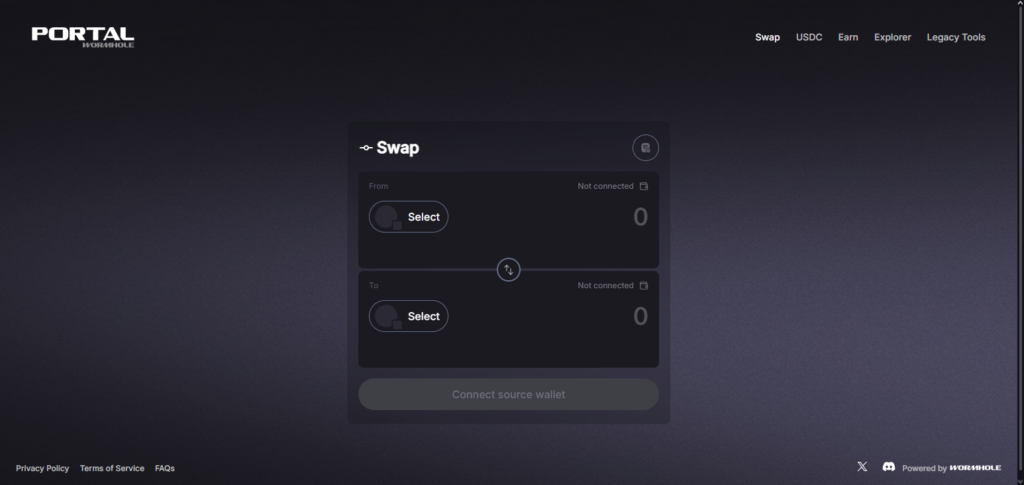
Among the Best Crypto Cross-Chain Messaging Platforms, Portal is appreciated for its ecosystem depth and production-grade usage. Developers can send customized messages to initiate cross-chain smart contract calls.
Portal is widely used for cross-chain token bridges, NFT transfers, and multi-chain DeFi services, which require seamless cross-chain integration of ecosystems like Ethereum, Solana, and others.
Key Features of Portal Token Bridge (Wormhole)
- Cross-chain messaging protocol
- Guardian-based security
- EVM and non-EVM compatible
- Transfers of tokens and data
- Extensive multi-chain ecosystem
Portal Token Bridge (Wormhole)
Pros:
- Supports the most amount of blockchains
- Messaging and asset transfer
- Great popularity in the ecosystem
- Works for both EVM and non-EVM
- Supports builders with great documentation
Cons:
- Guardian security models
- Lack of trust due to previous incidents
- Worries of centralization
9. Hyperlane
Hyperlane is a fully permissionless cross-chain messaging protocol that gives developers the freedom to implement and set their own security configurations. It comes with modular messages and configurable validators and routing.
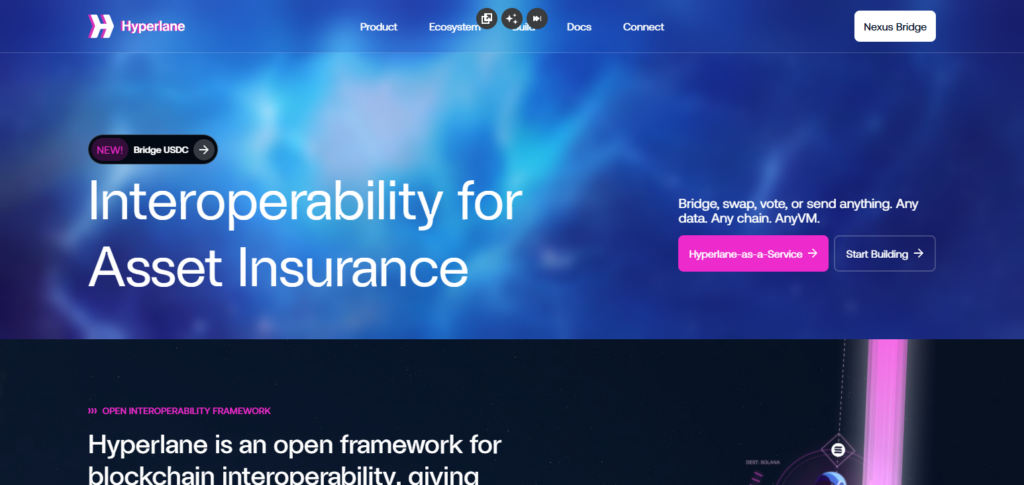
Hyperlane is recognized among the Best Crypto Cross-Chain Messaging Platforms, and is focused on providing the most freedom and control to the developer. It allows smart contracts to communicate without centralized solutions.
Hyperlane is optimal for experimental dApps, rollups, and modular blockchains, when teams wish to customize their security assumptions and enable fully cross-chain flexible operations.
Key Features of Hyperlane
- Cross-chain messaging without permission
- Custom and modular security frameworks
- Developer-set validator groups
- Execution and routing with flexibility
- Optimized for modular blockchains
Hyperlane Pros & Cons
Pros:
- Highly flexible and permission less
- Security modules are adaptable
- Customizable validator sets
- Great for modular chains and rollups
- Cross-chain routing of your choice
Cons:
- Needs security knowledge
- Protection is less standardized
- Limited ecosystem growth
10. Holograph
Holograph has built a messaging system for cross-chain communication with no bridges, maintaining state consistency for assets and contracts across diverse blockchains. It enables tokens, NFTs, and smart contracts to be present on various chains without wrapping.

Among Top Cross Chain Crypto Messaging Services, Holograph is one of the most convenient for deploying multi-chains. Its messaging system deals with state changes on one chain and automatically updates the other chains.
Holograph is typically used within NFT ecosystems, brand assets, and Web3 use cases that demand multi-chain identity and smart contract logic across chains.
Key Features of Holograph
- Cross-chain messaging without a bridge
- Multichain assets messaging
- Synchronized smart contract states across chains
- Management of tokens and NFTs across chains
- Simplified cross-chain development across multiple chains
Holograph Pros & Cons
Pros:
- No-Bridge Multi-chain Structure
- Cross-chain Consistent Native Assets
- Perfect for NFTs and branded assets
- Multi-chain launches made easier
- Wrapping made simpler
Cons:
- NFTs focus could be seen as a negative
- Developer ecosystem is less
- Fewer use cases for generalized messaging
Future Trends in Cross-Chain Messaging
The following are trends worth paying attention to in the industry’s Cross-Chain Messaging that are clear for Web3, DeFi, and enterprise stakeholders and speak to the ecosystem’s trajectory:
Cross-Chain Messaging Protocols Becoming Standardized
The industry has begun to adopt baseline standards for message formats, verification, and execution across various chains. This augments the industry’s interoperability, lowers fragmentation, and makes cross-chain development faster and securer.
Building New/Better Defense Structures
Cross-chain messaging, in the future, will utilize hybrid models that include light clients, decentralized validators, and crypto proof to adequately lower trust assumptions and attack vectors.
Omnichain Smart Contracts
Implementing unique contracts will allow developers to provide the same contract across multiple chains, wherein each chain will support the same logic and maintain shared execution, making operations simpler and reducing the need to re-code for every chain.
Flexible and Modular Security
There is an emerging trend for protocols to provide applications the ability to freely determine their cross-chain secure communication framework, based on their risk appetite.
Enterprise and Institutional Use Cases
The privacy and security features within cross-chain messaging will be ideal for enterprises, banks, and tokenized real world asset platforms. They will utilize the infrastructure to support compliance, audit, and reliability.
Expansion of Cross-Chain Governance
More DAOs will leverage cross-chain messaging for governance, treasury management, and voting. This will bring coordinated decision-making to multi-chain ecosystems.
Integration with Layer 2s and Rollups
As more Layer 2s are adopted, cross-chain messaging will be critical for bridging communications between rollups, mainnets, and appchains for better scalability and ecosystem cohesion.
Bridgeless and Native Interoperability
Future frameworks will lessen dependence on classic token bridges and instead use innovative messaging frameworks that sync state and execution without wrapped tokens and less liquidity fragmentation.
Better Developer Tooling
Abstraction layers, SDKs, and APIs will be more streamlined for cross-chain interoperability and allow builders to concentrate more on the app logic rather than the interoperability infrastructure.
Cross-Chain Data and Identity
More cross-chain messaging systems will have to incorporate cross-chain identity, credentials, and data to enable portable profiles, reputation systems, and identities in Web3.
Security Risks & Challenges in Cross-Chain Messaging
Standardization of Cross-Chain Messaging Protocols
In terms of cross-chain development, the industry will begin implementing standard procedures for message format, verification, and execution in order to increase compatibility, decrease fragmentation, and increase the speed and security of cross-chain development.
Stronger Security Models
Cross-chain messaging will be reliant on hybrid security models incorporating light clients, decentralized validators, and cryptographic proofs to eliminate certain attack vectors and minimize trust assumptions.
Omnichain Smart Contracts
With the use of seamless cross-chain smart contracts, developers will be able to deploy single contracts that provide unified logic, shared state, and consistent execution across multiple blockchains.
Modular and Customizable Security
Protocols will offer applications the ability to define their own security assumptions, validator sets, and verification methods to provide cross-chain communication that is flexible and secure relative to the applied risk.
Enterprise and Institutional Adoption
Cross-chain messaging will become compliant with the infrastructure, auditability, and reliability standards required by enterprises, banks, and tokenized real-world asset platforms.
Cross-Chain Governance Expansion
For governance, treasury management, and voting across multiple chains, DAOs will use cross-chain messaging to enable collaboration and governance in multi-chain ecosystems.
Integration with Rollups and Layer 2s
The more layer two solutions are adopted, the more critical cross-chain messaging will be for connecting the different rollups, mainnets, and appchains for an optimized ecosystem.
Bridgeless Native Interoperability
Future iterations will likely minimize barriers induced by bridges, using classic interchain-native messaging technology that works without wrapped tokens or liquidity sinks to merge state and processes.
More Advanced Developer Tooling
Cross-chain development will be simplified with new SDKs, APIs, and abstraction layers that will allow developers to concentrate more on the core application logic and less on the complex interoperability support
Conclusion
It is encouraging to see so many new Best Crypto Cross-Chain Messaging Platforms As new blockchains continue to be developed, messaging services like Polkadot, Cosmos, LayerZero, Axelar, and Chainlink CCIP will optimize security, scalability, and developer workflows to provide services over multiple chains.
Messaging services will allow siloed DeFi, NFTs, gaming, and enterprise applications to work over multiple chains. These services will eliminate the need for unreliable bridges.
Cross-chain messaging will remove the fragmentation caused by new blockchains that are becoming mainstream, and will provide a truly interoperable Web3 ecosystem.
FAQ
What are crypto cross-chain messaging platforms?
Crypto cross-chain messaging platforms enable blockchains to communicate with each other by transferring data, instructions, and smart contract calls across different networks securely and efficiently.
How are cross-chain messaging platforms different from bridges?
Traditional bridges mainly transfer tokens, while cross-chain messaging platforms support arbitrary data transfer, smart contract execution, governance actions, and complex cross-chain workflows.
Why are cross-chain messaging platforms important for Web3?
They remove blockchain silos, improve interoperability, enable omnichain applications, and support scalable, multi-chain ecosystems across DeFi, NFTs, gaming, and enterprise use cases.
Which are the best crypto cross-chain messaging platforms?
Top platforms include Polkadot (XCMP/XCM), Cosmos (IBC), LayerZero, Axelar, Chainlink CCIP, deBridge, Celer Network, Portal Token Bridge, Hyperlane, and Holograph.
Are cross-chain messaging platforms secure?
Security depends on the protocol’s design. Some use light clients, others use decentralized validators or oracles. Leading platforms prioritize multi-layer security and monitoring systems.